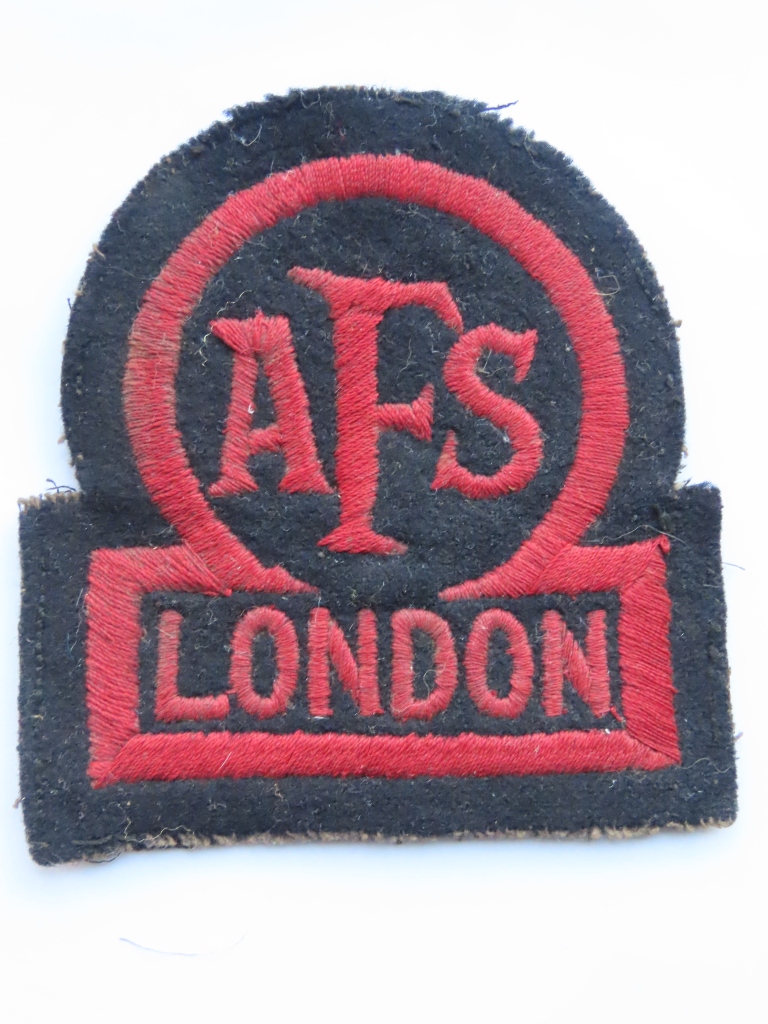
London’s Blitz-the firefighters story.

The London blitz begin in London 84 years ago this September. It was almost exactly twelve months after Britain had declared war on Germany. London was bombed for 57 consecutive nights.

London’s docks served as a beacon for further waves of enemy bombers. 7th September 1940-first night of the Blitz.

That first major raid took place over the 7 September 1940. It was followed by aerial bombardments, usually under cover of darkness, over the Capital and many of Britain’s major towns and cities. (It is estimated that over an eight month period, around two million homes were destroyed and between 40,000 and 43,000 civilians lost their lives, with many more injured in addition to those killed and injured fighting the fires and conflagrations resulting from the bombing raids.)

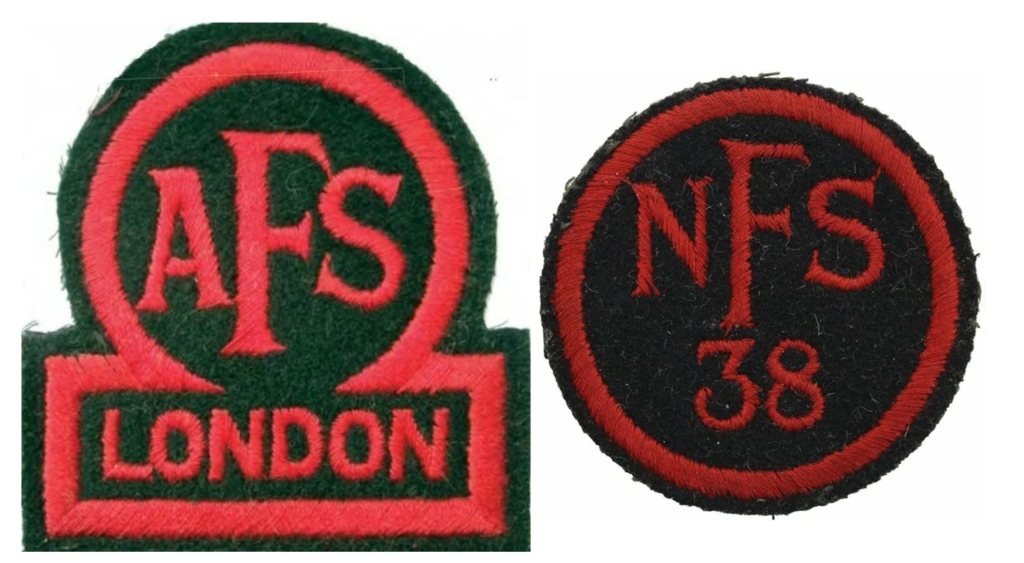
Yet despite these chilling statistics, the Blitz served to strengthen rather than weaken British resolve, invoking what we now remember as the famous ‘Blitz spirit’. Yet only two months before those serving the in the London Fire Brigade, and in particular those who had joined the newly created Auxiliary Fire Service (AFS), where often vilified in the press and, on occasion, by the general public as war dodgers!

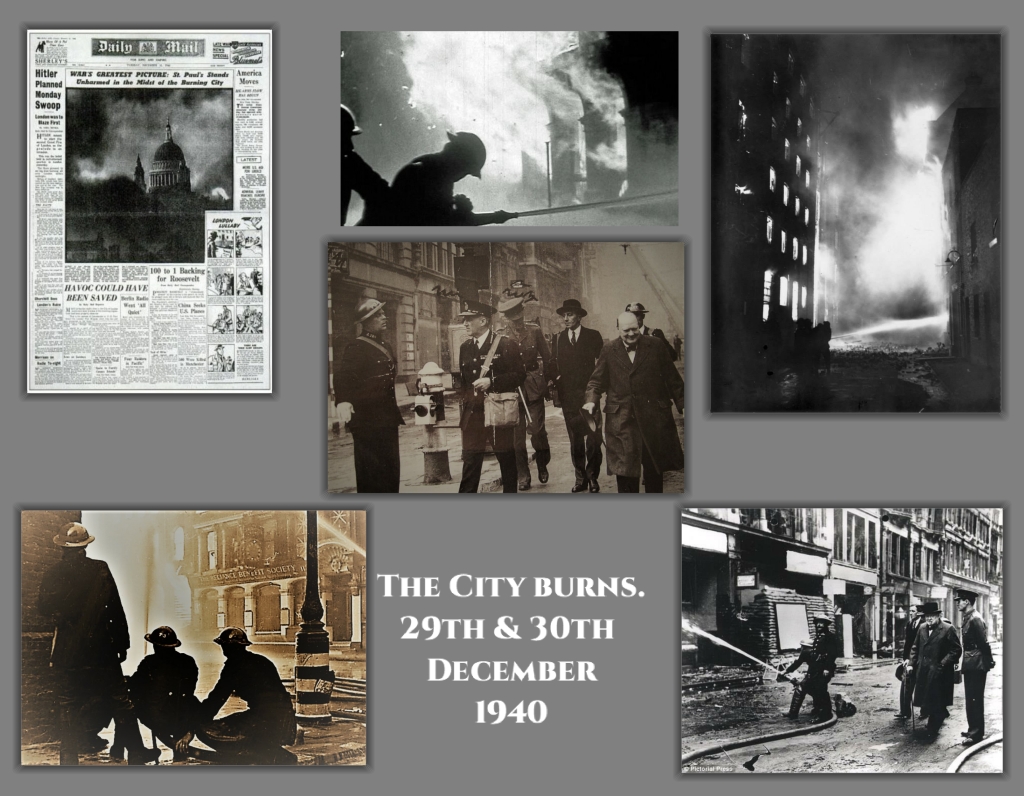
The Prime Minister of the time, Winston Churchill, would later coin the phrase, “Heroes with grimy faces“, referring to all regular firemen and the AFS firefighters. It was a fact that St Paul’s Cathedral would not be here today were it not for them.

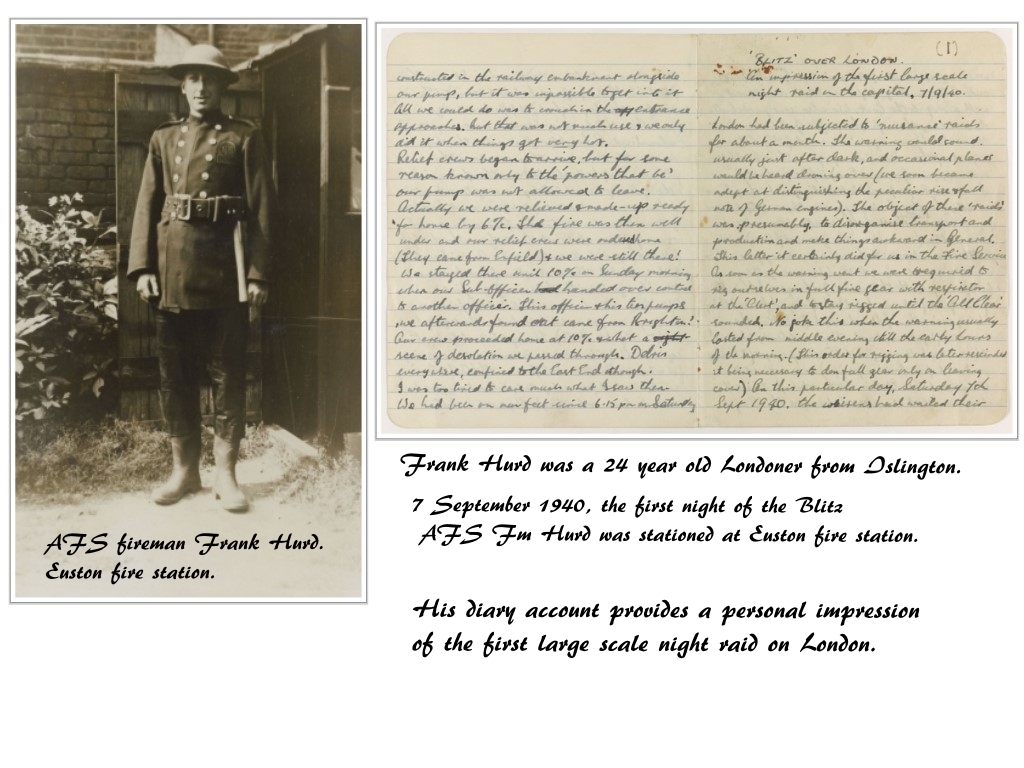
The Blitz started on a Saturday, Saturday late afternoon to be precise. To some it might have seemed that WWII had finally arrived at their doorstep, although there had been other German air-raids before that fateful day. For some unfortunate ones it was the last day of their lives. Whilst for members of the enlarged London Fire Brigade and the other Brigade’s in the London Region it was to be the start of their ordeal by fire. The bombs would rain down for 57 continuous nights before individual, but still devastating, mass bombing raids would continue until May 1941.

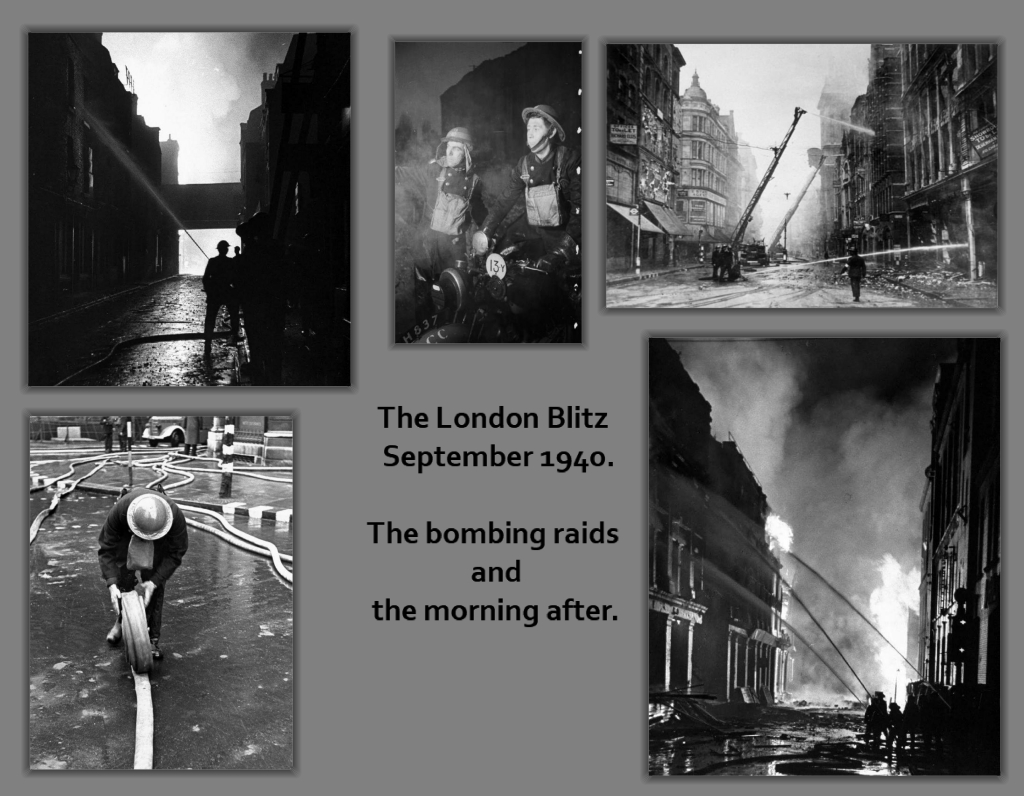
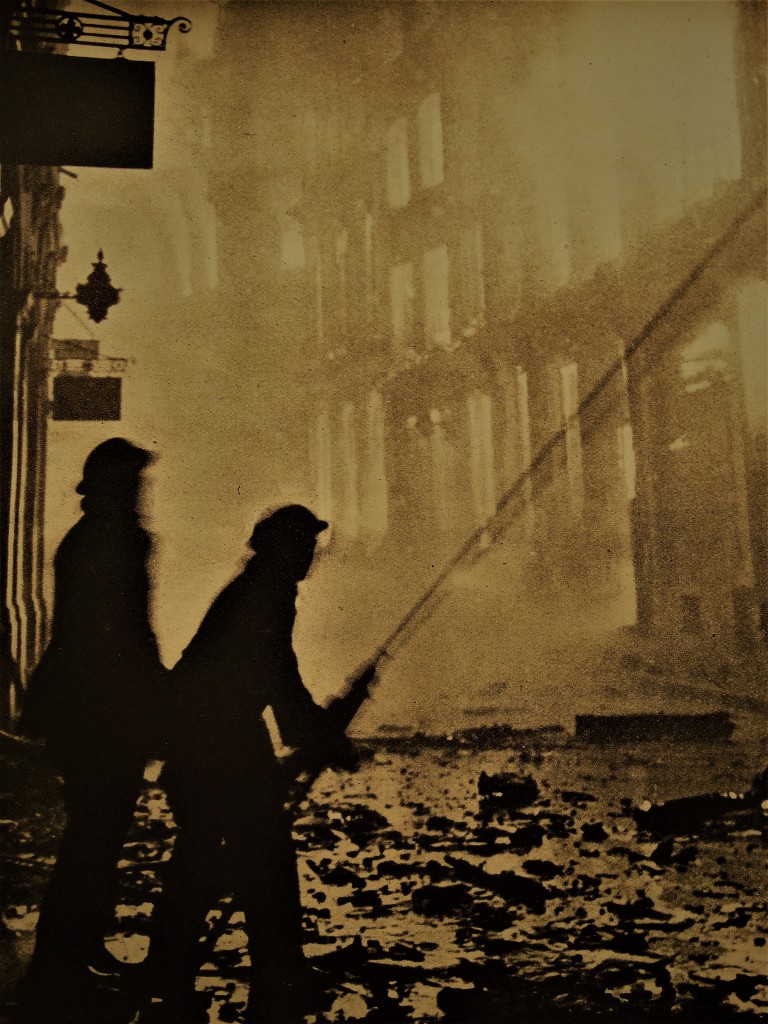
For those 57 continious nights, and then frequent raids beyond, London’s firemen and women worked in very demanding conditions. They worked throughout the raids, even while the bombs were falling. The firefighters were at risk from collapsing buildings and falling shrapnel from anti-aircraft guns, often working15 hours at a time, in clothes that were soaked through.

The Auxiliary Fire Service

The likelihood of a Second World War was already being planned for in the early 1930s. Although not widely publicised the then National Government, under the premiership of Ramsey MacDonald, were considering what arrangements would be necessary to cope with enemy aerial attacks on its strategic population centres. This was just one of many problems for the Government, not the least of which was the vast economic trouble the whole country faced in the wake of the Wall Street Crash of 1929 and the subsequent widespread depression it caused.

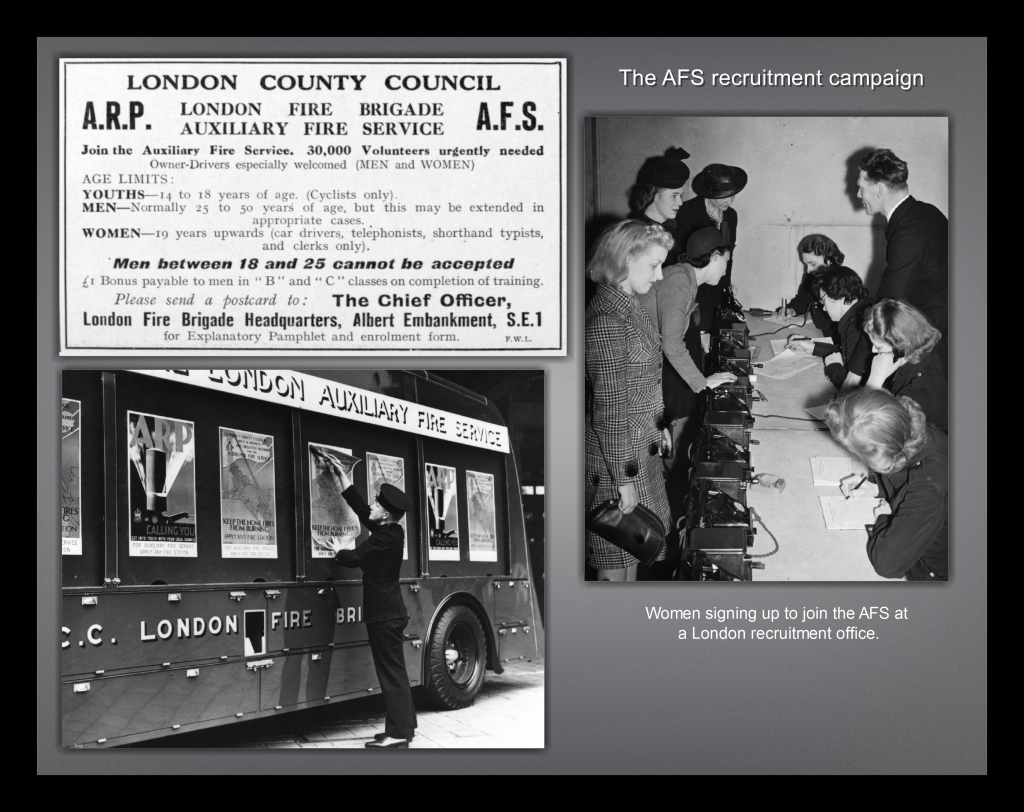
The London Fire Brigade’s, headquraters, hose-laying lorry used in the recruitment campaign for the AFS,
(Photo credit-London Fire Brigade.)

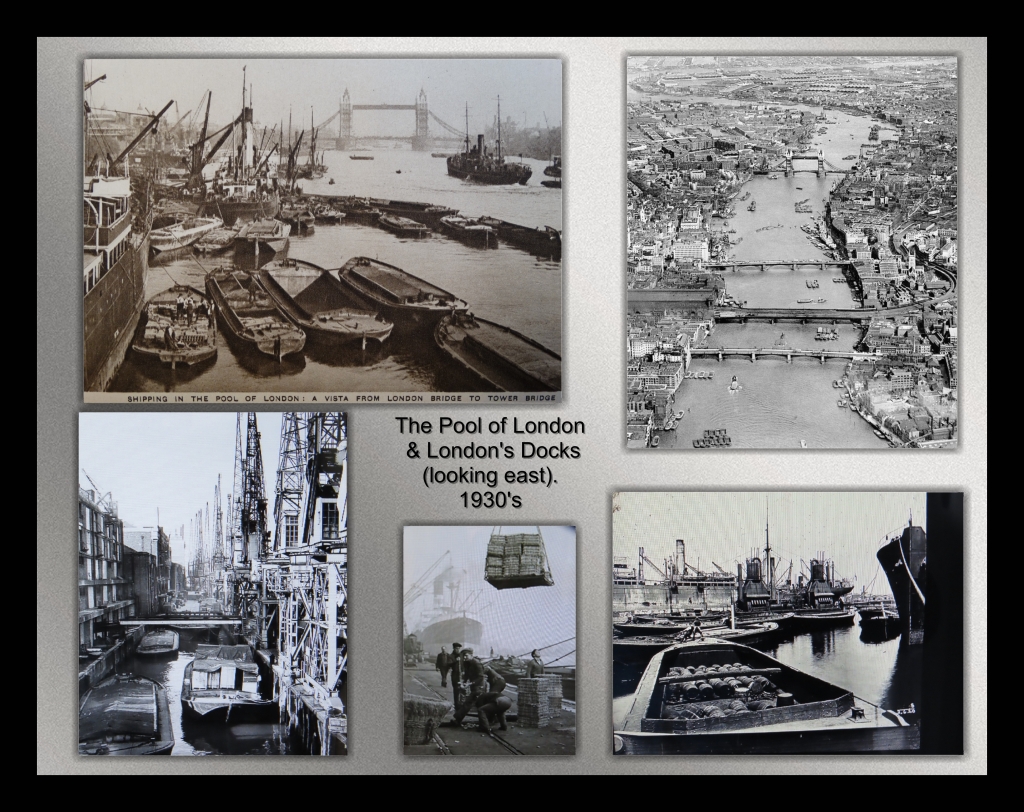
However, despite this background, the Home Office (then responsible for the Fire Service) held a series of seminars and secret planning meetings to deliver a strategy in the event of war and subsequent fire attacks on the British mainland from the air. London was considered a particularly vulnerable target from enemy action, not least because it was the nation’s seat of government and the City of London was crucial to the country’s financial and business interests. The London of the 1930s took on a vastly different look to the London of today. The River Thames provided easy access for shipping to the vast network of extensive docks and associated warehouses. The dockland warehouses, from Southwark and Blackfriars on the south bank and Tower Hill on the north bank, ran eastward to the Essex and Kent borders.

It was recognised at an early stage that it would require a massive expansion of the existing fire brigade(s) to deal with fires involving London’s central maze of narrow streets, warehouses filled with combustible products such as oils and grains and dockyards with acres of stacked imported timber. Failure to respond to such a challenge could leave London little more than a smoking ruin. However, before that day arrived the Auxiliary Fire Service (AFS) was formed and from March 1938 their numbers grew. Attracting the 28,000 proposed volunteers was a major logistical exercise. A massive recruitment drive was launched. Whilst sixty fire brigade vehicles toured London’s streets, a poster campaign was mounted and planes flew the over capital trailing recruitment banners. Even the Thames was used to advertise this new fire force and the Brigade’s high speed fireboat flew similar banners seeking recruits to supplement the London Fire Brigade’s river service.

The area we now know as Greater London had, prior to the outbreak of war, at least 66 fire brigades. This included the London Fire Brigade, the largest, which covered the whole of the former London County Council administrative area. Some of these other brigades were one fire engine outfits that only protected a small borough area while others had four or five stations such as West Ham and Croydon. Buildings and vehicles were seconded into service to house and equip this basically trained corps of AFS firemen and women that had now greatly expanded London’s fire service. Meanwhile garages, filling stations and schools, empty since the mass evacuation of children, were taken over and adapted as fire stations.

One of some 2000 taxis converted for World War II fire brigade use by Auxiliary firefighters in London and other major UK cities. Photograph taken in Lambeth High Street, outside the London Fire Brigade HQ.
(Photo credit-London Fire Brigade.)

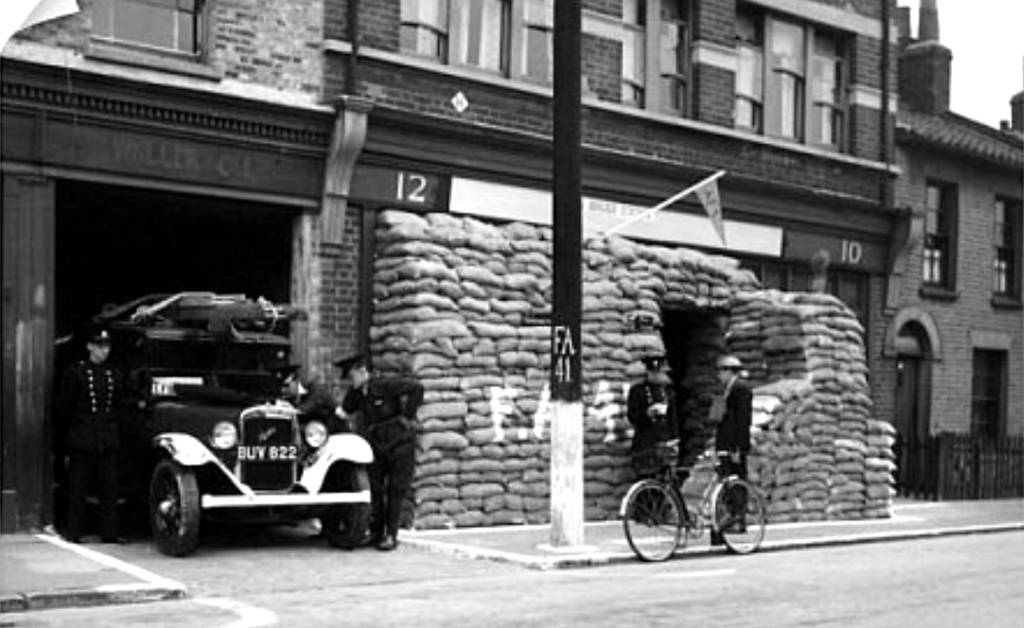
Some 2,000 London taxis were brought into service and used to tow trailer pumps. The taxis were large enough to carry a crew and the hose was stored in the luggage compartment. However, the accommodation was frequently poor at best and the new volunteer firefighters spent many hours making good their bases and building their own wooden beds. In addition to this they erected brick walls over windows and sandbagged entrances to protect themselves from blast damage.

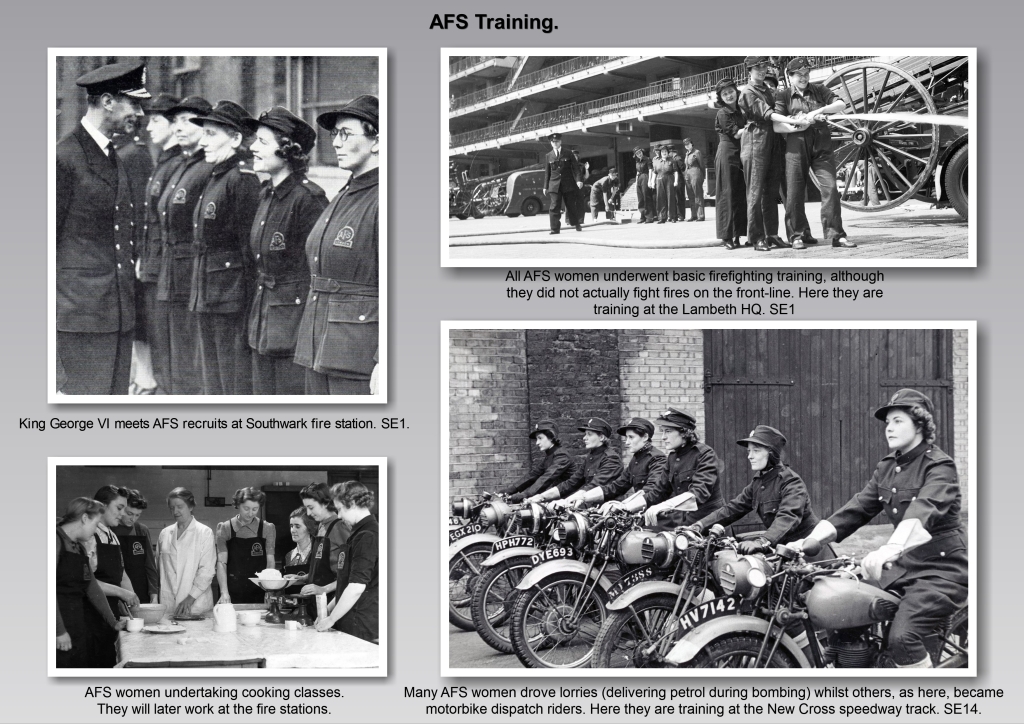
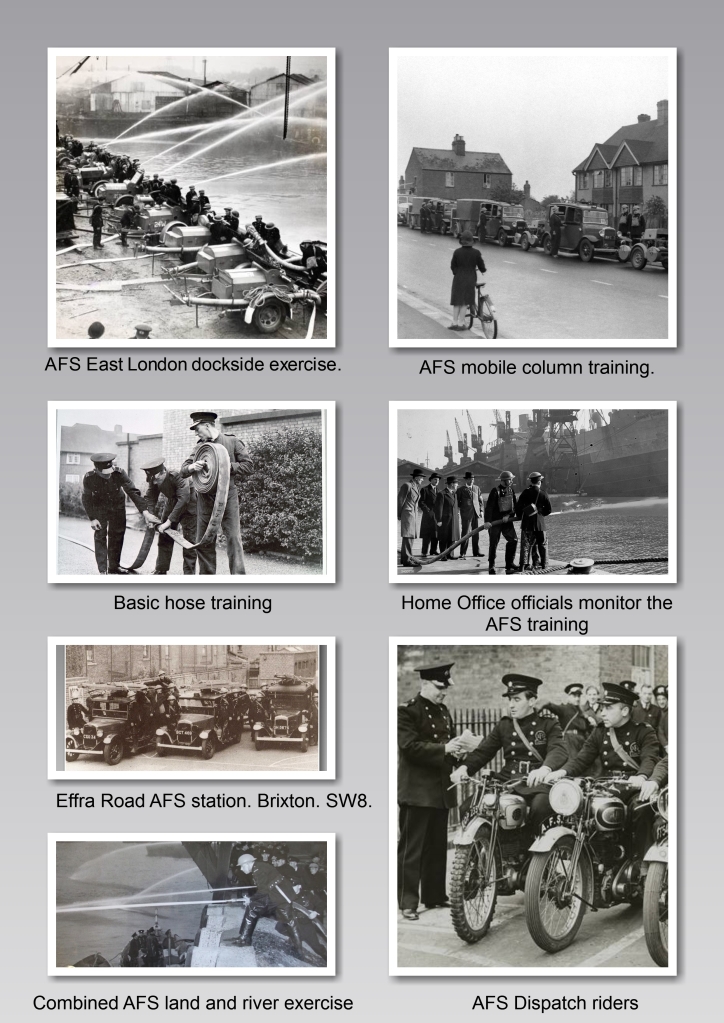
The Auxiliary Fire Service (AFS) eventually had some 21,000 volunteer firefighters, all of whom had to undergo 60 hours of basic training. Here AFS firemen are undergoing hose drill, running out the hose and connecting it with a special spanner which he carried on his belt along with his axe. Firefighters were expected to complete this task both in daylight and in the dark.

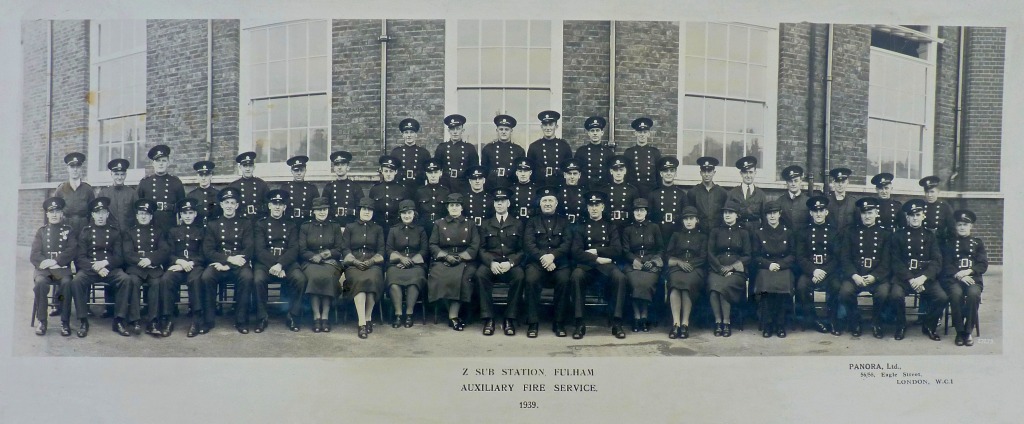
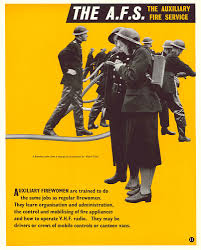
The basic training was provided by firemen from the London Fire Brigade. Detached from normal firefighting duties, they put the new recruits through 60 hours of practical and theoretical lessons. Whilst some women chose to undertake dispatch rider (motorcycle) duties and others opted for motor driving most were trained in ‘watchroom’ duties and necessary procedures for mobilising fire engines and pumping units. Everyone underwent basic firefighter training. They were, of course, civilians. They had volunteered from every trade and profession, from every walk of life. Office workers, labourers, lawyers, tailors, cooks and cleaners had taken up the call to join the Auxiliary Fire Service.

Women Auxiliary Fire Service (WAFS) members receiving hose instruction from London Fire Brigade staff in the Headquarters drill yard at Lambeth, SE1. (Picture credit-London Fire Brigade.)
London regular and AFS firefighters spent many hours, sometimes days, at incidents during the Blitz, and they needed refreshments. Women of the Auxiliary Fire Service are seen here learning to prepare and cook meals for those on the Blitz front line.
(Picture credit-London Fire Brigade.)

AFS recruits were divided into different categories. This was based on their physical capabilities, their age, gender and skills. Men considered Class B performed general firefighting duties. B1s worked only on ground level, either pump operating or driving. Others recruited from trades on the Thames were classed for River Service work and whilst women would be in the thick of it none performed frontline firefighting duties. Those youngsters under 18 years of age became messengers equipped with either motorcycles or pedal cycles.

Those auxiliaries who became full-time firefighters on the outbreak of war received a weekly wage. Firemen earned £3 per week, women got £2. Those aged 17–18 received £1-5 shillings and the 16–17 year olds got £1 a week.

7th September 1940.

It was a lovely sunny day when, at 4.43 p.m. the air-raid sirens started over London. A 12-hour bombing attack was launched on the capital and the ‘all clear’ would not be sounded until 4.30 a.m. on the 8th. In that raid, 1,600 people had been seriously wounded and 430 killed. Swathes of London’s docks and the surrounding areas were either totally destroyed or left as smouldering ruins.

For that first night only one in five of London’s firefighters had had any previous experience. The dangers they faced were numerous and unpredictable. During the war, more than eight hundred firefighters would be killed and more than seven thousand, seriously injured. Many of them blinded by heat or sparks. At the end of the ten-week onslaught of intensive bombing on London fire-crews were  utterly exhausted by lack of sleep, excessive hours, irregular meals, extremes of temperature, and the constant physical and mental strain.

Warehouses ablaze following heavy bombing raids on the Surrey Commercial Docks in Rotherhithe, SE London. This raid took place on 7 September 1940 and was consider to be the start of the Blitz on London.

On the river, beside the Massey Shaw and London’s other fire-fighting craft, London’s air defence precautions included the River Emergency Service. More than a dozen pre-war pleasure steamers were converted to first aid and ambulance boats. They were moored at various points along the river including Silvertown Wharf, Wapping and Cherry Garden Pier, alongside the Beta III. A taste of what the fire-float crews, and others, endured on the Thames that first night (7th September) it is perhaps best illustrated by a personal account given by Sir Alan Herbert, who was in command of the Thames Auxiliary Patrol’s vessel Water Gypsy, which was heading downriver:

 “Half a mile or more of the Surrey shore was burning. The wind was westerly and the accumulated smoke and sparks of all the fires swept in a high wall across the river.” He pressed on into the clouds of smoke: “The scene was like a lake in Hell. Burning barges were drifting everywhere. We could hear the hiss and roar of the conflagrations, a formidable noise but we could not see it so dense was the smoke. Nor could we see the eastern shore.”

As dawn broke on the 8th September the scale of the destruction was revealed. In addition to the dead and the injured three main railway stations were out of action and one thousand fires were still burning, burning all the way up the river from Deptford to Putney. They included two hundred acres of timber ponds and stores in the Surrey Commercial Docks, destroying one third of London’s stocks of timber – timber which was badly needed for building repairs in the coming months.

London’s women at war-in this case serving within the AFS.

Women had worked as firefighters long before the outbreak of the Second World War. They had been employed by private brigades and others, like the one attached to the feminist Girton College in Cambridge- the first all-women “brigade” in the UK where students were taught by Captain Sir Eyre Massey Shaw, the first chief fire officer of the Metropolitan Fire Brigade.

When the AFS was formed in 1938, a huge recruitment drive was launched to attract women as their fathers, brothers and husbands were signing up to join the Royal Navy, Army and RAF. At the mid-1930s there were still only 4,272 professional firemen in the whole of the UK, with nearly half of them employed in the London Fire Brigade.

When war broke out in September 1939, and with the AFS some 100,000 strong the ‘new’ firemen we seen as potentially posing a considerable threat to the regular fire brigades. Then to add insult to injury, as some saw it that ‘women’ were being allowed to join too! It was not a popular move with many of the men in positions of authority in the service. One chief officer even refused to admit women, declaring: “I would rather resign than be made to drill young girls and women to be firemen”.

But such macho sentiments like these had relatively little impact thankfully. With firewomen numbers increasing from 5,000 in 1940 to 20,000 six months later in 1941, the year the AFS was removed from local and placed under government control (and renamed The National Fire Service (NFS)) the numbers would rise to more than 90,000 women enrolled in the NFS by 1943.

Driving in pitch dark. The women were not expected to extinguish fires, although some did unofficially. Most were in supportive roles; drivers and despatch riders (a far more perilous job than it sounds) which would involve driving in pitch dark during enemy air raids.

Many others worked in the control rooms, usually putting in very long hours, but the women who attended air raids and fought fires alongside men seem to have been written out of history.

An internal Home Office memo from 1941 states that women’s duties were telephone and watchroom work, although it accepted that “it is not inconceivable that ultimately women may be accepted for observation duties and even as pump operators”.

Former FBU official Terry Segars writes in a later FBU history, Forged in Fire: “The reality … was that firewomen were more widely involved in active work than is generally acknowledged, and they could often be found in the midst of things during the blitz, whether helping out on the pumps, in control rooms close to the centre of the severest raids or delivering supplies to firefighters.”

Twenty-five firewomen lost their lives during the war.

London’s river fire service.

At the start of the blitz there was no stand-alone river service. It was an integral part of the London Fire Brigade and the London Fire Region. In 1938 twenty auxiliary fire-floats (they were not called fireboats until the creation of the National Fire Service in August 1941) had been ordered by the London County Council. These additional craft supplemented the London Fire Brigade’s existing five fire-floats: the newest being the high speed ‘James Braidwood’. The Massey Shaw (commissioned 1935), the Beta III (commissioned 1926) and the oldest two craft the Gamma II and the Delta II, which although decommissioned had been brought back into operational service.

The London Regional River Service and the fireboat attached to the River fire station 1RU at Battersea Bridge.
Auxiliary London firemen (AFS) under instruction in the use of a rocket-line as part of their fireboat drills and training. The rocket-line was a flare-type gun which fired a rocket, with a thin line attached, from the fireboat to the shore or vice-versa, to which a stronger line would then be attached. That bigger line could then haul fire hose, connected to the fireboat, to shore and supply water to land based pumps fed from the river via the fireboat’s pumps.

With its greatly increased numbers the boats, and a commensurate increase in river stations, London had the largest river-based firefighting force in its entire history. The additional boats, some of which were open whilst others had a small rear crew cabin, all carried two large capacity portable pumps, each with an eight hundred gallon per minute output. Mounted in the front of these ‘new’ craft was a monitor mounted on the front of each boat. Additionally the Brigade had seconded four Thames barrages. Each barge carried four one-thousand gallon per minute Dennis fire pumps and had twin holes cut in the stern plates. Six inch suction hose was fed through the holes and placed in the river. The barges, which could move in all directions, were manoeuvred by powerful jets of water from two of the pumps. The other two pumps on the craft were used to concentrate on dock and ship fire, although when moored all pumps could deliver the equivalent of five major land fire appliances.

The enlarged river force suffered its only fatality during the period of the ‘Phoney War’ when, on the 6th January 1940, River pilot George Sluman, who was employed by the LFB, was lost overboard when he fell from the Lambeth pontoon, opposite the Brigade headquarters building on the Albert Embankment. He was 53 and his body was recovered two weeks later on the 18th January at Southwark Bridge.

In addition the LFB’s four existing river stations, the Battersea station was reactivated after its closure in 1937, there were another nine stations from Richmond in the upper reached down to North Woolwich. In that first week of the Blitz much of the river service was constantly on station, if not actively engaged in firefighting them supplying vital water supplies to those that were. Unlike their land counterparts, on the river, there was nowhere to run for cover. Occasionally the fires would come to them as blazing steams of molten poured for the quayside and onto the water.

( Following the Blitz, which ended in May 1941, lessons had been learned from bring together differing brigades to fight major conflagrations. At times this led to misunderstanding and confusion with mismatched equipment and chains of command. In August 1941 the National Fire Service was created, it came into being on the 18th of that month. Contained in the London Region was the newly created River Thames Formation. It brought together the now renamed ‘fireboat’ stations of London, Kent, Surrey and Essex. It covered an area from Tilbury to Walton-on-Thames. Fifteen new river stations were added and the river firefighter’s strength had increased to 386. The now had a fleet of 30 fireboats and 40 adapted barges. Each pontoon was large enough to have two fireboats and two or three barges moored alongside.)

An AFS fireman’s tale.

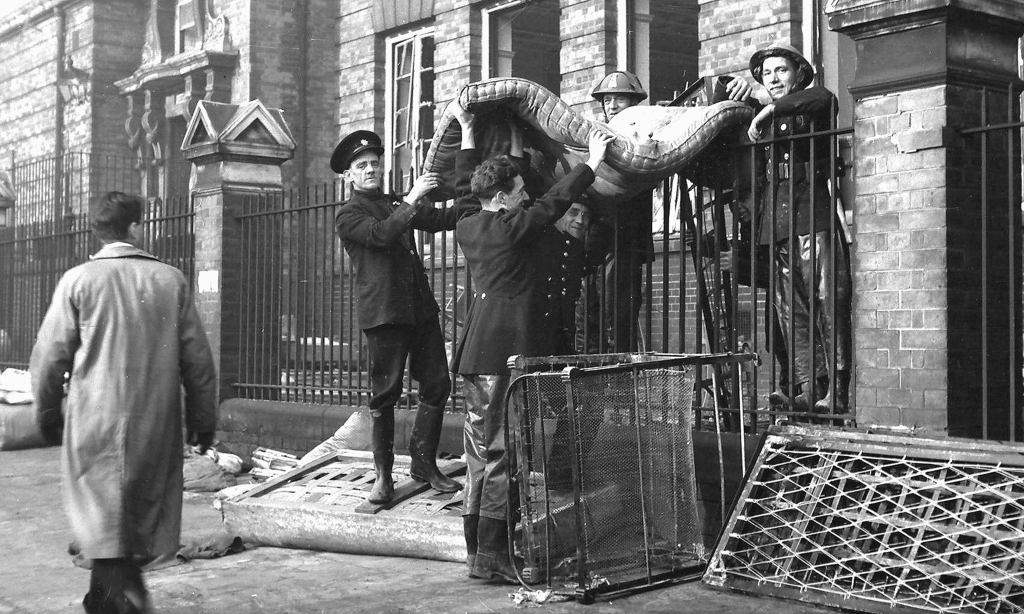
Blitz in London — AFS firefighters salvage their bedding from the bombed-out Mansfield Road fire sub-station after it was seriously damaged in a bombing raid on 16 November 1940.

“At that time, there was quite a lot of friction between the London Fire Brigade members and the AFS. We were regarded as young upstart amateurs but as events proved, we were just as professional as they were.

At one time, their helmets were painted bright red so they were instantly recognisable as LFB men. I was stationed at Holloway, at sub-station 76X. We had three LFB men in charge of us, each whose rank was no higher than Fireman, but they had been given charge of the sub-station because of the emergency situation. One of these men was a big, well built, abrasive type of man. When he gave instructions at drill time he would use three swear words when one would have been more than enough.

One night, North London appeared to be getting more than its fair share of a heavy air raid. At Holloway, we had six appliances available and one by one they were ordered out to various incidents until only one was left of which I was the driver/pump operator. The man in charge of us was this particular LFB man. We were sent to an incident in the Finsbury Park area which turned out to be a warehouse behind a row of terraced houses.

Access was by a long wide yard between two houses. We saw that water was pouring down this yard like a river in flood. Our intrepid No 1 said;

“Follow me.”

So in single file, we splashed our way up the yard. I was immediately behind our leader when suddenly he disappeared! We could hear a lot of muffled cursing and splashing and looking down. All we could see was a red helmet just above the water line.

The other two crew members and myself managed to grab his shoulders and yank him to his feet. There was this big arrogant man looking like a drowned rat. We dare not laugh otherwise I think he would have killed us. It seemed that someone in their wisdom had removed the cover of a rather deep man hole to enable some of the excess water to get away and our No 1 became its first victim.

by ASF Fireman-George Woodhouse (Touse).

Falling from the skies.

Four-fifths of all bombs dropped during the Blitz were high explosives (HE). The German war machine constructed them of thin steel to maximise the effect of the blast, and they varied greatly in size. Some had a cardboard tube (like an organ pipe) attached which emitted an eerie whistling sound as the bomb plunged to earth. They were expressly designed to terrify the civilian population.

The smallest, and most common, were the 110lb bombs. There was also the 2,200lb bomb, nicknamed “Hermann” (named after the portly Hermann Goring). Then there was the “Satan” (4,000lb) and the largest bomb dropped on Britain was the “Max” that weighed 5,500lb. 

The parachute bombs were very effective as they floated down and did not penetrate the ground. The damage they caused was widespread. Designed to smash through modern pre stressed-concrete industrial buildings in residential areas. The author of London at War 1939-1945 pointed out “as soon as one was seen falling, people would begin to move towards it: partly, perhaps, because they mistook the mine for a descending German pilot who needed to be lynched or apprehended; more probably because they wanted the silk of the parachute to make skirts or dresses.”

Incendiary bombs were small, but were very dangerous, as they could start fierce fires where they fell unless they were extinguished swiftly with sand or water. Thermite magnesium incendiaries were about eighteen inches long and only weighed around two pounds each, so thousands could be carried by a single plane. When ignited by a small impact fuse, the magnesium alloy would burn for ten minutes at a temperature that would melt steel, and metal particles would be thrown as far as fifty feet.

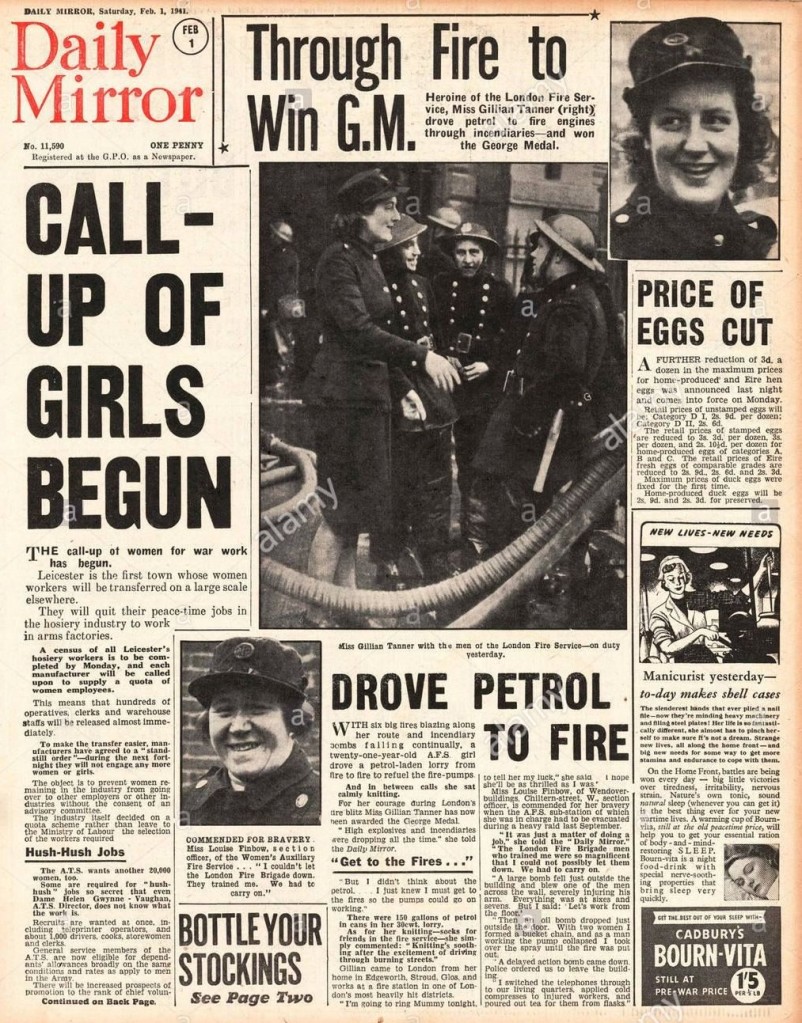
The George Cross was instituted on 24 September 1940 by King George VI. … I propose to give my name to this new distinction, which will consist of the George Cross, which will rank next to the Victoria Cross, and the George Medal for wider distribution. The medal was designed by Percy Metcalfe.

The George Cross remains the second highest award of the United Kingdom honours system. It is awarded “for acts of the greatest heroism or for most conspicuous courage in circumstance of extreme danger”, not in the presence of the enemy, to members of the British armed forces and to British civilians.

In 1940, during the height of the Blitz, there was a strong desire to reward the many acts of civilian courage. The existing awards open to civilians were not judged suitable to meet the new situation, therefore it was decided that the George Cross and the GM would be instituted to recognise both civilian gallantry in the face of enemy bombing and brave deeds more generally.

Announcing the new awards, the King said:

“In order that they should be worthily and promptly recognised, I have decided to create, at once, a new mark of honour for men and women in all walks of civilian life. I propose to give my name to this new distinction, which will consist of the George Cross, which will rank next to the Victoria Cross, and the George Medal for wider distribution.”

Blitz-Control rooms.

Control rooms were interesting places to be when their neighbourhood was under attack. Fire calls would pour in in by telephone and messenger, and it need an orderly system and well-trained operators-almost all women-if confusion were to be avoided.

Priorities and reserves presented many difficulties. If Mrs Brown rushed frantically into the station to say that her roof was blazing, was it possible to reply:

“We are sorry madam, but the fire service is reserving its last remaining appliance lest something more essential to the war effort than your house should catch fire, for example, the adjoining engineering factory of the nearby telephone exchange.”

There is much to be said for the slogan: ‘The fire that is burning is worth more attention than the fire that may never occur’. Important building around the capital have their own first-line fire defence, which could hold the fort until reinforcements arrived. On one occasion it happened that a message was passed by a fire station to a control at a higher level: ‘Called to a fire at Buckingham Place; no attendance from this station. On another occasion no immediate help was available when the House of Commons was hit by incendiaries.

Control room decisions were sometimes very difficult.

The Evening News-Tuesday October 1st 1940. By a Special Correspondent.

L.C.C. officials are tackling the job of making things as comfortable as possible for London’s heroic A.F.S. men and women. There have been little grumbles lately about the canteens and accommodation-chiefly lack of hot meals and drying facilities for cloths after long nights of dangerous firefighting. Ever effort is to be made to prevent any such troubled in the future.

Professional cooks have now been engaged at all stations and sub-stations so that meals can be prepared at any time and the number of field kitchens for use where there is any interruption of gas supplies is to be increased so that there will no hold-ups.

Emergency heating arrangements are being made to ensure the quick drying of saturated cloths.

In addition, it will be possible that extra premises will be acquired so that firemen temporary transferred from one station to another will not be overcrowded.

W.A.F.S. Helped: In the early days of the war the A.F.S. provided their own cooks. At some stations ‘W.A.F.S.’ took over the job-at others men who had had some experience. A few clubbed together to hire a cook. But when their work became arduous the Council [LCC] decided that cooks should be attached to all stations. This has now been done, and it is hoped that supplies of hot meals and drinks will always be ready when the firemen come off duty.

On the Spot: Mobile canteen vans now go around to all big fires started by incendiaries so that the firefighters may have and snacks on the spot.

But it is realised that men who have fought fires through intensive raids for perhaps eight hours or more want a hot meal before “turning in”.

An official of the L.C.C. said to me; “Everything possible is being done to ensure that the catering and accommodation are the best possible.” “There is plenty of food and all stations have facilities for cooking. With field kitchens to fill the gaps there should be no trouble.”

Station 72 – Soho Fire Station – 7 October 1940

Shaftesbury Avenue in W1 was bombed on several occasions during 1940 and 1941. On the 24th September 1940 two high explosive bombs hit the intersection of Shaftesbury Avenue and Wardour Street damaging the Queen’s Theatre and St Anne’s Church, Soho. There were four casualties were reported but no fatalities. The buildings were assessed as dangerous when inspected by the Rescue Services. The next day, 25 September, an oil incendiary bomb hit near the intersection of Great Windmill Street and Shaftesbury Avenue bursting a water main.

Then at 7.45p.m. on 7th October – after four nights in which Westminster escaped damage in the enemy raids on London – a high explosive bomb hit the doorway of Soho fire station, located at 72 Shaftesbury Avenue and close to Cambridge Circus, directly opposite the Palace Theatre. The Shaftesbury Avenue station (built in 1887 and renamed the Soho Fire Station in 1921 after the London Salvage Corps moved out) suffered severe damage and was virtually demolished. The station was replaced by a temporary structure-a structure that remined in place until 1983, when the current station was erected on the same site.

The dust was thick in the air and rubble, forty feet high, spreadeagled itself across Shaftsbury Avenue and onto the frontcourt of the Palace Theatre. Two passers-by sheltering in the doorway were killed outright and several of the firemen inside, sheltering in the basement emerged, covered in dust and some very shaken, but generally unhurt.  Some firemen remained trapped in the watchroom, the entrance to which was completely blocked by fallen rubble.

When the first supporting crews from the near-by sub-station arrived, they found that not only had the Soho firemen from the basement released their colleagues from the watchroom they had also removed the three dust laden fire engines, two staff cars and two dispatch rider bikes from the station too. However, two were still missing. They were LFB Station Officer William Wilson and AFS Fireman Frederick Mitchell. It would take two days before their bodies were finally recovered.

The Evening News, in its edition on Tuesday 8th October gave back page coverage to the ‘ALL-NIGHT LONDON RAIDS. Towards the tail end of the lengthy update was the sub-heading ‘FIREMAN KILLED’. The paper commented;

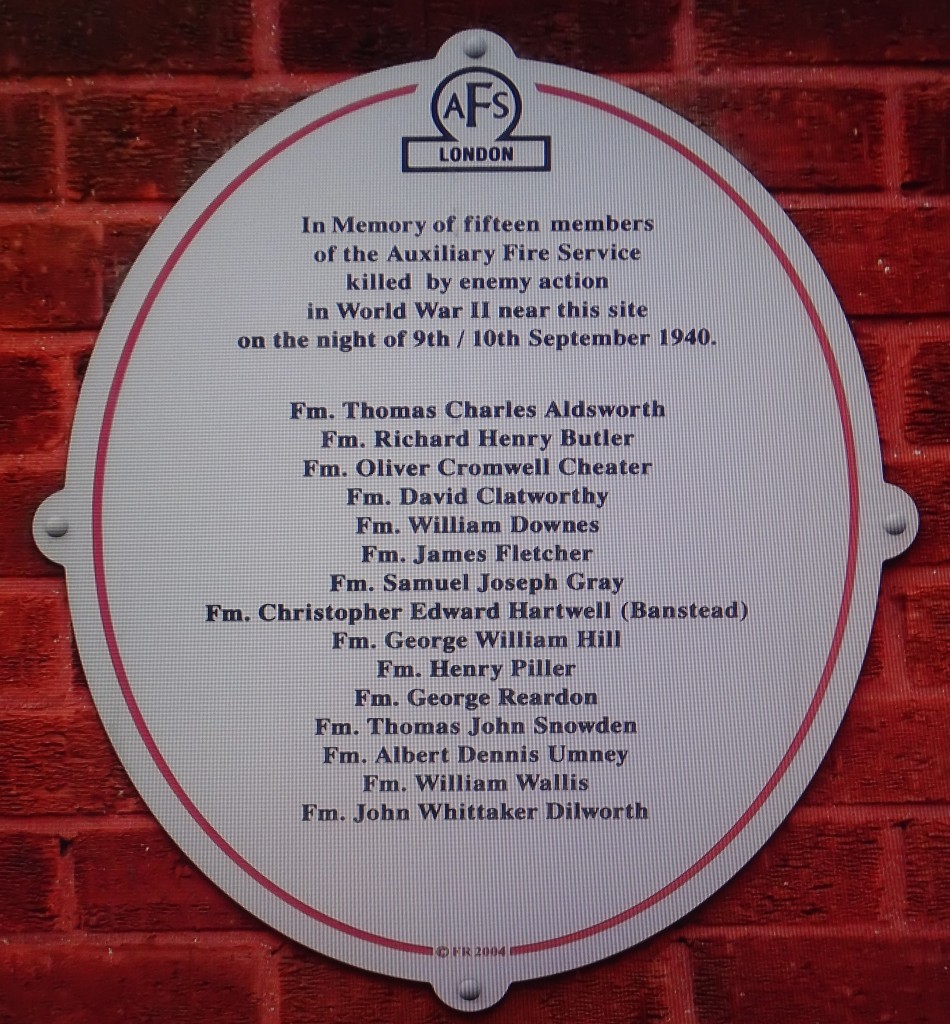
‘One fireman is dead, one is missing, and three are severely injured as the result of a bomb on a London fire station. The rest of the staff of the station got out of the debris unharmed.’ It was not the first tragedy to befall those attached to station 72 Soho. Seven Auxiliary firefighters died when a bomb hit the AFS sub-station at Jackson’s Garage in Rathbone Place (72X). It occurred around midnight on 18th September 1940, and Soho’s AFS substation was directly hit. The explosion demolishing the building and killing civilians as well as seven members of the AFS.

EXTRACTS FROM THE MEMOIRS OF FIREWOMAN. WINIFRED SLEET A.F.S. AND L.F.B.

“The blackout was a real hardship. Coming out of a well-lit room into the street was often fraught with danger if there was no moonlight. Once I found myself half blind, despite carrying the regulation torch, with its light blocked out by tape leaving just a tiny beam. Walking into the railing around a tree I suffered a black eye and split lip. That night, the now regular air-raid, a bomb fell on the bridge over the railway opposite. The bridge formed part of Liverpool Road which ran along the top of our street. I was on duty and went outside to look up towards the bridge. The buildings were still standing, minus the windows. It was a night to remember, as not long after, one of the men came in to say there was a strange swishing noise in the yard. We all went outside, and someone spotted a parachute dangling from the broken guttering, high up.

What seemed to be a long dark object was swinging around beneath it. At first, we thought it was an airman but it wasn’t the right shape, so we broke all the regulations and shone a torch up towards the roof. It revealed that what we were looking at was a land-mine capable of flattening the whole street. The station personnel, and any residents left at home in the street, were evacuated in minutes, and once again the bomb disposal unit came to our rescue.

As the raids continued stories began to circulate around the fire stations. We heard tales about warehouses in the docklands area, and how their contents were scattered in the bombing. Of fur coats and bales of expensive cloth and silks, floating down the gutters. Of the rivers of boiling sugar syrup from the Tate and Lyle sugar warehouse, and the horrors of the burning and exploding tins of paint. Paper was the worst, it smouldered for weeks, despite continual hosing down. When the perfume contents of the “Evening in Paris” stores were hit the bottles burst open and liquid perfume ran into the gutters. All the fire appliances in that area, had the wheels soaked in the stuff, and the fire stations reeked of perfume when the appliances returned. We heard that it put the men off their food it was so bad.

A lot of the casualties were men, fighting fires, on the boats and jetties. If they slipped and fell into the Thames, whilst wearing full gear of uniform, waterproofs and heavy boots, it was fatal unless a colleague saw them and got help.”

Balham. 14th October 1940.

Tragically, Underground stations were not always the safest places to be. Over 60 would be killed at Balham underground station in October 1940 when a bomb hit the street above the station and collapsed the tunnels below. The bomb burst a water main and the combination of water and soil meant some drowned in the resultant slurry.

It was on the evening of the 14th that one of the worst wartime disasters involving the London Underground took place. With German bombers overhead people had taken to the shelters, in south-west London this included the platforms at Balham underground station. Many trains were still running and commuters would be stepping over people using the station platforms for protection.

Although just 43 feet (13 metres) below ground, the Balham platforms were considered deep enough to be classed as an official shelter point. At exactly 2 minutes past 8 p.m. a bomb hit Balham High Road above the station. It caused a massive crater in the ground, and fractured a water main below ground. A bus, unable to stop, drove into the crater. It was an image of the London bombing that was circulated around the Allied globe.

The local Balham people had gone down into the Tube for safety, but instead they found something worse than the bombs. What they found was unknown, terror, women and children, small babes in arms, locked beneath the ground in a new Hell. One involving the power of water plus a cloud of gas. Those not killed outright were tragically either suffocated or drowned like rats in a cage.

The initial number of dead was unclear. Reports ranged from 64 to 68 people, although the Commonwealth War Graves Commission now officially records 66 deaths due to the flood of water and soil into the tunnel. In addition, more than 70 people were injured. What was certain is when the bomb actually struck: the clock on the underground platform stopped at 8:02pm.

Below ground the crater had struck right above a cross passage between the two platforms. Debris filled the short corridor however, with the water main broken the force of nature took an unkind hand as the water shifted vast quantities of soil into the tunnel system.

Mr Colin Perry was to later recount how the disaster was told to him. “The water main was burst and the flood rolled down the tunnels, right up and down the line, and the thousands of refugees were plunged into darkness, water. They stood, trapped, struggling, and panicking in the rising black invisible waters.”

Confusion reigned and rumour and gossip were already talking about hundreds of dead at Balham. But an inspection by Lt-Col. AHL Mount, the Chief Inspecting Officer of Railways at the Ministry of Transport the following day dismissed many of the claims as exaggerated. But his report gave a graphic insight into the aftermath of the disaster, as the London Fire Brigade was still pumping water out the following day and one of the three broken water mains was draining “into the crater like a small waterfall.”

It took several months to clear the site with bodies still being recovered in late December. The line, which had been suspended between Tooting Bec and Clapham Common was reopened on the 8th January 1941, with the station reopening on the 19th January.

The week of 10th -17th October 1940.

By the first week of October 1940 four LFB fire stations and seven AFS substations had been hit and put permanently out of action. At each there had been serious casualties.

Any raid could bring oil bombs, high explosive land mines, incendiaries, and parachute mines. Each had its followers in the shape of raging fire, falling debris, and choking smoke. South of the Thames, in Southwark, one such major blaze involved the Blackfriars Goods Yard on Friday 10th October.

However, using the London Underground as a mass air-raid shelter was not without its difficulties and its risks. Journalist Alison Barnes proclaimed at the end of her newspaper article, ‘that the airlessness, the lack of real ventilation was far more disturbing than all the noisy concrete horrors of London above ground.’

Footnotes.

  1. London had been bombed for 57 nights. The enemies last consecutive raid came on November 3rd 1940. Although London would continue to attracted the devastating, and deadly, bombing raids like a magnet, the Luftwaffe had spread its net wide across the country. A new term ‘to Coventrate’ [meaning to ‘devastate by heavy bombing] entered the language after Coventry was attacked by the light of a full moon. Local factories, roads and railways were destroyed and 568 people were killed.
  2. Merseyside received the unwanted accolade of being the second most heavily bombed place in the country. Hull, Swansea, Southampton, Portsmouth, Belfast, Bristol and Avonmouth also suffered. Clydeside, which had hoped it was out of range, was bombed in March. Not a single pub was said to be left standing. Over 4,000 homes were destroyed or damaged beyond repair in an already desperately poor area.
  3. As the bitter winter bombing dragged on few places escape attack. The main targets are ports, ship yards and naval bases and major London raids in December through to early 1941..
  4. In the eight months of attacks on greater London, some 43,000 civilians were killed. This amounted to nearly half of Britain’s total civilian deaths for the whole war. One of every six Londoners was made homeless at some point during the Blitz, and over 1 million houses and flats were damaged or destroyed. 327 of London’s firefighters lost their lives.

Paris to London Marathon Row.

LE MARATHON WHALER ROW DE SAPEURS-POMPIERS DE BRIXTON (LONDRES) E PARIS A LONDRES 1981. Nous remercions nos amis Francais pour leur hospitalité et nous espererons quils nous souhaitent un Bon Voyage.

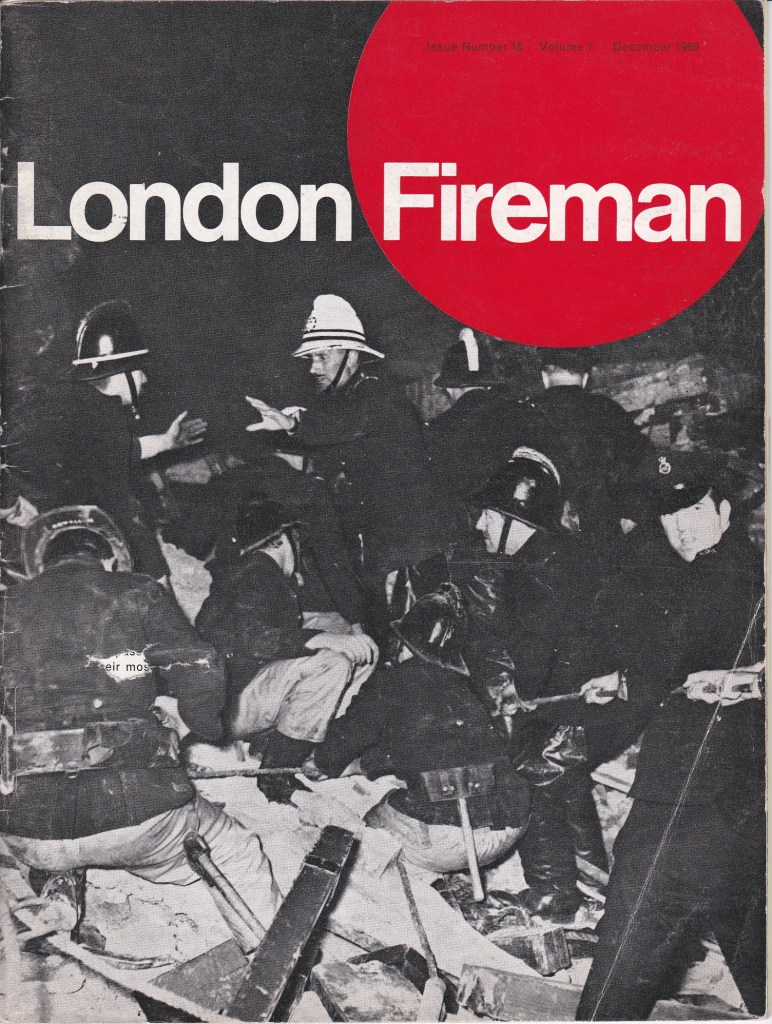
Mike Bedwell was from the Royal Navy. He was a Lt Cmdr. and was one of two adjudicators for our Guinness Book of Records attempt. He arrived at the fire station mid-evening. We had previously talked on the phone a few times but this was our first actual meeting. Dressed casually, he spoke with a soft upper class accent and looked every inch the dapper gentleman I had already conjured up in my mind’s eye. In his late thirties, he was of average height and clean-shaven. But seemed immediately relaxed in the company of us firemen. He published a report of our efforts in the London Fireman magazine. His opening paragraph provides a flavour of his first impression of what he had let himself in for:

“Your sleeping space is a bit primitive but it’s all been swept out” I had to take Stn O Dave Pike’s word for the swept bit, for the primitiveness of the penthouse area of Brixton fire station extends to the wiring which makes a gallant but vain attempt to bring amps to dark places. I did a blind pilotage into my sleeping bag after sampling Saturday Night Fever in a Brixton chippy. I was telling myself that I should never have joined.”
We were booked onto the 6.30 am Sealink ferry from Dover to Calais. At 2 a.m. on the 24th August with the teams assembling the early morning banter started. The 27ft whaler was on the AA’s trailer,the four support vehicles packed and ready together with the three rowing crews of five plus the support team and our extra member…the Divisional Commander-the late Brian ‘Bill’ Butler in mufti.
en-route to Paris and the naval whaler on the AA’s trailer.

The journey to Paris went like clockwork. Much to my surprise and to the obvious delight of all, we were met at Calais by a police motorcycle escort that saw us on our way to Paris. There they were replaced by our opposite numbers from the Paris fire service who escorted us to our overnight stop at Messena, the largest barracks of the Sapeurs Pompiers in Paris. ‘Bill’ just loved all this special treatment and with a beaming smile and glass in hand asked, “How the effing hell did you arrange that?” Knowing it was solely down to the kindness of some French official who took pity on us when I wrote to tell them of our undertaking I lied “Put it down to good planning.”

Late afternoon we put the whaler into the River Seine at Pont Notre Dame, the starting point of this fund raising by adventure. Our planned early night turned out to be not so early as the wine and conversation flowed, highlighting the natural kinship that exists between firefighters everywhere but especially when there is a glass or two of wine to share and stories to exchange largely due to our overworked interpreters.

The rowers and support team were ready at 4.30am the following morning, some not so jauntily, after our “Entente-Cordiale”, ready to catch the first morning light and start the row. We rowed in non-stop relays from first light until the French lock system shut down at mid-night.

My most treasured memory was rowing with my Brixton crew and arriving at a small village near Noyon. It was towards evening and we had been rowing hard to make up some lost time in the schedule. There waiting by the lock were the local part-time Pompiers, all standing in line and dressed in their very best bib and tucker and accompanied by the Mayor and other village elders to welcome us. It would have been churlish to have refused the Champagne that, after the obligatory mayoral words, awaited us. Luckily Mike Bedwell was also fluent in French and made an appropriate response and gifts were exchanged before we were back in the bloody boat! That was not the only official welcome either. In the town of Thourotte we were given a formal civic reception and made honorary Freemen of the town. Once again ‘Bill’ Butler was smiling like a Cheshire cat and wondering how all ‘just’ happened.

The biggest challenge was the crossing of the Channel and rowing the tidal Thames. After landing at Dover, clearing Customs, most went to the harbour’s East Wall to witness the whaler’s arrival. Waiting was the Sun XXVI sea-going tug, our second lager escort ship. The skipper and crew thought us all quite barmy but they were genuinely delighted to be involved with our efforts. Now it was non-stop to Tower Bridge.

Reaching London fire stations that bordered the Thames, on both sides of the river, turned out to cheer us on. We ‘raced’ through the Thames Barrier and as we approached the Royal Naval College, Greenwich the last piece of the row fell into place. Prior to our departure I had arranged for the fireboat’s crew to bring down to Greenwich two other whalers. Now all three crews rowed from Greenwich to Tower Bridge for a combined finish. What we were not to know was that the Chief Fire Officer, Ron Bullers, and senior GLC politicians were  there to greet us. With a swift “well done” they understood we had a marathon to finish and stayed on the fireboats to see us complete the Paris to London row.

The total time, from start to finish, was six days fourteen hours and one minute.

The footnote by Mike Bedwell in the Official Log sent to The Guinness book of

Records probably best sums up this remarkable week.

“Their unconventional style and technique might raise an eyebrow on the

least anchor-like of naval faces, but for sheer guts, stamina and determination no praise is too high.”

Sadly we did not make it into the record books this time! However, we did raise over £10,000 for charity and gave true value for money to our sponsors. I even managed a nice letter from Brian Butler congratulating me, but it never lasted long. A bollocking, for some misdemeanour, soon followed but it was nice while it lasted.

The presentation of the monies raised was held on HMS President, as the guests of the Royal Naval Reserve, The principal guest of honour for that evening was the LFB’s former Chief Officer, Joe Milner, who although retired (many of us thought he was actually forced out) was still highly regarded by us firemen. He accepted the cheque for the Benevolent Fund. Another cheque was handed to the International Year of the Disabled and joined us in a pint or three!.

We often talk of our brotherhood-this remains a week where I lived it 24/7. A week when, regardless of rank, we were all equals, support crew or rowers united by the most special of bonds. Just ordinary London firemen playing hard and working even harder.

London’s fire brigade- a private collaboration (1832 -1866).

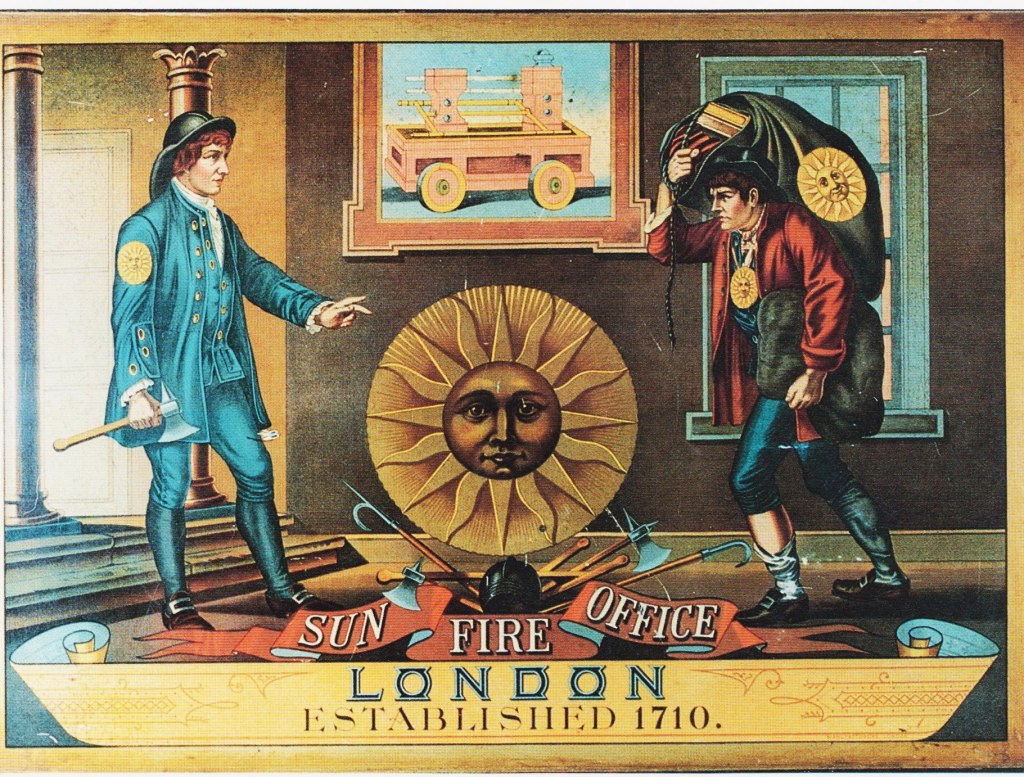
Certainly, within the City of London and that of adjoining Westminster fire cover had, since the early 1700s, been the prerogative of the private independent insurance companies. It remained that way until 1832. In that year the majority of insurance companies combined their forces, forming the London Fire Engine Establishment (LFEE), a single fire brigade made up of those previously independent.

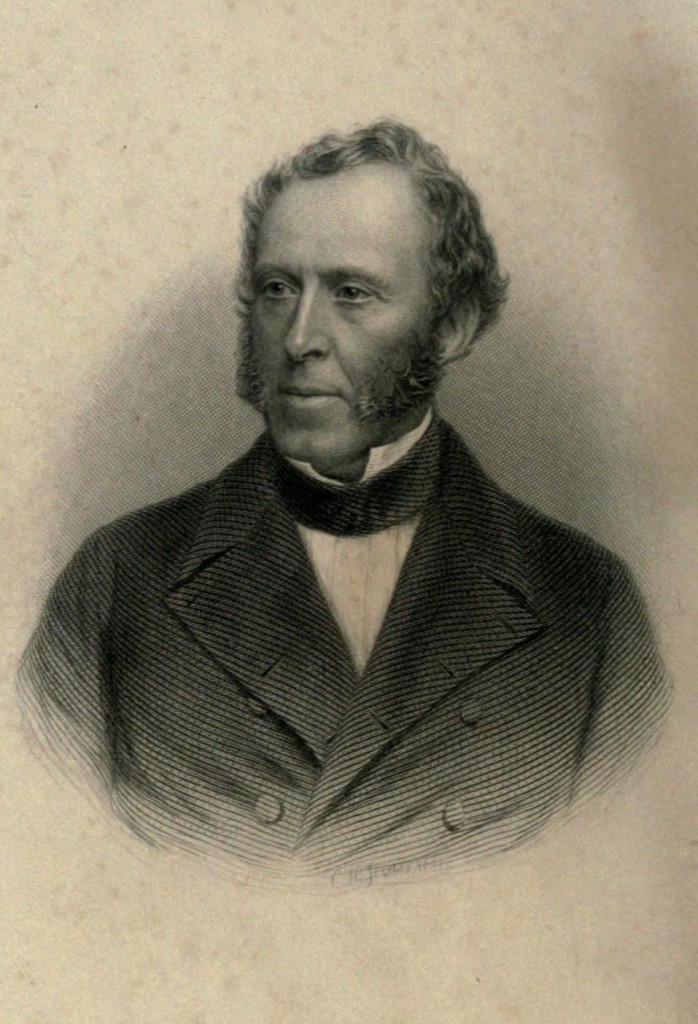
The amalgamation of the Insurance brigades helped to remove some of the chaos, reportedly, frequently occurring at fires. Whilst the LFEE remained a private body, it was nevertheless recognised as the public fire service for the London area. An advert running on 1 January 1833 announced its goal was to provide better fire protection to the inhabitants of the Metropolis. But in 1862, when John Drummond, Esq., Managing Director of the Sun, and Chairman of the Committee for Managing Fire Extinctions, was questioned on the ‘principles on which the LFEE had been formed’ he replied ‘solely for the protection of the offices; it is an association of nearly all the offices in London’ (House of Commons, 1862).

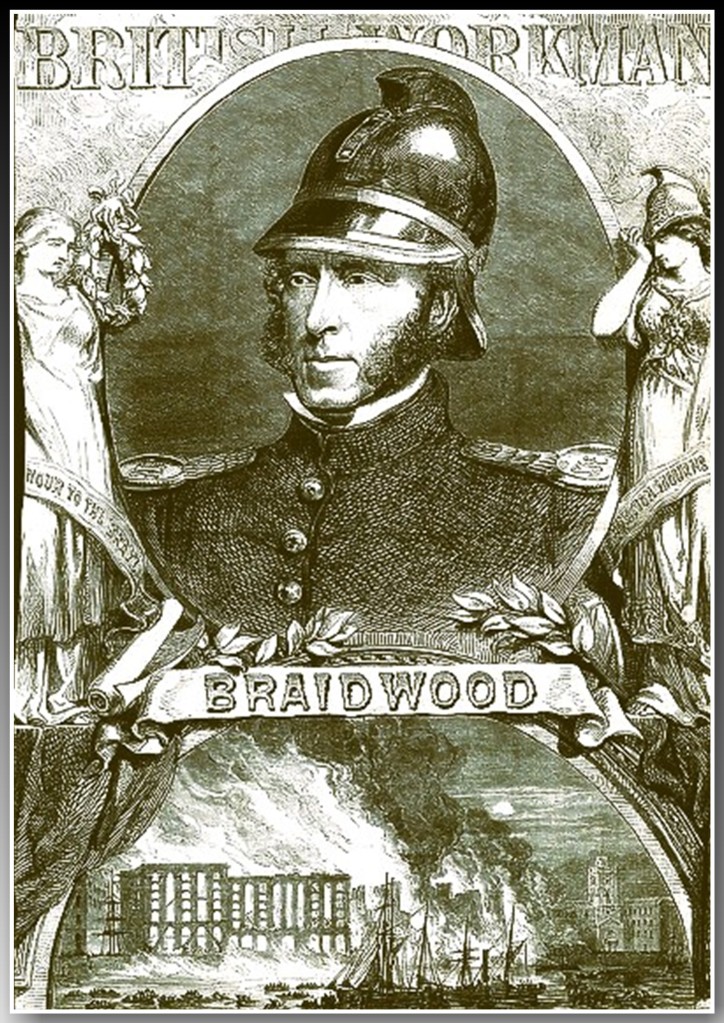
James Braidwood, a Scot, led a force that consisted of 80 watermen and had 17 land and two river stations. The now Superintendent Braidwood, who had previously run the Edinburg brigade, brought with him formal training programs for his new firemen. He also required that they have working knowledge of the district to which they were appointed. However small the LFEE was considered to be a very efficient organisation at the time. But, according to the Phoenix Assurance and the Development of British Insurance, the large insurance offices did not consider the protection the Brigade provided adequate for the City of London. They preferred fire protection to be publicly provided. London was expanding rapidly. The cost of protecting the metropolis from fire in 1833 was £7,988. By 1865 the cost had risen to ₤26,005.

James Braidwood-appointed the Superintendent of the London Fire Engine Establishment. 1833.

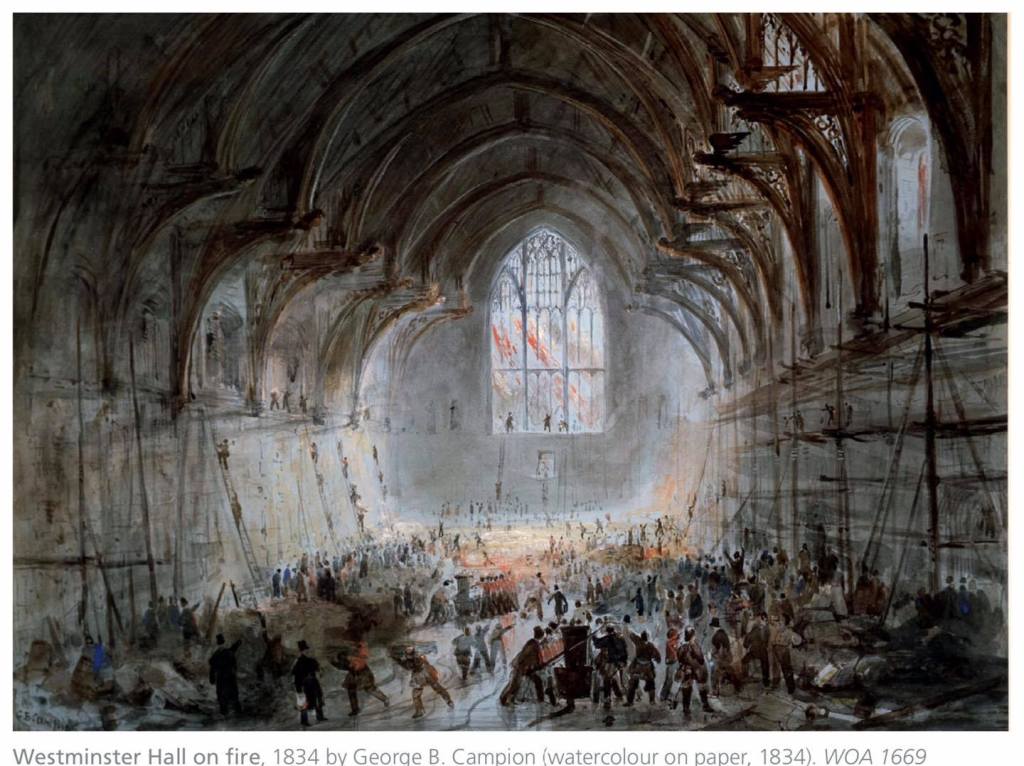
The Insurance companies were becoming acutely aware of the financial strain of fire protection. They sought opportunities to rid themselves of this burden. The insurance companies, involved in the LFEE, expressed their concerns over shouldering the duty of fire protection, therefore relieving the government of this duty. In a letter to the acting Prime Minister, and following the fire in which the Palace of Westminster (Houses of Parliament) was almost totally lost, they cited concerns were the failing conditions of the parochial engines and possibility of an insured property and an uninsured property catching fire at the same time.

Although the Insurance companies were willing to provide services to all in need, they were responsible only to their employers and through them to those purchasing insurance. Therefore, Insurance companies were not required to provide assistance to uninsured property, including public buildings. The insurance companies explained ‘….if during the late conflagration at Westminster, any insured property in danger, or any simultaneous fire or fires in other parts of the town, had imperatively called upon the Superintendent to devote the service of the engines elsewhere, Westminster Hall and the public property adjoining must have shared the fate of the two Houses of Parliament’.

The acting Prime Minister replied indicating ‘…the interference of Government would be productive of little benefit, while it might and probably would relax those private and parochial exertions which have hitherto been made with so much effect and so much satisfaction to the public’. The LFEE continued to supply fire protection to London for the next 30 years.

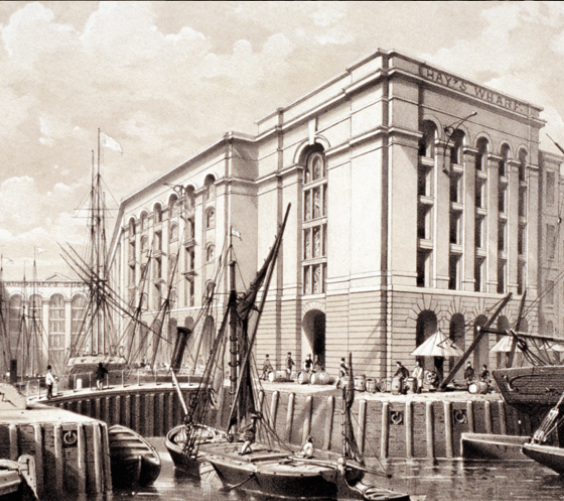
Braidwood wrote to the Commissioner of Public Works in 1854, to highlight his concerns with the safety of a particular warehouse being built on Tooley Street, which was too large and did not have the necessary fireproof measures in place. He wrote:
“The whole Building, if once fairly on fire in one floor, will become such a mass of Fire, that there is no power in London capable of extinguishing it, or even of restraining its ravages on every side and on three sides it is surrounded with property of immense value.”
Time would sadly prove the accuracy of James Braidwood’s warnings.

With London expanding, and the cost of fire-fighting growing, insurance companies struggled to continue to provide the service. It was clearly not a profitable endeavour for them. They were paid to provide insurance not to fight fires. The cost of offering fire protection now outweighed the benefit to them. Furthermore, because insurance companies were paid to provide insurance, an incentive existed for the offices to protect insured homes. An issue could certainly arise if both an uninsured property and insured property caught fire at the same time. The insurance companies would focus on the insured property and the uninsured would follow after.

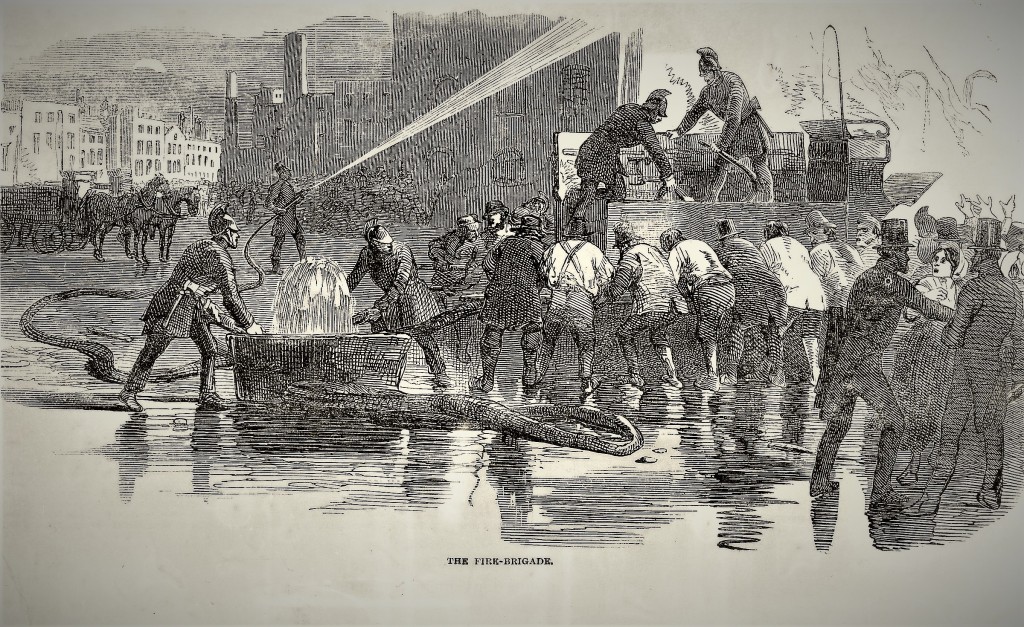
A manual pump is being worked by volunteers whilst firefighters from the London Fire Engine Establishment (LFEE) direct their efforts and fight the fire.

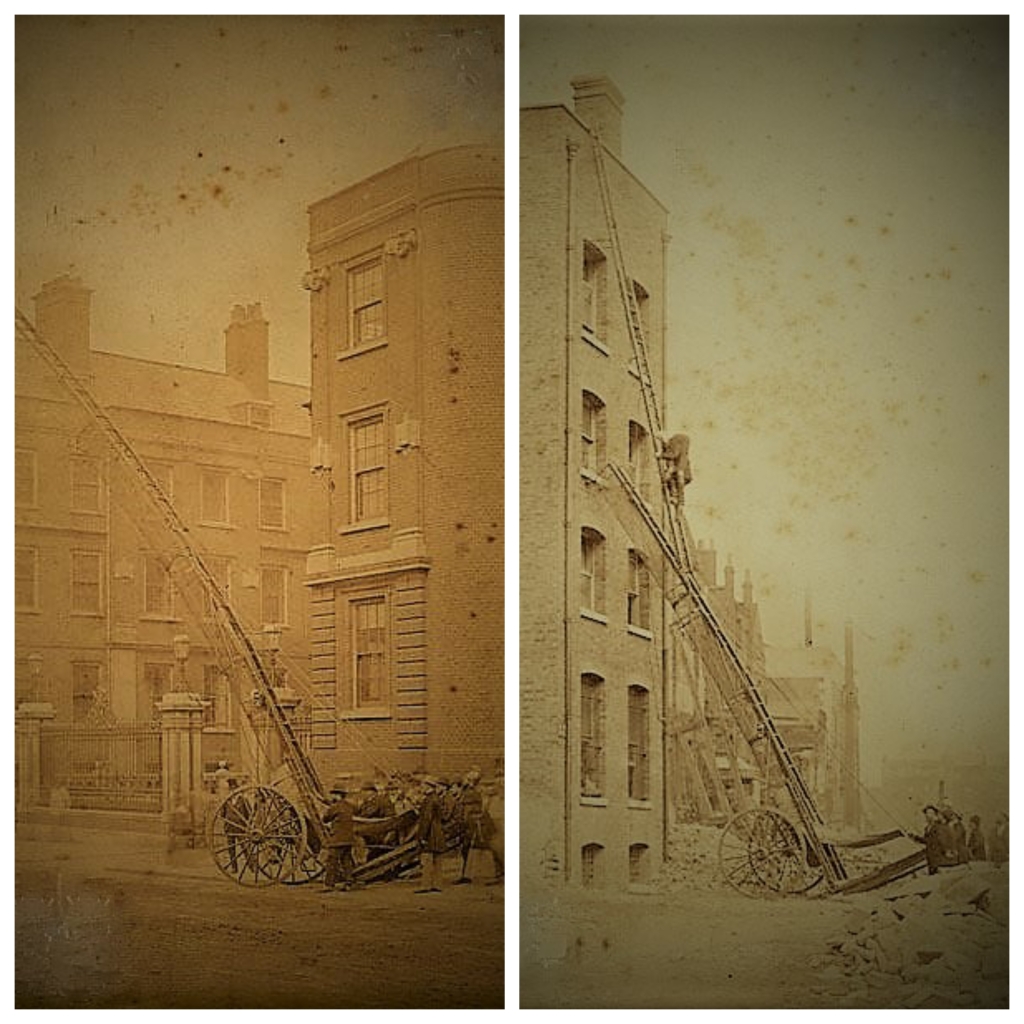
There was no incentive for insurance companies to correct this problem because they were not paid to fight fires. The government however felt the services provided were adequate and turned its attention elsewhere. In 1836 The Royal Society for the Protection of Life from Fire was formed. It followed in the footsteps of the Fire Escape Society (1828), an organisation set up by philanthropists in reaction to the high death rate in domestic property fires. The Royal Society for the Protection of Life from Fire provided escape ladders at fires, working alongside the LFEE to protect the citizens of London from fire.

The Royal Society for the Protection of Life from Fire provided escape ladders at fires, working alongside the LFEE to protect the citizens of London from fire.

Pre the LFEE London parish pumps, volunteer firemen and individuals owning and operating firefighting equipment continued to exist. Parishes while, perhaps, providing some assistance at fires had not improved the condition of their equipment. Volunteers continued to supplement the private brigades’ coverage, providing a great assistance to Braidwood and his force that were responsible only for the insured property located primarily in the centre of London. Despite having concerns about the fire service brought to its attention, the government declined to become involved.

Braidwood was killed in 1861 at a fire in Tooley Street. His death was said to have created confusion and disorganisation at the fire since there was no one appointed to lead in his absence. Further, the economic implications of the fire were profound. It cost the insurance companies over £2,000,000. The Insurance companies attempted to raise premiums, some by as much as 300 per cent. This created a loud response from both merchants and other business men who believed the size of increase was unjustified.

The insurance companies tried yet again to relinquish their fire-fighting duties. In a letter to the government, insurance companies note that ‘without any public authority whatever it [the LFEE] has for nearly 30 years extinguished the fires which have occurred in the metropolis and surrounding districts without inquiry and without charge’. The insurance companies pleaded for reconsideration of the state of the fire service: ‘In the opinion of the Committee such an increase in the number of fires and in the expenditure incurred, rendered a reconsideration of the whole subject imperatively necessary, more particularly as they were satisfied that a system for the extinction of fires which might formerly have been adequate for the metropolis, has now become very insufficient for its present greatly extended limits’ (House of Commons, 1862).

In response to the post Tooley Street uproar, a Select Committee was established to evaluate the system of fire protection in London. The Committee interviewed many witnesses to prepare its report discovering among other things that the insurance companies had been operating at a loss for some time. When John Drummond, Esq., Managing Director of the Sun was questioned regarding premiums he indicated that competition was such a factor that he doubted an increase could be carried into effect. Drummond was also asked why the insurance brigade (LFEE) would pay for fire extinction at all houses, to which he replied: ‘There is no reason why we should do so; we do so on the principle that it is our interest to put out every fire; that this house may not be insured, but that the next may, and that the one not insured may set fire to the other’ (House of Commons, 1862).

The report produced from the Committee noted that the insurance companies had agreed to supply fire suppression ‘so long as the expense was moderate’; however, the cost of the duty had now grown to a ‘magnitude’ which the insurance companies believed ‘they cannot continue to bear’. The report noted that of the £900,000,000 of insurable property only about £300,000,000 was actually insured. The final report also noted that the LFEE ‘as far as their means would enable them, have performed most ably and most efficiently. It has, however, been equally admitted by every witness that the present scale of their staff, engines, and stations is totally inadequate for the general protection of London and its immediate vicinity from the dangers of fire. This detail was admitted by the new Superintendent of the brigade, one Capt. Eyre Massey Shaw. (Appointed after Braidwood’s death.)

However, the Committee concluded that they consider the LFEE efficient for the protection of that part of London where the largest amount of insured property is located. They had no desire, or intention, to add to their expense by placing additional fire stations in situations where, if a fire occurs, it is not likely to cause such comparative injury to the offices as if it occurred in the water-side warehouse near the City. The final report from the Select Committee, and the details leading up to it, shed more light on why the insurance companies fought so hard to relinquish the duty of fire protection. The recurring argument that the cost of firefighting was rising significantly and the Insurance companies were not getting paid to fight fires.

There was a severe free-rider problem because of the difficulty of excluding uninsured properties. Premiums on the one-third of property in London that was insured were covering the cost of fire protection for the remaining uninsured two thirds. Even if competition had not impeded the implementation of increased premiums, it would have only affected those individuals already paying for the service. To operate profitably the insurance companies would have needed to find a way to charge individual home owners for fire protection, separate from the charge associated with insurance.

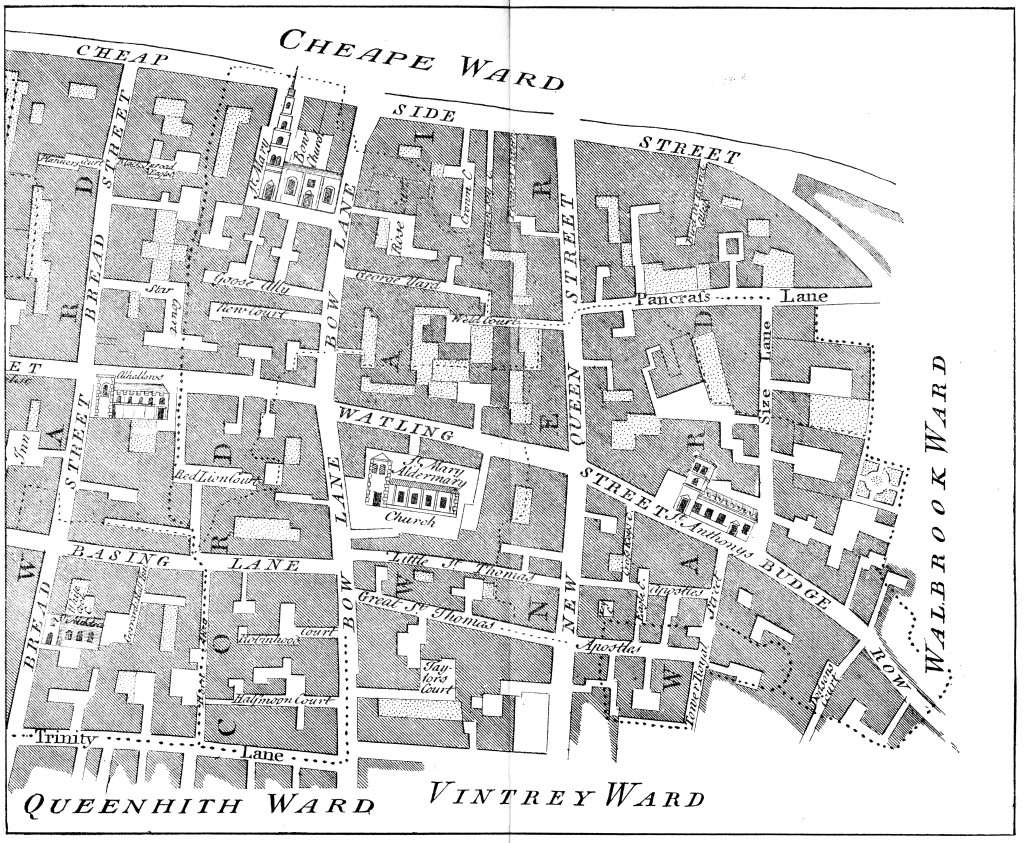
Watling Street. Location of the headquarters station of the London Fire Engine Establishment. 1833-1866.
(It also remained the headquarters station of the Metropolitan Fire Brigade until a new headquarters was built for Capt. Shaw. It was opened in 1878 in Southwark Bridge Road. SE1.)
The Watling Street headquarters and fire station. City of London.
(Picture credit-London Fire Brigade.)

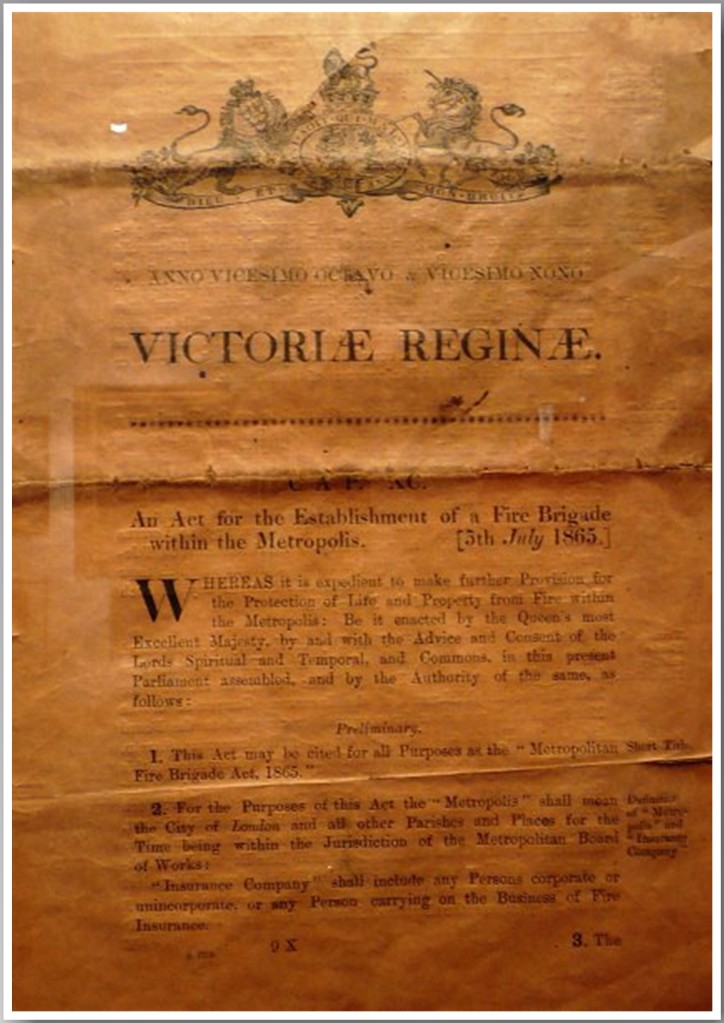
Alternatively, insurance companies needed to find another body to assume the duty of fire protection. Following the Report an Act was passed in 1865 to transfer fire protection into the hands of the Metropolitan Board of Works (MBW), a public authority. Public provision of fire protection began in London on 1 January 1866. The new Metropolitan Fire Brigade was created. With it a new post too, that of Chief Officer, the first being Capt. Shaw. The Insurance companies and parishes were officially relieved of their fire-fighting duties. Both were required, however, to contribute monetarily to the new public brigade. Insurance companies were mandated to pay at a rate of ₤35 per million gross insured (House of Commons, 1862). Those previously providing brigades were now required to pay for the service. In addition, insurance companies remained actively, and voluntarily, involved in monitoring the efficiency of the new institution. They served up recommendations for improvement of the fire service, including the development of several smaller stations versus fewer larger stations. Still with insurance cost concern the Insurance companies also formed the London Salvage Corps and in doing so deprived the new brigade of some its former firemen!

In addition to assuming the firefighting duty, the MBW through the MFB, also took on the services previously provided by the Royal Society for the Protection of Life from Fire. This transfer was driven by the Society which had experienced a drop in income. Additionally, the parishes which were now paying for fire protection believed protection of life should be included as part of their payment. The MBW eventually succumbed and took over the duty.

The transfer of firefighting from the private to public sector was not without difficulties. The financial situation was dire. The budget set for the brigade was tight and borrowing power of the MBW was restricted. The MBW received funds from the parishes and the insurance companies, as well as the government. Yet, financial troubles ensued. The new brigade had difficulty taking over mortgages of existing stations from the insurance companies, not to mention the need to build new stations where no coverage had been in place.

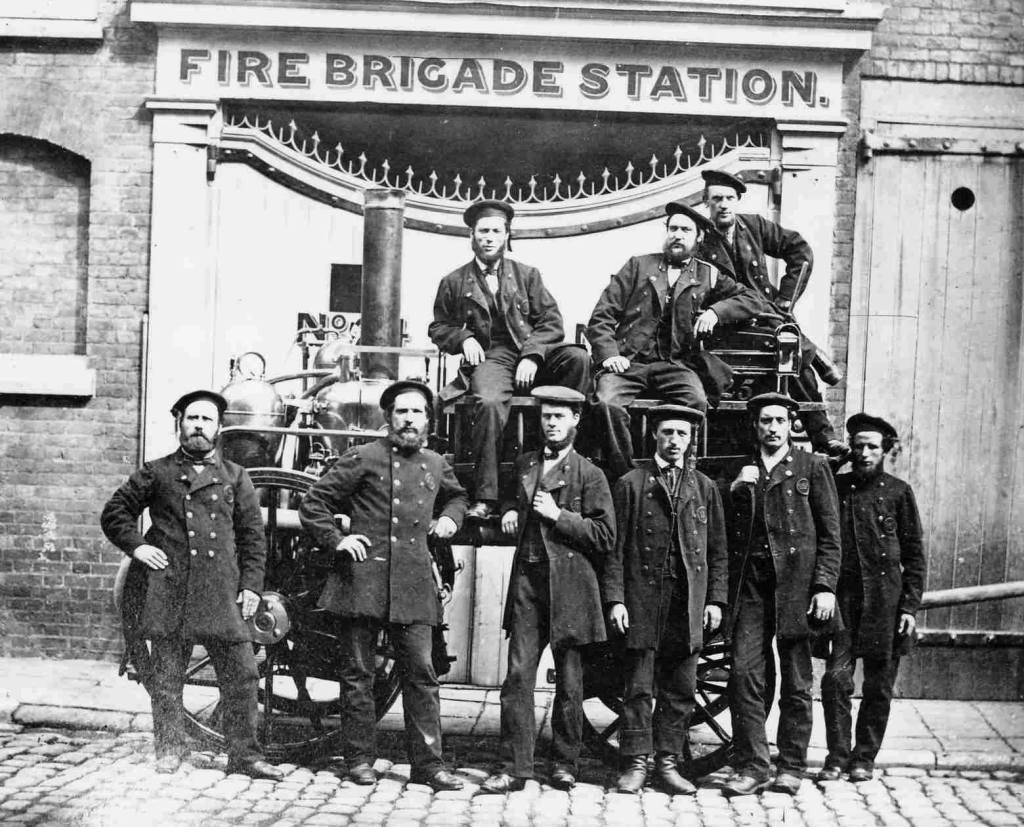
1866-Firemen of the Metropolitan Fire Brigade Camden station.

The working conditions for the firemen worsened under the MBW Firemen were forced to work longer hours, and in uncomfortable settings. Pay and funds provided in the event of a loss were slashed: the LFEE had paid families of those lost ₤10 to cover funeral expenses, but the Board paid only £5. The MBW faced a serious manpower issue, fuelled by the small budget and the growing metropolis.

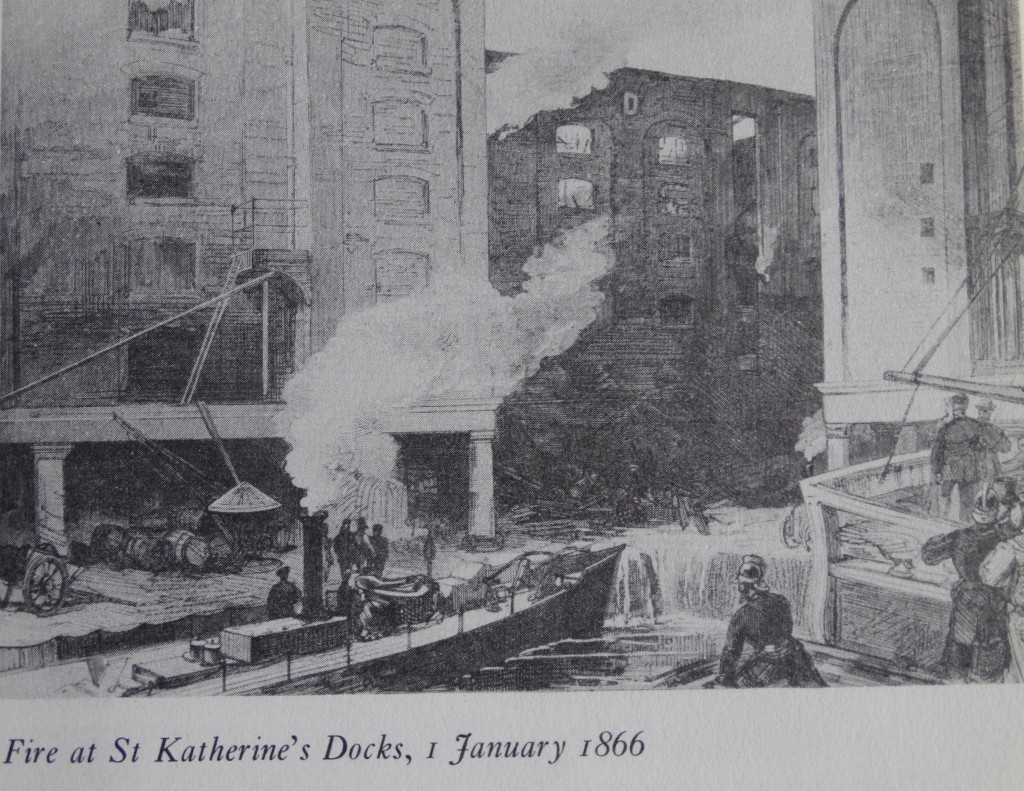
The early years for the new Chief, Capt. Shaw, were challenging to say the least. On its very first day the MFB faced its first major blaze at St Katherine’s Dock. In truth it was still the old brigade with just a new name. But in the years that followed Shaw moulded a brigade that became the leading fire brigade in the civilised world.

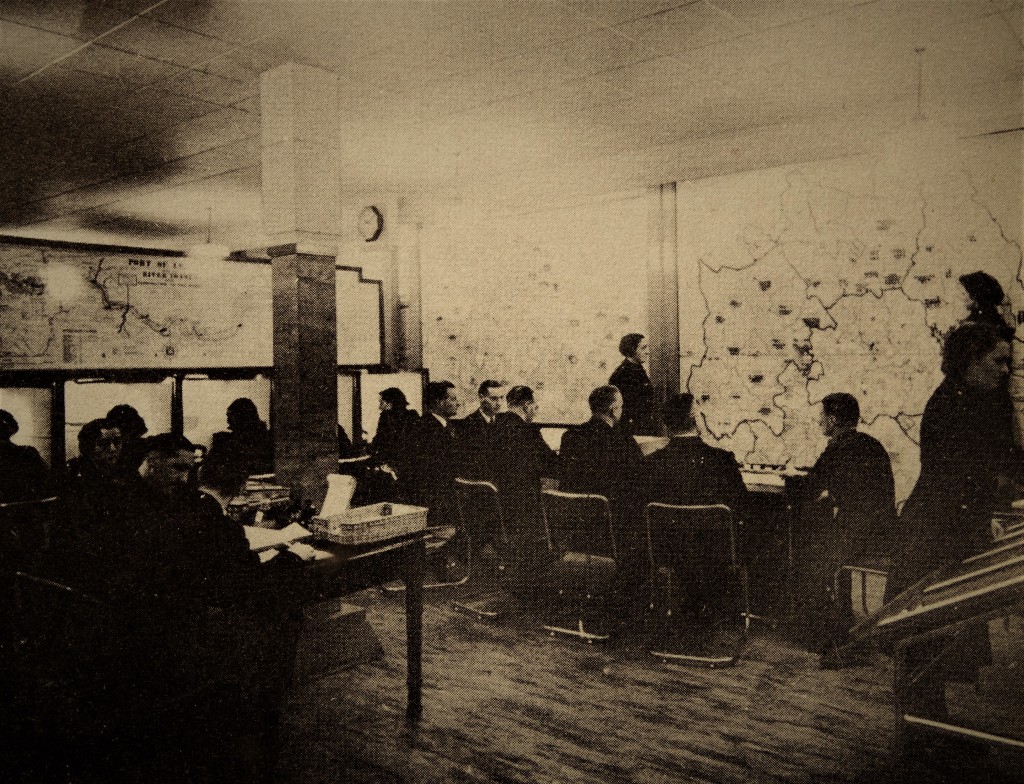
The London Fire Brigade (Lambeth) Control room (M2FH).

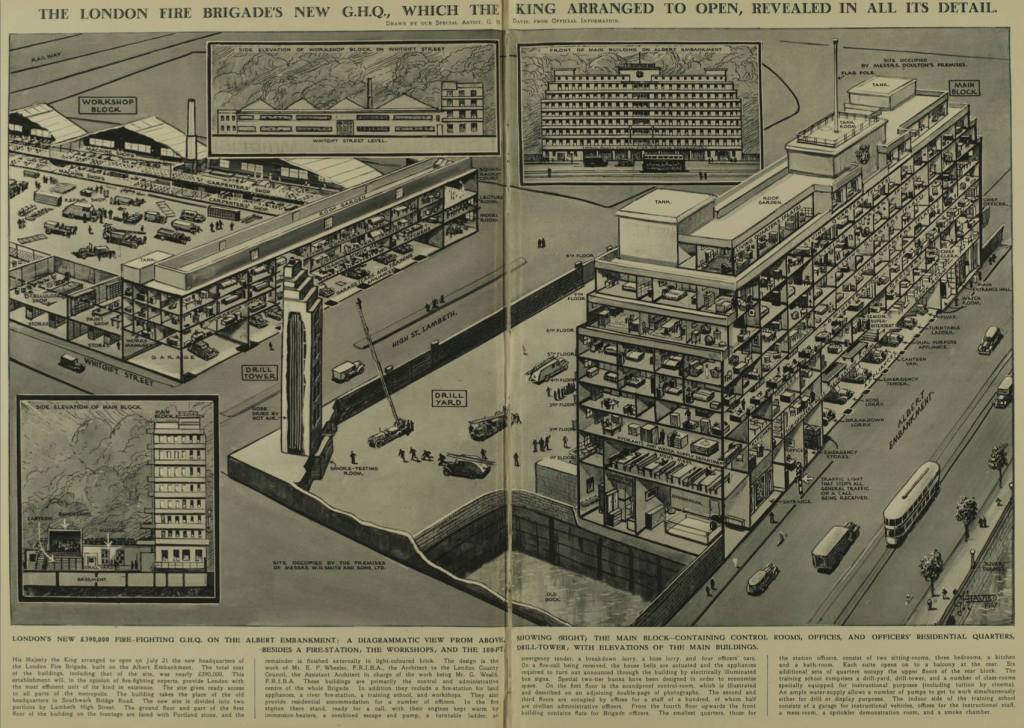
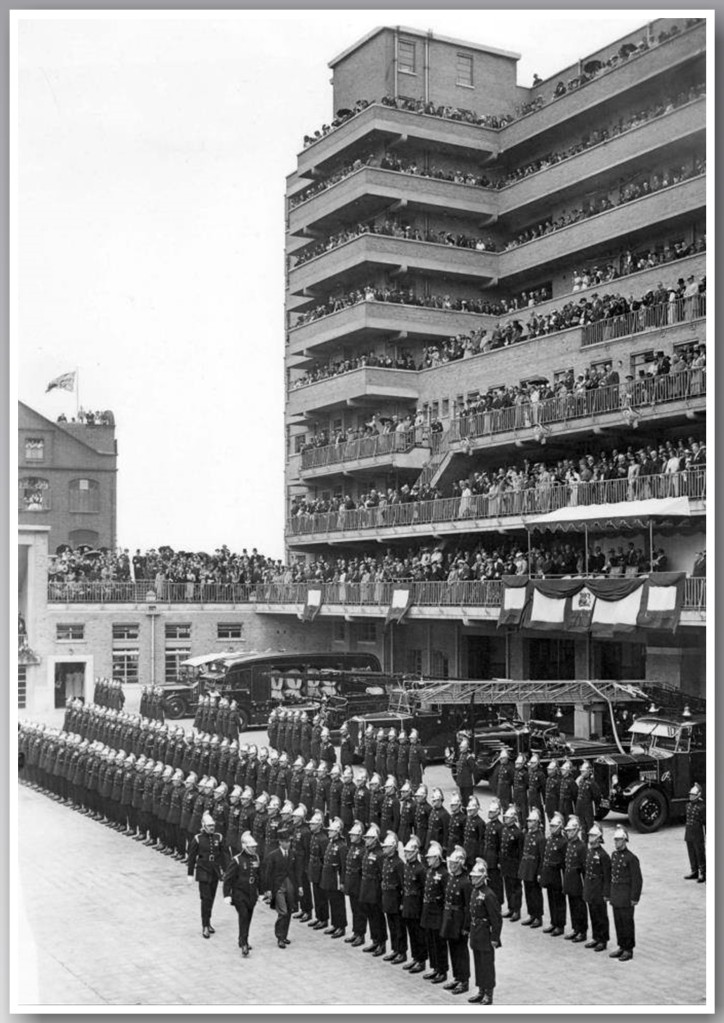
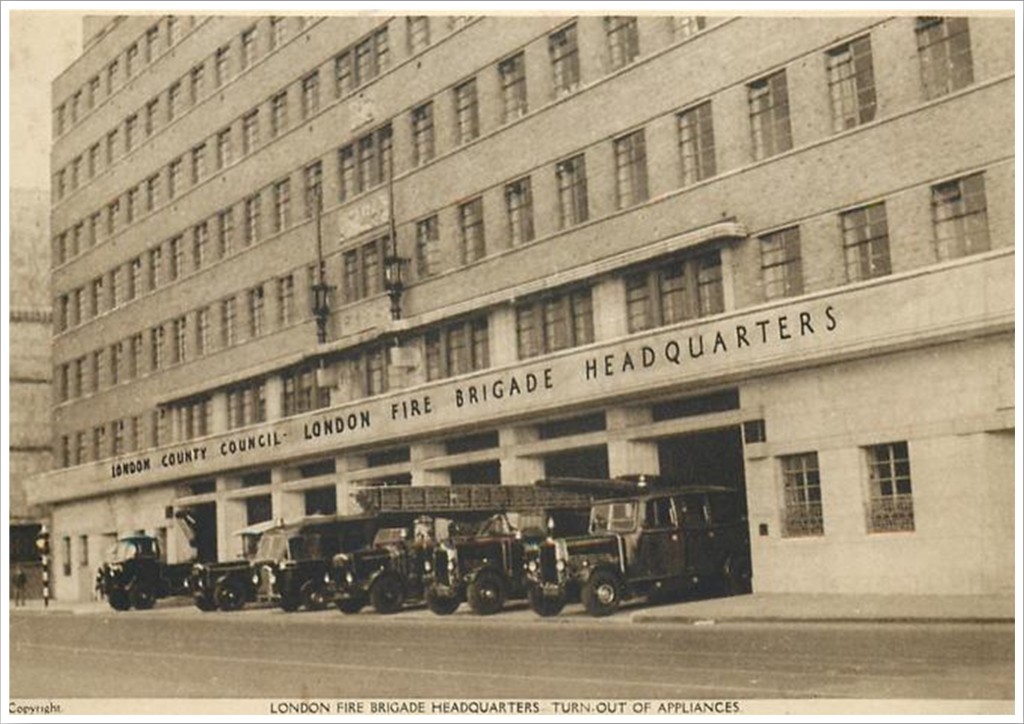
Until 1937, the headquarters of the London Fire Brigade had been located in Southwark Bridge Road. In July of that year His Majesty King George VI, accompanied by Queen Elizabeth, formally opened the new headquarters at 8 Albert Embankment.

His Majesty King George VI inspecting men of the London brigade at the official opening in 1937. The Chief Officer, Major Morris. MC. accompanies his Majesty.
Picture credit-London Fire Brigade.

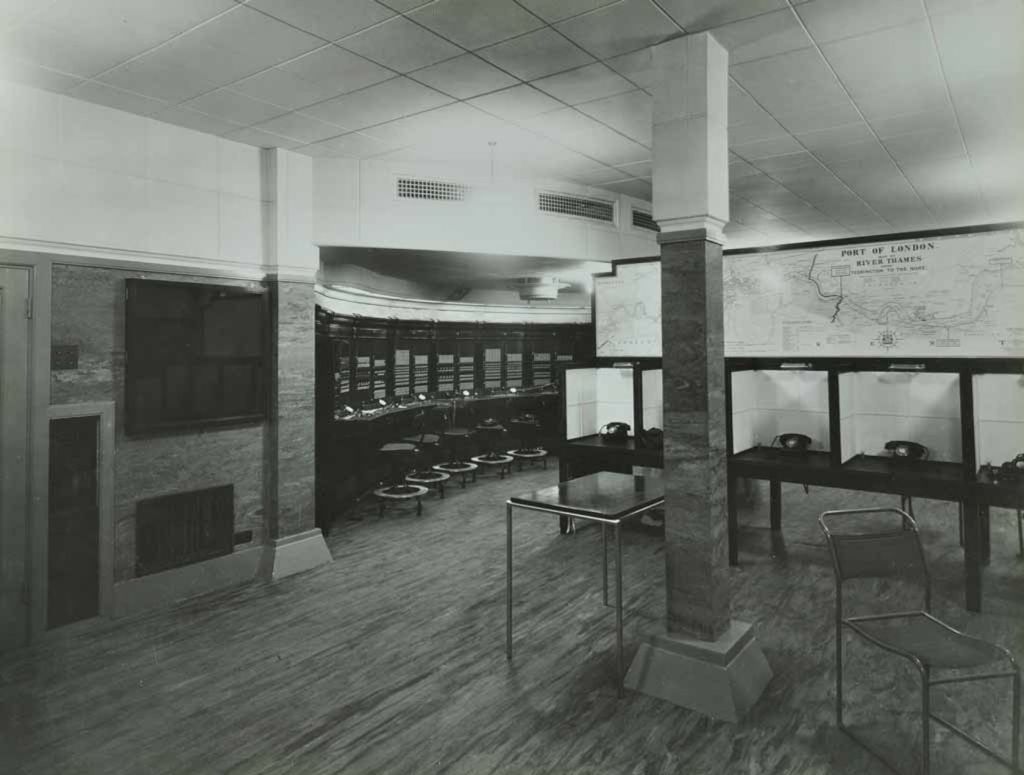
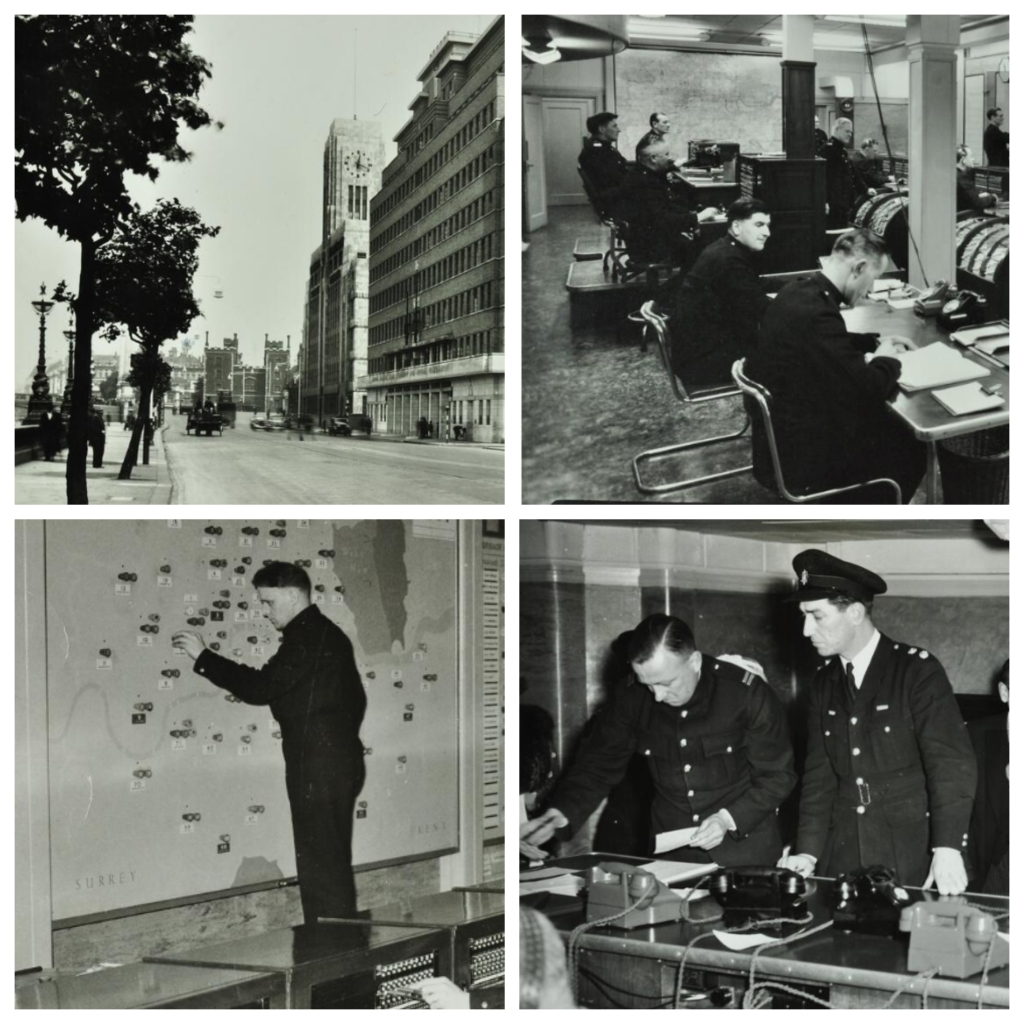
The new headquarters was state of the art. It comprised the fire station, with accommodation for the firemen there, residential accommodation for the Chief Officer, Deputy Chief, and other senior officers. The complex included a Brigade training school, repair and maintenance workshops, drill tower and spacious drill yard for both drills and displays. From the imposing seven wooden appliance room doors Lambeth’s appliances could drive directly onto the Embankment. Directly opposite the headquarters was the new Lambeth river fire station pontoon. Located on the second floor of the headquarters was the brigade control room, which supported the six superintendent stations who responded to emergency calls requiring a fire brigade presence.

1937 and the headquarters 2nf floor control room showing a map of the brigade’s area and the location of its fire stations.
Picture credit-London Fire Brigade.

With the prospect of war imminent the Brigade’s Chief Officer, Cmdr. Firebrace, was seconded to the Home Office and his deputy, Major Frank. W. Jackson, commanded the renamed London Fire Service, which covered of boroughs and brigades surrounding the London Council County boundary. Part of the Brigade’s war planning response was to relocate the Brigade Control room into the basement of the headquarters. Thankfully, the period of the ‘phoney war,’ where the anticipated enemy attacks on London and the UK failed to materialise allowed the construction to proceed uninterrupted. The control room was completed in record time and in April 1940 Lambeth opened its new underground fire brigade control room. It was constructed to withstand a direct hit from a high explosive bomb and also to render ineffective a poison gas attack. The control room, which had its own reserve generator of lighting and forced ventilation, was also sealed by water tight doors. Above ground the ‘snorkel’ tower (which also provided an emergency escape route) was built in the shape of an obelisk and designed to pierce any debris from any building that might fall upon it. 

1940. Part of the layout of the new basement, headquarters, control room.
Picture credit. London Fire Brigade.
1940. December; and officers of the brigade co-ordinating the disposition of London’s fire applances, and the fire situation, during a ‘Blitz’ attack on the Capital.
Picture credit-London Fire Brigade.

The Blitz on London commenced on the 7th September 1940. In the underground control room, Major Jackson, with a small band of senior officers, watched the deployment on the big wall maps. Around London local control rooms had been established to deploy the vastly increased resources of the London regular brigade with the introduction of the Auxiliary fire service (AFS) prior to the outbreak of hostilities. The LFB brigade control room personnel were greatly supplemented by women of the AFS.

During the war many schools were left empty due to children being evacuated to the country. The Old Palace LCC School in St. Leonards Street, Poplar, was but one. It was commandeered for use as a sub fire station, for the men and women of the Auxiliary Fire Service (AFS). On the night of Sunday April 20th 1941, fire crews were standing by in anticipation of a heavy raid on the Capital. At 1.53am, a land mine, dropped from a Luftwaffe bomber, landed directly on the school. It hit the roof of the school and dropped down a stairwell and into the watchroom where two women were killed outright. The firemen waiting outside were caught by the blast, which demolished two thirds of the school building, and they were buried by falling masonry.

Rescue services, already hard-pressed, arrived too late for any lives to be saved.
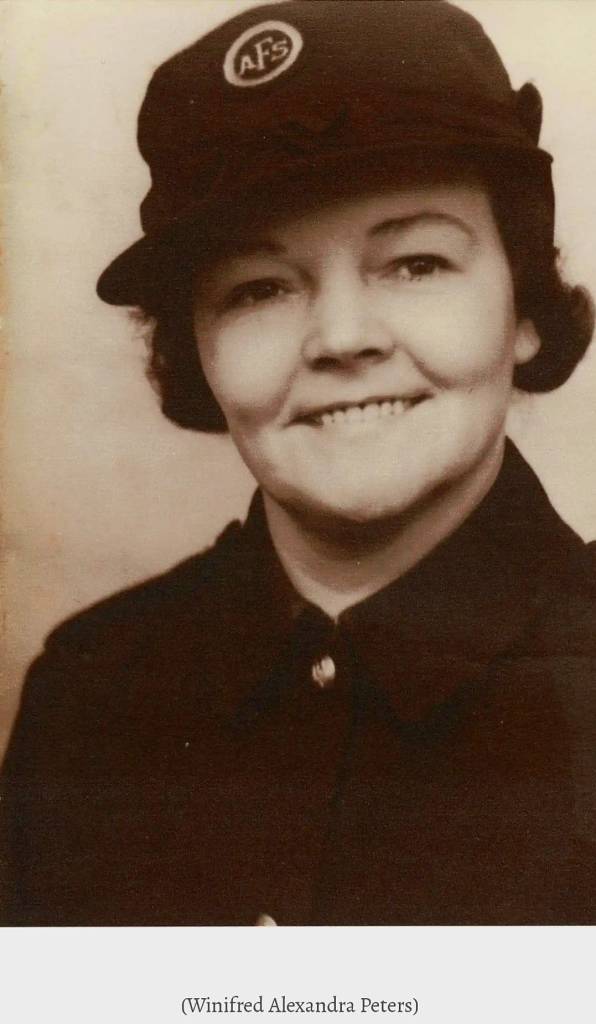
Thirty-two firemen and two firewomen died at The Old Palace School, the largest number of Fire Brigade lives lost in a single incident, in peacetime or war. Winifred Alexandra Peters was one of the two firewomen killed

With the establishment of the National Fire Service (NFS) in August 1941 the London area comprised of five fire forces (reduced to four in 1943) and the area resembled the Greater London area the Greater London Council became in 1965. Lambeth’s basement control room retained its central co-ordination role. From 1945 to March 1948 the NFS was occupied in maintaining a peacetime service. The Fire Service Act of 1947 imposed duties on all UK fire brigades.

(1) It shall be the duty of every fire authority in Great Britain to make provision for fire-fighting purposes, and in particular every fire authority shall secure—

(c) efficient arrangements for dealing with calls for the assistance of the fire brigade in case of fire and for summoning members of the fire brigade;

Big improvements had been made by which London’s fire brigade handled calls. The system of calls being directed to ‘superintendent’ stations around London ceased in 1948. During the war years two-way radio had been increasingly, and successfully, used to send radio information to and from fires and other incidents. Because the radio had to be operated from a central point the birth of the modern control room came into being in the basement of the Lambeth headquarters. Significant alterations were made to the former control, in fact it was totally revamped.

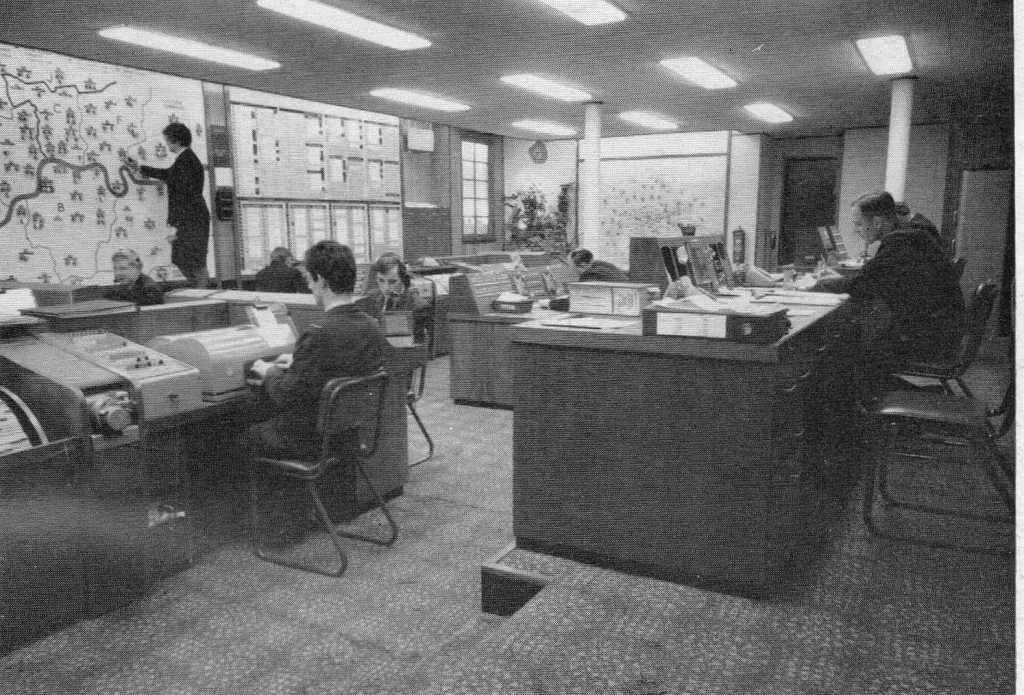
The ‘new’ underground Brigade control room.
Picture credit; London Fire Brigade.
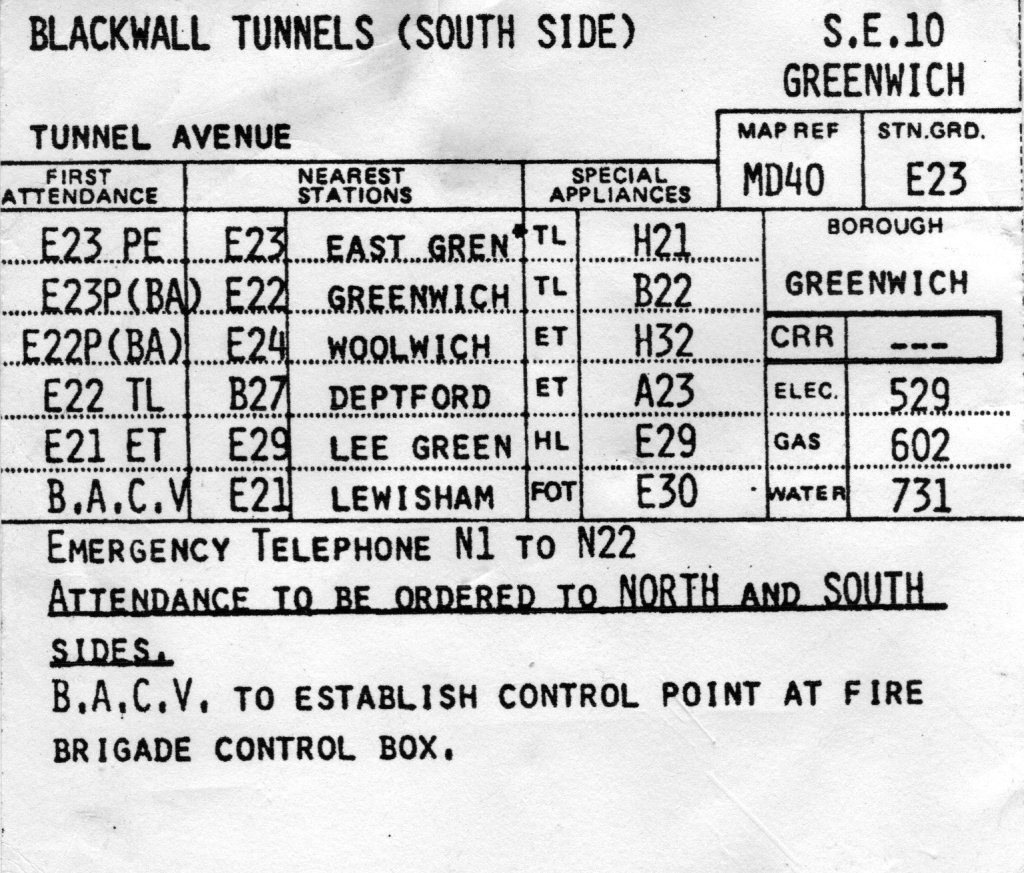
The control worked a card index system which recorded every thoroughfare in the London area. When a 999 call was received the control operator would locate the address and card gave details of the station ground, the six nearest stations, locations of the nearest special appliances and a route card No (eg NA46) which would tell the station crew attending which route card map would lead them to the address on their call slip.
Picture credit; London Fire Brigade.
Typical route card for the Greater London Council-London Fire Brigade. The numbers and abrviations told the control operators the local station names and where the nearest special appliances were located. This system remained unaltered from that used by the London County Council Lambeth control.

The ’new’ control was opened in 1948. It was where all ‘999’ calls were received in the LCC area and station appliances could be ordered to incidents. (In 1949 the LCC also decided to abolish street fire alarms-which had caused increasing numbers of false and malicious calls.) The call sign of the Brigade control radio scheme was M2FH. The control room would remain unchanged until 1966 when it once again underwent a major revamp. The LCC had authorised the adoption of a new mobilising system in 1963, the teleprinter involved the transmission of calls to fire stations by teleprinter, with phone lines used as a fail-safe back up system. However, due to delays in the supply of automated telephone equipment the system did not come into operation until the Greater London Council was created in 1965.

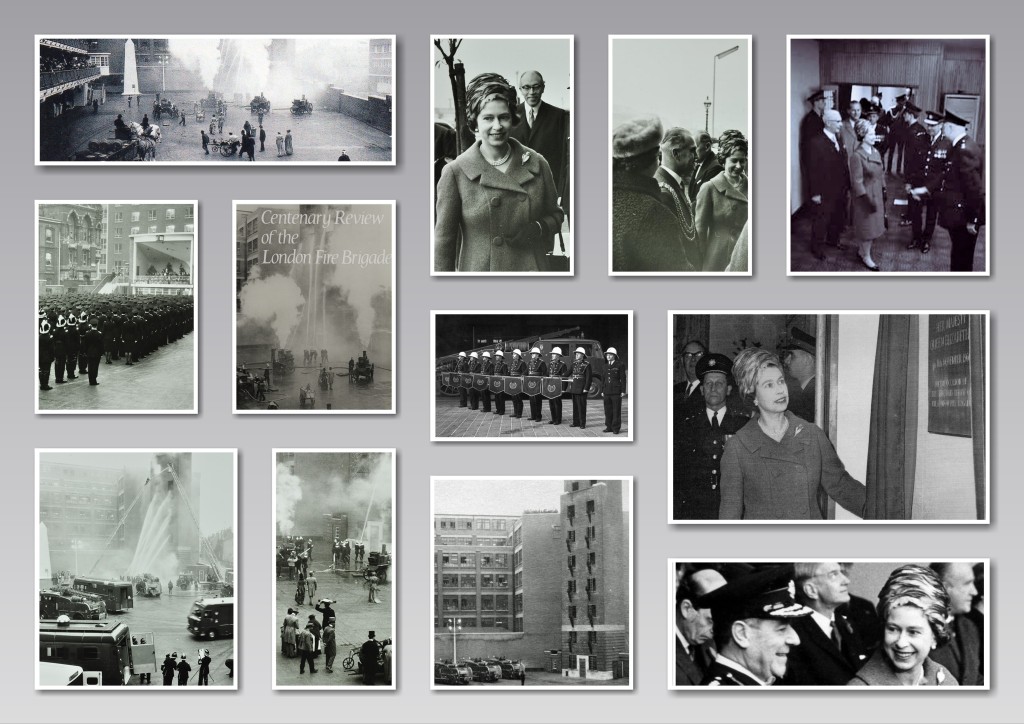
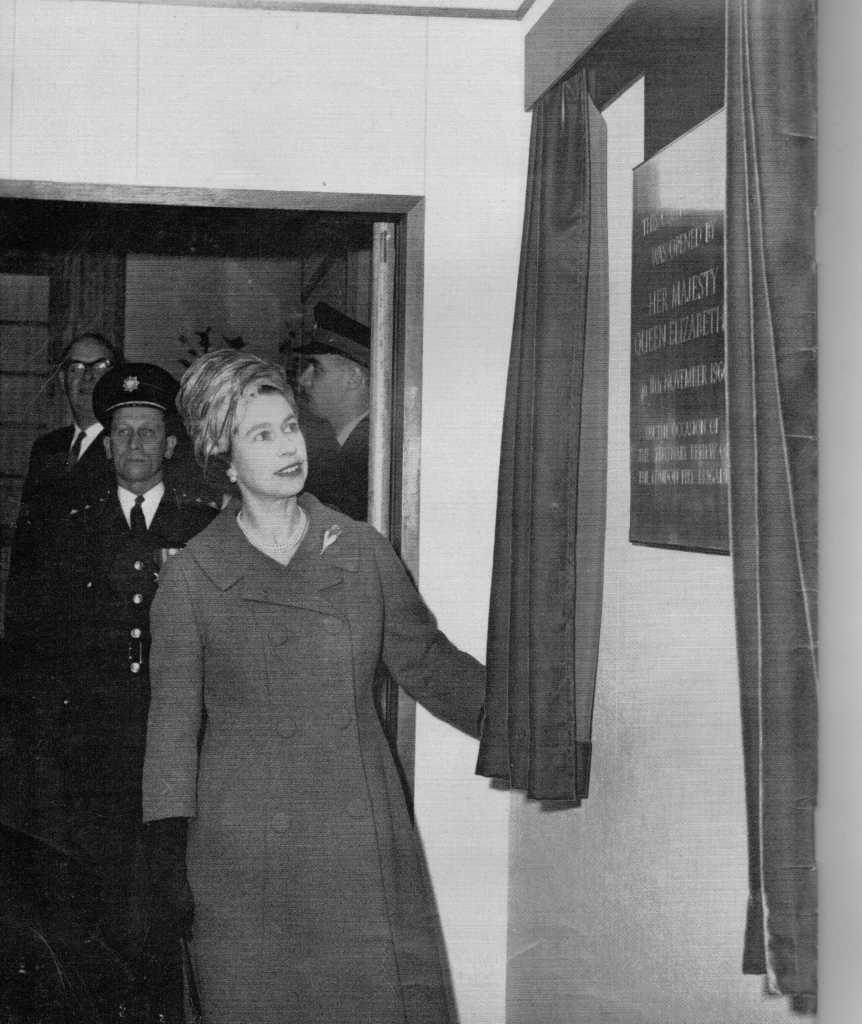
With the help of both the Home Office and the Post Office (GPO) the now Chief Officer, Mr L. W. Leete, the Lambeth control had the advantage of both the teleprinter and automated telephone system when it went live in 1965. (It was formally opened in 1966 by Her Majesty Queen Elizabeth, accompanied by His Majesty Prince Phillip, made a visit to the Brigade’s centenary celebrations at the Lambeth headquarters.)

11th November 1966. Her Majesty Queen Elizabeth unveils a plaque to mark her visit to the Lambeth headquarters and the Brigade Control room.
Photo credit: London Fire Brigade
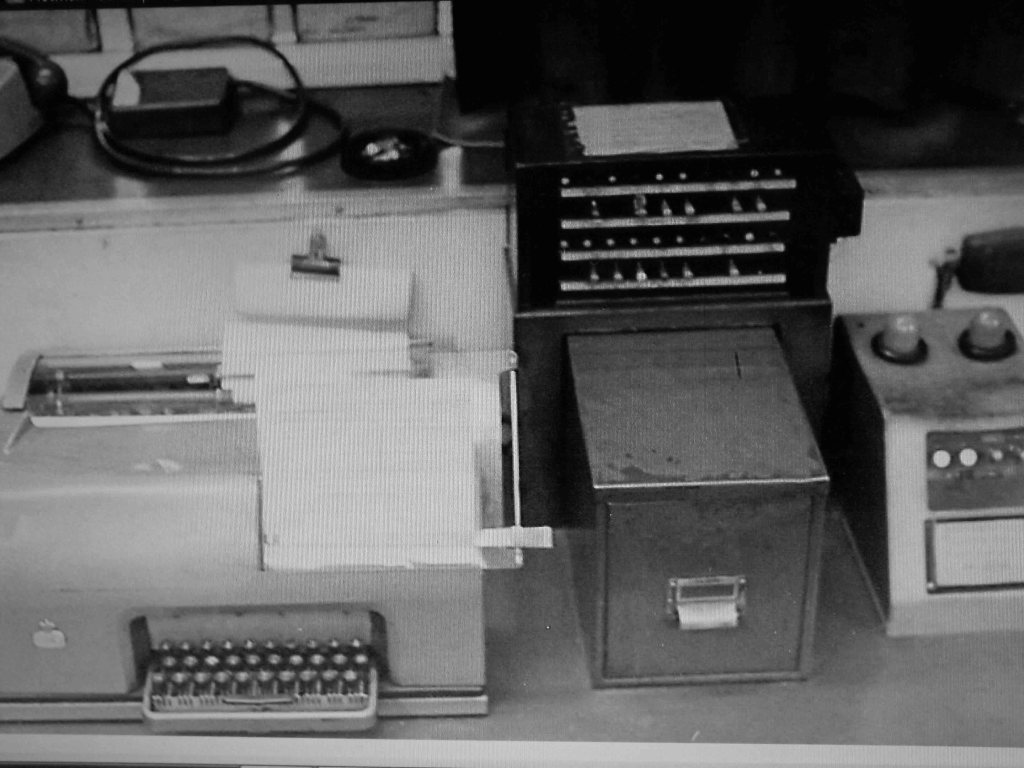
A london fire station teleprinter installed in the stations covered by the Lambeth Control room.

In 1965, the amalgamation of the various brigades onto the new London Fire Brigade provided an impressive array of new (and some not so new!) equipment. This included three additional control rooms at Stratford, Wembley, and Croydon, each with a designated area on control. However, Lambeth maintained jurisdiction over its former LCC area and took on a co-ordination role of major incidents.

The Lambeth basement control room layout.

The shutters finally came down on Lambeth’s M2FH control room in 1974 after twenty-six years of continuous mobilising. Its control staff were dispersed to the three remaining control rooms, with Lambeth control’s mobilising area being absorbed by them. mobilised by the control staff at the Croydon control room, who were responsible for mobilising all stations south of the River Thames. The other two control rooms were located at Wembley, the old Middlesex Fire Brigade control room, and Stratford, the former West Ham Fire Brigade control. Wembley covered the west of London whilst Stratford mobilised the east.

A central mobilising control would eventually return to Lambeth and, once again but for now it was an end of an era as the other three controls mobilise their additional new charges.

This blog is dedicated to all LFB control room personnel, past and present. A vital ingredient to a successful team.

Hazchem. A short history of the involvement of the LFB, and most notably that of Charles Clisby in promoting and introducing the Hazchem scheme.

.

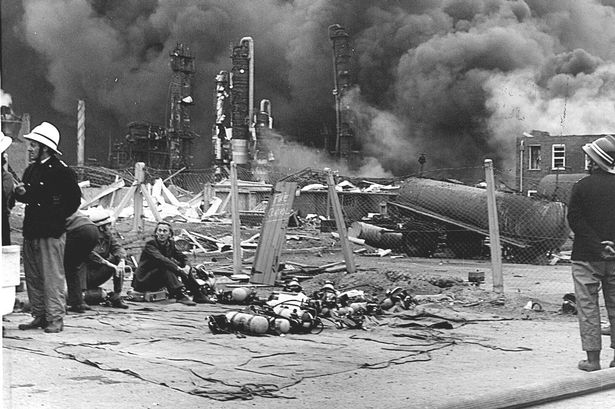
An explosion at Dudgeons Wharf, on the Isle of Dogs in east London in 1969, killed one demolition worker and five London firemen. There was no information on what an apparently empty oil storage tank had contained.

Dudgeons wharf post explosion. (Picture credit-London Fire Brigade.)
The funerals of the firemen killed at the Dudgeons Wharf disaster. 1969. (Picture credit-London Fire Brigade.)

It was four years later (1973) that the then Department of the Environment started to formulate legislation to protect the public from accidents involving road tankers carrying hazardous substances. This followed a horrific accident in December 1972, when a tanker carrying fuming sulphuric acid ran into another tanker, in fog. The second vehicle gashed the side of the acid carrying tanker and 13 tons of the hazardous chemical started to pour out onto the motorway. A woman, following the tanker in her car, stopped and got out of her car. She walked towards tanker, with a view (it was assumed) of trying to assist, she did not notice the swirling fumes. Overcome she fell into the brown liquid. At the Inquest the pathologist stated the woman was unidentifiable and it was only a section of bone that there was any indication that it came from the body of human female.


The explosion at the Nypro (UK) chemical plant at Flixborough, near Scunthorpe, in 1974 left 28 dead and 36 seriously injured. In the previous six years there had been 25 major fires at chemical and petroleum plants in Britain. This led to the Fire Certificates (Special Premises) Regulations 1976 where the Health and Safety Executive took responsibility for fire safety. The development of OSHA’s Hazard Communication Standard (HCS) had been initiated in 1974. (The Hazard Communication Standard (HCS) requires all employers to provide information and training to their employees about the hazardous chemicals to which they may be exposed at the time of their initial assignment and whenever a new hazard is introduced into their work area.)

Firemen at the scene of the NYPRO disaster, FLIXBOROUGH, June 1974.

Then in 1975 a train carrying a cargo of 16 tons of vinyl chloride overturned on the main London to Sheffield railway line. For 12 hours local firemen worked to save the load intact. After they succeeded the Chesterfield FB Chief Officer stated “the town was just a foot away from disaster.”

As a result of such instances, and the involvement of the London Fire Brigade, the Hazchem (hazardous chemicals) Code was subsequently introduced in 1975, on a voluntary basis. This identification scheme enabled emergency services to know how to proceed when faced with buildings, vehicles or storage areas containing hazardous chemicals. It was used that year in new regulations for the rear marking of vehicles. Its aim was always to assist the emergency services in the first few minutes of dealing with a hazardous goods distribution incident. (The Hazchem system was incorporated into UK law in 1981 with the first road tanker regulations.)

In an article published in the Sunday Times on 29th February 1976 Deputy Assistant Chief Officer Clisby, of the London Fire Brigade (LFB), when commenting on Hazchem hazards stated; “Some tankers are literally a Flixborough on wheels.”

However, the system which evolved into Hazchem was not a London idea. Its birth had its origins in the Middlesex brigade prior to 1965 but with the amalgamation, on the creation of the Greater London Council (GLC) in 1965, it was filed under ‘pending’ and did not see the light of day for almost a decade.

Cap badge of the Middlesex Fire and Ambulance Brigade, pre 1965.

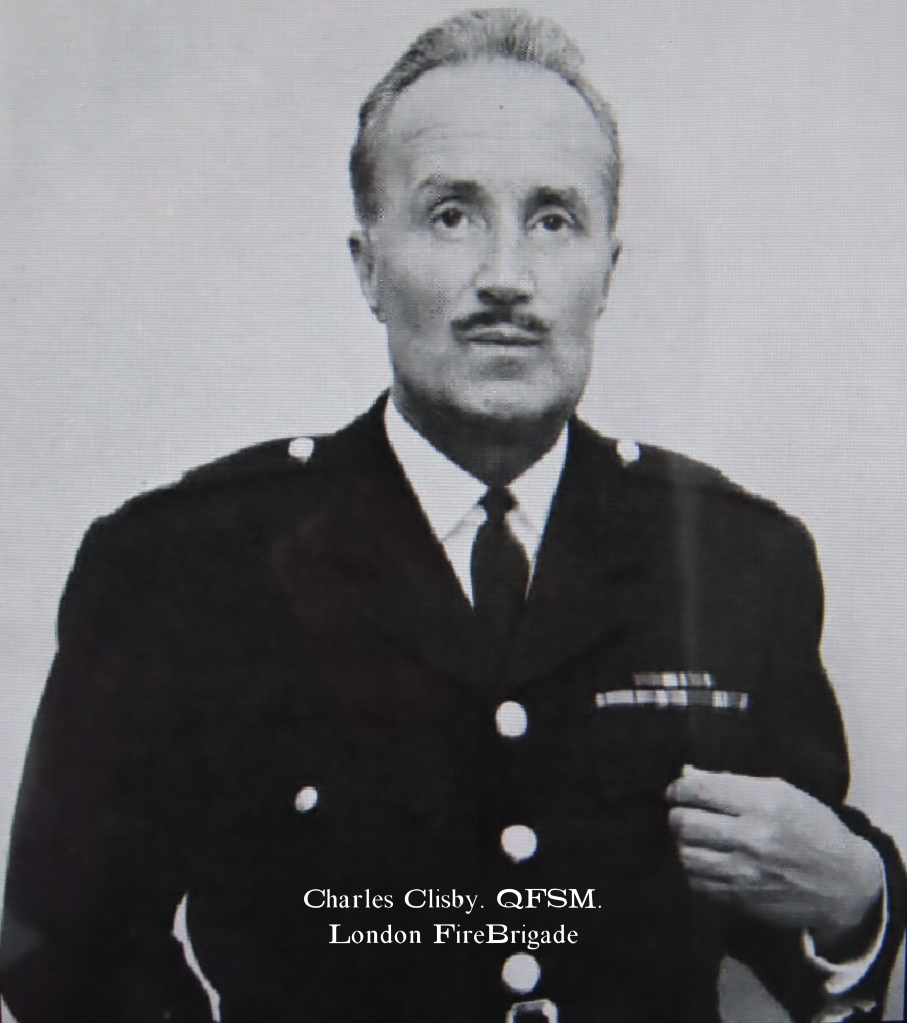
In London, Charles Clisby, had for some time been a campaigner and a vociferious advocate for a ‘hazard’ warning scheme for ‘his’ firemen. A northerner by birth, Clisby had first served in the army before joining the then Biringham and Coventry Brigade before transferring to the Middlesex Fire and Ambulance Service. He was transferred into the London Fire Brigade (LFB) in 1965 with the creation of the Greater London Council (GLC). In the GLC-LFB Clisby was first an Assistant Divisional Officer, based at Wembley, before being promoted to Divisional Officer and based at Shoreditch, the ‘C’ Divisional headquarters which covered the City of London within its divisional area.

Divisional Officer Charles Clisby (white helmet) leading the rescue attempts of temporary Leading Fireman Michael Lee, who was killed at a fire in Goswell Road, Shoreditch in 1969.

In 1972 the LFB Chief Officer, Joe Milner, had won approval from the GLC’s Fire Brigade Committee of his re-organisation of the Brigades operational management. It covered all aspects of operational efficiency and that included scientific information. Milner established three headquarter branches; Operations, a Mobile Group and a Technical, Planning and Development Branch. Clisby was transferred, and promoted, into the latter branch. In the ‘in-house’ press release he was described ‘as a man who will probably make his presence felt.’

Under Milner’s re-organised headquarters, a dedicated ‘Operations Room’ was established and among its various functions was the duty to relay information to crews who were having to deal with ever more chemical incidents (or incidents where chemicals became involved). It was estimated by the GLC that over 3 million chemical carrying journeys were being made across the GLC every year in the early 1970s. The Ops Room chemical information system, which pre-dated Hazchem, was reliant on Chemical Information cards, and which in those early days contained some 3,000 different listed chemicals. The aim was to eventually list some 10,000 different chemical substances, Requests for information resulted in first action measures being passed back to the incident. Additionally, the GLC Scientific was contactable for more detail guidance as well as various manufactures and even the Guy’s Hospital poison unit. As comprehensive as it was it remained labour intensive and first response measures were reliant on messages being sent and received, then acted upon. Hazchem it wasn’t.

The enhanced ‘Hazchem’ code is credited to have been developed by three London officers and championed by their then Divisional Officer, Charles Clisby, in the early 70’s. It was later that Clisby, with the support of the Brigade, who pushed for the Home Office to adopt the system as a nationwide means of marking bulk loads of hazardous chemicals for transportation in 1975.

The Hazchem system faced stiff competition from the European ADR Kemmler code, based system and requirements to include ever more detailed information, UN Numbers, Hazard Class, Tremcard number and proper shipping names. (Most of these are very familiar in this country now.)

The Hazchem concept was (and remains) remarkably simple and effective in providing an immediate emergency response statement to enable the risk from the hazardous substance to be managed at least in the first instance by the emergency services but especially the fire service.

Clisby remained resolute in defending, and promoting, the Hazchem scheme across the fire service and the chemical industry. In January 1976 Deputy Assistant Chief Officer Clisby was presented with a Commendation by the Association of Industrial Editors at the Communicator of the Year awards for his outstanding work on Hazchem. Such was the nature of Clisby’s appreciation of the team effort in moving the scheme forward that he requested that the Brigade’s Deputy Chief represent the award in the presence of his team, and who had made possible his success in achieving the introduction of the Hazchem scheme.

Deputy Assistant Chief Officer Charles Clisby being given his Commendation by the Brigade’s Deputy Chief, Don Burrell, in the presence of his Hazchem team.

The Hazchem Code signage provides vital information to the Fire Brigade, or other emergency services, on the immediate actions to take when dealing with that hazard in an emergency. The fire and police services use the specific characters and numbers to determine which actions may be necessary, during the first few minutes of an incident involving dangerous goods. These Emergency Action Codes (EACs), also known as Hazchem codes, are a three-character code that must be displayed on all GB registered road and rail vehicles that carry dangerous goods on domestic journeys within the UK.

Joe Milner resigned as the Chief Officer in 1976. He was replaced by Peter Darby, who would later become the Chief Inspector of Fire Services (UK). This was a time of industrial unrest across the UK and the fire service was no exception. In the days immediately before the first national firemen’s strike in November 1977 Peter Darby summoned all his principal officer to the Lambeth headquarters for a planning meeting. Charles Clisby, now holding the rank of a temporary Assistant Chief Officer, had been a long-standing member of the Fire Brigade Union (FBU). He believed in the values of the Union as much as he believed in the importance of Hazchem for the safety and protection of ‘his’ firemen. He, together with another Union principal officer, DACO Jim Curren, were ordered from the Chief’s meeting, effectively placing them on the outside of the HQ loop 4 days before the national strike started on the 7th November.

For Charles Clisby it was a heart-breaking moment. He was despondent. The service he had given most of his adult life to, and contributed so much through the successful introduction of the Hazchem scheme had, through Peter Darby, shunned and rejected him because of his FBU support. It was an action that he never recovered from. In December 1977 Charles Clisby had a heart attack and was medically discharged from the Brigade. In the 1978 New Year’s Honour list Charles Clisby was awarded the Queen’s Fire Service Medal for distinguished service.

He died, at his Wiltshire home, on the 11th June 1978. However, the FBU never forgot Charles Clisby nor did London’s firemen and its junior officers. His legacy remains through his poetry and, to this day, the widespread use of Hazchem by the UK’s first responders.

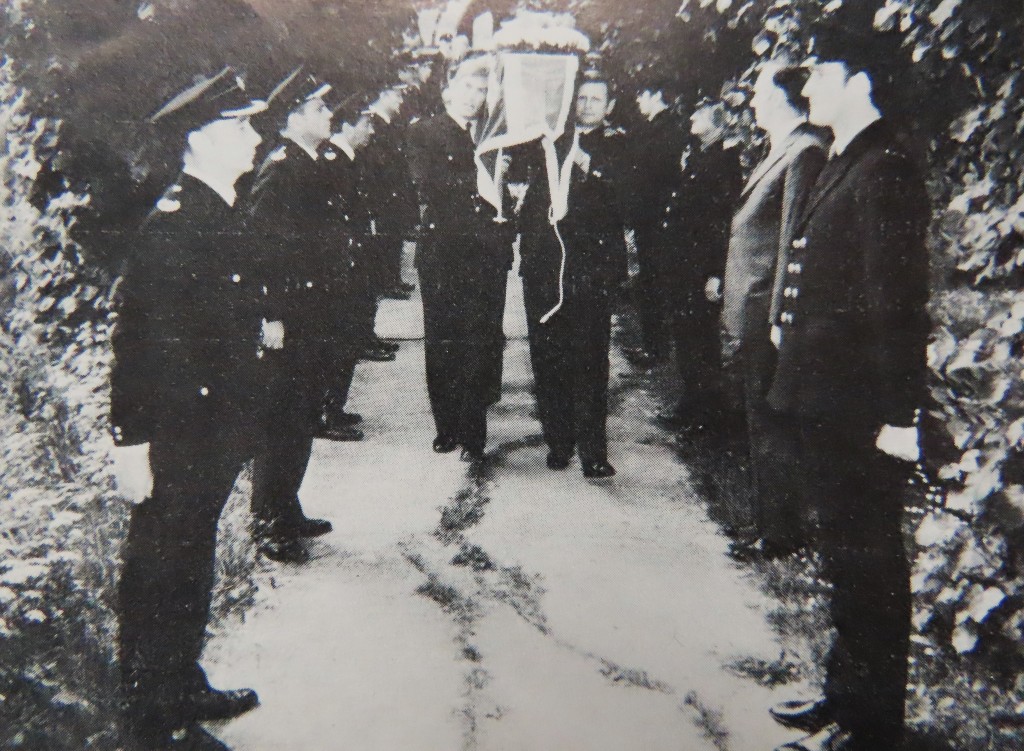
The funeral of the late Charles Clisby. QFSM. at St Barnabus Church, Easterton, Wiltshire with an honour guade and pall-bearer party of former London Fire Brigade friends and colleagues. (Picture credit-London Fire Brigade.)

Demise of the London Fire Brigade Junior Firemen scheme.

Its 1968 and the end of London’s ‘junior fire-bucket’ scheme.

In March 1968 the Conservative controlled Greater London Council (GLC) cancelled the scheduled April intake of Junior Firemen because, as a result a review of its financial commitments, it had decided that an immediate increase in the numbers of junior firemen under training could not be justified. Two months later the Council decided to close the Junior Firemen’s Residential College at Swanley, and in June, they decided to end the junior firemen training scheme and not even attempt to continue it on a non-residential basis.

In taking this action London has shown just how quickly a fire authority can block or indeed reverse progress in order to effect, in the short term, a financial saving. This retrograde decision was opposed in the Council chamber by the Labour opposition and before the (Fire Brigade) Union.

The new Swanley Junior Firemen College and new arrivals in 1966. (Photo credit-London Fire Brigade.)

The FBU’s General Secretary led a deputation from the London Brigade Committee and put an excellent and hard-hitting case to the Fire Brigade Committee against the closure of the Swanley college. It was only at this stage that that the Union learned, that in addition to the financial considerations, it was being claimed that the educational standard of junior firemen entry was so disappointingly low, that even after training there was little, if any, difference between junior firemen standards, and because of recent improvements, that of young recruit firemen.

1966. The formal opening of the Swanley Junior Firemen College by the then Home Secretary-the Rt Hon Roy Jenkins.

The background and short-sighted nature of the GLC’s decision to close Swanley College and now to abandon completely junior firemen entry can be gauged by the following brief facts.

College costs £200,000

Although London started its junior firemen scheme in 1964 the Swanley College has only been operating since early 1966. The initial costs of the college and adapted for junior firemen training was in the region of £200,000. It can accommodate 150 boys and since it opened between 70 and 90 boys have been under training at any one time. To date about 140 ex junior firemen are serving operationally and some 45 are still under training.

Apart from the general acceptance in the service that junior firemen entry was essential it seems logical to state that as the college has only been operating for two years it is far too early to draw conclusions as to its value.

Even the College building was a make-shift training facility for the junior firemen learing their operational craft.
(Picture credit-London Fire Brigade.)

If there is any weight in the claim that junior firemen entrants were not of a sufficiently high educational standard, how much consideration was given to the fact that a new educational curriculum was introduced in the autumn of 1967. This curriculum was aimed at bringing junior firemen up to graduate of Fire Engineer level at the age of 18 and was already, according to instructional staff, showing results.

The chapel of the former Parkwood (Westminster Hospital) convalesence home was adapted to provide a gym for the junior firemen’s fitness training. (Picture credit-London Fire Brigade.)

The London Fire Brigade is at least 500 men under strength in the first six months of this year (1968). Recruitment into the Brigade was almost completely cancelled out by normal wastage through retirement, etc. It follows that if there have been no junior firemen scheme, the manpower deficiency would have been much greater and one is entitled to ask if London is serious about its manpower problem when it closes this avenue of recruitment.

Parents Day at Swanley College, when friends and family were allowed to see the College and facilities. Here the Junior Firemen are inspected by a principal officer of the Brigade. (Picture credit-London Fire Brigade.)
Group photograph of the College principal, Major Anderson, instructional uniformed staff and the residential junior firemen under training. The last such photograph before the the Greater London Council abolished the Junior Firemen scheme. (Picture credit-London Fire Brigade.)

In this connection would it not have been reasonable to weigh the saving of well over half a million pounds per year, which arises because of the manpower shortages against the cost of running junior firemen training at Swanley.

Note: Article credit- the FBU Firefighter issued in 1968.

The Auxiliary Fire Service-a proud history.

Few national organisations have been stood down twice-but the Auxiliary Fire Service (AFS) holds such a dubious honour. The first time was in 1941, with creation of the National Fire Service (NFS). Then on the 31st March 1968 it was ordered to stand-down again after 20 years of peace time activity. This time it was final. The men and women of the AFS rode into fire service history.

Its origins came about in the 1930s when the likelihood of a Second World War was already being planned for in Britain. Although not widely publicised the then National Government, under Ramsey MacDonald, were considering what arrangements would be necessary to cope with enemy aerial attacks on its strategic population centres. The Home Office (then responsible for the Fire Service) held a series of seminars and secret planning meetings to deliver a strategy in the event of war and the subsequent fire attacks on the British mainland from the air. London was considered a particularly vulnerable target for such enemy action, not least because it was the nation’s seat of government and the City of London was crucial to the country’s financial and business interests.

London in the 1930s looked vastly different to the London of today. The river Thames provided easy access for shipping to its vast network of extensive docks and associated warehouses. The dockland warehouses, starting from Southwark on the south bank and Blackfriars on the north bank ran eastward to the Essex and Kent borders. It was recognised, at an early stage, that it would require a massive expansion of the existing fire brigade(s) to deal with fires involving London’s central maze of narrow streets, warehouses filled with combustible products such as oils and grains and its dockyards with acres of stacked imported timber. Failure to respond to such a challenge could leave London little more than a smoking ruin.

The AFS was formed on the 1st January 1938 and their numbers rapidly grew. A massive recruitment drive was launched. In London sixty London Fire Brigade (LFB) vehicles toured London’s streets alongside an AFS poster campaign and planes even flew the over capital trailing AFS recruitment banners. The Thames was also used to advertise this new fire force and the Brigade’s high-speed fireboat, the James Braidwood, flew similar banners seeking recruits to supplement the London Fire Brigade’s River service. The success of campaign attracted some 28,000 volunteers. Volunteers who would supplement the regular London Fire Brigade in event of war.

The City of London and the Lord Mayor's annual aprade is used to promote the AFS recruitment campaign. 1938
The City of London and the Lord Mayor’s annual parade is used to promote the national AFS recruitment campaign. 1938.
Picture credit-Daily Sketch.

This was a major logistical exercise for both the London County Council (LCC) and the LFB. Not least of the problems was the area we now know as Greater London. Prior to the outbreak of war in 1939 it had at least 66 fire brigades! This included the London Fire Brigade, the largest, which covered the whole of the former LCC’s administrative area. Some of these other brigades were one fire engine outfits: those that only protected a small borough area. Others had four or five stations such as West Ham and the Croydon brigades. Quickly various buildings, and vehicles, were seconded into service to house and equip this basically trained corps of AFS firemen and women that had now greatly expanded London’s fire service.

The AFS sub-fire station in Cooks Road. Vauxhall. SE 11. A former shop it was seconded for the AFS. 1939.

AFS firefighters salvage their bedding from the bombed-out Mansfield Road fire sub-station, a LCC school used a fire station. The picture shows it after it was seriously damaged in a bombing raid on 16 November 1940.

One of some 2000 taxis converted for World War II fire brigade use by the Auxiliary firefighters in London and other major UK cities. Photograph is taken in Lambeth High Street, outside the London Fire Brigade HQ. circa 1939. Above three picture credits-London Fire Brigade.

The London taxi, a vehicle that became synonymous with the London AFS throughout the Blitz. 1940-1941.

Garages, filling stations and schools, empty since the mass evacuation of children, were taken over and adapted as AFS fire stations. Some 2,000 London taxis were brought into service and used to tow trailer pumps. The London taxis were large enough to carry a small crew, hold a ladder on top and with the hose stored in the luggage compartment, plus pull a trailer pump. However, the accommodation was frequently poor at best. The new volunteer firefighters spent many hours making good their bases and even building their own wooden beds. In addition to this they erected brick walls over windows and sandbagged entrances to protect themselves from blast damage.

AFS (Auxiliary Fire Service) women resting in their make-shift bunks at Southwark Fire Station (Station 60), Southwark Bridge Road, SE1. Date: circa 1940. Picture credit-London Fire Brigade.

Basic training was provided by LFB firemen. Detached from normal firefighting duties, they put the new AFS recruits through 60 hours of practical and theoretical lessons. Whilst some women chose to undertake dispatch rider (motorcycle) messenger duties and others opted for motor driving, most were trained in ‘watchroom’ duties and the necessary procedures for mobilising fire engines and pumping units. Everyone underwent basic firefighter training. They were, of course, civilians. They had volunteered from every trade and profession, from every walk of London life. Office workers, labourers, lawyers, tailors, cooks, and cleaners they had taken up the call to join the AFS.

The AFS recruits were divided into different categories. This was based on their physical capabilities, their age, gender, and skills. Men considered Class B performed general firefighting duties. B1s worked only on ground level, either pump operating or driving. Others, recruited from trades on the Thames, were classed for River Service work and whilst women would be in the thick of it none performed actual frontline firefighting duties. (Although falling bombs did not discriminate those women delivering petrol to the firemen and those fighting the fires.)  The youngsters, under 18 years of age, became messengers equipped with either motorcycles or pedal cycles. Those auxiliaries who became full-time firefighters on the outbreak of war received a weekly wage. Firemen earned £3 per week; women got £2. Those aged 17–18 received £1-5 shillings and the 16–17-year-olds got £1 a week.

The AFS’s baptism of fire came on a 1940 September evening, the 7th. With basic training, and as yet untried, the auxiliaries were dispatched to the first big raids of the war. The official WWII publication Front Line 1940-41 recorded what happened that fateful night. “The auxiliaries, four-fifths of them with no prior experience of actual fire-fighting, faced the greatest incendiary attack ever launched…”

By midnight on the 7th there nine fires in London rating over 100 pumps. In the Surrey Docks were two of 300 pumps and the other 130 pumps. At Woolwich Arsenal the count was 200 pumps; at Bishopsgate Goods Yard another 100-pump fire. Such was the intensity of the enemy bombing that these fires all became conflagrations. The intensity of the radiated heat from the Surrey Docks blaze was such that the fire-float Massey Shaw, moored on the opposite bank (a distance of 300 yards) had her paint blistered! By the end of that first month 50 London fire-fighters had perished in action. 500 others were injured and many invalided out of the service. Almost overnight the previously lampooned and derided AFS were popular heroes. Many crews, returning from blazes, wet and exhausted were cheered by passers-by in the street.

As the raids intensified in the following months the number of fires were measured in the 10s of 1000s. In December of 1940 bombing reached a climax with the concentrated bombing of the City of London. With the Thames already at a low tide, water supplies were cut off for a while the men and women of the AFS got on with their job. Their courage helped to save St Paul’s by using all kinds of improvised fire engines and hauling heavy trailer-pumps to provide water supplies whilst AFS women delivered petrol supplies, acted as dispatch rider messengers, and staffed the control rooms and station watchroom’s, all under enemy fire. Then in the new year (1941) with a widening of the enemy bombing campaign AFS conveys travelled to far flung cities, such as Coventry, Portsmouth, and Southampton, to provide much needed fire-fighting reinforcements.

AFS wartime heros.

AFS fireman Harry Errington. GC.

Harry Errington was born in Soho. After attending Westminster free school, Harry won a trade scholarship to train as an engraver his mother, fearful, the craft would adversely affect his health, Harry went to work for his uncle’s tailoring business instead. Now a master tailor. He was also a volunteer Auxiliary London fireman working in his beloved West End. Just before midnight on the 17th September 1940, together with other AFS men, he was in the basement of a three-storey garage in Soho. It was used as a private air raid shelter and rest area for the fire service personnel. A bomb hit and all three floors collapsed. The resultant explosion killed some 20 people, including six London firemen.

In the Supplement to the London Gazette (issue No 35239, on the 8th August 1941, pg. 4545.) it was announced; The KING has been graciously pleased to award the GEORGE CROSS to Auxiliary Fireman Harry ERRINGTON. He showed great bravery and endurance in effecting the rescues, at the risk of his own life.  

Only three such awards were made to fireman during the Second World War; Harry was the only AFS London fireman so honoured. He received his GC from King George VI in October 1942.

AFS Firewoman Gillian Tanner. GM.

Gillian “Bobbie” Tanner delivered petrol to fire pumps in Bermondsey while the docks were being bombed during the Blitz in September 1940. On 3 September 1939, the day war broke out, 19-year-old Miss Tanner drove to London in her front-wheel drive BSA car from her home near Cirencester, in Gloucestershire, to see what she could do to help. The Women’s Voluntary Service directed her to the auxiliary fire service where she became a driver. This country girl, whose main past-time had been horse riding, was at first alarmed to hear she was being posted to Dockhead, Bermondsey, in south-east London. She recalled:

“There were two drivers allocated to Dockhead and I was the only one who had the heavy goods licence, so I had the canteen van and petrol lorry to drive,” she said. “You had the petrol in two-gallon tins and they were stacked on shelves around the lorry. I didn’t think about it at the time, luckily.”

“They took over a lot of schools and made them sub stations and they all had their own trailer pumps – I remember going to one not far from Tower Bridge and we were pouring petrol into the engine and it was red hot. I didn’t even think about the fact that one drop, and we would go up in smoke. You had a job to do and you got on and did it.”

Her citation read:

Awarded the GEORGE MEDAL. (L/G, 35058, 31st Jan 1941, pp. 610.)

Firewoman (Aux) Gillian Kluane TANNER. Six serious fires were in progress and for three hours Auxiliary Tanner drove a 30-cwt. lorry loaded with 150 gallons of petrol in cans from fire-to-fire replenishing petrol supplies.

By the spring of 1941 the war had shown that the UK fire service required a more co-ordinated response to deal with the conditions created by modern warfare. The government brought into being the National Fire Service (NFS), merging all of the former local brigades and the AFS under one umbrella. The NFS came into being on the 1st August 1941. This new body, the AFS with all 1,638 local authority fire brigades, totalled some 60,000 men and women. The NFS was organised around 40 Fire Forces, London Fire Brigade forming several of these.

During the Second World War 327 London firemen were killed. The vast majority of those killed were in the early years of the War, most notably during the Blitz and consisted of both men and women of the Auxiliary Fire Service. Many of the locations were they perished are remembered today by the erection of a memorial plaque. Their loss and their sacrific will not be forgotten.

The NFS operated until 1948 when, under the Fire Services Act 1947, fire brigades reverted to local authority control although with now far fewer brigades on a county or county borough council basis. The London Fire Brigade was returned to the London County Council, Middlesex was formed with its own fire brigade and counties like Kent had their own county wide brigade.

With the AFS absorbed into the NFS many continued regulars. Then in 1948 some even found a new career by staying within the Fire Service as peace time firemen.

After eight years in the wilderness, and one year after dissolving the NFS, the AFS was re-established in 1949. It became an integral part of the Civil Defence Corps (CDC)- a civilian volunteer organisation. The ‘Cold War’ and the threat of nuclear Armageddon had created the CDC which would mobilise and take local control of the affected area in the aftermath of a major national emergency; i.e., a nuclear attack.

In London the AFS vehicles, initially, were those that remained in government storage post WWII. From 1953 onwards, purpose bult AFS vehicles came on stream. They were issued painted ‘dark green’ and the era of the ‘green goddesses’ was born. They became a frequent sight on the streets of London. Selected London fire stations housed AFS engines and provided a training base for the crews. AFS crews were occasionally, when on the training nights, dispatched to large fires to gain first experience. The AFS staff trained to be available should they be needed in a national emergency. To this end several times a year they carried out large scale exercises especially in the relaying of large quantities of water over considerable distances. In 1966 AFS men and women came from far and wide to take part in a massive exercise staged in the Port of London. It marked the Tercentenary of the Great Fire of London. It would be their swan song!

Their second stand down came on the 16th January 1968. The Prime Minister, Harold Wilson, announced that the nation’s Civil Defense was to be placed on a care and maintenance mode. The AFS was disbanded on the 31st March 1968. It had survived on the perceived threat of ‘cold war’ fears of nuclear attack. Large scale exercises and mobile columns rehearsed for the probable dire effects of such a nuclear Armageddon or atomic holocaust! But the simple truth was that the radiation from a nuclear attack, the fallout, would have prevented AFS fire crews from getting within 50-100 miles of the scene and then being able to operate safely.

Firemen at Euston fire station having to use a ‘Green Goddess’ as a front line fire engine in 1968. The appliances were built for mobile column use and pumping water not so good as a rapid responce front line fire appliance! They were also extremely uncomfortable to ride in.The UK would see them in use again in the 1977-78 during the national fireman’s strike, when used by the military in lieu of regular striking firemen.
Members of South West London’s AFS crews at their farwell reception at the Wimbledon base in the London Fire Brigade’s K Division.

Some of the AFS members of the London Fire Brigade Eastern Command (Stratford) who attended the Greater London Council’s Chairman farewell reception to the Auxiliary Fire Service.

In London the Brigade hosted a farewell reception for the AFS at the Lambeth headquarters. The Chairman of the Greater London Council, Sir Percy Rugg, spoke of the people of the AFS who volunteered unselfishly and with no thought of themselves for the public good. London’s Chief Fire Officer, Lesley Leete (who started his career as a WWII AFS fireman) voiced his regrets at their passing.

The Bishopsgate Goods depot blaze.  December 5th 1964.

In the final months of the London County Council’s London Fire Brigade, the Brigade faced its biggest challenge in terms of a post WWII blaze. In fact the fire at the Bishopsgate goods depot, located by Commercial Street E1, and on the eastern side of Shoreditch High Street, was one of the biggest peacetime fires in Britain. It caused five million pounds worth of damage and killed two HM customs officers working at the site. This massive fire also stretched the resources of the then London Fire Brigade to the full.

Although it was classified as a 40 pump fire, at its height more than 45 pumping appliances, 10 turntable ladders and 13 other specialist fire engines, with 235 London firemen were fighting this conflagration. The blaze travelled at an astonishing speed and quickly engulfed the huge British Rail depot. The depot, with its main building of two and three floors, covered an area of approximately 350ft (107 metres) and was some 600ft (183 metres) in depth.

Bishopsgate Goods Depot had started life as Bishopsgate Station. It had opened in 1840 as a passenger terminal providing a passenger route between London, Ipswich, Norwich and Colchester. The station had closed to passenger traffic in 1875. It reopened six years later as Bishopsgate Goods-yard, a major freight station serving the eastern ports of England.

The premises had been constructed in two stages. The main portion being completed around 1880 and the remainder finished about 1914. The depot generally had brick load-bearing external walls and the floors are supported internally by unprotected cast-iron columns at the first and second floors and by brick arch construction at the ground floor.

Bishopsgate’ main buildings continued through ground floor arches under the marshalling yard and ended in a fruit bank platform at main rail level which is covered in by a canopy. The whole of the depot was connected by open staircases. Floors were also connected by lifts and various hoists. The main building, which formed a vast cube, in one undivided cell, measured over 10.5 million cubic feet (300,000 cubic metres).

By the twentieth century the depot was used for the handling and storage of the wide variety of commodities transported by the then British Railways. On the day of the fire the occupancy of the depot was: The ground floor (main railway line level); general storage and handling of goods (including drinking/potable spirits in the “vulnerable (at risk) arches”, plus mess rooms and offices. Some arches, which faced the public street, were let as shops.

On the first floor, loading banks with railway lines between; vehicle roadways and ancillary offices. Storage at this level was contained on the banks, inside railway wagons and road vehicles in the cage store. This store for undelivered goods. It being some 15-17ft long, 8-9ft wide and 8ft high (5 metres x 3metres x2.5 metres). It was constructed on a wooden frame; the lower part of sheet steel, the upper portion is expanded metal lined with hardboard and cardboard. The top was covered by a tarpaulin. Entry into the cage by a double door.

On the second floor; a warehouse floor and at the eastern end of which was a large partitioned area which formed a Customs cage. At the time of the fire the two unfortunate HM Customs and Excise Officers were on duty in a Customs Office at the northeast corner of this floor.

At the time of the fire the depot contained various rolling stock and road trailers comprising 112 British railway wagons (average 2.5tons content weight). 17 continental ferry wagons; 17 (between 8—I0 tons content weight) 140 3 to 6 ton road trailers: 140.These were located throughout the first floor. The rail wagons contained various goods, including fruit, machinery, biscuits, surplus clothing and general goods. The warehouse and customs cage contained large quantities of general merchandise and included plastic articles, toys, etc.; bales of carpets; synthetic fabrics and furs in cartons; baskets; leather handbags, glassware.

The first call to the Lambeth headquarters fire brigade control room that Friday morning was from a passer-by dialling 999 from an exchange telephone at 0620. They reported a fire at the ‘Bishopsgate Goods Depot.’ Four minutes later a second call was received by exchange telephone to a fire in the vicinity of the Goods Depot, Bishops-gate. A further six other calls were received by Lambeth’s Brigade control reporting the fire. The last was received at 0658.

Although this picture is dated two years later (1966) it shows the layout of the new ‘state of the art’ Lambeth basement control room at the Brigade headquarters, located on the Albert Embankment. SE1.

The first attendance came from Shoreditch and Whitechapel fire stations. The new state of the art basement control room at Lambeth had only just been completely refurbished and modernised.  This was to be its first major test by fire, literally. The Brigade Control officers now dispatched fire engines via teleprinters, something that had been introduced in 1963 across the LFB fire stations and into the four Divisional headquarters.

Shoreditch turned out from its brand new fire station, located in Shoreditch High Street, having vacated its former Victorian built fire station in Tabernacle Street.  The fire appliances ordered in response to that first call were Shoreditch’s pump-escape and pump, and the pump and a turntable ladder from Whitechapel. As those appliances arrived at the incident, and on receipt of the second call at 0624, the pump-escape from Whitechapel was ordered on.

The new Barbican fire station.

Fire cover in the City of London was changing. On 6 November 1963 the LCC’s Fire Brigade Committee had agreed a report on the City’s fire cover. A new Barbican station was to replace both Redcross St and Bishopsgate and also a new station was to be built in Upper Thames St that would replace both Whitefriars and Cannon St. Construction of the new Barbican was commissioned around the same time as the Shoreditch station, but planning and land acquisition issues meant it was not possible to start the proposed new Upper Thames St station. The Redcross St fire station was closed in February 1964 but its PE and personnel transferring temporarily to Cannon St but retained their station identity of B33. 

Shoreditch fire station and Divisional headquarters.

It had been expected that the new Barbican station would open before the new Shoreditch but in the event Shoreditch opened first on 4 November 1964. Clerkenwell’s Emergency Tender (ET) moving to Shoreditch in 6th November and B Divisional HQ was relocated from Clerkenwell on 7th November. It had been determined that Bishopsgate fire station would closed in advance of Barbican opening. It closed on 10 November 1964, its appliances being relocated to the new Shoreditch as second (or B) pump and its PE temporarily to Clerkenwell, again as second pump.

When those first appliances from Shoreditch arrived at the entrance to the Depot at Shoreditch High Street, the Station Officer in charge saw vast quantities of smoke issuing from the windows on the first and second floors. As the appliances drove along the road smoke was seen to be issuing from all the first floor windows and, to a lesser degree, from the windows on the second floor. The first appliances had pulled up adjacent to the canopied loading bank and the Station Officer made his way, on foot, to the loading bank and entered the building.

With some considerable difficulty he managed to progress about 25 yards into the building, parallel in direction to Bethnal Green Road. He saw in front of him, and to his left, a wall of fire and the smoke apparently extending from the Shoreditch High Street end of the building. He was unable to see across the cavernous depot floor area, to the Quaker Street side of the building, because of the high volumes the thick dense black smoke.

Upon returning outside, and only five minutes after the first call was made, he gave instructions that a priority message be sent to Brigade Control, making pumps 10. He then got his crews to get two jets to work into the building and near to the loading platform. The internal British Rail hydrant was set into for their initial water supplies.

The Bishopsgate goods depot fire. 1964. Radial branches were brought into use such was the intensity of the fire.

As the pump from Whitechapel arrived and drove up Wheler Street Hill to the Shoreditch High Street entrance, its Station Officer saw that fire had spread throughout the building and that beyond the front bank loading platform the depot was well alight for so far as he could see. He also noticed that BR depot staff were attempting to tackle the fire with a jet and working from an internal hydrant in front of the depot offices.

Shoreditch’s Station Officer, having given instructions for the positioning of the first two jets, quickly returned to the gate by which he had entered and was met by a Security Officer. He was told that lighted embers were falling from the first floor to the ground floor by way of an open lift shaft. The crews of the initial reinforcing appliances were instructed to deal with the falling burning brands and a jet was got to work on the first floor.

The pump-escape was from Cannon Street arrived at 0630. It had a Station Officer in charge. He immediately gave instructions to his crew to supply water to the pump from Whitechapel. He saw that the whole building, including the roof, appeared to be well alight. Drums of liquid were bursting and the walls at the Commercial Street side of the building were beginning to crack. The combined efforts of the crews of the two appliances from Whitechapel and Cannon Street enabled three jets to be quickly got to work on the fire from the front loading bank.

The Bishopgate goods deport fire. 1964.

Shoreditch’s Station Officer had meanwhile returned to his own crews, who had by now got one jet to work and were laying out their second, when there was a loud explosion. He noted it came from second floor and in a position that appeared to be to his front and to the left. This first explosion was followed by a number of minor ones also apparently coming from the second floor. He made pumps 20.

Immediately following the explosions fire spread at great speed along the lines of the goods wagons and loading platforms on the first floor and in the warehouse on the floor above. It spread so quickly that the crews had to break the hose connections and move both appliances to prevent them from becoming involved in the fire. As it was the appliances were severely blistered but their operational performance was not impaired. Both were able to play an extremely useful part in the subsequent firefighting.

As the appliances were being repositioned, fire broke through the roof of the building and a further assistance message was sent, making turntable ladders three.

Divisional Officer Frederick (Fred) Lapthorne. London Fire Brigade.

Divisional Officer Fredrick (Fred) Lapthorn was the senior officer in charge of the B Division. He arrived together with the reinforcing appliances at around 0630. He was quickly joined by the duty Assistant Division Officer, ADO Lloyd. Fred Lapthorn went to Wheler Street Hill side of Bishopsgate whilst the ADO took the the Bethnal Green Road side of the building. As he got to Bethnal Green Road he saw fire through the windows on both the first and second floors for about 300ft on that side of the building, ADO Lloyd returned to the Shoreditch High Street end at first floor level to see that about four-fifths of the first and second floors were a mass of fire; fire which was spreading rapidly towards the loading bank.

At 0636 DO Lapthorn sent an informative message which gave, in graphic but brief details, a picture of the dire situation. A message which told that the vast building was very well alight. Seven minutes later he made pumps 30 and turntable ladders 5. At this point both DO Lapthorn and ADO Lloyd realised that the situation within the building was rapidly becoming untenable for their firemen and all crews were withdrawn to positions outside the building.

The Bishopsgate goods depot fire. 1964.

At about 0645 the first of a series many major wall collapses occurred on the Bethnal Green Road side of the building. The debris completely obstructing the inclined road. Fortunately there were no personnel or appliances at work on the inclined road. There were, however, appliances, including two turntable ladders, and personnel at work in Bethnal Green Road. Urgent steps had to be taken to move the appliances to safety. This was accomplished only minutes before a further major collapse on this side of the building partially obstructed Bethnal Green Road.

The fire at Bishopsgate Goods Station on Shoreditch High Street, 5th December 1964.
Two customs officials lost their lives in the fire. (Photo by Evening Standard/Hulton Archive/Getty Images)

With the Brigades principal officers arriving from the Lambeth headquarters and Brigades major control unit set up, first the duty Assistant Chief Officer took charge before the Deputy Chief took command. From this time onwards it became apparent that all fire-fighting would have to be carried out from the perimeter of the building. Further requests for reinforcements were sent. Pumps were made 40 and the turntable ladders increased to 10. Additionally 10 radial branches were also ordered.

Firefighting was also hampered by a strong north-westerly wind. The adjacent properly in Quaker Street, on the south side of the fire, was menaced, both by radiated heat and by a large quantity of flying embers. A number of fires broke out but these were successfully dealt with and no serious damage occurred.

The firemen’s jets were concentrated at Wheler Street with the object both of stopping the spread of fire along the south side of the goods depot and protecting the property in Quaker Street. The turntable ladders were positioned at vantage points on both sides of the building and these were as soon reinforced by the arrival of the radial branches.

Further jets were got to work at the main rail entrance to the depot and as the fire was contained these jets were worked progressively into the building. However, great care was required owing to the very dangerous condition of the structure of the building. At the height of fire-fighting operations 21 jets and 14 radial branches were at work.

The Bishopsgate goods depot fire. 1964. Radial branch in use.
The Bishopsgate goods depot fire. 1964.

One and half hours after the first call the danger of any further spread of fire had been overcome. By 1029 a ‘stop’ message was sent to Brigade Control indicating that the fire was under control. Crews to remain in attendance cooling down the debris over the next 36 hours to ensure that there was no re-occurrence of fire.

In the aftermath of the blaze. Bishopsgate good depot. December 1964.

Shoreditch’s Station Officer twice made enquiries in the early stages of the fire as to whether any persons were in the building. On the first occasion he was informed by a British Railways policeman that he “did not know”. Shortly afterwards, and in response to the same request, he was shown by a security officer a group of employees who were in no apparent danger. The first indication that persons might be involved was given to the Brigade’s Control Unit staff and the officer-in-charge caused a message to be sent to all senior officers over the walkie-talkie network at 0713. The message indicated that information has been received that two customs officers were resident at the Sclater Street end of the building.

There was confusion as to whether the men had left the building before the fire and gone home. It was learned that there had been three HM Customs Officers in the building the previous night; one of whom had left at about 0300.

By the time the first indication that there was a possibility that the men were missing, the fire had involved the whole of the building and the portion of the building housing the customs office had already collapsed. It was impossible at that stage to enter and search the building.

As soon as conditions allowed and despite the quantity of debris and the instability of the structure a search of the building was commenced. At 1220 the two men, both fatally injured were located in the debris and in a position some 200ft distant from their office. Firemen removed the men’s bodies.

London Fire Brigade ‘relief’ crews remained on site until the early evening of the 12th December, eight days after the fire started, when the incident was closed down.

Footnotes:

  1. The destruction of all material evidence by the fire makes it impossible to decide the probable cause of the fire. The Goods yard and depot was rendered unusable. Over the next 40 years, the site became derelict and was made safe by a major demolition project in 2003-4.
  2. Some difficulties were experienced in obtaining enough water during the early stages of the fire but these were quickly overcome as reinforcing crews got to work. Despite the very large volumes of water used in fighting the fire there was no shortage
  3. Although this fire was apparently first seen by railway employees to be in the ‘brought back’ returns cage on No. 3 bank, it was considered by the Brigade’s Fire Prevention officers that the fire could not developed and have spread in the way it did if the fire had originated in this position. What was considered more probable is that the fire started on the warehouse floor above and the ignition in the returns cage resulted from burning debris falling from the floor above, either by burning through the floorboards or by falling down the adjacent hoist shaft and ricocheting into the cage.
  4. The explosions. At an early stage, while BR employees were tackling the fire, there were reports of ‘flashes of flame’. These may have been caused by the ignition of cartons containing numerous books of matches (240 per book) or cartons containing plastic aerosols of hair lacquer. Further explosions were also reported at both the track level and in the warehouse and were attributed to the bursting, due to heat, of drums of oil and numerous other containers.

The sequence of make-up messages.

0620: Time of call. (Six further calls received.)
0625: Make Pumps 10
0629: Make Pumps 20
0630: Make TL’s 3
0643: Make Pumps 30, TL’s 5
0657: Make Pumps 40
0700: Make Turntable Ladders 10. 10 addition radial branched required

1029: Stop message sent.

Station attending. (PE = pump-escape. P=pump. TL=turntable ladder. ET= emergency tender. HLL=hose laying lorry. BACV= breathing apparatus control van.)

A1 Manchester Square P TL. A3 Camden Town PE P. A4 Euston PE P TL ET. A5 Soho P TL
A7 Knightsbridge HLL. A10 Kensington P. A14 West Hampstead TL.


B20 Clerkenwell PE P P* (*Bishopgate’s former PE). B21 Islington PE. B23 Kingsland PE TL.B26 Bethnal Green PE P. B27 Shoreditch PE P ET P* (Bishopgate’s former P). B28 Brunswick Road TL
B29 Burdett Road PE P. B30 Whitechapel PE P TL. B31 Shadwell PE P. B35 Cannon Street PE TL ( plus B33 Redcross Street PE at B35). B36 Whitefriars PE P. B37 Holloway PE P.

C40 New Cross TL. C42 Deptford PE P. C43 East Greenwich P. C49 Lee Green HLL.


D60 Clapham P (ordered to Lambeth to collect the radial branches from the ET)
D61 Lambeth PE P CU. D62 Southwark PE P. D63 Dockhead PE P. D65 Peckham PE P
D66 Brixton P. D70 Wandsworth TL


‘B’ DHQ BACV-Shoreditch
‘C’ DHQ BACV-New Cross

Plus the AFS Pumps from Euston, Belsize, Kingsland, Whitechapel and Greenwich.

Fire at Bishopsgate goods depot, London 5 December 1964

The case of the peculiar out-duty.

NOTHING WAS WORKING OUT for Olly as he had intended. A recently qualified ‘Proto’ breathing apparatus (BA) fireman, he served at a busy inner London fire station. In fact, Olly was one of the very first to undertake the Brigade’s extended and improved breathing apparatus courses, something which had been introduced in the summer of 1960 in the wake of the death of two London firemen at the Smithfield Meat Market fire in 1958. The two men had entered a smoke-filled basement in BA and never came back out alive.

Illustrative image only. The Smithfield meat maket fire in 1958. Two of those first to responded never came out alive.

Now not only was Olly working a night duty on All Hallows eve, when he had hoped to take his wife and two young children to the special evening family service at his local church, but he was to miss the special mess supper too. His request for a night’s leave had been declined. Olly’s name had been entered on the roll call board as riding BA on the back of the pump when he had wandered into work at around 5.30 p.m. However, when his name was called out at the 6.00 p.m. roll call it had nothing to do with riding the pump. He was ordered to ‘stand-by’ for the watch at the dock-side fire station on the far side of the Division. He wouldn’t get to enjoy the quarterly mess dinner, something all the watch chipped in for and which the talented mess manager was busily preparing when Olly passed the kitchen, carrying his kitbag, on his way out of the station to perform this unwelcome out-duty.

Illustrative image only. The LFB HQ and station (including the river station) Albert Embankment SE1.

It was a Sunday night. One free of normal evening work routines. There was something of a festive mood across the watch: an anticipation of the special meal, with laughs shared and a glass of beer enjoyed with their dinner. Beer was something the guvnor only allowed at these infrequent events.

Olly crossed the station yard and placed the kitbag, with his black fire helmet tied on top, in the side-car of his trusty motorcycle combination. As he was preparing to depart there was relief on the faces of other firemen on the watch that they had avoided the unfortunate out-duty. It was all the luck of the draw. Olly’s name was simply next up on the rota.

Olly was an extremely likeable man. He had been keen to learn. He listened to what he was told by the more senior hands. Now in his third year, he was also a respected member of the watch. He had a couple of decent BA fires under his belt. Even so, the ‘old sweats’ would still much prefer to cough up lumps of soot rather than put on a ‘sissy’ BA set at a fire unless they were ordered to do so by their Station Officer, who was simply called ‘Guvnor’.

The guvnor ran a tight ship. Although not an overly friendly man, he was not considered a harsh taskmaster, rather someone who was both firm and fair. More importantly, he was thought of as a first class fire officer. On the fire-ground his word was law. His operational judgement was considered sound and highly regarded by rank and file. Now, much to Olly’s amazement, his guvnor strolled over to him as he prepared to kick-start his motorbike.

“Take care, old son,” said his Station Officer. “That station can have some surprises if you are not careful.”

With that the Station Officer turned around, walked back into the station and was gone. His words played on Olly’s mind as he navigated his way across the Division on the almost deserted Sunday evening streets. The ‘old man’ – not that Olly would ever say that in ear-shot of his guvnor – had never spoken to him before when he had done an out-duty. In fact, he did not say much to Olly at all, unless it was to bark an order at a fire or to shout an instruction on the station’s drill ground.

Moving closer to the river, the buildings started to change in appearance, reflecting the former use of the area. The once busy general warehouses and wharves had fallen on hard times in recent years. But the cobbled side streets gave the place a timeless quality. One where the Victorian workers, who once filled the streets, would have felt right at home had their spirits returned to pay a visit. Something Olly thought was a strange thing to think of. Even as a churchgoing man, he firmly believed that once you’re dead, you’re dead.

The autumn river mist was thickening. It was sweeping into the surrounding narrow streets. It gave everything a surreal feel. One might even be forgiven for thinking it was all a tad spooky – if one were that way inclined. Olly was glad he was not heading over to Whitechapel; the thought of Jack the Ripper stalking similar streets gave him a sudden shiver.

Then in the distance light shone out onto the street. It was the light from the open appliance room of his stand-by fire station. It was one of many such London stations that had no rear entrance. Everything had to pass through the appliance room to get into the rear, rather claustrophobic, yard. This was where he could park his motorcycle combination.

Illustrative image only. An LFB dockland fire station on the south of the river.

As he drew nearer both sets of doors were wide open. Olly assumed that the station had had a ‘shout’. Not many station crews would delay their turn-out by stopping to shut the appliance doors before proceeding onto an emergency call, despite the fact that they were required to do just that. Clearly this was one such station. What Olly had not expected to see was the unfamiliar fire engine, a pump, standing there in the station! Parking his bike in the rear yard he walked back towards the appliance room. He had ridden his bike wearing his fire-gear, exchanging only his fire helmet for his favourite leather crash hat and flying goggles, something he always wore whenever riding his beloved motorcycle. He immediately noticed something strange about the fire engine, something he had not noticed before. “Bloody ’ell,” he thought, “they must really be scraping the bottom of the barrel for spare appliances these days.”

The engine was red enough and it carried all the requisite ladders, but it could easily have come from a museum. He walked past it and into the station watchroom situated in one corner of the appliance room. It was where the three-man crew stood in complete silence. They all had the look of ‘old’ hands, each in their late 40s. None looked overjoyed to see him arrive.

“I am here to stand by for the watch,” said Olly.

“They’re out and have picked up a job down the road,” said the Sub Officer. The other two firemen did not give Olly a second glance; one of them looked strangely familiar.

“That’s a crap machine you have been given,” commented Olly, hoping to lighten the mood. He failed.

“It will do us,” said the Sub.

Illustrative image only-The rear of a 1950s LFB pump with its Proto Mark IV breathing apparatus sets.

Olly gave up on the conversation but could not help feeling a distinct chill. He put this down to riding his motorbike to this station in his fire tunic. He looked over at the watchroom desk. The station log book lay open on the top of the desk. He noticed that nobody from the crew had booked on duty in the watchroom nor had they booked in the peculiar-looking London Fire Brigade pump at the station as required. Not wishing to make a fuss, he made a note on the watchroom message pad stating what time he had arrived at the station, 6.45 p.m., together with the station name he had come from. Any further attempt by Olly at conversation was interrupted by the old, breathless, man who came running into the station.

The old man saw the others standing in the watchroom and rushed in. He started speaking before he got through the door. In fact, he was shouting more than speaking and to no one in particular.

“There’s lots of smoke coming from the warehouse around the corner.”

The only one to respond was the Sub Officer.

“Calm down, old chap, we are on our way. You,” – meaning Olly – “ride with us”.

Olly had ridden his motorbike wearing his belt and axe so putting his fire helmet on he found himself sitting on the rear of the pump as the engine roared into life. The driver seemed to know where to go without a word being said. Certainly, the old man had not given a precise address. The fire engine turned left out of the station and within a short distance turned right into a riverside alley. Even to Olly it was clear that they had a working job on their hands. Thick, billowing, brown smoke was coming from the upper loophole openings of a warehouse. Inside the warehouse the sound of burning timber, crackling angrily, could be clearly heard whilst above the five-storey building, reflected in the swirling mist, was an angry red and orange glow.

Olly had expected the Sub Officer to reach for the appliance radio, to send a priority message requesting immediate reinforcements. But there was no radio. “Some bloody spare appliance this is,” thought Olly. Instead, the Sub Officer turned to the driver and told him to find a public call box and make a ‘fire-flash’ call (a fireman’s 999 call) and ‘make pumps six’. Jumping down from the engine the Sub Officer kicked open the locked side entrance door. Inside there was a short landing which led directly onto the wooden internal staircase that gave access to the upper floors. Further along the hallway another staircase led down to the sub-basement.

“Right, you two; get your sets on and have peek downstairs. I am going to have a quick shufti up above.”

With that, and seemingly impervious to the thick acrid smoke, the Sub Officer made his way up the flight of stairs. Even before he was halfway up, he disappeared, lost to view in the churning smoke. The next thing that Olly noticed was that the Proto breathing apparatus set he was using was not like the one he had trained on or used back at his own station. His was the Mark V Proto set. What he was now throwing over his shoulder was the BA set that preceded it. It had a leather and canvas harness. But in all other respects he was familiar with it and how to start it up. Which was just as well as his “oppo” was looking as though he had no intention of waiting for Olly. Olly recalled the words of his BA instructor who said that steady, slow hand clapping was once the distress signal if BA men ever got into difficulties. Olly thought that a useful thing to remember right now.

Illustrative image only-A London fireman wearing his Proto breathing apparatus set.

As the pair entered the warehouse the smoke got thicker. Even with their battery-operated CEAG lamps turned on, the visibility was almost non-existent. Using the open wooden staircase, the pair headed down into the sub-basement. As they stepped onto the floor a sudden violent rumble somewhere overhead seemed to shake the building to its very core. They felt the vibrations rise up through their fire boots. Next followed a loud whoosh as escaping hot gases and fierce flames exploded through the roof into the night sky.

The upper floors started to collapse, one on top of the other. The deafening sound filled their heads as tons of falling masonry, and other debris, came crashing down. Olly made a dive to his left. His BA colleague dived to the right. Everything went black followed by an unexpected stillness. Shaken, but uninjured, Olly found himself trapped in a small alcove. A half-lit, barred window, just below the ceiling, was level with the outside pavement. The entrance to the room blocked by a wall of debris. Then something broke the dust filled silence. He listened intently, then he heard it again. It was coming from the other side of the fallen debris. It was the unmistakable sound of slow regular hand clapping. Clap…clap…clap.

Back at the fire station the pump-escape and pump had returned from the false alarm at the far end of the station’s ground. It was whilst they were reversing into their respective bays that the Station Officer walked into the watchroom and discovered the old man sitting in the dutyman’s chair. He was still trying to regain his composure after all that evening’s excitement.

“What are you doing here?” demanded the officer.

“I came to report the fire” said the old man, clearly offended by the officer’s attitude.

“What bloody fire?” insisted the officer.

“The one that your other engine is attending,” shouted back the old man, now irritated that his act of civic duty was being questioned in such an aggressive fashion.

By now the dutyman had entered the watchroom and passed the Station Officer Olly’s note which he had found on the watchroom desk.

“Book us back,” said the officer, “and ask Control why they sent a stand-by appliance here to cover our station.”

The dutyman did as instructed. He looked bemused as he informed his guvnor that no stand-by machine had been sent into the station. The Station Officer looked menacingly at the old man.

“Now you tell me exactly what happened and what you saw.”

Which the old man did. Reiterating his tale, adding that he was surprised that the firemen never asked him exactly where the fire was. He added that one of the firemen took off a motorcycle helmet, put on a fireman’s helmet before he got on the fire engine. It was then that Olly’s kitbag was noticed in the corner of the watchroom.

“Search the whole station,” demanded the Station Officer.

The two crews quickly completed their task – “Nothing, Guv.” – as they ran back to the watchroom to report.

“No one here except this old bloke,” commented the Sub Officer.

“Exactly where was this fire?” asked the Station Officer, now in a far more conciliatory tone.

“The warehouse in Druids Alley, just around the corner,” said the old man.

“Put the bells down dutyman, we’re going,” ordered the officer.

The Station Officer made pumps ten, turntable ladders two even before he got down from the pump. The upper floors of the warehouse were totally ablaze. Olly had managed to smash a pane of glass but could only reach high enough to stick his hand through the jagged opening to attract attention. No one noticed him at first, there too much going on. The attack on the fire was gathering pace, with each additional fire engine crew adding to the overall weight of attack. Finally, two of the pump-escape’s crew noticed the hand sticking out of the broken window. They worked feverishly to prise away the stout iron window bars. Removing two gave sufficient space for Olly to be lifted up and out, but not with him wearing his breathing apparatus set. Taking a deep breath of the life-giving oxygen, he lifted the set over his head and dropped it to the floor. The men hauled Olly to safety.

Olly’s first words were not, “Thank you,” but, “Get the others out, they are still inside.”

“What others?” said one of his rescuers.

“We were the first two fire engines here. There was no one else around! That old bloke must have got it wrong and just saw you run round here on your own.”

Olly was too confused and shocked to argue. But to his credit the Leading Fireman, who helped Olly out of the sub-basement, passed the comments on to a senior officer. That was when the ‘mire’ hit the fan. A full roll call was ordered but no one was found to be missing or unaccounted for.

Illustrative image only-A London dockland warehouse fire.

With the first of that night’s reliefs ordered and in place Olly returned, on the pump, to the station some hours later. No sooner had he stepped off the engine than he was ordered by the Station Officer into the watchroom to be interviewed by a senior officer from the Divisional HQ. An Assistant Divisional Officer sat in the dutyman’s chair. The officer was both senior in rank and in his length of service. His fire tunic smelt of the acrid smoke from the warehouse blaze where he had just come from. He had a brusque and off-hand reputation on the fire-ground and was known to be fond of using the odd expletive to those who were slow to react to his commands. But all Olly saw was a more human side of this man’s character.

“I have already spoken with the old gentleman who gave the ‘running call’, son,” said the senior officer. “I just need to hear your side of the story.”

So, Olly told him – everything, from beginning to end; from his arrival and the strange looking pump, right up to his rescue from the cellar. It was whilst the senior officer was on the phone to the control room that Olly noticed the small memorial plaque on the watchroom wall. It recorded the deaths of a Sub Officer and one fireman on the night of 31 October 1949 whilst standing by covering the station. Olly felt he had nothing to lose so asked the senior officer what had happened.

Illustrative image only-A London Sub Officer rigging in his breathing apparatus set.

“Their pump stood by here, as the plaque says. They picked up a call to a fire in Druids Alley. It was well alight when they arrived. Whilst the Sub went up the stairs to investigate the extent of the fire the floor collapsed and he was killed outright. The driver who ran for the phone box went the wrong way. By the time he got back there was nothing he could do. The other lone fireman had gone down in the basement in BA hoping to locate the Sub Officer. He became trapped by fallen debris. It was impossible for anyone to reach him although the driver said he heard the man’s regular slow hand-clapping for help. But no one can be certain what the driver actually heard. The trapped fireman’s oxygen eventually ran out and his body was recovered the following day. It was said that it was the deaths of his mates which led the driver to take his own life.”

“Why is his name not recorded here?” asked Olly.

“He was your guvnor’s elder brother and it was his wish not to have the name added,” replied the ADO.

“So what now?” asked Olly.

“Nothing,” said the man behind the desk as he closed his notebook.

“My report will say you responded to the running call whilst the station’s two machines were attending the false alarm. You acted in the finest traditions of the service and no more will be said about it. Understand?”

But Olly didn’t understand. So much went through Olly’s head as he lay on his bed, unable to sleep. The new day brought him no new cheer. At the change of watch he got back on his motorbike to return to his base station. However, he could not return without one last look at the scene of the previous night’s happenings.

All the reliefs had now departed. The alley was deserted. The warehouse was a smouldering ruin. The overpowering smell of burnt wood and debris filled his nostrils as he parked his motorcycle at the end of the eerily quiet turning. He looked around and saw the street level window, its missing iron bars indicating the place he had been pulled to safety.

He knew what had happened. It was imprinted in his brain. But he needed to see if the old leather-harnessed Proto set still lay on the floor where he left it. However, the sub-basement was more akin to a swimming pool, filled with the thousands upon thousands of gallons of water used to contain and then extinguish the fire. But he looked in anyway, drawing ever closer to the opening. It was deathly silent… or so he thought.

It was then he heard a sound. Then he heard it again. Olly’s heart started pounding as he turned an ashen white. He knew that noise. He had heard it before. It was unmistakable. It was the sound of someone clapping their hands together; slowly, repeatedly. Clap… clap… clap…

As Olly stood the clapping became louder. Its clamour filled his head as he ran for his motorbike. Even his bike’s powerful engine noise could not silence the rhythmic sound. Its regular distress signal followed Olly as he drove away at speed through those narrow, deserted, streets…

(A fire brigade fiction)

The last and first.Leslie Leete; Chief Officer of the LCC-London Fire Brigade (LFB) and the GLC-LFB.

1962 and Leslie Leete is appointed as the new Chief Officer of the London County Council’s London Fire Brigade. Picture credit-London Fire Brigade.

In 1962 Leslie Leete, who had been the deputy Chief under Sir Frederick Delve, became the first Chief Fire Officer of the London Fire Brigade (LFB) to have served in every rank within the Brigade. He had joined the Auxiliary Fire Service in 1938. Starting as an auxiliary river fireman he later became a professional fireman in 1939 on the outbreak of war in the then London County Council’s (LCC)-LFB. In 1940 he, and so many others, had faced the horrors of the Blitz upon London. Leete was the LCC’s last Chief Officer of the LFB prior to the creation of the Greater Council London (GLC) in 1965 which made the LFB the largest municipal fire brigade in the world.

1951. As a Divisional Officer Leslie Leete attended the fatal fire in Eldon Street. A fire where three London firemen were killed.
1958. The Smithfield meat market fire during which two London firemen perished. Images of Leslie Leete at operational incidents are rare. Here, as deputy Chief Officer, he is escorting City of London officials in the company of an LFB officer. Picture credit-London Fire Brigade.

There are no records of outstanding feats of note for Leete just his steady rise through the ranks during the war years and then onto senior rank on the return of the National Fire Service to local authority control in 1948. It is possible, but not certain, that the files creating the National Fire Service’s London Region were dusted off when CFO (Designate) Leete took charge of the Brigade’s transition to the Greater London Council in 1964. The creation of the Greater London Council saw a unified London with surrounding fire brigades (the whole of Middlesex, parts of Essex, Kent, Surrey and taking over several smaller County Borough brigades) all coming together under the banner of the London Fire Brigade.

April 1965 and new Greater London Fire Brigade is created.
Chief Leete with his principal officers in April 1965. Immediately behind him [R] is Mr Mummery -deputy Chief and [L] Mr Cunningham-3rd officer. Picture credit-London Fire Brigade.

During his tenure as Chief he saw, and brought about, many innovative changes. Some driven by improvements in technology, others by the need for change. Not least amongst the changes was the introduction of more flexible mobilising arrangements and the removal of ‘manned’ watch rooms at every London station. This required a fireman to be on duty at all times and to receive calls not only from Brigade control room but answer signals from automatic fire alarms, direct fire telephones connected to the station and the ‘running calls’ from members of the public.

The A Divisional headquarters at Paddington showing the teleprinters linked to the fire brigade control rooms.

His reports to the LCC’s Fire Brigade’s Committee in 1963 brought about the adoption of a new mobilising scheme and the transmission of calls to the fire station by teleprinter. This allowed some 200 members of the brigade to be released to firefighting duties instead of sitting in the watchroom whilst the other firemen went out either on a call or performing outside duties.

Introduced in 1964 Junior Firemen getting a briefing at the scene of a major London blaze. The Junior Firemen could join at 16 years of age and, subject to ‘passing-out’ at the end of their training, were allocated fire stations on their 18th birthday. Picture credit-London Fire Brigade.

Leete had been the deputy Chief since 1953 and bore some responsibility for the breathing apparatus procedural failings following the major fires at Covent Garden, the Googe Street deep tunnels in 1956 and lastly the Smithfield Meat Market fire in 1958. A fire which saw two London firemen die because of the existing breathing apparatus practices. However, he with Delve moved forward operational improvements that later became national policy and which enhanced the breathing apparatus control systems of personnel at fires. The brigade also introduced automated warning devices on their Proto breathing apparatus sets which sound a whistle when the wearers only have 15 minutes of oxygen left and before their supply was exhausted.

Firemen attend the scene of a fire which broke out at Smithfield meat market in Central London. The blaze, at the premises of Union Cold Storage Co, broke out on 23rd January 1958 and burned for three days in the centuries-old laby rinth before it eventually collapsed. Some of the breathing apparatus control measures used at the time and later incoprporated into national practices. Picture taken: 23rd January 1958. (Photo by Barham/Mirrorpix/Getty Images)

In 1963 the passing into law of the Railways, Shops and Offices Act brought 1000’s of new premises under the scrutiny of London Fire Brigade fire prevention officers. Premises controlled under the London Build Acts also had fire crews from fire stations undertake certain inspections. It became a regular part of fire station life for an officer and crew to go to the local factory to inspect fire prevention measures and gain local knowledge if a fire occurred.

Chief Leete conducting VIP visitors on an inspection of the headquarters fire station-Lambeth and here introducing Station Officer George Hunt and his Red Watch Lambeth crew. Picture credit-London Fire Brigade. Dated 1962. Picture credit-London Fire Brigade.

With the enlarge LFB, with its 122 fire stations and 285 pumping appliances, with most capable of carrying a 50 foot wheeled escape, the Brigade also had 29 100 foot turntable ladders, 6 foam tenders, 8 emergency tenders and an array of other specialist fire engines. The Brigade also had in its fleet a breakdown lorry, based at Clapham, and a canteen van at Lambeth which attended large fires.

Fire engines in the appliance room of the new Lewisham fire station and E Divisional headquarters. 1967. Picture credit-London Fire Brigade.
The Brigade’s canteen van based at Lambeth fire station. Picture credit-London Fire Brigade.

One year before Leete had also seen the introduction of Junior Fireman scheme into London after the initial scheme was started in the Kent Fire Brigade. Great emphasise was placed on the recruitment of suitable boys aged between 16 and 17 to undergo practical and technical training before passing out as firemen aged 18. Leete also oversaw the demise of the scheme too. It was abolished in 1969 on cost grounds prior to his retirement.

The Victorian frontage of the former Metropolitan Fire Brigade headquarters in Southwark Bridge Road. SE1.

Previously awarded the MBE, Lesley William Thomas LEETE was awarded the CBE in the 1965 New Year’s Honours list. His post nominals also included the Q.F.S.M. (Queens Fire Service Medal) and the O.St.J. (Order of St John).

One year after the successful establishment of the greatly enlarged LFB Leete oversaw the centenary celebrations in 1966 held at Lambeth. Attended by Her Majesty Queen Elizabeth II, and accompanied by His Royal Highness Prince Philip, the Queen also formally opened the new Brigade Control room at Lambeth, which at the time was state of the art.

Her Majesty the Queen together with Chief Leete on the formal opening of the new Lambeth fire brigade control room. Picture credit-London Fire Brigade.

After the 1969 Leinster Tower Hotel fire, where over 50 people were rescued from the hotel and without any fatalities, Leete issued the first ever special order, a Commendation, which described the fire as being “without parallel in the Brigade’s history for the magnitude of the task…and the excellence of the firefighting work performed”.

The Leinster Tower hotel fire. 6th June 1969.

For those that worked alongside him CFO Leete was an able and competent Chief. He was gifted with a cadre of principle officers, the likes of this deputy. Mr Mummery who had started life in the London Salvage Corps before joining the fire brigade at Finchley. A Company Officer during the early war he joined the Merchant Navy in 1943 where he remained until 1946. Returning to the fire service he rose through the ranks of the Middlesex fire brigade and appointed its Chief in 1973. Two other London officers’ of note were John Cunningham and the Alfie Shawer. Cunningham was a Leete contemporary, also joining in 1938. He had a distinguished Blitz war service record serving in South East London. A respected fire officer he was Leete’s deputy until 1965. He then became the Third Officer with the appointment of the former Middlesex Chief Officer to the Brigade.

Assistant Chief Officer A. S. Shawer, affectionately referred to as ‘Alf’.

Possibly Leete’s greatest asset was an operational fire officer, the late (many consider great) Assistant Chief Officer A. S. Shawer, affectionately referred to as ‘Alf’. As a LFB Column Officer (Station Officer) in the Blitz and then the NFS he led from the front in raids on the City and the East End of London. In 1944 he was twice COMMENDED for his rescue work in 1939 and 1944, the latter when a flying bomb buried five people beneath a building in The Highway. Stepney. Alf was awarded the KPFSM in 1952 and the MBE in 1958.

Alfie Shawyer had a reputation as a fire ground officer which was second to none in UK fire brigade circles. He was also an outstanding amateur boxer in the 1930s. He fought in middle weight, was ABA champion in 1933 and also the British Empire Amateur Champion in 1934. Fighting in Madison Square Gardens. NYC, in 1935 he won the famous Golden Gloves Tournament. He was later involved in training the British Boxing Olympics team.

Alfie died in in Tooting Bec Hospital on Thursday 13 May 1971 having retired five years ealier in 1966 and after 38 years’ service. Sadly, like so many of his contemporaries, this iconic and legendary ‘smoke-eater’ did not enjoy a long retirement. (The average life expectancy of any London fireman retiring at 55 meant few would see 68. Alf never did.)

Chief Leete at the London Fire Brigade Annual Review with Field Marshall Sir Gerald Templer prestenting a Commendation to Fireman David Pike (Lambeth). Picture credit-London Fire Brigade.

During his time as Chief Leete had seen 9 new London fire stations opened, including 3 divisional headquarters stations, namely Clapham, Paddington and Shoreditch.

The new Chelsea fire stations, one of the nine new stations opened during Leete’s reign. Picture credit-London Fire Brigade.

Leete retired in 1970, succeeded by Joseph ‘Joe’ Milner. Unlike Joe, Leete was never consider an approachable man by the rank and file, in fact he was somewhat aloof and considered, by some, somewhat of a snob! However his was a different age and Leslie Leete had grown up in it.

Leslie Leete died on the 31 August 1976 at his home in Luton.