On the last day of the Greater London Councils’ existence the London Fire Brigade dealt with, if not its biggest blaze of the year, then centainly one of the capital’s most significant heritage fires. It was a fire that had tragic, and fatal, consequences. This is an insight into that blaze and its chronology.
What became clear from the subsequent (i) Royal Inquest; (ii) the Government’s own inquiry; and (iii) the painstaking forensic examination was that this fire had started some considerable time before the first call to the fire brigade was made. It was concluded that the blaze had started in the early hours of the 31st March. The most probable cause was spread from a naked flame (a candle) on the upper floor of the Palace.
Hampton Court Palace remains a Royal Palace. It’s located in the London Borough of Richmond upon Thames in South-west London. It has not been lived in by the Royal Family since the 1700s. The palace contains many notable and rare works of art, together with furnishings from the Royal Collection, mainly dating from the two periods of the palace’s construction; Tudor (Renaissance) and late Stuart to early Georgian.
Throughout the twentieth century Hampton Court established itself as a major London tourist attraction. Contained within its buildings were fifty “grace and favour” residences that were given over to esteemed servants and subjects of the Crown. It was the elderly occupant of one of these grace and favour apartments, Lady Daphne Gale, the 86-year-old widow of General Sir Richard Gale, whose nightly habit of always taking a lit candle into her bedroom had set in train a sequence of events that would be both disastrous for her and the Palace.
Picture credit-Time and Leisure Magazine.
The first call to the London Fire Brigade’s Croydon control room was made at 5.43am. Four fire engines from Twickenham and Kingston, a turntable ladder from Heston and Sutton’s damage control tender and hose laying lorry turned out from their respective stations in response to the 999 call from Hampton Court Palace. Croydon’s fire control unit was also sent as part of the initial augmented attendance to this high profile special risk.
Directed by Palace staff, the crews from Twickenham and Kingston made their way to the affected apartments to assess the extent of the blaze. Crews in breathing apparatus (BA) undertook an exploratory search to determine the possible extent of the fire whilst others secured the initial water supplies and laid out hose lines. Despite there being four pumping appliances already in attendance, thirteen minutes after receiving the first call, the officer in charge sent a priority message, “Make pumps four”. This was followed five minutes later by an informative message which indicated that the whole of the gallery ceiling was alight and that it was not possible to ascertain the full extent of the fire!
Both Twickenham’s and Kingston fire station grounds’ cover large areas of South-west London. It means that other fire engines from surrounding stations have considerable distances to travel to reach Hampton Court Palace, adding vital minutes before they arrive at the scene. During those precious early minutes the intensity of the fire grew. It heated the surrounding combustible materials, allowing the ignition temperatures to reach critical levels thus enabling the uncontrolled spread of fire. Fire that rapidly increase in area and spread with astonishing speed. This fire had established a firm hold. Having consumed the Lady Gale’s apartment it sought fresh fuel.
Seven minutes after making pumps four, pumps were made six. The list of urgent tasks that the officer in charge had to prioritise was daunting. Three residents were believed still to be involved and unaccounted for. A rapidly worsening fire situation was stretching his crews; whilst reinforcing crews had to be briefed. He had to juggle the demands of search and rescue with actual firefighting. Additionally, there were considerable pressures placed upon him to initiate vital salvage operations. (The London Salvage Corps having long since ceased to exist.) Despite the requirements of the then 1947 Fire Services Act, (that placed a duty on every fire authority “to ensure efficient arrangements for ensuring reasonable steps are taken to prevent or mitigate damage to property resulting from firefighting”) the London Fire Brigade had yet to give sufficient emphasis to its salvage training following the demise of the London Salvage Corps, training that could replicate the standards provided by the former Salvage Corps. Salvage work remained an afterthought for many and that lack of pre-planning came home to bite you at an incident such as this. This deficiency now came into focus as national treasures were clearly at risk, not only from the fire and smoke but from water damage too.
Fortunately such pre-planning was something the Palace staff had taken account of given the possibility of a serious fire or flood. Their staff, including its own salvage squad, had been actively engaged in the work of removing and protecting the many historic paintings and artefacts. Working in sometimes difficult conditions, and with the aid of some Brigade personnel, their salvage plan was put into action. Almost all the invaluable works of art and irreplaceable treasures were subsequently saved for the nation. The same cannot be said for the actual fabric of the building. Finally, and with all this frantic activity on-going, the Palace’s automatic fire detection system finally operated. (6.15a.m.)
The arrival of increasing numbers of senior fire officers resulted in further evaluations of the situation and a change of command as more and more pumps were requested. Pumps were made ‘eight’ forty-four minutes after the initial call and the ‘Make pumps twelve’ twelve minutes after that. By now the fire had engulfed the whole of the State apartments, an area some forty metres by twenty metres in a building described as, ‘three-storeys’ high. With ‘make pumps twelve’ another senior officer, of higher rank, took on the mantle of ‘incident commander’. He attempted to put his plan of action into play.
This was easier said than done, given the complexity of the Palace and the lack of access for the firefighting crews. Also, the fire-ground description of the wing as three floors was misleading. The upper two floors, which were erupting into fierce flame, created a false impression as the high vaulted ceiling of both the ground and first floors made the building at least the equivalent of five-storey building.
Assistant Chief Officer Roy Snarey, who took charge of the Hampton Court fire. (Picture credit- London Fire Brigade)
An additional damage control tender had been requested to support the salvage work being undertaken under the direction of the Palace’s conservators. Now, with the intensity of the fire burning its way through the pitched roof (that was itself surrounded by an ornate stone balustrade) the Brigade’s one hundred foot turntable ladders were increased to three.
A typical appliance of the former London Salvage Corps, which by the time of the fire had been disbanded by the Insurance Association on cost grounds. (Picture credit-London Fire Bridage)
Many of the crews wearing compressed air breathing apparatus sets struggled, in their heavy equipment, to gain a better foothold from which to assault the blaze from within. They were severely hampered, not only by heavy smoke logging, but by the very nature of this historic building. Security was naturally very important, given the treasures the Palace contained. Getting through secured doors and entrances was difficult and sometimes impossible. With every minute’s delay the fire grew stronger and gained a firmer hold.
That was not all that was hampering the Brigade’s efforts with a fire that was clearly gaining the upper hand. Water supplies within the Palace’s ground were insufficient to meet the needs of the major pumps that were now supplying many thousands of litres of water per minute to the various jets that were being directed onto the blaze, some with greater success than others. A water relay was established from outside the Palace perimeter. The Water Board’s ‘turncock arrived and ensured that all available water were diverted to provide the Brigades needs and ensured there was no loss of the pressure to the hydrant fed supplies. All the while the fire within the grace and favour apartments continued its insatiable search for fuel. Having moved upwards and outwards it was now affecting the very structure as it ate away at the timber rafters and joists that supported the roof and upper floors. The heat of the blaze rose in to the hundreds of degrees centigrade (over 1,200 degrees Fahrenheit.)
The lead early morning news story on the BBC and ITN that day was the dramatic blaze at Hampton Court Palace. The clamour of the media to cover this “breaking news” story was one more pressure to add to the growing list of tactical considerations of the Incident Commander. The primary consideration for any London Fire Brigade officer has always focused on the preservation of life and property. Despite the many additional duties falling to the Brigade to perform rescues and firefighting were still the major component. It remains the one area where the public always expects the London Fire Brigade to excel. The command of fire-ground incidents including search and rescue can vary, depending on the scale and complexity of the particular fire being fought. There is, however, one constant in the deployment of the crews that weighs heavily in the mind of any Incident Commander. That is the interface and interaction with the structure, its occupancy, its inherent features, hazards and characteristics in a fire. In plain English the risk over benefits of putting firefighters in harm’s way.
Assistant Chief Officer Roy Snarey had taken charge. ‘Losing’ the Palace was not on his agenda and certainly not “live” on national television. This brash, Nottinghamshire, man had been in the Brigade all his considerable service but he had lost none of his Nottingham accent. Highly intelligent, this principal officer had set about co-ordinating his team of senior officers as soon as he had taken command. He hit the ground running and was determined to contain the blaze and not allow the fire to spread outside the existing fire zone. By 8.30 a.m. he had his BA firefighters and other firefighting crews in position. His water relay was working and his radio message sent from the major Fire Control Unit simply said;
“Steady progress being made.”
The partial collapse of the central section of the roof eased the smoke logging somewhat and, after adjusting the position of the firefighting crews, he made pumps twenty. He was now in a position to both contain (by boundary cooling) and press home his attack and extinguish the blaze. In doing so he was conscious of the risks that had to be taken by the firefighters who were within the blazing building. For them there was the ever-present danger of working in a burning structure, regardless of its particular construction. Both the firefighters themselves and the Incident Commander had to constantly evaluate the potential risks over benefits before committing themselves to action that may provide no meaningful gain. It was always an unwritten tenant of ‘London firemen’, especially the former smoke-eaters and their “old school” senior officers, that the only way to fight a fire was from the inside. But the risks have always to be measured and assessed in a controlled and calculated manner. No building, or property alone is worth the life of a firefighter. But many firefighters have lost their lives in the past at fires. It is, sadly, the nature of their job.
Firefighting, by its very nature, involves risk. The level of risk is clearly different where life is involved as opposed to saving property alone. In this case Roy Snarey’s view was clear, the remainder of the Palace would be saved. With the firefighters already in attendance and with the aid of the reinforcing crews soon to arrive, he would have the fire managed, despite the fact that many had been battling the blaze for over three hours and were re-entering the fray for a second or third time, having changed their BA cylinders once, some twice, after working to their maximum duration.
Only one person remained unaccounted for. A substantial collapse of the State apartments’ upper floors occurred as the fifteen pumps, three turntable ladders and two damage control tenders arrived to relieve the night watch crews. The collapse hampered progress as the charred timbers, and fallen brickwork and masonry, blocked access routes and made the continuing search both difficult and dangerous.
By 10.45 a.m. the crews had penetrated deep into the search area and the removal of the heavy debris was being undertaken by teams working in relays. The charred remains of Lady Daphne Gale were located late in the morning amongst the debris of her former apartment. A part of the Palace that was now unrecognisable. She was carefully removed and taken by ambulance to the local mortuary.
Her Majesty the Queen being shown the level of destruction by the Environment Secretary, Kenneth Baker, who said palace staff had saved; ‘as much as they could of the irreplaceable pieces of our history.’
Both the Queen and Prince Charles, who was nursing an injured arm from a prior accident, visited the scene of the fire and were escorted inside the building by a principal officer whilst the crews continued their work. The Queen was clearly distressed and anxious about the extent of the damage to one of her Royal Palaces. She was joined in this tour of inspection by the then Home Secretary Kenneth Baker (who had Ministerial responsibility for the fire servicenationally). In his subsequent news interview, Baker praised both the efforts of the Brigade and the Palace’s staff for their gallant and heroic efforts to save both the Palace and many of the national treasures. He was able to confirm that, in fact, only two paintings had been destroyed. However, the State apartments, the King’s Audience chamber and the Cartoon Gallery were not so fortunate. Half the first floor and three-quarters of the second floor and the roof were destroyed by the fire. Much of the debris was being carefully removed by the fire brigade crews. Special attention was paid to salvaging the timber joists and beams, so that subsequent re-construction could be based on, and benefit from the craftsmanship of the earlier skilled workers who had built the Palace two centuries before.
Fire Investigators of the London Fire Brigade start their painstaking search of the debris to determine the cause of the blaze. (Picture Credit-London Fire Brigade.)
The upper levels of the Palace showing the damage caused by the blaze.
In the weeks and months that followed, first up was the Royal Inquest, required for “All bodies found lying within the limits of the Monarch’s Palaces.” This recorded Lady Gale’s death as accidental. A direct consequence of the lit candle that she was in the habit of taking into her bedroom. The Government Inquiry conducted by Sir John Garlick had been ordered by the Secretary of State for the Department of the Environment, Nicholas Ridley. Sir John’s findings were presented to Parliament on the 3rd July by the Secretary of State. Amongst Sir John’s conclusions was his contention that it was highly unlikely that an earlier discovery of the fire would have averted the death of Lady Gale. The Palace’s fire detection system had inadvertently been rendered inoperative. He criticised the arrangement that allowed the fire alarm system, with design shortcomings, to be installed and then handed over with a less than adequate commissioning process. Sir John had discovered that there had been a “turf-war” as regards the jurisdiction of Hampton Court between the Department of the Environment and the Royal Household. This had contributed to an unsatisfactory state of affairs as to the responsibility and accountability for the Palace. He made recommendations for improving the automatic fire alarm system as well as changes in the procedures for its use and in the training of the staff concerned.
In his statement to the House, Mr Ridley made special note of Sir John’s praise towards the devotion and courage of the Palace staff and its salvage squad in seeking to protect life and property once the fire had been discovered. Whatever the Brigade’s own contribution to the salvaging of the Nation’s treasures from the Palace were, the Members of the House never got to hear about it. It was never mentioned!
A Bermondsey warehouse fire in the early 1950s. An iconic image of firemen of the Delve era. (Picture credit London Fire Brigade)
Frederick William Delve was born 28 October 1902. He would command the London Region of the National Fire Service during WWII (1942-1947) prior to becoming the London’s Chief Officer when the fire service was returned to Local Authority control in 1948, a post he held until his own retirement from the Brigade.
Chief Officer Frederick ‘Freddy’ Delve.
Delve was an outstanding figure in the world of fire. His 93 years spanned the part of a century remarkable for its increase in fire hazards and in developing the essential services for dealing with them. Known as ‘Freddy’ Delve he also broke the mould of previous appointments to becoming London’s Chief Fire Officer. He was the first fireman to rise through the ranks reaching the panicle of his profession.
‘Freddy’ Delve was the son of a Brighton master tailor. His parents’ plans for his education were shattered when in 1918 an over-patriotic suffragette on Brighton sea-front mistook the tall, blond, teenage Delve for an older man dodging military service. She pinned a white feather to his lapel. To his parents’ distress, he went and joined the Royal Navy on his 16th birthday. The First World War ended two weeks later. Resigned to Royal Navy life Delve became a wireless telegraphist. His ship was sent to the Black Sea to evacuate the British Military Missions as the Red Army overran the ports there and for the first time he became aware of the importance of good radio communications.
In 1922 Delve, aged 22, left the Navy and returned to Brighton. Here he joined the local fire brigade as a fireman. The full time, and fully trained, Brighton Corporation Fire Brigade had been established in May 1921 at Preston Circus. It replaced the former Police and Volunteer Brigade which was disbanded. By 1929 ‘Freddy’ had passed a series of technical examinations (with distinction) and had risen to higher rank. He was commended twice for two, separate, and particularly courageous rescues. At the age of 27 he was appointed as the Brigade’s Second Officer (deputy Chief), the youngest then in Britain.
‘Freddy’ Delve moved to the prestigious Croydon Fire Brigade as its Chief Officer in 1934. Under his leadership they became the first in the country to install radio communications between all appliances and the Croydon HQ. In his living history interviews, recorded for the Imperial War Museum when Delve was in his 80s, he recalled: “My time in the Royal Navy showed the vital part effective communications played. UHF frequency was being used by the Police and I manufactured at our Croydon workshops early appliance radios.” It was at Croydon that Delve led his brigade to the legendary Crystal Palace fire in 1936. There, he said, “For the first time I saw firemen turning their brass helmets back to front to protect their faces from the searing heat.” It was there too that he developed the skill which was to become vitally important during the Blitz, of relaying hose over long distances and, if necessary, uphill from the water sources to the fires.
On the 16th October 1936 Delve received a letter from the then Home Secretary appointing him to a special working group at Whitehall. Delve was one of a small group of young, dedicated, principal fire officers, who sought to advise the Government on what was necessary to deal with the serious threat of fire-bombing on UK civilian populations It was Delve’s contention, contrary to the public’s perception at the time, that the Government were very focused on the dire consequences of any enemy air attacks on the centres of population, especially the City of London and London’s industrial centres in the likely war ahead. Subsequently, and following the air attack on civilians in Guernica during the Spanish Civil War in 1937, the Home Office committee on which Delve served brought forward proposals for changes in the fire service in Britain. A fire service which, at that time, comprised some 1600 different brigades and much of their equipment incompatible with neighbouring forces. The ensuing Fire Brigade Act of 1938 corrected some of these inefficiencies (but not all) and established the Auxiliary Fire Service (AFS). Plus, for the first time, admitted women into the brigades in non-operational roles.
In January 1941 Frederick Delve’s was awarded the Kings Police and Fire Service Medal (KPFSM) for distinguished service. In the same year he left Croydon to become the Deputy Inspector-in-Chief of Fire Services, under Cmdr. Aylmer Firebrace, London’s former Chief Officer. With German saturation raids targeting major British cities Delve travelled to these areas to offer advice and, if necessary, support from neighbouring brigades or the armed services. However, the heroism of the Blitz firefighters could not hide the deficiencies of their equipment and general organisation. Delve was among those who persuaded the Government to establish the National Fire Service in August 1941.
‘Nationalisation’ did not have the political connotations it attracted in later years. The scheme was widely welcomed and, during the WWII, greatly improved the service. Finally, Delve had quite a battle with Firebrace on just how fire brigade reinforcements would be designated. Delve had proposed ‘Task Forces’ whilst Firebrace wanted the name ‘Mobile Columns used. The matter went before the Home Secretary, Herbert Morrison, who came down in favour of Delve. Task Forces came in three sizes; 100 pumps led by a Divisional Officer. 50 pumps led by a Column Officer and 10 pumps led by a Section Leader. The system worked and London’s task forces would later head to Plymouth, Southampton, Birmingham and Liverpool in the aftermath of enemy bombing. In 1942 Delve was awarded the CBE.
By January 1943 Delve had been appointed the Chief Officer of No 5 (London) Region. It remains a matter of conjecture, but it seems highly likely, that Delve’s selection to take charge of the Region was behind the reason for Major Jackson’s departure to the Home Office. Jackson had led the London Brigade with much distinction throughout the Blitz. He, as deputy Chief, had been the Commander of the London’s Brigade. He had guided it through unprecedented times during 1940-41. The appointment of Delve, the former Chief Officer of the Croydon Brigade with only four fire station was possibly a bitter pill for Jackson to swallow! In any event Jackson never stayed to serve under Delve for long.
The River Headquarters crest of the NFS River Thames Formation, which covered the Greater London area of the Thames and down river to the Estury mouth. The formation included various fireboats and assorted fire-floats and other tenders. 1942. (Picture credit-London Fire Brigade)
Delve was responsible of the whole of the Greater London area, including the seventy craft of the River Thames Formation which he delighted in equipping with radio-communication. It proved essential in their work protecting the fleet of support vessels which packed the Thames Estuary, laden with explosives and ammunition, awaiting the D-Day invasion. In fact, the eastern end of the length of the Thames was involved in the preparations for the eventual liberation of Europe. Hundreds of Thames lighters were converted to carry supplies and equipment for landing on the coast of France on D-Day. Many of these were crewed by Thames watermen, recruited into the Navy for ‘Special Combined Operations’ for the duration of the war. The NFS Thames Formation had the additional responsibility of keeping the waterway safe from the spread of fire, especially given the large volumes of flammable stores and fuel oil that was being moved by barge and ship on the river.
NFS fireboat AFB2 in the Pool of London.River Thames Formation. Delve had succeeded in equipping the fireboats with radio-communication. It was to prove essential in their work protecting the fleet of support vessels which packed the upper Thames and the Thames Estuary until the end of WWII. (Picture credit-London Fire Brigade)
In late 1943 Hitler, once again, ordered the mass bombing of southern England. As a result, the Luftwaffe gathered some five hundred aircraft to carry out this order. The raids were never of the same scale, or intensity, as the Blitz mainly because most of the experienced German bomber crews had been lost over Russia and in other campaigns. But on the 21st January 1944 the Luftwaffe bombed London employing over four hundred and forty aircraft in the process. However, due to the lack of experienced crews and the greatly improved British night fighters, and other defences, the raid proved a relative failure. Only a fraction of the bombs actually dropped landed on London. The raids did continued for another three months but, by which time, the Luftwaffe had been comprehensively defeated having fewer than ninety serviceable bombers and seventy fighters remaining in Western Europe.
Although the ‘Baby Blitz’ attacks had involved more Luftwaffe aircraft than any other raids on the UK since 1941, the effectiveness of air and ground defences prevented the destruction that occurred in 1940/41. However, Delve soon found himself protecting London again from a new onslaught by the enemy. The arrival of V1 and then V2 rockets unleased fresh carnage on London’s population.
A flying bomb attack on the Aldwich. WC2-1944. On the 30 June Aldwych suffered one of the deadliest V1 flying bomb attacks of the war. A fortnight after the first V1 strikes on London the menacing drone of yet another ‘Doodlebug‘ attacks was heard over London. (Picture credit-unknown)
In 1947 a new Fire Service Act was passed into law and enacted on the 1st April 1948. It placed the responsibility for maintaining efficient fire brigades into the hands of local authorities. The London Fire Brigade had its name restored and was returned again to the London County Council (LCC). The Brigade area covered the whole of the LCC’s administrative area and the length of the Thames within its boundary. Other fire brigades such as Delve’s former Croydon Brigade, East Ham, and West Ham that had formed part of the NFS (London Region), were returned to their respective County Borough Councils. The County Councils of Kent, Surrey, Essex and Middlesex became fire authorities in their own rite for the first time. London remained the country’s largest brigade with some two thousand five hundred officers and men. Frederick William Delve was retained as the Chief Officer of the re-formed Brigade.
The London County Council-London Fire Brigade cap badge. (Picture credit-London Fire Brigade)1949. London firemen dealing with an overflowing Thames on the Albert Embankment, SE1. opposite the London Fire Brigade headquarters. The Lambeth river station’s access gantry is below water. (Pictur credit-London Fire Brigade)
London’s fires were nothing on the scale of the worst days of the Blitz. However, there were enough to place serious demands on the Brigade. Tragically some incidents brought its operational procedures under serious scrutiny, none more so than in the wearing, and use, of breathing apparatus (BA). Any change was hard fought and slow. Following a series of major London blazes between late 1949 and 1958, where firemen wearing breathing apparatus lost their lives, changes to procedures were finally enacted. During Delve’s peace time reign as Chief Officer 11 firemen and officers perished in the line of duty.
The first of these tragic deaths happened at the Covert Garden Market fire in 1949. It had started during the morning of the 20th December, the last fire engine leaving at 1.40 p.m. on the 22nd December. Station Officer Charles Fisher, from Whitefriars fire station, died during the very difficult and arduous firefighting operations. In his subsequent report given on the 24th January 1950 to the Fire Brigade Committee of the LCC Chief Officer Delve surprisingly reported that in his opinion the brigade’s organisation had been satisfactory despite the death of one of his officers although an internal inquiry found procedural deficiencies. However, as a direct result of this tragic fire Delve introduced a nominal roll board which was placed in all fire station watchrooms. The names of crews were appended at the start of each watch and adjusted throughout the day as necessary. Firemen wearing BA had the letters BA added after their names, but these boards were not carried on appliances.
December 1949. The basement fire at the Covent Garden flower market where Station Officer Charles Fisher lost his life.
Post war one of Delve’s first actions was to change petrol driven fire engines to diesel. Diesel engines gave greater capacity over the then petrol engines. One of the major risks in London remained St Paul’s Cathedral. Senior officers would time the attendance to St Pauls and how long it took to get a jet of water to work over the ‘Golden Cross’ on the Dome, some 300 feet high. It had taken two petrol fire engines to get one jet of water over the Cross whilst with the new diesel engine it needed only one engine.
Cannon Street’s pump-escape at St Paul’s, on whose station ground St Paul’s was located. (Picture Credit-London Fire Brigade)
Historians consider the 1950s as a prosperous decade. Record quantities of imports and exports passed through London’s docks. The reconstruction efforts, post war, remained in full swing. Skilled labour was being actively recruited from Commonwealth countries and was helping to build and staff London’s new hospitals, houses and schools. London’s population was in excess of three and quarter million, and growing. Manufacturing firms flourished during this decade, particularly those making consumer goods such as televisions, washing machines and radios. ‘White collar’ jobs were on the increase as an office boom brought over fifty thousand new jobs to London and service took a bigger share of London’s overall economy. All of which resulted in a busy operational workload for the London Fire Brigade, including its three working fireboats; the Massey Shaw. Beta III and the James Braidwood.
1950. A Thames-side blaze in a paraffin wax warehouse. (Picture credit-Pathe`) London firemen, after the 1950 Thames-side blaze, enjoying a ‘cuppa’ from the Brigade’s canteen van and who are covered in paraffin wax. (Picture credit-London Fire Brigade) Clapham fire station, in Old Town, circa 1950. (Picture credit-London Fire Brigade)The London Fire Brigade headquarters, basement, control room. The control room officers both received the 999 calls and mobilised station crews to incidents. (Picture credit-London Fire Brigade)Rank markings for the officers of the London Fire Brigade.
Delve took charge of the Broad Street fire in 1951 where three of his fireman were killed and many others injured, including his deputy Mr McDuell (who as a result of his injuries had a leg amputated). In his official report Delve was unflinching in his praise and admiration for the work of his firemen and officers in the most difficult and harrowing of circumstance. His praise for their courage and unwavering devotion to duty removed the previous threat of disciplinary action against many firemen who had taken limited Fire Brigade Union industrial action in pursuit of a claim for fairer pay before the fire.
The Eldon Street fatal fire. (Picture credit-The Illustrated London News)
Funeral procession of the London firemen killed in the Eldon Street blaze. (Picture credit-London Fire Brigade)
Delve was an old school firefighter. He is quoted as following the ‘gospel’ of the late, great, Capt. Sir Eyre Massey Shaw. Delve’s adage was “Getting in-see the fire and don’t waste water.” Which, in part, might explain why he was slow to change London’s BA procedures in light of previous fatal accidents. The second major fatal fire, in 1954, cost the lives of Station Officer Frederick Hawkins and Firemen Arthur Batt-Rawden and Charles Gadd, all from Clerkenwell fire station. It, ironically, also occurred in the Covent Garden Market area. A fire that brought about limited change to procedures.
Three firemen died fighting this blaze in a Covent Garden warehouse in Langley Street. The first crews to arrive, from Clerkenwell fire station, found the warehouse well alight. The building was heavily smoke-logged. As the crews entered the building flammable gases exploded causing the roof to collapsed with fatal consequences. Station Officer Hawkins and fireman Batt-Rawden were both killed by the fall of debris. Fireman Gadd died later as a result of his injuries. 1954. (Picture credit-London Fire Brigade)1954. An injured fireman is carried away after the explosion and fire that killed three of his colleagues at the Langley Street fire, Covent Garden. (Picture credit-London Fire Brigade)
The fire had started in a five storey warehouse at 3 p.m. on the 11th May. It spread with explosive ferocity and burned until approximately 11.30 p.m. on the same day. Again Delve’s internal investigation found that no recording, or supervising, of firemen entering and leaving the fire wearing breathing apparatus had taken place. In fact, one fireman was only accounted for when a roll call was taken back at the fire station concerned. Other shortfalls found there was still no means for a fireman to summon assistance in an emergency.
(Picture credit-The Illustrated London News)
It took fire crews nearly an hour to locate a trapped colleague after the building collapse, and there were no agreed evacuation signals to warn firemen to withdraw if signs of a building collapse became evident. It was not until the following year, 1955, that a general Fire Service Technical Bulletin (No 2/1955) was issued. This set out, and stressed, the importance of two fundamental points of good BA procedure. 1. That BA should be donned and started up in fresh air before the wearer entered an incident; and 2. If the wearer’s nose clip or face mask became dislodged for any appreciable period of time the wearer should return to fresh air.
A London County Council information leaflet on the London Fire Brigade issued in 1950s.
LFB recruits taking part in hook ladder training at the Brigade’s Training ASchool located at the Lambeth headquarters station. Date: 1956. (Picture credit-London Fire Brigade)Fire at 298 Old Brompton Road, London SW5 on the 25th February 1956. Sub Officer Kirby, of A9 Fulham fire station, is carrying a 19-month-old child down in his arms. (Picture credit-unknown)The London Fire Brigade’s WWII memorial, erected to members of the London Fire Services who died in the line of duty during the London Blitz and from subsequent enemy action on the Home Front. The memorial, commissioned by the London County Council, was dedicated and unveiled on the 10 April 1956 at the London Fire Brigade Headquarters, Lambeth. (Picture credit-London Fire Brigade)
In December 1957 Delve took command of the Lewisham Train crash on a fog bound evening commute near St John’s station in south-east London. The steam engine ‘Spitfire’ and its train, several hundred tons all told, ploughed into the back of a stationary local ‘Hayes’ train. The force of the impact was catastrophic and deadly. The emergency services had no ‘major accident procedure’ then. However, it was very apparent to all three services that the crash was of calamitous proportions.
Access to the crash site was extremely difficult. It could only be made, initially, by means of an extension ladder pitched, to form a bridge, from the roof of an appliance to the top of a 12ft high brick wall. Also a steep embankment had to be negotiated to reach the permanent way. The sight that met the first crews from Lewisham, and then surrounding fire stations, was almost impossible to comprehend. The impact had thrown many passengers from the trains and they were lying, some already dead and others with life-threatening injuries, on both the permanent way and the embankment. The death toll was the most severe, however, in the rear coaches of the ‘Hayes’ train. These had been packed to ‘standing room only’ capacity. Miraculously, some passengers in this part of the train had survived the crash itself but now lay entombed in the midst of the entangled remnants of the carriages. The Brigade’s only two emergency tender crews were to the fore. (There were only two then in the London Fire Brigade in the 1950s) They set about the task of extracting the trapped and moving away the bodies of the dead. Alongside London’s firemen, doctors and nurses also moved among the injured administering morphine to those in pain. The London Fire Brigade control unit, from Lambeth, was located in the adjacent Thurston Road, and four advanced control points were established around the scene of the wreck making use of the walkie-talkie equipment. Extra cutting equipment was brought in as rescue work continued through the evening and into the night. The death toll was initially ‘officially’ listed as 90, although it grew higher as a number due to the victims later succumbed to their injuries. Many were removed to hospital and 109 were admitted.
The evening rush hour of Wednesday 4 December 1957 was a very foggy one. The sight that met the first fire engine crews from Lewisham, and then surrounding fire stations, was almost impossible to comprehend. The impact of the train crash had thrown many passengers from the trains and they were lying, some already dead and others with life-threatening injuries, on both the permanent way and the embankment.Extra cutting equipment was brought in as rescue work continued through the evening and into the night. The cold, grey light of dawn revealed the true scale of the St John’s rail disaster.(Picture credit-London Fire Brigade)
It took the deaths of a further two London firemen, Station Officer Jack Fourt-Wells and Fireman Richard Stocking, from the ill-fated Clerkenwell fire station, before a radical review of BA operational procedures would be finally enacted.
The scene of the Smithfield meat market fire in January 1958.
The fire occurred in the early hours of a January morning in 1958. It had started in the basement of Smithfield Meat Market. The fire proved to be one of the most difficult blazes to tackle since the end of the war. In truth the fire won as it was so difficult was to extinguish. But there were some pluses, one was the local procedure established by the Brigade following the second Covent Garden fire in 1956 worked. They involved the provision of a ‘Control Point’ set up to record the entry of BA firemen into the incident. It consisted of nothing more than an ordinary blackboard and, written up with white chalk, recording individuals names, their station, time of entry and their time due out. This procedure proved to be invaluable. It was able to indicate, later in the incident, that two men were overdue and missing.
Immediately following the disastrous fire at Smithfield, and its tragic loss of life, (plus the previous fatal fires at Covent Garden) there were calls for a more comprehensive schedule of BA procedures to be formulated. These calls came from Delve himself, Leslie Leete, his Deputy Chief, plus John Horner the General Secretary of the Fire Brigades Union (FBU) and a former London fireman. In addition the FBU had circulated twenty thousand membership questionnaires on possible improvements to BA procedures.
By February 1958, due to the firemen’s outcry over the recent deaths of colleagues, the Home Office set up a Committee of Inquiry into the operational use of BA. It appeared from its first meeting that some efforts had previously been made by the Home Office to establish a procedure for the use of BA although nothing had been circulated to UK brigades on the progress made. By June twelve UK brigades were circulated with a trial procedure. By August observations and recommendations had been received by the Committee of Inquiry who prepared an interim report. In that October FIRE SERVICE CIRCULAR 37/1958 was issued. It detailed the findings of the Committee of Inquiry and recommended the following five changes. They were:- A tally for every individual BA set that recorded the wearers name, the cylinder pressure and time they entered an incident: A Stage I and Stage II control procedure for recording & supervising BA wearers: and the duties of a BA control operator.
The new BA control procedures being practised in a training drill. (Picture credit-London Fire Brigade)
Additionally the recommendations set out the duties and procedure to be followed by BA crews: and establishing a main control procedure at incidents where there was extensive use of BA. All UK fire brigades were requested to report their observations and recommendations, in the light of experience, by the end of November 1959.
Another of Delve’s serious concerns was the state of the brigade’s accommodation needs. Most of London stations were old. They were more suited to the horse drawn fire engines of the past. The London County Council had previously agreed a comprehensive programme of rebuilding and re-siting fire stations as early as 1949. However, the financial difficulties prevailing post war made any rapid modernisation programme unrealistic if not impossible. Government grants were only be given if the Home Office (who was responsible for the Fire Service) approved them. The Home Office was most reluctant to do so, and in any event there were far more pressing demands. New housing, new schools and other important infrastructure projects over-ruled any new fire stations. Hardly any fire stations were built in London before 1956.
The North Kensington fire station, opened in 1882, and typical of the outdated buildings housing London’s fire stations. The station was finally replaced by a new North Kensington station in 1985.
Delve did bring about some early notable changes however. On his recommendations the London County Council had decided to abolish the street fire alarms in 1949. These alarms had been a source of increasing false and malicious calls, although the very last street alarm did not disappear from London streets until 1958. But most notable were Delve’s improvements in the area of the Capitals fire prevention arrangements. Many thousands of inspections were made by the Brigade each year, building plans were examined, fire prevention requirements prescribed and certificates of suitability issued. Officers specialising in fire prevention now attended all large fires to gather information, watch the effects of particular hazards, and give advice as to means of checking the spread of fire and undertaking investigations into the cause of the fire and breaches of any fire safety regulations.
Crews in rehersals for the public review held annually at the Lambeth Headquarters. (Picture credit-London Fire Brigade)
Delve saw the return of the Brigade’s Annual Reviews. He was fully aware of the merit that the occasions brought to the London scene. Lambeth’s balconies were full to brim every year and he used the occasion to also recognised the bravery and courage of London firemen. He also maintained the wide range of the Brigades various competitions, all inter-stations, from the quizzes to the pump and pump-escape competitions and whaler boat racing on the River Thames.
The London Fire Brigade band played an important part in the reviews in addition to playing on a regular basis at events on the London scene. (Picture credit-London Fire Brigade)1960. Multipule rescues on the Fulham Road. An extansion ladder, the 50 foot wheeled escape ladder, 100 foot turntable ladder and hook ladder all being used in the rescue attempts.
Slowly Delve modernised the Brigade’s appliance fleet too. In 1961 a new fireboat arrived. The fireboat Firebrace entered service. She was berthed at the headquarters and was moored at the Lambeth river station. The James Braidwood was sold off and the Massey Shaw remained downstream at Woolwich, its crew bedding down at night at nearby Woolwich fire station in Sunbury Street.
The arrival of the new London fireboat, the Firebrace, after its trip around the south coast from the commissing boat yard. Mooring at the Lambeth river station where it was berthed, (Picture credit-London Fire Brigade.
Delve’s last year in office was bitter sweet. In 1962, a year which saw him knighted, the first London Chief Officer to do so whilst still in office, he led the Brigade’s Honour Guard at the funerals of Station Officer Thomas Carterand Fireman James Bardens, both from Peckham fire station, who were killed at a railway incident in Camberwell’s Wyndham Road. SE5.
Delve was a fireman’s Chief who led from the front.
Delve retired from the Brigade in 1962 and passed the Chief’s baton on to Leslie Leete. He continued working and joined the board of Securicor, then the UK’s largest security company, as a director. Delve was an active Freemason. In retirement, and in his 80’s, he did a series of ‘Oral History’ narrations for the Imperial War Museum relating his war years. He was a regular attendee to the LFB ‘Roundthreads’ Reunions well into in later years.
Sir ‘Freddy’ Delve (white haired) in his retirement but a constant supporter of the Fire Service and the London Fire Brigade.
He never ceased to grieve for his beloved wife, Ethel who had died in 1980 after their fifty-six years of happy marriage. ‘Freddy’ Delve died at the age of ninety-three on the 2nd October 1995.
Braidwood’s London Fire Engine Establishment steamer racing through the City. (Illustrated London News)
With no suitable Insurance Company fire station/building in which to house the newly created London Fire Engine Establishment Headquarters (1833) and to provide a residence for its first Superintendent, James Braidwood, a reclaimed building was secured in Watling Street. EC. It became the principal station of the LFEE’s seventeen fire stations and its two floating engine stations. It was located on the north side of Watling Street, sitting between Bow Lane and the junction with Queen Victoria Street. The station address was No 68 Watling Street; but today the site encompasses No’s 66 to 69. (Bacon’s pocket London plan [map] of 1899 shows that end of Watling Street as a block of connected buildings.)
Walting Street-1833. City of London.
Braidwood was required to ‘live over the shop’ at London’s ‘double’ engine station. The buildings former use is not stated in the Insurance Co reports but it clearly had sufficient accommodation for the two horse-drawn manual fire engines. Contained within the four-storey building’s footprint was the engine room, the stables for the four horses and sufficient accommodation for the foremen and the firemen (some with families) required to reside at the Watling Street station, which was named Cheapside. The station underwent adaption in 1850 but strain was already beginning to show on a building too small for its growing role.
Braidwood’s firemen wore a dark grey uniform. His Brigade consisted of only 76 firemen. Each marked with an individual number, placed on the left of the tunic, a number that corresponded to his name in the roll. Any report of misconduct, which reflected discredit on the LFEE, was brought to the attention of the Superintendent at the Watling Street HQ.
One third of the men were constantly on duty at the engine house day or night, and the whole force were liable to be summoned to fires, or any other duty, at a moment’s notice. Braidwood’s men were also responsible for salvage and the protection of goods from both fire and water damage. Although this was a secondary duty. No man could leave a station from 10 p.m. to 6 a.m. except to attend a fire, or with a written order from the Superintendent. The moment an alarm of fire was given, wherever it may be within the LFEE boundary, Braidwood had to attend (‘with all possible expedition, and takes command of the whole force’). Braidwood was no fan of the ‘new’ steam fire engine and it was not until 1860 that the LFEE acquired its first ‘steamer’, and even that was hired.
Capt. Eyre Massey Shaw. Superintendent of the London Fire Engine Establishment 1861-1866. First Chief Officer of the Metropolitan Fire Brigade, created in 1866.
Following Braidwood’s death at the Tooley Street fire in 1861 Capt. Massey Shaw was appointed as the second LFEE Superintendent. The claustrophobic atmosphere of his headquarters, and his family’s accommodation, took a little while to bite on Shaw but within a couple of years he deemed it too small, and not fit for purpose, for the headquarters of the new London wide municipal fire brigade. The Metropolitan Fire Brigade (MFB) came into force on the 1st January 1866, although Shaw did not have much time to complain that day as he had a massive fire at St Katherine’s Dock to content with. In fact, it would be another 12 years before Shaw managed to move from the Watling Street address to one south of the river in Southwark.
One effect of the creation the MFB was that the fire brigade no longer maintained a salvage responsibility and so the Insurance Company’s formed, and financed, the London Salvage Corps (LSC). There first station opened at No 33 Watling Street before moving to No 64 in 1874. (Other LSC stations opened at Southwark, Great Marlborough Street and Wellclose Square the same year (1866).
64 Watling Street. London Salvage Corps station.
64 Watling Street. London Salvage Corps station stables.
64 Watling Street. London Salvage Corps station.
The Great Marlborough Street station-Soho-London. Opened in 1866.
With the LSC headquarters established in Watling Street, the MFB headquarters moved to Southwark Bridge Road. SE. opening in 1878. The Cheapside fire station was retained at No 68. Its most noteworthy blaze occurred in 1902 and received national press coverage. Not least because of the unwarranted criticism of the Brigade’s response and its actions. Such was the press’s campaign it led Capt. Wells R.N. (now Chief Officer of the MFB) to consider his future. The London press, in particular, had him in their sights after nine people, eight of them women, died in the fire.
Tragic fire in the City of London. Cheapside station-Watling Street- first to respond. 1902.
The fire in Queen Victoria Street involved a five-storey office building. Despite the delay in summoning the fire brigade when they arrived their 50-foot ladders could not reach those women trapped, and screaming for help, on the upper floor. By the time the Brigade’s 70-foot escape ladder arrived from its Southwark’s base it helped in the rescue of two women . However, it was the daring rescue, performed by Station Officer West of the Southwark station that received the public’s acclaim and a bravery medal from the London County Council (LCC).
The Press continued to publish bitter and blistering articles blaming both the LCC and the Brigade for its failings, their focus falling on Capt. Wells himself. In total contrast the Inquest jury exonerated the Metropolitan Fire Brigade and gave unqualified praise to the MFB for their actions at the fire. None of which did anything to appease the Press and their quest to continue to point the finger of blame at Well’s and his Brigade.
(This fire led to the LCC being given powers under the London Building Acts (Amendment) Act 1905 to require building works to be carried out in certain existing buildings to facilitate the safe escape of the occupants in the event of a fire.)
63-66 Watling Street-Headquarter’s station of the London Salvage corps.London Salvage Corps crews outside their Watling Street headquarters. Circa 1906.Chief Officer Fox, of the London Salvage Corps, leaving the Watling Street station. 1920s.
The London Salvage Corps chief, Captain Brymor Eric Miles, M C, was arrested in his Watling Street office. He was later remanded when he appeared in Bow Street Police Court. The case was a sequel to the Leopold Harris fire raising trial. The photo shows the Salvage Corps headquarters, Watling Street, London. 20 November 1933
The Cheapside fire station closed in 1907 on the opening of the new Cannon Street fire station. The London Salvage Corps headquarters, that had occupied Nos 63-64 Watling Street expanded. A new building, covered the site of 63-66 Watling Street, adjoining what had once been the LFEE/MFB headquarters. It retained that site until 1960 when the headquarters relocated to 140 Aldersgate. Its salvage stations were closed and all the salvage tenders operated form the new headquarters.
The LSC plaque remains at the site no 63-65 on the corner of Watling Street with Queen Victoria Street,
The London Salvage Corps were disbanded in April 1984..
In the early hours of Thursday 23rd January 1958, local firemen arrived at the Smithfield Meat Market. By the time the blaze was finally contained, days later, two members of the London Fire Brigade were dead and a further twenty-six firemen were hospitalised.
On their arrival the fire was discovered to be deep within the basement labyrinth. The crews from Clerkenwell fire station were among the first on site. Station Officer Jack Fort-Wells (47) and Fireman Richard Daniel Stocking (31) would head down into the dense smoke wearing breathing apparatus. Smoke completely filled the extensive basement. Tragically, they would never returned to the surface alive.
After 25 hours, and around 3am on the Friday morning, flames engulfed the ground floor of the Market. The intense heat and flammable gasses erupted from the basement and fire quickly consumed the entire Poultry Market. As the flames reached over 100 feet high it was decided that the fire was too fierce to extinguish and the brigade began focusing their efforts on protecting the surrounding buildings.
The ‘stop’ message was received at 16:45 hrs on Friday 24th January. Over 700 oxygen cylinders had been used by some 400 firemen wearing ‘Proto’ breathing apparatus during the three days of firefighting operations. A total attendance of more than 1700 officers and firemen, with 389 pumps and other appliances attended from 56 of the LCC’s 58 fire stations. This was in addition to some from surrounding fire brigades. The final brigade appliance withdrew from the scene on the 7th February.
The Smithfield meat market building on the morning of the fire. 23rd January 1958.
The original Smithfield Poultry Market was designed by Sir Horace Jones. The London Central (Smithfield) Markets, of which the poultry market was part, consisted of four buildings of almost equal size. They covered an area of around ten acres. Each one some 250 ft by 240 ft. Of particular note were the basements to these buildings which were slightly larger due to them running under the adjacent pavements. The building where the fire originated started was known as The Poultry Market.
At the time of the fire it was estimated that around 800 tons of poultry, game and meat was stored at the market. The single story buildings were constructed of load bearing brick walls with ornamental towers around 70ft high at the corners and centres of buildings. It had a pitched slate on boarding roof, wired louvers topped the structure. The roof was supported on cast iron columns and beams. None of these beams were protected against fire.
The basement was constructed with a concrete floor. The ground floor, which was about 2ft. thick, was formed from brick arches and covered with 8 inch thick stone slabs. Inside the building the galleries and ground floor were partitioned to form offices and shops. The partitions were built from timber, lath and plaster on timber studwork, breeze blocks rendered with plaster. The basement had been divided into around 90 storage compartments. Many had been divided further into sub-compartments. Whilst some compartments were accessible via doors from basement corridors, others could only be accessed by entering through trapdoors in the ground floor of the market. Access in the basement was further reduced by a railway tunnel which ran diagonally through it. This tunnel was bridged at 2 points using stepped crossovers, but these crossovers had limited headroom.
The basement plan of Smithfield meat market. (The Firefighter Magazine extract.)
Some access to the basement was available by electric lifts within the building and trapdoors which were set in the pavement outside. Further entry to the basement could be made via tunnels that were used to pass refrigerated air use to cool the basement. These tunnels contained heavy insulated doors that formed air locks to help prevent the escape of cold air. One large section of the basement was insulated with slab cork covered with cement, elsewhere the basement was insulated with granulated cork, slab cork or slag wool held in place with timber studwork or match boarding. A large amount of bituminous sheeting was used in conjunction with the insulation.
One London fireman’s story. Fireman John Bishop had started his career in the London Fire Brigade in February 1949, at the age of 20. He had previously served six years at sea in the Merchant service having joined at just 14 years of age! This red haired young fireman started his days at Clerkenwell, the Divisional headquarters of the former LCC B Division, which cover the City of London and the East End. It was one of four Divisional stations which covered the London Fire Brigade’s 58 stations. It was here he learned his craft alongside war-time firemen and those returning from active duty in WWII serving with the armed forces.
John, or ‘Ginger’ as he was known learnt his craft the hard way; especially after he ended up in hospital for several days after attending a refuse lorry fire in a council yard. By 1954 he was promoted to Leading Fireman and remained at Clerkenwell. It was on the 11th May 1954 that Clerkenwell’s pump-escape and pump were called to a fire at Langley Street, off Covent Garden. It was fate that saved John from possible death and certain serious injury that day. The crews had been called to a five storey warehouse, approximately 45 ft. x 100 ft. packed with crates and market materials. The building had recently been fumigated with a paraffin-based chemical. Whilst two firemen stayed outside to operate the pump seven others, led by Station Officer Frederick Hawkins, went inside to deal with the small fire. Leading Fireman Bishop was detailed to walk around the back of the warehouse as the others entered and climbed the stairs. Suddenly the fumes inside exploded. The resultant shock waves brought the roof down. The shingled roof covering was still reinforced with cobble stones which had been placed on top during the war as protection against incendiary bombs. The whole lot came crashing down burying all those on the stairs. The dead and injured were entombed in tons of debris. Whilst assistance was summoned John and his two colleagues fought desperately to reach their fallen colleagues.
The Langley Street warehouse blaze in 1954. As crews entered the building the roof collapsed with fatal consequences. Station Officer Hawkins and fireman Batt-Rawden were both killed by the fall of debris. Fireman Gadd died later as a result of his injuries. 1954
Station Officer Frederick Hawkins and Fireman, A. E. J. Batt-Rawden died at the scene. Five other firemen were seriously injured. Sub Officer Sidney Peen, Leading Fireman Ernest Datlin and Firemen Kenneth Aylward, Frederick Parr, Richard Daniel Stocking and Charles Gadd were all removed to hospital where Charles Gadd later died from his injuries. Three of the injured required plastic surgery treatment. Leading Fureman John Bishop escaped with bruises.
By January 1958 John Bishop had been promoted to Sub Officer rank. On the 23 January he was the acting Station Officer in charge of the Red Watch at Whitefriars fire station and whose ground adjoined the Smithfield Meat Market complex. The first call to the Brigade was received at 02.18 a.m. It was to a fire at ‘The Union Cold Storage’ premises in Smithfield Street. The Lambeth control room, located in the basement of the Brigade Headquarters, mobilised Clerkenwell’s pump-escape, pump and emergency tender together with Whitefriars pump plus Cannon Street’s turntable ladder. It was evident on arrival that there was fire within the basement. The problem was finding it.
Circa 1958.
Bishop’s crew was the first to arrive at the Smithfield Meat Market fire. He, together with another fireman, were preparing to investigate the thick smoke coming up from the markets basement when Station Officer Jack Fort-Wells from Clerkenwell arrived. As it was Fourt-Wells’s ground, and he was the substantive Station Officer, he immediately took charge. His first objective was to find the extent and seat of the fire. He was aided in his task by having not only firemen using breathing apparatus carried on the two pumps but the special breathing apparatus crew riding his station’s emergency tender. Fourt-Wells not only had difficulty in assessing the extent of the fire, but how to gain an effective access to it. Eight minutes after his arrival, and with no swift resolve in locating the fire, Fourt-Wells sent the first assistance message making pumps four.
Station Officer Fourt-Wells had been taken by an employee to the plant room tunnel. Here he encountered thick smoke. Returning to the surface Fourt-Wells, rigged in his breathing apparatus set, and joined by his emergency tender crew, returned below to investigate further. The BA team entered the tunnel and attempted to locate the source of the smoke. The plant room tunnel was searched but no fire was found. Information was received that the fire could be in the main basement where access to it was secured by a padlocked door. Eventually the crew found the door and were provided with a key. By this time the crew were running low on oxygen. (Of the 5 crew members, one gauge read 10 atmospheres, one gauge read 5 atmospheres and the another gauge was on zero atmospheres.) Three of the firemen left the basement and reported their Station Officer say “leave the door open I‘m just, going to take a look”. Within minutes of the exiting men leaving the basement the alarm was raised as the others had not surfaced. However, due to the complex nature of the basernent, it was almost an hour before the bodies of Station Officer Fourt-Wells and Firefighter Stocking were located and carried out.
John Bishop was interviewed about the fire by Channel 4 Television some years ago. In it he related the early stages of the Smithfield fire;
“When the first pumps arrived, thick acrid smoke was pouring out of the market’s maze of underground tunnels leading to cold storage rooms.” “With the arrival of senior officers from the B Divisional headquarters at Clerkenwell, Fourt-Wells although in command he and his crew members were in the basement.”
John Bishop recalls the moment; “Clerkenwell’s Station Officer and a fireman had headed down into the dense smoke, never to be seen alive again”.
Breathing apparatus sets typical of those worn at the Smithfield blaze.
Station Officer Fort-Wells and ET fireman Dick Stocking had entered the fire wearing their Mark IV proto oxygen breathing apparatus sets, sets that their pre-war counterparts had worn in the 1920s. In those early stages, with six BA carrying pumps and two emergency tenders in attendance increasing numbers of firemen, wearing breathing apparatus, were committed to find and attack the blaze. John Bishop and his pump’s crew would be one of scores of teams to enter the Smithfield labyrinth. Again he relates his story;
“It was a maze and we used clapping signals. I was going down the centre and I’d send men down a passageway here and there. You would walk along one step at a time, with the back of your hand in front of you in case you walked into something red-hot, making sure you were not going to fall down a hole. All we could find was passageways with meat packed either side from floor to ceiling. The smoke got thicker – you could eat it; black oily smoke. It was very cold down there and you were cold, even though you were sweating. That was fear.”
Firemen entering the basement of the Smithfield Market that had already cost the lives of two firemen, Station Officer Jack Forte-Wells and Fireman Richard Stocking. 1958
John Bishop would be reunited with his former Clerkenwell workmate, Dick Stocking, for the very last time as he led his Whitefriars crew in search of the two missing men. There was intense activity as the frantic search got underway, but it is highly likely that other lives were saved by the coolness of Assistant Divisional Officer Lloyd (the first senior officer to arrive) who checked the oxygen cylinder contents of each rescuer as they entered into the basement. Even so, many still put their own lives at risk by having less than half of their full cylinder content as they descended below ground.
It was a crew from Manchester Square who located Fourt-Wells. He was found under packages and carcasses of meat not far from their entry point. His mouthpiece was on laying on the floor and he was lifeless. They started to return his body to the surface but were relieved of their gruelling, unenviable, task by other BA firemen.
Bishop, and his team, found Stocking against a blank wall in a dead-end passageway. He showed no signs of life. On his return to the exit Bishop had to hand the task of recovery to other firemen as his own oxygen supply had by now expired but he made it back out.
For the next 24 hours crews struggled to come to terms with the blaze. The cold January air turned to excessive heat as crew after crew combated the dense smoke and worsening conditions. Such were the arduous, physically punishing, conditions that BA crews could not work for more than 10-15 minutes at a time. Despite the determination of the firemen the complexity of the basement, the manner of its flammable insulation and stored meat products, the intensity of the fire was able to spread through much of the two and a half acre maze of underground passages aided by air-ducts and concealed ceiling voids. The dominance of the fire below ground forced superheated gases and smoke up into the street, heat through which the firemen had to struggle against when bringing jets to bear though some of the pavement openings and external trapdoors.
Station Officer Cliff Colenutt, with colleague Don Burrell, taking a break between their attacks on the basement fire.
Smithfield was a blaze which had robbed the London Fire Brigade of two of its own. It was a Clerkenwell fireman, who knew Fort-Wells that described him as;
“One of the old `smoke eaters’ who would not give up hunting for the seat of a fire…”
Smithfield worker, George Goodwin, was an apprentice butcher working at Smithfield. He worked at a small family butchers at 59 Long Lane. It was situated at the top end of the market and as he arrived for work in the early hours of that Thursday morning already there was a lot of police activity and plenty of fire engines at the Poultry Hall. Smoke was rising from the vents in the walkway outside the market. Long Lane was closed off and the meat carrying lorries were cleared from their positions backed onto the entrances to the market to a place of safety.
A young fireman’s face, that of Brian ‘Bill’ Butler, was captured by a photographer of the national press and was featured in reports of the blaze. (Daily Mirror)
As he watched the situation changed, more and more fire engines arrived. The smoke got thicker and blacker and hung over the market like a cloud. Not recalling exactly when but rumours started to surface that there were a number of firemen hurt, possibly some killed. The meat workers we were kept away from the activities taking place but he wrote how he was “relieved I was not a fireman.”
Crowds of market men, in their long blue or white bloodied smocks, stood watching as the firemen battled with the fire after the tragedy unfolded.
Timeframe of the Smithfield fire.
0218. Call to the Union Cold Store-Smithfield Street. B20 (Clerkenwell) PE. P. ET B36 (Whitefriars) P B35 (Cannon Street) TL 0230. From Station Officer Fourt-Wells. Make pump four. B36 (Whitefriars) PE and B33 (Redcross Street) P plus A4 (Euston) AFS Pump ordered. ADO Lloyd and DO Shawyer attending from B Div HQ (Clerkenwell) O246. From DO Shawyer. Considerable amount of smoke issuing from basement store, market section. No fire yet. BA men searching. 0253. From DO Shawyer. Second ET required to stand-by. D61 (Lambeth) ET ordered. 0255. From DO Shawyer. A building of 2 floors and basement, about 300 ft x 300 ft, part of basement alight. 0307. Ex Tele call to Lambeth Control. Fire Charterhouse Street. (DO Shawyer informed.) 0315. From DO Shawyer. Making an entrance at Charterhouse Street. 0318. From DO Shawyer. Making entry from two different sides of the fire. Smithfield Street and Charterhouse Street. The fire has not yet been located. 4 additional pumps with BA required to stand-by. A4 (Euston) P from Clerkenwell. B32 (Bishopsgate) P from Whitefriars. B27 (Shoreditch) P and D62 (Southwark) P. 0325. From DO Shawyer. Fire located on Charterhouse Street side of incident. 0342. From ACO Cunningham at Smithfield Street make pumps 8. A1 (Manchester Square) P from Clerkenwell. D64 (Old Kent Road) P from Whitefriars. B33 (Redcross Street) PE. B35 (Cannon Street) PE. Brig HQ (Lambeth) CU. A1 (Manchester Square) HLL. 0347. From ACO Cunningham. 3 emergency lights required. Extent of fire still not known, access being made from all available points. Deputy Chief Leete mobile to incident. 0356. CU arrived and in control. (R/T 20) 0408. From ACO Cunningham. Make pumps 12. B37 (Holloway) P from Redcross Street. A10 (Kensington) from Clerkenwell. B29 (Burdett Road) from Whitefriars. D66 (Brixton) P from Cannon Street. (*On the make pumps 12; 4 PEs, 13 Ps plus 1 AFS pump would be in attendance.) 0433. From Chief Officer. Order CaV at once with refreshments for 100 men. (D61 Lambeth CaV ordered.) 0448. From Chief Officer. Second ambulance required at Smithfield Market. 0459. From Chief Officer. 10 BA pumps required as relief at 0600hrs. (B21 Islington, B24 Homerton, B26 Bethnal Green, B31 Shadwell, C42 Deptford, C43 East Greenwich, C50 Lewisham, D63 Dockhead, D60 Clapham, A3 Camden Town.) 0500. From Chief Officer. Make ambulances 4. 0507. From the Chief Officer. Fm Stropp removed to hospital. 0514. From the Chief Officer Station Officer Fourt–Wells and Fireman Stocking (B20) overcome by smoke and removed to hospital by ambulance. (They were pronounced dead upon arrival.)
Friday 24th 1645. Stop message sent.
Chief Officer Frederick Delve.
The London Fire Brigade of the late 1950s comprised of only three principal officers; the Chief Officer and his two Assistant Chief Officers (one nominated his deputy). All three remained in constant attendance in excess of 24 hours before either the deputy (Mr Leete) or the ACO (Mr Cunningham) was order to take charge of another major fire in Bermondsey. Delve was no stranger to major fires. However, the Smithfield fire would prove to be a ‘watershed’ for the Brigade’s breathing apparatus procedures (procedures that had ramifications for the whole UK fire service. For Delve, and his men, Smithfield it would be one of the most difficult breathing apparatus incidents faced in their recent peacetime history. Sadly, Delve a stranger to men dying on his ‘watch. Nine firemen and officers had died in the line of duty since the end of the World War II.
When the Chief Officer first arrived at Smithfield he was greeted by his crews facing thickening smoke and arduous conditions. BA crews were working underground in relays seeking out the fire and attacked it wherever possible. The two emergency BA crews where now situated at both entry points, ready to be committed to seek out colleagues in difficulty or find those who were overdue. Additionally a further emergency crew stood by at the Brigade’s Control Unit, ready to replace the other emergency teams should they be required to enter the basement.
The crews at Smithfield were relived at about four hour intervals plus at the change of watch at 0900 and 1800 hrs on the 23rd. Delve had discovered that his officer’s attempts to get a feel of the layout of the basement were seriously hampered due to the lack of employee knowledge about its layout and locked doors.
Delve consolidated the work of Divisional Officer’s Shawyer and Cunningham. Yet despite all their attempts to direct the extinguishment of the flames, and the tenacity of Delve’s firemen undertaking the task, (a task which had them working in the most challenging of conditions) the fire was gaining a firm hold. It was spreading throughout the basement. Such were the conditions during the morning of the 23rd crews had to be withdrawn from the Charterhouse Street entrance. All efforts were now concentrated on the West Smithfield tunnel entrance. With day shift (Blue Watch crews) now fully engaged, attempts were made to create fire breaks in the flammable insulation by teams of firemen. Large areas were painstakingly cut away from the basement walls and ceiling. This was all to no avail as the fire continued on its path of destruction.
Flooding the basement was attempted and water was applied from every possible vantage point. The Chief later reported that 500,000 gallons an hour was being pumped into the basement. (Individual pump capacity in 1958 was in the range of 500-750 gpm.) However, the drains disposed of the water before it could make any significant impact on the fire. Later the flooding was abandoned as large quantities of water was penetrating nearby underground railway tunnels.
Still with no noticeable effect from the previous firefighting efforts, by the late afternoon of the 23rd Delve chose to push the fire back from the Charterhouse Street side towards the lift shaft in West Smithfield from where, it was hoped, the fire would vent itself. The attack was made by fresh crews who inched their way into the basement. By this point the heat was so great that crews could not work for more than 10-15 minutes. Even then many were overcome by the heat. They were assisted, or carried, towards the entry point by colleagues. Colleagues who were themselves affected by the heat. Semi-collapsed firemen had to be hauled up the lift shaft by line before being removed to St Bart’s hospital by ambulance. Yet, despite the attrition rate of his firemen Delve pushed on with these tactics to advance the attack on the fire. However, as the heat and conditions below ground grew ever more severe the attackers were slowly forced back. Finally, Delve withdrew his men before they were overwhelmed entirely.
As night fell, and the Red Watch firemen returned to the scene, it was hoped that the thickness of the ground floor, at almost 3 feet, would contain the fire. It proved not to be the case. Late on Thursday evening the first breach in the ground floor became evident. Jets positioned to contain the fire spread proved ineffectual. In the early hours of Friday morning parts of the ground floor collapsed allowing for a massive escape of superheated gases and flame to spread upwards. Crews working inside the Market building were withdrawn. The intensity of the fire was such that the cast-iron columns lost their structural integrity raising fears of the collapse of the roof, which later transpired.
Radial branches, large powerful ground jets, had to be deployed to deliver water to the heart of the massive blaze.
Delve, in anticipation of such developments had previously ordered radial branches to the scene. It remains highly probable that at this point in excess of 20 pumps were actively engaged in containing the fire to the Poultry Market despite pumps not being increased beyond 12!
As the fire let forth its full ferocity it rabidly consumed all before it. It was fuelled by the insulated match boarding wood, wool, bituminous tar which had become deeply contaminated and impregnated with animal fats through the years of lack of service and maintenance. The physics of the now rapidly spreading fire was aided by the fact that the ground floor had a smaller footprint than that of the basement below it. Therefore, it acted as a chimney allowing the furnace like temperatures to overwhelm the firemen’s attempts to contain it.
Again, Delve was forced to withdraw his crews and they had to surround the blaze. There was no saving the Poultry Market. In the darkness of that January morning the ornate corner distinctive towers collapsed in spectacular fashion, the falling balls of flame adding to the pyre below.
At its height the 13 jets and 12 radial branches, fed by 10 pumps and supplied by 18 street hydrants, were throwing 16,000 gallons of water per minute onto the blaze. It was left to the day watch to see the blaze subdued, not least because it had consumed all the available fuel. It was late afternoon that the STOP message was finally sent. Then the more mundane activity of damping down and eliminating hot spots started. The Brigade would remain at the scene in ever decreasing numbers until the 7th February. It was during ‘damping down’ that Fireman Handey (Bishopsgate) suffered serious injuries when he fell through the floor into the basement.
The Lambeth control room staff had not only handled the challenging Smithfield fire in the period 23rd -25th January but also mobilised the Brigade to a further 259 separate incidents. In addition the Brigade dealt with 7 four pump fires, 1 six pump fire, plus an eight pump fire on the 24th in an office block in Southwark Street. This was followed by a fifteen pump at a Jam factory in Rouel Road, Bermondsey and a further twenty pump fire in the early hours of the 25th in a rubber dump/derelict warehouse, Poplar High Street, East London. Here both the West Ham and Essex fire brigades had to come to the aid of their London colleagues.
The aftermath. The City of London Inquest was open and adjourned on the 24 January. The Coroner, Mr J, Milner-Holme. MA. approving the funerals of Jack Fourt-Wells and Richard Stocking.
The funeral procession of the two Clerkenwell men took place on the 30th January. Station Officer Jack Fourt-Wells and Fireman Richard Stocking were each carried on a wreath laden turntable ladder. Leaving Clerkenwell fire station with its honour guard the fire engines bearing the men’s’ flagged draped coffins led the cortège through the Smithfield Meat Market before moving on the South London Crematorium at Streatham passing the Brigade Headquarters with it honour guard en-route. The men’s funeral service was conducted by the Rev. D.F.Strudwick, himself a serving London AFS fireman.
The aftermath of the Smithfield fire.
The full inquest of the two men took place on the 28th February and lasted two and half days. Mrs Fourt-Wells’s interests being represented by Andrew Phelen QC on behalf of the Fire Officer Association. Mrs Stocking by Rose Heibron QC on behalf of the Fire Brigade Union and Mr Davis QC representing the London County Council. Rose Heilbron QC. was a legal pioneer in post war Britain. She practised mainly in personal injury and criminal law and was the second woman to be appointed a High Court judge. But in February 1958, at the request of the Fire Brigade Union solicitors, she looked after the interests of the Stocking family. Both Fourt-Wells and Stocking where found to have died from asphyxia due to the inhalation of fire fumes (carbon monoxide poisoning) when trapped in the unventilated maze of underground chambers below Smithfield. Issues arose as to whether the men had proper supervision. Rose Heilbron placed both Brigade’s officers, including Delve, and the world renowned pathologist, Dr Keith Simpson, under detailed technical questioning. She left no stone unturned.
Rose Heilbron. QC.
The jury returned verdicts of ‘misadventure’ on the two deaths. The Coroner recommended the adoption of an automatic warning device designed to be fitted to the breathing apparatus set which would sound when the oxygen was running low. The Coroner did not wish to look into the origin of fire and the cause of the blaze was never ascertained. In his recommendations he also requested the installations of a ‘dry’ sprinkler system installation in similar locations. Finally he also required that a low cylinder warning device should be attached to BA sets and further recommended that the LFB do so in a timescale of 2-3 weeks.
Breathing apparatus procedures. Following Smithfield reports were submitted the Fire Brigade Committee of the London County Council by Delve. Once again lessons were to be learned. Some of the problems which occurred at Smithfield, regarding BA procedures, had occurred at two previous fires at Covent Garden. Although a local (LFB) procedure was set up by 1956 following the second fatal Covent Garden Fire. This involved the provision of a BA Control Point. At Smithfield this was in Charterhouse Lane to record the entry of men wearing BA into the incident. The Control Point consisted of no more than blackboard and chalk. It recorded: Name, Station/location, Time of entry and Time due out.
The blaze, at the premises of Smithfield; Union Cold Storage Co, burned for three days in the centuries-old laby rinth before it eventually collapsed. Picture taken: 23rd January 1958 showing the recording of breathing apparatus crews.
At Smithfield this procedure proved invaluable. It indicated, later, in the incident that two men were missing and overdue. However, following the tragic loss of life at Smithfield there were concerted calls for a more comprehensive schedule of BA procedures to be formulated. These calls came from Delve, Leete, his Deputy, and Mr John Horner, General Secretary of the Fire Brigades Union. Later that same year Fire Service Circular (FSC) 37/1958 was issued. It detailed the findings of the Committee of Inquiry and recommended the following:- Tallies for BA sets; A Stage I and Stage II control procedure for recording & supervising BA wearers: The duties of a control operator: The procedure to be followed by crews: A main control procedure.
In the accompanying letter to the circular Brigades were requested to report their observations and recommendations in light of experience by the end of November 1959. There was at the time no specifications for the design and use of guide or personnel lines. It was considered that more experience had to be gained! Recommendations were, however, made in respect of a specification for a low cylinder pressure warning device and a distress signal device.
Finally, and in light of the views of Fire Brigades following Smithfield and based on their own experiences, it was clear that the use of BA would require more men to be better trained in its use and the safety procedures. Subsequent guidance on the selection of BA wearers was provided in FSC 32/1960 after agreement at the Central Fire Brigades Advisory Council on 27 July 1960. It recommended:-18 months operational service before BA training. A possible age limit for wearers. Standards of fitness. Two BA wearers per appliance equipped with BA.
Finally. A special word of thanks to Dave Goldsmith for sharing some of his extensive archive material in the completion of this narrative. Other information has been taken directly from to documents held at the Metropolitan Archives FB/GEN/2/124 Fire at Poultry Market, Central Markets Smithfield E.C.1 – 23/1/58″.
The incident remains listed as a 12 pump fire! However the early attendance on the 23rd lists 18 pumping appliance (inc 1 AFS pump) plus specials. It was possibly a cultural thing back then, requesting additional appliances rather than making up? It was common pactice in the 1950s and 60s for senior/principal officers to request additional pumps to stand-by at the Control Unit then use them, especially in protracted BA operations. 10-12 pumps fire with twice as many machines in attendance was not without precedent in the LFB.
It also appears the Smithfield records are incomplete. Sight of the original fire report for Smithfield could clarify some these discrepancies. The LCC/LFB classifies the incident as a 20 pump make-up, which given the statement of Delve to the Coroner and the LCC’s Fire Brigade Committee supports this view. His own figures provides for an average attendance of 20 pumps at 3-4 hourly intervals over the 23rd to the 24th. The 13 jets and 12 radial branches used required the attendance of more than the official ‘12 pumps’ to deliver that amount of water.
Lastly, it was stated, anecdotally, that at one point that smoke from the Smithfield fire travelled through the catacombs into the basement of St Bart’s and the hospital authorities even considered evacuation. However, this was not mentioned in any LFB reports.
Lest we forget.
There were errors made at Smithfield, but they have to be set in the context of excepted practices of the time. As tragic as the deaths were the sacrifice was not in vain. Lessons were learnt. They helped developed better BA procedures. It remains both unfortunate and regrettable that it took their deaths to bring about such change.
Britain’s first properly organised municipal fire brigade was that of Edinburgh formed in 1824. Chosen to lead this brigade was a 23-year-old surveyor named James Braidwood. He had under him eighty firemen, all part-timers, who were chosen from trades associated with methods of building construction such as masons, slaters, plumbers, etc, as it was felt that the knowledge of men working in these trades would help them in their new job. Braidwood trained and drilled his brigade until they became the most proficient in Britain. He encouraged his men to attack the fire at its source rather than just pour water into a building which was alight and to creep in low to gain the benefit of the layer of relatively fresh air drawn in from outside by convection from the blaze.
In 1833 the leading London insurance fire brigades decided to amalgamate into a combined unit and it was agreed that Braidwood should be thebest person to head this new establishment. His salary was £250.00 per annum, a respectable sum in those days.
The London Fire Engine Establishment (LFEE), as this force was called, comprised the brigades of the Alliance, Atlas, Globe, Imperial, London Protector, Royal Exchange, Sun, Union and Westminster insurance companies. The LFEE had eighty full time firemen and nineteen fire stations. The men’s conditions were severe. Two men were always on a 24 hour watch while the remainder had to be within the station building in readiness for call-out at any time. Each man was officially on duty 168 hours a week, leaving just four hours of spare time. The pay of £1.0s.0d per week was good and Braidwood had no difficulty in finding recruits, mainly from men used to working long hours for little pay on the Thames and waterways.
A manual pump is being worked by volunteers whilst firefighters from the LFEE direct their efforts and fight the fire. The LFEE was the forerunner of the Metropolitan Fire Brigade which was formed in 1866.
The growth of London was too much for the insurance firemen to deal with and the City of London demanded a new force after a series of disastrous (expensive) large fires that found their firefighting skills seriously wanting. With just his whole-time ‘professional’ LFEE firemen, Braidwood started structured fire training, established a duty system and brought new ideas and original techniques into fire-fighting. Getting ‘stuck in’ would be the hallmark of future generations of firemen who followed these early practitioners of their craft. His men were trained in the dark, and made to get near the source of a fire, crawling low on their hands and knees, and below the rising hot gases. He also insisted that no fireman enter a building alone, stating that there should also be a ‘buddy’ or comrade to assist in the case of an accident or if a man collapsed in the heat or fumes.
In October 1834 Braidwood’s LFEE attended a fire at the Houses of Parliament and despite the efforts of sixty-four men and twelve engines only Westminster Hall was saved. The buildings were not insured and the proprietors of the London Fire Engine Establishment petitioned the government to set up a proper organised firefighting force. The government, sensing considerable expenditure, declined, leaving the fire protection of central London in the hands of the insurance companies. They did, however, agree to the provision of buckets, hand pumps and a few fire engines for use at important places, but when the Tower of London Armoury was destroyed by fire in October 1841 the firefighting equipment there was found to be in a sorry state.
The Palace of Westminster fire-October 1834The Tower of London Blaze in 1841
Occasionally the Insurance Companies’ brigade was powerless to act, even though their equipment was kept in first class order. One such incident occurred in a particularly cold January night in 1838 when the Royal Exchange caught fire. The wooden fire plugs in the street mains were frozen solid and when alternative water supplies were found the fire engine froze solid too.
Some private concerns formed their own fire brigades and often fought side by side with the LFEE. One such brigade was that of Frederick Hodges, who owned a distillery at Lambeth. Hodges claimed that his brigade, in relation to its size, was better equipped than Braidwood’s, and thanks to a specially built 120 foot high look-out mast, his brigade could often reach the scene of the fire before the LFEE, who then missed the reward paid to the first engine to the scene of a blaze.
Though he was always seeking ways to improve the efficiency of the brigade, Braidwood was basically opposed to steam fire engines as he felt the powerful jet with this type of engine would encourage his men to revert to the old ‘long-shot’ method of firefighting instead of tackling the fire at its heart. He did, however, introduce a floating steam fire engine to deal with waterfront fires and a Shand horse drawn steamer was being experimented with in 1861.
The London Fire Engine Establishment floating steam fire engine,
Braidwood’s demise.
The 22 June 1861 it may have well have started as an average day for James Braidwood, Superintendent in charge of the London Fire Engine Establishment. What he was engaged in prior to the outbreak of a fire in Tooley Street is a matter of conjecture. it remains of little concern given what followed. It had been a hot summer London day. Scovell’s was a large general warehouse located on the river’s edge in Southwark, adjacent to London Bridge. The hot day may have been the reason some of the substantial iron, fire-proof, doors being opened and to allow air to flow between the storage areas on the various floors. What is known is that these doors should, in fact, have remained closed. The extensive warehouse contained vast quantities of hemp, cotton, sacks of sugar, wooden casks of tallow, bales of jute, boxes of tea and spices.
Later reports would suggest the fire, like most fires, started small. It was believed that bales of damp cotton gave rise to very higher temperatures reached the threshold where spontaneous combustion occurred. As the flames rose, and spread, the fire consumed ever more goods. With the open iron doors not containing the blaze it soon spread beyond its point of origin.
The alarm was finally raised around five o’clock in the afternoon. It became immediately apparent that the fire had a firm hold on Scovell’s wharf and was spreading to the adjoining Cotton’s wharf. It would eventually consume both the Hay’s and Chamberlain’s wharves too. Braidwood was quickly on the scene, from Watling Street LFEE headquarters and station, and he had twenty-seven horse drawn engines, one steam engine, his two fire-floats and one hundred and seventeen firemen and officers, plus fifteen drivers fighting this conflagration on the south side of the Thames. The fire had such a hold that water from the firemen’s hoses evaporated before it even reach the boundary of the fire. Burning tallow, oil and paint flowed onto the river, almost consuming one of the fire-floats. The winds and thermals caused by the fire, aided by the Thames currents, sucked small boats into the flames.
Picture credit; Fire Protection Association.
Braidwood was not fighting the flames unaided. Capt. Hodges had brought his private fire brigade to assist Braidwood in his endeavours, his two steamers worked alongside the LFEE’s solitary steamer. Hodges’s firemen were joined by other private brigades before London parish manual pumps were rushed to the Thames-side conflagration. Sadly these parish pumps did little to help the situation, in fact, poor training and even poorer leadership of their crews only added to the confusion and nuisance their arrival caused
His fire brigade operated from Lambeth, a short distance from the Tooley Street fire.
Captain Frederick Hodges owned a gin distillery in Lambeth. He also owned, and led, one of London’s most famous private fire brigades stationed at his south London distillery from the early 1850s. His was the first fire brigade to use an engine with steam as opposed to manual pump power. He had started his brigade on the 1st May 1851. It was common practice that the larger factories had a private fire brigade (in later times called ‘works fire brigades’). Hodges neighbours, Burdett’s Distillery and the Price’s Candle factory being two such examples. He later equipped his brigade with ‘two powerful engines’ supplied by Shand and Mason, in nearby Blackfriars, in 1854.
Things were not going Braidwood’s way. It would, tragically, get worse. Even the River Thames was working against him. The ebbing tide meant his fire-floats were kept a considerable distance from the all engulfing blaze due to the exposed foreshore and its mud flats. The firemen and the pilots of his fire-floats nevertheless still had their hands and faces blistered and burned by the enormous quantities of radiated heat as they directed their jets from their vantage points. Braidwood was considered to be at his calmest at times of greatest danger. He also cared greatly about his fireman.
The Tooley Street conflagration. 1861.
It was seven in the evening when one of his men reported the fire-floats were scorching and was seeking Braidwood’s instructions. Braidwood made his way to the riverbank, by way of a narrow alley off Tooley Street, to see what the situation was for himself. On the way he paused to give aid to one of his firemen who had gashed his hand. Braidwood removed his red silk Paisley neck-silk to use as a bandage to bind the man’s bleeding hand. Moving on towards the river, and accompanied by Peter Scott, one of his officer’s, a warehouse wall many stories high suddenly bulged and cracked before giving way completely. It fell with a deafening crash killing both Braidwood and the officer instantly. The strenious efforts of his men to save the two were fruitless, but they tried anyway until beaten into a retreat by the relentless fire.
Given the contents of the warehouses it is hardly surprising that the subsequent explosions occurred. They projected flaming materials far and wide, setting fire to other warehouses and buildings. Braidwood’s death was said to have created confusion and disorganisation at the fire since there was no one appointed to lead in his absence.
A woodcut depicting the moments before Braidwood’s demise.
The fire burned, totally out of control, for another two days. Tides ebbed and flowed. On the high tides the fire-floats could move closer to the blaze but whatever progress they made was mitigated when the tide went back out and they had to move back towards mid-stream to direct their hoses.
For over a quarter of a mile the south bank of the Thames was ablaze. Braidwood’s body, and that of his companion, lay under the hot brickwork for three days before they could be recovered. Whilst no other firemen perished in the fire it claimed the lives of four men on the river attempting to collect tallow. Their craft was surrounded by a river of flames flowing from the fire. Paints, oils, waxes and the very tallow they were trying to collect having ignited and streamed out onto the water’s surface, their boat was engulfed and the men died in the flames.
James Braidwood’s body was buried at Abney Park Cemeteryon 29 June 1861. He was buried alongside his stepson, who was also a fireman and had been killed in a fire five years prior. The funeral procession was a mile and a half long and shops were closed with extensive crowds lining the route. As a mark of respect, every church in the city rang its bells. The buttons and epaulets from his tunic were removed and were distributed to the firemen of the LFEE.
Braidwood’s rank markings were later returned to the safe keeping on the London Fire Brigade museum.
The death of Braidwood left the LFEE bereft of any natural successor from its own ranks. The Insurance Companies had not appointed a deputy. It seemed that they had considered Braidwood immortal. They once again looked outside the capital for a suitable replacement. They found one in the guise of a certain Captain Eyre Massey Shaw, late of the North Cork Rifles. It was a commission that Shaw had resigned from the year before the Tooley Street fire, when in 1860 he was appointed Chief Constable of Belfast. His job description also covered that of Superintendent of the Belfast fire brigade, which Shaw discovered to be in a very unsatisfactory state of affairs. He immediately set about putting the brigade, and its firemen, on a more organised and professional footing. His success coming to the attention of the various London Insurance Companies, now urgently seeking a new Superintendent to lead the LFEE.
Capt. Shaw, Braidwood’s replacement.
The Tooley Street fire cost the insurance companies dearly. The loss of property alone was estimated to be in the region of £1,500,000.00 to £2,000,000.00. To pay the pumpers they paid out a further £1,100.00. Rumours spread around the City of London that the companies would collapse, but they settled the claims and continued, albeit unhappily. The Tooley Street fire finally convinced the authorities that something ‘definite and decisive’ had to be done. It would take almost four years of negotiations between the Government, the Metropolitan Board of Works and the insurance companies before anything was done and London’s first municipal fire brigade was created; the Metropolitan Fire Brigade and led by Braidwood’s successor Capt. Shaw.
The funeral procession of Superintendent James Braidwood.
London’s first fire chief was given a hero’s funeral, one befitting the high regard that he had secured in London’s population. His funeral cortège was one and a half miles long, and all the church bells in the City of London tolled a farewell to this brave fireman.
One of London’s first horse drawn steam fire engines. The London Fire Engine Establishment 1865.
London’s docks were the trust of the German attacks on the night of the 7th September 1940
London and the River Thames waterfront were the prime targets for the intensive enemy bombing campaign in the early part of World War II, which became known simply as the ‘Blitz’. Hitler had two objectives; to disrupt trade through the country’s largest port and breaking Britain’s spirit. But the Germans were to be proved to be wrong on both points. The German plan, overseen by Reich Air Marshall Goering, had been to reduce London, and other large populated cities, to rubble and ashes, shattering the infrastructures of everyday life. His aim to paralyse administration and industry and to leave the population exhausted, terror-struck, and cowering in their shelters. From this onslaught, it was hoped, Britain would sue for peace. Goering’s strategic bombing dissolved the clear distinction between the battlefield and homeland. His tactics turned a distant city into an embattled ‘home front’. The docks, warehouses, and munitions plants of London were obvious targets; but so were the utilities and transport networks that served them, together with the millions whose labour was the city’s lifeblood.
Sunday morning, 8th September, and Londoner’s looking eastward only saw a clouds of smoke billowing skyward.
This was industrialised war; a ‘total war of materiel and attrition’. The people of London became targets. As such, they faced a choice: they could be mere victims, waiting in the damp and muck of a crowded shelter for the bomb that destroyed them – or they could become combatants in their own right and fight back by simply not giving in to the bombing. Londoner’s chose the latter.
That first night, in Bonor Road, Peckham, SE15, a fire brigade hose laying lorry received a direct hit by a HE bomb. The lorry was blow up onto the roof of a terraced house, the bodies of the Auxiliary Fire Service (AFS) crew were never found.
Throughout the summer of
1940 the Luftwaffe (German Air Force) had targeted the Royal Air Force
(RAF), both in the skies over southern England and its bases in the Home
Counties, especially across the South-east. The Germans needed air superiority
before they could mount their planned invasion of England. This was the Battle
of Britain, and despite heavy losses of men and aircraft, the RAF gradually
gained the upper hand, forcing the Germans to change their tactics. The Germans
did.
In September 1940 London’s burning docklands provided a beacon for the German navigators following the Thames upriver. For those on the ground and fighting the dock and warehouse fires, the contents, added to hazards the firefighters faced nightly. There were pepper fires, loading the surrounding air heavily with stinging particles, so that when firemen took a deep breath, it felt like burning fire itself. There were rum fires, with torrents of blazing liquid pouring from the warehouse doors, and barrels exploding like bombs themselves. There was a paint fire, another cascade of white-hot flame… A rubber fire gave forth black clouds of smoke so asphyxiating that it could only be fought from a distance.
London’s fire brigade was massively expanded with creation of the Auxiliary Fire Service. Both men and women were recruited although the firewomen were not meant to fight the fires, but for the women as AFS dispatch riders (taking messages from the fires to the control rooms) the dangers were just as real. For the AFS fireman very few had actually ever seen a major until that night of the 7th September but the Blitz would change all that. Tragically, for many, serving on the Home Front it would also cost them their lives.
ARP wardens were on active
duty during the bombing, enforcing the blackout, guiding people to shelters,
watching for incendiaries, attending and reporting ‘incidents’. Under such fire
and doing this essential work, they were as much combatants as the regular
soldiers, manning AA guns, searchlights, and barrage balloons around London.
(The ARP suffered three thousand eight hundred and eight casualties during the
war, one thousand tree hundred and fifty-five of them killed.)
On that first night of the
Blitz, 7th September, only one in five of London’s firefighters had
had any previous experience. The dangers they faced were numerous and
unpredictable. During the war, more than eight hundred firefighters would be
killed and more than seven thousand, seriously injured. Many of them blinded by
heat or sparks. At the end of the ten-week onslaught of intensive Blitz on London fire-crews were all
utterly exhausted by lack of sleep, excessive hours, irregular meals, extremes
of temperature, and the constant physical and mental strain.
On the river, beside the Massey Shaw and London’s other fire-fighting craft, London’s air defence precautions included the River Emergency Service. More than a dozen pre-war pleasure steamers were converted to first aid and ambulance boats. They were moored at various points along the river including Silvertown Wharf, Wapping and Cherry Garden Pier, alongside the Beta III. To give a taste of what the fire-float crews, and others, endured on the Thames that first night (7th September) it is perhaps best illustrated by a personal account given by Sir Alan Herbert, who was in command of the Thames Auxiliary Patrol’s vessel Water Gypsy, which was heading downriver:
Water Gypsy on the Thames.
“Half a mile or more of the Surrey shore was burning. The wind was
westerly and the accumulated smoke and sparks of all the fires swept in a high
wall across the river.” He pressed on into the clouds of smoke: “The scene was
like a lake in Hell. Burning barges were drifting everywhere. We could hear the
hiss and roar of the conflagrations, a formidable noise but we could not see it
so dense was the smoke. Nor could we see the eastern shore.”
As dawn broke on the 8th
September the scale of the destruction was revealed. Four hundred and fifty
Londoners had been killed and one thousand five hundred badly injured. Three
main railway stations were out of action and one thousand fires were still
burning, all the way up the river from Deptford to Putney. They included two
hundred acres of timber ponds and stores in the Surrey Commercial Docks,
destroying one third of London’s stocks of timber – which was badly needed for
building repairs in the coming months.
The Blitz on London had started. The German bombers struck for fifty-seven consecutive nights and sometimes by day as well. The riverside communities from Woolwich to Lambeth bearing the brunt of the onslaught. Some streets had sturdy, well-constructed public air raid shelters; in others people had to rely on quickly-built Anderson shelters made from a couple of sheets of corrugated iron with earth piled on top. The shelters were for the civilians, there was no such safe haven for the emergency services, but especially the firemen, working on the streets and along the river.
Not all shelters were a safe haven, many were hit and hundreds would die in them. On October 15 a 50lb bomb hit the shelter in Kennington Lane killing 104 (the true total was never known). News of the distaster was kept from the wider public lest it spread fear about using shelters.
Meanwhile it was not exactly
business as usual for the docks and wharves as traffic was reduced to half its
pre-war levels. But more freight was carried by tugs and lighters (barges)
since, unlike the roads, the river was never blocked by bomb damage. For Londoners, and
particularly the East Enders, it was the winter from hell. From that September
their homes, and their city, had been pounded almost nightly by the German
bombers. In riverside communities from Woolwich and Silvertown in the east, and
Lambeth and beyond in the west, everyone knew the bomb-damaged streets, the
families whose homes had been destroyed or who had lost a loved one in the
Blitz.
The night-time raids that followed were equally terrible and deadly. Night after night the bombers returned. The Strand, the West End and Piccadilly were attacked. St Thomas’s Hospital, St Paul’s Cathedral, Buckingham Palace, Lambeth Palace and the House of Commons were all hit. Between September and November 1940 almost 30,000 bombs were dropped on London. In the first 30 days, almost 6,000 people were killed and twice as many badly injured including London’s firefighters.
There were many acts of
‘Blitz’ outstanding gallantry. One fireman was awarded the George Cross, the
Nation’s highest civilian gallantry award. Others received the George Medal,
tragically some medals and commendations were awarded posthumously. In late
1940 Acting
Sub Officer Richard Henry ASHTON’s actions saw him awarded the Medal
of the Most Excellent Order of the British Empire (BEM) for Meritorious Service.
(Published in the London Gazette Supplement No 35058, 31st January 1941, pp.
611.) About fifty people were cut off by a serious fire and were in danger of
being driven into the river by the flames. With great difficulty and while
bombing was continuing Sub-Officer Ashton, who was in charge of a fire-float,
rescued the stranded people by towing them in a barge, skilfully avoiding other
burning barges and disembarked them in safety.
Also
awarded the Medal of the Most Excellent Order of the British Empire (BEM)
for Meritorious Service wasAuxiliary
Messenger Samuel STILLWELL. At a large Docks fire this boy (16) was discovered
holding a hose until relieved by firemen. He continued afterwards to deliver
messages-and bring drinking-water to officers and men who were unable to leave
their positions. Altogether Stillwell was at the fire in the Docks on the first
day and night for over 14 hours and on five succeeding nights carried out
duties at fires in the same area with great courage. He was quite indifferent
to the danger he was in and, although ordered to shelter, he turned up again
and again later in the night and the next morning carrying drinking water to
the men on the hoses.
Just after Christmas, and at 6.30 p.m,
on the 29th December the massive night attack began in earnest.
Baskets and baskets of enemy incendiaries clattered down on the roofs and
streets of the City of London. All around St Paul’s Cathedral fires sprang up
and quickly spread. Some fire bombs fell on the cathedral’s roof but all were
cast off or extinguished. The water supply in London failed, important mains
being shattered by high-explosive bombs. Only by dragging heavy canvas hose
across the mud from the fire-floats working in the Thames could water be
brought to the bank. In the river bed firemen toiled, coaxing slimy hose-pipes
into a battery of lines for their vital water supply. It
was most one of the most notorious raids of the Blitz to date. The enemies
focus was the City of London. An area from Aldersgate to Cannon Street and
Cheapside to Moorgate went up in flames. Nineteen churches, including sixteen
built by Christopher Wren after the Great Fire of London, were destroyed.
Miraculously, however, St Paul’s survived. Of the thirty-four Guild Halls,
thirty-one were decimated. When Paternoster Row, centre of London’s publishing
industry, was destroyed, around five-million books were lost. Two fire
officers and fourteen firemen were killed that night. Across London two hundred
and fifty officers and firemen were injured fighting the one thousand-five
hundred fires that blazed into the early hours of the following day.
The aftermath of the December bombing when fire engine crews were caught up in the blaze. They had to flee for their lives leaving the engines to be consumed by the blaze.
After that the air raids continued sporadically, with major raids on 16 and 19 April 1941. More than one thousand people were killed on each night in various areas across the capital. Finally, on 10 May, bombs fell on Kingsway, Smithfield, and Westminster and across the City, killing almost three thousand and hitting the Law Courts, the Tower of London, and many of London’s museums and the House of Commons.
By May 1941 forty-three thousand people had been killed across Britain and almost one and an half million had been made homeless. Not only was London attacked but so were many other British cities. Coventry and Plymouth were particularly badly bombed. Few, if any of Britain’s cities escaped enemy bombing. Manchester, Glasgow and Liverpool all suffered major damage, the loss of life and its populations serious injury.
In the closing weeks of the Blitz the bravery of London’s firefighters was never far from the bombing. Fire stations from the outskirts of greater London headed into the fray, many attending the riverside docks and warehouse fires. The Blitz on Britain was called off in May 1941. Hitler had a far more prized target. In the following month, Operation Barbarossa was launched, the attack on Russia. The huge military force needed for this attack included many bombers and two-thirds of the German military was to be tied up on the Eastern Front for the duration of the war. Meanwhile it was not exactly business as usual for London’s docks and wharves as traffic was reduced to half its pre-war levels. But more freight was carried by tugs and lighters (barges) since the river was always clear of any bomb debris which blocked the capitals roads.
The Memorial Hall at the former Brigade headquarters on the Albert Embankment. Dedicated to London’s firemen and firewomen who perished in the line of duty on the Home Front during WWII.The Blitz memorial, in its original position, opposite St Paul’s Cathedral, and which was unveil by Her Majesty The Queen Mother in 1991.
It might come as a surprised just how early a system which allowed firemen to work in smoke was first used. In London early attempts to protect firemen, when entering smoke, were imported from France. A smoke-proof ‘dress’, that was created by M. Paulin, was one suggestion that found considerable favour.
Lieut-Colonel Pauline was the commander of the corps of Sapears Pompiers (fire brigade) in Paris. It was his design that crossed the Channel and adopted by its London equivalent force, the London Fire Engine Establishment (LFEE) in 1836. His invention was taken up by its Superintendent James Braidwood. Braidwood conducted his own tests and deemed them to be successful.
The smoke-hood, which covered the whole of the upper body, was made of leather. Enclosing the wearer’s head it reached down to their waist were it was secured by a belt. The arms reached down to the wrists and were secured about the cuffs by string. Two glass eye-pieces afforded the wearer uninterrupted vision.
Fresh air was supplied via a length of hose attached to the back of the hood. A bellows forced air into the hood with excess pressure escaping via the waist and wrists. As the air was being forced in it inflated the hood and prevented smoke from entering. Formally adopted, the hood was first used in anger at a fire in Basing Lane on the 22nd December the same year. Details of how many times it was actually used remains scarce but Braidwood’s reported to his Insurance Committee stated that its use in vaults, cellars or ships holds: “this dress is invaluable”.
Smoke helmet in a training drill at the MFB Southwark HQ.
Progress over the next 50 years can be regarded as limited but Capt. Eyre Massey Shaw (who took over from Braidwood after his death at a fire in Tooley Street) became the first Chief Officer of the new Metropolitan Fire Brigade. Progress with smoke hood development came around 1875 when he and a Professor Tyndall devised, and introduced, a ‘smoke cap’ which was, in fact, the first respirator. The earlier hoods were considered primitive. It was thought that a respirator would filter smoke and other gases and be effective under all conditions. It was not realised that the greatest danger to firemen, wearing such equipment, was oxygen deficiency! Nothing but a supplementary air supply, or oxygen, could do the job required.
Shaw next gave his blessing to Dr Fisher’s patent smoke mask in 1878. Made of light, imperishable, material, when dipped into hot water made it plastic. Placed on quickly it could be adapted to closely fit the fireman’s face. It was made with strong glasses covering the eyes and secured to the face by a buckled strap. The whole mask weighed only a few ounces and by Victorian standards was considered reasonably efficient.
Siebe Gorman smoke hood.
By 1900 a German company, Siebe Gorman, had supplied the brigade with an improved smoke helmet and accessories. It comprised a leather smoke helmet, double acting foot bellows air pump, canvas kit bag containing 120 ft of air hose, 120 ft. of security rope and body harness. They had introduced smoke helmets, based on the principle of a deep-sea diver’s breathing system. Air entered the helmet through breathing tubes, which were connected to a set of bellows at each side and operated by a second person. A neck curtain attached to the helmet was tucked into the fireman’s tunic, providing a reasonably air-tight seal. However, the equipment was very restrictive as firemen could only go as far as the air hose allowed.
In 1912 ten additional pairs of smoke helmets, of the self-contained type, were purchased to ensure it could be available in any part of London without undue delay. That said, in the Chief Officer’s report of that year “148 individuals were endangered at fires and of these 43 were rescued by firemen.” In the vast majority of cases firemen had, of course, to endure the punishing effects of smoke. His report made no mention if smoke-hoods made any material difference to the rescues carried out, or even if they were used?
With an increased use of motorised fire engines the following year a decision was made to purchase two additional, specialist, motorised fire engines (emergency tenders). One was under construction and would be allocated to the No 1 station at the Southwark headquarters. A second would be located at the Superintendent’s station of Clerkenwell once built.
The London Fire Brigade’s first emergency tender with its Proto wearing firemen and located at the No 1 station-Southwark. (Photo circa 1914)
The brigade’s policy on smoke-hoods was they were allocated to thirteen fire stations; each with two hoods carried on a fire engine. Smoke hood training was restricted to a relative few firemen, only those serving at those stations. The brigade’s total stock of smoke-hoods stood at twenty six sets. However, there continued use was brought to a sudden end in 1913.
On the 13th March that year Firemen Robert. L. Libby and William McLaren died during an incident at Pembridge Villas. W11 near Notting Hill. The two men had entered a sewer wearing smoke hoods (it is assumed) to rescue a sewer worker, but that is not certain. What is beyond doubt is that the two firemen died. Both asphyxiated because of gas within the sewer. As a direct result of their deaths the efficacy of all the self-contained smoke hoods raised much nervousness about their continued use. Henceforth the practice of carrying smoke hoods was discontinued and they were removed from stations.
The Brigade urgently required a better system of breathing apparatus. Under existing UK legislation (1910 and 1911), it was compulsory for the vast majority of British collieries to have access to self-contained breathing apparatus. The London Fire Brigade took upon itself to adopt the mine rescue teams’ most successful system. It remained in use (albeit modified over time) for more than sixty years.
A early breathing apparatus course at the Southwark headquarters and training in the Proto set.
The first practical breathing apparatus set, for rescue and salvage work in coal mines, had been invented by Henry Fleuss, an Englishman. He had become interested in diving equipment whilst working for the P&O steamship company. His first apparatus, of 1879, was a primitive self-contained underwater breathing apparatus. Divers would carry a self-contained compressed oxygen supply, plus a contrivance to recover (regenerate) oxygen from exhaled carbon dioxide. Fleuss subsequently obtained patents and started his own company. He also collaborated with Siebe, Gorman & Co. of London, the premier makers of diving equipment. The Fleuss apparatus was adapted for use in mines. Enabling the wearers to survive in a poisonous atmosphere underground.
Austria and Germany had both been at the forefront of efforts to develop breathing apparatus for use in irrespirable atmospheres (underground) during the 1890s and into the 1900s. The first British models began to appear in the early 1900s. The ‘Proto’ was introduced in 1906, manufactured by Siebe Gorman.
The Proto
Proto.
It was a self-contained system, consisting of a cylinder of oxygen and an air reservoir or breathing bag containing an absorbent. This removed the exhaled carbon dioxide it was mixed with a fresh supply of oxygen from the cylinder and reused. The apparatus included a separate mouthpiece through which to breathe, a nose clip and rubber goggles to protect the eyes. Although requiring special training, it was swiftly adopted by the Brigade and issued to the first emergency tender crews.
The benefit of this new breathing apparatus for firemen was that several could now work together as a team when wearing the oxygen sets. By 1916, there were some 913 Proto sets in use across Britain. The London Fire Brigade only account for around 2% of that total. The age of the smoke eating fireman remained the order of the day.
The outbreak of the Great War in 1914 had a number of significant impacts on the Brigade, not least the number of firemen, and officers, who returned to the ‘colours’ either as reservist or volunteered to fight for King and Country. With the War effort there was no funding available to see an expansion of breathing apparatus to more London fireman. According to the Brigade’s summary of stations and appliances published in 1919 it still only had the one petrol motor emergency tender and 36 sets of Proto breathing apparatus which, interestingly, were still referred to as ‘smoke helmets’!
1919 saw the promotion of Arthur Dyer to become the Brigade’s Chief Officer. The continuous duty of firemen had been approved to be changed to a two watch system the following year and with it the number of breathing apparatus trained firemen doubled. The second emergency tender was finally placed into service. Although in looks it took on the appearance of an adapted fire engine that remained open to the elements. The Proto set was proving its worth, although from the wearers point of view it was prone to overheat and the oxygen supply was painful to inhale. Dyer proved himself to be a remarkable Chief Officer, a more than competent fireman and leader of his men. However, it is worth noting that there was no general expansion in the acquisition of, or the use of, breathing.
The ‘open’ emergency tender and crew of station 66-Clerkenwell.
Cmdr. Aylmer Firebrace RN. joined the London Fire Brigade as an officer entrant the same year Dyer was appointed Chief Officer. Firebrace would rise, not only to command London prior to the outbreak of WWII, but would lead the British fire service during the conflict. In 1941 he was instrumental, along with his deputy Frederick Delve, in establishing the UK’s National Fire Service. Reflecting of his early years of service he had these comments regarding attitudes to breathing apparatus.
BA wearing London firemen of the late 1920’s and 1930s when the brass helmets were phased out and the new black cork helmets took their place.
“Fireman can, of course, be protected from smoke by the use of breathing apparatus, but we are not yet in the era; though with the advance in science it is bound to come. A time when every fireman has his own personal set of really light, efficient apparatus.” “But the apparatus is bulky and heavy, some thirty-one pounds, and a handicap to firefighting activity.”
Top: BA training at the Southwark headquarters. Lower: The first enclosed BA carrying pump at the Southwark headquarters.
However, Firebrace was swift to praise the performance of his BA firemen too. He reported on the quick thinking of a BA crew who saved the lives of two sewer men. An emergency tender crew had been summoned to rescue two men overcome in the sewer some 140 ft. below ground level. The gas-plant used for pumping fresh air into the sewer, whilst the men worked below, failed. First descending and then walking half a mile through sewage the team discovered two in a state of collapse. The Sub Officer leading the team detailed two men to carry one of the casualties to the entrance and fresh air. He carried the other man unaided. On his return he noted the man had stopped breathing. Filling his Proto breathing bag with oxygen he then disconnected the oxygen cylinder from the set and administered oxygen to the unconscious man. As the man’s breathing grew stronger he was carried to the entrance and raised to the surface. Both men survived their ordeal. Firebrace’s comment on the extraordinary rescue was; “Only a stout-hearted man, complete master of his equipment, would have done this.”
An emergency tender and crew of 1936.
It was not until 1934 that progress in the greater availably of breathing apparatus was felt across the brigade. Under its new Chief Officer, Major Cyril Morris MC. the London County Council’s Fire Brigade Committee approve the reorganisation of the brigade. In addition to improved appliance design and the introduction of dual purpose fire engine with 50 ft. wheeled escape the brigade introduced ten enclosed breathing apparatus pumps, each carrying thee Proto sets.
The BA room of the new headquarters station at Lambeth. 1937.
In 1937 the new headquarters of the London Fire Brigade was formally opened by King George VI accompanied by Queen Elizabeth. The bespoke, state of the art headquarters saw a dedicated brigade workshops incorporated into the design and Lambeth became the Brigade’s training school, both for new recruits and for breathing apparatus training. A smoke and heat training facility was included in the specification and was located in the basement under the main yard.
Lambeth fire station had the latest enclosed, BA carrying, limousine pumps plus one of the two emergency tenders. On the 12th July 1938 a serious leakage of ammonia occurred at the Eldorado ice cream factory in Stamford Street, SE1. An incident which resulted in questions being asked in Parliament. Yet whilst the growth in acquiring breathing apparatus continued firemen had no gas-tight clothing to protect them from the dangerous effects of chemicals, most notably ammonia. A gas that has very unpleasant effects on the skin, attacking any places on the body liable to perspiration.
The ammonia escape involved much of this extensive factory. An escape of gas that would see 60 people removed to hospital for treatment, 15 of whom had to be detained. With Lambeth and Southwark’s crews summoned it fell to the emergency tender crew, whose Proto sets could be adapted to take full-faces masks, to take a briefing from the factory engineers to shut off the supply. With limited body protection the fireman had to smear a thick coating of ammonia resistant ointment to their necks, ears and hands before entering the white ammonia mist. It would not be until the 1950s that the Brigade were equipment with gas tight suits (Delta suits) to wear when dealing with such incidents.
Preparations for war had started in the mid-1930s. The enrolment in excess 25,000 Auxiliary Fire Service (AFS) firefighters, both men and women, expanded the service across London to previously unseen levels. In 1937, the government passed legislation to enable the establishment of an AFS of volunteers to support the regular fire brigades in the event of war. By September 1939 the AFS had over 200,000 members, some of whom were equipped with pumps pulled by cars, or London taxis painted grey, as fire engines were in such short supply. However, the use of breathing apparatus remainded the domain of the regular London firemen.
WWII
Following the declaration of war there followed a considerable lull when the anticipated enemy attacks on the UK, and in particular London, never materialised. Termed the ‘phoney war’ AFS firefighters received both press and public ridicule and were frequently referred to as ‘war dodgers!’ However, both regular firemen and the AFS firefighters were at the forefront of danger with the start of the Blitz in September 1940. Throughout that time, and until the creation of the National Fire Service (NFS) in August 1941, London’s regular firemen maintained all BA duties.
Breathing aparatus training at the Lambeth headquarters. 1940s.
With the formation of the NFS the Siebe Gorman Salvus Mk VI breathing apparatus was a light oxygen rebreather set introduced into the London Region (NFS) and many of these sets supplemented the Proto sets across greater London’s fire stations. Their cooler boxes were marked ‘NFS’. Designed to last 30 minutes in an irrespirable atmosphere although it worked on the same principles of the Proto IV sets they were not interchangeable.
King George VI talking to BA fireman at the Lambeth headquarters. NFS.
The general design and layout of the Proto breathing apparatus sets up to, and including, the Mark IV had not changed to any great extent. Improvements were made with each successive ‘mark’ and these included such things as the change from caustic soda to ‘Protosorb’ and the introduction of a small breathing bag, and the carrying of the pressure gauge in a pocket on the shoulder instead of in front of the breathing bag.
BA instructor wear his compressed air set, firemen exiting the smoke chamber in Proto. NFS. Circa 1942.
Additionally, during this time another type of breathing apparatus came upon the scene. Compressed air sets were developed during the Second World War and the LFB, part of the NFS, tested some of the early versions at the Lambeth headquarters. Photographic evidence shows the ‘Roberts’ set in use in a training role. If they were accepted into general operational service the records of when and where are scarce. Clearly some were used by BA instructional staff conducting Proto BA training at the Lambeth headquarters, but the outcome of trials are vague.
Return to Local Authority control
On the first April 1948 the London Fire Brigade returned to local authority control, the London County Council. The Brigade, in common with others, came under the supervision of the Home Office regarding its standards of efficiency, appliances and equipment, including breathing apparatus. Recovering from the war left the Brigade in a very poor financial state. No new stations would be built before 1956. Some stations still ran with NFS appliances and the BA carried comprised a mix of both Salvus and Proto sets. The two emergency tenders retained their Proto sets and a couple of compressed air sets.
Gordon Smith was a post war London fireman. He was stationed at the Bishopsgate station. He shares some of his experiences of BA from those times.
“I recall, most of my training was done at my home station, Bishopsgate. First it was verbal and written questions on the Proto breathing apparatus. The capacity of the cylinder and the pressure, the flow rate in litres, the duration of the oxygen at two and a half litres per minute. Then the Protosorb, the coolant, the various valves, the donning procedure, the mouthpiece, nose clip and goggles also the entrapped procedure.
“Then would come the practical side. The wearing of the set under heavy smoke conditions, which was simulated by tying a black silk blindfold over your eyes. Then you would search a large room or series of rooms for a simulated victim. Generally you would search a space by maintaining contact with the wall, until you got back to your entry point, then diagonally from corner to corner. When you walked, or rather ‘shuffled’, you moved one foot cautiously ahead, testing the floor, then the other leg, in an outward sweeping movement, forward until it was beside your other foot.
If you hadn’t gone through the floor by then you took another step. Of course, our guvnor liked to make it a little more exciting so a few hazards were added. When searching the drill yard the boards would be lifted from the suction pit, drain covers would be missing and there would someone creeping up behind you who would crack open your bypass valve, to simulate that you had hooked it on something. All this training could take a good six months to complete to the satisfaction of the watch Station Officer.
For the training the BA had to be taken ‘off the run’ (unavailable). It could be two hours before we could put it back operationally. We only had two Proto sets and one Salvus set on the Pump. There was no BA on the open PE. There may have been a more authoritative BA testing unit somewhere in 1948 but I don’t remember where? I seem to remember entering a system of concrete piping wearing BA, maybe the Lambeth headquarters, where it was necessary to crawl on all fours before meeting an obstruction. Then it was necessary to loosen the breathing bag and push it ahead of you and over the obstruction so you could then squeeze yourself over it. There was a heat source to make it more challenging.”
In December 1949 he attended the ill-fated Covent Garden fire. He was one of many sent below ground to fight the blaze.
“If we had already been exposed to smoke, which was the norm, before we rigged we would take a few breaths of oxygen through the mouthpiece before putting on the nose-clip, to clear our lungs. Our BA was the Proto one hour set including its cylinder containing 6 cubic feet of oxygen at 1800 psi. If you became trapped you were taught to turn off the main valve and use the bypass valve to supply the bag with the oxygen needed.”
The Salvas sets (breathing bags at their sides) at the fatal fire in Covent Garden, December 1949. Station Officer Charles Fisher died in the basement whilst wearing his Salvus BA set.
Mark IV Proto sets in the early 1950s.
The BA ‘Bowler’.
In the mid-1950s the Chiek Officer, Frederick Delve, introduced a new style fire helmet for the BA riders of the Brigade’s two wemergeny tenders, based at Clerkenwell and Lambeth fire station. Due to its shape it was soon nicked-named the ‘bowler’.
The LFB’s BA helmet the bowler.
Whilst the helmet proved poplar with the firemen, especially when working in confined or restricted spaces with breathing apparatus, the helmet fell foul of the national standards governing the style and specifications of UK firemens helmet design. It was considered it lacked adequate neck protection, which the standard issue helmet afforded.
1956. Fireman Les Porter, an ET fireman from Lambeth, wearing the new style ‘bowler’ BA helmet.
By the late 1950s the Brigade had to withdraw the helmets from operational use due to the conflict with national helmet design.
An ET crew, wearing their ‘bowlers’ standing by with a station BA crew at the Smithfield Meat Market fire in 1958.
1958. A BA watershed
In January 1958 a massive fire swept through the Smithfield Meat Market in the City of London. Such was the intensity of that fire that it spread through two and a half acres of underground passages before involving the upper floors. Finally all BA crews were forced to withdraw and they had to surround the blaze. A blaze which lead to the collapsed of the old market buildings. It was a fire that was ultimately fought by 1,700 firemen and officers. Some 389 fire engines and ancillary vehicles attended the incident. Two dozen firefighters were injured at ‘Smithfield’s’, two tragically died.
In the early stages of the fire firemen wearing Proto breathing apparatus were committed into the basement to seek out the fire and extinguish it. John Bishop was an acting Station Officer and one of those first on the scene. His pump’s crew were one of scores to enter the Smithfield basement. This is his own story:
“It was a maze and we used clapping signals. I was going down the centre and I’d send men down a passageway here and there. You would walk along one step at a time, with the back of your hand in front of you in case you walked into something red-hot, making sure you were not going to fall down a hole. All we could find was passageways with meat packed either side from floor to ceiling. The smoke got thicker – you could eat it; black oily smoke. It was very cold down there and you were cold, even though you were sweating. That was fear.”
The re-drawing of breathing apparatus procedures.
Following Smithfield reports were submitted to the Fire Brigade Committee of the London County Council by Chief Officer Delve. Once again lessons were to be learned, lessons that could not be ignored. Some of the problems at Smithfield, regarding BA procedures, had occurred at two previous fires at Covent Garden. A revised LFB procedure was set up in 1956 following the second fatal Covent Garden Fire. This involved the provision of a BA Control Point. At Smithfield it was located in Charterhouse Lane. It detailed a record of the entry of men wearing BA into the incident however, the BA Control Point consisted of no more than a simple blackboard and white chalk. It recorded: name, station/location, time of entry and time due out.
As basic as it was it proved invaluable. It indicated, later, in the incident that two men were missing and overdue. However, following the tragic loss of life at Smithfield there were concerted calls for a more comprehensive schedule of BA procedures to be formulated. These calls came from Delve himself, his deputy Leslie Leete and Mr John Horner, General Secretary of the Fire Brigades Union.
A blackboard and white chalk serves as the BA control board at the Smithfield fire. It monitored crews locations and not individual BA wearers.
Later that same year a Fire Service Circular (FSC) 37/1958 was issued. It detailed the findings of the Committee of Inquiry and recommended the following:-
Tallies for BA sets;
A Stage I and Stage II control procedure for recording & supervising BA wearers:
The duties of a control operator:
The procedure to be followed by crews:
A main control procedure.
In the accompanying letter to the circular Brigades were requested to report their observations and recommendations in light of experience by the end of November 1959. There was at the time no specifications for the design and use of guide or personnel lines. It was considered that more experience had to be gained! Recommendations were, however, made in respect of a specification for a low cylinder pressure warning device and a distress signal device.
Finally, and in light of the views of Fire Brigades following Smithfield and based on their own experiences, it was clear that the use of BA would require more men to be better trained in its use and the safety procedures. Subsequent guidance on the selection of BA wearers was provided in FSC 32/1960 after agreement at the Central Fire Brigades Advisory Council on 27 July 1960. It recommended:-18 months operational service before BA training. A possible age limit for wearers. Standards of fitness. Two BA wearers per appliance equipped with BA.
BA controls procedures being demonstated together with the ‘Southhampton’commications equipment. The images shows Stage II procedure with an ’emergency’ crews standing by (D61).
Smithfield brought about the introduction of the Mark V Proto set. The set saw some major changes. The weight of set was reduced by 6 lbs (2.7 kilos) down to about 27 lbs (12.2 kilos). The reduction was achieved by the use a terylene fabric for the breathing bag and harness and using alloy steel for the oxygen cylinder. Additionally there were changes to the filter, valves and the by-pass valve. The main valve became the only valve operated by a hand wheel and it was no longer possible to confuse the controls. There was also a push button operated by-pass valve and an automatic relief value on the breathing bag.
In the late 1950s gas-tight suits were added to emergency tenders. They were worn in conjunction with the MarkV Proto set.
Besides the changes to BA procedures the brigade increased its complete of emergency tenders by 100%. The additional tenders were placed a Greenwich and Euston fire stations. Additionally when a ‘BA required’ message was received by the control room two emergency tenders were dispatched to the incident. In some instances, dependent on the risks, additional breathing apparatus was sent at the time of the original call. A typical example was a ship fire.
On Boxing Day 1960 a call was received to a fire on the Motor Vessel ‘Twin’, moored at Hercules Wharf in Poplar. E14. The 999 call was received at 9:25 p.m. and was on Brunswick Road ground. Its pump escape and turntable ladder together with Burdett Road’s pair joined the ET’s from Clerkenwell and Greenwich, plus Lee Green’s hose laying lorry as the initial attendance. Additionally West Ham’s (a separate, adjoining, fire brigade) emergency tender was sent together with a breathing apparatus control vehicle from Clerkenwell (the Divisional Headquarters) and the major control unit from the Lambeth headquarters. The incident also attracted two senior officers from Clerkenwell.
The officer in charge made an immediate attack on the fire committing his BA crews in the knowledge he had speedy BA reserves at hand if required. Neither did he require additional fire engines to deal with the incident. At 10.10 p.m. the fire was under control. His stop message gives an indication of the severity of the fire.
Stop for the MV Twin. Hercules Wharf. Severe damage by fire to 3 crew cabins on starboard quarters, water from 2 jets and hosereel from 1 pump from hydrant. 6 x Proto BA.
In late 1962 Leslie Leete became the LFB’s new Chief Officer. Among his initial actions was the return of the Brigade’s training school to Southwark. It would be the hub of all recruit, BA and ET training until the creation of the Greater London Council (GLC) in 1965 and an enlarged London Fire Brigade. The arrival of the GLC saw the part or whole amalgamation of the fire brigades surrounding the outgoing LCC’s London. Almost all of the former Middlesex brigade (which after London was the second largest brigade in the UK) was absorbed. The Brigades of East and West Ham together with Croydon were taken in wholesale. Not all the appliances or equipment taken over were of the same pattern. BA sets were one such issue with Kent having some Salvus sets and others running with Proto Mark IV sets. Croydon fire brigade had moved entirely to compressed air sets. Fortunately those firemen familiar with Proto just required familiarisation with London’s Mark V set. As part of the transition Proto Mark V sets replaced the other inherited BA sets. In addition three emergency tenders were acquired, one each from Middlesex, Croydon and West Ham, bringing the Brigade’s fleet of ET’s to seven.
Both breathing apparatus and emergency tender training returned to Southwark.
During the early 1960s an addition to existing Proto breathing apparatus came into service; compressed air (CABA). Supplied by Siebe Gorman the set was normally intended for the use of senior officers at major fires and where only short inspections of the progress/actions of Proto firemen was necessary. The set provided approximately half an hour of air, however, if the wearer was working hard the amount of time would be much reduced. The set comprised a full face mask, an air cylinder (carried vertically on the back) and the facility to allow the wearer to talk to other crew members.
The ‘rat-run’ at Southwark formed an intergral part of the practical training for BA courses. Both heat and smoke could be added to this underground obstacle course.
At the end of the 1960s Proto BA remained the dominant set but there were three types of compressed air sets in use in the Brigade. The most common being Siebe Gorman but Roberts and Normalair sets had also been purchased.
In the last months of Leets’s service London had its worst post war ship fire. In August 1969 the SS Paraguay Star, moored at the Royal Victoria Dock. E 16 caught fire. Twenty pumps, a foam tender and both the Brigade’s fireboats (Massey Shaw and Firebrace) attended the refrigerated cargo/passenger ship (10,800 tons). The fire centred on the ships engine room and Proto crews experienced the most punishing heat and dense oily smoke whilst gaining access into the ship. As with many such protracted and involved BA incidents the BA Incident Box was summoned and spare oxygen cylinders sent to the scene. It facilitated BA wearers testing their sets, changing cylinders before being recommitted into the ship.
New era.
The arrival of the 1970s heralded a new era. An era where the arrival of a new Chief Officer brought change, especially in regard to breathing apparatus. The Proto set would be consigned to the history books and compressed air sets would replace them in a massive expansion of their allocation. Joe Milner had been the former Chief Officer of the Honk Kong fire service. When asked about his priorities on taking on the role of London’s new Chief he said that although helmets and clothing were some insurance against injury, not enough attention had been given to preventing the damage done to firemen’s lungs. In Hong Kong he had ensured that there was one breathing apparatus set for very two men on duty. London firemen were riding with a ratio of one set for every four men on duty.
Joe Milner (with pipe) talking to BA firemen at the scene of a north London blaze.
The new Chief Officer quickly established his authority, but anyone left thinking the ‘new broom’ was going to swept away the practices of the past overnight with a programme of rapid reforms were disappointed. He was also a very regular face on the fireground and proved himself a competent operational officer and swiftly won the respect of his men. He commanded from the front and in August 1971 directed firefighting operations at London biggest blaze of the decade at Tooley Street. The second of two post war 50 pump fires.
The vast, disused, cold store warehouse fire involved breathing apparatus from the off. The severest of conditions tested wave after wave of Proto firemen attempting to enter the building and seek the heart of the blaze. It was not the only thing being tested. The recently introduced, new style, BA guidelines were given their baptism by fire. Many of the exhausted Proto crews were affected by the excessive heat and humidity. Late in the afternoon a contractor’s acetylene cylinder exploded. The resultant flashover caught three BA firemen working from a covered Bridgeway. All were injured and one was rushed to hospital suffering serious burns to his hands and face.
Into the last days of the Proto sets…
By 1972 Joe Milner was really getting into his stride. It was the year that his promise of more breathing apparatus for firemen was delivered. The ‘Airmaster’ compressed air (CA) breathing apparatus sets were introduced initially into pump-escapes and proto sets carried on pumps. Later the Proto was reduced to two sets with two additional CA sets carried. Eventually four CA sets were carried on every front line appliance (PE and pumps). The ‘Airmaster’ was subsequently replaced by the phased introduction of the Siebe Gorman ‘Firefighter’ set around 1979.
1970s. LFB Compressed air wearers exiting from a major blaze at Ironmongers Row. London.…after the wearing came the testing and maintenance of the Proto set back at the station.
Enter the compressed air ‘Airmaster’ sets.
With the growth in chemical incidents Milner also oversaw the introduction of a Chemical Incident Unit into the operational fleet. It attended both chemical incidents and was mobilised to all radiation incidents. Among its crews duties were the safe decontamination of BA crews committed to such incidents. Milner also added the word ‘rescue’ to the title of emergency tenders. Henceforth they were called ‘emergency rescue tenders’.
With the widespread allocation of compressed air breathing apparatus to all front line appliances its use was very much the norm rather the exception. The age of the ‘smoke-eater’ if not totally passed their days were numbered. BA became an integral part of the fireman’s everyday operational kit.
Shoreditch (C21) crews use BA sets where firemen once stood and took in the smoke!
Such was the importance of breathing apparatus to the fireman’s ‘job’ that the Fire Brigade’s Union cited it as a central plank in their case to secure a much overdue pay rises for firemen nationally. The case fell on deaf ears and the first national strike stated in November 1977. It would last until January 1978. Firemen across London, whilst on strike, carried their BA sets in their private cars to the scene of fires where there was a risk to life.
(London first woman firefighter joined the Brigade in 1982; the term fireman was officially replaced with ‘firefighter’ in all formal Brigade contracts by the late 1980s.)
The 80s & 90s
In all instances serious fires underground were difficult, challenging and frequently dangerous. On every occasion breathing apparatus was necessity to extinguish the fire. A fire at the Oxford Street underground station was no exception. In November 1984 a blaze started in building materials stored in a closed-off passageway between the northbound Bakerloo and Victoria line platforms. It lead to many passengers being hospitalised with smoke inhalation. Such was the damage caused that the Victoria line had to be closed between Warren Street and Victoria for nearly a month. Something which gives an indication of the tremendous determination required of the BA firefighters in getting to grips with the blaze. (As a direct result a complete ban on smoking all sub-surface stations was introduced in February 1985.)
Kings Cross underground fire. November 1987.
On the 18 November 1987, at approximately 19:30 p.m. a fire broke out at King’s Cross underground station, a major interchange on the London underground. The fire started on a wooden escalator serving the Piccadilly line when at 19:45 p.m. it erupted in a flashover into the underground ticket hall. The fire would kill 31 people, including Station Officer Townsley from Soho fire station and injure 100, some critically. It was the most significant BA fire of the decade. Whilst the conditions endured by the firefighters were horrendous their compressed air breathing apparatus sets stood up to the challenges presented. However, a number firefighters were overcome with heat exhaustion. What was found wanting was the outdated fire kit of the firefighters, kit that had hardly changed since the arrival of the early Proto sets? As a direct result of this fire improved fire kit was introduced, kit that has continued to be modified and updated to the present day.
A new style automatic distress signal unit was introduced on all breathing apparatus sets in 1990. The device would operate when the wearer is immobile for more than 20 seconds.
An exhausted firefighter administered oxygen at the Gillender Street fire.
On 10th July 1991 two firefighters died whilst wearing BA at a major fire at Gillender Street, E3. Fire had broken out in a document storage warehouse in the early afternoon. Before the fire was brought under control 40 pumping and specialist appliances attended. The incident took over six to contain. It was during the course of firefighting operations that a BA team were instructed to lay out a BA main guide line to the scene of the fire on a second floor mezzanine. It was whilst carrying out this activity that two firefighters (Terence James Hunt and David John Stokoe) from Silvertown fire station lost their lives.
Their deaths resulted in an immediate inquiry and investigation not only by the Brigade, the Fire Brigade Union but the Health and Safety Executive. Such was design of the building and its structure the fire generated punishing conditions of intense heat and dense smoke making the incident particularly difficult.
The internal report identified a number of areas of concern both of basic ‘firemanship’; departures from procedures and practical problems with the use of BA. Not least of the matters identified was issues with Operation 91 (that covered all matters BA related). The report suggest areas of it required revision and amendment. It was stated that a longer duration breathing apparatus set would have been an advantage (EDBA) although at the time the Brigade was only evaluating such equipment.
Health and Safety Executive, at the conclusion of their investigation, took the unprecedented action of serving two improvement notices on the Brigade. It brought about a radical review of BA practices and the standing of its training regime. However, of note the Brigade’s investigation also highlighted areas of excellence? One was those mentioned were East Ham’s Emergency Rescue Tender crew whose actions and professionalism in attacking the fire greatly aided the headway in extinguishing it. Finally the commitment and professionalism of a large number of the firefighters and officers, in such difficult and complicated circumstances, was considered worthy of the highest admiration and praise.
But the issuing of the Improvement Notices acted as a watershed, particularly in regard to BA training at all levels.
ERT were rebranded as Fire Rescue units with enhanced rescue capability and extended duration breathing apparatus sets.
Southwark Training Centre received approval for a multi-million pound make-over and refurbishment in 1992. It’s the first major overall at Southwark since its creation by Capt. Shaw in 1878. A pilot study also starts on the creation of a bespoke, hi-tech, firehouse complex at Southwark and the creation of the Brigade’s first ‘real-fire’ training facility.
The findings of a radical review of the LFB’s firefighter recruit training syllabus is agreed. Recruits had previously be trained in BA at the end of their course and prior to going to their stations. They now received that training at the mid-point, thereafter performed practical ladder drills wearing BA and following BA procedures. Recruits finished their basic training with a visit to the Fire Service College-Morton in Marsh to undergo ‘real fire training’ which was assessable.
A mobile heat and smoke training unit was introduced and made available to enhance station BA training.
Into the new millennium
2002- a change of fire kit but the task of getting in with BA remained the same.
After 12 years of research and development, in 2003, (and at a final cost of £22 million) the ‘Firehouse’ at the refurbished and modernised Southwark Training Centre goes live. It lasted less than two years! After a second fire in the complex it was necessary to stop all ‘real fire training’. The facility could only be used for ‘cold’ BA training. It was later demolished when the whole of the Southwark site was sold and the vast majority of Brigade training had been outsourced.
Not all was smothing sailing regarding BA especially if you happened to be a woman firefighter. There were serious issues of adequate PPE. Some women had to make do with ill-fitting kit. Not least were incorrectly fitting helmets, tunics and BA facemasks. The Brigade undertook to work nationally to provide ALL firefighters with the best possible gear regardless of size, gender or ethnicity.
At the same time the Brigade undertook improvements to its Fire Rescue Unit (FRU) fleet. They were to be increased from five to seven with enhanced essential specialist equipment in addition to their BA role. In December 2003 25 Draeger extended duration sets relaced the old sets on the FRU’s. They would extend a firefighter’s working time to a nominal 75 minutes. In addition the set was fitted a bodyguard intergrated pressure gauge which provided digital information toalart the wearer when to get out when conditions became unsafe.
In 2004 London saw the creation of the ‘London Resiliance Forum’. It meant, in practical terms. that more money was allocated to special clothing and equipment to make sure specially trained firefighters are able to deal with any kind of disaster.
BA Telemetry
(The process of recording and transmitting the readings of an instrument.)
In 2010, following research, it was established it was possible to interference (with the telemetry component of breathing apparatus) using a mobile handset, dongle or other 4G mobile device within a certain distance. This allowed live and relevant data to be transmitted and received between a remote monitoring point and the breathing apparatus wearer for the first time.
The LFB introduced telemetry procedures for their BA equipment. The telemetry was incorporated in BA command and control and BA equipment procedures.
Standard Duration Breathing Apparatus (SDBA)
The Brigades current standard duration breathing apparatus has only one cylinder. The set weighs about 15kgs. When a firefighter is breathing normally a SDBA they should get about 31 minutes of air time. But, if the firefighter is working hard and breathing heavily the cylinder won’t necessarily last that long.
Extended Duration Breathing Apparatus (EDBA)
To use extended duration breathing apparatus firefighters must have completed specialist training. EDBA sets have two cylinders and weigh around 23kgs.
A firefighter in EDBA should get 47 minutes of air time. But the same rules apply if the firefighter is working hard and breathing heavily.
EDBA is usually brought out when firefighters have to travel longer distances using breathing apparatus, like a train stuck in a tunnel.
Since the Smithfield fire (1958) whenever firefighters are committed using breathing apparatus a Breathing Apparatus Entry Control (BAEC) is established. The system tracks who’s gone in and who’s come out.
(Note. 1.Currently there is one contract in place with Dräger Ltd for the supply of component parts for BA, cylinders and telemetry equipment. This is due to expire on 1 July 2021. 2. The disparity between the duration of the EDBA set (75 minutes and 45 minutes) is not easy to explain. The current duraton is given at 45 minutes.)
Grenfell
Grenfell-2017
The fire at Grenfell Tower on 14 June 2017 took the lives of 72 people. It left hundreds more with both physical and psychological injuries. Whilst firefighters are trained to respond to fires in residential high rise buildings this incident was of a scale and rapidity that was exceptional. Those failures created a set of conditions not previously experienced by the Brigade. It provided unique challenges for the Brigade and none more so than in its use of breathing apparatus.
The first on the scene, although experienced, were not of senior rank. They faced with a situation for which they had not been properly prepared or trained. In the resulting, ongoing, public inquiry it was established none seem to have been able to conceive of the possibility of a general failure of compartmentation or of a need for mass evacuation. The Inquiry looked, in microscopic precision, at the actions of individuals almost minute by minute. A few were found to be wanting but in publishing an interim report the Chairman, a retired High Court judge, to pains to state;
“The firefighters who attended the tower displayed extraordinary courage and selfless devotion to duty.”
Grenfell-where London firefighter BA crews put themselves in harm’s way-only to do it again at the Grenfell Inquiry when individual actions were placed under a micoscope.
In the aftermath the LFB, following its examination of the breathing apparatus and telemetry data gathered was able to identify the composition of all the BA teams deployed into Grenfell Tower. A detailed analysis of the data, including a comparison of the effectiveness of SDBA and EDBA in such circumstances was commenced in 2019 to identify learning that may inform operational procedures and / or the design of BA equipment in the future.
The training of all station-based firefighters begun the same year. Babcock Training Services (The LFB’s training provider) delivered half day briefings on fire safety in high-rise premises including elements of construction, compartmentation, firefighting facilities, evacuation strategies and ventilation systems. A computer-based training package and one day face-to-face training session covering fire safety in commercial premises is scheduled to take place in the financial year 20/21. Following Grenfell, and as the Brigade’s outsourced training arrangements have been in place for a number of years, the LFB commissioned an independent review of training by Ribband Star Consultancy Limited. A report was presented to Commissioner’s Board on 9 October 2019.
After Grenfell, the Brigade also began investigating the use of fire escape hoods to mitigate the risk of smoke inhalation for occupants attempting to escape or being rescued. The hoods were introduced in November 2018 and provide up to 15 minutes protection for the wearer. The hoods are attached to every BA set. They have used to assist in the rescue of 25 members of the public at October 2019. Investigations are taking place to see if additional fire escape hoods could be provided in designated grab packs on frontline appliances and used on occupants in the event an evacuation.
Problems with BA policy were discovered. A preliminary report to the LFB Commissioner noted that some elements of BA operations were not fully aligned to the Brigade’s operational procedures as set out in its operational BA policy.
The Brigade has since replaced its bi-annual two day BA course and the bi-annual half day confirmation of BA skills course. From April 2019 firefighters receive a new annual two day firefighting course; designed to increase firefighter awareness and understanding of tactical ventilation, scene survey, weight of attack and the importance of correct BA procedures.
The outcomes of its BA analysis will inform the development of operational procedures and BA equipment in the future. The Brigade is also investigating a number of events related to BA operations including the removal of personal facemasks to provide air to residents seeking to evacuate the building via the compromised stairwell, leading to exposure of the products of combustion.
Working with Imperial College they hope to establish an independent long term respiratory health study for firefighters who attended the Grenfell Tower incident. This study has the support of the Fire Brigades Union and is the largest of its kind to date, into the potential long-term effects of firefighting.
The Grenfell Tower Inquiry was suspended in March 2020 “until further notice” following the escalation in the country’s response to the growing coronavirus crisis. The history of the LFB’s continues to be written.
The story of London’s fire brigade breathing apparatus progress continues…
An iconic image of London firemen wearing their Proto sets.
Crystal Palace was erected in London for the Great Exhibition of 1851. It was the centrepiece of an exposition constructed in what is now Kensington Gardens. A truly astonishing, prefabricated, design that was created on parkland and with many planted trees inside it. It had been designed in glass, iron and wood by the architect Joseph Paxton at the bequest of Queen Victoria’s husband, Prince Albert. As the exhibition’s focal point it attracted thousands of visitors from home and abroad. The press of the day commented; ‘it could hardly have been a more effective demonstration of advanced British technology.’
The original ‘Palace’ measured 1,851 feet (564 m) long, with an interior height of 128 feet (39 m) and was, at the time, the largest amount of glass ever seen in a building. When the exhibition closed in 1852 Sir Joseph, as he now was, pointed out that the building could be dismantled and moved somewhere else. It was and relocated to the village of Sydenham, Kent. Paxton ran the whole re-siting operation and the ‘Palace’ was recreated even larger than before. The structure was topped by an imposing Moorish dome in open parkland. From the hilltop, which would take the name of Crystal Palace, it could be seen for miles around.
The Crystal Palace.
Twelve years before the Metropolitan Fire Brigade (MFB) was created the new Crystal Palace was formally opened by Queen Victoria in 1854. The new site, comprising gardens and trees, fountains, a maze, life-size figures of dinosaurs, was a great success. Its creator, Paxton, died in 1865 aged 61. Various events vied to be held at the ‘Palace’. They including firework displays, cat and dog shows, cricket and football matches. Crystal Palace even had its own railway station and Sydenham village had developed into a prosperous area in the London suburbs. In the year the MFB was formed a one-off Olympic Games was staged there in 1866. That was also the same year that Crystal Palace suffered its first major fire.
The fire occurred on Sunday 30th December. A fire broke out destroying the North End of the building along with many natural history exhibits. Such was the importance of the site that the MFB’s new Chief Officer, Capt. Eyre Massey Shaw, drove in this carriage from the Watling Street headquarters, in the City of London, to direct operations. As the Crystal Palace Company was underinsured the north transept was never rebuilt and the building was unsymmetrical from then on. In 1892 one person died from a hot air balloon accident and in 1900 another was trampled to death by an escaped elephant.
In 1911, the building hosted The Festival of Empire for George V’s coronation.
Yet despite attracting hundreds of thousands of visitors the revenue raised was still not enough to keep the Palace solvent. It’s much anticipated sale by auction was announced. The scale of its financial problems plagued the Palace, its sheer size meant it was impossible to maintain financially and it was declared bankrupt in 1911. A number of ‘Save the Palace’ schemes came into being and the Earl of Plymouth raised the money to prevent it being sold to developers. Finally in 1913 The Lord Mayor of London set up a fund to repay him and the Palace became the property of the nation.
From the time of its reopening on Penge Common in 1854 to 1884, the Palace averaged 2 million visitors a year, hosting a wide range of shows and exhibitions, meetings for numerous societies and organisations, as well as concerts, circuses, pantomimes, and weekly firework displays that only ceased in 1935. It was the venue of many fire brigade competitions too and teams around the country vied for the National Challenge Shield.
The Sydenham fire station, built by the Metropolitan Board of Works (the forerunner of the London County Council) for the Metropolitan Fire Brigade opened in 1869. It was closed in 1915.
The fire.
On the evening of the 30th November 1936, at about 7.25 p.m. a staff fireman noticed a flame at the rear of the staff offices. Joined by two others they attempted to tackle the blaze but with no dividing walls to resist it, and fanned by a strong northwest wind, the fire rapidly grew in ferocity. The Palace had been almost empty at the time of the outbreak apart from the Crystal Palace Orchestra rehearsing in the nearby Garden Hall. An orchestra member later told reporters;
‘The band didn’t take much notice when told there was a fire in the Palace. But they soon fled after a staff member ran in crying; “Run for your lives! The Palace is blazing!”
It was later reported that just after 7pm on that evening the Palace’s manager, Sir Henry Buckland, was walking in the grounds of the building when he saw a red glow emanating from it. There is no record of him ever summoning the fire brigade. Thick smoke was, by then, bellowing out of the main door and glass was raining down “like red hot treacle” as the orchestra members made a hasty exit. Fortunately that evening a local man was walking his dog past the building when he saw flames inside. Hurrying in, with his dog, he found the firemen vainly trying to extinguish what had started as a small fire but was being fanned by a rising wind. It was he who called the fire brigade, which arrived just after about 8p.m. His call was not the only summons for fire brigade help.
At 7:59 the Penge Urban District Council Brigade received the call but upon arrival found it could not cope and summoned help. Local brigades, Kent, Croydon and London sent more firemen and engines to the scene. The early reinforcements arriving from Beckenham and Thornton Heath. West Norwood fire station, located in Norwood Road, received a street alarm call from Farquhar Road at 8.00pm. (New Cross fire station-a superintendent station- received a further call at 8.02pm.) It was the call to West Norwood that would bring much of the London Fire Brigade into action.
The first London Superintendent to arrive at the blaze made it a ‘Brigade call’. A message that immediately summoned 60 London fire engines to the scene. It was not long before the whole of the Crystal Palace area was ankle deep in inter-woven fire hoses and within an hour of the arrival of the first Penge fireman over 400 fire-fighters were at work. According to some reports, the flames reached 300 feet. The glow could be seen from Brighton and by ships in the English Channel. Hills for miles around were packed with people watching the blaze. Motorcars were also clogging the already chaotic scene arriving from the West End with the well to do who had finished watching the evening performances of London shows.
With the Brigade call message received the Chief Officer, Major Cyril Morris. MC. left the Southwark Brigade headquarters and rushed to the scene where he took over command of firefighting operations from the Chief Officer of the tiny Penge brigade. The Crystal Palace fire raged until midnight. There were serious concern as to the safety of the 275-foot south tower. Not only did it have vast densely populated streets in its shadow but also the top of the tower held approximately twelve thousand gallons of water. Residents of nearby homes were evacuated in fear of it collapsing. Luckily, the London Fire Brigade managed to stop the fire some 15 feet from the tower.
Every effort was made to put the flames out, but they grew stronger and were accompanied by clouds of sparks and fierce explosions. London sent many of its 100 foot turntable ladder fire engines to act a water towers, directing power jets of water into the inferno. Despite the bravery and skills of the firemen, now comprising some 88 fire engines and 438 firemen from four brigades, the building could not be saved. Finally its central transept collapsed with a deafening roar.
Thousands of people flocked to watch the blaze. They came on foot or by bicycle, cars and vans. Even special trains were put on from towns in Kent. Mounted policemen did their best to control the spectators, but they seriously hindered the firemen, as well as causing damage to local people’s properties. When dawn arrived most of Paxton’s masterpiece had been reduced to twisted metal and heaps of ash. The next day all that remained of the former Palace were the two water towers, now blackened with smoke, and a few hundred feet of the nave to the north.
About two hundred of the seven hundred Palace employees received their notice the morning after the fire. Some were re-employed to clear the debris. Six years later the two towers were demolished as they were thought to be an easy navigation point for German bombers. No lives were lost in this blaze and just how the fire had begun was never established.
Rival theories were attributed to the probable cause; one being a cigarette left burning that ignited wooden flooring: another was deliberate sabotage by a disgruntled worker or some sort of extremist! John Logie Baird, the television pioneer, who had a workshop in the building suggested a one of his cylinders might have been leaking flammable gas, which could have been ignited by the watchman’s gas ring. This caused all the other cylinders to blow up like a bomb going off! There was no report of an explosion prior to the blaze by the Palace firemen.
There is some irony about the night the Palace burnt down. The Crystal Palace fire was a more spectacular event than could ever have been dreamt up by the Palace trustees. An irony not lost on many of the national newspapers. The Palace’s swansong brought the largest crowd ever to assemble at the top of Anerley Hill. The event became deeply ingrained in the memories of many Londoners who thronged to investigate the red glowing sky and witness the collapse of their ‘Palace’.
The cause of the fire is remains unknown and there was never an official inquiry into the fire.
On the 26th February 1994 an arson attack killed eleven people at the Dream City Cinema fire, located at 7 St John Street, Smithfield, EC1. The Metropolitan Police would later confirm that the ‘gay’ pornography cinema was deliberately targeted after they launched a murder investigation into the fire related deaths which broke out in the private club just before 6pm on a Saturday evening.
One person was confirmed dead on arrival at St Bartholomew’s Hospital with another dying soon after; six more bodies were found on the second floor and up to 23 people were injured in this rapidly spreading lethal blaze. As the local fire crews arrived they were faced with scenes of pandemonium. At one point people desperate to escape scrambled to get onto Islington’s` turntable ladder. The first, second and third floors were already ablaze and flames were shooting out of the ground floor over the pavement as Barbican’s fire engine pulled up. The injured lay in the street as men jumped from the second and third floor windows to escape certain death.
‘Dream City’ showed straight and gay sex films and occupied the second and third floors in St John Street. Witnesses later said flames engulfed all floors within minutes of the building ‘exploding’. The injured suffering from severe burns, broken bones and the effects of smoke inhalation. The pavement outside became strewn with the dead and injured as firefighters fought the blaze and undertook rescues whilst the police and ambulance crews battled to revive badly burned victims.
The rear of the Dream Cinema fire premises.
The fire had started after a deaf, homeless man called David Lauwers (known as ‘Deaf Dave’) had a fight with a doorman over a disagreement of needing to pay his entry fee again having left the club earlier.But after being ejected from the cinema Lauwers went to a nearby petrol station. He returned with a can of petrol and set fire to the entrance area. The foyer exploded into flames and the fire took hold rapidly trapping most of the staff and patrons inside the building. Eight men died at the time of the attack, seven from smoke inhalation and one from injuries sustained from jumping from an upper floor. Three further fatalities followed in the week that followed and where thirteen were detained in hospital suffering from serious injuries.
The London Fire Brigade’s control room received the first of multiple calls at 1739. Barbican’s pump-ladder (on whose fire ground the fire occurred); together with Clerkenwell’s pump and Dowgate’s Ariel ladder platform made up the initial attendance. They were swiftly augmented by Dowgate’s pump-ladder, Shoreditch’s pump ladder and pump and Islington’s turntable ladder. With pumps made eight at 1820 hrs Euston’s and Whitechaple’s pump-ladders were both dispatched. It took crews wearing breathing apparatus, and some without, four hours to bring the blaze under control, locate the bodies and account for missing persons. Three jets and a two hosereels were used to extinguish the blaze. The Brigade rescued a total twenty-one people from the fire.
Station Commander Ken Emsley (Euston) was one of the first senior officers on the scene. He commented at the time: ‘It was a horrific incident. The worst I have experienced in my 30 years. It was absolutely chaotic. We were working under extreme conditions, with so many people trying to get out of the building.’ Efforts to escape were hampered by a lack of lighting. One man who had been inside said the cinema was ‘very dark and very seedy’.
In 1995 firefighters Raymond Walton, Mark Garrard, James Mansfield and Alan Ward received awards for their bravery in dealing with the cinema inferno.
Firefighter Raymond Walton (Barbican) received a Chief Officers Commendation and Firefighters Mark Garrard (Barbican), Alan Walton (Shoreditch) and Stephen Mansfield (Leytonstone) were each awarded the Chief Officer’s Letter of Congratulations for their respective actions.
As Barbican crews first arrived it was immediately evident that people were injured and panicking and many of whom required rescuing. With one person having already jumped from the 2nd floor of the building, Firefighter Walton was the first to climb a ‘Lacon’ extension ladder to begin the rescues. He doggedly held onto a casualty who had thrown himself head first at him but was forced to let go when another climbed over them both in total panic. He then helped two other people down the ladder. Returning into the building to fight the fire Firefighter Walton discovered other casualties, and with colleagues, got them onto an aerial ladder platform rescuing four people. Finally using a ladder Walton brought down a casualty in a face to face descent but the casualty lost his footing and Walton had to support his whole body weight whilst bringing him down to safety.
Firefighter Garrard had got to work performing ladder rescues and using a hose-reel jet placed himself in harm’s way to protect other firefighters undertaking rescues from the fire. He assisted in the rescue of eight people from the building in difficult and dangerous circumstance.
Firefighter Mansfield undertook the search for casualties on the second floor in extremely hot, smoke filled and dangerous conditions. Finding casualties he assisted them to safety onto ladders at the second floor windows before discovering a casualty that he had to carry down the internal staircase to safety.
Firefighter Ward also worked on the second floor searching for casualties. He assisted the safe rescue of injured casualties before carrying down a casualty from the upper floors, via the internal staircase, to safety. A total of sixteen people were rescued, five jumped from the building killing one, and six died within it. A further four died subsequently from their injuries.
The Dream City Cinema fire scene.
Notes:
Two days after learning of the gravity of the situation Lauwers handed himself in to Walthamstow police station. He was later given a life sentence at the Old Bailey on three sample charges of manslaughter.
Islington Council said following the fire that the club was not licensed as a cinema. They set about introducing licensing of all adult cinemas in the Borough. Although Dream City was unlicensed and its fire provisions were inadequate the London Fire Brigade was aware of the cinema.Post-mortem examinations showed the seven died from smoke inhalation and one from multiple injuries consistent with a fall from a window.
The other three deaths occurred in hospital and were attributed to the injuries received on the night of the 26th.
For whatever reason the London County Council (LCC) authorities passed over Sidney Gamble whenever the matter of his possible appointment to the Brigade’s Chief Officer Post came before them. It bemused many, both in the service and beyond it, not least Sidney Gamble himself! Although he never commented upon his disappointment at non-selection, publicly at least. Gamble just got on with his job of guiding the Brigade, and the various men actually appointed to the position of Chief Officer. Gamble’s CV was truly impressive, far more so than some of those whom he reported.
The younger Gamble in his early years in the Metropolitan Fire Brigade.
Gamble was not a
Londoner. He was born in Grantham on the 20th September 1854. As a
child he was weaned on firefighting. The eldest son of Alderman Gamble, who was
both a supporter and activist in the Volunteer Fire Brigade of the town, in his
boyhood days Gamble attended many fires in the borough. At the age of only 19
he became the Deputy Superintendent of the Borough of Grantham Fire Brigade.
Gamble had qualified as an architect and surveyor and was, prior to his
appointment to the Metropolitan Fire Brigade, the Borough Surveyor of Grantham
as well as the Chief of Grantham Fire Brigade.
When it came to being
appointed Chief, or not in Gamble’s case, this highly competent man appears to
have been just plain ‘unlucky’. He was
in the ‘wrong place at the wrong time’ or ‘tarred with the same brush’. Both phrases
that seemed to haunt the unfortunate Gamble when it came to securing the
position of London’s Chief Officer, a position that can justifiably argued that
was his for the asking.
Gamble, aged 38, arrived
at the then Metropolitan Fire Brigade headquarters in Southwark Bridge Road in
the February of 1892, a year after the first Chief Officer, Capt. Massey Shaw
(now Sir Massey Shaw) retired. Officer appointments to the Brigade were made by
the LCC’s General Purposes Committee. It was they who appointed Gamble as the
Brigade’s ‘second’ officer (deputy Chief). Their choice of another Army officer
to replace Shaw was rejected when presented to the full Council. Instead they
chose Mr J. Sexton Simonds who had been Shaw’s deputy. His five reign came to
an acrimonious end due to some ‘dodgy’ dealings on his part. Asked to resign
Simonds refused so the LCC sacked him, paying him a gratuity of £1650.
Sadly Gamble paid the
price of his former Chief money making scheme. So incensed where the LCC over
Simonds behaviour they refused to consider any member of the Brigade for the
vacant Chief’s post, even though Gamble was in effect ‘minding the shop’ whilst
a new Chief Officer was being sought. In the end Capt. Wells (RN) was appointed
in November 1896 and it turned out to be a wise choice that was until the Queen
Victoria Street fire in which nine people died.
On the 9th
June 1902 a waste paper basket caught fire in a workshop on the top floor of a
city building. It was a premises owned by the General Electrical Company. With
the spiral wooden staircase quickly ablaze, thirteen typists and packers, all
girls, were trapped. The Brigade’s escape ladders, at 50 feet, were too short
to reach the upper floors and as a result some of the young women jumped to
their deaths rather than be consumed by the fire. There was a public outcry,
fuelled by erroneous reports in the newspapers. The ‘Daily Mail’ declared that
“Captain Wells must go”.
Calling of the fire brigade was delayed, and when they arrived heroic efforts were made to save the trapped people. Station Officer West, from the Watling Street station, lowered himself down from the roof on a telegraph cable and saved two lives. Two more were saved using the ‘long ladder’ a 75 foot wheeled escape dispatched from the Southwark headquarters. However eight young woman and a young man, who had tried to help, perished in the blaze.
Escape ladders and a hook ladder being used in training at the Southwark headquarters station.
The subsequent Coroners
Inquiry, held at the City of London’s Guildhall the Brigade was exonerated.
Despite the jury’s unanimous findings the LCC and the MFB came under steady
attack. The finger of blame being pointed at Capt. Wells who was accused of
being hostile to change, that despite Wells bringing into service a radically
improved fire-float into service. Hook ladders were introduced into the Brigade
as a direct result of that fire, an introduction that saved many lives. Station
Officer West was awarded the MFB’s Silver Medal-the equivalent of the fireman’s
VC.
But the toll told on Capt.
Wells and he resigned the following year. Once more the Brigade and the London
insurance companies, who held Gamble in considerable esteem, lauded praise on
him and cheered for him to take over. The LCC had other ideas and once again
bypassed Gamble and appointed yet another ‘officer and a gentleman’.
The LCC appointed James de Courcy Hamilton, a Captain in the Royal Navy. He is widely credited with being a Rear Admiral but Captain Hamilton was only promoted to rear-admiral on the retired list in 1910 and after he had left the Brigade to run the Army and Navy Stores. Hamilton may well have looked the part of a Chief Officer but it was widely considered that he knew little of fire brigade matters when he started and his knowledge was little increased when he left. It was to Gamble, and the Brigade’s Superintendents, to look after the Brigade and to drive it forward. Whilst Hamilton is credited with increasing the number of the Brigade’s motorised appliances (it had only one motor steamer when he was appointed and six motor escapes and various other motor vehicles and appliances when he left six years later) it was Gamble that remained the power behind the throne and the real force for change. The first turn-table ladder was introduced in 1905 and that was horse drawn.
The name of the brigade
was changed in 1904, a name the London Fire Brigade retains today.
Gamble was 55 when in
1909 the LCC General Purposes Committee was seeking to appoint yet other new
Chief. Once again they selected an outsider and yet again their decision was
overturned by the full Council. Gamble clearly did not have friends in high
places. They had selected Commander C V de Morney Cowper* (RN) but with their
selection overturned Mr Gamble would appeared before the Board for the final
time. (*Cowper died on 28th June 1918 when his ship was sunk by
torpedo fired by a German submarine 130 miles from Cape Vilano off the coast of
western Spain.).
It was clear that the LCC Committee members were taking no chances on an ordinary fireman like Gamble. Everybody who knew anything about the internal organisation of the London Fire Brigade that by this time the Fire Brigade Committee would see fit to glance at the man in their service who was experienced and fit, and in every way suitable for the job. Mr Gamble was the Brigades most eligible candidate. He had years of experience of fighting fires and he was an enthusiastic fireman in theory and practice. He was brave to a fault, but was always ready to lead his men at the fiercest and dangerous point. If he was to be found at a fire it would be in the danger zone and where the flames were most intense.
Presentation of long service medals at Southwark HQ, showing C.O. Sladen (Lieutenant Commander RN) and D.C.O. Mr Gamble. Date: 1915
However, Lieutenant
Commander Sampson Sladen, aged 41, who had joined the Metropolitan Fire Brigade
in 1899 as a direct entry officer and was the Brigade’s Third Officer pipped
Gamble to the post. The irony being that Sladen was so certain the Gamble had
got the job he warmly congratulated him before being called back before the
Committee and told of his appointment as Chief Officer. Sladen was judged,
throughout his career, as a ‘committee man’ and again Gamble was left to ‘mind
the shop’. Sladen was never able to obtain the full confidence of his officers
or his men, with his loyalty siding on that of the LCC and not the Brigade. It
was an issue that ultimately led to his resignation in 1918 and after the War.
Sladen did not give support to the much needed improvement in firemen’s’
conditions which the now active Fire Brigades Union were pursuing.
The First World War had an immediate impact on the Brigade. Almost a third of its strength was depleted. Some firemen and officers who were reservists, were recalled to their colours, others left the Brigade and volunteered to fight at the front. So short of men was the Brigade that its force was supplemented by the London Rifle Volunteers.
Typical London Fire Brigade fire emgine in use in London during WWI. 1914-1918.
Gamble, now 60, took a major operational role, a role he never shirked, in responding to the attacks upon London. The first of which came in September 1915. During the enemy attacks on London two-hundred and twenty-four fires and other incidents were caused by enemy action and were attended by the London Fire Brigade. Thankfully only a few bombing attacks resulted in major fires. That said 138 persons were rescued, for which members of the Brigade were awarded 47 Medals of the British Empire (BEM), 3 King’s Police Medals, 1 Silver Medal and 43 Commendations. Thirteen members of the brigade received injuries, from which 3 died: Firemen J. S. Green, C. A. Henley (both decorated posthumously) and Fireman A. H. Vidler, and 3 were invalided from the brigade. One of those injured was Gamble, although the extact details are not know. However his injury would lead to him being invalided out of the service.
Gamble (with goatie beard) in the latter days if his service overseeing an equipment inventory. London Fire Brigade.
In the 1917 New Year’s Honours, the same
list that Temp Major Morris was award the Military Cross, Sidney Gamble and
Arthur Dyer, both Divisional Officers in the Brigade, were awarded the Kings
Police Medal (KPM). Deputy S. G. Gamble was medically retired on the
22 February 1918. Gamble was aged 64 and had completed 26 years’
service.
“POLICE MEDALS and FIRE
BRIGADE 1917.
Announced in The Times | February 13, 1917.
SERVICE AT HOME AND ABROAD.
His Majesty has been graciously pleased to award the King’s Police Medal to the
following officers of Police Forces and Fire Brigades in the United Kingdom,
the Empire of India, and his Majesty’s Dominions beyond the Seas:-
FIRE BRIGADE.
SIDNEY COMIERTZ GAMBLE. Divi. Officer. London Fire Brigade. Second officer of
brigade since 1892. Has displayed exceptional zeal, courage and ability.
Frequently injured on duty.”
Gamble had served all his 26 years as the
deputy chief of the Brigade. He remains the longest served deputy Chief Officer
in its history. Would things have been different under his command; who knows?
What is beyond doubt, given the endorsements and comments of both rank and file
and fire service professional of the time, is that Gamble was a consummate
leaders of his men and tour de force as a firefighter. He remains the Chief
Officer that London never had.
In retirement Gamble published a book; ‘A
practical treatise on outbreaks of fire being a systematic study of their
causes and means of prevention.’ (1926). The life of Gamble, in his latter
years, remains rather a mystery although he was a regular attendee at the LFB
‘Roundtreads’ annual reunions according to their records.


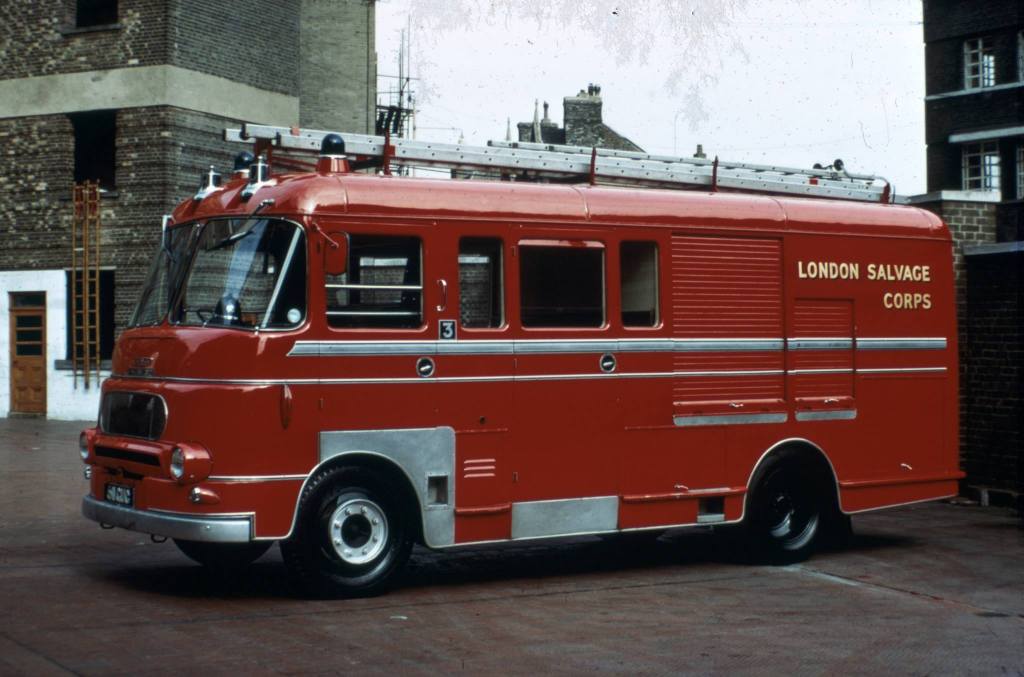


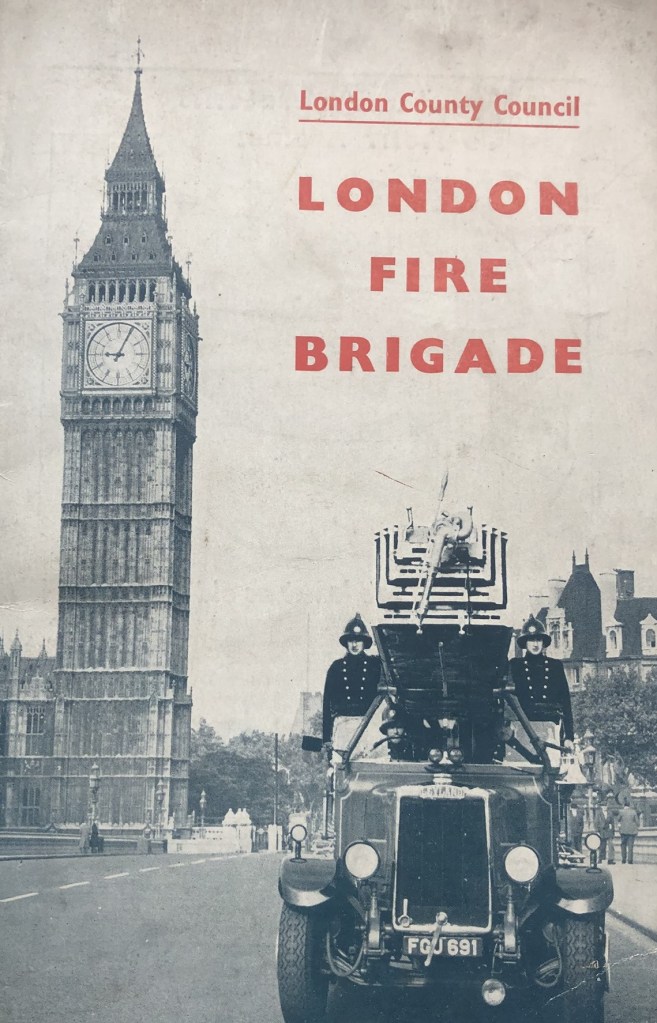


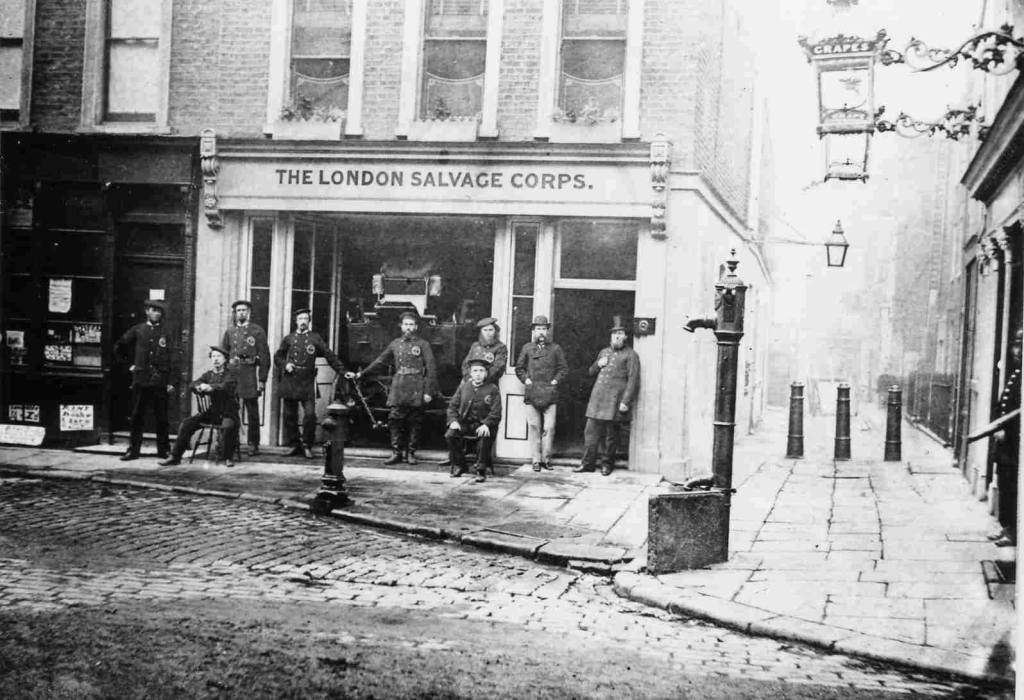


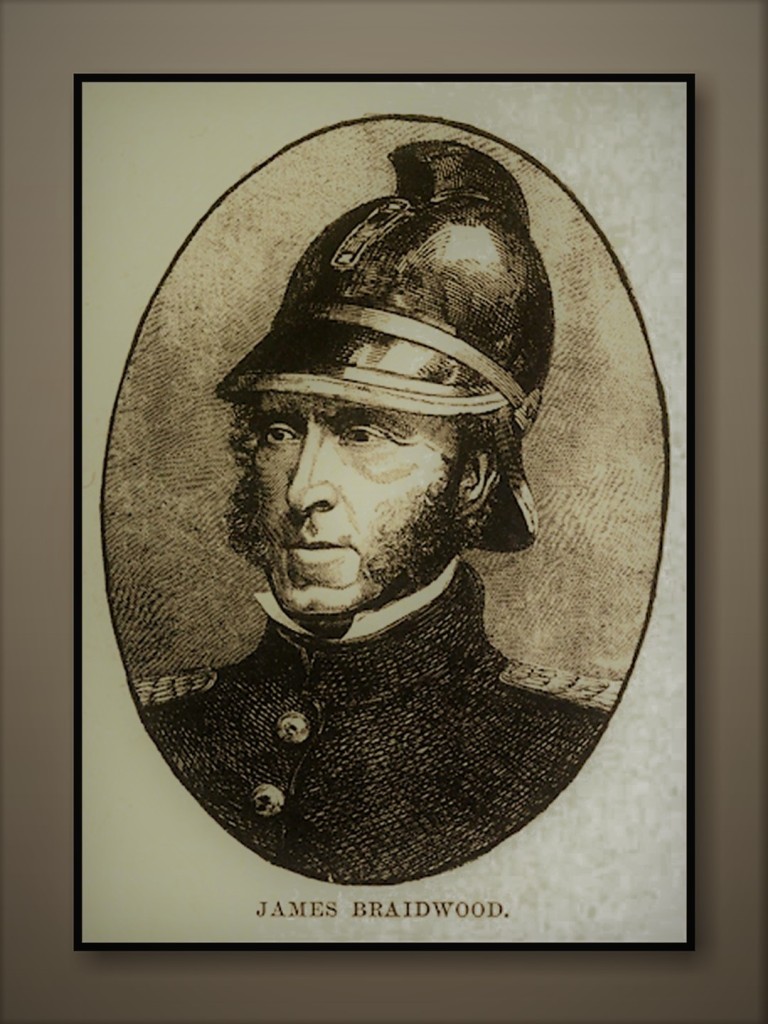
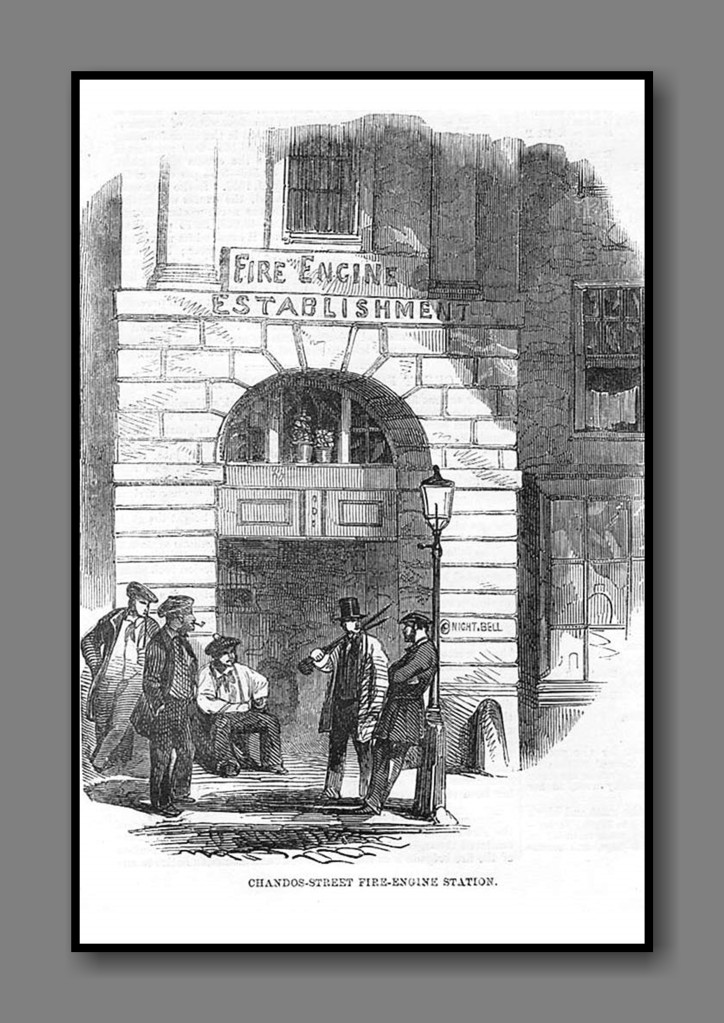
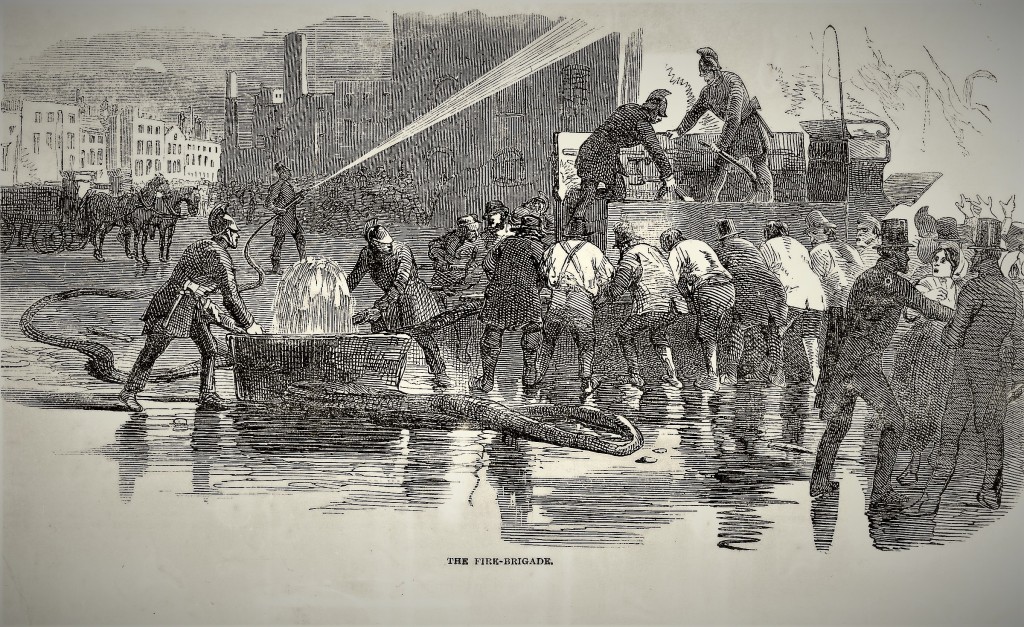
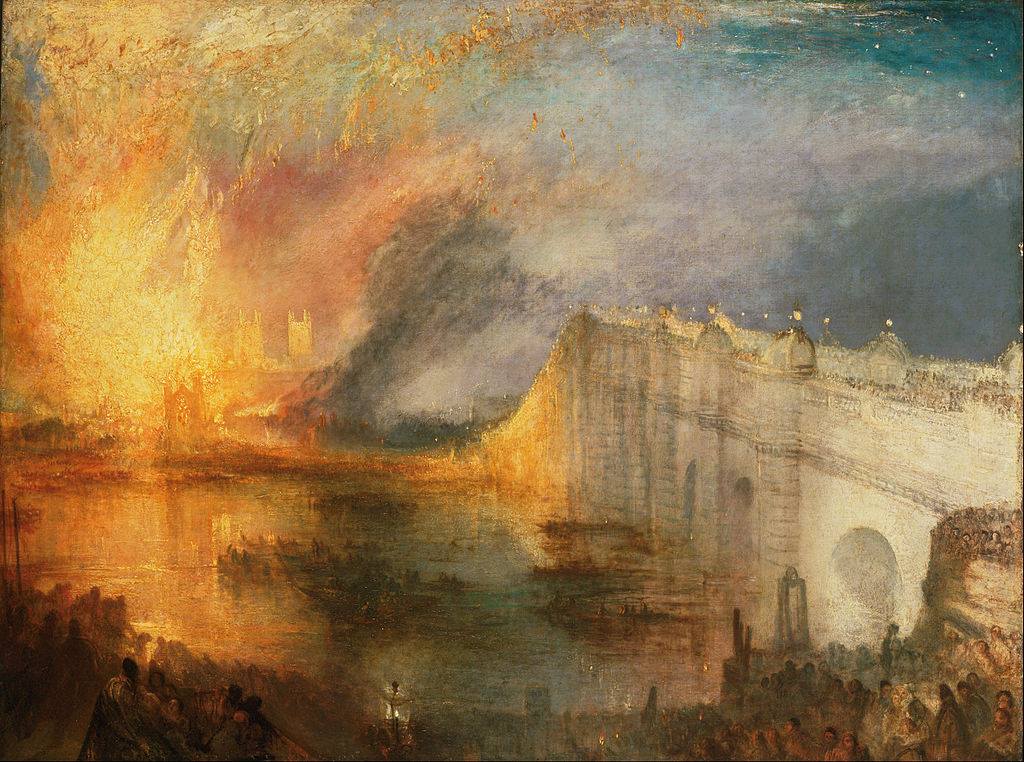
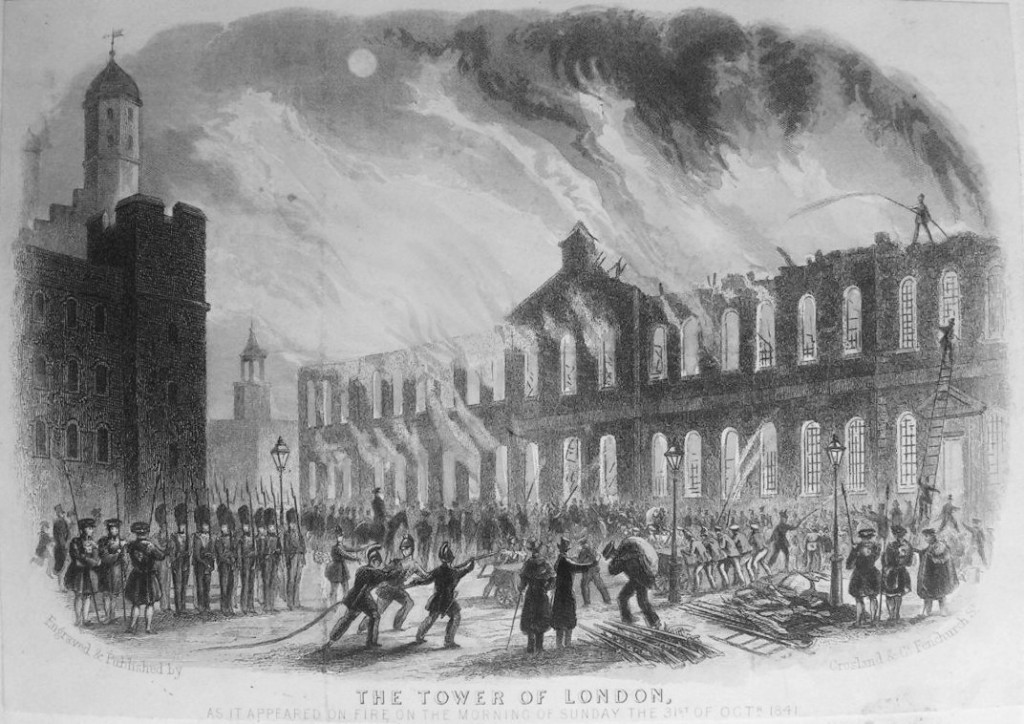
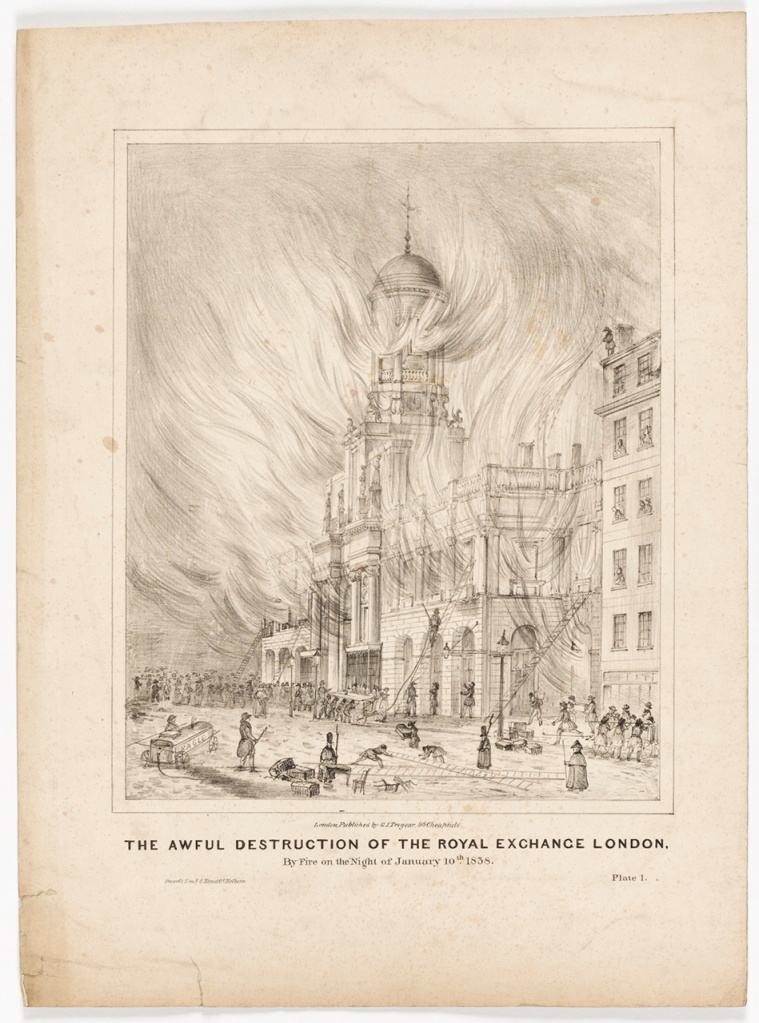
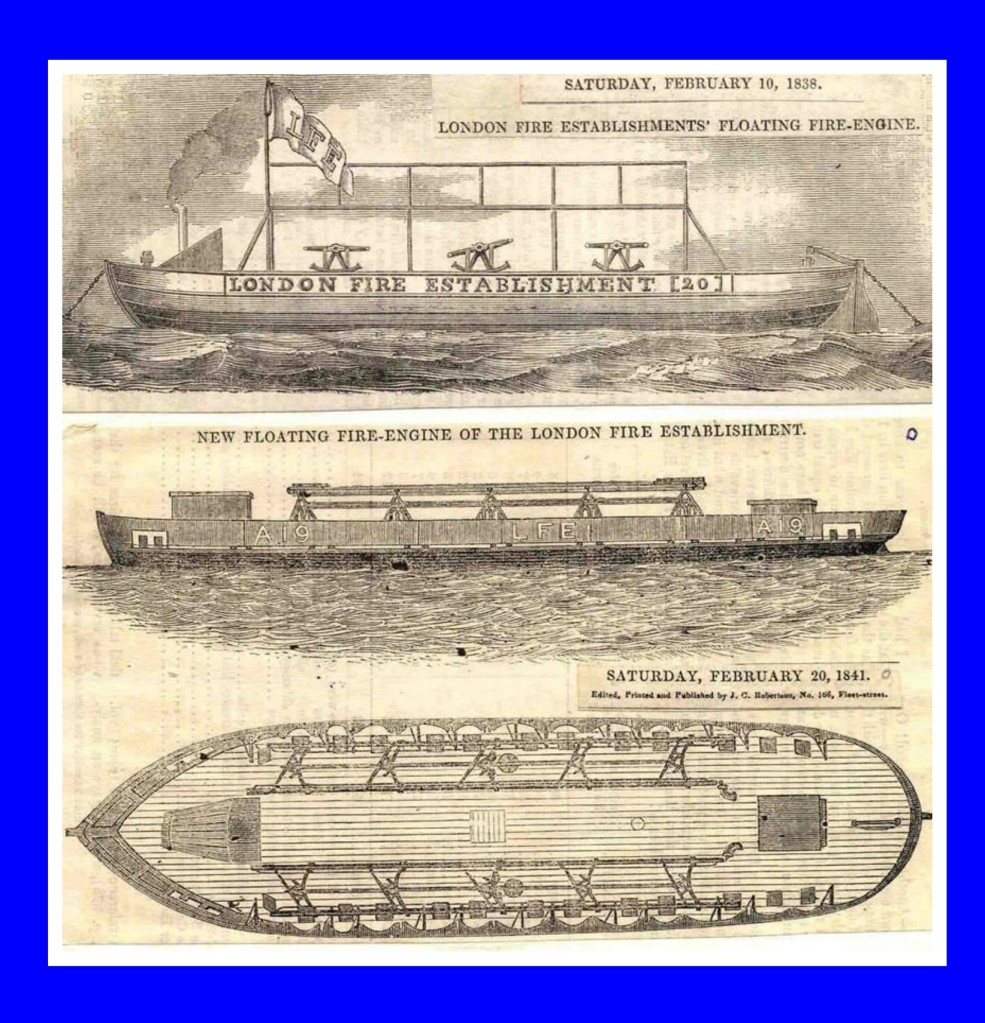
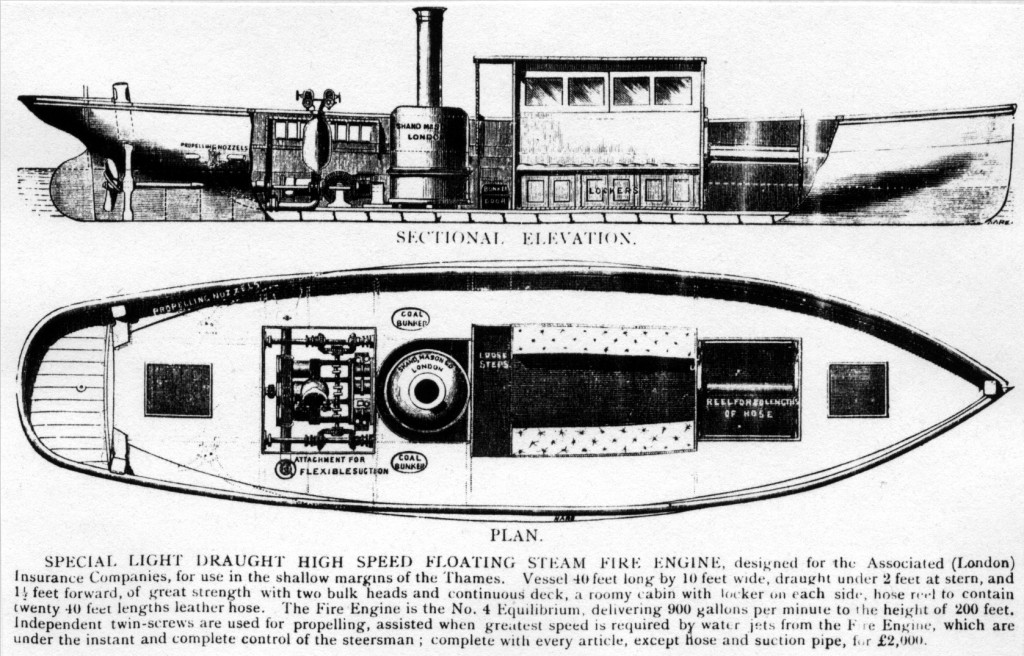
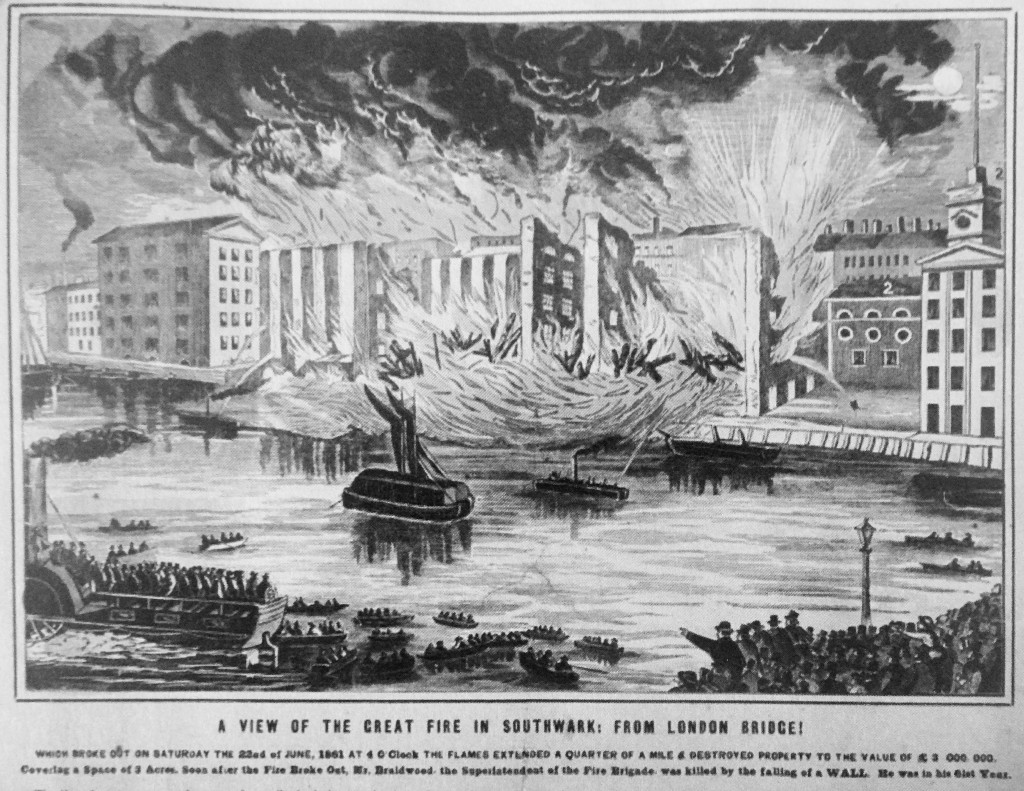
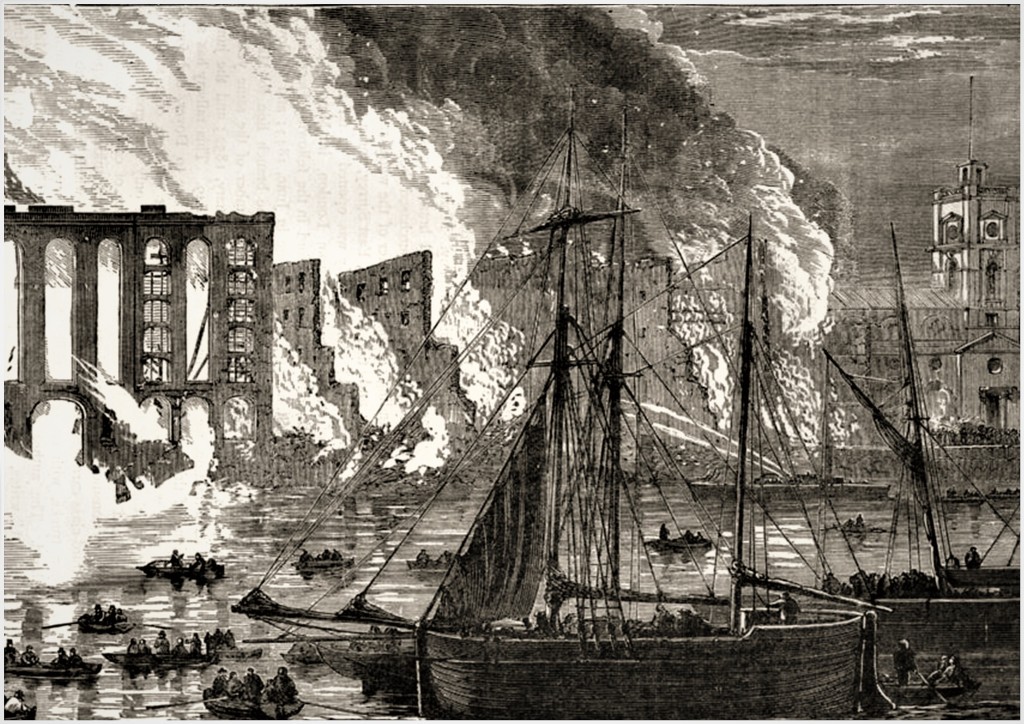
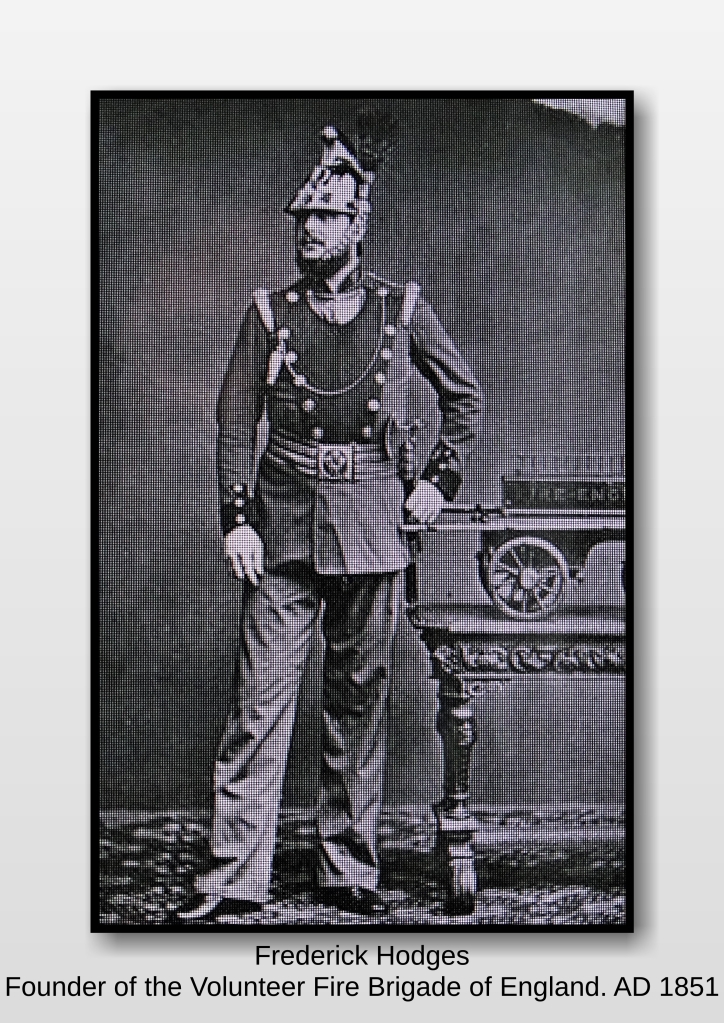
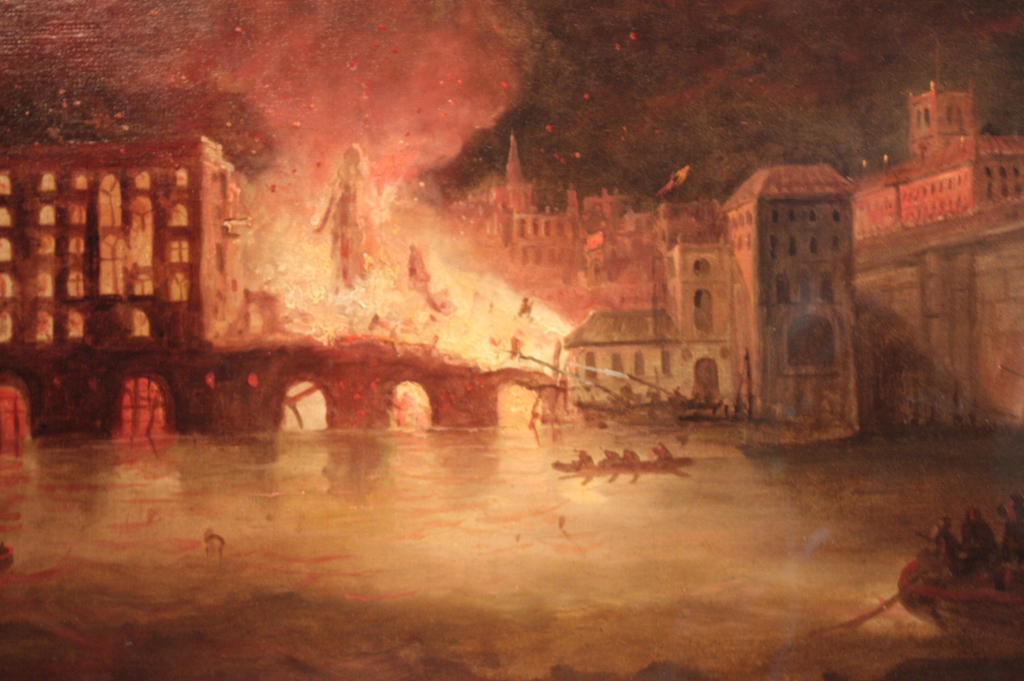
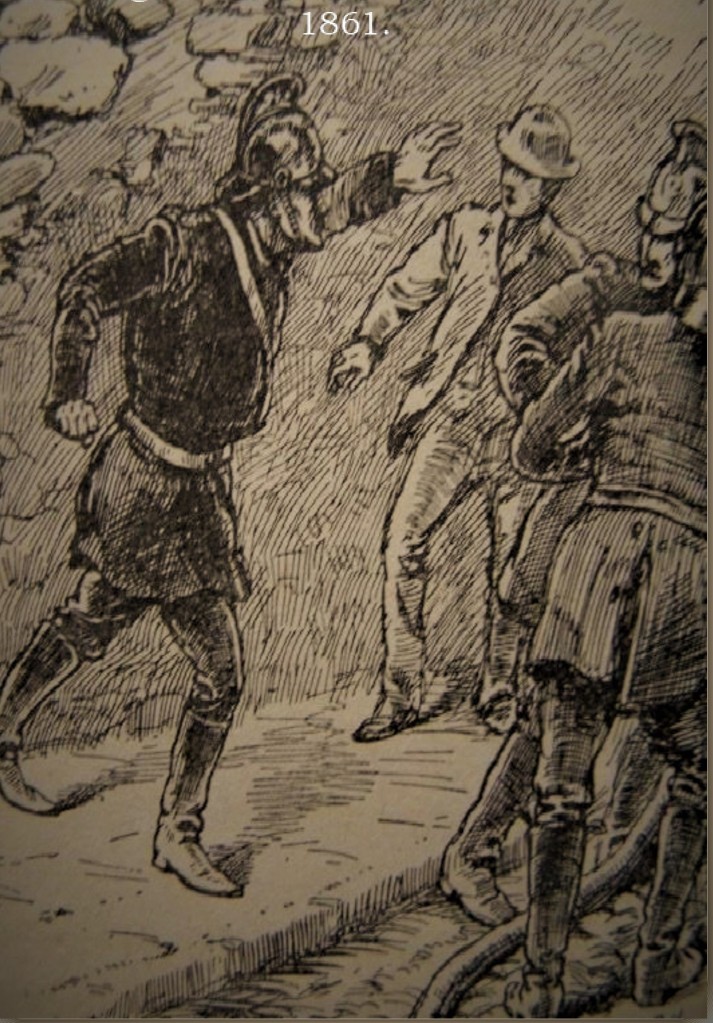
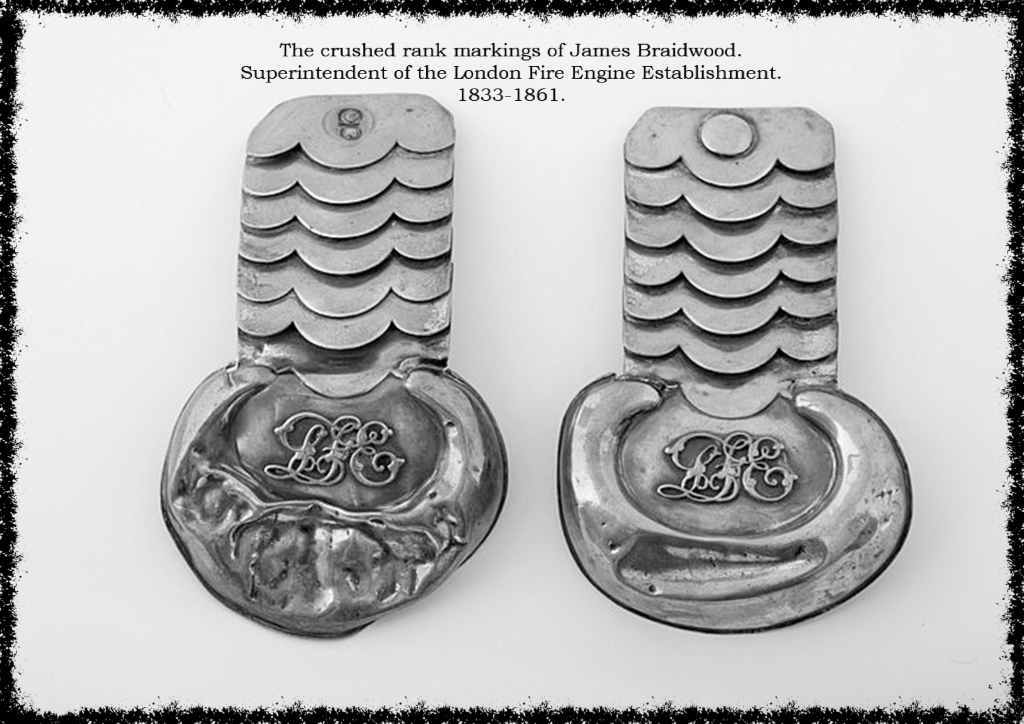
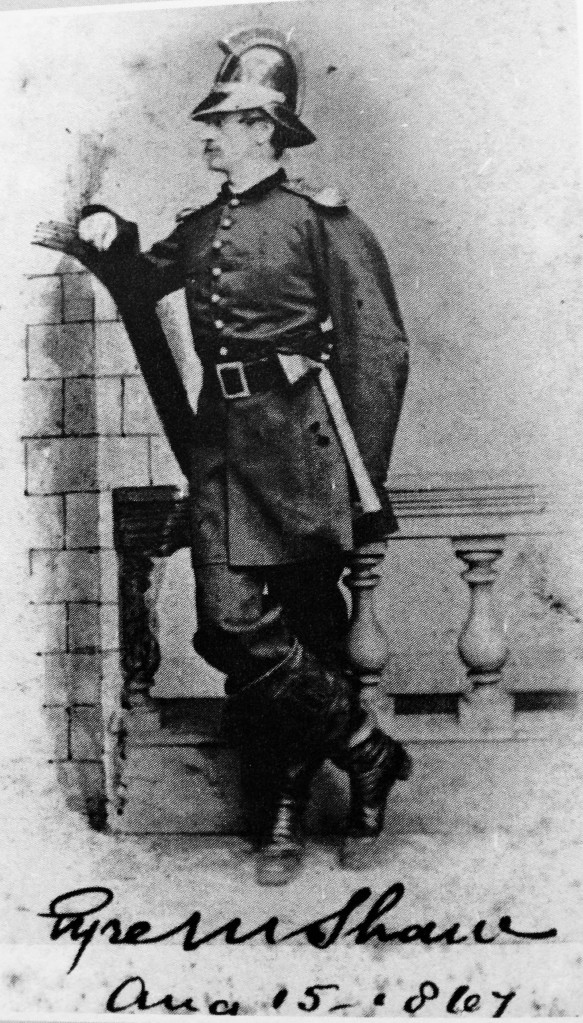
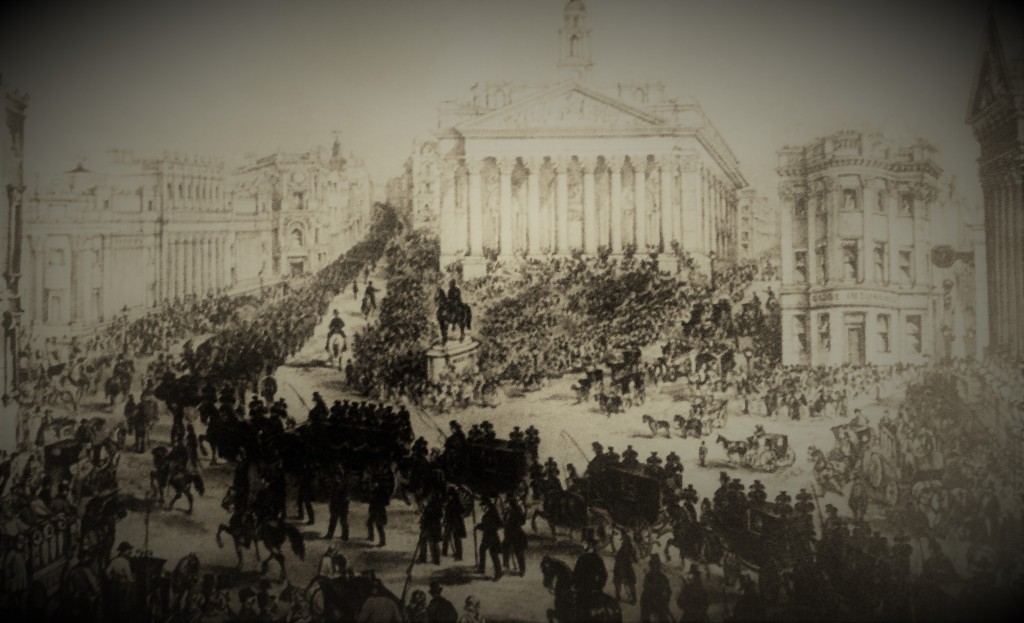
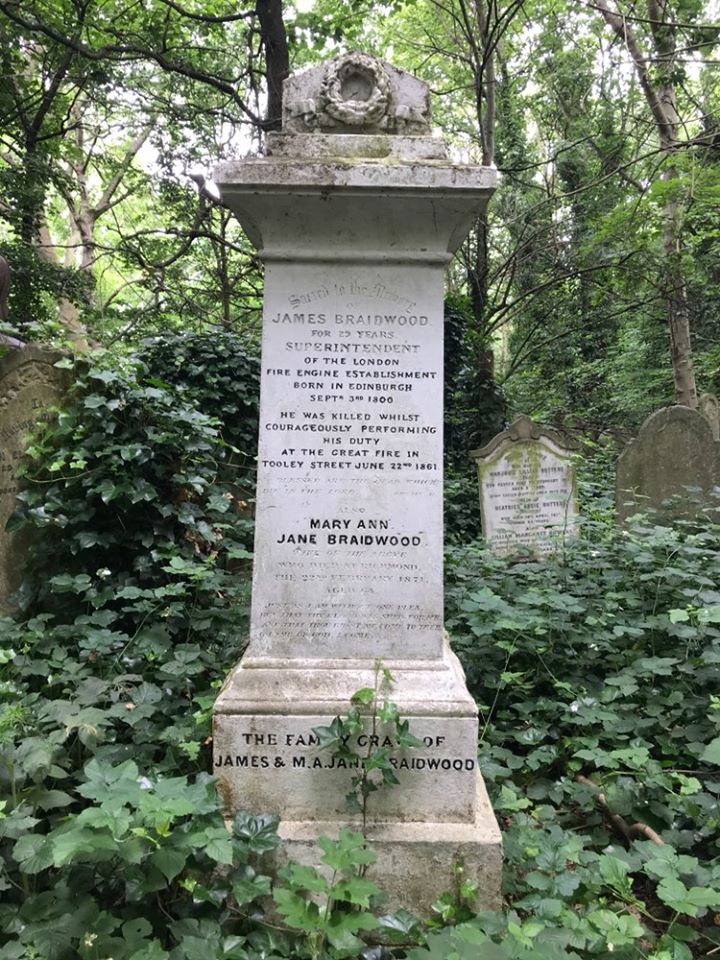
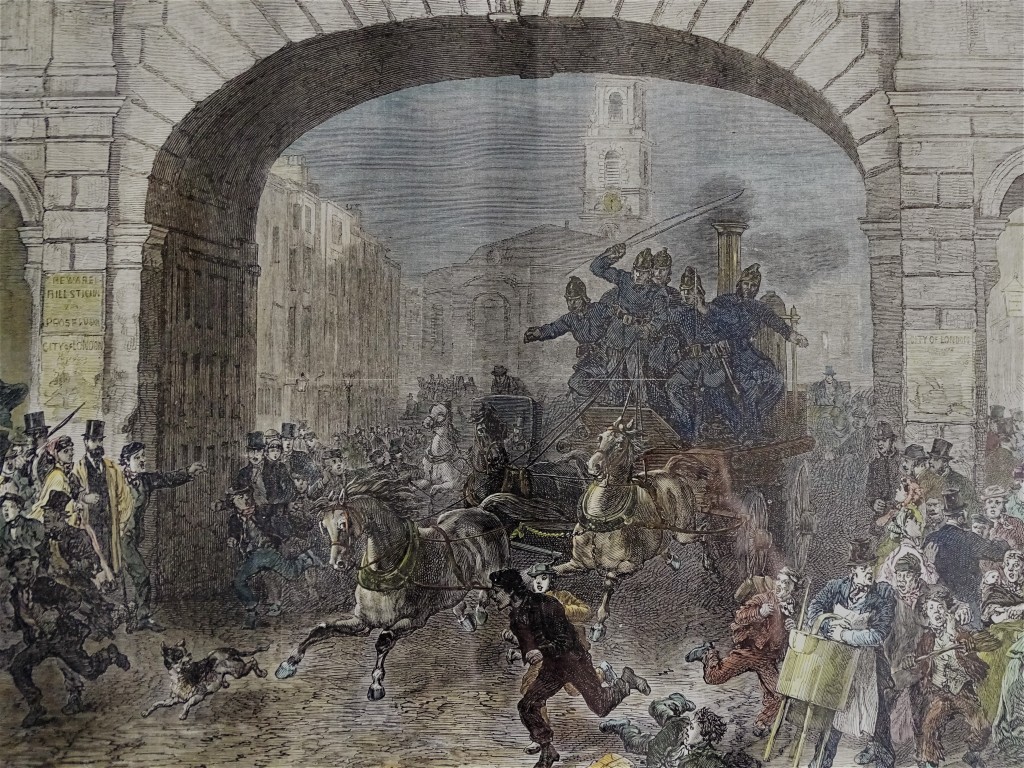
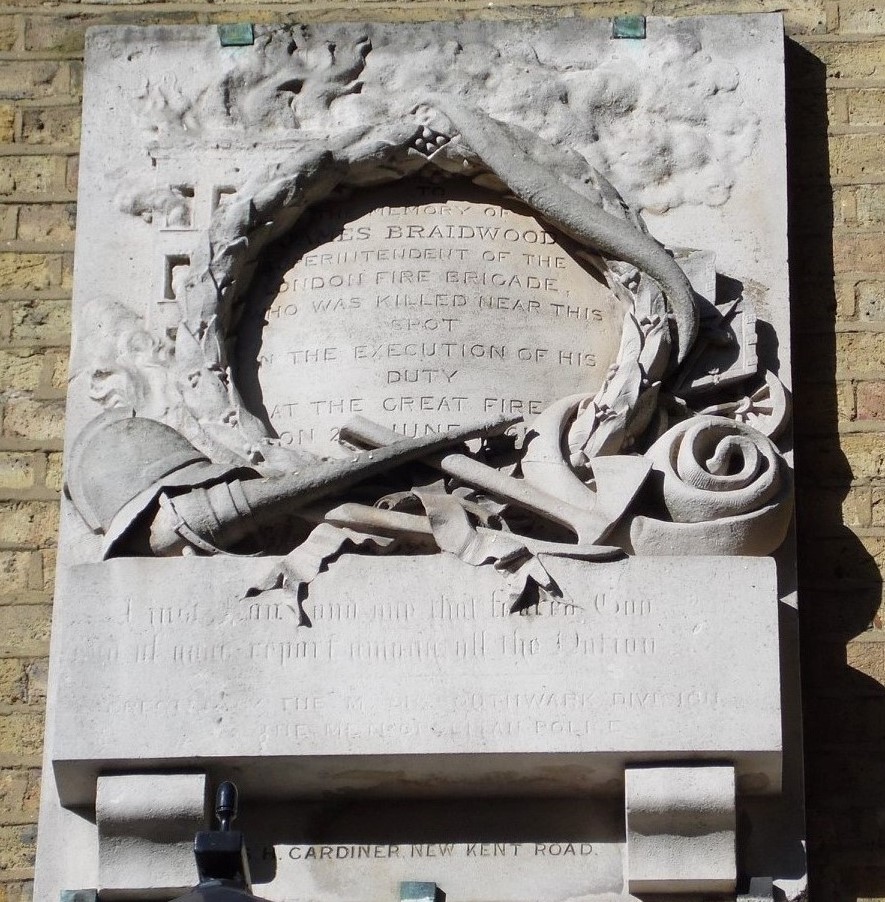
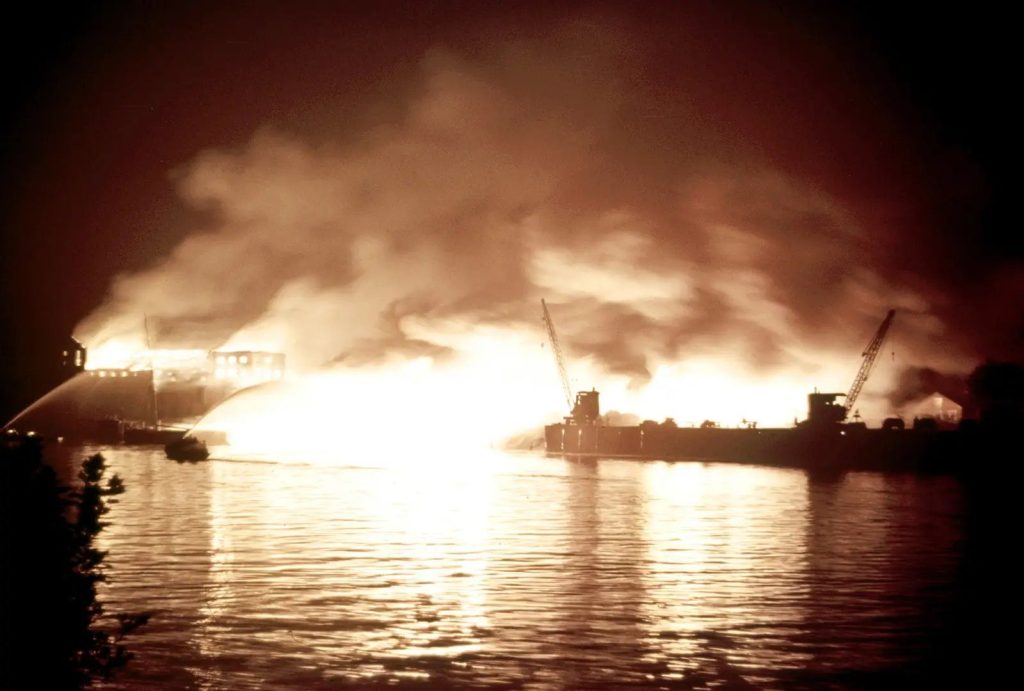


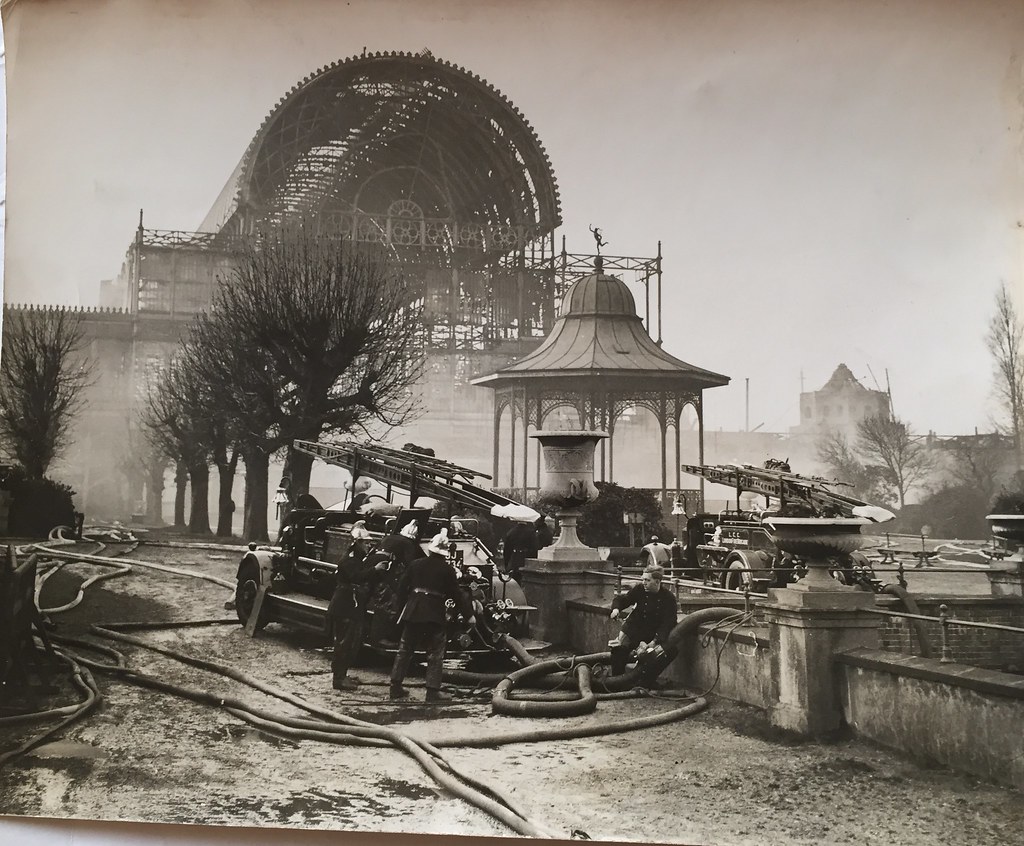

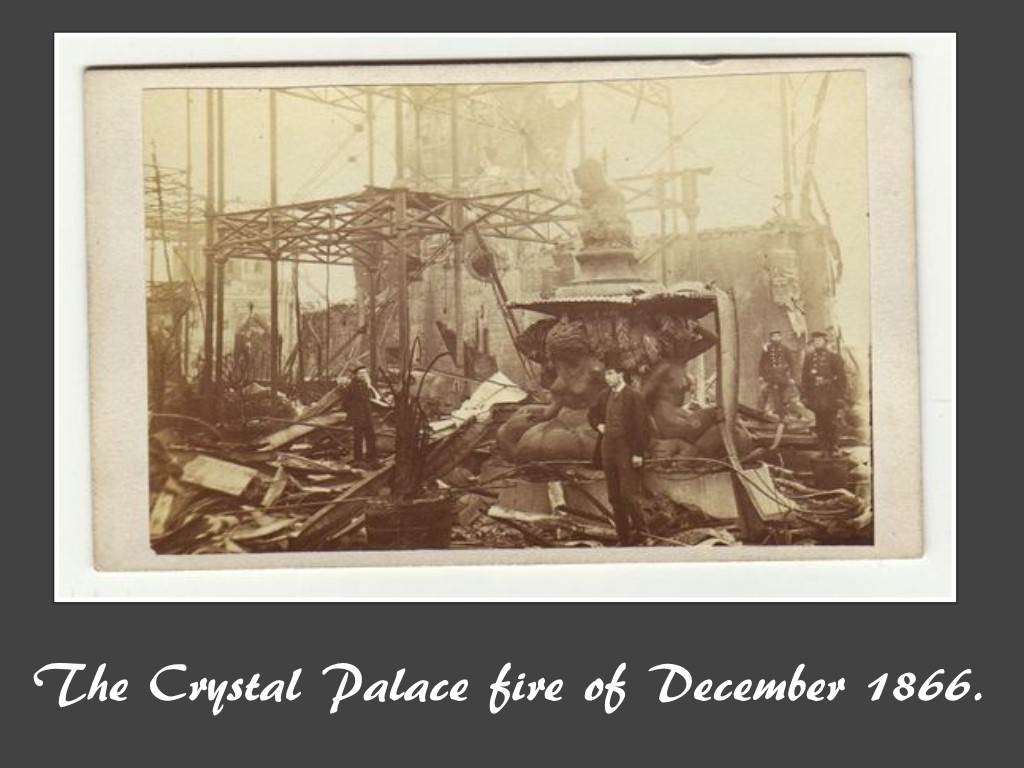
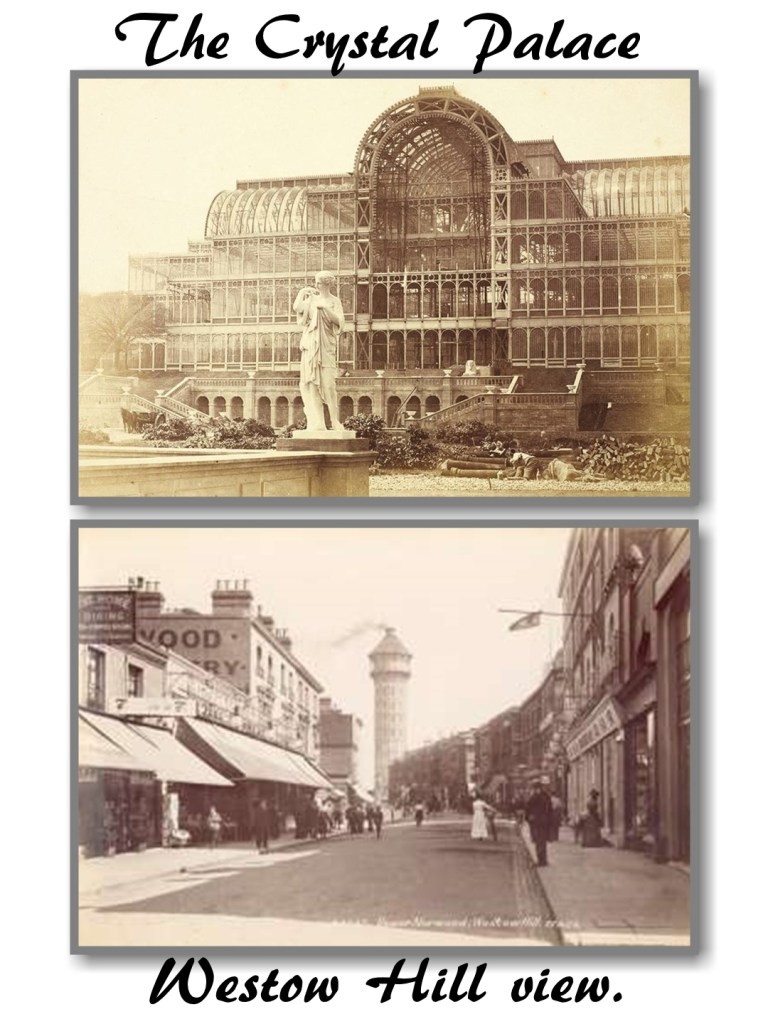
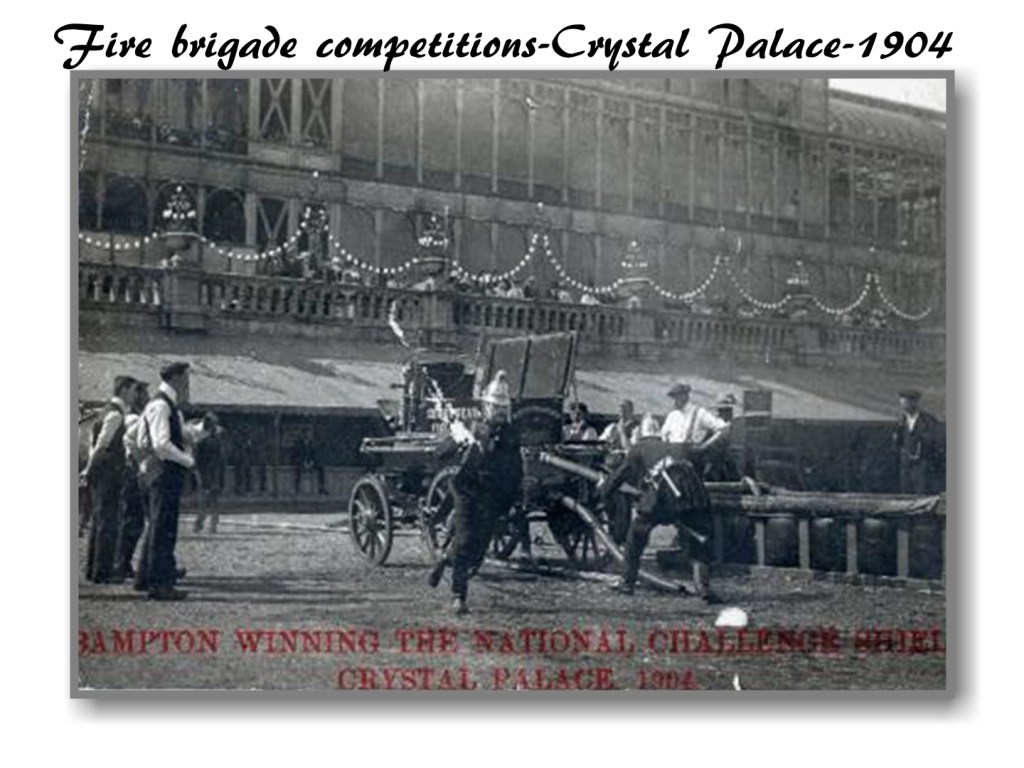
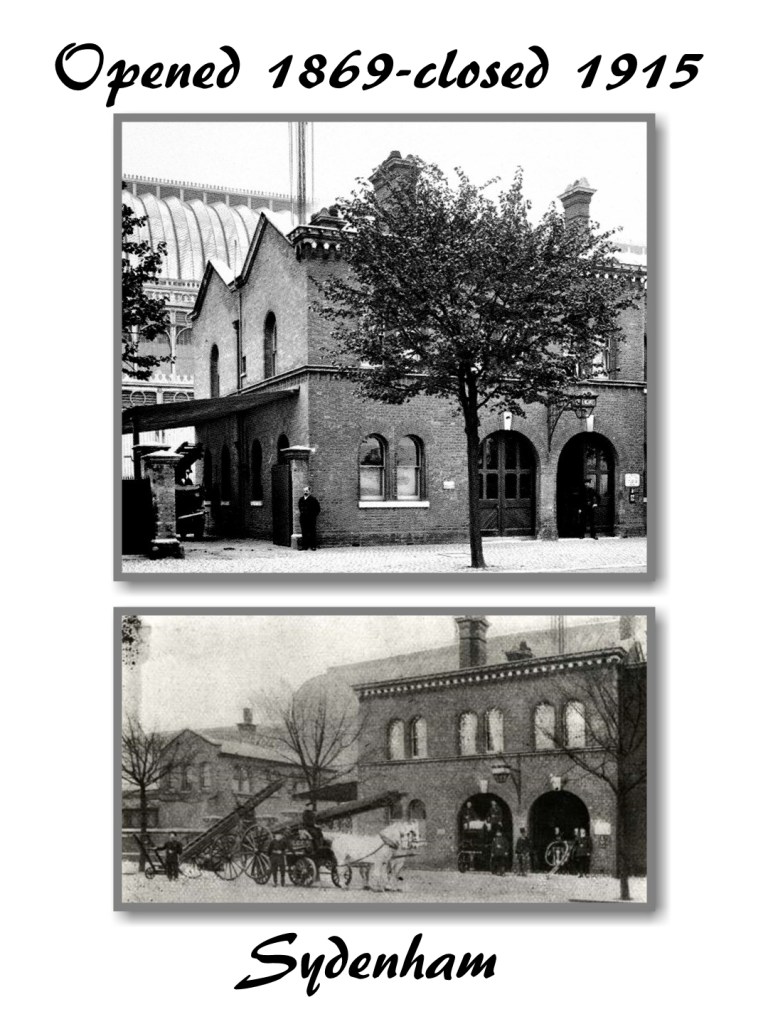


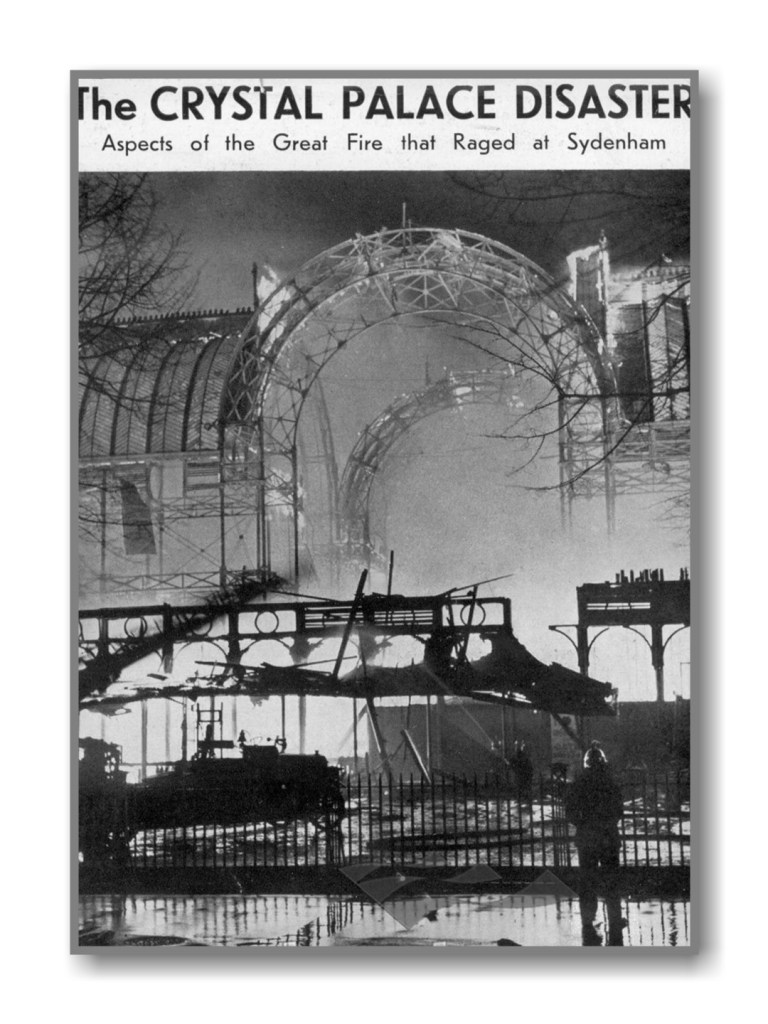
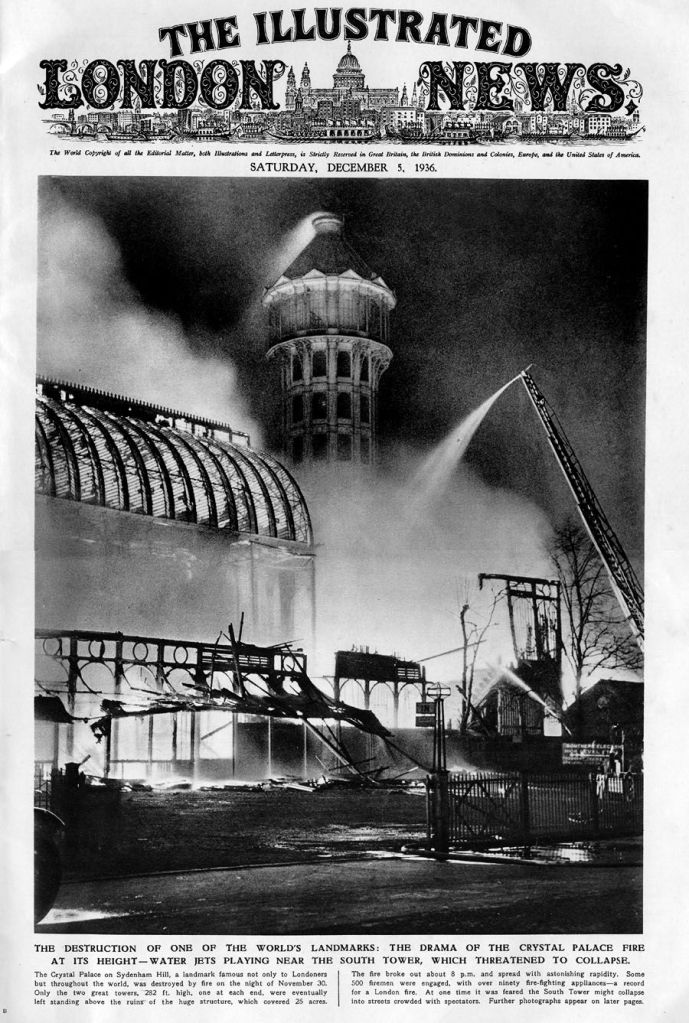


 A retired London Fireman