Captain Massey Shaw by Herbert Rose Barraud published 1890.
EVERY STORY HAS A beginning: this happens to be ours. Captain Eyre Massey Shaw is considered by many to be the great-great grandfather of London’s fire brigade. Shaw was appointed as the first Chief Officer of the Metropolitan Fire Brigade, which was founded in 1866. So it would be remiss not to include some words and images† of this iconic figure in this collection of fire brigade stories and to provide a glimpse of this eminent man of London society and his prodigious achievements in the early years of firefighting and later fire prevention.
Eyre Massey Shaw was born in Ireland in 1828 of a Scots-Irish family which had settled in Ireland in the seventeenth century. George Bernard Shaw, the playwright, was another member of the wider Shaw family. After attending Dr Coghlan’s school in Dublin, Shaw studied at Trinity College and took his MA there in 1854. It was intended by his family that he should enter the Church. However, when the time came for him to take Holy Orders he couldn’t face it and bolted to North America.
This is so unrepresentative of Shaw – to run away from something – that it deserves examination. Why should a serious- minded, intellectual type of man like Shaw refuse to enter a profession which seemed likely to prove congenial and where his family could secure him preferment? The answer might lie in family letters, but these, to my knowledge, do not exist. I can only speculate as to the true explanation.
Though the years of Shaw’s childhood and early manhood may have been happy enough for him personally – as the third son of Bernard Robert Shaw of Monkstown Castle, he is unlikely to have suffered any material hardship – they were far from kind to Ireland as a whole. The years between 1840 and 1850 were the years of famine. It is believed that as many as eight million people died from starvation in Ireland or emigrated to avoid it; approximately half the population. Villages and towns were emptied and corpses lined the roadsides. The effect on a sensitive boy – perhaps when riding home from school through villages where death and disease had carried off half their inhabitants, where starving women shook their fists at anyone on a horse, or were even too apathetic to protest – must have been disturbing. He might even have doubted the benevolence of his Maker and the value of the Protestant Church for which he was intended.
Anyway, Shaw took ship to North America and stayed there for several months. One incident occurred during this time which is worthy of comment. While he was in New York, the hotel in which he was staying caught fire and the guests had to evacuate the building. There is little doubt that the incident made an indelible impression on Shaw. He returned home on the understanding that he might choose another career.
In 1855 a commission was obtained for him in the North Cork Rifles, a militia regiment, and he married a Portuguese lady from Lisbon. By 1859 he had risen to the rank of Captain and was the father of two children, but he had still to find a profession that suited him. In 1860 he left the Army to become Chief Constable and the Superintendent of Fire Services in Belfast and was at once a success. He quelled the riots between Catholics and Protestants without forfeiting the respect of either party, and reorganised the Belfast Brigade which had been in very poor order. It was this latter achievement which led to his appointment to succeed James Braidwood who, as the first Superintendent of the London Fire Engine Establishment, was killed by a falling wall whilst directing his force of firefighters at a disastrous warehouse fire at Tooley Street in 1861.
The years from 1862 to 1865 were Shaw’s years of apprenticeship when he acquired a detailed knowledge of every aspect of firefighting. The London Fire Engine Establishment was a small and vastly overworked force paid for by the insurance companies. It never numbered more than 130 men or 19 stations, but it was well trained and completely professional. Under its first Superintendent it had won considerable popularity, with a remarkable reputation for efficiency.
Superintendent Capt. Eyre Massey Shaw of the London Fire Engine Establishment 1861-1866.
The Tooley Street fire, however, had persuaded the insurance companies (who ran the London Fire Engine Establishment) and London’s public that the defence against fire should not be a matter for private enterprise. The Metropolitan Fire Brigade was established on 1 January 1866 and Captain Shaw was the natural choice as its first Chief Officer. The men from the London Fire Engine Establishment formed the core of the new Brigade, and added to them and their stations and equipment were the escapes and conductors of the Royal Society for the Protection of Life from Fire. Later, Shaw persuaded his employers, the Metropolitan Board of Works, to buy those fire engines of the London parishes which were in good working order.
The Brigade at this time was composed exclusively of seamen, from both the Royal and Merchant Navy, men who were used to irregular hours and living in confined quarters. Shaw was a stern but fair martinet, rising at 3 a.m. to drill and train his men when the streets were empty, but there was no doubt of his personal popularity. When men refer to a senior officer formally by name or rank it can imply a lack of acceptance, or even active dislike or disrespect; Shaw was universally known among his firemen as the “Skipper” or “the Long ’Un”.
At a fire in the basement of a big warehouse in Upper Thames Street, a fireman was struggling to drag a hose towards the centre of the fire when dimly through the smoke he noticed someone behind him. The fireman suggested quickly, and coarsely, that the ‘long’ person behind him should give him a useful hand with the heavy hose instead of aimlessly standing about doing absolutely nothing. The person in question, Shaw, merely told a fireman with him to take up the hose as suggested. There were no further repercussions following this incident. This story contrasts nicely with that of a subsequent London Chief Officer who, very early in his Brigade career, arrived at a fire and angrily demanded of the officer in charge why the firemen were not formed up on parade and awaiting his orders. It is not known what the officer said in reply but I imagine his expression would have been sufficient indication that London firefighters don’t wait to be told what to do at a fire.
Shaw’s Metropolitan Fire Brigade 1866-1904
Perhaps a further clue to Shaw’s personality lies in the care he showed for his men’s safety at fires. Warehouses at that time presented a particular risk. They were commonly built of brick with unprotected steel or iron girders to support the floors and roof. In a fierce fire the girders would expand with the heat and push out the walls of the building. The floors, laden with goods – many which could absorb large quantities of the water used to fight the blaze – added significantly to the fire loading, which in turn frequently caused floors to collapse in a fire. A fireman directing a hose through a lower window from the street was particularly exposed to danger from falling brickwork. Shaw took the greatest pains to see that his men were posted in positions where they would be safe.
The Metropolitan Fire Brigade headquarters-Southwark Bridge Road. SE1. opened by Shaw in 1878.
Turn-out from the headquarters station.
On one occasion in the 1880s, at a very big fire at the King and Queen Granaries, Shaw was superintending firefighting operations when there was a crash of brickwork. The huge walls, bulging under the weight of swollen maize and tons of water, looked as if they were going to collapse. One of the firemen who was directing a jet from the centre of an escape ladder dropped his hose, slid down the escape, and started to run. Shaw caught him by the arm as he ran.
“Don’t run,” he told him, “you run into danger. Go and pick up your hose and carry on. I’ll tell you when to run.”
The fireman looked at the bulging walls, looked at his Chief Officer, who stood quietly on the very spot where the walls would crash if they did collapse, picked up the nozzle and resumed his work. The walls did collapse, but not until three days later. Finally, Shaw backed his men on every occasion when they made representations for improvements in their pay and conditions. For three shillings a day when he joined, a man was required to remain continuously on duty, fully dressed in uniform, boots, belt and axe. If he took off his boots, he was liable to be fined the best part of a day’s pay. Leave was allowed for a few hours during the day with the Station Officer’s agreement, but beyond this, or after 10 p.m., Shaw’s personal permission was necessary. When recruiting was poor and men fell ill, firemen might be on duty for six days at a time, never shifting out of their clothes.
In 1884 the position at last improved. Station officers could grant leave for 24 hours; District Officers could grant leave for 48 hours. However, this was a special privilege, not a right, and the firemen were still otherwise employed on continuous duty. The strain on the firemen was enormous. Shaw could ensure that few died on active duty – there were, in fact, only ten deaths in the 30 years he was Chief Officer – but he could not prevent the breakdown in health and early retirement into which many were forced.
It is difficult to estimate how much these conditions arose from public penny-pinching (the Metropolitan Board of Works ran the Brigade on a very cheap shoestring) and how much from the defects in Shaw’s own character. There is a modern tendency to look for feet of clay on every idol and Shaw had his faults. If nothing else, he had some of the defects of his many virtues. His powers of leadership almost certainly surpassed those of any other fireman in the world at that time, but he seems to have been quite unable to secure the backing of any elected body or committee with whom he had dealings.
He was an aristocrat by birth and an autocrat by nature. He expected implicit obedience from his subordinates. He never forgot for a single moment that he was a gentleman and on the friendliest terms with Royalty. When Shaw was injured at a fire in 1883, which left him with a permanent limp – he collected several injuries in the courses of his firefighting career – the Prince of Wales, a close personal friend, together with other members of the Royal family, drove in open carriages to the Brigade’s headquarters at Southwark, where Shaw was convalescing, through streets lined with cheering Londoners. There can be very few people who belonged to quite so many London clubs as Shaw. Besides the Carlton and Pratt’s there were at least five others. He was very much a member of London Society.
Shaw was a character to admire rather than to love. Throughout his life, apart from the single lapse when he preferred flight to America to Holy Orders, it seems doubtful that he ever flinched from the path of duty even in the full glare of publicity. He wrote of a fireman’s work: “If he wants to do it well, he must show moral as well as physical courage; in short, he must harden his heart and act as if no one were looking on.”
A rare picture of the Chief Officer, Captain Eyre Massey Shaw, as he waits to greet the Prince of Wales (the future King Edward VII) and other members of the Royal party at the Metropolitan Fire Brigade Headquarters in Southwark, SE1. Captain Shaw is in the company of his officers and men from the headquarters station. He resigned from the MFB on 1 November 1891 after having a severe disagreement with the London County Council on how the Fire Brigade should be run. A favourite with the Prince of Wales, Captain Shaw was knighted upon his retirement and became a KCB. 1891
I have a suspicion that Shaw may have enjoyed disdaining public approval and flexing his moral muscles. It would probably have served his own interest, and those of the Fire Brigade, better if he had on occasion showed that he cared even a little what other people thought and felt. One would have thought, for example, that when the Metropolitan Board of Works gave way to the London County Council in 1889 he would have used his immense influence and personal authority, combined with his great popularity amongst the general public, to have persuaded the Fire Brigade Committee to expand the Brigade and improve working conditions for firemen. The financial restrictions which had bedevilled the Metropolitan Board of Works had disappeared; money could be found quite easily. Instead, matters went from bad to worse.
Two years after the London County Council was formed, Shaw abruptly retired. It is difficult to know exactly why. The Committee Clerk was notably discreet, and nothing of the true facts was allowed to infiltrate the minutes. The Committee, as a whole, was genuinely surprised and expressed their pain to see him go. They may also have secretly been relieved. He had become an institution, and institutions can be obstacles to evolution. But he departed with the Committee’s thanks, an inscribed marble clock from Queen Victoria, a fine silver tea service from the insurance companies and a knighthood.
He became Managing Director of the Palatine Insurance Company and Chairman of the Metropolitan Electricity Board. He was even appointed Deputy Lieutenant of Middlesex. But these are peripheral to his real achievement. He was the creator in his own time of the finest fire brigade in the world, and when he died in 1908, his legs amputated and approaching eighty years old, this was remembered by the thousands who followed his funeral cortège from Pimlico to Highgate Cemetery where he lies buried with his wife and children. Shaw remained a potent influence in the London Fire Brigade right up until the late 1990s.
The funeral cortege of Sir Eyre Massey Shaw at the Pimlico home of his daughter.
His memory is perpetuated in the fireboat bearing his name. The Massey Shaw showed some of his indomitable courage in 1940 off the beaches of Dunkirk, but his was the moral fervour which makes firefighting in the London Fire Brigade more than a way of earning one’s livelihood. Even until more recent times the brigade brought with it membership of one of the most tightly-knit, morally-motivated groups of men in the world. I am none too sure what the ghost of Sir Eyre Massey Shaw would make of the policies and practices of today’s London Fire Brigade. His was a growing London. Fires were far more frequent and gave rise to genuine public concern. He worked during a period of growth with more firemen being employed and more fire stations built.
The Massey Shaw fireboat nearing her berth at Blackfriars on the Victoria Embankment, London.
1938
Today’s Brigade is a very different ‘kettle of fish’. Recent reductions in the number of fires have led to consequential reductions in both staff and fire stations. (Ten London stations were closed in 2014.) The new brigade has ‘out-sourced’ training regimes and even a for-profit offshoot, LFB Enterprises Ltd. LFB Enterprises provides a range of community safety, fire-related products and training tailored for organisations. It is a fact that Shaw was none too fond of the fledgling London County Council. He was a man of his time; today is in the now. Whilst many former London Fire Brigade staff find might find themselves in the same boat as he – unsure and occasionally ill at ease with this rapidly changing world – it is a world in which the modern London Fire Brigade must contend. Despite the fiscal challenges the Brigade continues to move forward. As with Shaw, it will take the passage of history to see what progress is actually made.
Crystal Palace was erected in London for the Great Exhibition of 1851. It was the centrepiece of an exposition constructed in what is now Kensington Gardens. A truly astonishing, prefabricated, design that was created on parkland and with many planted trees inside it. It had been designed in glass, iron and wood by the architect Joseph Paxton at the bequest of Queen Victoria’s husband, Prince Albert. As the exhibition’s focal point it attracted thousands of visitors from home and abroad. The press of the day commented; ‘it could hardly have been a more effective demonstration of advanced British technology.’
The original ‘Palace’ measured 1,851 feet (564 m) long, with an interior height of 128 feet (39 m) and was, at the time, the largest amount of glass ever seen in a building. When the exhibition closed in 1852 Sir Joseph, as he now was, pointed out that the building could be dismantled and moved somewhere else. It was and relocated to the village of Sydenham, Kent. Paxton ran the whole re-siting operation and the ‘Palace’ was recreated even larger than before. The structure was topped by an imposing Moorish dome in open parkland. From the hilltop, which would take the name of Crystal Palace, it could be seen for miles around.
The Crystal Palace.
Twelve years before the Metropolitan Fire Brigade (MFB) was created the new Crystal Palace was formally opened by Queen Victoria in 1854. The new site, comprising gardens and trees, fountains, a maze, life-size figures of dinosaurs, was a great success. Its creator, Paxton, died in 1865 aged 61. Various events vied to be held at the ‘Palace’. They including firework displays, cat and dog shows, cricket and football matches. Crystal Palace even had its own railway station and Sydenham village had developed into a prosperous area in the London suburbs. In the year the MFB was formed a one-off Olympic Games was staged there in 1866. That was also the same year that Crystal Palace suffered its first major fire.
The fire occurred on Sunday 30th December. A fire broke out destroying the North End of the building along with many natural history exhibits. Such was the importance of the site that the MFB’s new Chief Officer, Capt. Eyre Massey Shaw, drove in this carriage from the Watling Street headquarters, in the City of London, to direct operations. As the Crystal Palace Company was underinsured the north transept was never rebuilt and the building was unsymmetrical from then on. In 1892 one person died from a hot air balloon accident and in 1900 another was trampled to death by an escaped elephant.
In 1911, the building hosted The Festival of Empire for George V’s coronation.
Yet despite attracting hundreds of thousands of visitors the revenue raised was still not enough to keep the Palace solvent. It’s much anticipated sale by auction was announced. The scale of its financial problems plagued the Palace, its sheer size meant it was impossible to maintain financially and it was declared bankrupt in 1911. A number of ‘Save the Palace’ schemes came into being and the Earl of Plymouth raised the money to prevent it being sold to developers. Finally in 1913 The Lord Mayor of London set up a fund to repay him and the Palace became the property of the nation.
From the time of its reopening on Penge Common in 1854 to 1884, the Palace averaged 2 million visitors a year, hosting a wide range of shows and exhibitions, meetings for numerous societies and organisations, as well as concerts, circuses, pantomimes, and weekly firework displays that only ceased in 1935. It was the venue of many fire brigade competitions too and teams around the country vied for the National Challenge Shield.
The Sydenham fire station, built by the Metropolitan Board of Works (the forerunner of the London County Council) for the Metropolitan Fire Brigade opened in 1869. It was closed in 1915.
The fire.
On the evening of the 30th November 1936, at about 7.25 p.m. a staff fireman noticed a flame at the rear of the staff offices. Joined by two others they attempted to tackle the blaze but with no dividing walls to resist it, and fanned by a strong northwest wind, the fire rapidly grew in ferocity. The Palace had been almost empty at the time of the outbreak apart from the Crystal Palace Orchestra rehearsing in the nearby Garden Hall. An orchestra member later told reporters;
‘The band didn’t take much notice when told there was a fire in the Palace. But they soon fled after a staff member ran in crying; “Run for your lives! The Palace is blazing!”
It was later reported that just after 7pm on that evening the Palace’s manager, Sir Henry Buckland, was walking in the grounds of the building when he saw a red glow emanating from it. There is no record of him ever summoning the fire brigade. Thick smoke was, by then, bellowing out of the main door and glass was raining down “like red hot treacle” as the orchestra members made a hasty exit. Fortunately that evening a local man was walking his dog past the building when he saw flames inside. Hurrying in, with his dog, he found the firemen vainly trying to extinguish what had started as a small fire but was being fanned by a rising wind. It was he who called the fire brigade, which arrived just after about 8p.m. His call was not the only summons for fire brigade help.
At 7:59 the Penge Urban District Council Brigade received the call but upon arrival found it could not cope and summoned help. Local brigades, Kent, Croydon and London sent more firemen and engines to the scene. The early reinforcements arriving from Beckenham and Thornton Heath. West Norwood fire station, located in Norwood Road, received a street alarm call from Farquhar Road at 8.00pm. (New Cross fire station-a superintendent station- received a further call at 8.02pm.) It was the call to West Norwood that would bring much of the London Fire Brigade into action.
The first London Superintendent to arrive at the blaze made it a ‘Brigade call’. A message that immediately summoned 60 London fire engines to the scene. It was not long before the whole of the Crystal Palace area was ankle deep in inter-woven fire hoses and within an hour of the arrival of the first Penge fireman over 400 fire-fighters were at work. According to some reports, the flames reached 300 feet. The glow could be seen from Brighton and by ships in the English Channel. Hills for miles around were packed with people watching the blaze. Motorcars were also clogging the already chaotic scene arriving from the West End with the well to do who had finished watching the evening performances of London shows.
With the Brigade call message received the Chief Officer, Major Cyril Morris. MC. left the Southwark Brigade headquarters and rushed to the scene where he took over command of firefighting operations from the Chief Officer of the tiny Penge brigade. The Crystal Palace fire raged until midnight. There were serious concern as to the safety of the 275-foot south tower. Not only did it have vast densely populated streets in its shadow but also the top of the tower held approximately twelve thousand gallons of water. Residents of nearby homes were evacuated in fear of it collapsing. Luckily, the London Fire Brigade managed to stop the fire some 15 feet from the tower.
Every effort was made to put the flames out, but they grew stronger and were accompanied by clouds of sparks and fierce explosions. London sent many of its 100 foot turntable ladder fire engines to act a water towers, directing power jets of water into the inferno. Despite the bravery and skills of the firemen, now comprising some 88 fire engines and 438 firemen from four brigades, the building could not be saved. Finally its central transept collapsed with a deafening roar.
Thousands of people flocked to watch the blaze. They came on foot or by bicycle, cars and vans. Even special trains were put on from towns in Kent. Mounted policemen did their best to control the spectators, but they seriously hindered the firemen, as well as causing damage to local people’s properties. When dawn arrived most of Paxton’s masterpiece had been reduced to twisted metal and heaps of ash. The next day all that remained of the former Palace were the two water towers, now blackened with smoke, and a few hundred feet of the nave to the north.
About two hundred of the seven hundred Palace employees received their notice the morning after the fire. Some were re-employed to clear the debris. Six years later the two towers were demolished as they were thought to be an easy navigation point for German bombers. No lives were lost in this blaze and just how the fire had begun was never established.
Rival theories were attributed to the probable cause; one being a cigarette left burning that ignited wooden flooring: another was deliberate sabotage by a disgruntled worker or some sort of extremist! John Logie Baird, the television pioneer, who had a workshop in the building suggested a one of his cylinders might have been leaking flammable gas, which could have been ignited by the watchman’s gas ring. This caused all the other cylinders to blow up like a bomb going off! There was no report of an explosion prior to the blaze by the Palace firemen.
There is some irony about the night the Palace burnt down. The Crystal Palace fire was a more spectacular event than could ever have been dreamt up by the Palace trustees. An irony not lost on many of the national newspapers. The Palace’s swansong brought the largest crowd ever to assemble at the top of Anerley Hill. The event became deeply ingrained in the memories of many Londoners who thronged to investigate the red glowing sky and witness the collapse of their ‘Palace’.
The cause of the fire is remains unknown and there was never an official inquiry into the fire.
London County Council (LCC) was the principal local government body for the County of London throughout its existence from 1889 to 1965, and the first London-wide general municipal authority to be directly elected.
Cheapside fire station-Watling Street. Headquarters of the London Fire Engine Establishment.
Capt. Eyre Massey Shaw, who took over the former London Fire Engine Establishment as Superintendent, became the first Chief Officer of the newly created Metropolitan Fire Brigade on the 1st January 1866. By 1882, and under the control of the Metropolitan Board of Works (MBW), Shaw had increased the number of fire stations and the total strength of his Brigade to 536 men.
In 1878 the headquarters of the Brigade was moved from its City of London base in Watling Street to a vastly improved and state of the art facility in Southwark Bridge Road. On the 21 March 1889 the London County Council was created and the Metropolitan Board of Works went out of existence. In its final report the MBW admitted it had left the Brigade ‘in a condition of insufficiency’. The LCC, unlike the MBW, was a directly elected body by the people of London. It took on new duties including power to provide public services and protection, this included the Metropolitan Fire Brigade. A scheme to provide new fire stations in the outer parts of the LCC administrative area had already been prepared by Capt. Shaw. His plan was adopted by the LCC and it pursued a policy to build the Brigade into one of the finest fire-fighting forces in the world.
The Southwark Headquarters of the Metropolitan Fire Brigade 1878-1904. Renamed the London Fire Brigade in 1904 it remained the headquarters station until 1937.
The inherited fire stations, in the mid-1880s were typical of early Victorian municipal buildings and built for the London Fire Engine Establishment. With the arrival of the LCC London saw a move towards bolder architectural statements with its fire stations both decoration and compositional quirkiness. Some far more noticeable than others. But there can be little doubt there was a building boom of the 1890s-1910. One that was to transform fire station architecture and give the Brigade its most characterful buildings.
The Manchester Square fire station, one of the jewels on the crown of the LCC’s legacy of its erected fire stations.
By 1889 new stations were designed by a group of architects led by Owen Fleming and Charles Canning Winmill, both formerly of the LCC Housing Department. They brought the highly-experimental methods which had evolved for designing new social housing to the Fire Brigade Division, as the department was called from 1899. It drew on a huge variety of influences to create unique and commanding stations, often built to a bespoke design and plan. Most of the stations built in this period retained the arrangement of earlier stations, whereby accommodation for the firemen’s’ families was in flats above the appliance bays, accessed via external balconies from a projecting central staircase bay. The treatment of the facades of these stations was always distinctive. One example, which remains an operational fire station to this day is EUSTON. Mr Percy Nobbs is credited with the design of this London fire station. It was completed in 1902 and the original building was altered and extended around 1920. (Nobbs went on to have a distinguished career as the architect of a number of prominent Canadian buildings.)
Ferndale Road fire station (top image) and one of so many that remain standing to this day.
A listed building (like so many of London fire stations of that era) Euston was designated Grade II protected in 1974. It is listed on the National Heritage List for England (NHLE) together with the likes of Lambeth, Southwark, Belsize and Waterloo to name but a few. The report to the Secretary of State commented on Euston:
“It is widely regarded as the masterpiece of a remarkable group of fire stations built by the LCC between 1896-1914, and stands at the summit of achievement of LCC civic architecture of this rich and prolific period;
Euston fire station remains operational to the present day.
A highly original interpretation of the Arts and Crafts style, expressed through its dynamic façades and bold, skilful massing, coupled with high-quality materials and detailing; its romantic silhouette is a prominent landmark; Well preserved externally, with original boundary walls and ironwork.”
Herne Hill sub-fire station. Opened in 1906 but shut in the cull of station closures of 1920.
Since the LCC’s creation London has had as many as 84 fire station. But with the development of motorised fire engines and the demise of horse drawn fire vehicles, in the early 1900s, many were shut and a number demolished. The largest cull of fire stations occurred between 1915 and 1920 when 18 London fire station were closed down.
Lambeth river station. Opened in 1937 and still operational. London’s only river fire station.
By the 1960’s the London Fire Brigade had 57 land stations and two river stations, one at Lambeth the other at Woolwich, all of which had been erected by the London County Council. The only exception was Clerkenwell, which was built in 1870 but enlarged by the LCC in 1896.
At London’s fire stations, in the early hours of that Friday morning, it was the White watches second night duty. As some station crews’ slept, others were either hurrying to; attending; or returning from different emergency calls across the capital. It was very much business as normal. At around 4.15 a.m. that morning someone else was up and about preparing for work. It would be a day when a catastrophic occurance, involving the man, would severly challenge the men of London Fire Brigade. It would embarked on its largest, and most testing, rescue and extended recovery operation in more than a decade.
The man, left his New Cross flat in south London, and caught a No 21 bus to take him to work. Awaiting near the New Cross fire station he probably never gave the firemen there a second thought. He was a train driver, an underground train driver. He had worked for London Underground since 1969, first as a guard and had recently qualified as a ‘motorman’ (train driver). His name was Leslie Newson. This was the last day of his life.
His depot was Drayton Park on the London Underground’s Northern line (Highbury Branch). He had only recently been transferred there. Just before 7 a.m. he undertakes the first of three return journeys to Moorgate, a four mile round trip, driving the six coach train. His guard for that day was 18 year old Robert Harris. A relative new comer to London Underground.
1938 London Underground rolling stock as used on the Northern line and identical to the Moorgate train
The 08:38 a.m. service from Drayton Park to Moorgate left one minute late. It was formed of two three-car units of 1938 LTE rolling stock. The train stopped normally at Old Street, the penultimate stop. Some 300 morning commuters are on the train heading into the Moorgate terminus platform. Between the two stations guard Harris goes looking for a newspaper to read and is away from his normal post. Around 500 yards from Moorgate there are looks of concern from some of the regular travellers as the train should be slowing down now. Guard Harris is more than just concerned because the train should have powered down ready to cruise into Moorgate. He is also in no position to apply the emergency brake as he is at the wrong end of the carriage!
Internal view of the 1938 London Underground rolling stock.
Individuals waiting on Moorgate’s platform 9 saw the train exit the tunnel travelling alarmingly fast. The train failed to slow and passed through the station platform at speeds estimated to be 30–40 mph. The lead, driver’s, carriage entered the 66 feet (20 m) long overrun tunnel striking the red stop-lamp and running into sand drag before hitting the hydraulic buffer stop without braking. The sand drag only marginally slowing the train before impacting heavily with the buffers and immediately ploughing into the terminal tunnel end wall. The kinetic force delivered overwhelming energy to the forward moving train. The wall was going nowhere. The mass and speed of the train, in the confined space of the tunnel, had deadly consequences.
In the confinded space of the dead-end tunnel the first car to rode up over the hydraulic buffers with the second coach driving under the first leading to significant damage at this end. The leading (driving) car buckled at three points into a V shape and was crushed to less than half its length between the tunnel walls. The weight of the remaining carriages piling in behind them. The third car was damaged at both ends, more significantly at the leading end, as kinetic forces continued to push it over the second car.
The first 999 call to the emergency service was timed at 08:54 a.m. The London Ambulance Service control dispatches ambulances from the nearby St Bartholomew’s hospital to the scene. Its control room passing details of the call to the Fire Brigade and the City of London police. As the first ambulance crews’ arrive they see dazed and dust covered passengers exiting Moorgate station.
Barbican was then the closest fire station to Moorgate. Its crews were dispatched, with Station Officer Christopher Wood in charge, together with crews from the Clerkenwell and Shoreditch stations to the reported train crash. In addition the duty Assistant Divisional Officer and the duty Divisional Officer, Sidney Peen, were informed. Both officers immediately mobilised to the scene.
Barbican fire station, located in the City of London. It was opened in 1965 and was closed, without replacement, in 1999.
The scene confronting Station Officer Wood, on his arrival, was one of utter distress, confusion and shock as he passed passengers exiting from below ground. Many were suffering obvious wounds, others covered in someone else’s blood. All were trying to make their way out through clouds of accumulated dust and grime thrown up by the compacted train wedged into the narrow end tunnel. His assessment was immediate and precise. Requesting immediate reinforcements (‘Make pumps 6 with additional ambulances’) he declared a ‘Major Accident Procedure’ at the incident. The London Ambulance Service had also declared Moorgate a major accident.
Station Officer Wood, and two other firemen, were the first Brigade personnel to gain access to the train make a preliminary assessment. What was clear in their minds is it would not be good especially given the scenes that they had already witnessed. What they discovered was their worse nightmare. It was a bloodbath. Beams of light from their hand lamps revealed multiple bodies but they needed to concentrate on the living not the dead. With the first rescue undertaken many more would follow, testing the resolve of those waiting to be released and the skills of London’s firemen using rudimentary cutting tools (by today’s standards) including hacksaws and crowbars because the confined did not allow for their larger cutting equipment.
Firemen streacher out a casualty to a waiting ambulance.
Some 75 minutes after the arrival of the first crews almost 100 firemen and officers were now concentrated at Moorgate. But the restricted working space in the tunnel, entombing the first three carriages and those already beyond help, meant the rescuers were fighting for space to release the living. When they had finally cleared the third carriage it was estimated that some 40 individuals were still within the most damaged first and second coaches.
Carrying out injured passengers was labour intensive, plus their were the escalators to negociate.
It would prove to be the LFB’s most difficult special service incident since the creation of the Greater London Brigade ten years earlier. It remains London’s worst-ever Tube disaster. The deadly crash had left the station in total darkness. Dust and vast amounts of soot still filling the station platform. Divisional Officer Peen was the first senior officer to take command establishing a rotation of immediate relief pumps and the Brigade’s specialist Emergency Tenders. Two Assistant Chief Officer’s, Allday and Miller, were ordered to the scene and Brigade’s Chief Fire Officer, Joe Milner, headed to the scene of his volition.
The press corps were correlled by the station entrance which meant the living and the dead became ‘fair games’ for their camera lenses.
As part of the attendance to the Major Accident the Brigade’s dedicated photographer had responded to the incident. Don Pye was a Sub Officer based at the Lambeth HQ and worked on the Blue Watch. Upon his arrival he starts his photographic record of the rescue operations and, in the process, considerably aids the subsequent Inquest and official investigation into the crash. As with most fatal incidents attended by the Brigade its devoted and professional Brigade photographers are required to attend. Don Pye starts to capture the distressing scenes which the rescuers try to put out of their minds whilst crawling over the dead in their search for the living. Troubling and disturbing images that may, or may not, come back to haunt them at a later day? Don’s two other colleagues, on the Red and White watches, continues the work on this protacted incident.
Exhausted crews take a short break in fresh air before being recommitted.
With co-ordination established between the three major emergency services and their respective major control units, the City of London police arrange for the delivery of wooden coffins which are discreetly hidden from wider public view and the media scrum which had descending on the scene clamouring for the latest updates and the number of dead.
By 11:00 a.m. bodies are passed along a chain of firemen back towards the platform. Stretchers for the living are carried in sideways along a narrow gap by the crash scene because there is no space to do otherwise. The severely injured are carried out to platform 11 where a medical team have established an emergency operation theatre.
With London Underground shutting off traction to the station and no train movements in the vicinity fresh air, that normally is forced through the tunnels and onto the platforms, stops circulating. The heat has been rising and is recorded to be 110 degrees Fahrenheit. The rescuers are having to be rotated every 20 minutes because of the possibility of extreme heat stress. For those still awaiting release there is no relief from the claustrophobic hot conditions.
In order to fit through some of the gaps in the carriages, plus trying to avoid heat exhaustion, firemen removed their helmets, tunics, belts and axes. None of the crews working in the tunnel want to leave. All wished to stay and free the casualties they are with. Some being ordered out by senior officers to allow fresh crews in and to give them a break from the most challenging of extrications. One principal officer to see, at first hand, what conditions his men had to endure was Chief Officer Joe Milner. He would later put his thoughts down on paper and issued the Brigade’s appreciation to all who work so hard to resolve the difficult, gruelling and arduous demands imposed by the Moorgate disaster.
Chief Officer Joe Milner talking to his crews in the crash site, whilst encouraging them and seeing for himself the conditions they had to endure.
By 3:00 pm that Friday only two survivors remain in the crushed and compacted train. Both are at the furthest point from the platform and are trapped together under the driver’s leading coach. One is a City of London, newly appointed, policewoman, the other a 27 year old man. Their release is difficult and complicated. They are intertwined together. Any movement by one causes severe pain for the other. It would take 5 hours before a solution can be found to release them. It has dire consequences for both of them.
Day turns into night at Moorgate and one of the many official London Fire Brigade images taking by the team of Brigade’s photographers.
At 8:00 p.m. the senior surgical registrar from St Bart’s prepares to amputate the young policewoman’s foot. It is the only solution in releasing the pair, already in critical condition. A small team of fireman provide light from their torches as two doctors and an anaesthetist undertake the grim procedure. It took 55 minutes before the pair were taken separately to the waiting medical team. Tragically the man would die from his injuries one month later. The policewoman would retire from the police force a year later.
At 10:00 p.m. the medical officer determines that all remaining casualties are dead. The London Fire Brigade moves from rescue to recovery mode but the compassion, and determination, of its firemen remains totally focused on the daunting task in hand. Senior police, fire and ambulance officers give frequent press updates. Only one journalist was allowed down into the tunnel in the early stages; Gerard Kemp of the Daily Telegraph. He reported.
“It was a horrible mess of limbs and mangled iron,” he said. “One of the great problems [for the rescue teams] was the intense heat down there. It must have been 120 degrees. It was like opening the door of an oven.”
It took four days to reach the final body, that of the driver, Leslie Newson. The driver’s cab was reduced to a width of only 10 inches from its normal 3 feet operating space. The six day rescue operation involved 1324 firemen, 240 policemen, 80 ambulance men, 16 doctors and numerous voluntary workers and helpers. Approximately 300 passengers were on the train. 42 passengers and the driver died. 74 passengers were treated in hospital for their injuries.
The reverberations of Moorgate.
The teleprinter message circulated to all LFB stations by Joe Milner, their Chief Fire Officer.
On the 19 March 2,000 mourners, including representatives of the London Fire Brigade, City of London police, the Ambulance Service and Medical Services, attended a memorial service at St Paul’s Cathedral. There also was the widow of Leslie Newson and his grieving family.
Inquest.
During the full inquest, held between the 14th and 18th April 1975; X-rays taken of Newson’s hands and forearms confirmed the eyewitness statements that he had not raised his hands before impact, even though it is a natural human instinct to protect your face. (The post mortem was conducted by the eminent Home Officer pathologist Keith Simpson on the 4 March 1975.) Newson had not been electrocuted. The cause of his death was “shock from multiple injuries” on what otherwise appeared to be a “perfectly healthy man”. The medical examiner found no dissolved drug or poison matter, nothing to suggest a seizure or brain disease of any kind, and no indication of a heavy drinking habit.
However, another examiner concluded that the 80mg per 100ml of alcohol in Newson’s blood indicated that he had been drinking on the morning of his death. This became the subject of much disagreement between the examiners. Some felt that the level was high enough to make a person more susceptible to a lapse in concentration, while others did not. In particular, one examiner said that the level of alcohol might have been caused by the growth of micro-organisms and fungi in a decomposing body (made more prevalent from four days in a high-temperature environment).
The colleague with whom Newson had shared milk confirmed that it did not taste of alcohol. And none of the people who had been in contact with Newson that morning were suspicious of his behaviour.
Several medical conditions were suggested, including those akin to ‘locked-in’ syndrome whereby the individual is aware of his surroundings but suffers from total paralysis. However, there was no evidence to support this. Whatever was happening to him, it was a condition that allowed him to retain balance and muscle tone throughout. Newson took no positive action of any kind, and it was this that the inquest determined was ‘the most notable feature about this sequence of events’.
The inquest jury returned a verdict of accidental death on all the victims, including the train’s driver, Leslie Newson.
Gallantry Awards.
Christopher Wood and Richard Furlong on the steps of No 10 Downing Street.
Margaret Haigh of the London Ambulance Service was made a Member of the Order of the British Empire in the Queen’s Birthday Honours list post Moorgate. Her citation read for gallantry.
Station Officer Christopher Wood (Barbican fire station) and Richard Mark ‘Twiggy’ Furlong (Shoreditch fire station) were each Commended by the Chief Officer for their actions during the Moorgate tube disaster. Both men were subsequently award the British Empire Medal for Gallantry for their individual rescue efforts and later attended No 10 Downing Street as ‘Man of the Year’ attendees.
Government Inquiry.
The Department of the Environment (DoE) report on the collision was published on 4 March 1976. Tests had shown no equipment fault on the train. Post-mortem evidence indicated, that at the time of impact, the driver’s hand was on the brake handle rather than in front of his face to protect it. From witnesses interviews; some passengers on the train reported that the train accelerated when entering the station. One witnesses, standing in the station platform, reported that the driver, 56-year-old Leslie Newson, was sitting upright in his seat and looking straight ahead as the train passed through the station. The state of the motor control gear as found after the accident indicated that power had been applied to the motors until within two seconds of the impact. The DoE Report revealed that the train, although old (1938) its braking system were in good working order.
Leslie Newson, a 56 year old husband and father of two children, left for work that fateful money with £240 in his pocket heading to buy a second hand car for his daughter after he finished work.
An Inquiry by the Chief Inspecting Officer of Railways concluded; there was no fault with the condition of the train, track or signalling and that the cause of the accident ‘lay entirely in the behaviour of motorman Newson during the final minute before the accident occurred’.
Yet despite all the investigations, eye-witness evidence and various theories, no conclusive reason has ever been given for the cause of the crash, except that of ‘driver error’. Was Newson suicidal, was he taken ill or was he simply distracted by something? Mystery surrounds the cause of the accident to this day. No one has been able to explain why Moorgate happened.
The Moorgate Memorial.
A second plaque, in memory of 43 people who died in the Moorgate Tube disaster in 1975, was unveiled in 2015. It commemorated the 40th Anniversary of the disaster. The black granite memorial at Finsbury Square has the names of all those killed. Its installation was organised by historian Richard Jones with support from Islington Council. Among those invited to the ceremony was retired Sub Officer Brian Goodfellow. He had been stationed at Clerkenwell fire station and was a fireman on the initial crews that attended the Moorgate disaster.
His story of the shocking events 45 years ago is:
“I was driving the emergency tender that day. We went downstairs with all our gear, thinking it was a ‘train into buffers’ situation, but we soon got the call saying it was a major action procedure – this meant there were multiple casualties and at least 50 walking wounded. We went inside what we thought was the first carriage, assuming the driver would be in there, but it was actually the third – there were two more carriages up ahead.
What really sticks in my mind was the human jigsaw puzzle of casualties… if you imagine a fully-loaded, underground carriage at a 45 degree angle, in the shape of a W – everyone had been catapulted into the end of the carriage. The rescue situation was very arduous, a lot of images still stay with me. We were there from nine to five that day, with only glasses of water for relief. The Salvation Army brought some food but no one wanted to eat because of the atmosphere. And when we went back to the fire station there was an icy cold silence. I wanted to keep cleaning my teeth, someone else kept washing their hair, and someone else was washing their hands. Back then we didn’t understand what it meant, but we were trying to wash away the memories.
But in every tragedy there are gems of human recovery and happiness and one thing I remember is a man who was walking injured. He was being asked to leave the station but he said: ‘No, my wife’s in there. I’m not leaving till I see her.’ Then a woman came out from behind a pillar who was also just walking injured, and when they were reunited, the only way I can describe it is love and happiness going up that escalator… with all the tragedy going on behind them. That’s the image that I remember so well. It gave me a second wind to go back in there and do what needed to be done.”
Steve Gleeson is a retired London fire office. As a fireman in 1975 he was part of Lambeth’s emergency tender Blue Watch crew. He recounted his memories a couple of years ago. He arrived at Moorgate Underground station around 10:00 a.m. on the morning of the incident.
“We were immediately told to get our spreading and cutting gear and take it down to the platform level. As we were taking our gear down, firemen were guiding casualties, covered in dust and grime, up the other escalators to safety, as well as to grab more equipment. We quickly began to get an idea of the size of the incident but we didn’t really know what to expect until we got to the platform.
Once there we found a carriage half at the platform and half into the tunnel but on a slant up into the ceiling. Our brief was to go further into the tunnel and start rescuing the trapped people. At the time, we didn’t know how many people there were or what condition they were in. A crew from Clapham had already cut a hole in the end of the train carriage and we used that to go through to the next carriage. In there we met a senior officer who asked us to get into the roof of a carriage. We were right at the very front of the train – about 10 to 12 feet behind the driver’s cab. While we were working on the roof of the cab, Paddington’s crew were working on freeing a woman below. Crews worked tirelessly in the dark, dusty tunnel, which was illuminated by only old style battery ‘box’ lamps to rescue the trapped people.”
45 years on Moorgate still represents the highest peacetime loss of life on the Underground system in a single incident. It will also be remembered for the question that remain unanswered. The survivors of the crash, the families of the victims, the railway will never know.
On the 26th February 1994 an arson attack killed eleven people at the Dream City Cinema fire, located at 7 St John Street, Smithfield, EC1. The Metropolitan Police would later confirm that the ‘gay’ pornography cinema was deliberately targeted after they launched a murder investigation into the fire related deaths which broke out in the private club just before 6pm on a Saturday evening.
One person was confirmed dead on arrival at St Bartholomew’s Hospital with another dying soon after; six more bodies were found on the second floor and up to 23 people were injured in this rapidly spreading lethal blaze. As the local fire crews arrived they were faced with scenes of pandemonium. At one point people desperate to escape scrambled to get onto Islington’s` turntable ladder. The first, second and third floors were already ablaze and flames were shooting out of the ground floor over the pavement as Barbican’s fire engine pulled up. The injured lay in the street as men jumped from the second and third floor windows to escape certain death.
‘Dream City’ showed straight and gay sex films and occupied the second and third floors in St John Street. Witnesses later said flames engulfed all floors within minutes of the building ‘exploding’. The injured suffering from severe burns, broken bones and the effects of smoke inhalation. The pavement outside became strewn with the dead and injured as firefighters fought the blaze and undertook rescues whilst the police and ambulance crews battled to revive badly burned victims.
The rear of the Dream Cinema fire premises.
The fire had started after a deaf, homeless man called David Lauwers (known as ‘Deaf Dave’) had a fight with a doorman over a disagreement of needing to pay his entry fee again having left the club earlier.But after being ejected from the cinema Lauwers went to a nearby petrol station. He returned with a can of petrol and set fire to the entrance area. The foyer exploded into flames and the fire took hold rapidly trapping most of the staff and patrons inside the building. Eight men died at the time of the attack, seven from smoke inhalation and one from injuries sustained from jumping from an upper floor. Three further fatalities followed in the week that followed and where thirteen were detained in hospital suffering from serious injuries.
The London Fire Brigade’s control room received the first of multiple calls at 1739. Barbican’s pump-ladder (on whose fire ground the fire occurred); together with Clerkenwell’s pump and Dowgate’s Ariel ladder platform made up the initial attendance. They were swiftly augmented by Dowgate’s pump-ladder, Shoreditch’s pump ladder and pump and Islington’s turntable ladder. With pumps made eight at 1820 hrs Euston’s and Whitechaple’s pump-ladders were both dispatched. It took crews wearing breathing apparatus, and some without, four hours to bring the blaze under control, locate the bodies and account for missing persons. Three jets and a two hosereels were used to extinguish the blaze. The Brigade rescued a total twenty-one people from the fire.
Station Commander Ken Emsley (Euston) was one of the first senior officers on the scene. He commented at the time: ‘It was a horrific incident. The worst I have experienced in my 30 years. It was absolutely chaotic. We were working under extreme conditions, with so many people trying to get out of the building.’ Efforts to escape were hampered by a lack of lighting. One man who had been inside said the cinema was ‘very dark and very seedy’.
In 1995 firefighters Raymond Walton, Mark Garrard, James Mansfield and Alan Ward received awards for their bravery in dealing with the cinema inferno.
Firefighter Raymond Walton (Barbican) received a Chief Officers Commendation and Firefighters Mark Garrard (Barbican), Alan Walton (Shoreditch) and Stephen Mansfield (Leytonstone) were each awarded the Chief Officer’s Letter of Congratulations for their respective actions.
As Barbican crews first arrived it was immediately evident that people were injured and panicking and many of whom required rescuing. With one person having already jumped from the 2nd floor of the building, Firefighter Walton was the first to climb a ‘Lacon’ extension ladder to begin the rescues. He doggedly held onto a casualty who had thrown himself head first at him but was forced to let go when another climbed over them both in total panic. He then helped two other people down the ladder. Returning into the building to fight the fire Firefighter Walton discovered other casualties, and with colleagues, got them onto an aerial ladder platform rescuing four people. Finally using a ladder Walton brought down a casualty in a face to face descent but the casualty lost his footing and Walton had to support his whole body weight whilst bringing him down to safety.
Firefighter Garrard had got to work performing ladder rescues and using a hose-reel jet placed himself in harm’s way to protect other firefighters undertaking rescues from the fire. He assisted in the rescue of eight people from the building in difficult and dangerous circumstance.
Firefighter Mansfield undertook the search for casualties on the second floor in extremely hot, smoke filled and dangerous conditions. Finding casualties he assisted them to safety onto ladders at the second floor windows before discovering a casualty that he had to carry down the internal staircase to safety.
Firefighter Ward also worked on the second floor searching for casualties. He assisted the safe rescue of injured casualties before carrying down a casualty from the upper floors, via the internal staircase, to safety. A total of sixteen people were rescued, five jumped from the building killing one, and six died within it. A further four died subsequently from their injuries.
The Dream City Cinema fire scene.
Notes:
Two days after learning of the gravity of the situation Lauwers handed himself in to Walthamstow police station. He was later given a life sentence at the Old Bailey on three sample charges of manslaughter.
Islington Council said following the fire that the club was not licensed as a cinema. They set about introducing licensing of all adult cinemas in the Borough. Although Dream City was unlicensed and its fire provisions were inadequate the London Fire Brigade was aware of the cinema.Post-mortem examinations showed the seven died from smoke inhalation and one from multiple injuries consistent with a fall from a window.
The other three deaths occurred in hospital and were attributed to the injuries received on the night of the 26th.
The Metropolitan Fire Brigade was created in January 1866. Its name changed to the London Fire Brigade (LFB) in 1904. In 2016 the Brigade celebrated its 150th year anniversary. The Southwark Headquarters, in Southwark Bridge Road. SE1 was opened in 1878 and was an important part in the London fire brigade story. Sadly in 2017 the London Fire Brigade and the London Assembly ‘bean-counters’ sold off the very soul of the London Fire Brigade. Here part of its tale is told in the words taken from an extract in ‘The Strand’ magazine, 1892. (Quoted in Gareth Cotterell’s London Scene.)
The Watling Street building became the headquarters of the new Metropolitan Fire Brigade in 1866. It transferred to Southwark in 1878.
“‘Fire!’ This startling cry aroused me one night as I
was putting the finishing touches to some literary work. Rushing, pen in hand,
to the window, I could just perceive a dull red glare in the northern sky,
which, even as I gazed, became more vivid and threw some chimneys near at hand into
strong relief. A fire undoubtedly, and not far distant! The street, usually so
quiet at night, had suddenly awakened. The alarm which had reached me had
aroused my neighbours on each side of the way, and every house was ‘well alight’
in a short space of time. Doors were flung open, windows raised, white forms
were visible at the casements, and curiosity was rife. Many men and some
venturesome women quitted their houses, and proceeded in the direction of the
glare, which was momentarily increasing, the glow on the clouds waxing and
waning according as the flames shot up or temporarily died down.
‘Where is it?’ People ask in a quick, panting way, as they hurry along.
No one can say for certain. But just as we think it must be in ‘Westminster, we come in sight of a huge column of smoke, and turning a corner are within view of the emporium— a tall, six-storied block, stored with inflammable commodities, and blazing fiercely. Next door, or rather the next warehouse, is not yet affected. The scene is weird and striking; the intense glare, the shooting flames which dart viciously out and upwards, the white and red faces of the crowd kept back by the busy police, the puff and clank of the engines, the rushing and hissing of the water, – the roar of the fire, and the columns of smoke which in heavy sulky masses hung gloating over the blazing building. The bright helmets of the firemen are glinting everywhere, close to the already tottering wall, on the summit of the adjacent buildings, which are already smoking. Lost on ladders, amid smoke, they pour a torrent of water on the burning and seething premises.
Above all the monotonous “puff, puff” of the steamer is heard, and a buzz of admiration ascends from the attentive, silent crowd. Suddenly arises a yell, a wild, unearthly cry, which almost makes one’s blood run cold even in that atmosphere. A tremor seizes us as a female form appears at an upper window, framed in flame, curtained with smoke and noxious fumes. ‘Save her! Save her.’
The crowd sways and surges women scream; strong men clench their hands and swear—Heaven only knows why. But before the police have headed back the people the escape is on the spot, two men are on it, one outstrips his mate, and darting up the ladder, leaps into the open window. He is swallowed up in a moment, lost to our sight. Will he ever return out of that fiery furnace? Yes, here he is, bearing a senseless female form, which he passes out to his mate, who is calmly watching his progress, though the ladder is in imminent danger. Quick! The flames approach!
A Victorian print giving an artist’s impression of the bravery of firemen in the Metropolitan Fire Brigade, rescuing those trapped by fire from the top floor of a house on fire.
The man on the ladder does not wait as his mate again disappears and emerges with a child about fourteen. Carrying this burthen easily, he descends the ladder. The first man is already flying down the escape, head-first, holding the woman’s dress round her feet. The others, rescuer and rescued, follow. The ladder is withdrawn, burning. A mighty cheer arises ‘mid the smoke. Two lives saved! The fire is being mastered. More engines gallop up. The ‘Captain’ is on the spot, too. The Brigade is victorious.
Reproduction from the Strand Magazine.
Emerging from Queen Street, we find
ourselves upon Southwark Bridge, and we at once plunge into a flood of memories
of old friends who come, invisibly, to accompany us on our pilgrimage to old
Winchester House, now the headquarters of the Metropolitan Fire Brigade, in the
Southwark Bridge Road. The whole neighbourhood is redolent of Dickens. From a
spot close by the head office we can see the buildings which have been erected
on the site of the King’s Bench Prison, where Mr. Micawber waited for something
to turn up, and where Copperfield lost his box and money. The site of the
former haven of domestic tranquillity and peace of mind quite a suitable name
in such a connection with Dickens by whom we are courteously and pleasantly
received in the office of the Metropolitan Fire Brigade.
Our credentials being in order
there is no difficulty experienced in our reception. Nothing can exceed the
civility and politeness of the officials, and of the rank and file of the
Brigade. Fine, active, cheerful fellows, all sailors, these firemen are a
credit to their organisation and to London. The Superintendent hands us over to
a bright young fellow, who is waiting his promotion, we hope he has reached it,
if not a death vacancy, and he takes us in charge kindly.
Standing in the very entrance, we had already remarked two engines. The folding, automatic doors are closed in front of these machines. One, a steamer, is being nursed by means of a gas tube to keep the fire-box warm. The fire-call rings there is no time to begin to get up steam. The well-heated interior soon acts in response to the quickly lighted fire as the engine starts, and by the time our steamer reaches its destination steam is generated. A spare steamer is close at hand. Very bright and clean is the machine, which in a way puts its useful ally, the ‘manual’,’ in the shade though at present the latter kind are more numerous, in the proportion of seventy-eight to forty-eight. Turning from the engines we notice a row of burnished helmets hanging over tunics and below these, great knee-boots, which are so familiar to the citizen. When the alarm is rung, these are donned rapidly but we opine the gates will occupy sometime in the opening. Our guide smiles, and points out two ropes hanging immediately over the driving seat of each engine.
‘When the engine is ready the coachman
pulls the rope, and the gates open of their own accord, you may say. See here!’
He turns to the office entrance, where two ropes are hanging side by side. A pull on each, and the doors leading to the backyard open and unfold themselves. The catch drops deftly into an aperture made to receive it, and the portals are thus kept open. About a second and a half is occupied in this manoeuvre. We consider it unfortunate that we shall not see a ‘turn out,’ as alarms by day are not usual. The Superintendent looks quizzical, but says nothing then. He gives instructions to our guide to show us all we want to see, and in this spirit we examine the instrument room close at hand.
The ‘engine’ room of No 1 station-Southwark. At the ready.
Here are fixed a number of
telephonic apparatus, labelled with the names of the stations
:—Manchester-square, Clerkenwell, Whitechapel, and so on, five in number, known
by the Brigade as Superintendents’ Stations, A, B, C, D, E Districts. By these
means immediate communication can be obtained with any portion of the
Metropolis, and the condition and requirements of the fires reported. There is
also a frame in the outer office which bears a number of electric bells, which
can summon the head of any department, or demand the presence of any officer
instantly.
It is extraordinary to see the
quiet way in which the work is performed, the ease and freedom of the men, and
the strict observance of discipline withal. Very few men are visible as we pass
on to the repairing shops. Here the engines are repaired and inspected. There
are eleven steamers in the shed, some available for service, and so designated.
If an outlying station require a steamer in substitution for its own, here is
one ready. The boilers are examined every six months, and tested by
water-pressure up to 180 lbs. on the square inch, in order to sustain safely
the steam pressure up to 120 lbs when it blows off.
Passing down the shed we notice the
men, all Brigade men, employed at their various tasks in the forge or
carpenters’ shop. Thus it will be perceived that the headquarters enclose many
different artisans, and is self-contained. The men were lifting a boiler when
we were present, and our host caught them in the act.
Close to the entrance is a high
‘shoot’ in which hang pendant numerous ropes and many lengths of drying hose.
The impression experienced when standing underneath, and gazing upwards, is
something like the feeling one would have while gazing up at the tops of the
trees in a pine wood. There is a sense of vastness in this narrow lofty brick
enclosure, which is some 70 ft. high. The hose is doubled in its length of 100
ft., and then it drains dry, for the moisture is apt to conceal itself in the
rubber lining, and in the nozzles and head-screws of the hoses.
Turning from the repairing shops we proceed to the stables, where we find things in the normal condition of preparedness. “Be ready “is evidently the watchword of the Brigade. Ready, aye ready Neatness and cleanliness are here scrupulously regarded. Tidiness is the feature of the stables. A pair of horses on either side are standing, faces outward, in their stalls. Four handsome, well-groomed, lithe animals they look; and as we enter they regard us with considerable curiosity, a view which we reciprocate. Round each horses’ neck is suspended his collar. A weight let into the woodwork of the stall holds the harness by means of a lanyard and swivel. When the alarm rings the collar is dropped, and in “half a second” the animals, traces and splinter- bar hanging on their sleek backs and sides, are trotted out and harnessed. Again we express our regret that no kind householder will set fire to his tenement, that no nice children will play with matches or candle this fine morning, and let us see everything. Once more our guide smiles, and passes on through the forage and harness-rooms, where we also find a coachman’s room for reading, and waiting on duty.
It is now nearly mid-day and we
turn to see the fire-drill of the MFB recruits, who, clad in ‘lops’ practise
all the necessary and requisite work which alone can render them fit for the
business They are employed from nine o’clock to mid-day, and from two till four
p.m. During these five hours the squads are exercised in the art of putting the
ladders and escapes on the wagons which convey them to the scene of the fire.
The recruit must learn how to raise the heavy machine by his own efforts, by
means of a rope rove through a ring-bolt. We had an opportunity to see the
recruits raising the machine together to get it off the wagon. The men are
practised in leaping up when the vehicle is starting off at a great pace after
‘he wheels are manned to give an impetus to the vehicle which carries such a
burden. But the rescue drill is still more interesting and exhibited the
strength and dexterity of the firemen in a surprising manner.
It is striking to notice the
different ways in which the rescue of the male and female sexes is
accomplished. The sure-footed fireman rapidly ascends the ladder and leaps upon
the parapet. The escape is furnished with a 1adder which projects beyond the
net. At the bottom a canvas sheet or hammock is suspended so that the rescued
shall not suffer from contusions, which formerly were frequent in consequence
of the rapid descent.
One fireman passes into a window
and emerges with a man. He makes no pause on the parapet, where already,
heedless of glare and smoke and the risk of a fall, he has raised on his
shoulders the heavy, apparently inanimate, form, and grasping the man round
one leg, his arm inside the thigh, he carries him steadily, like a sack of
coals, down the ladder as far as the opening of the bag-net of the escape. Here
he halts, and puts the man into the net, perhaps head downwards, he himself
following in the same position. The man rescued is then let down easily, the
fireman using his elbows and knees as “breaks” to arrest their progress. So the
individual is assisted down, and not permitted to go unattended.
The rescue of a female is
accomplished in a slightly different manner. She is also carried to the ladder,
but the rescuer grasps both her legs below the knees, and when he reaches the
net he places her head downwards and grasps her dress tightly round her ankles,
holding her thus in a straight position. Thus her dress is undisturbed, and
she is received in the folds of the friendly canvas underneath, in safety.
There is also a ‘jumping drill’
from the windows into a sheet held by the other men. This course of instruction
is not so popular, for it seems somewhat of a trial to leap in cold
blood into a sheet some twenty feet below. The feat of lifting a grown man
(weighing perhaps sixteen stone) from the parapet to the right knee, then, by
grasping the waist, getting the limp arm around his neck, and then, holding the
leg, to rise up and walk on a narrow ledge amid all the terrible surroundings
of a fire, requires much nerve and strength. Frequently we hear of deaths and
injuries to men of the Brigade, but no landsman can attain proficiency in even
double the time that sailors do, the latter are so accustomed to giddy heights,
and to precarious footing.
Moreover, the belt, to which a
swivel hook is attached, is a safeguard of which the fireman takes every
advantage. This equipment enables him to hang on to a ladder and swing about
like a monkey, having both hands free to save or assist a victim of the fire or
one of his mates. There is a death roll of about five men annually, on average,
and many are injured, if not fatally then very seriously, by falling walls and
such accidents. Drenched and soaked, the firemen have a terrible time of it at
a fire, and they richly deserve the leisure they obtain. This leisure is,
however, not so pleasant as might be imagined, for the fireman is always on
duty; and, no matter how he is occupied, he may be wanted on the engine, and
must go.We glanced at the stores and at the firemen’s quarters. Here the men
live with their wives and families, if they are married, and in single room
quarters if unmarried.
Winchester House, festooned with its
creepers, was never put to more worthy use than in sheltering these retiring
heroes, who daily risk their lives uncomplainingly. As our guide seeks a
certain he returns and beckons us to other sights.
Descending the stairs we reach the office once again. Here we meet our
Superintendent. All is quiet. Some men are reading, others writing reports,
mayhap a few are in their shirt-sleeves working, polishing the reserve engine:
a calm reigns. We glance up at the automatic fire-alarm which, when just
heated, rings the call. Yes! But suppose it should ring, suppose— Ting, ting,
ting, ting-g-g-g!
What’s this, a fire call? I am at
the office door in a second. Where I proceed no farther. As I pause in doubt
and surprise, the heavy rear doors swing open by themselves as boldly and
almost as noiselessly as the Iron Gate which opened for St. Peter. A clattering
of hoofs, a running to and fro for a couple of seconds four horses trot in, led
by the coachman in the twinkling of an eye the animals are hitched to the ready
engines the firemen dressed, helmeted, and booted are seated on the machines; a
momentary pause to learn their destination while the coachman pulls the ropes
suspended over head the street doors fold back, automatically, the prancing,
rearing steeds impatient, foaming, strain at the traces ; the passers-by
scatter helter-skelter as the horses plunge into the street and then dash round
the corner to their stables once again.
A false alarm? “Yes, sir. We
thought you’d like to see a turn out, and that is how it’s done!”
A false alarm! Was it true? Yes the
men are good-temperedly doffing boots and helmets, and quietly resuming their
late avocations. They do not mind. Less than twenty seconds have elapsed, and
from a quiet hall the engine-room has been transformed into a bustling fire
station. Men, horses, engines all ready and away! No one knew whither he was
going. The call was sufficient for all of them. No questions put save one,
“Where is it? “ Thither the brave fellows would have hurried, ready to do and
die, if necessary.
It is almost impossible to describe
the effect which this sudden transformation scene produces; the change is so
rapid, the effect is so dramatic, so novel to a stranger. We hear of the
engines turning out, but to the writer, who was not in the secret, the result
was most exciting, and the remembrance will be lasting. The wily artist had
placed himself outside, and secured a view, an instantaneous picture of the
start but the writer was in the dark, and taken by surprise. The wonderful
rapidity, order, discipline, and exactness of the parts secure a most effective
tableau.
Capt. Eyre Massey Shaw. The first Chief Officer of the Metropolitan Fire Brigade.
After such an experience one
naturally desires to see the mainspring of all this machinery, the hub round
which the wheel revolves—Captain Eyre M. Shaw, C.B. But the chief officer has
slipped out, leaving us permission to interview his empty chair, and the
apartments which he daily occupies when on duty in Southwark. This unpretending
room upstairs is plainly but comfortably furnished, though no carpet covers the
floor, oilcloth being cooler. Business is writ large on every side. Onone
wall is a large map of the fire stations of the immense area presided over
Captain Shaw. Here are separately indicated the floating engines, the escapes,
ladders, call points, police stations and private communications.
The chair which “the Captain “has
temporarily vacated bristles with speaking tubes. On the walls beside the
fire-place are portraits of men who have died on duty; the chimney-piece
is decorated with nozzles of various sizes. Upon the table are reports, and
many documents, amid which a novel shines, as indicating touch with the outside
world. There is a bookcase full of carefully arranged pamphlets, and on the
opposite wall an illuminated address of thanks from the Fire Brigade
Association to Captain Shaw.
There are many interesting items in connection with the Brigade which we find timeto chronicle. For instance we learn that the busiest time is, as one would expect, between September and December. The calls during the year 1889 amounted to 3131. Of these 594 were false alarms, 199 were only chimneys on fire, and of the remainder 153 only resulted in serious damage, 2185 in slight damage. These are exclusive of ordinary chimney fires and small cases, but in all those above referred to engines and men were turned out. The grand total of fires amounted to 4705, or on an average 13 fires, or supposed fires, a day. This is an increase of 350 on those of 1888, and we find that the increment has been growing for a decade. However, considering the increase in the number of houses, there is no cause for alarm. Lives were lost at thirty-eight fires in 1889.
The personnel of the Brigade
consists of only seven hundred and seven of all ranks. The men keep watches of
twelve hours, and do an immense amount of work besides. This force has the
control of 158 engines, steam and manual of all sorts; 31½ miles of hose, and
80 carts to carry it besides fire-floats, steam tugs, barges, and escapes long
ladders, trolleys, vans, and 131 horses. These are to attend to 365 call
points, 72 telephones to stations, 55 alarm circuits, besides telephones to
police stations and public and private building and houses, and the pay is 3s.
6d. per day, increasing!
Turning-out from the Southwark headquarters station.
We have now seen the manner in
which the Metropolitan Fire Brigade is managed, and how it works the splendid
services it accomplishes, for which few rewards are forthcoming. It is true
that a man may attain to the post of superintendent, and to a house, with a
salary of £245 a year, but he has to serve a long probation. For consider that
he has to learn his drill and the general working of the Brigade. Every man
must be competent to perform all the duties. During this course of instruction
he is not permitted to attend a fire such experience being found unsuitable to
beginners. In a couple of months, if he has been a sailor, the recruit is fit
to go out, and he is sent to some station, where, as fireman of the fourth
class, he performs the duties required.
By degrees, from death or accident, or other causes, those above him are removed, or promoted, and he ascends the ladder to the first class, where, having passed an examination, he gets a temporary appointment as assistant officer on probation. If then satisfactory, he is confirmed in his position as officer, proceeds to head-quarters, and superintends a section of the establishment as inspector of the shops, and finally as drill instructor. After this service, he is probably put under the superintendent at a station as engineer in-charge, as he is termed. The wisdom of such an arrangement is manifest. As the engineer-in-charge has been lately through the work of drill instructor, he knows exactly what is to be done, and every other officer in similar position also knows it. Thus uniformity of practice is insured.
There are many other points on which information is most courteously given at head-quarters. But time presses. We accordingly take leave of our pleasant guide, and the most polite of superintendents, and, crossing the Iron Bridge once more, plunge into the teeming thoroughfares of the City, satisfied.”
The headquarters of the Metropolitan Fire Brigade-opened in 1878. Southwark Bridge Road.
The Station Officer picked up his battered, but much thumbed, pocket Oxford Dictionary. He found the word he was seeking and studied the range of definitions. “The zone of burning gases and fine suspended matter associated with rapid combustion: a hot, glowing, mass of burning gas or vapour: the condition of active, blazing, combustion: burst into flame: something resembling a flame in motion, brilliance, intensity, or shape: a violent or intense passion: a person that one has an intense passion for.”
Such a simple five-letter word was ‘flame’, yet it influenced so much of what he did and who he was. He thought of the young man. A man who had died instantly even before the flames engulfed his body. A body which was only identified from his dental records. It would take the police a few days to locate the man’s next of kin. Unbeknown to the Station Officer, he would discover her before they did.
The old lady was a creature of habit. Her early life had been one of service. She was born towards the end of the last century. Once a nanny’s assistant in a grand country home she had, through her own hard work and study, become a children’s nanny herself. Her first lover also turned out to be her last. When he took the ‘King’s shilling’ they were engaged to be married but he never returned from the Great War; neither did his body. His faded, uniformed, image now stood in the silver plated photograph frame he had given her for her 21st birthday. The frame looked as old, worn out and tired as she did. It showed more tin than the silver plate that once covered it. Age had taken its toll on the picture frame and the old woman in equal measure. Her only living relative was her dead sister’s son who, although he had remained in the Southwark area, she hadn’t seen in years.
Situated in Waterloo, a part of Southwark, it was only a relatively short walk across the bridge to Covent Garden and the palatial homes where she had once worked. Not that she walked there anymore, living in Cornwall Gardens, a maze of forgotten back streets hemmed in by bleak Victorian tenement building. She might as well have been on a different planet. She thought she was. Most Londoners preferred to forget that it even existed. The local council seemed to have overlooked it completely. Prying eyes would watch those lost and hurrying through the dirty side streets from behind their equally dirty window panes and nicotine-stained net curtains. Given her surroundings, it was hardly surprising that she considered herself a prisoner in her own home. Despite the name, no grass ever grew in this dark and depressing labyrinth. The narrow alleys of blackened brick tenements blocked out the sun for most of the day. All colour had leached away after decades of the multitude of chimneys spewing out their smoke and soot, occasionally filling the streets with its smog. In her two-room, fourth floor, dwelling in Charles Court, just around the corner from the Old Vic Theatre, the meagre fire burning in the grate drew moisture out of the room’s damp and crumbling plaster.
For her there was no escape from the gloom except, possibly, at night. That was when she lit the candle that stood on the bedside cabinet. Its reflected light was much friendlier than the naked single light bulb hanging from a twisted flex on the ceiling. Through the hole in her wall, where once had hung a door, the candle’s light cast shadows into her day room which served as her kitchen, diner and lounge. In fact it served her every daily purpose. Her bedroom had only enough room for her narrow single bed, the small bedside cabinet, and the clothes she kept in a battered leather trunk in one corner. In cold weather warmth was a luxury. Her broken window panes were stuffed with anything that came to hand – old newspapers, rags, and sometimes bits of cardboard from the food boxes occasionally brought around by the nearby Southwark Cathedral’s missionary. He found it hard to believe that such obscenities were allowed to persist in his city in this so-called age of enlightenment and equality. At least, that is what Prime Minister Thatcher had called it!
Very few now called the old lady by her first name, Mary-Ann. In fact few even knew it. Even her kindly neighbour only ever called her Miss Fellows. She had a crippled hip and it confined her to her two rooms. Harry, the neighbour, helped her out by cadging food from local restaurants, but not tonight. She had gone to bed hungry. She had been reading by candlelight. It was her habit. She loved the candlelight as much as she loved her books. She had read them all many times. She would read until her eyelids grew heavy with sleep. Tonight she put the book down too close to the candle, much too close. Her eyes were already closed as the book pushed the enamel candle holder to the very edge of the cabinet. There was more holder off the cabinet than on it.Gravity took control and the lit candle fell to the floor. It remained alight and the heat of its flame ignited the newspaper behind the cabinet which ignited the bedclothes hanging down. This, in turn, set fire to the underside of her ancient mattress. All the while the smoke rose upwards towards the ceiling.
Some compounds found in the smoke from fires are highly toxic. Others can cause irritation to the skin and mucous membranes. The most dangerous of these compounds is carbon monoxide. It is an odourless but lethal gas and is sometimes accompanied by the gases hydrogen cyanide and phosgene. Smoke inhalation can therefore quickly led to incapacity and loss of consciousness. Sulphurous oxides, hydrogen chloride and hydrogen fluoride in contact with moisture respectively form sulphuric, hydrochloric and hydrofluoric acid, which are corrosive to both lungs and materials. When sleeping neither the nose nor the brain senses smoke, but the body will wake up if the lungs become enveloped in smoke; the brain will be stimulated and the person will be awakened. The old lady was now coughing and gasping for her breath. Her eyes were desperately trying to focus in the darkened, smoke-filled, room. Suddenly it got brighter, much brighter. In her last living moments she believed that someone had come into her rooms and turned on the electric light. Light radiated all around her as the smouldering mattress found the oxygen it needed and the whole bed exploded into flames.
Those reporting for their first night shift started to drift into Southwark fire station just before 5 p.m. They could report for their night duty right up to the change of watch at 6 p.m. You could set your watch by Eric who always arrived at the station exactly six minutes prior to roll call. Morning or evening Eric never failed. This particular afternoon, as they reported to the Edwardian station, the pump bay was missing its pump. However, it was not missing the array of equipment it carried and which littered the appliance room floor. Hose, ladders, small gear, adaptors and extinguishers seemed to fill every available space. It never ceased to amaze the uninformed observer just how much kit a fire engine actually carried. The pump had been taken out of service with a mechanical fault. One of the day watch had been sent to collect a spare fire engine and it looked very much that the first task of the night shift was to re-stow the reserve appliance when it arrived at the station.
“Funny how the bloody spare comes in after that lot go off duty,” muttered Bunny to no one in particular.
There was not much love lost between the two watches and there hadn’t been since the aftermath the first national fireman’s strike some eighteen months earlier. Of the four watches, the day shift had a poor reputation across the other three watches. Unlike his watch their Station Officer had refused to strike. He had not let them forget it either. He was considered an even greater ‘jobsworth’ than he was before that winter of ’77/78. He relished reminding them that he was enjoying the considerable pay rises earned on the backs of their actions. The watch reacted in any way it could, with the result that standards had fallen and were still falling. However, since such problems were kept on the station; Divisional HQ was largely in the dark about what was happening. But matters were coming to a head.
As if on cue the spare fire engine returned to the station during the 6 p.m. roll call. In fact, those on parade could hear it coming down the street. It had blown the exhaust and sounded more like a tank than a fire engine. Another would have to be found. It was eventually, arriving just before 8 p.m.: their supper time! Supper would have to wait as they re-stowed and then tested the spare pump. It looked like it had been around the block a few times too, probably seen more service than their junior buck, the ‘JB’, who had only recently passed his four yearly qualified fireman’s examination. Although, as the older hands would remind him, it did not contain that much of a test these days not since the union had kicked over half of the former content into touch.
Their ‘Guvnor’ was a good man. He was rated triple F: fair, firm and friendly. He had mellowed over the years, the last ten of which he’d been stationed here as the watch Station Officer. When he first arrived he had inherited a troublesome watch. He set about sorting it out and had. He was not averse, then, to holding the occasional conversation behind the back of the drill tower with those intent on making others’ lives a misery. His little ‘chats’ always had the desired effect. Now he had built up a professional team of competent firemen that he was privately very proud of. Something he had not done it all on his own. Six years ago he won the junior officers’ ‘lottery’, when getting one of the best Sub Officers he had ever worked with. They made for an amusing looking pair. The Station Officer, short and squat and the Sub Officer tall and lanky.
In fact, the guvnor was border line regulation height and he had a somewhat portly figure. Although no one other than his wife would remind him of his increased girth. His Sub Officer, on the other hand, was built like a beanpole. At six feet eight inches tall he was too tall to wear the gas-tight suits carried on the emergency tender that he had ridden in charge of at his last station. It proved to be a problem and the solution was to send in a shorter officer and transfer him out. He and the guvnor made for a formidable team, especially on the fire-ground: each watching the other’s back, anticipating the other’s moves and leading from the front. But station work routines were law and the guvnor did not alter from them. The Sub Officer was loyal to his boss’s wishes. Meals were served at the allotted times and stand-easies lasted not a minute over the assigned fifteen minutes as laid down in Brigade Orders. However, with a fire-engine to be re-stow tonight’s supper was put on hold.
“I was really hoping to catch the new BBC comedy tonight, Yes Minister. It started at 8 p.m. Bloody missed it now,” said Eric as he wound on the 240 feet of hose-reel tubing carried on either side of the pump. “They have electric motors that wind on these tubing’s now, you know,” he grumbled as he stood on the roof of the appliance, pulling the tubing hand over hand on the roof- mounted drum. Finally at 8.45 p.m. the pump was put ‘on the run’ and the men ambled up to the mess room for their delayed supper. The lead story on the 9 p.m. BBC radio news bulletin that night was British Steel’s announcement that more than 11,000 jobs would be axed from its plants in Wales by the end of the following month.
“That’s strange,” piped up Alan, the mess manager, who as well as being an excellent cook was also an even better wind-up merchant. “Funny how Margaret Thatcher announced last week that State benefits to strikers would be halved and now the steel workers losing their jobs get reduced benefit when trying to defend their industry.” He was looking directly at Eric, who made no secret about being a Tory. The watch was waiting for the bullets to start flying – even the guvnor had a wry smile of anticipation on his face – but it never happened. The station bells rang out. Their first shout of the night.
The fire in Charles Court, Cornwell Gardens had already taken a firm hold. Mary Ann was no longer recognisable. The strong flames had consumed the cardboard covering over the broken window panes and the strong breeze shot through the gaping hole fuelling the hungry fire. What few contents the old lady had were consumed as the temperatures rose and the flames spread. The rotting plaster simply fell from the walls and ceiling, exposing timber rafters and wall battens alike. Angry flames seeking whatever new fuel lay in their path. They found few obstacles in a building where the maintenance, and repair, had long since been forgotten by uncaring landlords.
The watchroom teleprinter tapped out the ordering slip. It read: ‘Fire. Charles Court. Cornwall Gardens, Waterloo.’ The station’s pump-escape and pump were ordered and, as an ‘A’ risk category area, the call also attracted an additional fire engine. The Station Officer was surprised to see that Soho’s pump-escape was the third engine; normally one from Lambeth, or occasionally Westminster, fire station would attend. The answer came as the two fire engines were no more than one hundred yards from the station and a senior officer, whom the Station Officer only knew by name, made ‘pumps 12’ at Hyde Park Corner, Westminster.
As Southwark’s two fire engines sped their way along The Cut, towards Waterloo, the high buildings prevented any view of Cornwall Gardens. It was somewhere you had to be right on top of to find. However, the strong smell of burning, a working ‘job’ was unmistakable. It could be the Hyde Park Corner blaze, thought the Station Officer as plumes of smoke would rise high into the night sky before cooling and falling back towards the ground’ It’s taint spreading way beyond the area of the actual fire. The two engines’ turned right just before the Old Vic Theatre. You might easily have thought you were transported back to a London of yesteryear. Every vestige of a modern London seemingly disappeared. Victorian buildings, over one hundred years old, dominated the narrow streets and narrower alleyways.
The flats were typical of those built by the Peabody or the Guinness Trust. These Trusts’ had originally built across central London over one hundred years before to provide improved accommodation for the poor. George Peabody, an American banker, diplomat and philanthropist, was the first seized with a desire to “ameliorate the condition of the poor and needy in this great metropolis”. The Guinness Trust followed in his wake. The building with flames coming out of a fourth floor window may have looked similar to those belonging to the Trusts, but this and the surrounding buildings were now owned by much less scrupulous landlords. Maintenance of the five-storey terraced buildings, sub-divided into small, squalid flats, was not high on their agenda. They just wanted a maximum return on their investment.
A central entrance fed onto a common staircase which served the four flats on each floor, two at the front, two at the rear. A narrow corridor gave access to the individual flats, leading off an unprotected stone staircase. Just four feet of pavement separated those in the ground floor flats from the kerb. The party walls only extended into the pitched roof areas every two building widths, thus making a common roof space spread over the eight top floor flats.
Generally, the public has no idea of the hazards firemen encounter when they attempt a rescue. They are prepared to risk their lives at such fires. As the first two fire engine crews pulled up they saw the enormity of the task confronting them. Already several people, including children, were trapped on the upper floors and pleading for rescue. Fire and thick smoke was blasting from one particular top floor window. Smoke was coming from others too and the roof was well alight. Seeing those waiting for rescue, and assuming that were would be others plus the extent of the fire, the Station Officer sent a ‘priority’ assistance message making pumps six, breathing apparatus required and requested a turntable ladder. He already knew that an ambulance would be despatched to the incident but his experience told him to request another, so he did.
The pump-escape crew needed no instructions. They hit the ground running. Even before the driver had stopped moving the crew were pulling the escape ladder from the rear of the appliance and the bespoke carriage wheels hit the road with a resounding thud. As the driver moved his engine clear, the crew had already turned the wooden escape ladder 90 degrees and Eric was starting to extend the ladder to its full working height. The Sub Officer’s choice of who to rescue first was made for him. Two windows away from the room gushing flames a hysterical woman was hugging her two children, children who were crying with fear. There were others too, but they looked in less imminent danger if only marginally. Parked cars made for an awkward pitch. The ladder stood at an obtuse angle to the window five stories up. Southwark’s ‘junior buck’ (a former marine but with less than a year’s service in the brigade) was already up on the main extension shouting to the mother to stay put and mind the ladder as the top landed heavily on the supporting brickwork just below the window sill. The Sub Officer followed him up the ladder. There was more screaming in the background: a man’s voice bellowed something about his “trapped kids”.
Many things happened at once. The guvnor was assessing the incident whilst keeping a weather eye on his crew’s actions. He had already ran through the ground floor entrance lobby to see what was happening at the back of the building. At the rear, an enclosed and restricted yard, he was relieved to see that no one else was shouting for help from the upper windows, not yet anyway! Alan, the pump’s driver, had parked on the other side of the road, clear of the flats’ frontage. The two riding the back of the pump had put the compressed air breathing apparatus sets on en route, their facemasks hanging loosely about their necks. Hose was flying from the locker and Alan was legging it up the road with a standpipe, key and bar. He had engaged the pump when he stopped and ‘dropped’ the water tank to provide water for a covering jet. He was running towards the nearest hydrant, some 150 feet away, on the next corner. Aided by a firemen wearing his BA set they set about laying out the twin lengths of 2½ inch hose and connecting it to the pump inlets before Alan then ran back to the hydrant to turn the water on. He had not even had time to rig in his fire gear.
On the fourth floor flames were being caught in the strong breeze and threatening the fireman at the head of the escape. A second fireman directed a jet into the burning room and was ready to protect his colleagues from the flames. The ‘JB’ had hauled himself up over the sill, which was 18 inches higher than the head of the escape ladder. He clambered through the open sash window head first. The room was full of smoke, although not enough to stifle breathing, it was enough for the woman to fear for her children’s lives. The room was hot and getting hotter. With the Sub Officer just below the window sill, and balancing precariously on the ladder, the JB handed down the first child, a toddler, clearly suffering from shock. The Sub passed the child to a fireman immediately below him who descended the ladder with the screaming child. The Sub Officer was passed a second child, a boy of about nine or ten. As he started his descent the ladder he heard the reassuring sound of two-tone horns blasting out and getting ever closer.
Soho’s arrival coincided with the JB assisting the mother, who was in a highly agitated state, out of the top floor window. Soho had intercepted the informative message Alan had sent for his guvnor. The message gave Control brief details of the fire and the estimated number of people involved. Soho’s adrenaline levels were high. Its crew did not require a script to do what needed doing. With three of their crew already rigged in their BA sets, the Station Officer indicated the next priority rescue. Their escape was slipped with ease and pushed towards the building at speed. The driver of the Soho’s pump-escape moved off up the road, directed to do so by the Station Officer, who was reserving the space he had occupied for the imminent arrival of the turntable ladder. Well, he was praying it was imminent.
The JB was on the head of the escape ladder. He had to constantly talk to the woman in an attempt to keep her calm. She was in danger of losing it completely despite her children being safely on the ground. Another fireman was making his way up the escape ladder to assist the JB who had managed to coax the woman to sit out on the window sill.
“Right, now turn around and find the top of the ladder with your feet,” he said in a composed voice. “Then you can climb down the ladder and I will be right here behind you,” he continued.
She found the first round, then the second whilst gripping the window sill for dear life.
“Right, now move your hands to the top of the ladder,” he Instructed.
She tried to do it all in one movement, making a sudden grab for the sides of the ladder with her hands. She failed. Her feet slipped off the rung and her body followed her feet through the gap. She was falling. Total panic consumed the woman. She thought she was going to die. In a reflex action the JB slipped his arm under the woman’s right armpit and stopped her falling. However, in the process and with the weight of her downward motion, she dislocated her shoulder blade. Now her screams were 50% fear and 50% pain. The JB, and his colleague, retrieved the woman and turned her to face the JB. With her good arm clinging to his neck, and the colleague moving her feet one rung at time, the trio made a painfully slow descent to the ground.
Soho’s crew, on the other hand, were moving at a different speed entirely. Who removed the loft hatch in the adjoining block, which gave access the common roof void, would never be discovered? Whoever it was, their actions allowed thick toxic smoke and heat to fill the top floor corridor and the stairwell serving the flats. In the furthest flat, where the man had been shouting about his trapped children, he was still shouting. Soho’s leading fireman was the first up the ladder. As Soho had a straight pitch of their escape ladder it rested directly on the window sill. The leading fireman was followed by a fireman in BA and then another. The three entered the man’s flat via the window and was full of acrid smoke. The leading fireman held the sobbing man by the window, where he took in gasps of fresh air. The two firemen having turned on their BA sets.
Between sobs the man said he was unable to reach his two children who were in the rear bedroom. The smoke had banked down to the floor with visibility was only a couple of feet. The BA pair could hear the sound of coughing but found no obvious bedroom door as an internal door concealed the children’s door. But the coughing guided the pair to the children’s room. Inside only one child was coughing; the other was not moving. Each man picked up a child and rushed back towards the open window. The leading fireman took the unmoving child and immediately applied CPR, inflating the child’s lungs before carrying it down the ladder. But on the ladder their father was already being assisted down. As one BA fireman exited the window the other passed the second, coughing, child. The escape ladder was full of people either being rescued or led to safety.
Soho’s turntable ladder arrived before any of the ‘make-up’ pumps. Clerkenwell’s emergency rescue tender had followed it over Waterloo Bridge. The turntable ladder driver read the Station Officer’s intentions without a word being exchanged. He positioned the 100 foot ladder mid-point between the two pitched escape ladders. Soho’s young ‘acting’ leading fireman took his place on the ladder, and hooked on, even before the TL jacks were down, its driver not stopping to rig in his fire-gear. The TL driver, a career long Soho fireman in his early fifties, was a consummate operator of his beloved appliance. Sat at the rear console he elevated, trained and extended his ladder in one smooth, faultless motion, aiming for the remaining faces on the top floor. The Station Officer, still in charge, told him, “After the rescues, rig for a water tower,” before returning to oversee the fire situation.
The two adjoining buildings had four flats across the top floor frontage. One flat was burning ‘like a bastard,’ the fire within having spread into the roof. At two of the other flats escape ladders were at work, rescues were in progress and increasing volumes of acrid smoke were drifting out into the street. The turntable ladder was extending the acting leading fireman towards the last of the flats, whose sole occupant was getting increasingly distraught waiting for rescue. Whilst this flat was less affected by smoke than some of the others, it was a moot point to the young woman living there, who thought she was going to vomit from the vile smoke she had breathed in. Finally she did, all down the front of the young leading fireman as he climbed into her flat. He had been followed up the turntable ladder by a member of the ET crew wearing a BA set.
In the flats to the rear families had managed to make their way down to safety via the internal staircase. Alarmed by the smell of smoke, so had a family in the adjoining building, again using the internal staircase. However, the young asthmatic teenager in the rear corner flat had not been so fortunate. The smoke pushing down through the open ceiling hatch filled the narrow communal corridor. It had greeted him as he attempted to leave his flat, his parents having popped out for a drink at the pub prior to the fire starting. He had only taken a couple of gasps of acrid smoke before he suffered a convulsive fit. He collapsed, unconscious, to the floor. It had been a relatively straightforward task to transfer the woman from the last of the flats onto the TL and into the arms of the ET fireman, who assisted her down to the ground. The young leading fireman spoke to the TL operator via the intercom.
“I am just going to have a quick look around.”
With that he headed for the front door. The smoke was making his throat raw. He crawled across the floor. The front door was bolted shut. It was a close fitting door; it prevented even more smoke percolating in. Releasing the bolt and opening the door filled the flat with smoke.
“Bollocks,” the leading fireman said, regretting his decision to have a look around.
He was just about to close the door again when he saw something, or rather someone, out in the corridor. The teenager appeared lifeless. Crawling on his belly the Soho man reached out and grabbed an arm and dragged the teenager back into the flat. He could feel no pulse as he gasped for breath. The smoke now hung almost down to the floor. The sudden increase in the smoke billowing from the flat’s window caused alarm for the experienced fireman operating the TL.
“Get that bloody woman down here and quick,” he shouted up to the ET fireman.
Not that the ET man needed much encouragement: having seen the smoke himself, he was urging the woman to move faster. What his vocal encouragement failed to achieve was made up for as he half-tugged and half-dragged her down the bottom section of the ladder. Here he passed her over to the operator, who had jumped up from the console, to finish the job. Heading back up the TL at speed, he started up his compressed air BA set, not knowing what to expect when he reached the top. What he had not expected to see, as he poked his head through the window, was the young acting leading fireman trying to breathe life into the teenager whilst keeping himself alive at the same time. The flat door had not closed properly and smoke filled the flat. What little breathable air there was hugged the floor. The young officer was sucking it into his lungs and then blowing it into the lungs of the teenager. He did not think he could continue it for much longer when a hand touched his head. With the ET fireman now in the room the pair managed to lift and place the unconscious youth up by the window opening. With the ET fireman back on the turntable ladder the teenager was placed over his shoulders. The boy’s limp form added to the weight of the heavy BA set the ET man was wearing, but he could not wait for assistance. He had to get down the ladder and recommence the resuscitation. His arms and legs were throbbing – the pain caused by oxygen starvation due to his exertions – as he sped down the ladder. It was a coughing and spluttering acting leading fireman who unceremoniously exited the flat window and followed him down the ladder.
All these events happened over an extremely short period of time. The street resounded to the clamour of reinforcing appliances seemingly arriving all at once, their crews eager to get in on the action, much of which had been occurring in parallel to the ladder rescues taking place in the street. As one ambulance took a casualty away a second was arriving, its crew heading in the direction of the teenager being brought down the turntable ladder. Three police cars added to the mix, the last bringing the duty Inspector from the local ‘nick’.
The two fireman who had arrived on Southwark’s pump had been running themselves ragged. One had provided a covering jet, the other helping Alan set into the hydrant. Both had made herculean efforts to get water onto the fire. With residents escaping down the internal staircase the pair, with the aid of Alan, had pitched the extension ladder to the second floor staircase window. They had left Alan their BA tallies, before taking a 1¾ inch hose line into the building via the ladder and laying it out on the landing below the top floor. Contrary to proper BA procedures, whilst one pulled more hose up onto the landing the other legged it back down to the window, half-hollering and half-gesticulating for Alan to turn the water on. In those first few frantic minutes, with so much to do, there was not a spare pair of hands to be found. Every fireman was playing an active part. Those at the bottom of the ladders were just as vital as those at the top.
The pair in BA rapidly made it up onto the top floor before turning left and heading to the blazing flat. Despite the protection given by their breathing apparatus sets, the heat drove the pair down to the floor. They were crawling forward on their bellies having to endure the energy-draining heat before being able to direct their jet directly onto the fire. But the fire was coming to meet them. Having burnt through the upper section of the old lady’s door, superheated gases and vapours had ignited. A flame front was moving along the ceiling and directly in front of the pair. The water spray from their jet gave a cooling effect but it was marginal. They never felt any real benefit from it although it gave them the impetus to push on. The vaporising water spray, hopefully, would prevent a flashover, something that seriously worried the pair. Suddenly their hose line became lighter; it moved easier. Four members of Clerkenwell’s ET crew had joined them. Together they reached the flat door and directed the jet into the blazing rooms.
All this time the fire in the roof void had been advancing. Thick black smoke was also punching out into the night from the adjoining building’s upper floor. With rescues complete, additional crews made use of one of the escape ladders and brought a second hose line to bear on the ceiling hatch. Flames were visible through the smoke, seemingly determined to force the firemen back from whence they came, but they did not succeed. The men held their ground and pushed on with attacking the fire. Other firemen brought a short extension ladder up the inside staircase so the fire in the roof could be reached via the hatch opening. Finally, and with the TL converted to a water tower, the fire in the old lady’s flat was finally subdued. The fire in the roof soon followed suit, with hose-reel jets replacing the bigger jets: the last thing the Station Officer wished to see now was excess water cascading down the internal staircase and flowing out into the street.
The Assistant Divisional Officer (ADO) arrived and took charge as the last rescue was being carried out. He and the Station Officer shared a strong mutual respect so he allowed the other to maintain his sound plan of attack. Order flowed from the initial frenzied activity. The punishing heat and smoke conditions abated. Despite their desire to get into the thick of it, two of the reinforcing crews were allocated salvage work, thus minimising unnecessary water damage on the lower floors.
Reports that the old lady was missing had been slow to surface. Once they did, there was nothing to be done except look for her remains. The process to consume a human body by fire, as in a cremation, usually takes 90 to 120 minutes in temperatures of around 1000°C; larger bodies can take longer. By all accounts the old woman was small and frail. Sixty minutes had elapsed since the time of first 999 call, so there would be something to find, however unpleasant it may be.
The asthmatic teenager was in a critical condition as he arrived, under police escort, at the hospital. Despite the endeavours of the medical teams he would not survive the effects of the carbon monoxide poisoning. Unlike the old lady he died without a single burn to his body. The same could not be said for the charred remains that would soon lay in the refrigerator of the local mortuary as it awaited the post mortem by the forensic pathologist. In due course the closing chapter of her life, and death, would be played out at the Coroner’s Inquest, together with that of the unfortunate teenager.
As the ADO was sending his ‘Fire surrounded’ message the Station Officer was on his third ascent to the top of the building’s staircase. He was checking on the progress of the damping down in the roof space and the final searches of the affected flats, but he was desperate for a fag. Reaching the top landing he reached into his fire-tunic pocket for his baccy tin. Things were much calmer now; the Brigade photographer was taking pictures, the police surgeon having certified the remains of the old woman dead. The Station Officer stood in the corridor and took stock as he removed one of his pre-made roll ups. It was his habit always to have a couple ready and waiting. All the lads had performed well, bloody well in fact. He would have expected nothing less and made a mental note to ring his opposite numbers at Soho and Clerkenwell to pass on his appreciation and formal thanks to their PE, TL and ET crews.
He held his lighter, an old petrol lighter that he had for years. With the cigarette between his lips his thumb pushed down on the lighter. There was a spark, then a flame. He looked momentarily at the flame. The product of fire that produces both light and heat, only today it had brought death and destruction. He watched as it flickered and danced in the darkened gloom. Suddenly the chest pains began. They hit him like a train crash. As he dropped his lighter his right hand grabbed his upper left arm and he let out a mournful groan. Time drifted out of sync. His last thought was: “This is no bloody heartburn!”
By the time the first fireman ran to his aid the pain had spread to his neck, his jaw and, for some reason he could not comprehend, just above his belly button. Short of breath, he was breaking out in cold sweats. It was the police surgeon who saved his life. She had ran back up the stairs as soon as she heard the commotion and the fireman shouting urgently for an ambulance crew. It was her decision to crush the aspirins and put them under the tongue of the ashen Station Officer. She was certain he had just suffered a major heart attack. Rushed to hospital under police escort he was again in the midst of controlled mayhem of people working desperately to save life. Only this time his was the life being saved.
The hours became days and days turned into weeks. The first fully implantable pacemaker had been fitted in 1958 to a man who, at 43, had been suffering from a cardiac arrhythmia, something which had worsened as a result of a viral infection. The procedure was now commonplace. The Station Officer, also 43, had been seen by the hospital’s top heart specialist, a pre-eminent cardiologist. He had learnt lots about the procedures he was now required to undergo and of the people who would carry them out, people like the ‘electrophysiologist’: a cardiologist who specialises in heart rhythm disorders. He also knew one other thing for definite. His days of riding a fire engine were over, probably his time with the Brigade were too.
The night duty immediately following the fire in Cornwall Gardens was a surreal one for the watch back at the station. Routines had to be performed, duties attended to. Despite the congratulations of others heading their way they all felt the same: empty inside. What news they got from the hospital was stilted and sparse. Their guvnor remained in a critical condition. The doctors were not hopeful at this stage. Their Divisional Commander attended the station to thank them for a job well done and to say the Brigade would do all it could to support the guvnor’s family, which consisted of his wife only. There were no children. There was no real plan of action either, what followed just happened. Their guvnor was more than just their Station Officer, he was their companion too.
He had had his moments. He was a bit of a stickler for the rules, but he cared deeply about them and would go out on a limb to argue their case. His wife, who had a job in the City, had bought everyone on the watch a Christmas hamper during the firemen’s strike in ’77.
“It probably cost her a grand if it cost her a penny,” Alan had said at the time.
It was payback time. The whole watch rallied round. Worrying about her husband’s fate took its toll. She was not coping well and discovered she didn’t have to. She found herself with a new-found family, her husband’s watch. They in turn trusted each other’s decisions and actions. No one wasted time discussing the next steps, they just got on with what needed to be done. Transporting the wife to and from hospital, jobs done around the house, caring for the guvnor’s garden, servicing his car: all was taken care of. Each weekend his wife was invited to someone’s home for dinner. Nothing was too much trouble. The guvnor was never short of a visitor either. Alan was sternly lectured one night by the duty ward sister for trying to smuggle in the guvnor’s baccy tin! It was a strange sort of bollocking, one that ended up with Alan inviting her out for dinner and she accepting.
In a corner of Eltham cemetery, three weeks after the fire, a double funeral took place. Police inquiries into the death of an unidentified man had led back to Mary-Ann Fellows. She was buried alongside her estranged nephew in paupers’ graves. The only people who bothered to attend were Mrs Fellow’s kindly neighbour, the Southwark Police Inspector (who had discovered their family connection), the four undertakers and the ‘duty’ vicar who conducted the burial service. Even as they moved away the council’s mechanical digger was already filling in the graves.
It was five months after the old lady died that his watch and friends gathered for the guvnor’s farewell bash. It was not so much a goodbye as an au revoir, since their Station Officer was now a Technical Officer (a non-operational Station Officer) in the Division’s Fire Prevention Branch. Having given up smoking completely he had nevertheless requested an unexpected leaving gift, something to replace the one he had lost in all the confusion on that fateful night. It was handed to him in its presentation box, one which he opened before smiling faces. He lifted it and pressed the igniter of the pure gold ingot, petrol-filled lighter. Tears filled his eyes as he watched the flame and recalled that last memorable ‘shout’. He had thought his watch had made him proud then. But he knew, looking at his wife, and with tears filling her eyes, that they had made him so much prouder since. He hoped that they knew it. But just in case his short speech told them how he felt in typical fashion. He and his wife were not the only ones wiping away a tear by the time he finished his heartfelt, hilarious, farewell words.
For whatever reason the London County Council (LCC) authorities passed over Sidney Gamble whenever the matter of his possible appointment to the Brigade’s Chief Officer Post came before them. It bemused many, both in the service and beyond it, not least Sidney Gamble himself! Although he never commented upon his disappointment at non-selection, publicly at least. Gamble just got on with his job of guiding the Brigade, and the various men actually appointed to the position of Chief Officer. Gamble’s CV was truly impressive, far more so than some of those whom he reported.
The younger Gamble in his early years in the Metropolitan Fire Brigade.
Gamble was not a
Londoner. He was born in Grantham on the 20th September 1854. As a
child he was weaned on firefighting. The eldest son of Alderman Gamble, who was
both a supporter and activist in the Volunteer Fire Brigade of the town, in his
boyhood days Gamble attended many fires in the borough. At the age of only 19
he became the Deputy Superintendent of the Borough of Grantham Fire Brigade.
Gamble had qualified as an architect and surveyor and was, prior to his
appointment to the Metropolitan Fire Brigade, the Borough Surveyor of Grantham
as well as the Chief of Grantham Fire Brigade.
When it came to being
appointed Chief, or not in Gamble’s case, this highly competent man appears to
have been just plain ‘unlucky’. He was
in the ‘wrong place at the wrong time’ or ‘tarred with the same brush’. Both phrases
that seemed to haunt the unfortunate Gamble when it came to securing the
position of London’s Chief Officer, a position that can justifiably argued that
was his for the asking.
Gamble, aged 38, arrived
at the then Metropolitan Fire Brigade headquarters in Southwark Bridge Road in
the February of 1892, a year after the first Chief Officer, Capt. Massey Shaw
(now Sir Massey Shaw) retired. Officer appointments to the Brigade were made by
the LCC’s General Purposes Committee. It was they who appointed Gamble as the
Brigade’s ‘second’ officer (deputy Chief). Their choice of another Army officer
to replace Shaw was rejected when presented to the full Council. Instead they
chose Mr J. Sexton Simonds who had been Shaw’s deputy. His five reign came to
an acrimonious end due to some ‘dodgy’ dealings on his part. Asked to resign
Simonds refused so the LCC sacked him, paying him a gratuity of £1650.
Sadly Gamble paid the
price of his former Chief money making scheme. So incensed where the LCC over
Simonds behaviour they refused to consider any member of the Brigade for the
vacant Chief’s post, even though Gamble was in effect ‘minding the shop’ whilst
a new Chief Officer was being sought. In the end Capt. Wells (RN) was appointed
in November 1896 and it turned out to be a wise choice that was until the Queen
Victoria Street fire in which nine people died.
On the 9th
June 1902 a waste paper basket caught fire in a workshop on the top floor of a
city building. It was a premises owned by the General Electrical Company. With
the spiral wooden staircase quickly ablaze, thirteen typists and packers, all
girls, were trapped. The Brigade’s escape ladders, at 50 feet, were too short
to reach the upper floors and as a result some of the young women jumped to
their deaths rather than be consumed by the fire. There was a public outcry,
fuelled by erroneous reports in the newspapers. The ‘Daily Mail’ declared that
“Captain Wells must go”.
Calling of the fire brigade was delayed, and when they arrived heroic efforts were made to save the trapped people. Station Officer West, from the Watling Street station, lowered himself down from the roof on a telegraph cable and saved two lives. Two more were saved using the ‘long ladder’ a 75 foot wheeled escape dispatched from the Southwark headquarters. However eight young woman and a young man, who had tried to help, perished in the blaze.
Escape ladders and a hook ladder being used in training at the Southwark headquarters station.
The subsequent Coroners
Inquiry, held at the City of London’s Guildhall the Brigade was exonerated.
Despite the jury’s unanimous findings the LCC and the MFB came under steady
attack. The finger of blame being pointed at Capt. Wells who was accused of
being hostile to change, that despite Wells bringing into service a radically
improved fire-float into service. Hook ladders were introduced into the Brigade
as a direct result of that fire, an introduction that saved many lives. Station
Officer West was awarded the MFB’s Silver Medal-the equivalent of the fireman’s
VC.
But the toll told on Capt.
Wells and he resigned the following year. Once more the Brigade and the London
insurance companies, who held Gamble in considerable esteem, lauded praise on
him and cheered for him to take over. The LCC had other ideas and once again
bypassed Gamble and appointed yet another ‘officer and a gentleman’.
The LCC appointed James de Courcy Hamilton, a Captain in the Royal Navy. He is widely credited with being a Rear Admiral but Captain Hamilton was only promoted to rear-admiral on the retired list in 1910 and after he had left the Brigade to run the Army and Navy Stores. Hamilton may well have looked the part of a Chief Officer but it was widely considered that he knew little of fire brigade matters when he started and his knowledge was little increased when he left. It was to Gamble, and the Brigade’s Superintendents, to look after the Brigade and to drive it forward. Whilst Hamilton is credited with increasing the number of the Brigade’s motorised appliances (it had only one motor steamer when he was appointed and six motor escapes and various other motor vehicles and appliances when he left six years later) it was Gamble that remained the power behind the throne and the real force for change. The first turn-table ladder was introduced in 1905 and that was horse drawn.
The name of the brigade
was changed in 1904, a name the London Fire Brigade retains today.
Gamble was 55 when in
1909 the LCC General Purposes Committee was seeking to appoint yet other new
Chief. Once again they selected an outsider and yet again their decision was
overturned by the full Council. Gamble clearly did not have friends in high
places. They had selected Commander C V de Morney Cowper* (RN) but with their
selection overturned Mr Gamble would appeared before the Board for the final
time. (*Cowper died on 28th June 1918 when his ship was sunk by
torpedo fired by a German submarine 130 miles from Cape Vilano off the coast of
western Spain.).
It was clear that the LCC Committee members were taking no chances on an ordinary fireman like Gamble. Everybody who knew anything about the internal organisation of the London Fire Brigade that by this time the Fire Brigade Committee would see fit to glance at the man in their service who was experienced and fit, and in every way suitable for the job. Mr Gamble was the Brigades most eligible candidate. He had years of experience of fighting fires and he was an enthusiastic fireman in theory and practice. He was brave to a fault, but was always ready to lead his men at the fiercest and dangerous point. If he was to be found at a fire it would be in the danger zone and where the flames were most intense.
Presentation of long service medals at Southwark HQ, showing C.O. Sladen (Lieutenant Commander RN) and D.C.O. Mr Gamble. Date: 1915
However, Lieutenant
Commander Sampson Sladen, aged 41, who had joined the Metropolitan Fire Brigade
in 1899 as a direct entry officer and was the Brigade’s Third Officer pipped
Gamble to the post. The irony being that Sladen was so certain the Gamble had
got the job he warmly congratulated him before being called back before the
Committee and told of his appointment as Chief Officer. Sladen was judged,
throughout his career, as a ‘committee man’ and again Gamble was left to ‘mind
the shop’. Sladen was never able to obtain the full confidence of his officers
or his men, with his loyalty siding on that of the LCC and not the Brigade. It
was an issue that ultimately led to his resignation in 1918 and after the War.
Sladen did not give support to the much needed improvement in firemen’s’
conditions which the now active Fire Brigades Union were pursuing.
The First World War had an immediate impact on the Brigade. Almost a third of its strength was depleted. Some firemen and officers who were reservists, were recalled to their colours, others left the Brigade and volunteered to fight at the front. So short of men was the Brigade that its force was supplemented by the London Rifle Volunteers.
Typical London Fire Brigade fire emgine in use in London during WWI. 1914-1918.
Gamble, now 60, took a major operational role, a role he never shirked, in responding to the attacks upon London. The first of which came in September 1915. During the enemy attacks on London two-hundred and twenty-four fires and other incidents were caused by enemy action and were attended by the London Fire Brigade. Thankfully only a few bombing attacks resulted in major fires. That said 138 persons were rescued, for which members of the Brigade were awarded 47 Medals of the British Empire (BEM), 3 King’s Police Medals, 1 Silver Medal and 43 Commendations. Thirteen members of the brigade received injuries, from which 3 died: Firemen J. S. Green, C. A. Henley (both decorated posthumously) and Fireman A. H. Vidler, and 3 were invalided from the brigade. One of those injured was Gamble, although the extact details are not know. However his injury would lead to him being invalided out of the service.
Gamble (with goatie beard) in the latter days if his service overseeing an equipment inventory. London Fire Brigade.
In the 1917 New Year’s Honours, the same
list that Temp Major Morris was award the Military Cross, Sidney Gamble and
Arthur Dyer, both Divisional Officers in the Brigade, were awarded the Kings
Police Medal (KPM). Deputy S. G. Gamble was medically retired on the
22 February 1918. Gamble was aged 64 and had completed 26 years’
service.
“POLICE MEDALS and FIRE
BRIGADE 1917.
Announced in The Times | February 13, 1917.
SERVICE AT HOME AND ABROAD.
His Majesty has been graciously pleased to award the King’s Police Medal to the
following officers of Police Forces and Fire Brigades in the United Kingdom,
the Empire of India, and his Majesty’s Dominions beyond the Seas:-
FIRE BRIGADE.
SIDNEY COMIERTZ GAMBLE. Divi. Officer. London Fire Brigade. Second officer of
brigade since 1892. Has displayed exceptional zeal, courage and ability.
Frequently injured on duty.”
Gamble had served all his 26 years as the
deputy chief of the Brigade. He remains the longest served deputy Chief Officer
in its history. Would things have been different under his command; who knows?
What is beyond doubt, given the endorsements and comments of both rank and file
and fire service professional of the time, is that Gamble was a consummate
leaders of his men and tour de force as a firefighter. He remains the Chief
Officer that London never had.
In retirement Gamble published a book; ‘A
practical treatise on outbreaks of fire being a systematic study of their
causes and means of prevention.’ (1926). The life of Gamble, in his latter
years, remains rather a mystery although he was a regular attendee at the LFB
‘Roundtreads’ annual reunions according to their records.
Somewhere in that opaque space, between our recall of fact and the misty memories of urban folklore, lay those heady times of when we were growing up as teenagers. Here reside notable moments of new discoveries and places where we reached a particular fork in the road. A choice of paths to take, with some routes proving more memorable, or successful, than others. This is one such path I took when I became a butcher’s boy.
The timeframe is the end of 1962 and the beginning of 1963. I am 14 years old. Conjure up an image of Granville, from the original ‘Open all hours’ (as he sets off on his bike), wicker basket piled high with deliveries, and that was me on a typical Saturday morning as I started my ‘meat’ round. But more of that later.
It was an interesting time the early 60s; even to this
recent addition to the ranks of South London’s teenage clan. However, I was not
necessarily aware of all its ramifications back then. This new decade, the 60s,
had brought about changes. We teenagers were already significantly different to
those of a decade earlier. If the 1950s were a time of ‘black and white’ we had
discovered colour; in more ways than one. This juxtaposition, in hindsight, was
remarkable. If I had not actually discovered sex yet, it was certainly making
it presence felt.
New musical sounds were hitting our teenage ears. Beatlemania would soon arrive. It was a term the Press coined to describe the intense fan frenzy directed toward the Beatles during the early years of their success. The phenomenon began in 1963 and continued well past the band’s breakup in 1970. Although for me I was back then, and still remain, a Rolling Stones fan.
At the same time as this Cultural Revolution was happening it was illegal to be gay, or as my 98 year old Dad still describes it, ‘queer’. Although, even in our now far more liberal society the conservative values of Christianity still clash on the topic of homosexuality. Until the passing of the Sexual Offences Bill in 1967 gay men were frequently imprisoned for consensual sex with another man. Lesbianism although not illegal was nevertheless similarly the subject to public disapproval, or just ignored. At my all-boys school it was a sniggering matter to us 2nd and 3rd year lads, but to some of the 5th and 6th formers, questioning their own sexual orientation, it was no laughing matter. ‘Gay’ rights would soon come in to prominence following the decriminalisation of same-sex sexual activity across the UK between 1967 and 1982. It nevertheless remains a subject of considerable debate, just ask my gay daughter if you don’t believe me.
Sex scandals were in the public arena too. The
Profumo Affair, a scandalous mix of sex, spies and government captured even our
teenage attention in 1963. The Secretary for War, a John Profumo, was
discovered to be having a lurid affair with Christine Keeler, a woman who was
also seeing a Russian military attaché. This was still the Cold War.
Whilst Profumo initially denied the affair in Parliament, he later admitted
that he had lied to the House and had to resign. The affair is said to have changed
the relationship between government and press forever. It seriously undermined
the public’s trust in our politicians, the former deference to figures of
authority gradually replaced by suspicion and mistrust. Something that still
continues today.
I was heading into my first full year as a
grunting, typical, teenage lad. My pocket money was not keeping up with my
spending on 45rpm records, going to the pictures with my mates or trying to
impress my same age female neighbour, who had recently developed bumps on her
chest, things called breasts, and who I now had the ‘hots’ for….I needed a job.
So aged 12 (and a bit) I got myself a newspaper round. My Dad’s mate, Dickie
Bird, who also worked in the print industry with my Dad, owned a local
newsagent. He gave me a job.
It was an
early start, 6.30 am. Dickie Bird would be marking up the daily newspapers in
his corner shop as we walked in. A warm friendly man, Mr Bird permanently had a
cigarette (fag) dangling from his lips. He wore a jacket over his cardigan which
always seem covered in “fag ash”. He also coughed a lot!
There were no ‘plum’ rounds, not in this hilly part of New Cross. Armed with my paperboy bag, full to the brim, I had 90 minutes to finish the round, get home, have breakfast and get off to school. It was a seven days a week round and after a few months I started an evening paper-round too. Saturdays I would head off to Nunhead railway station to collect the late papers from the London train before doing my regular round. I was in the money. I got 13 shillings a week. (7s 6d for the mornings; and 5s 6d for the smaller evening round.) It was building up to my first Christmas on the rounds and was looking forward to getting my Christmas tips and a share of the newspaper boys (there were no paper girls) tip box standing on the shop counter. What an extraordinary Christmas it turned out to be.
The winter of 1962 (also known as the Big Freeze) became one of the longest, coldest, winters on record. It remains the coldest since at least 1895 in all meteorological districts of the United Kingdom, except North Scotland.The beginning of that December had been incredibly foggy. A thick layer of fog covered London for the three days. When walking to school we were shrouded in the swirling misty haze. All our outside sports were curtailed not least because we could not see from one side of a pitch to the other. Evenings were even worse as the daylight started to disappear and our frequent landmarks walking back home became indistinct and obscured.
Always on
the lookout for an excuse to skip school I recall that the hospitals issued a
“red warning” so as to prepare for more patients as thick fog
continued to affect public health. People were sadly dying. The fog was not
expected to lift swiftly. Even DIY
masks were being recommended. The
Ministry of Health issued warnings to those at most risk saying, “stay
indoors and rest as much as possible”. My Mum would have none of it, she
just told my sister and me to get off to school and to leave earlier.
Not that we knew it when we went to bed on that December Saturday night ( the 22nd ) but something was definitely in the air. We had already had a short wintry outbreak which brought snow to the country on 12th–13th December. Enough for some snowball fights and sliding down the slopes in Telegraph Hill Park. The very cold easterly wind set in on that Saturday as an anticyclone formed over Scandinavia, drawing cold continental air from Russia. We woke up on Sunday morning to a couple of feet of snow on London’s streets. It was the deepest snow I had ever seen. Dad was stuck somewhere in London, unable to get home from Fleet Street and I had to deliver my blooming papers! A route that normally took just over the hour lasted forever, well four hours actually before I finally returned to the shop, my feet freezing.
Parts of the south of England, including London had more heavy snow late on Boxing Day and it continuing into 27 December. The cold air became firmly established. Then to make matters worse on the 29 and 30 December a Blizzard swept across the south west of England and Wales. Snow drifted to over 20 feet deep in places, driven on by gale force easterly winds, blocking roads and railways. The snow stranded villagers and brought down powerlines. The near-freezing temperatures meant that the snow cover lasted for over two months in some parts of the country. What I recall so clearly, from the BBC television news, were the farmers unable to locate and feed much of their stock. Many animals never survived that winter.
One of the most noticeable consequences of the freezing conditions were the enormous disruption to the national sporting calendar. For many weeks football matches in both the English and the Scottish leagues suffered because of the severe effects of the winter weather. Several ties in the 1962-63 FA Cup were rescheduled ten or more times. A board known as the ‘Pools Panel’ was set up; postponed matches were adjudicated by it, to provide the football pool results. Both rugby union and league suffered much the same fate. All this occurred in the days well before modern inder-soil heating. When the thaw finally arrived a huge backlog of fixtures had to be hastily dealt with. The Football League season was extended by four weeks from its original finishing point.
For us 1962 was very much a White Christmas. But, if the streets were not totally cleared of snow and ice, we were still able to return to school in early January after the Christmas school holidays. My school was Samuel Pepys Secondary modern.Such schools were common back then. They had existed throughout England, Wales and Northern Ireland, from 1944 until the early 1970s. They were designed for the majority of primary school pupils who did not achieve scores in the top 25% of the 11+ exams. To a thicko like myself one thing was acertainty, I was off to the secondary modern. None of which came as a surprise to me. But to my Mum and Dad they were none too impressed, especially after all my fibs of just how well I must be doing at school came home roost. At the pre 11+ parents evening they had been told by my form teacher, back in that dark January evening of 1960, “Your son is not academic material Mr and Mrs Pike.” There was a steely silence went I got home that night.
The Seaford school journey group photo.
It did not get any better on my, post exams, summer school journey to Seaford, in East Sussex. It was here that the results of the 11+ were to be announced. Playing on the lawn one evening we were instructed to get inside to hear our results. Mr Palmer, one of the two teachers who accompanied us to Seaford, said, “You might as well stay outside and play Pike! “He always had a way with words did Mr Palmer. Needless to say I had failed the exam. It would be the first of many. I was off to Samuel Pepys Secondary School.
It may come as a surprise, but it was the
then government minister, Enoch Powell, who was one of those who encouraged
Caribbean peoples to leave their home countries and to take up the UK Government’s
offer to migrate to what many saw as their “Mother country” in the early 1960s.
Many took up the offer and sought a better life. Then only to find on their
arrival into Britain, ‘shock’ and ‘dismay’. Many faced the open racial
discrimination that was prevalent in London back then. Signs on buildings read
“No Blacks, No Irish, No dogs”. Many white British people believed that their
jobs, women and houses, were being stolen by the Caribbean people. Sayings like
“Why don’t you go back to your country” were the norm. (How little things have
changed in the 21st century!) For the invited immigrants, trying to
assimilate into British society, it could be difficult and lonely at times. In
south London, as in other parts of London, the Caribbean community knew they
had to unite. They were made to feel particularly unwelcome in local ‘white’
pubs and clubs so, they held their own house parties and dances as a way of
keeping the Caribbean peoples spirits up.
Back than the term widely used was
‘coloured’. Although, even then it was considered old fashioned and something your
grandparents said. My Nan did. At seventy years of age she sold Dad her house
in Waller Road and bought another, bigger, terrace house in Queens Road. Her
next door neighbours were a ‘black’ family. Their basement, which faced the
Hatcham gentlemen’s club, was turned into a night club. She loved sitting by
her front window on Fridays and Saturdays evenings and would watch the comings
and goings. She was often asked in to have a drink. She declined, but got on
famously with her ‘coloured’ neighbours, who always kept an eye on Nan and
looked out for her.
Now, of course, the term is regarded as a highly offensive racial slur which recalls a time when casual racism was a part of everyday London life. As a teenager I still recall the horror of watching the violence and discrimination in the United States as the protests gathered pace. Protests that would soon lead the Bill of Civil Rights in 1964. Historically, coloured was the word associated with both US segregation and South Africa’s apartheid, where black people where kept separate from white people – on public transport, schooling or even at drinking fountains which were described as “coloured-only”.
January 1963 that saw my 14th
birthday. I had left primary school wearing short trousers and started
Secondary Modern still wearing them. My first year as a Pepys boy was spent at
the Peckham annex, under the watchful eye of ‘Herr Fuhrer’ Gowland, our
headmaster. It did not take me long to get up close and personal with the new
‘head. I was awarded ‘six of the best’
for carrying the morning milk, still in its crate, on my own and against school
rules. My punishment was not for the crime but of getting caught! One of the
strokes broke the skin on my thigh; but did I cry? You bet I did. But not where
the head or anyone else could see me. When I showed my Dad my battle scar that
same evening, all I got was, “You’re with the big boys now son-get on with it.”
Corporal punishment was the norm then, both at home and at school.
Samuel Pepys was divided into A, B and C
streams. I have no idea how but I was put in the A stream. I was taught
English, maths, history, geography and religious education, art and bloody
French! Also in year two we did technical drawing, woodwork and metalwork. Additionally we had music lessons
but didn’t learn much about music. We sung a few songs and no instruments were
ever produced. We had PE, where I was expected to climb ropes and failed, jump
over the ‘horse’ and still failed. In winter, for football, rugby and hockey we
travelled in diesel fume filled coaches to Ewell in Surrey one afternoon a
week, spending more time in the coach than we ever did in the pitches. Summer and
it was the same journey, only lobbing a javelin or discus, doing the high/long
jump, and running the dreaded cross county at the end of it. It felt at times
the school just went through the motions. Did as little as possible and sent us
on our way to the local engineering factory or a shop. Some thought it not a good place to get
an education. To this day I remember my first history lesson and the introduction
to Vasco da Gamma, that Portuguese sailor, who boldly went where no European
had sailed before.
But my secondary modern school experience was probably similar to many others across the country. One where I felt where my teachers strived not to give me a second class education. They seemed fully aware that a rigid test at 11 did not mean that those of us who failed to pass that exam were failures. It was not there teaching that was at fault, if anything it was my inability to learn. Some of my classmates were entered for their GCE 0 level exams, that badge of so called academic excellence, while other class mates were given the practical skills which enabled them to become tradesmen in a whole range of worthwhile occupations.
But I digress. Starting at the main school after the annex saw me in long trousers for the first time. Samuel Pepys was located between Wallbutton Road and Sprules Road in Brockley. The school has since been demolished. There is still a school standing on the same site; Christ the King, Aquinas Sixth Form College. Soon after the start of our third year a new kid arrived. It was Melvin Baird. He was tall, good looking, intelligent and extremely athletic. He was everything that I was not. Allocated to our class, A.3.2.we soon became firm friends. Melvin was also black. One of the first to arrive at the school. His life was not made easy. He stayed two terms, then after the Easter break he never returned. We never knew why?
So finally, the butcher’s bike. At fourteen I could be
employed as a butcher boy, well according to Mr Woods who owned the butchers
shop in Gibbon Road next to Nunhead railway station. I got the princely sum of
18 shillings for the Saturday, plus tips. Mr Woods used to live over the shop
but he had moved to Epping Forest and the accommodation lay vacant. Den and Ben
were the two full time butchers, they were like ‘Little and Large’. They treated
me like a young adult and not a child. It was the start of a new education, a
new awakening, a previous unseen insight into an adult world. It was time to
look and learn. To say little. Just to listen and to observe. There was a lot
to see. I learnt a new language; back slang. This unusual slang flourished
in butcher shops, where it allowed the butcher to order his assistant to bring
out the old piece of meat for this customer. A word was coded by writing it
backwards and trying to make a sensible pronunciation. For example; pork chops
became ‘kayrop poches’, scales were ‘eelacs’. Frequently the slang related to
the customers, especially the lady customers; big breast being ‘gib teesurbs’
and backside translated to ‘kab edis’. One old chap, who had come in for his
pigs trotters caught them out one Saturday when he told them to ‘kaycuff foe’!
Then there was my insight into adult hanky-panky. Den
was tall and a cheeky chappy. He could charm the birds out of the trees and did
so. Clearly not a worldly wise young man I thought nothing of the young
attractive, married, women who came into the shop to buy their meat then
popping upstairs with Den while Ben minded the shop. How nice of him to have a
chat over a cuppa I thought, and 30 or 45 minutes later, the woman left the
shop with an obvious glow and Den returned wearing a wide smile. I spent 18
months at the shop and it prepared me for an adult world.
The 1960s was a decade of rapid change. Blink for one second and you would have missed it. It was the period that finally allowed people the liberty and individuality people had fought for and what we take for granted nowadays. The sixties began somewhat bleak and restricted. But by the end, people were full of hope and optimism for a better future. I know I was. It got better too. At sixteen I joined the London Fire Brigade as a Junior Fireman and started a wonderful career. But that’s for another day…
HEADQUARTERS of the METROPOLITAN FIRE-BRIGADE, SOUTHWARK. Opened in 1878.
“We light our fires differently from everybody else,” says the fireman. “We put shavings on top, the wood next, and the coal at the bottom; then we strike a steam-match, and drop it down the funnel, and, behold the thing is done!” It was the engine fire of which the fireman spoke, and he was pointing to one of the magnificent steam fire-engines at the headquarters of the London Brigade.
A Victorian steam, horse drawn, fire engine standing in the appliance room of No 1 station, Southwark at the Headquarters of the Metropolitan Fire Brigade.
“Here is a steam-match,” he continued, “kept in readiness on the engine. It is like a very large fuse, and is specially made for us. Water won’t put it out.” He strikes the match, and it burns with a large flame. He plunges it into some water nearby, and it still continues to burn. It evidently means to flame until the engine fire is burning fast. The wood also is carefully prepared, being fine deal ends, specially cut to the required size; while the coal is Welsh—the best for engine-boilers. These details may seem trivial; but they assist in the rapid kindling of the engine fire, which is not trivial. But the rapid kindling of the fire is not the only reason why the brigade raises steam so quickly in its engines; in addition, a gas-jet is always kept burning by the boiler, and maintains the water at nearly boiling-point before the fire is lighted. This was a method adopted by Captain Shaw. But even this arrangement does not explain everything. To fully understand the mystery, we must leave this smart engine, shining in scarlet and flaming with brass, and go upstairs to the instruction-room for recruits.
If you could see a section of the engine fire-box and its boiler it would be very interesting and very ingenious. But probably a novice would ask, “Where is the boiler? I see little else but tubes.” That is the explanation. The tubes chiefly form the boiler; for they are full of water, and they communicate with a narrow space, or “jacket,” also full of water, and which reaches all-round the fire-box. This fire-box is held in a hollow below the tubes, which are placed in rows, one row across the other, just at the bottom of the funnel and above the fire-box. When, therefore, the flaming steam-match is dropped down the funnel, it finds its way straight down between the crossed mass of tubes to the shavings beneath; and the tubes full of the hot water are at once wrapped in heat from the newly-kindled and rapidly-burning fire. Every particle of heat and smoke and flame that rises must pass upward between the tubes. Furthermore, the hot water rises and the colder falls, so that there is a constant circulation maintained. The colder water is continually descending to the hottest tubes; and when bubbles of steam are formed, they rise with the hot water to the top. A space is reserved above the tubes, and around the funnel, called the “steam-space” or “steam-chest,” where the steam can be stored; the steam pressure at which the engine frequently works being a hundred and twenty pounds to the square inch. The result of all these ingenious arrangements is that, starting with very hot water, a hundred pounds of steam can be raised in five minutes.
POWERFUL STEAM FIRE-ENGINE FOR THE METROPOLITAN FIRE-BRIGADE.( Capacity, 350-400 gallons per minute. Delivered to the brigade, February 9th, 1899, by Messrs. Merryweather and Sons, Greenwich.)
“But,”
it may be asked, “why is a fire not always kept burning, and steam
constantly at high pressure?” The answer is that a constant fire, whether
of coal or of oil, would cause soot or smoke to accumulate; while the Bunsen
gas-burner affords as clear a heat as any, and maintains the water at a great
heat, or even at boiling-point.
The
nozzle of the hose belonging to one of the largest steam fire-engines measures
1¼ inch in diameter, some nozzles being as small as ¾ inch; and a large column
of water is being constantly driven along the hose at a pressure of a hundred
and ten pounds to the square inch, and forced through the narrow nozzle; here
it spurts out, in a large and powerful stream, to a distance of over a hundred
feet. It is obvious, therefore, that the power exerted by the steam-driven
force-pumps and air-chamber is very high; and although such an engine may be in
some folks’ opinion only a force-pump, it is a force-pump of a very elaborate
character; and not inexpensive, the average price being about £1,000.
Every steam fire-engine carries with it five hundred feet of hose. The hose is made in lengths of a hundred feet, costing about £7 a piece, without the connections. If you examine a length, you will find it made of stout canvas, and lined with india-rubber, the result being that, while it is very strong, it is yet very light. Miles of it are used in the service; and upstairs in the hose-room you will find a large stock kept in reserve. Every piece is tested before being accepted.
The Metropolitan Fire Brigade conducting ‘steam’ and hose tests at Blackfriars. Circa 1880.
The greatest care is taken of the hose. When it is brought back, drenched and dripping, from a fire, it is cleaned and scrubbed, and then suspended in the hose-well to dry. The hose-well is a high space, like a glorified chimney-shaft, without the soot, where the great lengths of canvas pipe can be hung up to dry. They are, in fact, not used again until they are once more in the pink of perfection. The outside public see the fire-brigade and their appliances smartly at work at big fires, but little know of the numerous details of drill and of management which are instrumental in producing the brilliant and efficient service.
Look, for
another instance, at the manuals’ wheels. You will find them fitted with broad,
wavy-shaped iron tyres, which extend over the side of the wheel and prevent it
from tripping or slipping over tramway-lines in the headlong rush through the
streets. And should a horse fall as he is tearing to the fire, that swivel-bar,
which you will find at the end of the harness-pole, can be quickly turned, and
in a moment the fallen steed is unhooked and helped to his feet again.
Ready for action. Harnesses hang ready for the horses in a Metropolitan Fire Brigade appliance room.
The horses are harnessed quite as quickly. Behind the engine-room and across a narrow yard you will find five pairs of horses, and, like the men, some are always on the watch. Here they stand, ready harnessed, their faces turned round, and looking over the strip of yard to the engines. The harness is light, but efficient; and the animal’s neck is relieved from the weight of the collar, as it is suspended from the roof.
Directly the fire-alarm clangs, the rope barring egress from the stall is un-swivelled, the suspender of the collar swept aside, and the horse, eager, excited, and impatiently pawing the ground, is led across the narrow strip of yard, hooked on to the engine, and is ready for his headlong rush through the streets. Horses stand thus ready harnessed at all stations where they may be kept; and when their watch is over, they are relieved by others, even though they may not have been called out to a fire. So intelligent have some of these animals become, that they have been wont to trot out themselves, and take their places by the engine-pole without human guidance; and so expert are the men and so docile the horses, that the whole operation of harnessing to the engine occupies less than a minute, sometimes, indeed, only about fifteen or twenty seconds. Every man knows exactly what to do, and has his place fixed on the engine. There is consequently no confusion and no overlapping of work.
The ‘steamer’ crew at the Tooley Street fire station in Bermondsey.
A steam
fire-engine has a “crew”—as the brigade call it—of one officer, one
coachman, and four firemen. The officer No. 1 stands on the “near
side” of the engine by the brake; No. 2 stands on the other side by the
brake; No. 3 stands behind the officer, and No. 4 behind No. 2; No. 5 attends
to the steam, and rides in the rear for that purpose; while the coachman
handles the reins on the box.
The positions are taken in a twinkling, the shed-doors open as swiftly, and away rush the impatient steeds, while the loud and exciting cry of “Fire! Fire!” rings from the firemen’s throats as they speed along. Wonderfully that cry clears the way through the crowded streets. When the men arrive at the scene of action, the preparations proceed in the same orderly manner. Nos. 1 and 2 brake the wheels, and proceed to the fire; while the coachman, if necessary, removes the horses, and is prepared to take back any message with them, No. 1 charging No. 2 to convey the message to the coachman. By the chief officer’s plan, however,—whereby a portable telephone, carried on a fire-engine, can be plugged into a fire-alarm post,—a message can be sent back from a fire by telephone instead of by a coachman. Meanwhile, No. 3 is opening the engine tool-box, and passing out the hydrant-shaft, hose, etc.; and No. 4 receives the hose, and connects it up with the water-mains, and places the dam or tank in which water is gathered from the hydrant. No. 3 is then busy with the delivery-hose, which is to pour the water on the flames; and No. 5 connects the suction-pipe. When ready, No. 4 hurries away with the “branch,” as the delivery-pipe with nozzle is called; No. 3 helping with the hose attached to it—until sufficient is paid out—and connecting the lengths as required. Then, when all is finished, everyone except the steam-man is ready to proceed to the fire, unless otherwise instructed. Every engine, it may be added, carries a turncock’s bar, useful for raising the cover from the hydrants.
So each one has his recognized duties in preparing the apparatus, all of which duties are duly set forth in the neat and concise little pocket drill-book prepared by Capt.Wells the Cheif Officer of the Metropolitan brigade. The most complete organization must be in operation, otherwise a force of a hundred or a hundred and fifty men, no matter how brave and zealous, gathered at one fire would only be too likely to get in one another’s way. And in a similar manner the crews of manual-engines and horsed escapes have all their duties assigned in preparing the machines.
Capt. Wells (seated centre) with his two senior officers on either side and the Brigade’s six Superintendents standing at the rear. (Wells was later Knighted and served in the Brigade, as its Chief, from 1896-1903.)
During a
conflagration, the superintendent of the district in which the fire occurs
controls the operations under the superior officers; for London is divided, for
fire purposes, into five districts, which are known to the brigade by letters.
A
District is the West End, and the superintendent’s station is at Manchester
Square;
B
District is the Central, and the superintendent’s station is at Clerkenwell;
C
District is the East and North-East, with district superintendent’s station at
Whitechapel: all of these three being north of the Thames.
The D
District is the South-East of London, with superintendent’s station at New
Cross; and the
E
District in the South-West, with superintendent’s station at Kennington.
The headquarters, which are known as No. 1, and which used to be at Watling Street in the City, now occupy a central position in Southwark Bridge Road, and thence the chief officer can readily reach the scene of a fire.
A TURN OUT FROM HEADQUARTERS AT SOUTHWARK.
All these stations are in electric communication, and all telegraph their doings to No. 1. The lines stretch from No. 1 to the five district superintendents’ stations; from there they extend to the ordinary stations in each district; and from these stations again they reach to points such as street stations, and even in some cases to hose-cart stations. The consequence is, that superintendents and superior officers can speedily arrive on the spot; and that, if necessary, a very large force can be concentrated at a serious outbreak in a short time. Thus headquarters knows exactly how the men are all engaged, and the character of the fire to which they may be called. Electric bells seem always clanging. Messages come clicking in as to the progress of extinguishing fires, or notifying fresh calls, or announcing the stoppage of a conflagration. And should an alarm clang at night, all the other bells are set a-ringing, so that no one can mistake what’s afoot.
The ‘Watchroom’ at Metropolitan Fire Brigade headquarters in Southwark Bridge Road, with fire men manning the switchboard and monitoring the fire alarm control board where calls for assistance were received. Date: 1902
A list is compiled at headquarters of all these fires, the period of each list ranging from 6 a.m. to the same hour on the next morning. This list, with such details as can be supplied, is printed at once, and copies are in every insurance-office by about ten o’clock. The lists form, as it were, the log-book of the brigade. Some days the calls run up to seventeen or more, including false alarms; on other days they sink to a far fewer number; the average working out in 1898 to nearly ten calls daily. The Log also shows the causes of fires, so far as can be ascertained; and the upsetting of paraffin-lamps bulks largely as a frequent cause. The overheating of flues and the airing of linen also play their destructive part as causes of fires. The airing of linen is, indeed, an old offender. Evelyn writes in his Diary, under date January 19th, 1686: “This[night was burnt to the ground my Lord Montague’s palace in Bloomsbury, than which for painting and furniture there was nothing more glorious in England. This happened by the negligence of a servant airing, as they call it, some of the goods by the fire in a moist season; indeed, so wet and mild a winter had scarce been seen in man’s memory.” And now, more than two hundred years later, the same cause is prevalent.
THE CHIEF’S OFFICE AT SOUTHWARK, METROPOLITAN FIRE-BRIGADE. Published in the Strand Magazine
But the upsetting and exploding of lamps is now, perhaps, the chief cause, especially for small fires; and more deaths occur at small fires than at large. This is not surprising, when we remember that such lamps are generally used in sitting or bedrooms, where persons might quickly be wrapped in flames or overwhelmed with smoke. Smoke, indeed, forms a great danger with which firemen themselves have to contend. At a fire in Agar Street, Strand, in November, 1892, a fireman was killed primarily through smoke. He was standing on a fire-escape, when a dense cloud burst forth and overpowered him. He lost his grasp, and, falling forty feet to the earth below, injured his head so severely that he died. Again, several men nearly lost their lives through smoke at a fire about the same time at the London Docks. The firemen were in the building, when thick smoke, pouring up from some burning sacks, nearly choked them. Ever ready of resource, the men quickly used some hose they had with them as life-lines, and slipped from the windows by means of the hose to the ground below.
Nevertheless, dense smoke is not the greatest danger with which firemen are threatened. Their greatest peril comes from falling girders and walls, from tottering pieces of masonry, and burning fragments of buildings, shattered and shaken by the fierce heat. Helmets may be seen in the museum at headquarters showing fearful blows and deep indentations from falling fragments of masonry, and firemen would probably tell you that they suffer more from this cause than any other. For small fires in rooms, little hand-pumps, kept in hose-carts, are most useful. They can be speedily brought to bear directly on the flames and prevent them from spreading. These little pumps can be taken anywhere; they are used with a bucket, which is kept full of water by assistants, who pour water into it from other buckets.
The fire, large or small, being extinguished, a message to that effect is sent to headquarters, and the firemen return, with the possible exception of one or two men to keep guard against a renewed outbreak. In the case of larger fires, perhaps half a dozen men and an engine will remain; while on returning, the various appliances have all to be prepared in readiness to answer another alarm. It sometimes happens that a fireman may be on duty for many hours at a stretch, or may only have time to snatch an hour’s sleep with clothes and boots on; for nearly every hour a fresh alarm comes clanging into the station, telling of a new fire in some part of busy London. And for any real need, there is, I trow, no grumbling or complaint from the brave men. But the miscreant detected in raising a malicious false alarm would have scant mercy. He would be promptly handed over to the police, and the magistrate would punish him severely—perhaps with a month’s imprisonment.
Metropolitan firemen attending a call in the Whitefriars area of London.
When not actually engaged at fires, the men find plenty to do in painting and repairing appliances, attending to horses, and keeping up everything to the pink of perfection. The hours on duty and for specified work are all marked down in the brigade-station routine, general work commencing at 7 a.m., and ending at one, while allowing for a “stand easy” of fifteen minutes at eleven. The testing of all fire-alarms once in every twenty-four hours, excepting Sundays and before six o’clock at night, also forms part of the brigade-station routine. Every fireman, however, has a spell of twenty-four hours entirely off duty in the fortnight; but at all other times he is ready to be called away. Indeed, men on leave are liable to be summoned in case of urgent necessity; but such time is made up to them afterwards.
Now, before being drafted into the effective ranks, all the men have to pass through a three months’ daily drill at headquarters. The buildings are very extensive, affording accommodation for about a hundred men, thirty-five or so being the recruits. In the centre, enclosed by the buildings, stretches a large square, in which the drill takes place. To see the combined drill is something like seeing the brigade actually at work; and this being Wednesday afternoon, and three o’clock striking, here come the squad of men marching steadily into the yard. The evolutions are about to begin.
How firemen recruits are trained.
Tramp, tramp, tramp! Three lines of wiry, muscular young men march into the centre of the yard.
“Halt!
Right about face!”
Quick as thought the men pause and wheel around. Socket ladders over theit shoulders at the ready. The opening of the drill this afternoon is a course of exercises with these familiar appliances; but they soon give place to other evolutions, such as jumping in the sheet, practise with the engines, rescue by the fire-escape, and the chair-knot.
Every day some section of the drill is taken; but on Wednesday afternoons, the whole or combined drill is practised. All candidates must have been sailors; no one need apply who has not been at least four years an A.B. Further, they must be between the ages of twenty-one and thirty, and able to pull over the escape; that is, they must be able to pull up a fire-escape ladder from the ground by the levers. The height of the ladder is about 28 feet, and the pull is equal to a weight of about 244 pounds. It is a hard pull, and a severe test of a man’s strength; but after the first twelve feet, the weight seems lessened, as the man’s own weight assists him. In this test, as in some other things, it is the first step that costs. Should the candidate pass this test successfully, he is examined by the doctor; finally, he comes to headquarters for his probationary drills.
TESTS OF STRENGTH FOR MEN ENTERING THE FIRE-BRIGADE: PULLING UP THE ESCAPE.
“Open
order!”
The men break off from their exercises, and in obedience to instructions some of them run for large canvas sheets, and spread them out, partly folded on the ground. Then others calmly lie themselves down on these sheets. What is going to happen?
The
recruits approach the recumbent figures, which lie there quite still, and
apparently heavy as lead; the lifeless feet are placed close together, and the
limp, inanimate arms arranged beside the body. Then, at a word or a sign, the
bodies are picked up as easily as though they were tiny children, and carried
over the recruits’ shoulders—each recruit with his man—some distance along the
yard. The men are practising the art of taking up an unconscious person,
overcome may be by smoke, or heat and flame, and carrying him in the most
efficient manner possible out of danger.
There is more in this exercise than might at first appear. It might seem a comparatively easy task—if only you had sufficient strength—to throw a man over your shoulder and carry him thus, even leaving one of your hands and arms quite free; but you would find it not so easy in the midst of blinding flame and choking smoke; you would find it not so easy to pick your uncertain way through a burning building and over flaming floors, over a sloping roof or shaky parapet, and even down a fire-escape. Hence the urgent necessity that the fireman should be so well practised, that in a moment he can catch up an insensible, or even conscious person in exactly the most efficient manner, and, with hand and arm free, be able to find his way quickly out of the fire. He must be cool and clear-headed, dexterous, and sure-footed, ready of resource, and quick yet reliable in all his movements; and to these ends, as to others, the drill is directed.
But shouts of laughter are rising, as presently two or three of the recruits at the drill appear in a long flowing skirt, and look awkward enough in their unaccustomed garments as they stride along. They imitate women for the nonce, and are rescued in a similar manner, the men also carrying apparently lifeless figures down the ladders of the escapes.
The
sheets, however, are used for other purposes of drill. See! A group of men are
opening one out, and carrying it below an open window some twenty-five feet
above the ground. There are fourteen or so of these men, and they grip the
sheet firmly all round, and spread it out a little less than breast-high. A man
appears at the window, twenty-five feet or so above. He is about to jump into
the sheet far below. At the cry he leaps, or rather drops, down plump into the
sheet; and the force of the fall is so great, that, unless these men were all
leaning well backward, it would drag them toward the ground, and the rescued
man sustain injury. As it is, they are all dragged pretty well forward by the
impact of the fall.
A person
jumping like this into a sheet should drop down into it, not spring, as though
intending to cover a great space. And the persons holding the sheet should lean
as far backward as possible. If they simply held the sheet, standing upright in
the ordinary way, no matter how firm the grip, they would probably all be
dragged to the ground in a heap.
The headquarters of the now re-named London Fire Brigade. 1905.
The
jumping-sheet is made of the best strong canvas about 9 feet square, and
strengthened with strips of webbing fastened diagonally across. The sheet is
also bound round at the edges with strong bolt-rope, and is furnished with
about a score of hand-beckets, or loops. If at a fire all other means of rescue
be unavailable, the sheet should be brought into use. Volunteers, if necessary,
should be pressed into the service, and instructed to stretch out the sheet by
the beckets, holding it about two feet or so from the ground. They should grasp
the becket firmly with both hands, the arms being stretched at full length,
their feet planted well forward, but their heads and bodies thrown as far back
as possible. Even then the volunteers will probably find great difficulty in
maintaining the sheet, and preventing it from dashing on the ground. If
possible, a mattress or pile of straw or some soft object should be placed on
the ground beneath the sheet. The uninitiated have no idea of the weight of a
body suddenly falling or jumping on to the sheet from a great height, and this
occasion is one for the putting forth of all the strength of body and
determination of will of which a man may be capable.
But, now
the sheet is being folded, and men are appearing on the roofs of the buildings
above. A new exercise is beginning. Rescue by rope is now to be practised, and
long threads of rope begin to appear. Imagine yourself a fireman on the top of
a burning house, with smoke and flame belching out of the windows below, and
agonizing screams for help ringing in your ears. No fire-escape is near, or, if
near, not available; for it sometimes happens that persons cannot be rescued by
ladders, and the staircase is a mass of flames. What would you do?
It is
then that the firemen use the chair-knot, or, speaking popularly, they try
rescue by rope. Every engine carries excellent rope of tanned manilla, and the
fireman carries a rope about his body. Quickly the ends of the rope are
fastened to two points, one on either side of the window—to a chimney-stack, if
possible; then, as sailors know how, by means of what is called a
“tomfool’s knot,” loops and knots are made in the rope—one loop to be
slung under the arms, and the other to support the knees, and together forming
a sort of chair. Speedily the loops are adjusted round the person to be
rescued, and then he is gradually lowered to the ground. A guiding-rope has
been attached, and thrown to the men below, and is used by them to steady the
person’s descent, to prevent him from bobbing hither and thither, or to draw
him out of reach of the flame and smoke.
This exercise being over, there is a rattle and a clatter, and into the yard dashes a horsed fire-escape. The men pounce upon it at once, and in a trice whip it off its carriage and wheel it to the building. The present escapes are great improvements on the old forms, and two men can extend it with ease.
Fireman recruits at rest at the Headquarters station. Dated 1904.
The first
or main ladder of the escape reaches about 24 feet high; and in the 1897
pattern the 40-feet ladders having one extension. Other escapes have
extending-ladders rising to a height of 50 feet, and even 70 feet, these being
in three lengths. But an Act of Parliament now provides that all buildings
above a certain height must have means of exit attached; this generally takes
the form of iron ladders or stairways outside the building. All parts of an
escape are as far as possible interchangeable, and the ladder-vans are designed
to carry any ladders in the brigade.
And now the escape-drill is about to commence. The machine is placed against the building, which we must supposed to be burning. Up runs a fireman, with hands and feet on the rungs, to the window where the top of the ladder rests. If the window will not open readily, he may, in case of real need, smash it with his axe to obtain ready entrance. Then, if you watched him closely, you would see he did something which you would never think of doing. He fastens the end of his rope to the rung of his ladder, and, with the rest of the rope coiled over his arm, disappears into the room. The rope easily runs out as he moves, and affords him a means of speedily finding his way back to the window through the smoke; a very valuable arrangement it may prove to be, when the fireman finds an insensible person or a couple of children to rescue. One child he carries in his arm, and the other he throws across his shoulder, in the recognized brigade manner; and loaded thus, he gropes his way, guided by his one free hand, along the rope.
Or there may be more than one adult to save. Then the rescued person is carried over the shoulder to the top of the trough, or shoot of netting, with which some escapes used to be fitted at the back of the escape-ladder, and is slipped down it feet first to the firemen waiting below; while the plucky fireman above returns for the next person in peril. The fireman will probably follow the last down the shoot by turning a somersault and coming down head first; meantime, holding the other’s hands, and regulating the speed of the descent by pressing his knees and elbows against the sides of the netting. But without the shoot he descends by the ladder.
Should
the fire occur at a house surrounded by garden-wall, shrubs, or forecourt, the
machine is wheeled as close as possible, and the extension or additional
ladders can be placed at a somewhat different angle from the first, so as to
bridge over the intervening space and reach the farthest window. The ladders of
fire-escapes may also be useful substitutes for water-towers. A water-tower is
a huge pipe, running up beside the ladder, or tower; and as three or four
steamers play into the base of the huge pipe, the water is forced up it, and
the jet at the top can then be directed anywhere into the burning building.
“But
we don’t want any water-towers,” exclaimed a fireman; “we can make
one ourselves, if we need one.” That is, by using the fire-escape ladders
to obtain points of vantage.
We soon
see this accomplished. With a rush of horses and a whiz of steam, a fire-engine
tears into the yard, the steam raising the safety-valve at a pressure of a
hundred and twenty pounds to the square inch.
Off leap the men, as though actually at a fire; each attends to his prescribed duty; and ere long you see one of the men hurrying up the escape-ladder bearing the branch in his hand—i.e., the heavy nozzle end of the hose. In a second the engine whistles, there is a spurt of water, and the fireman directs the jet from the distant head of the ladder to a tank in the centre of the yard.
A similar scene at the Headquarters drill yard but dated in 1910 and motorised fire engines have been added to the Brigade’s fleet of horse drawn appliances.
The
beckets on the hose, placed at intervals of seventeen and then twenty feet,
over a hundred-feet length, are made of leather; and are most useful for
fastening it to a chimney or any point of vantage by means of the fireman’s rope.
The weight of a hundred-foot length when complete ranges from sixty to
sixty-five pounds, and when full of water much more.
The hose
for the London Brigade is woven seamless, of the best flax; and the interior
india-rubber lining is afterwards introduced, and fastened by an adhesive
solution. Unlined hose is used by some provincial brigades; and it is contended
that the water passing through it keeps it wet, and therefore not liable to be
burned by the great heat of the conflagration. On the other hand, the leakage
is said to be a very objectionable defect. The internal diameter of the hose is
two inches clear at the couplings, but a little larger within.
The steam-man is taught to remember the great power he rules; otherwise he may, by neglecting to give the warning whistle, endanger his brother-fireman’s life by suddenly sending the water rushing through the hose, or bringing a great strain upon it, when the men controlling it are not prepared. It may appear an easy thing to stand on a ladder or a house-top, and direct the jet on the fire; but it is not so easy to carry and to guide the long, heavy, and to some extent sinuous pipe, full of the heavy water throbbing and gushing through it at such tremendous pressure, especially when your foothold is none too secure. A fireman lost his life one night, when holding the hose on the parapet of a roof in the Greenwich Road. He overbalanced himself, and fell crashing, head downward, sixty feet or more below, and met a terrible death. Whether this fearful accident was entirely due to the heavy hose, we cannot say; but unless hose be laid straight, it is apt to struggle like a living thing. The reason is obvious. The water rushes through it at great pressure; and if the hose be not quite straight, the pressure on the bent part of the hose is so great that it struggles to straighten itself. Consequently, a fireman turning a stream will probably have to use a great deal of strength.
The
increase in velocity of the water by the use of a branch and nozzle is, of
course, very great. A branch-pipe is defined by Commander Wells as “the
guiding-pipe from hose to nozzle.” Some branches are made of metal; but
leather branches are being substituted for long metal pipes. Some of these
latter measured from 4 to 6 feet long, and were not only very cumbersome to
carry, but often impracticable to use with efficiency inside buildings.
Leather branch-pipes are sometimes longer, and are tapered from 2 inches in diameter to 1½ inch at the nozzle. When, therefore, a stream of water from two to two and a half inches in diameter, forced along at a great pressure, and distending the hose to its utmost capacity, is driven through the narrowing path of the branch-pipe, it spurts out from the nozzle at a much higher velocity; and it is just this narrowing part of the hose which the fireman has to handle, and whence he directs the jet. Some nozzles are like rose watering-can pipes, and are furnished with a hundred holes to distribute the water. These nozzles are useful in interior conflagrations and smoky rooms.
Yet, all important as is the engine-drill, and invaluable as are the engines for serious conflagrations, it is interesting to read in the Brigade Report that in 1897 no fewer than 808 fires were extinguished by buckets, and 460 by hand-pumps, while 98 were extinguished by engines, and, as we have said, 466 by hydrants and stand-pipes.
The Southwark headquarters and the hook ladder is introduced into the Brigade following a serious and fatal blaze in Queen Victoria Street in 1902.
The
brigade bucket carried on the engine holds about 2½ gallons, and is made of
canvas; it is collapsible, cane hoops being used for the top and bottom rings.
Drill is maintained even for bucket and hand-pump; and the latter appliance is
so portable, that the whole of the gear pertaining to it, including two
ten-feet lengths of hose, is carried in a canvas bag.
Hand-pumps
are often used for chimney fires. Two men usually attend, and expect to find a
bucket in the house. They pour small quantities of water on the fire in the
grate, and allow as large a quantity of steam as possible to pass up the flue.
When the fire in the grate is quenched, the men use the hand-pump on the fire
in the lower part of the chimney, and then, mounting to the roof, pour water
down the chimney.
The hand-cart and pulled by two firemen to the scene of the small blaze or chimney fire. Taken at the Headquarters-Southwark. 1880s.
As sometimes the ends of wooden joists are built into the flues, an examination should be made to discover if the lead on the roof or in any place shows signs of unusual heat, and the joists have caught fire; for outbreaks of fire have been known to occur from this obscure cause. A comparatively simple but effective means of dealing with a chimney fire is to block up both ends of the chimney with thoroughly wet mats or sacks; while one of the easiest methods is to throw common salt on the fire. The heat decomposes the salt, and sets free chlorine gas—common salt being chloride of sodium, and chlorine being a gas which very feebly supports combustion, and tends to choke and dull a fire, if not to extinguish it entirely. And so the drill goes on, with scaling-ladders and long ladders, hose-carts and horsed escapes, steamers and manual-engines, the object of the whole being, not alone to perfect the men in their knowledge of the gear and machines, and skill in using them, but also to develop quickness of eye, and readiness and firmness of hand. A systematic routine is followed by fully-qualified instructors, part of the course being theoretical and part practical; while about the year 1898 a new syllabus of instruction came into use.
Among other alterations, it was arranged that a selected officer should take charge of the recruits’ drill for about two years, instead of engineers appointed at comparatively short intervals. Further, it was decided to permanently increase the authorized number of recruits, with the anticipation that never fewer than thirty men will be under instruction; and to prohibit them, if possible, from being called away to engage in cleaning or other work, so that their instruction drill should never be interrupted. When the men have passed through a three months’ course of instruction, they should be ready to be drafted into the ranks as fourth-class firemen. The men in the brigade are divided into four classes; in addition to which, there are coachmen, and licensed watermen for the river-craft, also engineers, foremen, and superintendents, the whole being in charge of a chief officer and a second and third officer.
First aid to the injured is also included in the instruction of the men; and the Recruits Instruction-Room and Museum contains a beautifully-jointed skeleton, kept respectfully in a case, for anatomical lessons.
Further,
if you search the indispensable boxes on the engines, you will find among the
mattocks and shovels, the saws and spanners and turncock’s tools, a few medical
and surgical appliances. Every engine carries a pint of Carron oil, which is
excellent for burns. Carron oil is so called from the Carron Ironworks, where
it has long been used, and consists of equal parts of linseed oil and
limewater; olive oil may be used, if linseed oil be not procurable. Carron oil
may be used on rags or lint; and triangular and roller bandages are carried with
the oil, also a packet of surgeon’s lint and a packet of cotton-wool. Accidents
which are at all serious are, of course, taken as soon as possible to the
hospital. But, alas! some accidents occur which no Carron oil can soothe, or
hospital heal; and on that roll of honour in the little room beside the big
engine-shed, and in the blackened bits of clothing and discoloured, dented
helmets in the museum in the instruction-room, you find ample demonstration
that a fireman’s life is often full of considerable risk.
The blackened bits of clothing and discoloured, dented helmets in the museum in the instruction-room. Taken from the Strand magazine. 1880s.
These are
the mute but touching memorials of the men who have died in the service; to
each one belongs some heroic tale. Let us hear a few of these stories; let us
endeavour to make these charred memorials speak, and tell us something of the
brave deeds and thrilling tragedies connected with their silent but eloquent
presence here.
The above extract taken from Firemen and their Exploits.


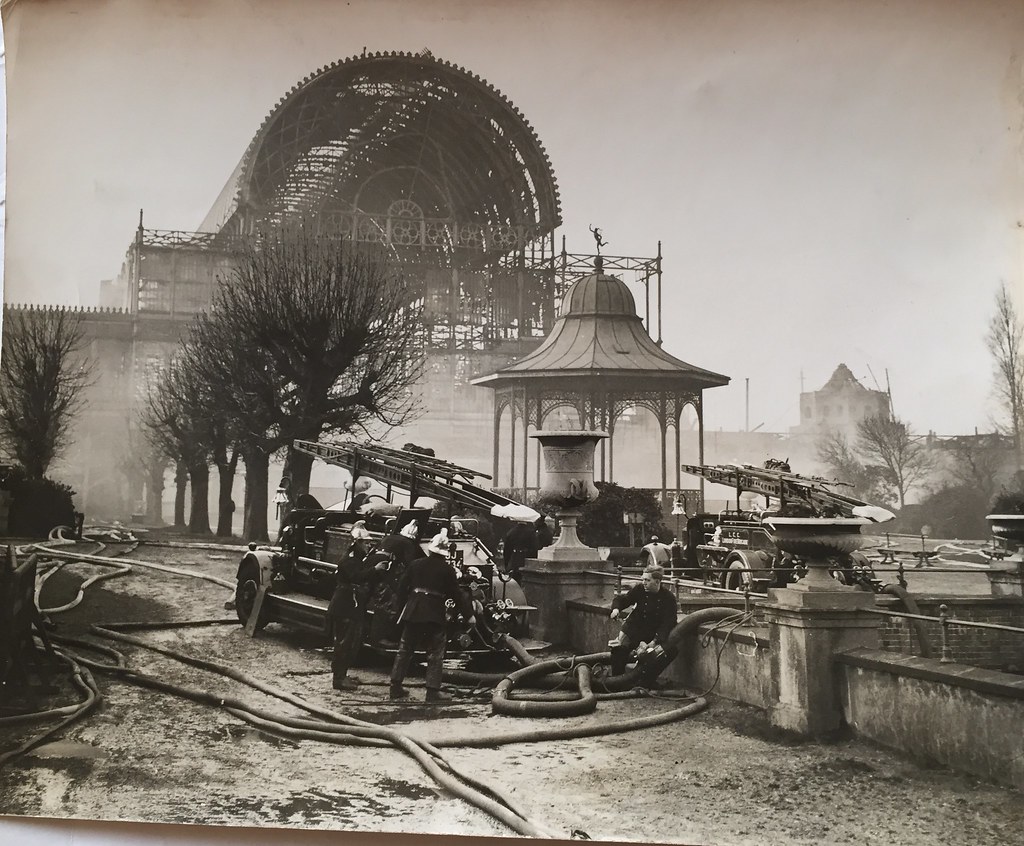

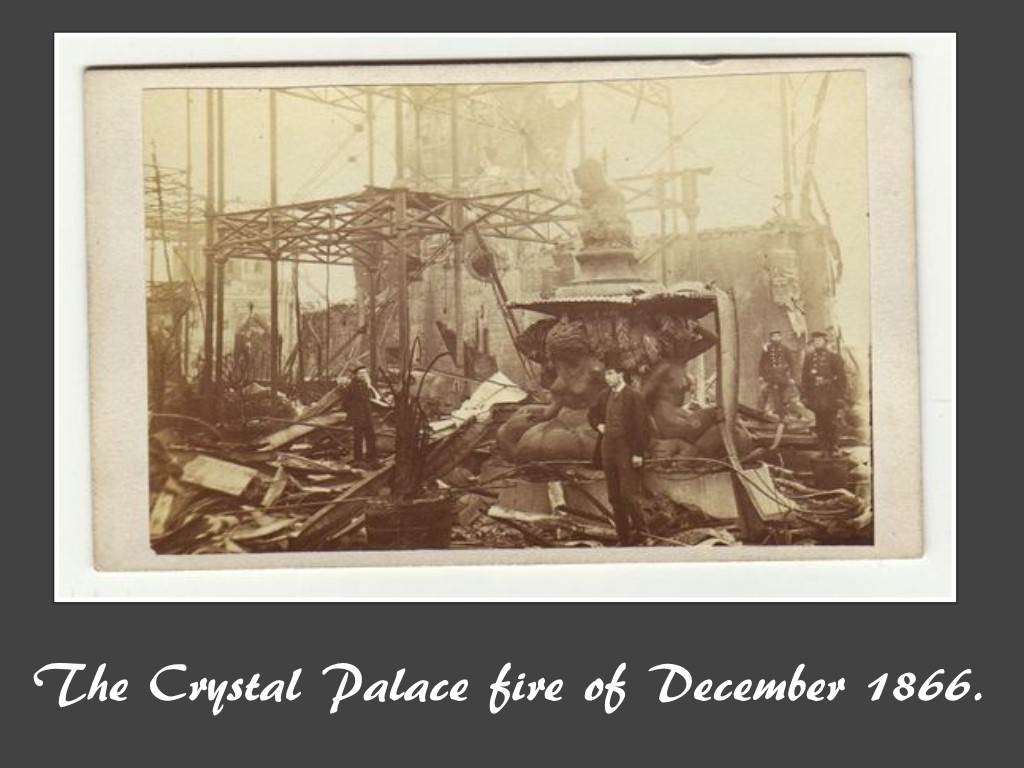
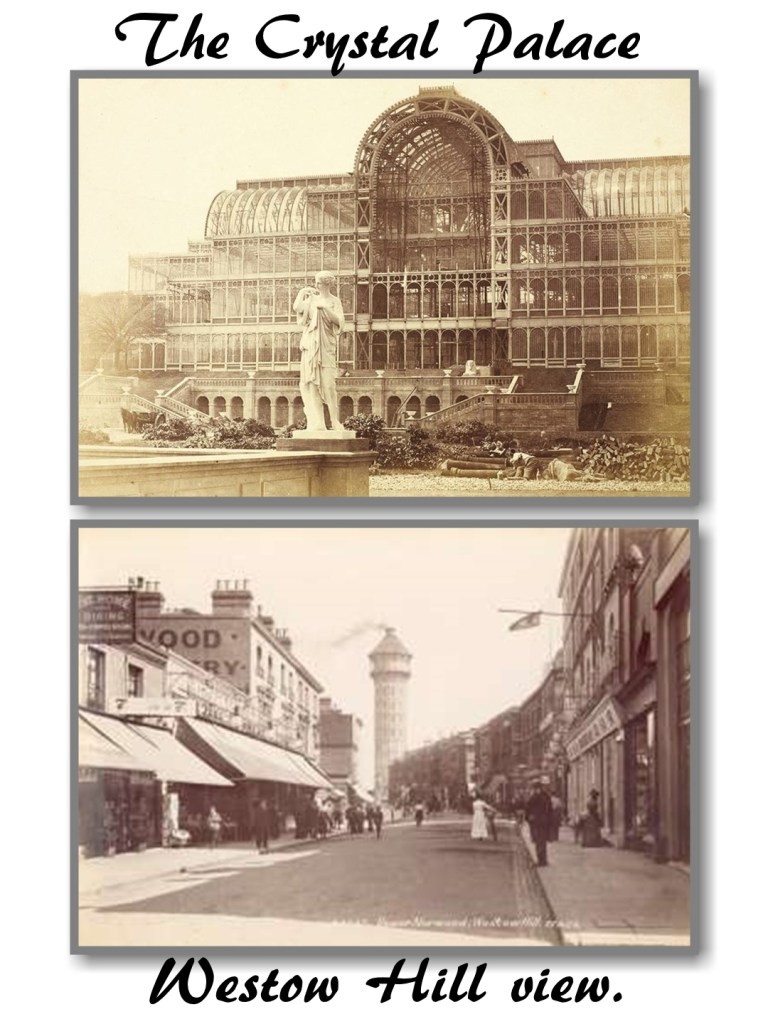
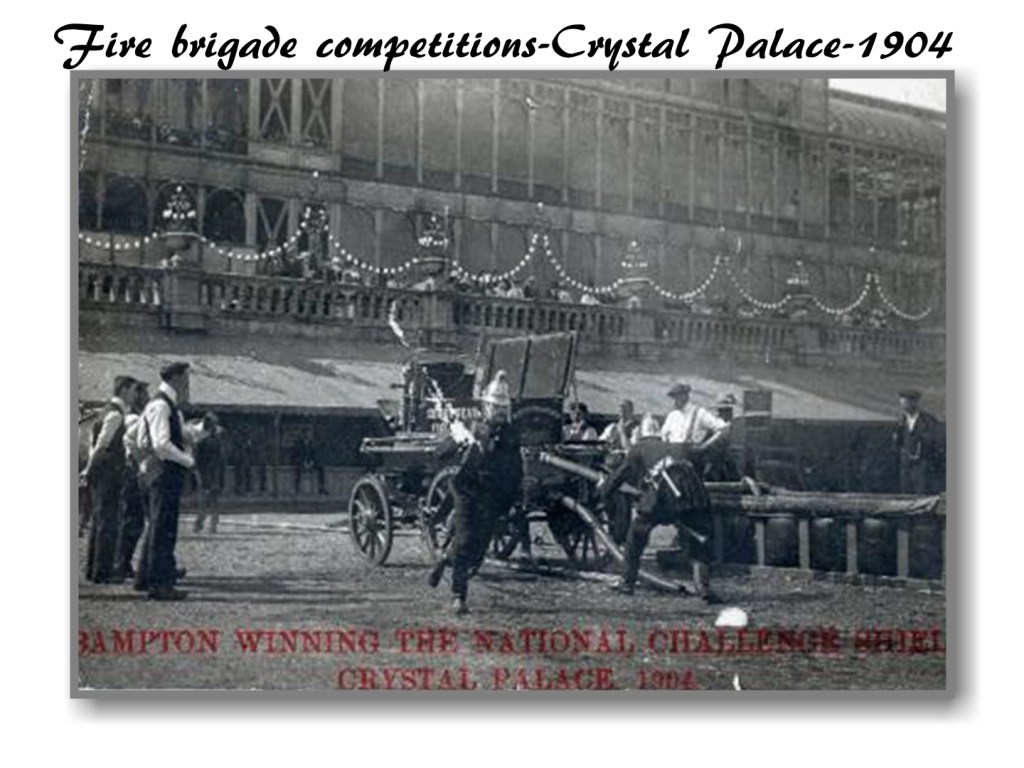
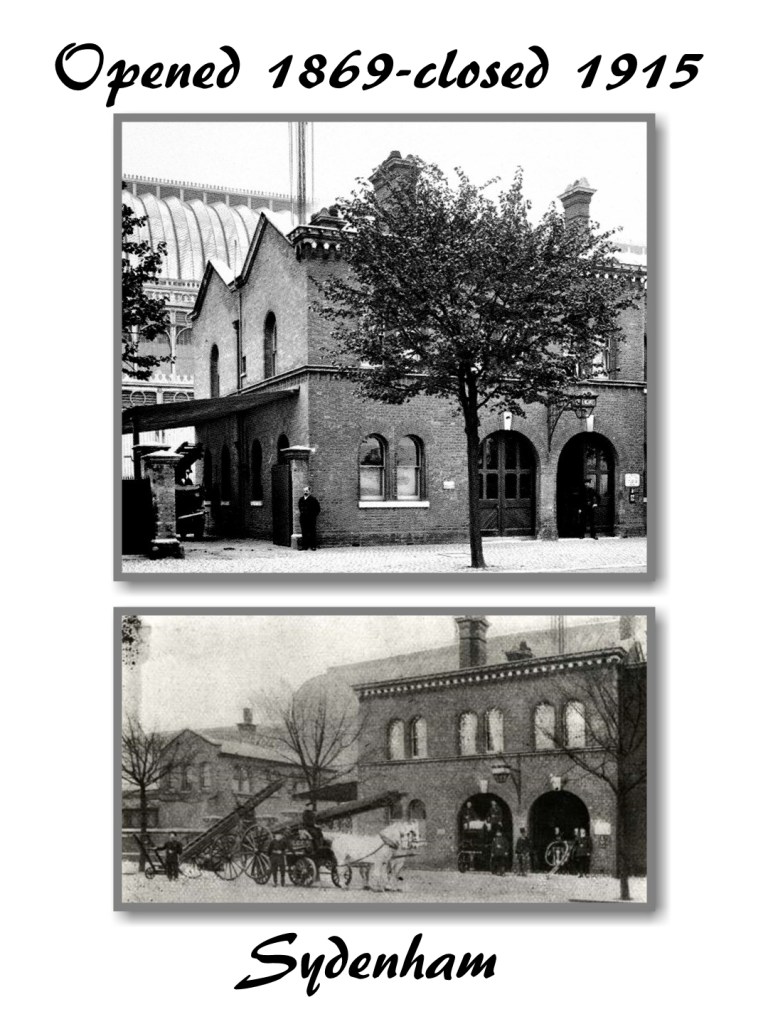


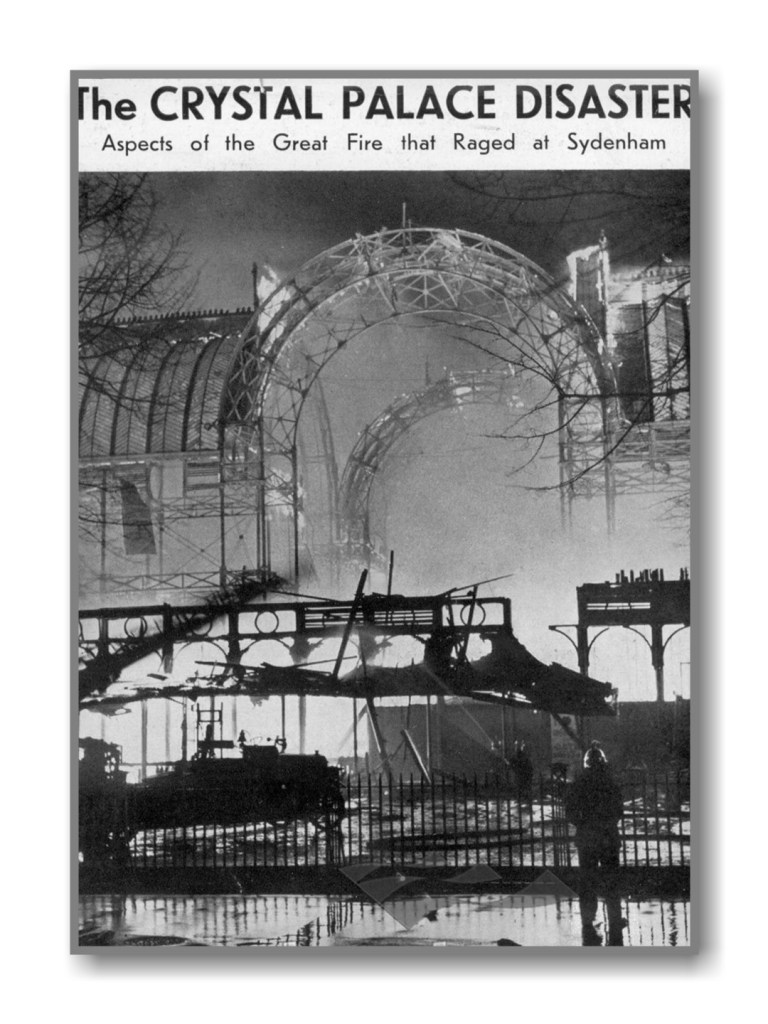
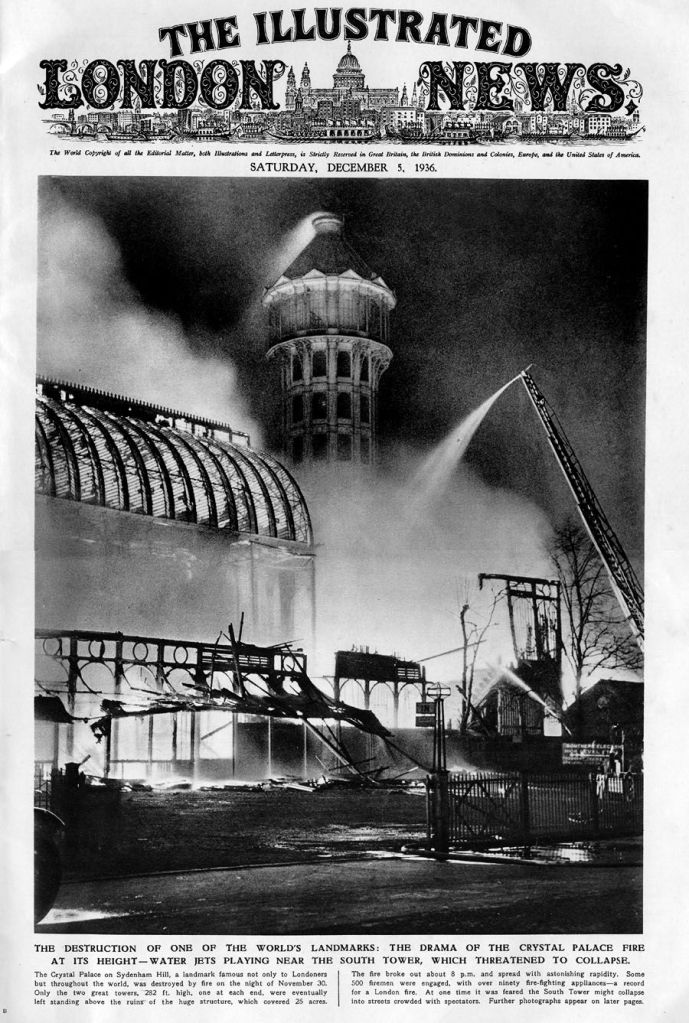


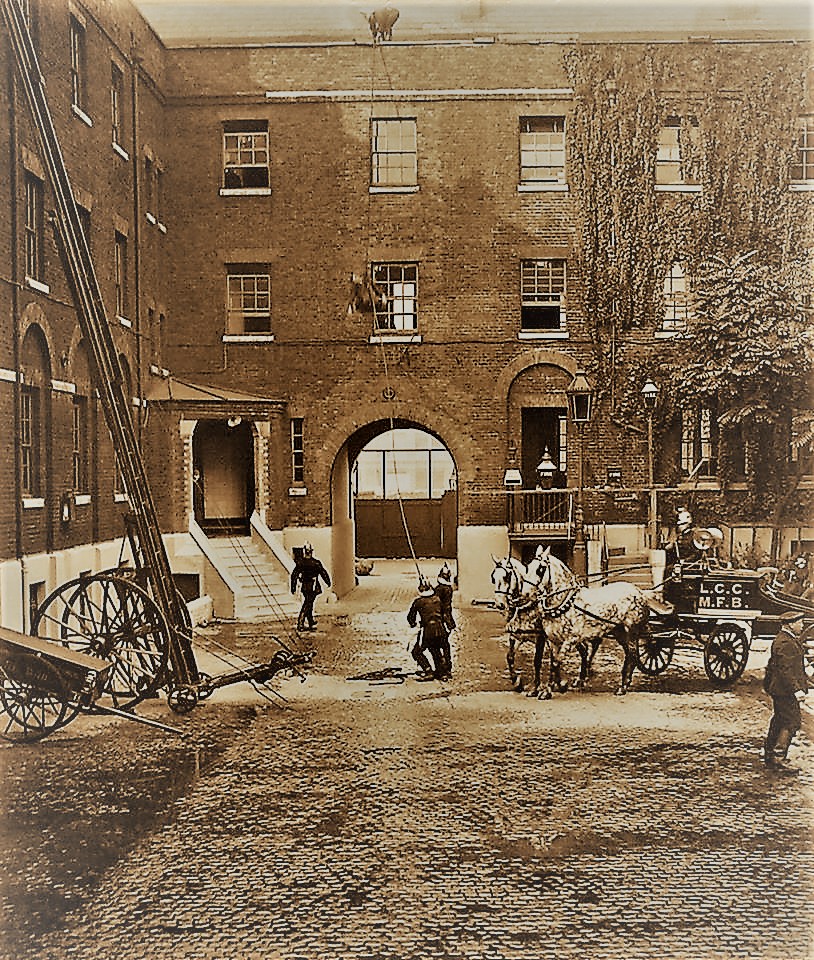


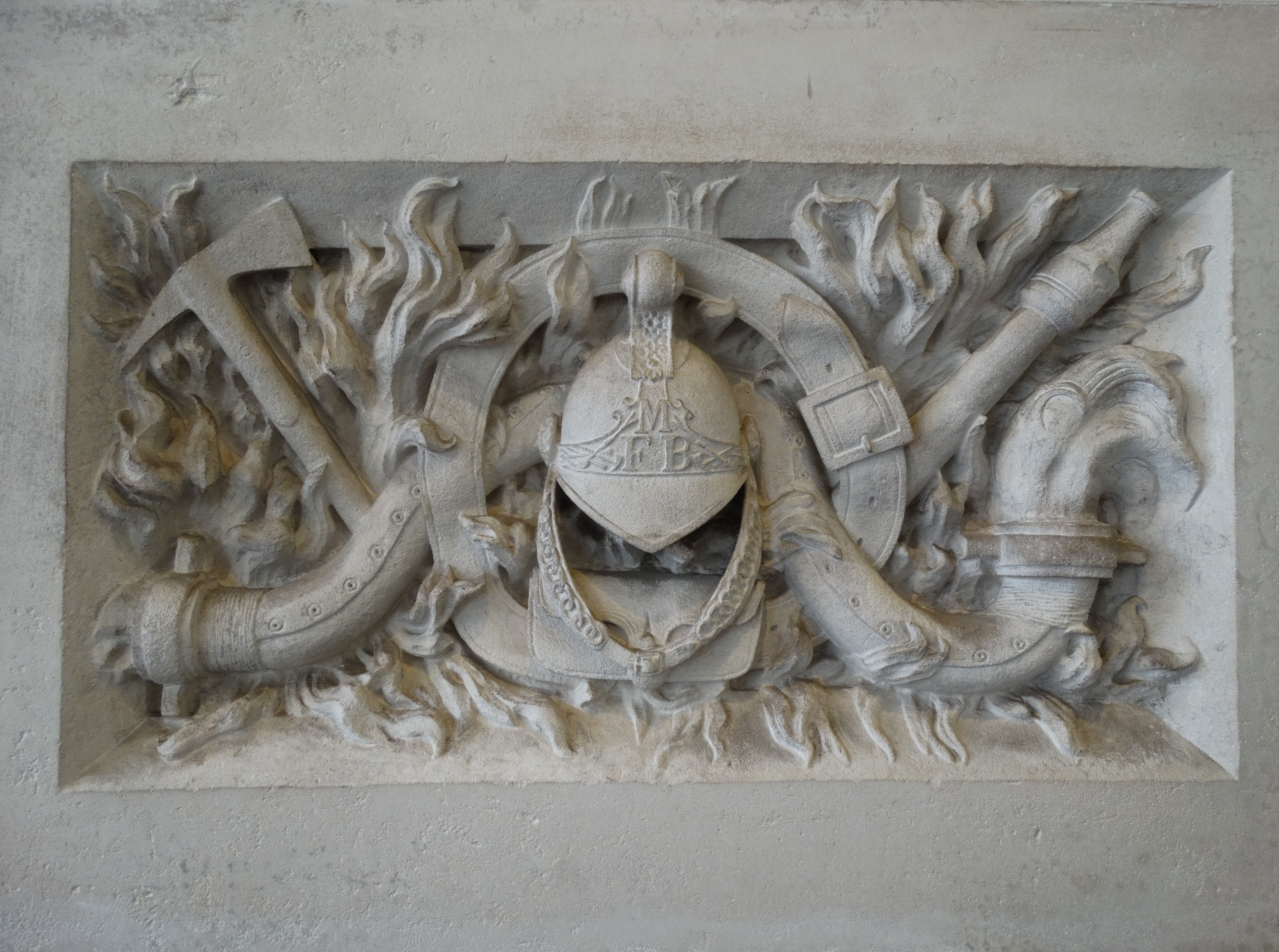


 A retired London Fireman