It was a Monday, Monday the 23rd January 1967. I had waited, impatiently, at home all day. I was wishing the hours away and anxious to catch the afternoon train that would take me into Waterloo station. It was my very first shift as an operational London ‘fireman’. It was with a mixture of excitement, and trepidation, that I walked alongside the Thames, past St Thomas’ Hospital and Lambeth Palace, before I reached Lambeth fire station on the Albert Embankment. This would be my fire station’s ground. Somewhere I would get to learn intimately. I would, eventually, know the names of all its roads, its important buildings. I would gain an understanding of its special risks and how to gain access to them. But for now I was just wondering, in fact praying, that something would catch fire tonight.
My training instructor’s (Dave Rees) words of wisdom had been simple as I bade him farewell for the last time. They were;
“Keep your head down Pikey, say little. Look, listen and learn.”
Station Officer Dave Rees (closest the camera) training recruits at Lambeth fire station.
With his advice going around in my head I walked sheepishly through Lambeth’s main front entrance to start my 15 hour night shift. I was self-conscious as I strolled across the multi-bay appliance room and made my way up to the first floor. Finding my locker I changed into my blue work overalls. Trying to absorb the atmosphere of the station was something I found difficult if not impossible. It was as if I were in a dream. I was seeing what was around me but not feeling part of it. I felt very alone. Which is strange because Lambeth fire station had the largest watch strength of any London fire station. Suddenly the thoughts of self-doubt vanished as the house bells started ringing loudly around the station. The noise of the electric bells flooded my head. It was a noise immediately followed by the thud of footsteps running on lino and the crashing of doors. I poked my head out into the long central corridor to watch the excitement as the duty day watch responded to this callout.
Hanging from the ceiling of the long corridor hung a set of appliance indicator lights. Lights that the dutyman illuminated from the station watchroom to let the crews know which appliance, or appliances, were being ordered out. There were another set of identical lights in the firemen’s locker room and in the appliance room. In the main drill yard there was three sided indicator panel with capital letters cut into them. (PE, P, TL, ET, CaV and FB).
Suddenly the bulbs lit up; red, green, yellow, blue and white. All four land appliances (red to blue) and the fireboat (white) were being sent out. The corridor was hushed now but the sound of fire engine bells ringing and tone-tone horns blaring came from the Embankment. I went to the nearest pole house and opened the narrow twin wooden doors by releasing the catch above the doors. The thick chrome ‘fireman’s’ pole rose up through a square opening in the floor. It led to the appliance room floor some 20 feet below. Lambeth had the longest sliding poles in the brigade and I was trying to recall our only sliding pole practice! Gripping the pole with both hands I flipped one leg behind it whilst the other gripped in front before, much too fast, sliding down the pole onto the mat below. It was not a dignified descent. Fortunately all the crews were out, heading to the call.
I wandered over to the watchroom to see where they were going and was welcomed by the dutyman, Ken Hunt, sadly now no longer with us.
“You’re new aren’t you?” he said.
“Yes, I start tonight,” I replied.
“I thought so by the way you came down the pole at a rate of knots. Anyway my name is Ken, how do you do?”
Ken looked smart in his undress uniform. He explained that Lambeth had a manned watchroom twenty-four hours a day because it was the Brigade Headquarters station. He said the machines had gone out to Battersea Power station, on Clapham’s ground, and that Lambeth’s appliances made up the initial attendance together with Clapham’s pair. He spent the next twenty minutes or so giving me a brief tour of the watchroom and showed me the station logbook and teleprinter message book.
“It’s so much better now,” he said before continuing, “at one time we had to write every message by hand and enter it into the log book. If you had a large make up fire you could be writing for bloody hours. Now we just paste copies of the messages in the teleprinter log book. I like progress, don’t you?”
As if on cue the teleprinter bell rang and the teleprinter started printing out the “stop” message from Battersea Power station. Something that turned out to be a small fire in a basement boiler house. With the machines returning to the station Ken said it was time to make myself scarce as only the dutyman was meant to be in the watchroom, especially if his govnor was about.
Fireman Tom Read came into work about 5.30pm and he found me sitting on my footlocker. Tom had showed me around when I had brought my kit bag and fire gear to the station from Southwark T/S the previous day shift.
“Evening young Pikey, you been here all day?”
Tom changed into his overalls and told me it was time to get ready for parade and roll call. There was much activity in the appliance room with oncoming Red watch crews relieving the off-going Blue watch. Appliance lockers were being opened and the contents checked, drivers started engines and conducted their routine checks. At about 5.55 p.m. Red Watch firemen, dressed in their fire gear, started to congregate in a loose huddle at the rear of the appliance room by the stairs. So many faces and all, bar Tom, strangers to me.
Typical roll call parade.
Their fireboots and black leggings were polished as were their belts and axe pouches. Axes were worn on the left side and the carefully tied belt line hung looped on to their wide belts. Our torches (which were actually black cycle lamps) were hooked onto the belts and with a narrow loop of webbing fixed to them that went over our heads. (This was to stop us losing them.) Although the fire tunics were brushed clean there was a pervading smell of smoke on most of the tunics, except mine of course! Their black fire helmets were either being carried or worn on the back of the head as the general chatter of conversation, or the laughter of a shared joke, filled the appliance room.
Seconds before 6.00 pm short rings of the house bells announced the start of my first shift. The milling crowd suddenly formed into two neat lines of men facing towards the rear of the appliances. Tom kept me at his side and in the front row. There were eighteen of us on parade that night and the acting Station Officer, the late Dick Richardson, told his deputy to;
“Detail the riders.”
The acting Sub Officer called us to attention and he detailed the riders for the night shift.
“Pump Escape. A/Sub O Lambert; Fm Howes; Fm Read; Fm Burns; Fm Pike.”
He then moved on to the Pump; followed by the Turntable Ladder; Emergency Tender and finally the Canteen Van. (The canteen van crew doubled as the dutyman, taking it in turns to cover the duty.) After the riders were detailed the govnor made the briefest of announcements saying that I was joining the watch. I was now officially on duty.
With parade over Tom introduced me to the other firemen riding the PE that night and Eric Burns said,
“Thank f… you’re here I’m no longer the junior buck.”
We carefully checked over the appliance, noting any equipment that was found to be missing and were expected to find out if it was in for repair, or had been left at a fire somewhere. Whilst Lambeth’s PE and pump were amongst the brigade’s more recently acquired appliances, most of the equipment they carried had not changed in design for years. Wartime firemen, looking over the PE or pump, would have recognised virtually all of the equipment being carried and probably had used most of it.
“Pikey, put your gear in the middle of the back seat,” said Tom and he suggested that I went with Eric. Eric had been at Lambeth for about five months, having come from Southwark training school as a recruit. He was in his early twenties, well-built but not fat, and spoke with a slight lisp. He was clearly delighted that there was a new ‘junior buck’ on the watch and he willingly passed his baton to me. Eric was very thorough in his checks, taking time to explain what he was doing and why.
“Don’t forget that when we go out on a shout that you and I have to wear the hook belts. Never go into a job empty handed, make sure you always take something with you like a line, extinguisher, or large axe”.
After fifteen minutes of checking Eric said;
“Let’s go for tea.”
Tea was served in the first floor mess and TV room, but as there was a staff canteen at headquarters, unlike other fire stations Lambeth did not have its own kitchen. However, it did have a small galley and an aging gas cooker on which stood a large metal kettle, simmering away, ready to make tea at any time of the day or night. It was in the mess, filled with over four hundred years of combined operational experience, which my fire brigade education would take on a new meaning in the months ahead.
Just five days after my eighteenth birthday I was the youngest fireman ever to join the Red Watch, possibly on any watch on the station. I felt ill at ease suddenly being thrown into this very adult world. I was ill-equipped, not having the life experiences or knowledge to counter the quips and comments that were rapidly being thrown in my direction. The age span of the watch was considerable with some firemen in their early fifties, the same age as my Dad.
Most however were in the thirties and forties like Tom, the remainder in their twenties, like Eric. I was bottom of the pile. Uneasily, I took my tea from Ken Thorne, the mess manager, who immediately asked for my mess money for the month. Ken had started his brigade career in 1938 and had served for twenty-eight years at Lambeth, and always on the Red Watch. He had joined prior to the outbreak of war and served during the Blitz. He had won Brigade pump escape and pump competitions in the fifties and now, together with Charlie Watson and Les Porter, were the watch’s senior hands. Ken only ever driving the Emergency Tender.
My first night was a catastrophe, from my point of view at least. Evening drills were interrupted with shouts for the pump and then the TL. Supper-time saw the ET get a call and each time I raced for the PE but just watched it stood there, motionless, as other appliances left the station.
‘Lights out’ was at 11p.m. although most “hands” stayed up until at least midnight. Some stayed down in the bar while others were in the mess having a drink, playing cards or watching TV. I had laid out my bedroll at eleven but knew tonight, of all nights, that sleep was the last thing on my mind. I eagerly waited for my first shout. The call that would send the PE out. Further calls came in the early hours of the morning for the pump and TL and even the fireboat got a call.
Finally, with the station quiet about 2.00am, I lay on my bunk wide awake and pulled the rough blankets over me. I was wearing my overall trousers and tee shirt ready for a quick reaction to any summons for help. Many of the firemen slept with their overall trousers either on the end of their bunk or folded on the floor ready to step into as they got out of bed. I finally drifted into an uneasy sleep only to be woken by the house lights coming on and the house bells ringing out breaking the silence of the sleeping station. In a flash I jumped out of my bunk, slipped on my shoes and was sliding down the pole. A clatter of feet followed me and I was sitting on the engine and pulling on my boots and leggings then slipping into my fire tunic. The sound of the fire engines starting up filled the appliance room as crew members mounted their various appliances.
Lambeth’s pump-escape pictured on Lambeth Palace Road, SE1, in 1967. A fire station in the heart of London.
The dutyman passed out the teleprinter call slips to the officer in charge of each engine. One by one they left the station, the pump; the TL and finally the ET. I was left behind, sitting in the back of the PE on my own. Tom had at least followed me down and looking into the rear cab said;
“Come on Pikey, it’s not your turn yet son.”
Rising early, and ever the optimist, I watched the minutes pass by as the time moved up to 9.00am and the end of our shift. Finally, with only minutes to go, the house bells dropped again and I moved purposefully towards the PE only to see the yellow light come on indicating another shout for the TL. The whole night shift and not one bloody shout for the PE, not even a false alarm! I was gutted.
The Greater London Council-London Fire Brigade cap badge. 1st April 1965.Lambeth’s pump escape, a fire engine I rode for almost my first year of service.
It was later determined that the fire had most likely been smouldering since Saturday night, after the wharf had closed for business on 31st October. It had been an exceptionally busy few weeks for the London Fire Brigade. Only eleven days earlier, on the 20th October, the brigade had tackled a massive blaze at the Southwark Hop Exchange, Southwark Street, in the shadow of the Brigade’s headquarters. So serious was the blaze that many appliances were mobilised within minutes of the first call. Forty motor-pumps, four turntable ladders and other special fire engines fought the blaze and within a couple of hours the fire was thought to have been brought sufficiently under control that only four engines remained at the scene. Suddenly some hop dust exploded in the part of the building that had been saved. It very quickly involved the whole of the western ends six upper floors. Once again tens of fire engines had to attend the scene and it took another five hours to bring the blaze under control. It was not until the 11th November, three weeks after the first outbreak of fire, that the brigade were able to leave the scene.
The Southwark Hop Exchange fire, Southwark Street,
London’s major fires attracted large crowds. In many cases, thousands of spectator’s would flocked to watch the London Fire Brigade at work and the drama unfold. For the crews of East London’s Shadwell fire station it was the start of a new month, the month of November. For three of their number it was the last day that they would ever see. Like most of London’s firemen they had welcomed in the recent major changes to their working conditions. The LCC had finally agreed to introduce into the brigade two watches (shifts) and its firemen had now only to work a seventy-two hour week! That news had not made much impact on the daily London newspaper scene, but the mens’ demise would, as the following day newspapers proved, record banner headlines: ‘London Fire Tragedy’ and ‘Disastrous Wharf fire at Wapping.’
London firemen in the ‘Proto’ oxygen breathing apparatus sets. 1920.
Late on the evening on Sunday 1st November the fire engines at the former Metropolitan fire brigade stations of Shadwell, located in Glamis Road E1 (adjacent to the Shadwell Basin), and Whitechapel, at 27 Commercial Road turned out of their respective stations responding to a fire call at ‘Lower Oliver’s Wharf’ in Wapping. The Brigade’s nearest fire-float, the Beta II, prepared to leave her moorings at Cherry Garden Pier and proceed to the fire that they already had sight of on the north bank of the river which stood adjacent to the St Johns’ Wharf, less than a mile distant. Within minutes the motor-engines arrived and the fire was already of such proportions that it necessitated the urgent attendance of other fire station crews to tackle a rapidly developing fire situation.
Typical London Fire Brigade mororised pump. (The pump shown is Holloway’s; Station No 76.)
Lower Oliver’s Wharf was built in the 1830s. The Victorian brick built riverside wharf was a wide four storey building in the narrow Wapping High Street. It was one of many such warehouses located in a mix of five and six storey building that lined the river frontage. The wharf stored untreated rubber and some of the firemen quickly pitch their wheeled escape ladder, whilst others used an extension ladder to gain access to the upper floors and from where their hoses might be directed. In the meantime others, under the direction of the Station Officer from Whitechapel, Station Officer Moore, entered the building to seek the seat of the fire. Within a very short time Moore detected the smell of escaping gas. He immediately instructed his men to withdraw.
Tragically, it was already too late for some. Even as the firemen were making their escape a tremendous explosion occurred. The firemen on the fire-float saw its devastating effects but where then unware of its fatal consequences. The sound of the explosion reverberated across the wide expanse of the Thames, a signal to the local population on both banks of the river that something dire had just happened. On the riverside, and the frontage on the narrow street, the windows shattered and cases of burning rubber shot out into the night
In the East London street fleeing firemen were caught in the blast, many being injured by the falling brickwork, iron shutters and other falling/flying debris. The escape ladder was tossed across the street together with the pitched extension ladder, hurled away from the wharf by the sheer force of the explosion, two of the firemen on the escape ladder being thrown to the ground.
Shadwell firemen John Coleman, Albert Best and Harry J. Green, who was a notable boxer and swimmer all received fatal injuries as a result of the explosion. District Officer Wood, who had arrived to take charge of the fire was caught in the blast and resultant collapse of part of the frontage of the building. He and six other firemen and officers, together with the dead, were removed to two nearby hospitals; the Wapping Infirmary and the London Hospital in Whitechapel.
In the immediate minutes following the explosion chaos reigned as firemen desperately fought to recover, and render assistance to, their fallen colleagues. Some only received relatively minor injuries whilst others suffered potentially life threatening wounds. For the three Shadwell firemen it was too late. As other firemen protected their comrades from the fire, salvagemen from the London Salvage Corps Whitechapel station rushed forward to assist in the rescue efforts.
The Beta II fire-float of the London Fire Brigade.
With the Beta II fire-float now attacking the fire from the riverside, Chief Officer Arthur Dyer was heading to the scene of the catastrophe. He was only in his second year as London’s Chief Officer. He had joined the Brigade sixteen years earlier in 1904 as an officer entrant. By 1909 he had risen to the rank of District Officer. In those sixteen years 15 London firemen had been killed at operational incidents, but these were the first on his ‘watch’. In the months prior to his appointment as Chief seven London firemen had perished on the Albert Embankment. Dyer was very much a fireman’s officer, a man who led his men from the front. He was the recipient of the Brigade’s Distinguished Conduct Medal for his actions at a South London oil-shop fire, when the lives of two children were saved by his and another fireman’s actions. The other fireman was awarded the Silver Medal by the London County Council, the fireman’s equivalent of the VC. Now once again Dyer led the crews of forty motor pumps and pump escapes, plus three of his four fire-floats, in their attempts to quell the blaze. A blaze that had spread to the adjacent Lusk’s Wharf and involved a one-hundred ton barge, The Rippon, that had been laden with rubber.
Lower Oliver’s Wharf burnt to the ground. Lusk’s Wharf was gutted by fire and the barge, Rippon, sank. However, it was only by the combined efforts of both the land and river crews that the eleven other buildings that were involved were saved from more serious fire damage. The cost of the fire, in financial terms, was estimated to exceed £120,000.00. To London’s firemen that cost paled into insignificance when compared to the lives of their three lost colleagues.
London’s Chief Fire officer- Arthur Dyer. 1918-1933.
Chief Dyer led the Brigades funeral honour guard as the bodies were carried on three of the brigade’s motor pumps. London’s firemen turned out in force to honour their dead. The coffins being borne by brass helmeted firemen passed the lines of land and river firemen as the three men were carried shoulder high into St Paul’s Church, Shadwell on Saturday 6th November. The bodies were later buried the same day at Firemen’s Corner in Highgate Cemetery, North London.
Britain’s first properly organised municipal fire brigade was that of Edinburgh formed in 1824. Chosen to lead this brigade was a 23-year-old surveyor named James Braidwood. He had under him eighty firemen, all part-timers, who were chosen from trades associated with methods of building construction such as masons, slaters, plumbers, etc, as it was felt that the knowledge of men working in these trades would help them in their new job. Braidwood trained and drilled his brigade until they became the most proficient in Britain. He encouraged his men to attack the fire at its source rather than just pour water into a building which was alight and to creep in low to gain the benefit of the layer of relatively fresh air drawn in from outside by convection from the blaze.
In 1833 the leading London insurance fire brigades decided to amalgamate into a combined unit and it was agreed that Braidwood should be thebest person to head this new establishment. His salary was £250.00 per annum, a respectable sum in those days.
The London Fire Engine Establishment (LFEE), as this force was called, comprised the brigades of the Alliance, Atlas, Globe, Imperial, London Protector, Royal Exchange, Sun, Union and Westminster insurance companies. The LFEE had eighty full time firemen and nineteen fire stations. The men’s conditions were severe. Two men were always on a 24 hour watch while the remainder had to be within the station building in readiness for call-out at any time. Each man was officially on duty 168 hours a week, leaving just four hours of spare time. The pay of £1.0s.0d per week was good and Braidwood had no difficulty in finding recruits, mainly from men used to working long hours for little pay on the Thames and waterways.
A manual pump is being worked by volunteers whilst firefighters from the LFEE direct their efforts and fight the fire. The LFEE was the forerunner of the Metropolitan Fire Brigade which was formed in 1866.
The growth of London was too much for the insurance firemen to deal with and the City of London demanded a new force after a series of disastrous (expensive) large fires that found their firefighting skills seriously wanting. With just his whole-time ‘professional’ LFEE firemen, Braidwood started structured fire training, established a duty system and brought new ideas and original techniques into fire-fighting. Getting ‘stuck in’ would be the hallmark of future generations of firemen who followed these early practitioners of their craft. His men were trained in the dark, and made to get near the source of a fire, crawling low on their hands and knees, and below the rising hot gases. He also insisted that no fireman enter a building alone, stating that there should also be a ‘buddy’ or comrade to assist in the case of an accident or if a man collapsed in the heat or fumes.
In October 1834 Braidwood’s LFEE attended a fire at the Houses of Parliament and despite the efforts of sixty-four men and twelve engines only Westminster Hall was saved. The buildings were not insured and the proprietors of the London Fire Engine Establishment petitioned the government to set up a proper organised firefighting force. The government, sensing considerable expenditure, declined, leaving the fire protection of central London in the hands of the insurance companies. They did, however, agree to the provision of buckets, hand pumps and a few fire engines for use at important places, but when the Tower of London Armoury was destroyed by fire in October 1841 the firefighting equipment there was found to be in a sorry state.
The Palace of Westminster fire-October 1834The Tower of London Blaze in 1841
Occasionally the Insurance Companies’ brigade was powerless to act, even though their equipment was kept in first class order. One such incident occurred in a particularly cold January night in 1838 when the Royal Exchange caught fire. The wooden fire plugs in the street mains were frozen solid and when alternative water supplies were found the fire engine froze solid too.
Some private concerns formed their own fire brigades and often fought side by side with the LFEE. One such brigade was that of Frederick Hodges, who owned a distillery at Lambeth. Hodges claimed that his brigade, in relation to its size, was better equipped than Braidwood’s, and thanks to a specially built 120 foot high look-out mast, his brigade could often reach the scene of the fire before the LFEE, who then missed the reward paid to the first engine to the scene of a blaze.
Though he was always seeking ways to improve the efficiency of the brigade, Braidwood was basically opposed to steam fire engines as he felt the powerful jet with this type of engine would encourage his men to revert to the old ‘long-shot’ method of firefighting instead of tackling the fire at its heart. He did, however, introduce a floating steam fire engine to deal with waterfront fires and a Shand horse drawn steamer was being experimented with in 1861.
The London Fire Engine Establishment floating steam fire engine,
Braidwood’s demise.
The 22 June 1861 it may have well have started as an average day for James Braidwood, Superintendent in charge of the London Fire Engine Establishment. What he was engaged in prior to the outbreak of a fire in Tooley Street is a matter of conjecture. it remains of little concern given what followed. It had been a hot summer London day. Scovell’s was a large general warehouse located on the river’s edge in Southwark, adjacent to London Bridge. The hot day may have been the reason some of the substantial iron, fire-proof, doors being opened and to allow air to flow between the storage areas on the various floors. What is known is that these doors should, in fact, have remained closed. The extensive warehouse contained vast quantities of hemp, cotton, sacks of sugar, wooden casks of tallow, bales of jute, boxes of tea and spices.
Later reports would suggest the fire, like most fires, started small. It was believed that bales of damp cotton gave rise to very higher temperatures reached the threshold where spontaneous combustion occurred. As the flames rose, and spread, the fire consumed ever more goods. With the open iron doors not containing the blaze it soon spread beyond its point of origin.
The alarm was finally raised around five o’clock in the afternoon. It became immediately apparent that the fire had a firm hold on Scovell’s wharf and was spreading to the adjoining Cotton’s wharf. It would eventually consume both the Hay’s and Chamberlain’s wharves too. Braidwood was quickly on the scene, from Watling Street LFEE headquarters and station, and he had twenty-seven horse drawn engines, one steam engine, his two fire-floats and one hundred and seventeen firemen and officers, plus fifteen drivers fighting this conflagration on the south side of the Thames. The fire had such a hold that water from the firemen’s hoses evaporated before it even reach the boundary of the fire. Burning tallow, oil and paint flowed onto the river, almost consuming one of the fire-floats. The winds and thermals caused by the fire, aided by the Thames currents, sucked small boats into the flames.
Picture credit; Fire Protection Association.
Braidwood was not fighting the flames unaided. Capt. Hodges had brought his private fire brigade to assist Braidwood in his endeavours, his two steamers worked alongside the LFEE’s solitary steamer. Hodges’s firemen were joined by other private brigades before London parish manual pumps were rushed to the Thames-side conflagration. Sadly these parish pumps did little to help the situation, in fact, poor training and even poorer leadership of their crews only added to the confusion and nuisance their arrival caused
His fire brigade operated from Lambeth, a short distance from the Tooley Street fire.
Captain Frederick Hodges owned a gin distillery in Lambeth. He also owned, and led, one of London’s most famous private fire brigades stationed at his south London distillery from the early 1850s. His was the first fire brigade to use an engine with steam as opposed to manual pump power. He had started his brigade on the 1st May 1851. It was common practice that the larger factories had a private fire brigade (in later times called ‘works fire brigades’). Hodges neighbours, Burdett’s Distillery and the Price’s Candle factory being two such examples. He later equipped his brigade with ‘two powerful engines’ supplied by Shand and Mason, in nearby Blackfriars, in 1854.
Things were not going Braidwood’s way. It would, tragically, get worse. Even the River Thames was working against him. The ebbing tide meant his fire-floats were kept a considerable distance from the all engulfing blaze due to the exposed foreshore and its mud flats. The firemen and the pilots of his fire-floats nevertheless still had their hands and faces blistered and burned by the enormous quantities of radiated heat as they directed their jets from their vantage points. Braidwood was considered to be at his calmest at times of greatest danger. He also cared greatly about his fireman.
The Tooley Street conflagration. 1861.
It was seven in the evening when one of his men reported the fire-floats were scorching and was seeking Braidwood’s instructions. Braidwood made his way to the riverbank, by way of a narrow alley off Tooley Street, to see what the situation was for himself. On the way he paused to give aid to one of his firemen who had gashed his hand. Braidwood removed his red silk Paisley neck-silk to use as a bandage to bind the man’s bleeding hand. Moving on towards the river, and accompanied by Peter Scott, one of his officer’s, a warehouse wall many stories high suddenly bulged and cracked before giving way completely. It fell with a deafening crash killing both Braidwood and the officer instantly. The strenious efforts of his men to save the two were fruitless, but they tried anyway until beaten into a retreat by the relentless fire.
Given the contents of the warehouses it is hardly surprising that the subsequent explosions occurred. They projected flaming materials far and wide, setting fire to other warehouses and buildings. Braidwood’s death was said to have created confusion and disorganisation at the fire since there was no one appointed to lead in his absence.
A woodcut depicting the moments before Braidwood’s demise.
The fire burned, totally out of control, for another two days. Tides ebbed and flowed. On the high tides the fire-floats could move closer to the blaze but whatever progress they made was mitigated when the tide went back out and they had to move back towards mid-stream to direct their hoses.
For over a quarter of a mile the south bank of the Thames was ablaze. Braidwood’s body, and that of his companion, lay under the hot brickwork for three days before they could be recovered. Whilst no other firemen perished in the fire it claimed the lives of four men on the river attempting to collect tallow. Their craft was surrounded by a river of flames flowing from the fire. Paints, oils, waxes and the very tallow they were trying to collect having ignited and streamed out onto the water’s surface, their boat was engulfed and the men died in the flames.
James Braidwood’s body was buried at Abney Park Cemeteryon 29 June 1861. He was buried alongside his stepson, who was also a fireman and had been killed in a fire five years prior. The funeral procession was a mile and a half long and shops were closed with extensive crowds lining the route. As a mark of respect, every church in the city rang its bells. The buttons and epaulets from his tunic were removed and were distributed to the firemen of the LFEE.
Braidwood’s rank markings were later returned to the safe keeping on the London Fire Brigade museum.
The death of Braidwood left the LFEE bereft of any natural successor from its own ranks. The Insurance Companies had not appointed a deputy. It seemed that they had considered Braidwood immortal. They once again looked outside the capital for a suitable replacement. They found one in the guise of a certain Captain Eyre Massey Shaw, late of the North Cork Rifles. It was a commission that Shaw had resigned from the year before the Tooley Street fire, when in 1860 he was appointed Chief Constable of Belfast. His job description also covered that of Superintendent of the Belfast fire brigade, which Shaw discovered to be in a very unsatisfactory state of affairs. He immediately set about putting the brigade, and its firemen, on a more organised and professional footing. His success coming to the attention of the various London Insurance Companies, now urgently seeking a new Superintendent to lead the LFEE.
Capt. Shaw, Braidwood’s replacement.
The Tooley Street fire cost the insurance companies dearly. The loss of property alone was estimated to be in the region of £1,500,000.00 to £2,000,000.00. To pay the pumpers they paid out a further £1,100.00. Rumours spread around the City of London that the companies would collapse, but they settled the claims and continued, albeit unhappily. The Tooley Street fire finally convinced the authorities that something ‘definite and decisive’ had to be done. It would take almost four years of negotiations between the Government, the Metropolitan Board of Works and the insurance companies before anything was done and London’s first municipal fire brigade was created; the Metropolitan Fire Brigade and led by Braidwood’s successor Capt. Shaw.
The funeral procession of Superintendent James Braidwood.
London’s first fire chief was given a hero’s funeral, one befitting the high regard that he had secured in London’s population. His funeral cortège was one and a half miles long, and all the church bells in the City of London tolled a farewell to this brave fireman.
One of London’s first horse drawn steam fire engines. The London Fire Engine Establishment 1865.
THE COMBINED AGE OF the six-man fire engine crew came to a staggering 107 years of operational service – although Alfie, with his meagre five years in, didn’t add much to those totals. He was the new kid on the block, but he was far from a rookie: six years serving in the 3rd Battalion of the Parachute Regiment had seen to that. Unlike his fellow Emergency Tender (ET) companions, whose war service had seen two of them serving in the LFB whilst the others were either too young to fight or had been working in a reserved occupation, Alfie had first seen action in Suez, then Malaya. Sir Gerald Templer, the High Commissioner in colonial Malaya, had told his troops: “The hard core of armed communists in this country are fanatics and must be, and will be, exterminated.” Alfie had taken life with his bare hands, whereas the others had only been involved in saving it. To look at Alfie, with his handsome, smiling face and deceptively athletic frame, you would never think so. It was only his haircut, still in his preferred military style of very short back and sides, that would give the keen observer any clue to his former life.
Les and Ken were the Watch’s two senior hands. In fact, they were the eldest two on the whole station. Only months separated both their ages and length of service – although Ken, as he would occasionally remind Les, was the more senior of the two. He had finished his training at the Brigade’s recruit training school, then at Lambeth, whilst Les was only halfway through his. The pair had, over the intervening years, become the closest of friends and were a formidable duo on all things pertaining to the ET. There were things that separated the two men. Ken was a brigade driver, now only ever driving his beloved ET and Les wasn’t. Each had been winners in Brigade level competitions. Ken had excelled in both the pump-escape and pump competitions whilst Les had shined at volley ball, representing the Brigade at National and International levels.
Lambeth’s Emergency Tender.
They differed in other ways too. Les was partial to a drink and could be found on his night duties down in the headquarters’ canteen with a pint in one hand and ‘a short’ in easy reach of the other. The thread veins in Les’s nose let it be known that he enjoyed his liquid suppers more than was actually good for him. That said, Les was never found wanting on the fire-ground. One or two bursts of 100% oxygen straight from a cylinder en route to a call immediately cleared his head. Ken, on the other hand, would only ever be found with a mug of tea in the mess room, which was Ken’s domain. He was the watch mess manager and woe betide anyone who was foolish enough to leave his galley kitchen in an untidy state. At morning stand-easy Ken was like a mother hen, fussing over the crusty cheese and onion rolls that he carefully laid out on the two large but battered enamel trays which had been on the station inventory ever since it had first opened in 1937. Lastly, Ken had never had a day’s sick in his career, whereas Les took his ‘lay-ins’ very seriously. Never too many, never too few and certainly not any when he was actually feeling unwell.
Despite the watch being one of the largest in the Brigade, under-manning meant it had been below its authorised strength for months. Recent retirements on the watch had seen two ET men head off into the sunset and the promotion of their Leading Fireman to another station had left the watch short of both ET qualified firemen and officers. That is when Teddy joined the watch. Already a Leading Fireman, he had been transferred in from Greenwich where, until the previous week, he had been happily riding their ET. To say he was not delighted about his enforced move would have been an understatement, but he wasn’t the type to take it out on his new-found colleagues.
The other two ET regulars on the watch were Butch and Tom. Butch had come from Croydon Fire Bridge in 1965 when the Greater London Council was formed and the enlarged London Fire Brigade was created. Posted into Lambeth, for months, he went round still wearing his old Croydon Fire Brigade cap badge despite instructions to the contrary. Finally, a visit by the Divisional Commander and an almighty bollocking saw him putting the new GLC-LFB badge in his cap. So now he didn’t wear his cap at all. As for the Croydon badge, well that became his belt buckle on the leather belt he used to hold up his fireman’s black leggings. Tom had originated from Somerset, his broad West Country accent standing out on a watch where most were London born and bred.
There was one other ET ‘hand’. Enter Freddy Floyd. Freddy was actually a ‘floatie’, serving on the Firebrace fireboat moored at Lambeth’s river station – one of the Brigade’s two fireboat stations. A former Royal Navy gunner during the Second World War, Freddy had served for the past twenty years at Clerkenwell, mostly riding its ET. Now in the latter part of his career, Freddy wanted a quieter life and to get back on the water. He had put in for a transfer to the fireboat and got it. His ET qualification meant he was the first choice for any stand-by on the land station’s ET, something that never pleased the watch’s young river service trained firemen who had to take Freddy’s place on the fireboat!
Southwark fire station’s volley ball court was tucked away behind the drill tower on the far side of the Victorian buildings that were used as the recruits’ accommodation block. It was as far away from the fire station as you could get on the once Metropolitan Fire Brigade headquarters site. Because you could not hear the station call bells from there, a special call bell had been installed by the GPO so that the summons of a fire call could be heard by the fireman when playing volley ball. For some unfortunate residents, living on the other side of the boundary wall, it summoned them too in the dead of night when the dutyman forgot to isolate the volley ball court call bell.
For now, however, their extended lunchtime game was in full swing. It had been allowed as a lunchtime ‘shout’ had taken up forty minutes of their one-hour lunch break. The warm day and the strenuous game meant that the six firemen, the leading fireman and the guvnor had all built up quite a head of steam. They were sweating freely and patches of sweat stained their uniform shirts.
The fire call bells rang simultaneously at Southwark and Lambeth fire stations and an alarm sounded at the Divisional Headquarters located at Clapham. In fact, the sound to be heard at Clapham was a warbler, but it all meant the same thing: a fire call.
The singular feature that made Stamford Wharf, owned by the Union Cold Storage Company, stand out from the surrounding riverside warehouses was the iconic Oxo Tower. Back in 1927, the Liebig Extract of Meat Company, which made Oxo, had built a new wharf. Its reinforced concrete structure was built on the site of the former GPO power station. But in its heyday the wharf was the largest site in Britain for the importing of meat. When erected it was the second tallest building in London: a nine-storey, reinforced concrete building with river-facing exterior cranes. These days its zenith was over; however, it was still a busy cold store along with the nearby Chambers Wharf in Bermondsey and, more recently, the Nine Elms Cold store erected in Vauxhall.
Today, however, something else was making the Upper Ground wharf stand out. It was the over-powering aroma of ammonia leaking from its condenser room. That, and the flood of warehouse workers cascading out every exit into the narrow Bargehouse Street that ran alongside the River Thames. Most had streaming eyes; many were coughing and spluttering. Some never even made it out into the street; overcome, they lay inside the loading bay doors that fronted onto Upper Ground.
The scene when Southwark’s pump-escape and pump arrived was one of chaos, something that Southwark’s guvnor was no stranger to. Already eyes were smarting as two firemen from the pump’s crew and one from the PE donned the three Proto breathing apparatus sets carried on the pump. The guvnor was wearing his fire helmet at his customary trademark rakish angle but the look of concentration on his face told a different story. With five cold stores on his station’s or the first take’s grounds, he was well aware that the main risks in the use of ammonia, as a refrigerant, were associated with its toxicity and flammability. He knew that ammonia gas can be ignited in relatively high concentrations and an ammonia explosion could cause structural damage to a building. However, he drew some comfort from the fact that the gas is difficult to ignite and so combustion can be prevented by relatively simple precautions. His pressing priority was that every second counted after an accidental exposure to ammonia refrigerant. He had given his watch station lectures about how to treat exposed individuals and the importance of proper medical treatment for ammonia exposure. The cold store maintained emergency safety showers and eye-wash stations, so individuals exposed to liquid ammonia or a very heavy concentration of ammonia vapour may flush the affected parts immediately with copious amounts of water. But these were all located inside the wharf, not out here in the street! The guvnor recalled from his own lecture notes that the flushing of the affected parts must be performed continuously for at least 15 minutes after exposure to minimise injury – injury that could involve his own crew now.
He was well aware that when ammonia enters the body (as a result of breathing, swallowing or skin contact) it reacts with water to produce ammonium hydroxide, a chemical that is corrosive and damages cells in the body on contact. Nevertheless, he ordered his BA crew into the wharf. Aware too, now, were his three firemen. Wearing their Proto sets, they had moved forward to rescue two workers who had collapsed inside of the ground floor delivery doors. Immediately the chemical started to react with their body sweat. What started as mere tingling quickly moved onto discomfort and then graduated to actual pain. The ammonia vapour found the greatest concentrations of sweat under their arms and, in particular, around their groins.
Southwark’s guvnor made pumps six, breathing apparatus required. He also requested a third ET with full protective clothing, plus four ambulances to attend. He knew his best chance of minimising further injury to his own crews, and to others, was the swift arrival of Lambeth’s ET crew.
As said, ammonia is corrosive…very. The severity of the health effects depends on the path of exposure, its dose and the duration of that exposure. Exposure to high concentrations of ammonia in air causes immediate burning of the eyes, nose, throat and respiratory tract. In serious leaks it can result in blindness, lung damage or even death. Inhalation of lower concentrations can cause coughing, and nose and throat irritation, symptoms exhibited by many of those making their way out to the street. But those by the engines knew this; they were feeling the mild effects standing some 50 feet away from the wharf.
With his pump parked upwind, Southwark’s guvnor gave short, curt, but precise instructions to his crew whilst secretly worrying what effects the concentrations of ammonia were having on his BA crew inside the wharf. The pump driver had ‘dropped’ the water tank, a hydrant was being set in and the pump’s hose-reel jets, on minimal pressure, were being used by his remaining crew to apply water spray to the faces of some of the worst affected cold-store workers in the street. Four galvanised two-gallon buckets, from Southwark’s two machines, had been filled with water so others could splash their faces and, in particular, rinse stinging eyes. The guvnor had instructed that the PE’s large applicator be set into the pump with orders to douse the BA crew upon their exit from the wharf, if needed. It was.
The BA crew were staggering, rather than walking, out of the wharf’s loading bay; carrying one casualty, they were leading the other who was clearly unable to see. She looked in considerable distress. The physical discomfort experienced by the BA wearers was intense. The corrosive effect of the gas appeared to be eating into their privates and burning at any exposed skin. The guvnor instructed his BA team to walk into the large applicator’s vast cone of water spray, undress, and then undress the casualties. BA sets, fire gear, firemen’s overalls and civvy clothes soon cluttered the ground as the five stood or lay in the neutralising effects of the water spray in their underpants and with the woman in her pants and bra. For one member of Southwark’s crew it proved more embarrassing than for the others as he never wore underwear!
The street was filling with emergency vehicles. An ambulance crew moved into the water spray, to assist with the casualties, and were immediately drenched. Ken had positioned Lambeth’s ET behind Southwark’s pump. Teddy, Les, Butch and Alfie had rigged in Draeger full protective gas-tight suits on route. Now Tom and Ken, acting as the dressers, helped the four whilst connecting the full-face masks to their oxygen ‘Proto’ sets. Normal practice dictated that two would enter the building and two remain outside to act as safety crew. But not today, as the cold store senior engineer had informed Southwark’s Station Officer that one of his engineers was missing. The man had gone to shut down the isolation valves in the condenser room and had not returned. The senior engineer also said that to stop the leak the isolation valves must be shut down.
Les was pleased they still didn’t have to wear the old Delta gas-tight suits which the one-piece Draeger suit had now replaced. Both were gas-tight and gave the wearer full body protection, but the Draeger was easier to work in. Les also happened to know the cold store’s general layout. He had attended many familiarisation visits, plus a couple of exercises, over the years. However, this was no exercise. The people around him were suffering. Les recalled the words of his wise old former Station Officer. He was a pre-war LFB officer who had led his crews with such distinction during the London Blitz. He himself had been awarded a gallantry medal, and received a badly scared back, after a burning beam had fallen on him during a hazardous and daring rescue at the height of an air-raid. The fireman standing next to him had been killed outright but he had saved two others. He had given his medal to the parents of the dead fireman; he was that type of man. So, whenever any of the watch had moaned about going on visits to familiarise themselves with a potential risk, the ‘old man’ had always said: “Time spent in reconnaissance is rarely wasted.” The ‘old man’ never spoke a truer word, thought Les as he listened to the briefing from the senior engineer.
It was agreed that Les and Butch would shut down the isolation valves whilst Teddy and Alfie searched for the missing engineer. This was Alfie’s first full body protection job. He had only ever worn the gas-tight suits on his ET course and during station training. He was not overly keen on the full face either, much preferring the rubber Proto mouthpiece between his lips. On the upside, though, he could talk to Teddy without taking the mouthpiece out – a practice that was frowned upon but nevertheless a common trait with BA firemen.
The temperatures in the cold store came in three levels. They ranged from minus 18°C to minus 30°C over its nine floors. The condenser room was located on the third floor. Whilst the common areas and staircase were not refrigerated, the place was either cold, very cold or freezing. The pliable rubberised gas-tight suits stiffened immediately as soon as the two teams of two walked into the building. They found the lower floors were packed with timbers pallets, some piled high with frozen goods, others waiting to be loaded. The rapid evacuation of the building had left forklift trucks abandoned and the thick insulated individual cold store doors ajar. The freezing air spilling out into those areas normally not so cold. Eighty people worked at the warehouses, employed in a variety of shifts. Not all had got out when the alarm was raised; the engineer certainly hadn’t.
Les led the way to the condenser room floor. Power to the lifts, and elsewhere, had been shut down after the alarm had sounded. Only the emergency battery lighting illuminated the wharf’s escape routes and its emergency exits and even that was dim. The place was in near darkness with hardly a window to be found on any of the nine floors. The four were reliant on the beams of light from their individual spark-proof ‘CEAG’ lamps, lamps that could safely be used in an explosive atmosphere. Despite their ability to do so no one spoke. They just followed Les up the stairs to the third floor at a steady pace.
The vapour cloud coming through the third-floor lobby doors hugged the ceiling. It continued up into the stairwell. It would rise to the highest level before filling the upper floors and filtering back down again if left unventilated. Passing through the outer lobby double doors the four men came across two other sets of doors; one was marked ‘Plant/Condenser Room’, the other led into the cold store. What little light there was on the stairwell failed to follow them as they passed through the outer doors. They walked into total darkness, four shafts of narrow torchlight their only illumination to work by. Les was the first to speak.
“We’ll find the valves and shut them down, Teddy and Alfie, find the engineer. He will be in here if he is anywhere.”
Divided into their pairs, they moved deeper into the plant room, an area about 30ft by 40ft. Above their heads, and shrouded in an ammonia mist, their torch beams picked out the array of pipework and control valves.
“We need isolation valves ‘One and Two’,” Butch reminded Les, but Les didn’t need reminding and kept his mouth shut as they started their search.
Looking around the floor space was easier. Teddy’s and Alfie’s beams of light cut through the gloom. By the far right-hand wall stood a cabinet of switches, various dials – and a man lying unconscious on the floor.
“Found him,” shouted Teddy, not expecting a reply. He didn’t get one as the other pair went from valve to valve carefully inspecting each ID tag, looking for numbers one and two.
A scientist would tell you ammonia dissolves readily in water to form ammonium hydroxide, an alkaline solution. Whilst the concentration of aqueous ammonia solutions used in the home is typically around 5% to 10%, here in the cold store the solution was around 25% or more and was corrosive. Anhydrous ammonia reacts with moisture in the body’s mucous membranes to produce ammonium hydroxide. Exposure to ammonium hydroxide results in corrosive injury to the mucous membranes of the eyes, lungs, and gastrointestinal tract as well as to the skin. The engineer was laying on his back; the light from the men’s ‘CEAG’ lamps showed him to be in a bad way.
Trying to find a pulse whilst wearing Draeger rubber gloves is practically impossible, but Alfie tried anyway. He felt nothing. Moving as close as possible to the injured man’s face Alfie looked for the faintest sign of life, like the man’s exhaled breath condensing on the surface of his facemask. Nothing. Alfie had seen the Royal Army Medical Corps at work, close up and personal, in Malaya. He knew a bit about battlefield first aid.
“Check his airway,” said Alfie. “Shine your torch in his mouth, Teddy. His windpipe looks burned and his airway is likely to close up completely. He has little chance unless we do something and do it quickly.”
Alfie recalled something he had seen a medic do once. “What I have I got to lose?” he thought. “He is going to die if I don’t do something.” Alfie looked round and saw what he was looking for. He ran towards it. By the workbench drawer he found a bit of plastic tubing, about the diameter of a common garden hose. Cutting off a nine-inch section, he rushed back to the man.
“Teddy, hold his head back and open his mouth wide while I stick this down his throat.”
Teddy held the man’s head steady. Already nasty blisters were covering his neck and exposed face. Holding the man’s tongue forward with a finger, Alfie inserted the tube into the man’s mouth and slid it down the back of the man’s inflamed and swollen throat.
“Right you bastard, breathe,” said Alfie as he moved up to behind the man’s head, his knees touching the man’s shoulders. He started Holger Nielsen resuscitation. “You pump his heart, Teddy, when I’ve got his arms outstretched,” said Alfie, committed to getting the man breathing again.
After what seemed an age, but in reality was only a matter of minutes, the injured man made a gurgling noise before producing a convulsive spluttering cough. Although the man was unconscious, Teddy felt the air being exhaled when Alfie compressed the man’s chest. He also felt the movement of breath when Alfie stopped the resuscitation.
“He’s breathing, Alfie. We’ve got to get him out of here and bloody fast.”
Calling to Les and Butch, Teddy and Alfie took the man out, half carrying, half dragging him back towards the staircase. Speed was of the essence. Whilst supporting his upper body they carried, in fact yanked, the unconscious engineer backwards down the staircase, one on either side of him, their rapid progress marked by the man’s boots bumping on each step during their descent. By the time they reached the first floor both men were near exhaustion when two firemen, in Draeger, came towards them.
“You Clerkenwell?” asked Teddy.
“No, Euston,” came the reply.
“Help us get him out,” demanded Teddy.
With conditions somewhat improved in the street, ambulance crews were waiting as they saw the four firemen carrying the engineer towards the loading bay exit ramp. They swiftly cut away all his clothing and started to douse the man with water spray from a fire brigade hose-reel. An ambulance man substituted the bit of hose for an airway, not giving the discarded, lifesaving, hose a second glance. Bottled distilled water was applied to the man’s eyes and he was lifted onto a stretcher and placed in the ambulance before being whisked away, with a police escort, to Guy’s Hospital.
Les and Butch descended the staircase at a more leisurely pace after locating the valves and shutting them both down. The first closed with ease, the second with the aid of the injured engineer’s wrench. In the street, cold store employees were still being treated by ambulance crews but there was less pandemonium. Even the naked Southwark fireman had been found some overalls to wear. Other ET crews in full protective clothing would finish the ventilation, and with the cold store’s power switched back on their engineers would engage the building’s fans to safely dissipate the remaining ammonia gas.
Returning to the station, it was cleaning and testing their BA sets and the Draeger suits for the Lambeth ET crew – well, most of them anyway. Ken was headed off to the mess to make them all a cuppa and to get out the special tin of biscuits, reserved for the tender’s crew after working jobs. As Alfie left the station that evening the rubber suits were still suspended from broom handles, so as to help them dry completely, before being returned to their storage boxes. They looked like alien scarecrows hanging from the appliance room balcony as Alfie thought, “Well, that was an interesting afternoon.
The following day Alfie reported for his night duty at around 5.30 p.m. Out of habit he looked in at the watchroom to see what he was riding. He would have been surprised if it hadn’t been the tender. He saw that Les had laid-in for watch and that Butch had taken public holiday leave. Freddy Floyd’s name had been pencilled in to ride the ET, which was now down to five – its minimum number of riders.
After roll call Alfie was ordered up to the station office by the Sub Officer. As he went in Teddy was standing by the Station Officer, who was seated at his desk.
“That was quite some trick you pulled off yesterday, Alfie” said his guvnor. “The man is still critical although he’s stable. The doctors think he has probably lost the sight in one eye. You saved his life yesterday, Alfie. Teddy has already given me a blow by blow account of your deeds. I am reporting your actions to Division as worthy of meritorious conduct.”
As the Station Officer stood to shake Alfie’s hand the station call bells started playing their tune and all three headed towards the appliance room.
“Great job yesterday,” said Teddy as they waited in the appliance room to see what was going out. Lambeth’s pump-escape, pump and turntable ladder were off.
“Time for another cup of tea,” said Alfie as the tender’s crew, including a none too happy looking Freddy, made their way back upstairs to the mess room.
That evening Lambeth’s machines are in and out like a fiddler’s elbow. All except the ET, that is. Then, just before midnight, Lambeth’s house lights illuminate the station as the call bells sound yet again. The blue-coloured call light tells the ET crew that it’s their shout.
“It’s a ‘BA required’ fire at a Bayswater Hotel,” shouts the dutyman as he passes Teddy the call slip and the route card, not that Ken needed one.
The emergency tender picks up speed as it crosses over Lambeth Bridge heading north. Its crew are already rigged in their distinctive yellow bagged Proto sets. They sit silently as the appliance radio crackles into life. A priority message is sent from the Bayswater hotel making pumps eight. They listen intently, knowing it’s going to be a long night.
One of the first London Salvage Corps station (circa 1866) believed to be the Great Marlborough Street station in Soho.
The London Salvage Corps (LSC), copying the first Salvage Corps formed in Liverpool in 1842, was set up by John Brookes Johnston of the Royal Insurance Company in 1865. It came into being on the same day as the Metropolitan Fire Brigade (MFB) in 1866 by an Act of Parliament passed the year before. The MFB was London’s first municipal fire brigade. It replaced the former London Fire Engine Establishment who had taken on the role of fire salvage as part of discharging its functions under the direction of the London Insurance companies.
The yard, stables and family quarters of a London Salvage Corps station.
The London Fire Engine Establishment had been created and maintained by the principal fire insurance offices of London. The London Fire Engine Establishment, established in 1833 under the command of Superintendent James Braidwood, had undertaken salvage work as part of its normal everyday fire extinguishing duties. Following Braidwood’s death at the great Tooley Street fire in 1861 and the arrival of Captain Eyre Massey Shaw a new fire brigade for London was required. Created in 1866 it was called the Metropolitan Fire Brigade, still with Shaw as its first Chief Officer. However, the Metropolitan Fire Brigade Act of 1865 was vague enough to enable the Metropolitan Board of Works, who then controlled the new brigade, to refuse responsibility for any salvage work without payment. The amount sought by the Metropolitan Board of Works for this service exceeded that for which an independent salvage corps could be maintained by the fire offices themselves. Therefore it was decided at a meeting of the London Fire Engine Establishment on 22 December 1865 to establish a salvage corps independent of the Metropolitan Fire Brigade. The London Salvage Corps commenced operations during January 1866. The original subscribers to the London Salvage Corps were the Alliance, Atlas, Globe, Imperial, London, Protector, Royal Exchange, Sun, Union and Westminster fire offices, but membership varied subsequently.
In an edition of the Encyclopaedia Britannica, published in 1911, it featured an article on the London Salvage Corps: “The London Salvage Corps is maintained by the fire offices of London. The staff of the corps, when first formed, consisted of 64 salvagemen and officers. Since that time, owing to the many improvements that have taken place in the system of dealing with salvage, and the increase in the work to be done, the corps has necessarily been strengthened, and the staff now numbers over 100. The various stations of the corps are well placed, and the Metropolis has been mapped out so that when a fire takes place it may be attended to at the earliest possible moment.
The headquarters are situated at Watling Street, which is called the No. I station, and this station protects the City of London enclosed by the Euston Road, Tottenham Court Road, City Road and the river Thames; No. 2 station is at Commercial Road, and attends to the whole of the East, and North East portion of London to the North of the Thames; No. 3 station, opposite the headquarters of the Metropolitan Fire Brigade Station in the Southwark Bridge Road, protects the whole of South London; whilst No. 4 station, at Shaftesbury Avenue covers the West End and Kensington. Finally, No. 5 station, in Upper Street, Islington, guards the parish of Islington.
The Southwark station in Southwark Bridge Road and, directly opposite the Headquarters of the London Fire Brigade and its No1 station.
The working staff, which is mainly recruited from the royal navy, consists of the chief officer and a superintendent, foreman and crew of men at each station. The stations of the corps are connected by telephone with the fire brigade stations from whence the calls are received. In addition to the home staff, there is also a staff constantly employed during the daytime in inspecting docks, wharves, goods and uptown warehouses, and reports are made weekly to the committee.
London Salvageman D. Blazer.
Duties of the corps. Generally speaking, the work of the Salvage Corps may be divided into two distinct classes; services at fires; and watching and working salvage. Services at fires formed the most important feature of their work. Much depends upon the method of dealing with the salvage. If, for instance, a large goods warehouse was on fire in the top part, it would be very little advantage to the offices interested in the risk if the men were set to work removing the stock off the ground floor. The best method would be to cover up with tarpaulin all goods there, and prevent the water from collecting on the lower floors. It will be gathered that the most important work of the corps is to prevent damage to goods, and that water is mostly looked after. The damage from fire is left almost entirely to the fire brigade.
The salvage engines, which immediately on receipt of an alarm proceed to the scene of the fire with their crew of men, carry every kind of appliance for the saving of goods from destruction by fire or damage by water, as well as lime-light apparatus for use in working after the fire has been extinguished, thus enabling the men to note the position of dangerous walls, and a portable coal-gas apparatus, which can be employed in the interior of buildings when the ordinary means of illumination has failed.
Where a fire takes place, a man is left behind in charge of the salvage if the property is insured. If that fact cannot be ascertained, but it appears probable, a man is still left until the information is obtained later. The duty is divided into a day and night duty. An experienced salvageman being sent on day duty who will meet the surveyor and to carry out his instructions regarding the working out of the salvage. A junior salvageman is sent at night as a watchman. The day man, if working out salvage, would employ a number of men (called strangers) over whom he acts as a salvage foreman.
A pair of Salvage Corps ‘Greys’ with their coachman, who was the driver of the horse drawn tender.
The work may take the form of dividing up damaged goods into lots ready for a sale to be held by the surveyor, or of sifting over the debris to find remains of certain articles claimed for. If, for instance, a large fire occurred at a pianoforte manufacturers, and the debris was all in one common heap, the London Salvage Corps might have to arrange certain quantities of pegs and wires in order to give an idea of the number of pianos before the fire. The watching continues until the loss is settled, when the charge of the premises is given over to the assured.
The last horse drawn salvage tender was withdrawn in 1923
Its last horse drawn salvage tender was withdrawn in 1923, two years after the last of the London fire brigade’s horses were retired from service. By May 1936 its fleet consisted of seven Leyland 3-tonners that had been in operation since 1923. It also had a 30-cwt and a 5-cwt. van; the larger used far carrying extra waterproof cloths and other gear, whilst the smaller vehicle can be used for taking first-aid gear to small outbreaks and thus save the expense of turning out a major tender. One of the LSC tenders, which carried a crew of two, was equipped with a portable pump used for pumping out basements which have been flooded.
The LSC was rocked by an arson scandal during the 1930s: Taken from ‘Times’ newspaper, dated 26th February1934: “At all great London fires for the past ten years, Londoners have seen inside the fire scenes a tall, hearty figure in the black helmet and blue uniform of the London Salvage Corps. He was Captain Brymore Eric Miles, chief of the insurance companies’ special force to keep down unnecessary damage by fire & water. On his hefty chest glittered a row of medals, including the Military Cross and the 1914 Star (Mons Star). How venal a heart those medals covered Londoners first discovered last November, at the end of a scandalous trial of a huge arson ring. Before he was sentenced to 14 years in jail, the ringleader, one Leopold Harris, testified that he had had nearly every Salvage Corps officer in his pocket. Of the ring’s £500,000 annual takings in insurance, Captain Miles had received a paltry £25 a month for overlooking cases of suspected arson. Last week a jury in Old Bailey Court found brave Captain Miles guilty of `corruption and conspiring to pervert the administration of justice.’ Grimly the judge sentenced him to four years in jail.”
One of the early motorised salvage tenders at the Watling Street headquarters station. 1920s.
The services rendered by the Corps were many and varied. They include covering goods with waterproof sheeting, protecting damaged roofs with tarpaulins, locating drains and keeping them free, damming doorways to prevent water from entering the undamaged portion of a building, clearing off water and smoke, saw dusting floors and cleaning up in general after firefighting operations.
London salvagemen (with their black leather helmets) worked side by side with London firemen (brass helmets).
After the departure of the London Fire Brigade from an incident, the affected premises are left in the custody of the Salvage Corps, pending the arrival of the insurance assessor. The assessor frequently instructed the Salvagemen to continue their watch-duty until further orders. It was the duty of the Corps to obtain, as promptly as possible, particulars of insurances upon damaged property and to acquaint the offices interested. The watch-duty, after a fire, also prevented tampering with any salvage before the loss is assessed. It also permitted an immediate alarm to be given should the fire again break out. The Corps also might remove partly destroyed goods and arrange them for sale, or to search for evidence of the origin of the fire.
1924. The funeral of Salvageman H Sharp killed at a blaze in Kingsbury Road-Islington. Also killed at the same incident was London Fire Brigade Fireman H.Parsons.
Losses which would otherwise have been heavy were prevented or minimized as the Salvagemen entered the floor(s) immediately beneath the fire and protected the contents. Other services included oiling and cleaning machinery immediately after fire, so avoiding the rusting of valuable equipment and plant. Sometimes the removal of stock was deemed necessary, especially in the case of a hop warehouse fires, where the swelling of the stored hops with water could cause collapse of walls.
The Second War War, and especially during the enemy bombing of London, this placed the London Salvage Corps, and its salvagemen, squarely on the Capital’s front line together with London’s other Civil Defence force, including the massively enlarged London Fire Brigade following the creation of the Auxiliary Fire SErvice.
During WWII the London Salvage Corps continued to play a vital role in saving precious goods after blazes started by the enemy bombing raids.
Prior to the outbreak of the Secord World War the London Salvage Corps turned out on average seven times a day. The estimated cost of the eight principal fires in London for the first quarter of 1934 was £325,000. In its report the Insurance Companies stated, “It is evident that the loss in material damage, trade and unemployment would have been much greater but for these activities.
London salvagemen filtering the aftermath of small warehouse blaze in East London.
The London Salvage Corps attended the massive Crystal Palace fire in 1936, taken from the fire report, they sent 3 Motor Tenders and 1 Motor Car, 22 men and the LSC Chief Officer. Although not in the same numbers as their fire brigade counterparts, Salvagemen also died in the line of duty.
In 1960 the Salvage Corp moved from its Headquarters in Watling Street, that it had occupied since 1907, to a new purpose-built headquarters complex at 140 Aldersgate. The five various Salvage stations had been closed down over the preceding years and with the opening of the new HQ all its salvage tenders operated from the headquarters station.
London salvagemen circa 1960s with one of their fleet of salvage tenders
By 1973, and around 3,500 times a year, the appliance room doors at the Corps HQ would crash open to allow the Salvagemen to speed their way to all parts of Greater London. The Corps, with just 112 uniformed personnel, could not follow the Brigade to every incident, so the decision whether or not they do turn out is left to the officer-of-the-day. Because of the higher risks involved within Central London and the dock areas (although in the latter case they were now in a state of rapid decline) the Corps invariably responds to the initial call in these instances.
1966. The London Salvage Corps securing a premises in south-east London after a serious shop fire.
For incidents in the outer London boroughs the Corps normally waited for the informative message to be sent back by the London Fire Brigade. The Corps had both radio ‘listening in’ and teleprinter facilities before deciding what action, if any, to take. Operating from this one station the Corps had to bear in mind the time it took to arrive and what action they might be able to take when it arrived. The brigade could request the attendance of the Corp to any incident.Many people (mistakenly) believed that the Corps, who were independent from the London Fire Brigade and paid for by the insurance companies, would only set to work at insured risks. There was in fact is no such discrimination and salvage work is carried out without regard to insurances. Thus, much of the Corps’ work was of a “public service” nature, particularly with regard to calls to Government buildings.
The equipment carried on the larger standard salvage tender was comprehensive enough to cover virtually every aspect of salvage work, and included salvage sheets, roof covering, and pumps. Deodorising apparatus for clearing the smell of smoke, heaters, brooms, squeegees, mops, scoops, buckets, keys, saws, hammers, ladders, lamps, padlocks, you name it and the LSC more than likely carried it!
Working hand in hand with the London Fire Brigade, the Salvage Corps provided a valuable service to both the public and the Brigade.
Naturally enough one of the Corps’ major tasks was to restrict the amount of damage that can be done to property by the water used to extinguish the fire. This was done by the construction of intricate channels and dams with salvage sheets, strategically placed trays to catch dripping water, removing objects to dry areas and ensuring that water already spilling about drained away. Fans were brought in to ventilate premises, corrugated sheets used to secure broken windows and doors and roofing sheets used to keep out the elements. It is hard, if not impossible, to estimate just how much money was saved by this work? But equally important was that in many cases the Corps’ attendance meant firms could soon be back in business.
The treatment of the contents of a building after a fire was vitally important. Where possible the Corps made full use of its heating apparatus for drying-out purposes. Where machinery and tools had become soaked these were dried and oiled to prevent rusting, furniture was leathered and dried, sprinkler systems reinstated and the premises left properly secured.
Salvagemen enjoyed the same benefits of the greater use of breathing apparatus at incidents as their London firemen counterparts.
The causes of the incidents it attended were also investigated by the Corps, and important details brought to the notice of the insuring company and loss adjusters, who had the ultimate responsibility for the recovery, custody and disposal of salvage.
The London Salvage Corps long service and good conduct medal.
Much of the Corps’ valuable work went unheralded and unnoticed by the public and, occasionally, the fire brigade alike. The Corps only got a handful of major incidents in a year. However, the total amount of money saved by restricting damage to a minimum ran into many tens of thousands of pounds. The LSC role was always to protect buildings and goods from fire, smoke and water. Salvagemen frequently risked their lives performing their duties, just like London’s firemen. In fact some Salvagemen died in the line of duty.
In the 1970s, and at a time when fire losses were soaring to sky-high proportions, there was even consideration for the insurance companies considering re-establishing a couple of ‘satellite’ stations for the Corps in other parts of the capital. That never happened, it was quite the reverse in fact. Whilst, by the 1980s, the London Salvage Corps attended all fire calls in the City of London and its local surrounding fire station areas, and all significant fires and floods in the Greater London area, it was not to last. Despite the fact that they worked successfully alongside the London Fire Brigade, controlling damage by protecting contents from the firefighting operations, pumping out, ventilating and drying out, then temporary roofed and offered security protection including post fire and security watching duties, serious concern was being raised by the Insurance Companies about the cost of the service.
The Aldersgate headquarters and London Salvage Corps station in the City of London.
Then in the early 1980s a meetings took place between the Insurance Office representatives, Central Government and the London Fire Brigade with a view to incorporating the services undertaken by the Corps into the London Fire Brigade. But it was never delivered to the same standard as by the Corps’. Regardless of the loss of salvage skills an agreement was reached and the Corps were disbanded in April 1984.
Many of those employed by the London Salvage Corps were able to transfer into the London Fire Brigade and retained as London firemen. One such squard at the Southwark Training Centre in 1984.
All of its equipment, vehicles and Headquarters premises were offered to the London Fire Brigade, some of which was accepted and used. Sadly the staff were not as lucky. Due to reasons of age, recruiting conditions and staffing costs, very few of the Salvagemen undertook retraining and were absorbed into the London Fire Brigade. Those remaining were offered early retirement (depending on their age and service) and the rest were made redundant.
Besides London, insurance companies established and operated salvage corps in Liverpool and Glasgow. Sadly none are left today.
Shaftesbury Avenue in W1 was bombed on several occasions during 1940 and 1941. On the 24th September 1940 two high explosive bombs hit the intersection of Shaftesbury Avenue and Wardour Street damaging the Queen’s Theatre and St Anne’s Church, Soho. There were four casualties were reported but no fatalities. The buildings were assessed as dangerous when inspected by the Rescue Services. The next day, 25 September, an oil incendiary bomb hit near the intersection of Great Windmill Street and Shaftesbury Avenue bursting a water main.
Then at 7.45p.m. on 7th October – after four nights in which Westminster escaped damage in the enemy raids on London – a high explosive bomb hit the doorway of Soho fire station, located at 72 Shaftesbury Avenue and close to Cambridge Circus, directly opposite the Palace Theatre. The Shaftesbury Avenue station (built in 1887 and renamed the Soho Fire Station in 1921 after the London Salvage Corps moved out) suffered severe damage and was virtually demolished. (The station was replaced by a temporary structure-a structure that remined in place until 1982.)
The dust was thick in the air and rubble, forty feet high, spreadeagled itself across Shaftsbury Avenue and onto the frontcourt of the Palace Theatre. Two passers-by sheltering in the doorway were killed outright before several of the firemen inside, sheltering in the basement emerged, covered in dust and some very shaken, but generally unhurt. Some firemen remained trapped in the watchroom, the entrance to which was completely blocked by fallen rubble.
When the first supporting crews from the near-by sub-station arrived they found that not only had the Soho firemen from the basement released their colleagues from the watchroom they had also removed the three dust laden fire engines, two staff cars and two dispatch rider bikes from the station too. However, two were still missing. They were LFB Station Officer William Wilson and AFS Fireman Frederick Mitchell.
Soho fire station in the aftermath of the bombing.
It would take two days before their bodies were finally recovered.The Evening News, in its edition on Tuesday 8th October gave back page coverage to the ‘ALL-NIGHT LONDON RAIDS. Towards the tail end of the lengthy update was the sub-heading ‘FIREMAN KILLED’. The paper commented;
‘One fireman is dead, one is missing, and three are severely injured as the result of a bomb on a London fire station. The rest of the staff of the station got out of the debris unharmed.’
It was not the first tragedy to befall those attached to station 72 Soho. Seven Auxiliary firefighters died when a bomb hit the AFS sub-station at Jackson’s Garage in Rathbone Place (72X). It occurred around midnight on 18th September 1940, and Soho’s AFS substation was directly hit. The explosion demolishing the building and killing civilians as well as seven members of the AFS: They were;
Auxiliary Fireman Alfred George Abrahart
Auxiliary Fireman Arthur Batchelor
Leading Auxiliary Fireman Jack Bathie
Leading Auxiliary Fireman George Bowen
Auxiliary Fireman Robert William George
Auxiliary Fireman Benjamin Mansbridge
Auxiliary Fireman Myer Wand
The press photographs for that day included the London skyline and the scenes above Horse Guards Parade in Whitehall and the bombing of Lambeth Palace, SE1.
Photo credit. The Daily Telegraph-7th October 1970.Soho fire station-Shaftsbury Avenue. London
Frank Whitford Jackson was born in 1887 in Strood, Kent. Little is known of his formative years but the Census records of 1911 shows him living with his father, who was an Assistant Superintendent of Shipbuilding and working for the War Department, in Shooters Hill Road, South London.
By 24 Jackson was employed by the London County Council as a clerk. Following the start of the First World War in July 1914 he volunteered to go to the ‘front’ and on the 7th October was enrolled into the Officers Training Corps of the Royal Army Service Corps. (The Royal Army Service Corps [RASC]) was the unit responsible for keeping the British Army supplied with all its provisions barring weaponry, military equipment and ammunition, which were under the remit of the Royal Army Ordnance Corps). It was the same day as a Cyril Clarke Boville Morris was promoted to Second Lieutenant. Both men would go on to command the London Fire Brigade.
Frank Jackson had a noteworthy war, rising to the rank of Major. He served in France throughout the war and was mentioned in dispatches on three separate occasions for his bravery and his outstanding conduct in the field by Field Marshall Douglas Haig, who commanded the British Expeditionary Force from 1915 to the end of the war. He was awarded the Distinguished Service Order (DSO) in January 1918. (The DSO was established in 1886 for rewarding individual instances of distinguished or meritorious service by officers in war, typically in actual combat.) Jackson remained in the Army until 1919 having served for over five years.
In 1920 Jackson applied to the London County Council to join the London Fire Brigade (LFB), entering as an officer (Assistant Divisional Officer). He joined the likes of Major Morris, who had been awarded the Military Cross for his gallantry during active operations against the enemy and had been recalled to the Brigade in 1917, plus Cmdr. Firebrace (R.N) who had applied for the vacant Chief’s job in 1981. The post went to Arthur Dyer who was already covering the role and was an LFB man. Firebrace accepted an officer entrant’s position as a Divisional Officer. (He would eventually get the Chief’s job.)
Assistant Divisional Officer Frank Jackson. DSO with Divisional Officer Cyril Morris. MC, pictured in 1921
As a direct entry officer Jackson found a Brigade organised into two areas, North and South, and with a Divisional (principal) Officer in charge of each Division. Each area was sub-divided into three districts. The LCC/LFB then comprised sixty land fire stations and three river stations. Each of the six districts were overseen by a Superintendent with an additional Senior Superintendent at the Southwark Headquarters. (The Senior Superintendent being the highest rank to which an ordinary fireman could rise.) Jackson soon discovered it was these men who were the backbone of the Brigade, both operationally and for its day to day management. It was they, together with Chief Dyer and the two Divisional Officers (Firebrace and Morris), who helped Jackson gain his firefighting skills. Skills that would come so much to the fore during 1940-41.
The London County Council’s Fire Committee (a Committee which was combined with Main Drainage!) had previously agreed the standard of fire cover for the whole LCC area. This standard comprised of two guiding principles; the first being that any fire within the LCC boundary was attended by an ‘escape van’ within five minutes. The second being that, under normal circumstances, it should be possible to assemble one hundred firemen, with their appliances, within fifteen minutes.
By 1933, with Chief Officer Morris. MC now at the helm, Jackson was a Divisional Officer. Firebrace was the Divisional Officer North, commanding north of the River Thames and Jackson covering the South. Firebrace was appointed Deputy Chief in 1936. All three moved to the new Lambeth Brigade Headquarters in 1937, and with the shadow of another world war already discernible on the horizon, Firebrace was appointed Chief Officer in 1938. Jackson was promoted to be his deputy. With Firebrace’s departure to the Home Officer the following year Jackson retained his rank of Deputy Chief, but he was made responsible for commanding the London Fire Brigade and its massive influx of auxiliary firefighters and their equipment. Jackson was, in fact, the Brigade’s de facto Chief Officer. In June 1939 Jackson commanded the largest fire in the Brigade’s history. The fire broke out at 7 p.m. in a five-story general warehouse on the corner of the Barbican and New Zealand avenue, within a stone-throw of Aldersgate under- ground station.
In three hours, it had destroyed seven buildings and damaged eight others, mostly warehouses filled with flammable materials. The whole of New Zealand avenue was destroyed, only the skeletons of the buildings remaining. About 100 men and women were in the buildings, and many of them had remarkable escapes from death by scrambling over the roofs of other buildings and thence through emergency fire exits. Thirty people who were working in a warehouse were trapped in a blind alley, but were pulled, hand by hand, from danger. Three people suffered minor injuries and a fireman was burned seriously. Four hundred London firemen, the entire force of the London County Council, were called out. For Jackson, it was a taste of things to come, when in September 1940 the London Blitze started.
Exactly why Jackson did not adopt the mantle of London’s Chief Officer can’t be stated for certain. Maybe Firebrace would not relinquish the London title even though he was now the Regional Fire Officer and had the other sixty-six Outer London Chief Officers under his wing. Certainly Firebrace made only the scantest of passing comments about Jackson in his Fire Service Memories. Therefore, Jackson’s title remained Deputy Chief Officer-Commanding London Fire Brigade until the creation of the National Fire Service in August 1941. It was where he remained until his sudden departure in 1943 and Frederick Delve was appointed to command the NFS London Region.
But for London’s Blitz firemen they simply saw Jackson as their Chief. With the onset of continuous raids Jackson could always be found in the underground central control room at Lambeth, together with a small staff of senior officers, where he would monitor the deployment of his forces on the big wall maps. As soon as the situation of each raid had been determined he set out on a tour of the affected areas where he offered advice and encouragement to his officers and the firemen and firewomen alike. If management jargon had been in vogue then his style would have been described as; MBWA-management by wandering around.
The underground control room at the Lambeth headquarters station.
It was under Jackson’s clear leadership that the London Fire Brigade had prepared for and then fought the blitz. Command of the London Fire Brigade had rested with him, and to him was entrusted the responsibility of coping with the many and difficult situations created in the London area by the enemy’s attacks. Churchill added to pressure upon Jackson when he gave him the unenviable responsibility to keep St Paul’s intact. In his citation, published in the London Gazette, it set out the exemplary performance of Jackson’s leadership throughout the first months of the Blitz upon London, most notably the unprecedented burden on the Brigade’s firefighters throughout the intensive enemy HE bombing and incendiary attacks of the Blitz. (September to December 1940.)
“Deputy Chief Officer (Commanding the London Fire Brigade) Major Frank Whitford JACKSON, D.S.O. Since the outbreak of war the Command of the London Fire Brigade has rested with Major Jackson, and to him has been entrusted the responsibility of coping with the many and difficult situations created in the London area by the enemy’s attacks. The London Fire Service has successfully dealt with outbreaks of fire on a scale and in such numbers as have never previously been experienced. Particularly noteworthy was the manner in which, in spite of severe handicaps, the public Fire Services operated on the occasion of the enemy’s incendiary attacks on the City of London on the night of the 29th December, 1940. It is to Major Jackson’s able and inspiring leadership that the success of the London Fire Service is in large measure due. His leadership of the Service throughout has been distinguished. He has shown marked personal gallantry on a number of occasions, and in the fullest sense has shared the dangers of his officers and men.”
Jackson was made a Commander of the Most Excellent Order of the British Empire (C.B.E.) (L/G. 35074, 14th Feb 1941, pp. 869.)
On February 1st, 1941 Jackson wrote to the secretary of the War Artists Advisory Committee (WAAC), E.M. O’Rourke Dickey, to inform him that he had recently called for a list of artists serving in his force, which had revealed ‘a large amount of hidden talent of which we were not previously aware’. He stated that he had invited all artists in the service to submit works of art for an exhibition in his headquarters and wondered if the WAAC would assist in judging them. If the standard was sufficiently high then perhaps the works might be sent to the US. Instead of dismissing the idea as fanciful, Dickey arranged for the works to be seen by J.B. Manson, a former curator of the Tate Gallery, after getting agreement from the WAAC chairman, Kenneth Clark, that depending on the quality ‘it would be quite a good thing to send it to America’. They were.
Throughout his tenure as leading the Brigade Jackson proved a very popular character with Brigade personnel and helped set-up a welfare fund for the men and women of the London fire service. Jackson guided the Brigade through one of the toughest assignments ever held by a Chief Fire Officer even though he was never appointed to the actual rank!
Then in January 1943 his was a sudden, and unexpected, departure from what now was the London Region of the National Fire Service, and in what were considered ‘acrimonious’ circumstances, although the reasons were was never made public? (A hallmark of the man’s character.) He took on a senior administration role within the Home Office, directing his energies to fire prevention. In the same year, on the 12th June, his son, also named Frank Whitford, aged twenty and a Flying Officer pilot in the Royal Air Force Volunteer Reserve (196 Squadron) was killed in action. It is said that Major Jackson never fully recovered from his son’s loss, one of three children.
He retired from the Fire Service as it planned to return to Local Authority control in 1947 and aged 60. He had moved to Epsom in Surrey with his wife Lily. Frank Whitford Jackson CBE. DSO died on the 15th June 1955, peacefully at his home, aged sixty-eight. If there was ever an obituary published, to the LFB’s most outstanding war-time leader I can find no record of it.
Footnotes;
Jackson appears to have been an incredibly private and unassuming man. Clearly a man of action, an outstanding leader of the Brigade during a period of crisis, this highly intelligent yet modest and down-to-earth ‘Chief’ never sought the limelight.Official images of him as ‘Chief’ during his tenure are few and far between.
One mystery still surrounds Jackson after his departure from the LFB. Although he worked with the Home Office, as a Fire Prevention consultant, there remains the matter of his France and Germany Star! It is one of the various medals in the late Jackson’s medal collection. To qualify Jackson (who would have been 58 years of age) must have seen operational service in France, Belgium, Luxembourg, Holland or Germany between 6 June 1944 (D-Day) and the 8 May 1945. Despite the family searches none has yet discovered the man’s final enigma…
London’s docks were the trust of the German attacks on the night of the 7th September 1940
London and the River Thames waterfront were the prime targets for the intensive enemy bombing campaign in the early part of World War II, which became known simply as the ‘Blitz’. Hitler had two objectives; to disrupt trade through the country’s largest port and breaking Britain’s spirit. But the Germans were to be proved to be wrong on both points. The German plan, overseen by Reich Air Marshall Goering, had been to reduce London, and other large populated cities, to rubble and ashes, shattering the infrastructures of everyday life. His aim to paralyse administration and industry and to leave the population exhausted, terror-struck, and cowering in their shelters. From this onslaught, it was hoped, Britain would sue for peace. Goering’s strategic bombing dissolved the clear distinction between the battlefield and homeland. His tactics turned a distant city into an embattled ‘home front’. The docks, warehouses, and munitions plants of London were obvious targets; but so were the utilities and transport networks that served them, together with the millions whose labour was the city’s lifeblood.
Sunday morning, 8th September, and Londoner’s looking eastward only saw a clouds of smoke billowing skyward.
This was industrialised war; a ‘total war of materiel and attrition’. The people of London became targets. As such, they faced a choice: they could be mere victims, waiting in the damp and muck of a crowded shelter for the bomb that destroyed them – or they could become combatants in their own right and fight back by simply not giving in to the bombing. Londoner’s chose the latter.
That first night, in Bonor Road, Peckham, SE15, a fire brigade hose laying lorry received a direct hit by a HE bomb. The lorry was blow up onto the roof of a terraced house, the bodies of the Auxiliary Fire Service (AFS) crew were never found.
Throughout the summer of
1940 the Luftwaffe (German Air Force) had targeted the Royal Air Force
(RAF), both in the skies over southern England and its bases in the Home
Counties, especially across the South-east. The Germans needed air superiority
before they could mount their planned invasion of England. This was the Battle
of Britain, and despite heavy losses of men and aircraft, the RAF gradually
gained the upper hand, forcing the Germans to change their tactics. The Germans
did.
In September 1940 London’s burning docklands provided a beacon for the German navigators following the Thames upriver. For those on the ground and fighting the dock and warehouse fires, the contents, added to hazards the firefighters faced nightly. There were pepper fires, loading the surrounding air heavily with stinging particles, so that when firemen took a deep breath, it felt like burning fire itself. There were rum fires, with torrents of blazing liquid pouring from the warehouse doors, and barrels exploding like bombs themselves. There was a paint fire, another cascade of white-hot flame… A rubber fire gave forth black clouds of smoke so asphyxiating that it could only be fought from a distance.
London’s fire brigade was massively expanded with creation of the Auxiliary Fire Service. Both men and women were recruited although the firewomen were not meant to fight the fires, but for the women as AFS dispatch riders (taking messages from the fires to the control rooms) the dangers were just as real. For the AFS fireman very few had actually ever seen a major until that night of the 7th September but the Blitz would change all that. Tragically, for many, serving on the Home Front it would also cost them their lives.
ARP wardens were on active
duty during the bombing, enforcing the blackout, guiding people to shelters,
watching for incendiaries, attending and reporting ‘incidents’. Under such fire
and doing this essential work, they were as much combatants as the regular
soldiers, manning AA guns, searchlights, and barrage balloons around London.
(The ARP suffered three thousand eight hundred and eight casualties during the
war, one thousand tree hundred and fifty-five of them killed.)
On that first night of the
Blitz, 7th September, only one in five of London’s firefighters had
had any previous experience. The dangers they faced were numerous and
unpredictable. During the war, more than eight hundred firefighters would be
killed and more than seven thousand, seriously injured. Many of them blinded by
heat or sparks. At the end of the ten-week onslaught of intensive Blitz on London fire-crews were all
utterly exhausted by lack of sleep, excessive hours, irregular meals, extremes
of temperature, and the constant physical and mental strain.
On the river, beside the Massey Shaw and London’s other fire-fighting craft, London’s air defence precautions included the River Emergency Service. More than a dozen pre-war pleasure steamers were converted to first aid and ambulance boats. They were moored at various points along the river including Silvertown Wharf, Wapping and Cherry Garden Pier, alongside the Beta III. To give a taste of what the fire-float crews, and others, endured on the Thames that first night (7th September) it is perhaps best illustrated by a personal account given by Sir Alan Herbert, who was in command of the Thames Auxiliary Patrol’s vessel Water Gypsy, which was heading downriver:
Water Gypsy on the Thames.
“Half a mile or more of the Surrey shore was burning. The wind was
westerly and the accumulated smoke and sparks of all the fires swept in a high
wall across the river.” He pressed on into the clouds of smoke: “The scene was
like a lake in Hell. Burning barges were drifting everywhere. We could hear the
hiss and roar of the conflagrations, a formidable noise but we could not see it
so dense was the smoke. Nor could we see the eastern shore.”
As dawn broke on the 8th
September the scale of the destruction was revealed. Four hundred and fifty
Londoners had been killed and one thousand five hundred badly injured. Three
main railway stations were out of action and one thousand fires were still
burning, all the way up the river from Deptford to Putney. They included two
hundred acres of timber ponds and stores in the Surrey Commercial Docks,
destroying one third of London’s stocks of timber – which was badly needed for
building repairs in the coming months.
The Blitz on London had started. The German bombers struck for fifty-seven consecutive nights and sometimes by day as well. The riverside communities from Woolwich to Lambeth bearing the brunt of the onslaught. Some streets had sturdy, well-constructed public air raid shelters; in others people had to rely on quickly-built Anderson shelters made from a couple of sheets of corrugated iron with earth piled on top. The shelters were for the civilians, there was no such safe haven for the emergency services, but especially the firemen, working on the streets and along the river.
Not all shelters were a safe haven, many were hit and hundreds would die in them. On October 15 a 50lb bomb hit the shelter in Kennington Lane killing 104 (the true total was never known). News of the distaster was kept from the wider public lest it spread fear about using shelters.
Meanwhile it was not exactly
business as usual for the docks and wharves as traffic was reduced to half its
pre-war levels. But more freight was carried by tugs and lighters (barges)
since, unlike the roads, the river was never blocked by bomb damage. For Londoners, and
particularly the East Enders, it was the winter from hell. From that September
their homes, and their city, had been pounded almost nightly by the German
bombers. In riverside communities from Woolwich and Silvertown in the east, and
Lambeth and beyond in the west, everyone knew the bomb-damaged streets, the
families whose homes had been destroyed or who had lost a loved one in the
Blitz.
The night-time raids that followed were equally terrible and deadly. Night after night the bombers returned. The Strand, the West End and Piccadilly were attacked. St Thomas’s Hospital, St Paul’s Cathedral, Buckingham Palace, Lambeth Palace and the House of Commons were all hit. Between September and November 1940 almost 30,000 bombs were dropped on London. In the first 30 days, almost 6,000 people were killed and twice as many badly injured including London’s firefighters.
There were many acts of
‘Blitz’ outstanding gallantry. One fireman was awarded the George Cross, the
Nation’s highest civilian gallantry award. Others received the George Medal,
tragically some medals and commendations were awarded posthumously. In late
1940 Acting
Sub Officer Richard Henry ASHTON’s actions saw him awarded the Medal
of the Most Excellent Order of the British Empire (BEM) for Meritorious Service.
(Published in the London Gazette Supplement No 35058, 31st January 1941, pp.
611.) About fifty people were cut off by a serious fire and were in danger of
being driven into the river by the flames. With great difficulty and while
bombing was continuing Sub-Officer Ashton, who was in charge of a fire-float,
rescued the stranded people by towing them in a barge, skilfully avoiding other
burning barges and disembarked them in safety.
Also
awarded the Medal of the Most Excellent Order of the British Empire (BEM)
for Meritorious Service wasAuxiliary
Messenger Samuel STILLWELL. At a large Docks fire this boy (16) was discovered
holding a hose until relieved by firemen. He continued afterwards to deliver
messages-and bring drinking-water to officers and men who were unable to leave
their positions. Altogether Stillwell was at the fire in the Docks on the first
day and night for over 14 hours and on five succeeding nights carried out
duties at fires in the same area with great courage. He was quite indifferent
to the danger he was in and, although ordered to shelter, he turned up again
and again later in the night and the next morning carrying drinking water to
the men on the hoses.
Just after Christmas, and at 6.30 p.m,
on the 29th December the massive night attack began in earnest.
Baskets and baskets of enemy incendiaries clattered down on the roofs and
streets of the City of London. All around St Paul’s Cathedral fires sprang up
and quickly spread. Some fire bombs fell on the cathedral’s roof but all were
cast off or extinguished. The water supply in London failed, important mains
being shattered by high-explosive bombs. Only by dragging heavy canvas hose
across the mud from the fire-floats working in the Thames could water be
brought to the bank. In the river bed firemen toiled, coaxing slimy hose-pipes
into a battery of lines for their vital water supply. It
was most one of the most notorious raids of the Blitz to date. The enemies
focus was the City of London. An area from Aldersgate to Cannon Street and
Cheapside to Moorgate went up in flames. Nineteen churches, including sixteen
built by Christopher Wren after the Great Fire of London, were destroyed.
Miraculously, however, St Paul’s survived. Of the thirty-four Guild Halls,
thirty-one were decimated. When Paternoster Row, centre of London’s publishing
industry, was destroyed, around five-million books were lost. Two fire
officers and fourteen firemen were killed that night. Across London two hundred
and fifty officers and firemen were injured fighting the one thousand-five
hundred fires that blazed into the early hours of the following day.
The aftermath of the December bombing when fire engine crews were caught up in the blaze. They had to flee for their lives leaving the engines to be consumed by the blaze.
After that the air raids continued sporadically, with major raids on 16 and 19 April 1941. More than one thousand people were killed on each night in various areas across the capital. Finally, on 10 May, bombs fell on Kingsway, Smithfield, and Westminster and across the City, killing almost three thousand and hitting the Law Courts, the Tower of London, and many of London’s museums and the House of Commons.
By May 1941 forty-three thousand people had been killed across Britain and almost one and an half million had been made homeless. Not only was London attacked but so were many other British cities. Coventry and Plymouth were particularly badly bombed. Few, if any of Britain’s cities escaped enemy bombing. Manchester, Glasgow and Liverpool all suffered major damage, the loss of life and its populations serious injury.
In the closing weeks of the Blitz the bravery of London’s firefighters was never far from the bombing. Fire stations from the outskirts of greater London headed into the fray, many attending the riverside docks and warehouse fires. The Blitz on Britain was called off in May 1941. Hitler had a far more prized target. In the following month, Operation Barbarossa was launched, the attack on Russia. The huge military force needed for this attack included many bombers and two-thirds of the German military was to be tied up on the Eastern Front for the duration of the war. Meanwhile it was not exactly business as usual for London’s docks and wharves as traffic was reduced to half its pre-war levels. But more freight was carried by tugs and lighters (barges) since the river was always clear of any bomb debris which blocked the capitals roads.
The Memorial Hall at the former Brigade headquarters on the Albert Embankment. Dedicated to London’s firemen and firewomen who perished in the line of duty on the Home Front during WWII.The Blitz memorial, in its original position, opposite St Paul’s Cathedral, and which was unveil by Her Majesty The Queen Mother in 1991.
For those of my generation that July day was one of the darkest of days for us GLC firemen. It brought news of the worst peacetime fatalities involving London firemen since seven firemen had lost their lives at a building fire on the Albert Embankment in 1918, ironically on the very site that would later become the LFB’s future Lambeth headquarters. However, for this 20 year old, in that summer of 1969, news of the tragedy came in the most unlikely of settings on that particular fatal Thursday. I had been delivering wine to a flat in Dolphin Square. Its occupant, a regular customer, was an extremely kind, single but decidedly ‘gay’ middle-aged gentleman. Immaculately dressed, well spoken, his mannerisms betraying his sexual orientation.
Opening the door to his elegantly appointed Pimlico flat he invited me in saying;
“Oh you poor boy, you must be so sad.”
It was obvious from the confused look on my face that he could see I had no idea what he was talking about?
“I’m so sorry. You have not heard the news. Five of your fellows have been killed this morning in a terrible explosion in East London.”
I had built up a rapport with this particular customer as I dropped off his weekly case of wine at his posh London flat. He knew I was a serving fireman working somewhere in central London. He loved to chat. I liked the generous tip he always gave me. I normally accepted his offer of a cuppa but not that day. The devastating news hit me like a hammer blow! The change in my mood reflecting the awful sadness that suddenly consumed me.
“Here, please take this and put it in the widows’ collection box,” he said as he thrust two ten pound notes into my hand.
It was an exceptionally generous gesture back then. One I had not experienced before or since. Twenty pounds was a great deal of money. Almost as much as I earned in the LFB in a week! The mood was subdued, even sombre, when I returned to Lambeth fire station later that afternoon reporting for my Red Watch night duty. The vacant bays, which housed the principal officer’s staff cars and the Control Unit indicating the severity of that day’s awful events.
Details of the explosion and its aftermath, an explosion that killed six, five of whom were East London firemen were there to read in the watchroom teleprinter message book. Messages repeated across the Brigade in its typical scant fire brigade speak. One message announced ‘with the deepest of regret etc’… The deaths seemed all the more poignant by the fact that they had died at an incident which appeared, at the outset, to be almost trivial.
By that evening a Brigade Headquarters principal officers’ car driver, the late Johnny Guy, added grim details to the briefest of information given out on the official teleprinter messages. He told of his small part in the extraction of some of the bodies from the oil laden sludge in the partly demolished oil tank farm at Dudgeons Wharf.
Around the station there was much debate and speculation about that day’s horrific incident. The same speculation, that no doubt, mirrored right across the Brigade with night watch personnel asking the very many questions raised by this wasteful loss of lives. The ‘who, how, what, where and why’ was pondered about endlessly. Emotions were raw. Its anger generating some ill-founded assumptions and accusations.
What later became common knowledge was that the Dudgeons Wharf disaster was caused by a workman hot cutting away an inspection cover securing bolts on an oil tank. An oil tank that had contained flammable substances. Although the affected tank was marked ‘light oil and linseed oil’ the lettering was indistinct. There was certainly no warning of the potential dangers to firemen having to deal with a fire within them. The national papers, the following day, gave fitting tributes and reported, “They died simply doing the day-to-day job of a London fireman.”
The Dudgeons Wharf site.
What the papers didn’t report at the time was the lead-up to that awful July day in 1969. It was in 1951 that commercial operations had stopped at Dudgeon’s Wharf. It remained empty for many years before any demolition work actually commenced. By 1967 the company owning Dudgeons Wharf tank had no further use for it. But unable to find a suitable buyer they decided to demolish it, clear the site and sell the land for development. Despite two large and experienced demolition companies tendering for the demolition contract it was awarded to, what effectively was, a one-person contracting company. Whereas the larger companies would have required the tank farm owners to clear the site of accumulated refuse and receive assurances that the tank farm vessels were thoroughly clean inside the small scale, inexperienced, contractor was prepared to take on the job as seen. It was for that reason he was awarded the demolition contract!
It was during the subsequent public inquiry, conducted byA. W. M. Davis QC, into the fatal disaster that the attitude of the demolition contractor and that of the scrap dealer, to whom it was planned to sell the salvaged was metal, was found to be purely a commercial one. Even the site owners gave safety a low priority. The public inquiry report noted that the demolition contractor:
…“agreed that he was unaware that any statutory requirements or Regulations applied to the work which was being done and he made no effort, not did anyone else, to inquire”…
So on that fateful Thursday morning it was Millwall’s pump escape and pump, Brunswick Road’s pump, the foam tender from East Ham together with the fireboat Massey Shaw were dispatched to Dudgeons Wharf on the Isle of Dogs at 11.22 a.m. (A nine-nine-nine call, whose aftermath, continues to be remembered in the chronicles of London’s fire brigade history to this day). A fire had broken out in one of the huge oil storage tanks at Dudgeons Wharf. An expansive former tank farm site situated between the riverfront and Manchester Road. The tank in question, which was empty but not purged, had a capacity of twenty thousand gallons. The demolition workers believed they had actually put the fire out. The land fire crews, which totalled twelve in number, arrived to make sure it was, meanwhile the Massey Shaw fireboat was en-route to the scene from Greenwich.
Over one hundred tanks, of various shapes and sizes, had stood on the Dudgeons Wharf site. The demolition contract had been issued, and the contractors had started their work in earnest on the 30th June. Four days later, on the 4th July, an eight pump fire occurred at the site. On the 17th July the site remained in varying stages of demolition. Tragically it was a miscalculation that led to a horrifying explosion. An explosion that sent six men, five members of the Brigade and a demolition contractor, to their deaths. They had believed that storage tank in question, the sixty foot high ‘No 97’, tank to be empty. They were inspecting the tank when their efforts to remove a securing nut from a ‘manhole’ cover at the base of the tank proved fruitless. A demolition worker started to remove/loosen the nut of the inspection cover using an oxy-propane cutting torch. When the flame was applied to one of the securing nuts the roof of the tank, on which the firemen and contractor had climbed onto blew off almost instantaneously. The explosion hurled the six men high into the air.
Chairman of the GLC Fire Brigade’s Committee talking to DO Abbit at the scene.
Other Brigade crews, police and nearby dockers soon raced to the scene to search for the men. The injured were ferried in a fleet of ambulances to the nearby Poplar Hospital. A neighbour, living close by in Manchester Road, later told reporters: “The explosion rocked our flats, it was just like the blitz all over again.” Local mothers ran to the nearby Cubitt Town Primary school fearful of their children safety. Wreckage from the blast landed one hundred and fifty feet away from the site of the blast. A demolition worker, who helped find the bodies, was metal-cutter Roy Measom, whose friend Richard Adams, known as Reg, was the demolition worker on the top of the tank who was killed. Roy later told news reporters attending the scene, “When I looked up the firemen were flying around like paper dolls”. “The air was full of helmets and debris. There was no need to cut into the tank,” Roy added. “The fire was out. We should have left it to cool and not taken the inspection plate off.”
Immediately following the fatal explosion Station Officer Harold Snelling, who was in charge of Brunswick Road’s pump, and fireman Ian Richards, who was the driver of East Ham’s foam tender rushed to the aid of their fallen colleagues. The force of the exploding oil tank had thrown the pair off a pathway, down an embankment, into a deep pool of oil and water. Station Officer Snelling was completely submerged. With both suffering from shock they were assisted back on their feet by the workmen. The oil was already affecting their eyes. Informed a fireman had fallen into the exploded tank, using side ladders, they climbed a 35 feet high wall into the tank and commenced their search. After making their way through thick sludge, many feet deep in places, they reached the half submerged body of a fireman which they realised was already beyond help. Disentangling the fireman’s body from the wreckage they carried him to a dry spot where he could be lifted by a line. After being ordered out of the tank the pair became so ill they had to be removed to hospital for treatment for shock and oil affecting their eyes. (For their actions Station Officer Harold Snelling and Fireman Ian Richards were both subsequently awarded a Chief Officer’s Commendation, the Brigade’s highest bravery accolade, for their attempted rescue of a fireman at the disaster. Both men were later awarded the British Empire Medal for Gallantry.)
Divisional Officer Hughie Abbit was the local Divisional Commander. His response was immediate when news of the explosion was passed from the scene of the disaster to the Stratford control room. He rushed to the Isle of Dogs demolition site. A veteran of the London Blitz he was no stranger to firemen losing their lives. As an Assistant Divisional OfficerHughie Abbit had been commended by the Chief Officer, and later received the King’s Commendation for Brave Conduct in 1950, for attempting to rescue a colleague, Station Officer Charles Fisher, at the Covent Garden Market fire which had occurred the year before. Station Officer Fisher had died at that fire. However, this hardened fire officer had tears in his eyes as surveyed the scene of the explosion and instantly realised it was a recovery operation and not a rescue situation, the recovery of the bodies of his men.
The East End went into mourning following this tragic loss. Hundreds of firemen from all over Britain arrived the following week for the funeral of their comrades: from Millwall, Sub Officer Michael Gamble and Firemen Alfred Smee; from Brunswick Road, Firemen John Appleby and Terence Breen; and from Clerkenwell fire station Fireman Trevor Carvosso – who had volunteered to stand-by at Millwall.
It was another bright sunny July day when hundreds of members of the Brigade and Fire Services representative’s from around the Country gathered, unified in grief, to pay a personal farewell to five “good firemen”. They formed a guard of honour four deep as the coffins, draped in Union Jacks, were carried into All Saints Church at Stratford. Crowds lined East London streets to see the coffins arrive, where brass-helmeted trumpeters played The Last Post. The London Fire Brigade Missionary, Jack Woodgate, spoke of the six men, including civilian Richard Adams, as “comrades in death.” After the church service, traffic came to a halt and passengers got off buses to pay their respect as the firemen’s cortege made its way slowly to the City of London Cemetery. It was the greatest loss of life in the London Fire Brigade from a single incident since the Second World War, three decades before.
Sub Officer Michael Gamble, Firemen John Appleby, Alfred Smee, Trevor Carvosso and Terence Breem were carried on their last journey on five gleaming scarlet turntable ladders. Each fire engine bore a flag draped coffin. A blaze of floral tributes were mounted on both sides of each fire engine. The requiem mass for Fireman Breem had already been held. The funeral service, at West Ham Parish Church, was held for the other four and when the procession reunited the five comrades started their final journey to the City of London Crematorium and Cemetery in Manor Park. Emotions were raw as a Brigade bugler sounded the ‘Last Post’ from the rear of the church.
As moving as the turn-out of the Brigade’s Honour Guard was an outstanding feature of this incredibly sad day was the presence of the people of East London who came out in their droves to pay homage to five firemen they probably would not have recognised had they sped by on their engine whilst responding to some call or other. Any feelings that the public took London firemen for granted were totally dispelled that day as the “Eastenders” lined the route; either in small groups of neighbours, or adding their considerable weight to the single file of firemen who stood rigidly to attention, along the kerbside, under the hot sunshine.
The pallbearers moved slowly, and with solemn gravity, along the narrow pathway through the hushed cemetery towards the grey stone chapel. Standing shoulder to shoulder, and covering every yard of the route, stood the uniformed Honour Guard. Unmoving we were bound together in common tribute, each lost in our own private thoughts. My position just happened to be adjacent to the chapel entrance. With the modest dignity the occasion demanded I watched as the pallbearers gently lift and carried the coffins into the chapel one by one. They were followed by the chief mourners, whose own private grief had been shielded from public gaze by the darkened windows of the funeral limousines.
After the brief sermon, relayed to the very many unable to get into the crowded chapel, there was a particularly poignant moment when the muted sobs of a woman, broken in grief, overshadowed the words of the committal and the music. Then it was over. The mourners eventually, almost reluctantly, left the cemetery. But not before an astonishing act of personal courage was displayed. As they were preparing to leave the cemetery one of the wives got her limousine to stop and stepped out of the car. This striking and graceful young woman walked over to some of the Honour Guard to thank them for their attendance, then repeated it on the other side of the car before returning to her car and departing. This simple act of gratitude, delivered with sincerity and displaying such resolve and fortitude was just too much for some of those receiving it. Tears filled my own eyes, many others were overcome with emotion as we slowly broke the continuous line of firemen, fire officers and control staff that had seen our fallen comrades arrive but who we would never see depart.
Footnotes:
Harold Snelling BEM is no longer with us. He passed away about 8 years ago and was buried in his undress uniform. His Honour Guard, mostly from Poplar, attending his local church in Wilmington, Kent.
In 2009 the London Fire Brigade’s Commissioner Ron Dobson, formally unveiled a memorial plaque commemorating the site of the Dudgeon’s Wharf disaster and the lives of the six men who, on the 17th July 1969 sadly became ‘comrades in death.’
The Public Inquiry into a Fire at Dudgeons Wharf on 17 July 1969 was conducted by A W M Davis QC.
In 1918, and two months before the end of the First World War, the very first public performance of the London Fire Brigade band took place at London’s Royal Exchange. They played, as their opening number, ‘On the Quarter Deck’.
The band was funded then by the Members of Lloyds who had subscribed £1500.00 to equip the band. (That is worth £90.000.00 in today’s money.) The gift was as token of ‘great appreciation for the efforts and bravery shown by the Brigade, particularly during the air raids’.
Radio, or the ‘wireless’ was still in its infancy and musical entertainment in the home was common place then and there was no shortage of musical talent within the Brigade. In fact when the Band was formed there was a waiting list of firemen instrumentalist waiting to join. The London Fire Band very soon became a regular feature of the London scene, with public performances in major London parks and at both Brigade and other public events. The band, under the direct of its first band master, Peter Anderson, established a sound reputation together with its standing, and status, containing accomplished performers grew and grew.
In 1930 the band became a recording artists. Under their conductor, Peter Anderson, (also a former military conductor) they released a record on the Piccadilly label. It was musical medley and today copies of are collectors items.
Between the wars the Band found itself playing the extremes of engagements, from Royal reviews of the Brigade by the King and Queen, Royal Princes to weekends standing on public park bandstands. By 1937 the new, bespoke, London Fire Brigade headquarters at Lambeth had incorporated an elevated bandstand in the design. The first engagement there was for King George VI when, accompanied by Queen Elizabeth, he formally opened the new HQ.
The London Fire Brigade band at Lambeth HQ in the year the new building opened.
1937
During the Second World War the band continued playing and was not disbanded (no pun intended!). It became known as the Central Band of the London Fire Brigade and with the creation of the Auxiliary Fire Brigade, which vastly increased the strength of the brigade, there was a vast pool of musical talent to call on. It was during this period that the band came to national prominence by its frequent performances and radio broadcasts. But they were not the only players in town. With so much musical talent coming into the National Fire Service other bands were formed, both in the London Region and around the UK. One such band was to found at Battersea in 1944, the Fife and Drum Band. But a milestone occasion for the official Regional (London) band was taking part in the Victory March of 1946.
Its bandmasters were not actually operational firemen. They were selected and employed for their musical back ground and all four were former military musicians. The last LFB bandmaster was Mr J.C. Wood. ARMC. He carried the rank of Station Officer but had previously been the bandmaster of the 8th Queen’s Royal Irish Hussars until his retirement from the Army.
The Brigade band were a ‘headline’ act at the Festival of Britain celebrations on what would become known as London’s South Bank in the summer of 1951. The Festival was a national exhibition and fair that reached millions of visitors from throughout the land. However, it was after the war, and throughout the 50s and 60s, that the band faced many difficulties, not least was the loss of ‘professional’ musicians who had retired or returned to civilian life. Whilst the band retained a hard core of its pro-war bandsmen (there were no women) it was the exception rather than the rule that new recruits into the brigade came carrying musical talent and the ability to play a musical instrument. Additionally it was requirement that all bandsmen must measure up to the physical standards required for operational purposes. Combined these factors made finding replacements problematic to say the least.
With the demise of the London County Council and the creation of the Greater London Council (GLC) in 1965 the band was finding financial pressures as great as attracting sufficient musicians. Whilst the GLC assisted the band with grants it had become largely self-supporting by the means of the many public performances it gave during the course of the year. This was in addition to its ‘private’ engagements and the 30 public concerts in some of London’s most famous parks. One regular performance was at the Star and Garter Home on Richmond Hill, a purpose build large building that gave accommodation and nursing care to some 180 seriously injured servicemen from the two World Wars.
The Band supporting a London Fire Brigade charity event.
The band played, literally, a significant role in the Centenary celebrations at the Brigade headquarters in 1966 and performed in the presence of Her Majesty the Queen and His Royal Highness, Prince Philip. They were also a regular feature at the Brigade’s Annual Reviews. But time was running out for the Brigade band and it would not see it through the 1970s. One of its last major public performances was at the Queen Elizabeth Hall on the Southbank. It was a sell-out show. Maybe that’s a good note on which to end.
Members of the LCC-London Fire Brigade band, standing in a row with their fanfare trumpets. The pith helmets seen here were later replaced with brass helmets. with its last LFB bandmaster was Mr J.C. Wood. ARMC. Picture 1960.


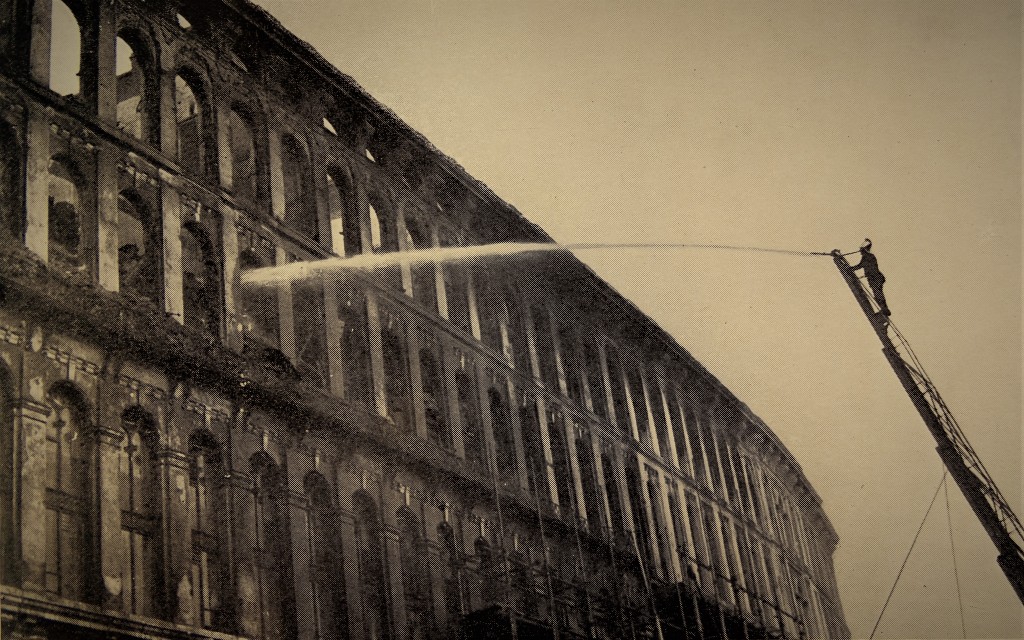
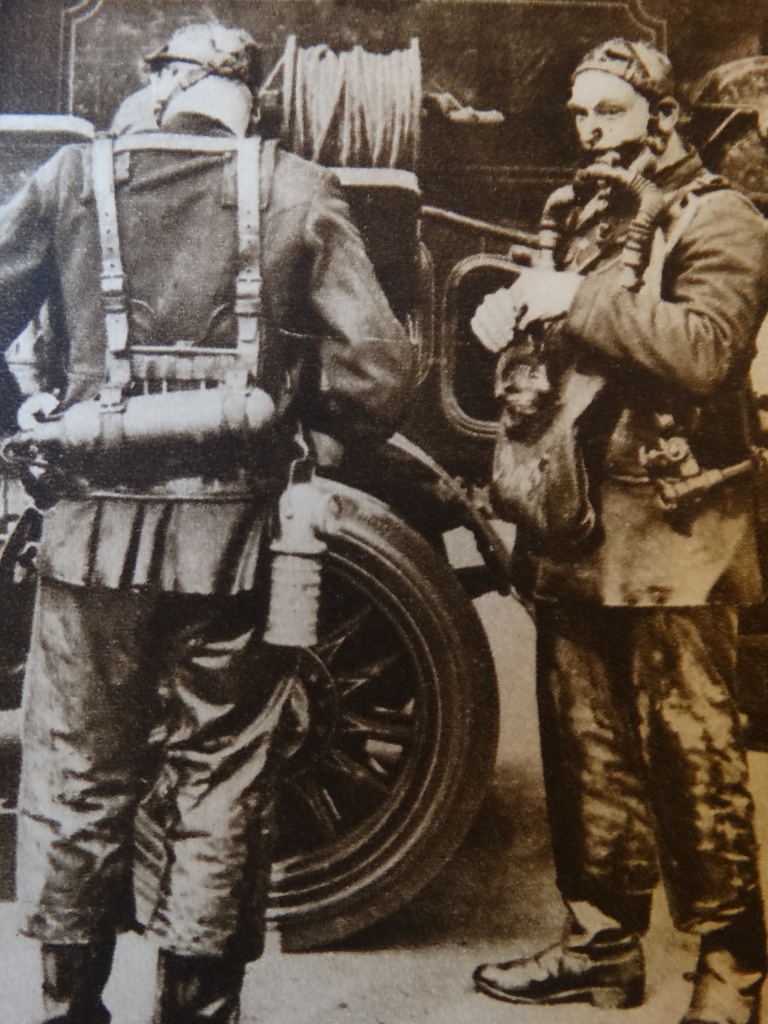
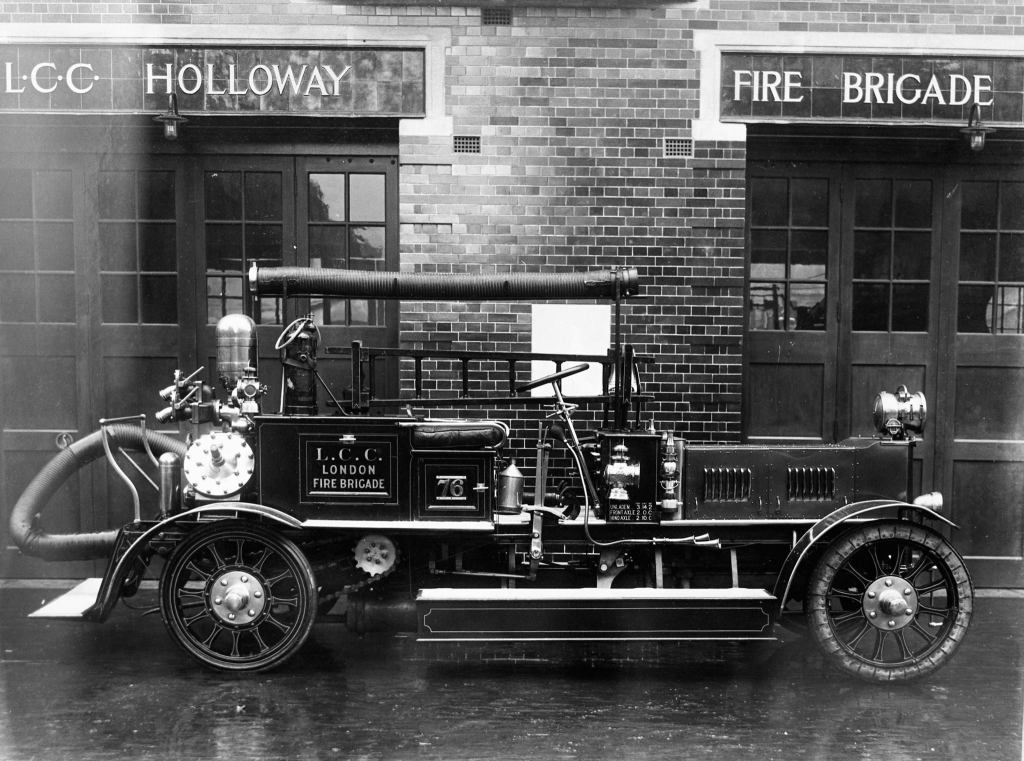


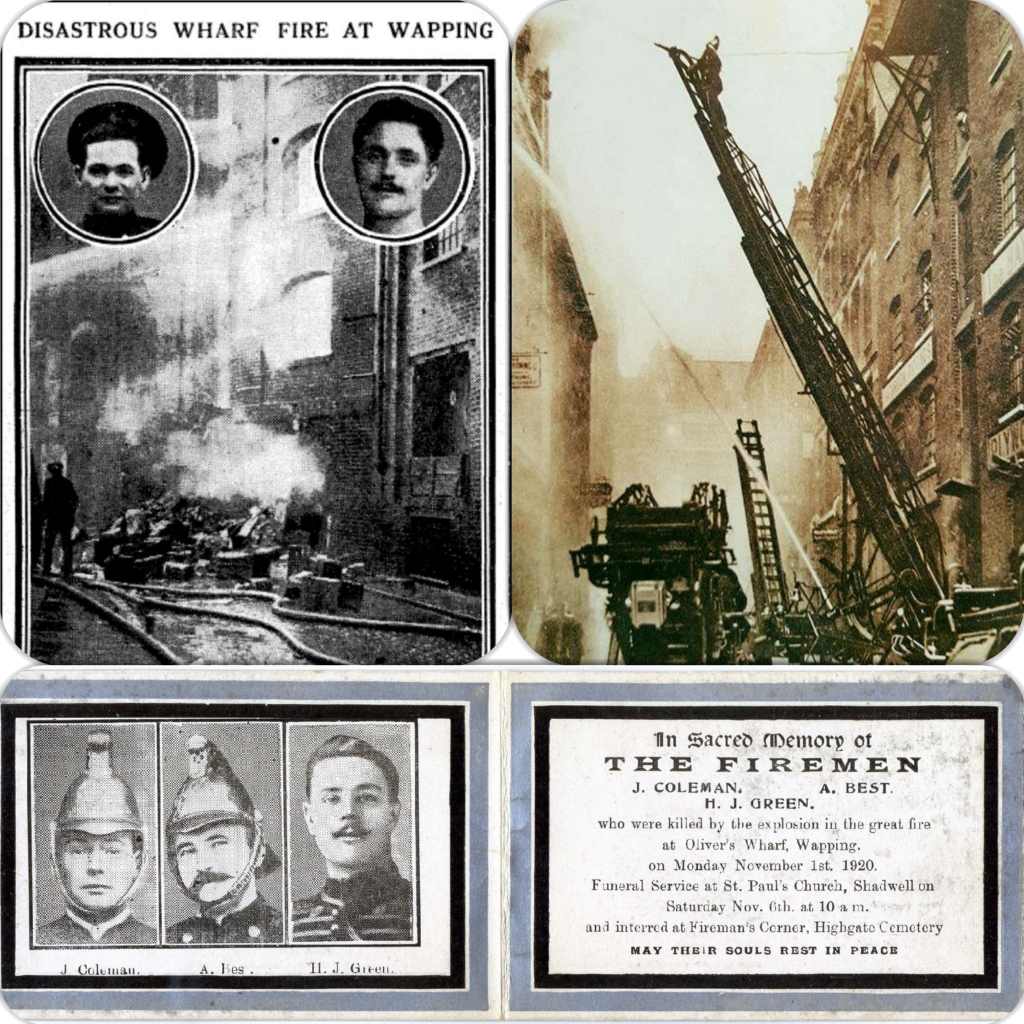
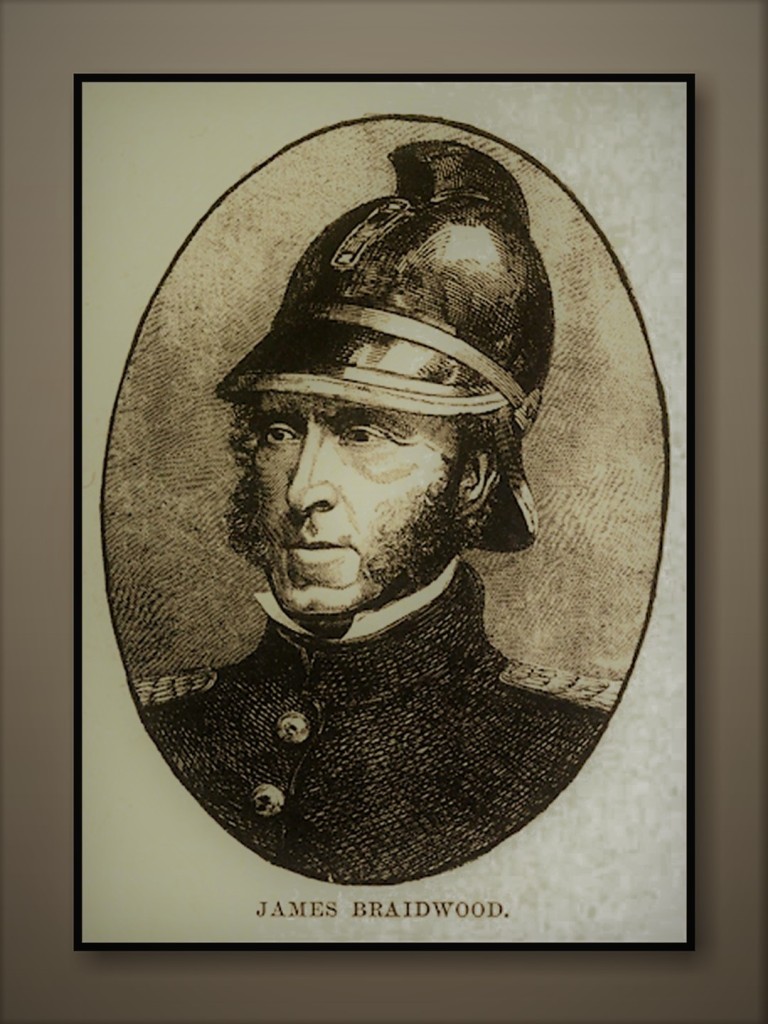
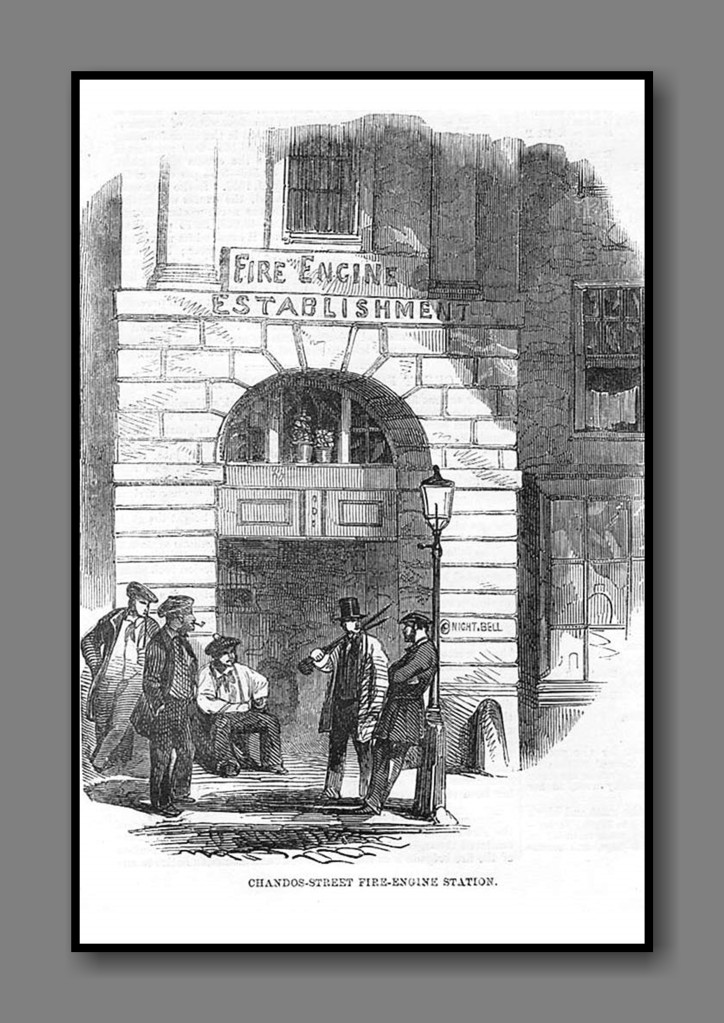
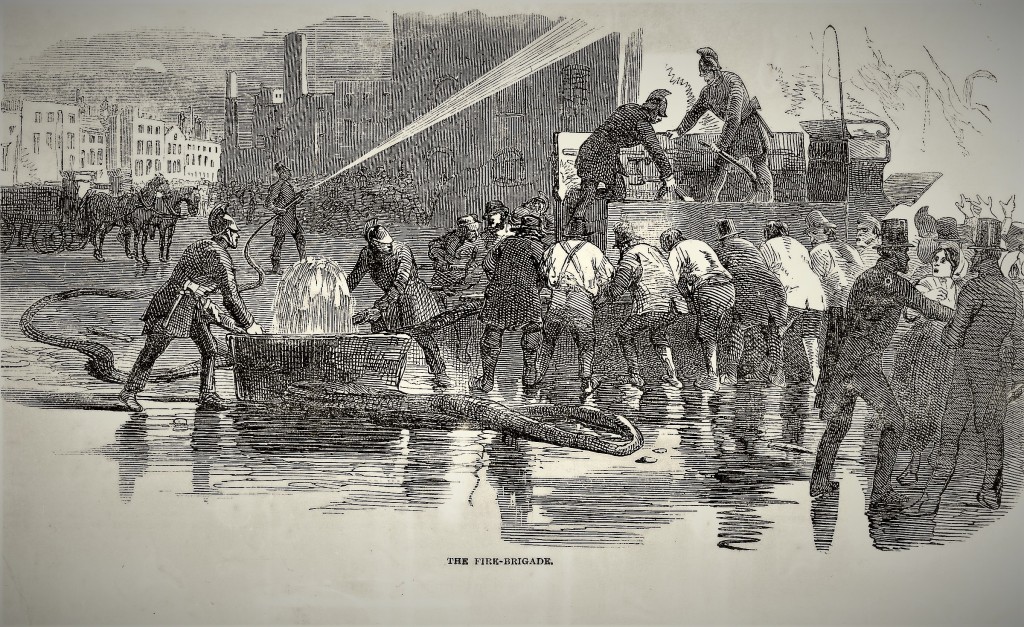
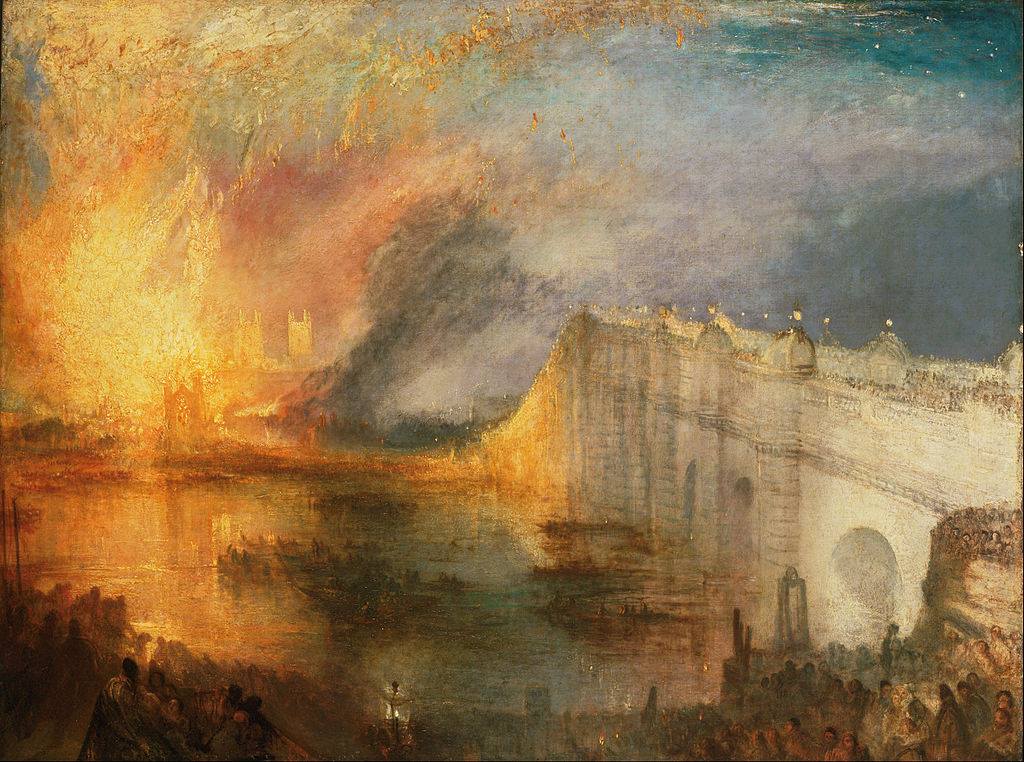
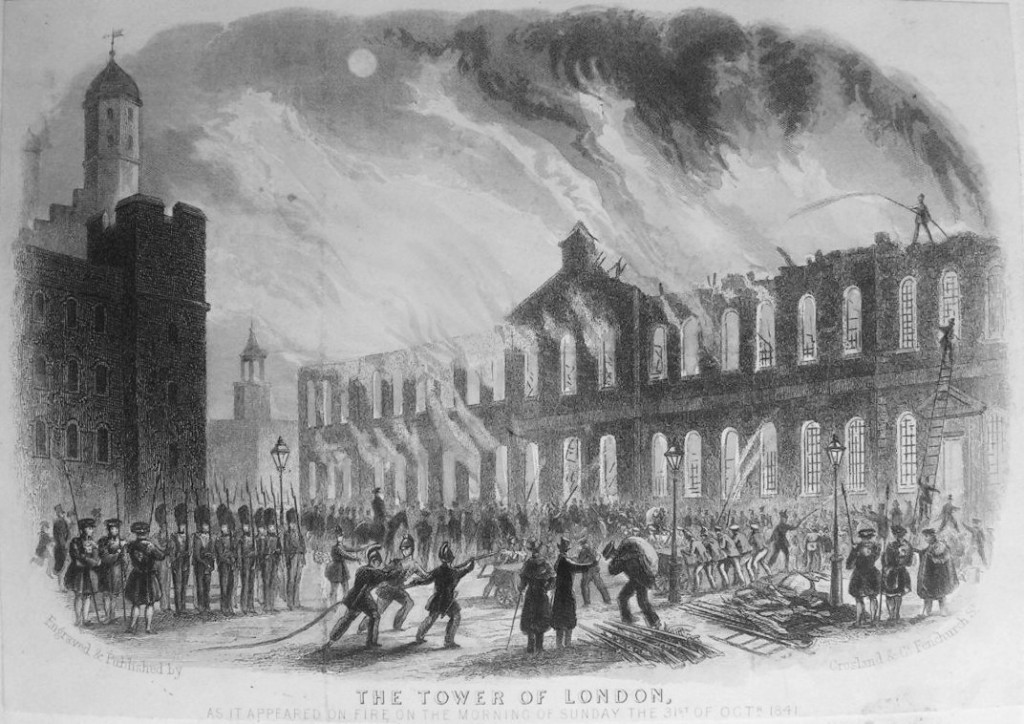
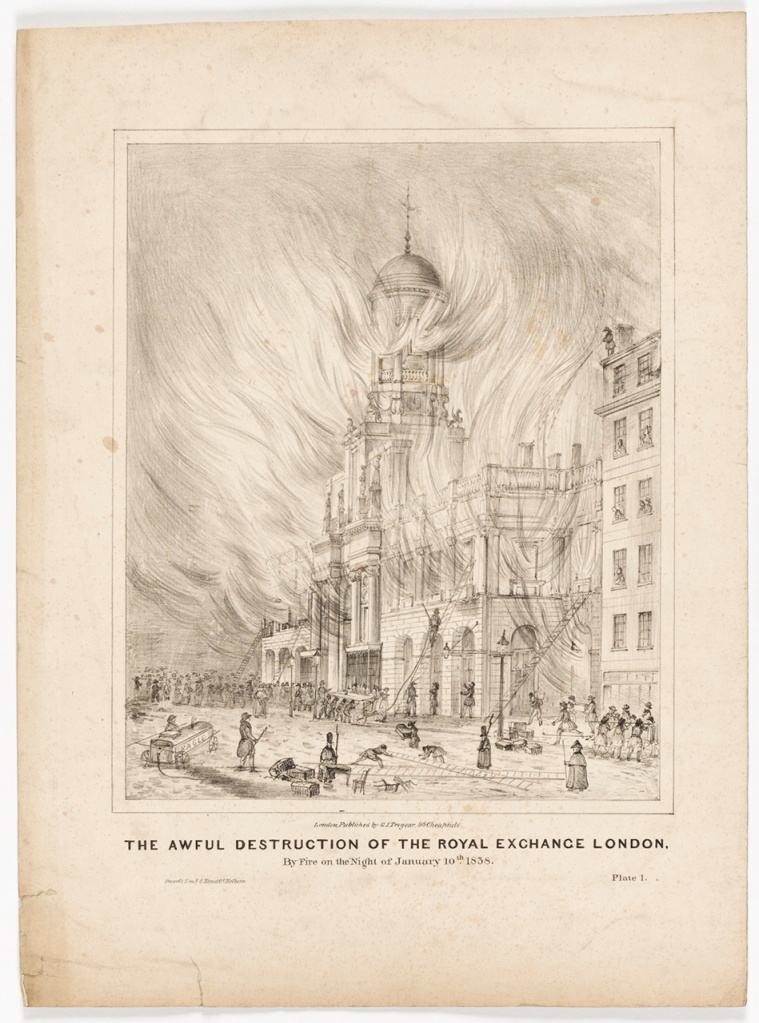
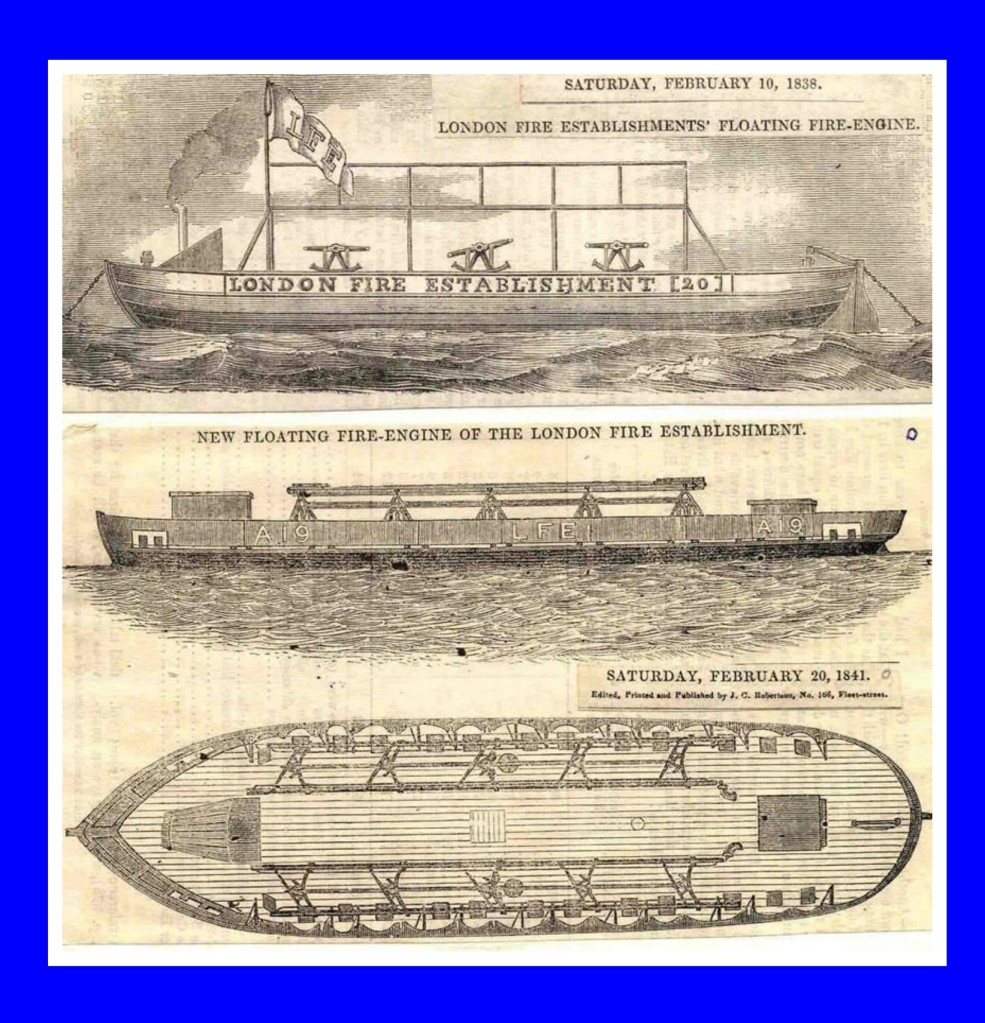
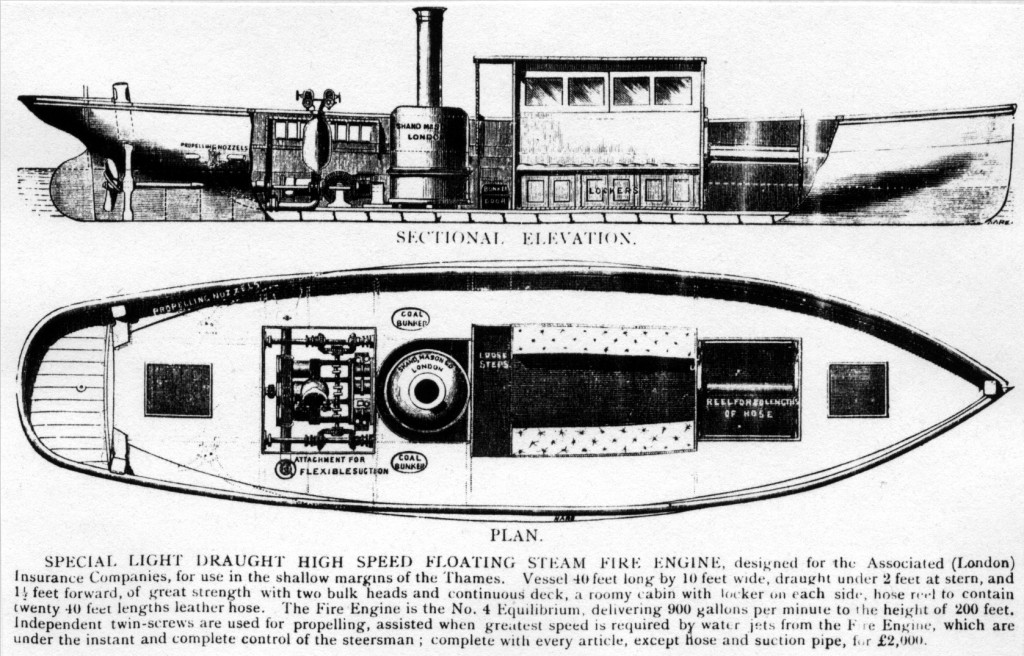
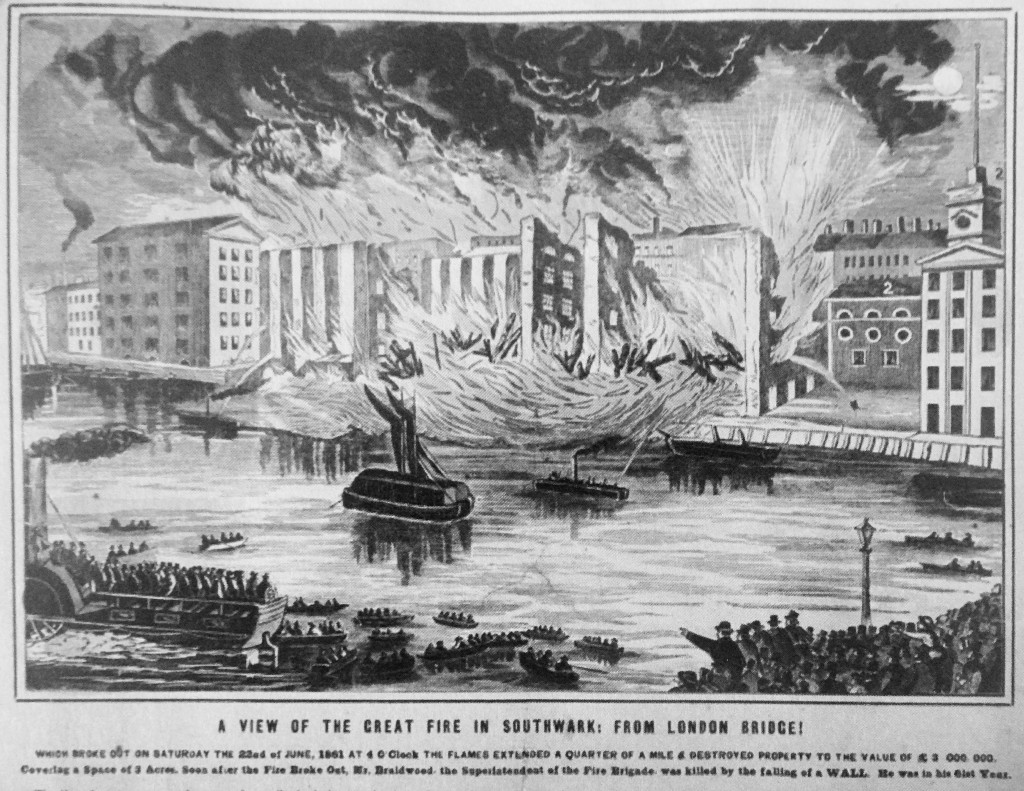
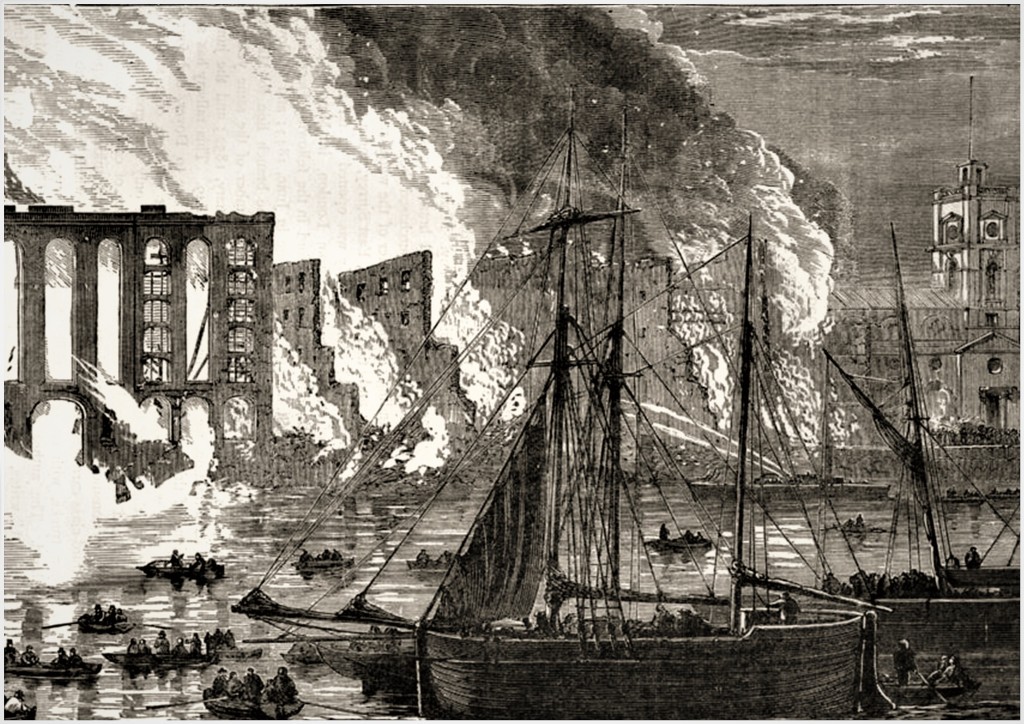
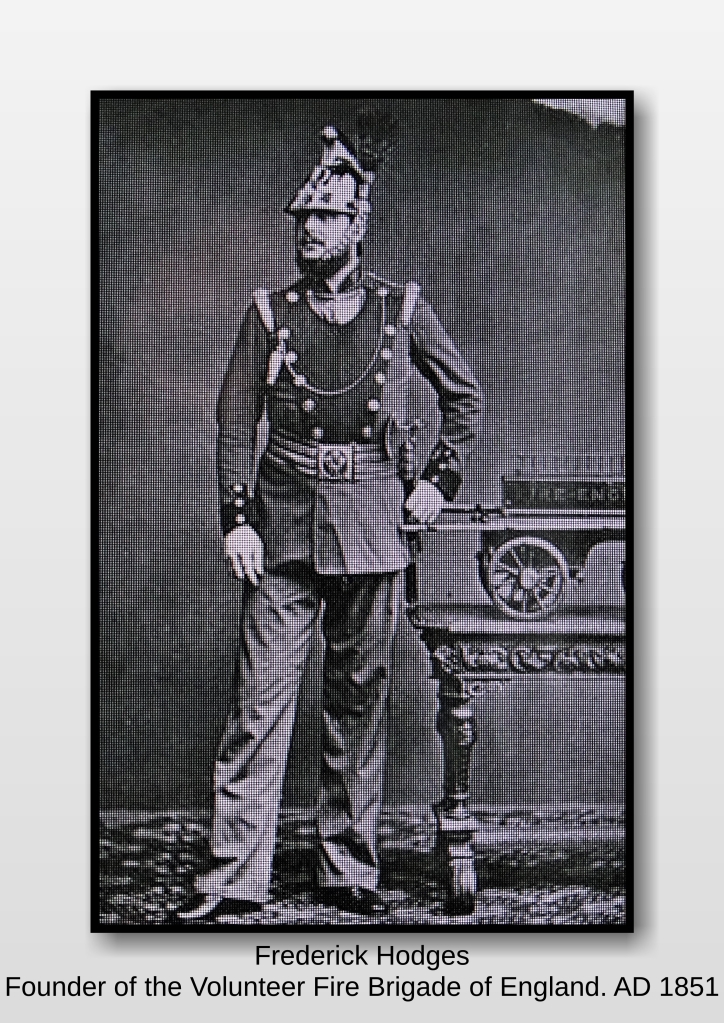
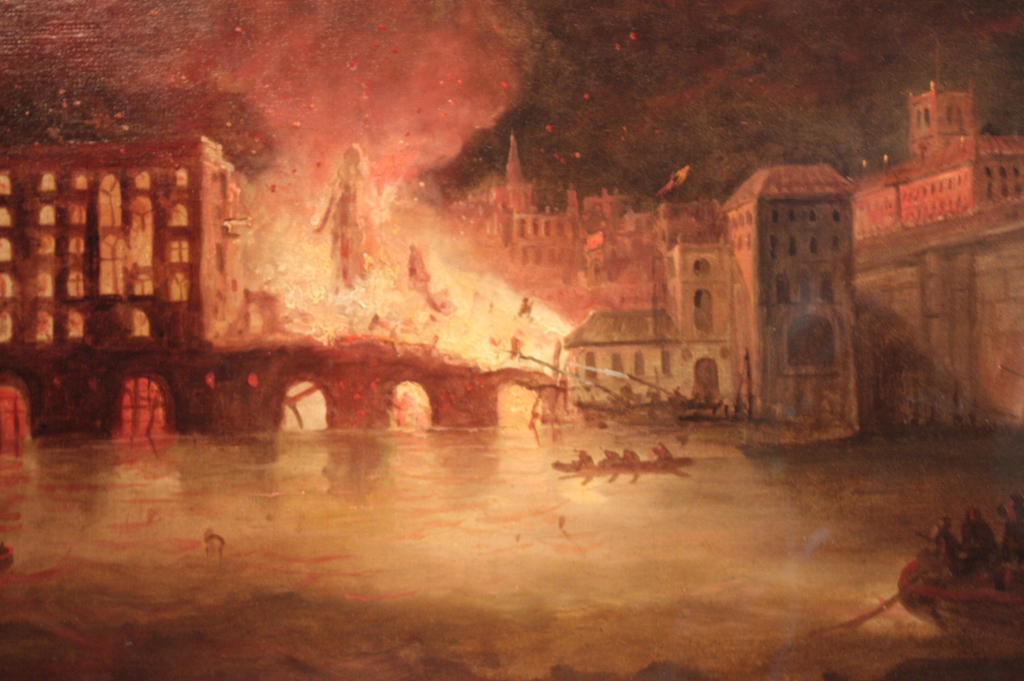
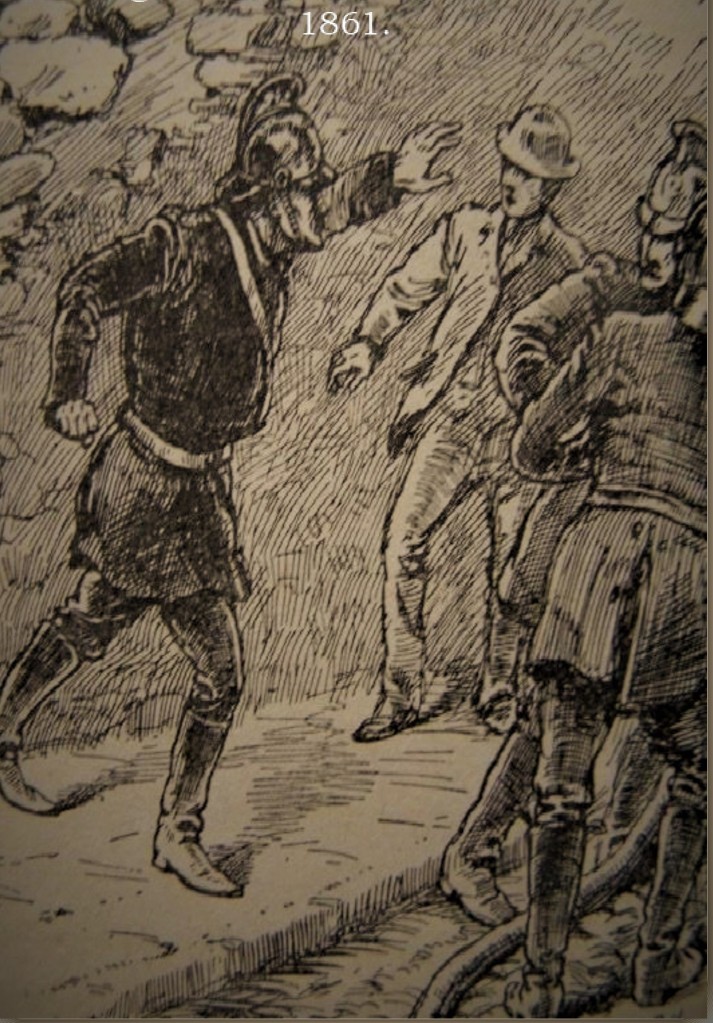
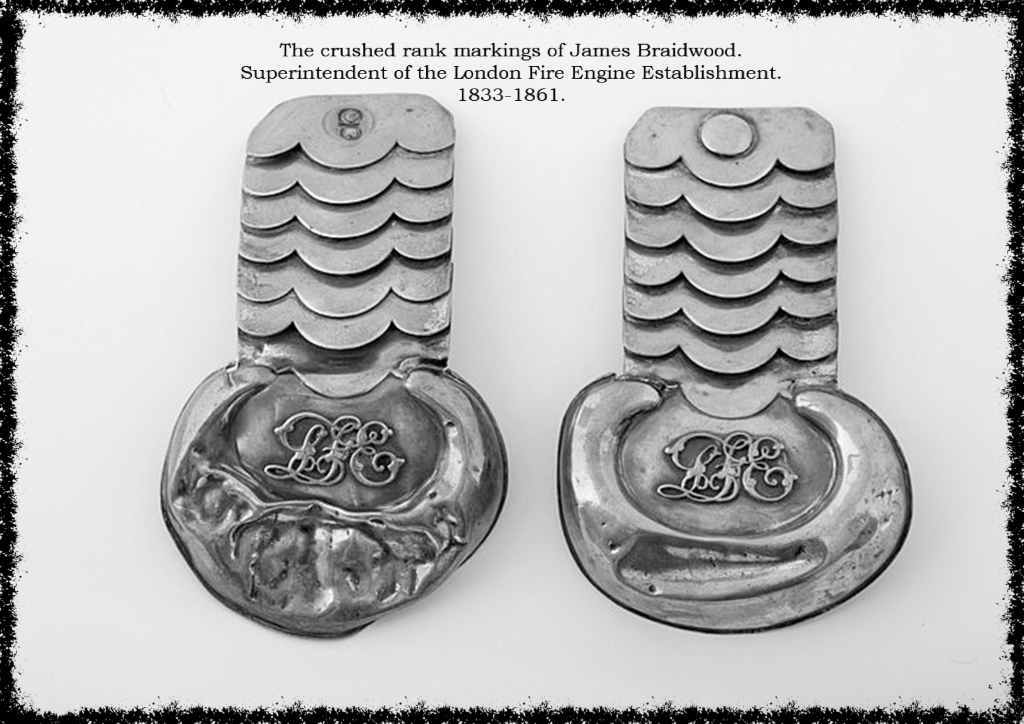
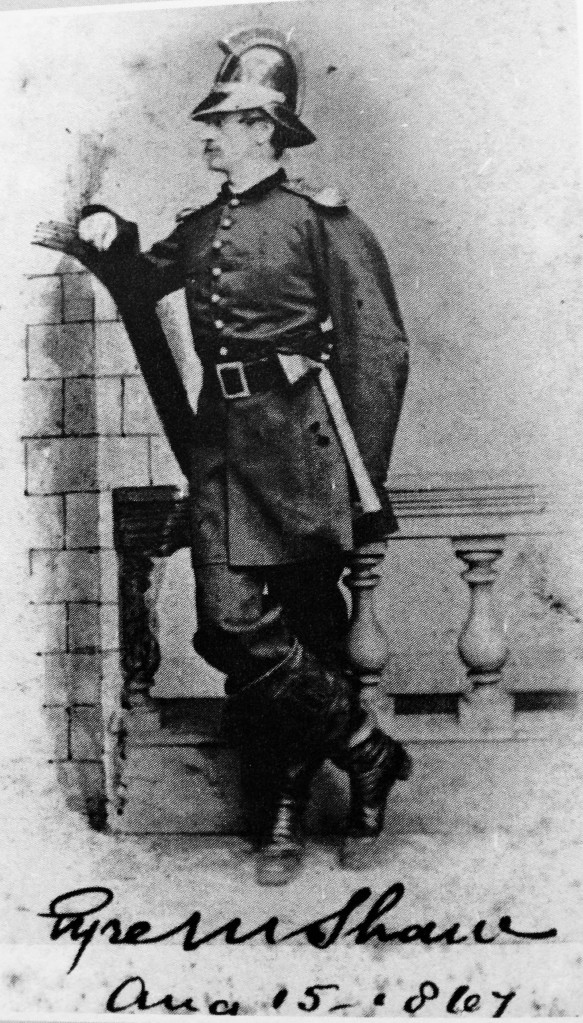
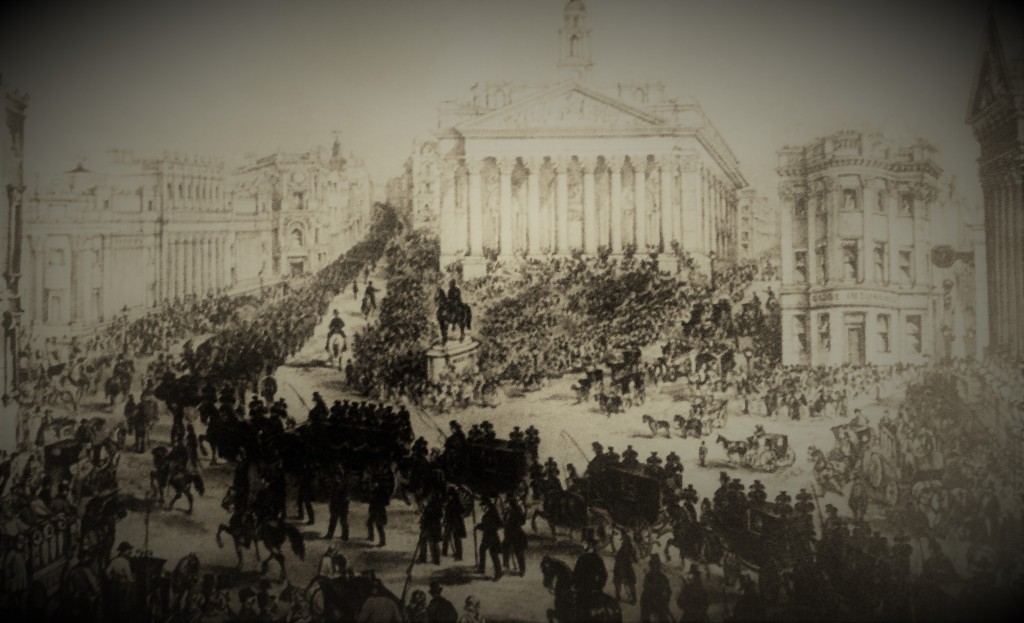
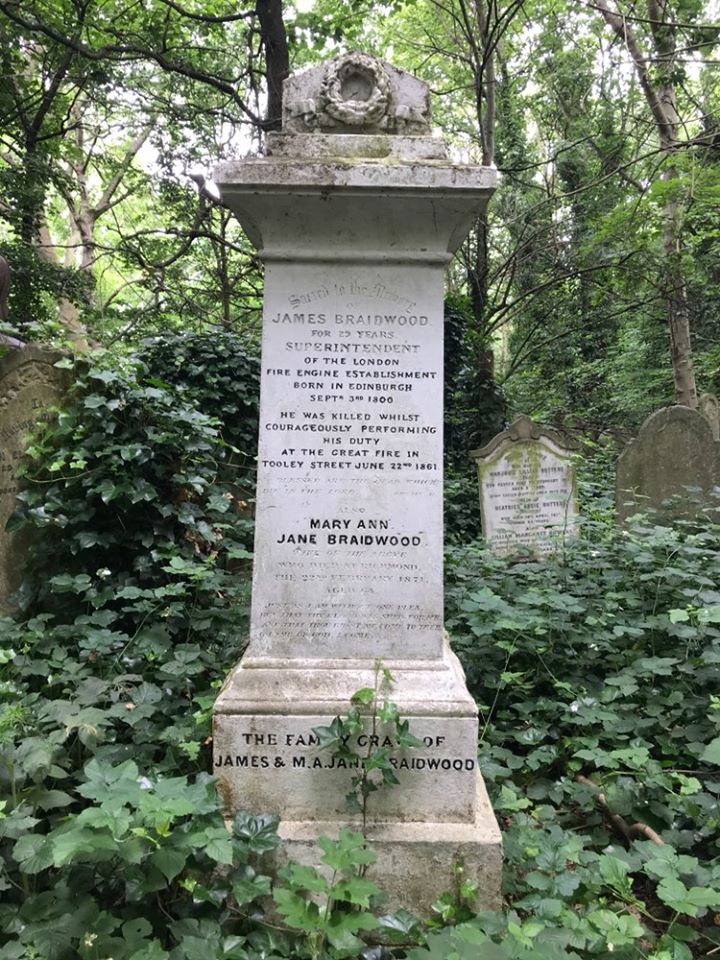
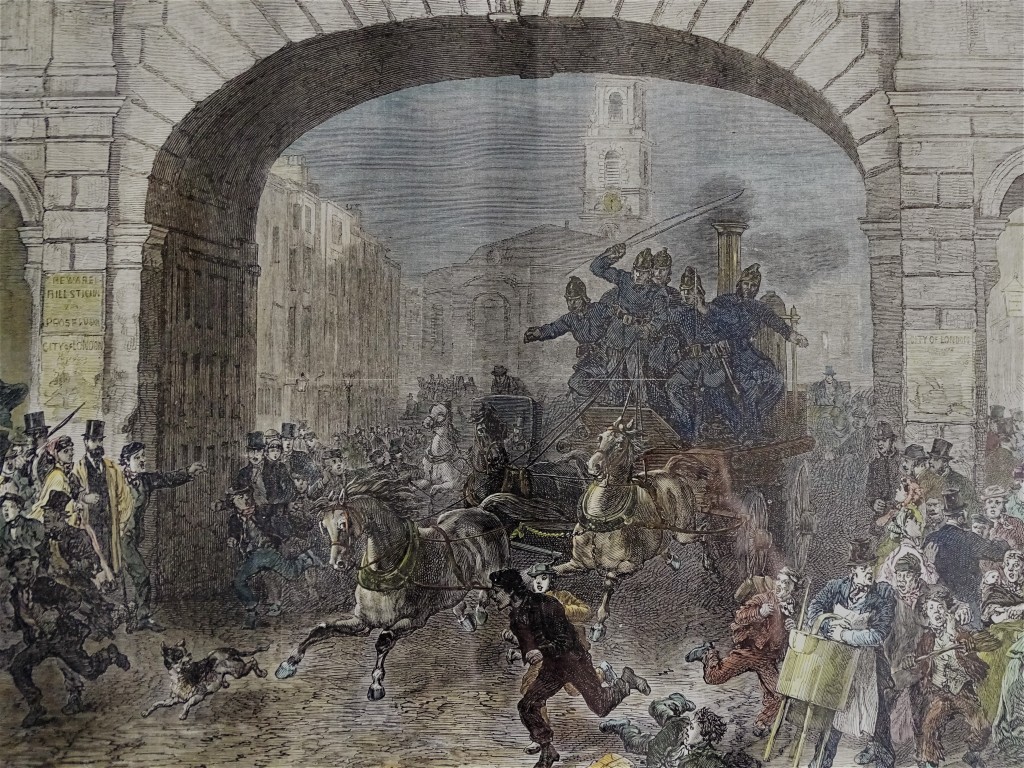
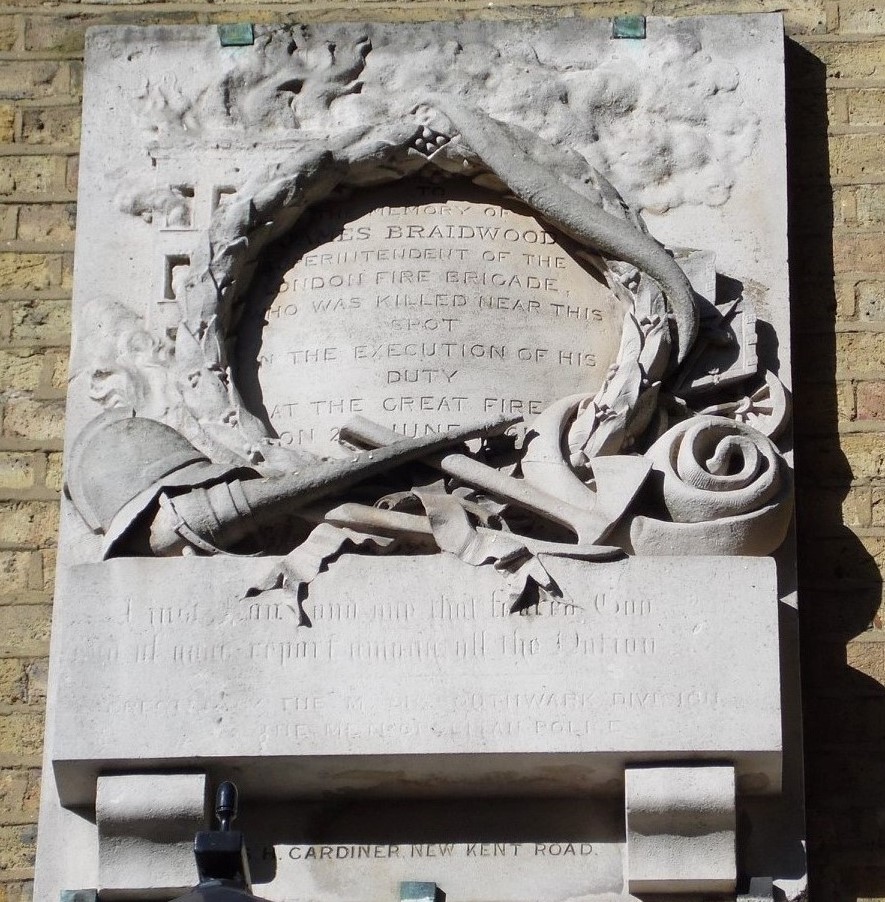


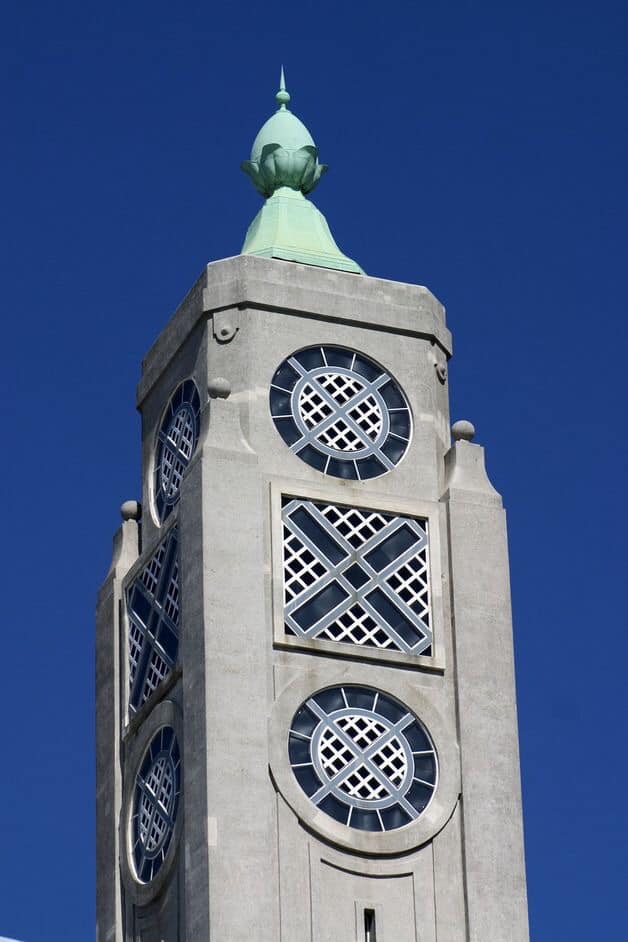


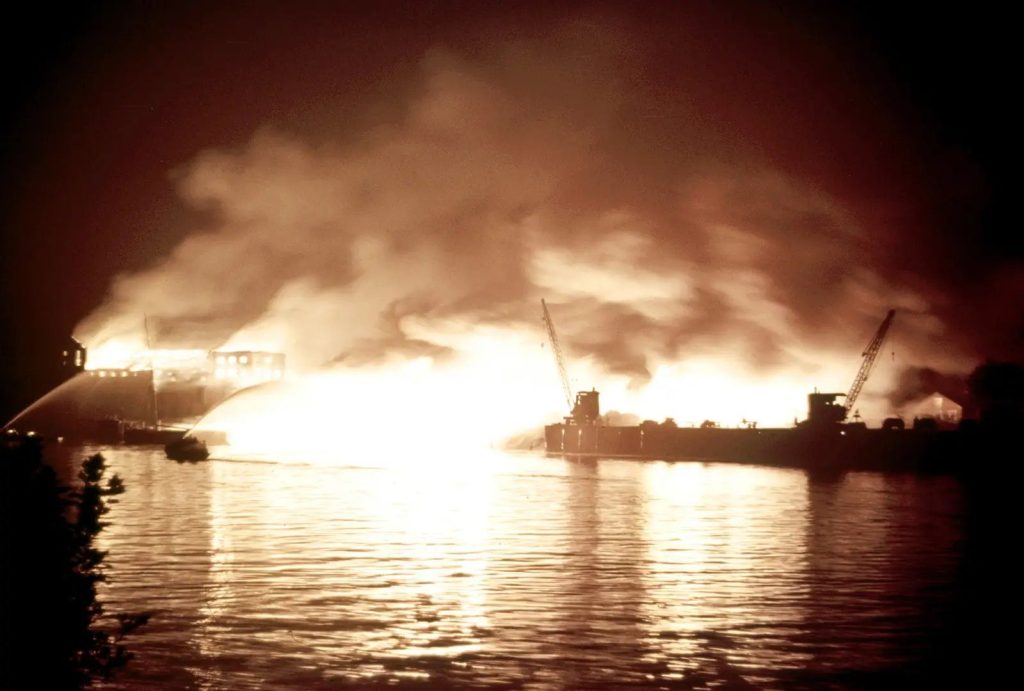


 A retired London Fireman