Possibly the origins of London fire brigade competitions lay in the Metropolitan Fire Brigade (MFB)? To be honest, I have no real way of knowing as reference to them is rather scarce! Probably the earliest competitions came with the London Insurance Companies and the various brigades racing to the scene of a fire and trying to get to the latest blaze first! Capt. Eyre Massey Shaw (the first Chief Officer of the MFB) was certainly aware of fire brigade competitions when, in 1881, he witnessed the New York brigade competition on his famous American tour. But they were, in fact, more horse races, with the teams of horse-drawn fire engines competing against each other. The idea would eventually come to London but not on Shaw’s watch. He just returned to London with the American idea of introducing firemen’s poles. They soon became a popular feature in all his London fire stations.
Up until 1889 men of the Metropolitan Fire Brigade were not permitted to take part in any national fire brigade competitions, partly because of the unfair advantage they had as the UK’s premier fire brigade. The idea of these professional MFB men sweeping the board, and collecting all the trophies, did not sit well with the competition organisers. After Shaw’s retirement in 1891 neither the disgraced MFB Chief Simmonds, or his much-revered replacement Capt. Wells (1896-1903) appeared to encourage their men into such competition ‘trivialities’.
But by the brigade’s change of name in 1904 (when it was formally named as the London Fire Brigade) the idea of the benefits of inter-station competitions grew both in momentum and popularity. They would involve both land and water races, with both professional skills and sporting prowess gaining impetus. In the space of a few short years’ competition became part of the LFB’s way of life for its firemen, and whilst the age of the horse-drawn engine was in decline the racing of the wheeled escape cart crews had entered the annual LFB calendar.
1912-Kingsland Road fire station. Their horses won the International Horse Show in their category.
Under the brigade’s sixth Chief Officer-Lieut-Commander Sampson Sladen, it is fair to say the idea of regular brigade competitions had become firmly established. By 1905 a new competition was initiated; the turnout competition. A cup was awarded to the winning team with the fastest response to the station alarm being sounded. The competition would continue until the late 1960s. The Brigade Regatta, a Thames River race, would become one of the longest running LFB competitions, morphing into the inter-divisional/brigade whaler race, and later still the inter-services Fishmongers Cup. It finally fell off competition shelf in the late 1990s when support by the Brigade for those entering competitions went into terminal decline. (By then, most of the former competitions had already been consigned to the brigade’s history book!)
In 1912 the annual escape competitions were initiated with the finals held at the Southwark headquarters and a cup awarded to the quickest station crew. The first winners being Southwark; who were able to raise their ladder and climb into the four-storey tower to extinguish an imaginary fire in 41 seconds! The pump competitions followed as did the LFB entering their teams of horses in the International Horse Show in London.
Despite the onset of the first World War in 1914 it did not diminish the williness of stations, or individuals, to take part in competition. Not least was the growth in sporting competitions, with road races, boxing matches and the annual athletics meeting taking place at one of London national stadiums, but most notably at the White City.
With the arrival of Arthur Dyer in 1918 as Chief Officer competitions moved up a gear. Dyer was a keen sportsman and highly competitive. He saw the merit in competitions and would eventually add a fireman’s technical quiz to the annual LFB calendar.
The London Fire Brigade regatta on the River Thames. It would lead to the inter-divisional Whaler races and Brigade finals16th August 1919. London firemen watching the races at the London Fire Brigade Sports at Herne Hill, south London. (Photo by A. R. Coster/Topical Press Agency/Getty Images)1920 and the Brigade finals of the pump competition held at Southwark HQ.1920 and firemen roll up their hose during the Brigade finals of the pump competition held at Southwark HQ.1931-The finals of the pump-escape competition at the Southwark HQ. Firemen, using dummies, have to rescue casualties from the third and fifth, by carry-down and lowering line, tower in the fastest time.
1935-The finals of the pump-escape competition at the Southwark HQ. Firemen, using dummies, have to rescue casualties from the third and fifth floors, by carry-down and a lowering line, in the fastest time.
1935. Station No 1-Southwark-winners of the Brigade pump-escape competition held at the London Fire Brigade Southwark HQ.
Up until 1937 all Brigade finals of the various skill competitions were held at the Southwark HQ in Southwark Bridge Road. But the HQ founded by Capt. Shaw in 1878 was considered passed its sell by date. The current Chief, Major Morris. MC. had secured agreement with the London County Council to build a new, bespoke, headquarters station on the Albert Embankment. SE1. Lambeth would be the home of all future pump and pump escape finals until the 1960s and 70s.
1935. The Brigade finals of the pump competition at the Southwark HQ.1937. The Lambeth fire station crew, first winners of the pump-escape competition held at the new Brigade HQ. Albert Embankment. SE1.1938 and the Brigade competition final held at the Lambeth HQ.
It took the Second World War, in particular the Blitz from September 1940 to May 1941 to suspend the LFB’s competitions. However, it was only a temporary lull and with the creation of National Fire Service in August 1941 various pump competitions continued to be held in the enlarged London Brigade, with finals held at the Regional Lambeth HQ. It was also a time that the Home Office introduced the first Manuals of Firemanship. In the years that followed a technical quiz competition, based on answers from the manuals, took on a national focus with regional finals and a UK national winner. (To my knowledge London has always been a runner-up, never a winner.)
Post war the LFB returned to local authority control (LCC) and the range of competitions both on land and the Thames returned to the Brigade’s regular annual calendar. In addition, the Brigade’s sports associations added competitions involving athletics meetings, swimming galas and the occasional inter-divisional boxing tournament. There were also Divisional football and rugby teams, each addingplayers to the respective Brigade team, whilst station volleyball reached international status. The LFB team playing continental fire brigades.
1951-52. Manchester Square fire station- pump competition Brigade final winning crew. 1952. The winning crew of the annual Brigade whaler race. The race started at the Lambeth river station pontoon and finished at HMS President, moored on the Victoria Embankment.1957. The London Fire Brigade’s Internation Volleyball team (in vests) playing the Paris fire brigade at the Lambeth HQ.
Tragically, on the 17th March 1961, the death of a Battersea fireman practising for the Brigade pump-escape competition at Brixton fire station (SW London) brought about an immediate hiatus to those particular competitions. He and a colleague fell from the escape ladder. Fireman Albert Hunt died at the scene and fireman Bob Maloney, also from Battersea, suffered serious injuries. These competitions were never reintroduced into the London Fire Brigade.
It was as a teenage fireman, arriving at Lambeth in January 1967, I discovered that there was a lot more to station life than just cleaning, regular drills and waiting for the inevitable fire and other emergency calls. There was taking part in, and aiming to win, Brigade pump competitions. For some this was clearly a religious calling, especially the watch govnors’ whose whole life seemed to centre on this particular event. Lambeth’s Blue Watch govnor was one such animal. He would go to the most extraordinary lengths to give his team every possible advantage. Dedicated lengths of hose would be washed and ironed, by hand, so as to make them run out smoother and faster!
1967. A pump competition crew in the Lambeth drill yard.
Devoted competition men would rip their fire tunic linings out to make them lighter. Standpipes were modified to make them fit on the hydrant quicker. Even the hose coupling lugs were dismantled and oiled to make them rotate and release faster. Every minute part of the pump drill underwent scrutiny to achieve the maximum possible time advantage.
However, the actual competition was a relatively straightforward and simple affair, albeit physically demanding. A four-man pump crew had to start, sitting on their appliance (the pump), dismount and set into a hydrant; run out two lines of hose; knock down two targets with their jets of water; before making up all the gear and return it to a marked area on the drill ground, before re-mounting their appliance and drive it over a finish line in the fastest possible time.
It sounds easy but it was much more complicated due to the time penalties. The senior officers, acting as judges, would add seconds for any technical error that any member of the pump crew made. Drop a hose; penalty points. Miss a target; penalty points. Not under-running the hose correctly; penalty points. Then there was the burden placed on the pump operator. Too little pump pressure and you could miss the target; too much and there’s a danger of losing control of the branch. Months of arduous, and demanding, training could be in vain, all because of a momentary loss of concentration.
Underhand tactics were not unheard of either. Pump crew’s competition hose mysteriously going missing! Hose couplings were sabotaged so they would not connect properly. Strange furtive figures, lurking around the fire station back gates, could be seen spying on the opposition practising their competition drills. The individual, making notes, looking remarkably like the team trainer from a nearby fire station.
The Divisional watch related elimination rounds would start the competition season. These were followed by the Divisional finals where the fastest three crews ran off against each other. One winning team from each of the eleven Divisions progressed to the Brigade pump competition finals, held each autumn, in Lambeth’s yard at the Brigade Headquarters. Supporters filled the tieredbalconies, cheering on their particular crew or Division. Competition was always keen. The team’s enthusiasm spurred on by the chanting of their supporters, chanting that would have done credit to any London local football derby.
As someone fresh from training school, and built like a racing snake, I was picked for the Red Watch team that year. Despite our best efforts and winners in the Red Watch run offs we never reached the Brigade finals. (Our chances not helped after our prized competition hose went missing!). We were well beaten by Lambeth’s Blue Watch. We fared no better the following year (1968) when a new Brigade record time was set by Edmonton’s Blue Watch, of one minute 47 seconds, from dismounting to passing over the finish line. A truly remarkable time. It was a record that was to remain unbeaten. Lambeth’s Blue Watch, with their bellowing govnor Alan Jackson, urging them on, gave an excellent account of these themselves being only 1.8 seconds behind the winners. (The Jackson brothers were both pump competition aficionados. His elder brother Peter led his Brixton crew to win the Brigade finals in the early 60s.)
Station Officer Peter Jackson (standing) with his Brixton pump competition Brigade winning crew in the early 1960s
When our govnor was not trying to encourage some of the watch to enter the pump competition, he was putting others in for the Brigade’s technical quiz competition. Another annual event and being the junior buck, it seemed I had an automatic pass into everything that others had to actually volunteer for!
1964. Burdett Road fire station winning technical quiz competition team (standing) with the Brigade senior officers who adjudicate and Mr Cunningham-Deputy Chief Officer (middle) who was the question master.
The technical quiz competition led to onto national UK finals. London’s winning team would represent the Brigade in the southern counties district, which covered some ten different surrounding fire brigades. All the questions were drawn from any of the Manuals of Firemanship, which ran to eleven books. Thousands of pages and tens of thousands of potential questions. If you learnt all the answers to the questions there was not one promotion examination you could not pass. Our Red Watch Lambeth team managed not to get kicked out in the first rounds but we got nowhere near the Brigade finals. This was won by an exceedingly knowledgeable Battersea team. Battersea later went on only to be narrowly defeated by Bournemouth Fire Brigade in the District finals.
In the late 1960s the Fire Brigade Union was not a fan of the pump competitions. By 1970 the Chief Officer, now Joe Milner, found himself increasingly embroiled in more and more matters involving industrial unrest across the Brigade. The pump competitions became a casualty of this and they were stopped in favour of one and two-man competitions. It was the final straw in the long running era of skill competitions and, by the time of the first national firemen’s strike in 1977, there was little appetite for competitions from those at fire stations.
In today’s London Fire Brigade, if there is enthusiasm for this style of competitive activity there appears little eagerness from those in the managerial driving seat to promote it. Competitions do exist on the national scene but the freedom to give time off, with pay, for those undertaking such activities belongs to a time long gone by. These are different times with different rules. For London’s modern firefighters these former competitions are now just an entry in its historic past.
It might come as a surprised just how early a system which allowed firemen to work in smoke was first used. In London early attempts to protect firemen, when entering smoke, were imported from France. A smoke-proof ‘dress’, that was created by M. Paulin, was one suggestion that found considerable favour.
Lieut-Colonel Pauline was the commander of the corps of Sapears Pompiers (fire brigade) in Paris. It was his design that crossed the Channel and adopted by its London equivalent force, the London Fire Engine Establishment (LFEE) in 1836. His invention was taken up by its Superintendent James Braidwood. Braidwood conducted his own tests and deemed them to be successful.
The smoke-hood, which covered the whole of the upper body, was made of leather. Enclosing the wearer’s head it reached down to their waist were it was secured by a belt. The arms reached down to the wrists and were secured about the cuffs by string. Two glass eye-pieces afforded the wearer uninterrupted vision.
Fresh air was supplied via a length of hose attached to the back of the hood. A bellows forced air into the hood with excess pressure escaping via the waist and wrists. As the air was being forced in it inflated the hood and prevented smoke from entering. Formally adopted, the hood was first used in anger at a fire in Basing Lane on the 22nd December the same year. Details of how many times it was actually used remains scarce but Braidwood’s reported to his Insurance Committee stated that its use in vaults, cellars or ships holds: “this dress is invaluable”.
Smoke helmet in a training drill at the MFB Southwark HQ.
Progress over the next 50 years can be regarded as limited but Capt. Eyre Massey Shaw (who took over from Braidwood after his death at a fire in Tooley Street) became the first Chief Officer of the new Metropolitan Fire Brigade. Progress with smoke hood development came around 1875 when he and a Professor Tyndall devised, and introduced, a ‘smoke cap’ which was, in fact, the first respirator. The earlier hoods were considered primitive. It was thought that a respirator would filter smoke and other gases and be effective under all conditions. It was not realised that the greatest danger to firemen, wearing such equipment, was oxygen deficiency! Nothing but a supplementary air supply, or oxygen, could do the job required.
Shaw next gave his blessing to Dr Fisher’s patent smoke mask in 1878. Made of light, imperishable, material, when dipped into hot water made it plastic. Placed on quickly it could be adapted to closely fit the fireman’s face. It was made with strong glasses covering the eyes and secured to the face by a buckled strap. The whole mask weighed only a few ounces and by Victorian standards was considered reasonably efficient.
Siebe Gorman smoke hood.
By 1900 a German company, Siebe Gorman, had supplied the brigade with an improved smoke helmet and accessories. It comprised a leather smoke helmet, double acting foot bellows air pump, canvas kit bag containing 120 ft of air hose, 120 ft. of security rope and body harness. They had introduced smoke helmets, based on the principle of a deep-sea diver’s breathing system. Air entered the helmet through breathing tubes, which were connected to a set of bellows at each side and operated by a second person. A neck curtain attached to the helmet was tucked into the fireman’s tunic, providing a reasonably air-tight seal. However, the equipment was very restrictive as firemen could only go as far as the air hose allowed.
In 1912 ten additional pairs of smoke helmets, of the self-contained type, were purchased to ensure it could be available in any part of London without undue delay. That said, in the Chief Officer’s report of that year “148 individuals were endangered at fires and of these 43 were rescued by firemen.” In the vast majority of cases firemen had, of course, to endure the punishing effects of smoke. His report made no mention if smoke-hoods made any material difference to the rescues carried out, or even if they were used?
With an increased use of motorised fire engines the following year a decision was made to purchase two additional, specialist, motorised fire engines (emergency tenders). One was under construction and would be allocated to the No 1 station at the Southwark headquarters. A second would be located at the Superintendent’s station of Clerkenwell once built.
The London Fire Brigade’s first emergency tender with its Proto wearing firemen and located at the No 1 station-Southwark. (Photo circa 1914)
The brigade’s policy on smoke-hoods was they were allocated to thirteen fire stations; each with two hoods carried on a fire engine. Smoke hood training was restricted to a relative few firemen, only those serving at those stations. The brigade’s total stock of smoke-hoods stood at twenty six sets. However, there continued use was brought to a sudden end in 1913.
On the 13th March that year Firemen Robert. L. Libby and William McLaren died during an incident at Pembridge Villas. W11 near Notting Hill. The two men had entered a sewer wearing smoke hoods (it is assumed) to rescue a sewer worker, but that is not certain. What is beyond doubt is that the two firemen died. Both asphyxiated because of gas within the sewer. As a direct result of their deaths the efficacy of all the self-contained smoke hoods raised much nervousness about their continued use. Henceforth the practice of carrying smoke hoods was discontinued and they were removed from stations.
The Brigade urgently required a better system of breathing apparatus. Under existing UK legislation (1910 and 1911), it was compulsory for the vast majority of British collieries to have access to self-contained breathing apparatus. The London Fire Brigade took upon itself to adopt the mine rescue teams’ most successful system. It remained in use (albeit modified over time) for more than sixty years.
A early breathing apparatus course at the Southwark headquarters and training in the Proto set.
The first practical breathing apparatus set, for rescue and salvage work in coal mines, had been invented by Henry Fleuss, an Englishman. He had become interested in diving equipment whilst working for the P&O steamship company. His first apparatus, of 1879, was a primitive self-contained underwater breathing apparatus. Divers would carry a self-contained compressed oxygen supply, plus a contrivance to recover (regenerate) oxygen from exhaled carbon dioxide. Fleuss subsequently obtained patents and started his own company. He also collaborated with Siebe, Gorman & Co. of London, the premier makers of diving equipment. The Fleuss apparatus was adapted for use in mines. Enabling the wearers to survive in a poisonous atmosphere underground.
Austria and Germany had both been at the forefront of efforts to develop breathing apparatus for use in irrespirable atmospheres (underground) during the 1890s and into the 1900s. The first British models began to appear in the early 1900s. The ‘Proto’ was introduced in 1906, manufactured by Siebe Gorman.
The Proto
Proto.
It was a self-contained system, consisting of a cylinder of oxygen and an air reservoir or breathing bag containing an absorbent. This removed the exhaled carbon dioxide it was mixed with a fresh supply of oxygen from the cylinder and reused. The apparatus included a separate mouthpiece through which to breathe, a nose clip and rubber goggles to protect the eyes. Although requiring special training, it was swiftly adopted by the Brigade and issued to the first emergency tender crews.
The benefit of this new breathing apparatus for firemen was that several could now work together as a team when wearing the oxygen sets. By 1916, there were some 913 Proto sets in use across Britain. The London Fire Brigade only account for around 2% of that total. The age of the smoke eating fireman remained the order of the day.
The outbreak of the Great War in 1914 had a number of significant impacts on the Brigade, not least the number of firemen, and officers, who returned to the ‘colours’ either as reservist or volunteered to fight for King and Country. With the War effort there was no funding available to see an expansion of breathing apparatus to more London fireman. According to the Brigade’s summary of stations and appliances published in 1919 it still only had the one petrol motor emergency tender and 36 sets of Proto breathing apparatus which, interestingly, were still referred to as ‘smoke helmets’!
1919 saw the promotion of Arthur Dyer to become the Brigade’s Chief Officer. The continuous duty of firemen had been approved to be changed to a two watch system the following year and with it the number of breathing apparatus trained firemen doubled. The second emergency tender was finally placed into service. Although in looks it took on the appearance of an adapted fire engine that remained open to the elements. The Proto set was proving its worth, although from the wearers point of view it was prone to overheat and the oxygen supply was painful to inhale. Dyer proved himself to be a remarkable Chief Officer, a more than competent fireman and leader of his men. However, it is worth noting that there was no general expansion in the acquisition of, or the use of, breathing.
The ‘open’ emergency tender and crew of station 66-Clerkenwell.
Cmdr. Aylmer Firebrace RN. joined the London Fire Brigade as an officer entrant the same year Dyer was appointed Chief Officer. Firebrace would rise, not only to command London prior to the outbreak of WWII, but would lead the British fire service during the conflict. In 1941 he was instrumental, along with his deputy Frederick Delve, in establishing the UK’s National Fire Service. Reflecting of his early years of service he had these comments regarding attitudes to breathing apparatus.
BA wearing London firemen of the late 1920’s and 1930s when the brass helmets were phased out and the new black cork helmets took their place.
“Fireman can, of course, be protected from smoke by the use of breathing apparatus, but we are not yet in the era; though with the advance in science it is bound to come. A time when every fireman has his own personal set of really light, efficient apparatus.” “But the apparatus is bulky and heavy, some thirty-one pounds, and a handicap to firefighting activity.”
Top: BA training at the Southwark headquarters. Lower: The first enclosed BA carrying pump at the Southwark headquarters.
However, Firebrace was swift to praise the performance of his BA firemen too. He reported on the quick thinking of a BA crew who saved the lives of two sewer men. An emergency tender crew had been summoned to rescue two men overcome in the sewer some 140 ft. below ground level. The gas-plant used for pumping fresh air into the sewer, whilst the men worked below, failed. First descending and then walking half a mile through sewage the team discovered two in a state of collapse. The Sub Officer leading the team detailed two men to carry one of the casualties to the entrance and fresh air. He carried the other man unaided. On his return he noted the man had stopped breathing. Filling his Proto breathing bag with oxygen he then disconnected the oxygen cylinder from the set and administered oxygen to the unconscious man. As the man’s breathing grew stronger he was carried to the entrance and raised to the surface. Both men survived their ordeal. Firebrace’s comment on the extraordinary rescue was; “Only a stout-hearted man, complete master of his equipment, would have done this.”
An emergency tender and crew of 1936.
It was not until 1934 that progress in the greater availably of breathing apparatus was felt across the brigade. Under its new Chief Officer, Major Cyril Morris MC. the London County Council’s Fire Brigade Committee approve the reorganisation of the brigade. In addition to improved appliance design and the introduction of dual purpose fire engine with 50 ft. wheeled escape the brigade introduced ten enclosed breathing apparatus pumps, each carrying thee Proto sets.
The BA room of the new headquarters station at Lambeth. 1937.
In 1937 the new headquarters of the London Fire Brigade was formally opened by King George VI accompanied by Queen Elizabeth. The bespoke, state of the art headquarters saw a dedicated brigade workshops incorporated into the design and Lambeth became the Brigade’s training school, both for new recruits and for breathing apparatus training. A smoke and heat training facility was included in the specification and was located in the basement under the main yard.
Lambeth fire station had the latest enclosed, BA carrying, limousine pumps plus one of the two emergency tenders. On the 12th July 1938 a serious leakage of ammonia occurred at the Eldorado ice cream factory in Stamford Street, SE1. An incident which resulted in questions being asked in Parliament. Yet whilst the growth in acquiring breathing apparatus continued firemen had no gas-tight clothing to protect them from the dangerous effects of chemicals, most notably ammonia. A gas that has very unpleasant effects on the skin, attacking any places on the body liable to perspiration.
The ammonia escape involved much of this extensive factory. An escape of gas that would see 60 people removed to hospital for treatment, 15 of whom had to be detained. With Lambeth and Southwark’s crews summoned it fell to the emergency tender crew, whose Proto sets could be adapted to take full-faces masks, to take a briefing from the factory engineers to shut off the supply. With limited body protection the fireman had to smear a thick coating of ammonia resistant ointment to their necks, ears and hands before entering the white ammonia mist. It would not be until the 1950s that the Brigade were equipment with gas tight suits (Delta suits) to wear when dealing with such incidents.
Preparations for war had started in the mid-1930s. The enrolment in excess 25,000 Auxiliary Fire Service (AFS) firefighters, both men and women, expanded the service across London to previously unseen levels. In 1937, the government passed legislation to enable the establishment of an AFS of volunteers to support the regular fire brigades in the event of war. By September 1939 the AFS had over 200,000 members, some of whom were equipped with pumps pulled by cars, or London taxis painted grey, as fire engines were in such short supply. However, the use of breathing apparatus remainded the domain of the regular London firemen.
WWII
Following the declaration of war there followed a considerable lull when the anticipated enemy attacks on the UK, and in particular London, never materialised. Termed the ‘phoney war’ AFS firefighters received both press and public ridicule and were frequently referred to as ‘war dodgers!’ However, both regular firemen and the AFS firefighters were at the forefront of danger with the start of the Blitz in September 1940. Throughout that time, and until the creation of the National Fire Service (NFS) in August 1941, London’s regular firemen maintained all BA duties.
Breathing aparatus training at the Lambeth headquarters. 1940s.
With the formation of the NFS the Siebe Gorman Salvus Mk VI breathing apparatus was a light oxygen rebreather set introduced into the London Region (NFS) and many of these sets supplemented the Proto sets across greater London’s fire stations. Their cooler boxes were marked ‘NFS’. Designed to last 30 minutes in an irrespirable atmosphere although it worked on the same principles of the Proto IV sets they were not interchangeable.
King George VI talking to BA fireman at the Lambeth headquarters. NFS.
The general design and layout of the Proto breathing apparatus sets up to, and including, the Mark IV had not changed to any great extent. Improvements were made with each successive ‘mark’ and these included such things as the change from caustic soda to ‘Protosorb’ and the introduction of a small breathing bag, and the carrying of the pressure gauge in a pocket on the shoulder instead of in front of the breathing bag.
BA instructor wear his compressed air set, firemen exiting the smoke chamber in Proto. NFS. Circa 1942.
Additionally, during this time another type of breathing apparatus came upon the scene. Compressed air sets were developed during the Second World War and the LFB, part of the NFS, tested some of the early versions at the Lambeth headquarters. Photographic evidence shows the ‘Roberts’ set in use in a training role. If they were accepted into general operational service the records of when and where are scarce. Clearly some were used by BA instructional staff conducting Proto BA training at the Lambeth headquarters, but the outcome of trials are vague.
Return to Local Authority control
On the first April 1948 the London Fire Brigade returned to local authority control, the London County Council. The Brigade, in common with others, came under the supervision of the Home Office regarding its standards of efficiency, appliances and equipment, including breathing apparatus. Recovering from the war left the Brigade in a very poor financial state. No new stations would be built before 1956. Some stations still ran with NFS appliances and the BA carried comprised a mix of both Salvus and Proto sets. The two emergency tenders retained their Proto sets and a couple of compressed air sets.
Gordon Smith was a post war London fireman. He was stationed at the Bishopsgate station. He shares some of his experiences of BA from those times.
“I recall, most of my training was done at my home station, Bishopsgate. First it was verbal and written questions on the Proto breathing apparatus. The capacity of the cylinder and the pressure, the flow rate in litres, the duration of the oxygen at two and a half litres per minute. Then the Protosorb, the coolant, the various valves, the donning procedure, the mouthpiece, nose clip and goggles also the entrapped procedure.
“Then would come the practical side. The wearing of the set under heavy smoke conditions, which was simulated by tying a black silk blindfold over your eyes. Then you would search a large room or series of rooms for a simulated victim. Generally you would search a space by maintaining contact with the wall, until you got back to your entry point, then diagonally from corner to corner. When you walked, or rather ‘shuffled’, you moved one foot cautiously ahead, testing the floor, then the other leg, in an outward sweeping movement, forward until it was beside your other foot.
If you hadn’t gone through the floor by then you took another step. Of course, our guvnor liked to make it a little more exciting so a few hazards were added. When searching the drill yard the boards would be lifted from the suction pit, drain covers would be missing and there would someone creeping up behind you who would crack open your bypass valve, to simulate that you had hooked it on something. All this training could take a good six months to complete to the satisfaction of the watch Station Officer.
For the training the BA had to be taken ‘off the run’ (unavailable). It could be two hours before we could put it back operationally. We only had two Proto sets and one Salvus set on the Pump. There was no BA on the open PE. There may have been a more authoritative BA testing unit somewhere in 1948 but I don’t remember where? I seem to remember entering a system of concrete piping wearing BA, maybe the Lambeth headquarters, where it was necessary to crawl on all fours before meeting an obstruction. Then it was necessary to loosen the breathing bag and push it ahead of you and over the obstruction so you could then squeeze yourself over it. There was a heat source to make it more challenging.”
In December 1949 he attended the ill-fated Covent Garden fire. He was one of many sent below ground to fight the blaze.
“If we had already been exposed to smoke, which was the norm, before we rigged we would take a few breaths of oxygen through the mouthpiece before putting on the nose-clip, to clear our lungs. Our BA was the Proto one hour set including its cylinder containing 6 cubic feet of oxygen at 1800 psi. If you became trapped you were taught to turn off the main valve and use the bypass valve to supply the bag with the oxygen needed.”
The Salvas sets (breathing bags at their sides) at the fatal fire in Covent Garden, December 1949. Station Officer Charles Fisher died in the basement whilst wearing his Salvus BA set.
Mark IV Proto sets in the early 1950s.
The BA ‘Bowler’.
In the mid-1950s the Chiek Officer, Frederick Delve, introduced a new style fire helmet for the BA riders of the Brigade’s two wemergeny tenders, based at Clerkenwell and Lambeth fire station. Due to its shape it was soon nicked-named the ‘bowler’.
The LFB’s BA helmet the bowler.
Whilst the helmet proved poplar with the firemen, especially when working in confined or restricted spaces with breathing apparatus, the helmet fell foul of the national standards governing the style and specifications of UK firemens helmet design. It was considered it lacked adequate neck protection, which the standard issue helmet afforded.
1956. Fireman Les Porter, an ET fireman from Lambeth, wearing the new style ‘bowler’ BA helmet.
By the late 1950s the Brigade had to withdraw the helmets from operational use due to the conflict with national helmet design.
An ET crew, wearing their ‘bowlers’ standing by with a station BA crew at the Smithfield Meat Market fire in 1958.
1958. A BA watershed
In January 1958 a massive fire swept through the Smithfield Meat Market in the City of London. Such was the intensity of that fire that it spread through two and a half acres of underground passages before involving the upper floors. Finally all BA crews were forced to withdraw and they had to surround the blaze. A blaze which lead to the collapsed of the old market buildings. It was a fire that was ultimately fought by 1,700 firemen and officers. Some 389 fire engines and ancillary vehicles attended the incident. Two dozen firefighters were injured at ‘Smithfield’s’, two tragically died.
In the early stages of the fire firemen wearing Proto breathing apparatus were committed into the basement to seek out the fire and extinguish it. John Bishop was an acting Station Officer and one of those first on the scene. His pump’s crew were one of scores to enter the Smithfield basement. This is his own story:
“It was a maze and we used clapping signals. I was going down the centre and I’d send men down a passageway here and there. You would walk along one step at a time, with the back of your hand in front of you in case you walked into something red-hot, making sure you were not going to fall down a hole. All we could find was passageways with meat packed either side from floor to ceiling. The smoke got thicker – you could eat it; black oily smoke. It was very cold down there and you were cold, even though you were sweating. That was fear.”
The re-drawing of breathing apparatus procedures.
Following Smithfield reports were submitted to the Fire Brigade Committee of the London County Council by Chief Officer Delve. Once again lessons were to be learned, lessons that could not be ignored. Some of the problems at Smithfield, regarding BA procedures, had occurred at two previous fires at Covent Garden. A revised LFB procedure was set up in 1956 following the second fatal Covent Garden Fire. This involved the provision of a BA Control Point. At Smithfield it was located in Charterhouse Lane. It detailed a record of the entry of men wearing BA into the incident however, the BA Control Point consisted of no more than a simple blackboard and white chalk. It recorded: name, station/location, time of entry and time due out.
As basic as it was it proved invaluable. It indicated, later, in the incident that two men were missing and overdue. However, following the tragic loss of life at Smithfield there were concerted calls for a more comprehensive schedule of BA procedures to be formulated. These calls came from Delve himself, his deputy Leslie Leete and Mr John Horner, General Secretary of the Fire Brigades Union.
A blackboard and white chalk serves as the BA control board at the Smithfield fire. It monitored crews locations and not individual BA wearers.
Later that same year a Fire Service Circular (FSC) 37/1958 was issued. It detailed the findings of the Committee of Inquiry and recommended the following:-
Tallies for BA sets;
A Stage I and Stage II control procedure for recording & supervising BA wearers:
The duties of a control operator:
The procedure to be followed by crews:
A main control procedure.
In the accompanying letter to the circular Brigades were requested to report their observations and recommendations in light of experience by the end of November 1959. There was at the time no specifications for the design and use of guide or personnel lines. It was considered that more experience had to be gained! Recommendations were, however, made in respect of a specification for a low cylinder pressure warning device and a distress signal device.
Finally, and in light of the views of Fire Brigades following Smithfield and based on their own experiences, it was clear that the use of BA would require more men to be better trained in its use and the safety procedures. Subsequent guidance on the selection of BA wearers was provided in FSC 32/1960 after agreement at the Central Fire Brigades Advisory Council on 27 July 1960. It recommended:-18 months operational service before BA training. A possible age limit for wearers. Standards of fitness. Two BA wearers per appliance equipped with BA.
BA controls procedures being demonstated together with the ‘Southhampton’commications equipment. The images shows Stage II procedure with an ’emergency’ crews standing by (D61).
Smithfield brought about the introduction of the Mark V Proto set. The set saw some major changes. The weight of set was reduced by 6 lbs (2.7 kilos) down to about 27 lbs (12.2 kilos). The reduction was achieved by the use a terylene fabric for the breathing bag and harness and using alloy steel for the oxygen cylinder. Additionally there were changes to the filter, valves and the by-pass valve. The main valve became the only valve operated by a hand wheel and it was no longer possible to confuse the controls. There was also a push button operated by-pass valve and an automatic relief value on the breathing bag.
In the late 1950s gas-tight suits were added to emergency tenders. They were worn in conjunction with the MarkV Proto set.
Besides the changes to BA procedures the brigade increased its complete of emergency tenders by 100%. The additional tenders were placed a Greenwich and Euston fire stations. Additionally when a ‘BA required’ message was received by the control room two emergency tenders were dispatched to the incident. In some instances, dependent on the risks, additional breathing apparatus was sent at the time of the original call. A typical example was a ship fire.
On Boxing Day 1960 a call was received to a fire on the Motor Vessel ‘Twin’, moored at Hercules Wharf in Poplar. E14. The 999 call was received at 9:25 p.m. and was on Brunswick Road ground. Its pump escape and turntable ladder together with Burdett Road’s pair joined the ET’s from Clerkenwell and Greenwich, plus Lee Green’s hose laying lorry as the initial attendance. Additionally West Ham’s (a separate, adjoining, fire brigade) emergency tender was sent together with a breathing apparatus control vehicle from Clerkenwell (the Divisional Headquarters) and the major control unit from the Lambeth headquarters. The incident also attracted two senior officers from Clerkenwell.
The officer in charge made an immediate attack on the fire committing his BA crews in the knowledge he had speedy BA reserves at hand if required. Neither did he require additional fire engines to deal with the incident. At 10.10 p.m. the fire was under control. His stop message gives an indication of the severity of the fire.
Stop for the MV Twin. Hercules Wharf. Severe damage by fire to 3 crew cabins on starboard quarters, water from 2 jets and hosereel from 1 pump from hydrant. 6 x Proto BA.
In late 1962 Leslie Leete became the LFB’s new Chief Officer. Among his initial actions was the return of the Brigade’s training school to Southwark. It would be the hub of all recruit, BA and ET training until the creation of the Greater London Council (GLC) in 1965 and an enlarged London Fire Brigade. The arrival of the GLC saw the part or whole amalgamation of the fire brigades surrounding the outgoing LCC’s London. Almost all of the former Middlesex brigade (which after London was the second largest brigade in the UK) was absorbed. The Brigades of East and West Ham together with Croydon were taken in wholesale. Not all the appliances or equipment taken over were of the same pattern. BA sets were one such issue with Kent having some Salvus sets and others running with Proto Mark IV sets. Croydon fire brigade had moved entirely to compressed air sets. Fortunately those firemen familiar with Proto just required familiarisation with London’s Mark V set. As part of the transition Proto Mark V sets replaced the other inherited BA sets. In addition three emergency tenders were acquired, one each from Middlesex, Croydon and West Ham, bringing the Brigade’s fleet of ET’s to seven.
Both breathing apparatus and emergency tender training returned to Southwark.
During the early 1960s an addition to existing Proto breathing apparatus came into service; compressed air (CABA). Supplied by Siebe Gorman the set was normally intended for the use of senior officers at major fires and where only short inspections of the progress/actions of Proto firemen was necessary. The set provided approximately half an hour of air, however, if the wearer was working hard the amount of time would be much reduced. The set comprised a full face mask, an air cylinder (carried vertically on the back) and the facility to allow the wearer to talk to other crew members.
The ‘rat-run’ at Southwark formed an intergral part of the practical training for BA courses. Both heat and smoke could be added to this underground obstacle course.
At the end of the 1960s Proto BA remained the dominant set but there were three types of compressed air sets in use in the Brigade. The most common being Siebe Gorman but Roberts and Normalair sets had also been purchased.
In the last months of Leets’s service London had its worst post war ship fire. In August 1969 the SS Paraguay Star, moored at the Royal Victoria Dock. E 16 caught fire. Twenty pumps, a foam tender and both the Brigade’s fireboats (Massey Shaw and Firebrace) attended the refrigerated cargo/passenger ship (10,800 tons). The fire centred on the ships engine room and Proto crews experienced the most punishing heat and dense oily smoke whilst gaining access into the ship. As with many such protracted and involved BA incidents the BA Incident Box was summoned and spare oxygen cylinders sent to the scene. It facilitated BA wearers testing their sets, changing cylinders before being recommitted into the ship.
New era.
The arrival of the 1970s heralded a new era. An era where the arrival of a new Chief Officer brought change, especially in regard to breathing apparatus. The Proto set would be consigned to the history books and compressed air sets would replace them in a massive expansion of their allocation. Joe Milner had been the former Chief Officer of the Honk Kong fire service. When asked about his priorities on taking on the role of London’s new Chief he said that although helmets and clothing were some insurance against injury, not enough attention had been given to preventing the damage done to firemen’s lungs. In Hong Kong he had ensured that there was one breathing apparatus set for very two men on duty. London firemen were riding with a ratio of one set for every four men on duty.
Joe Milner (with pipe) talking to BA firemen at the scene of a north London blaze.
The new Chief Officer quickly established his authority, but anyone left thinking the ‘new broom’ was going to swept away the practices of the past overnight with a programme of rapid reforms were disappointed. He was also a very regular face on the fireground and proved himself a competent operational officer and swiftly won the respect of his men. He commanded from the front and in August 1971 directed firefighting operations at London biggest blaze of the decade at Tooley Street. The second of two post war 50 pump fires.
The vast, disused, cold store warehouse fire involved breathing apparatus from the off. The severest of conditions tested wave after wave of Proto firemen attempting to enter the building and seek the heart of the blaze. It was not the only thing being tested. The recently introduced, new style, BA guidelines were given their baptism by fire. Many of the exhausted Proto crews were affected by the excessive heat and humidity. Late in the afternoon a contractor’s acetylene cylinder exploded. The resultant flashover caught three BA firemen working from a covered Bridgeway. All were injured and one was rushed to hospital suffering serious burns to his hands and face.
Into the last days of the Proto sets…
By 1972 Joe Milner was really getting into his stride. It was the year that his promise of more breathing apparatus for firemen was delivered. The ‘Airmaster’ compressed air (CA) breathing apparatus sets were introduced initially into pump-escapes and proto sets carried on pumps. Later the Proto was reduced to two sets with two additional CA sets carried. Eventually four CA sets were carried on every front line appliance (PE and pumps). The ‘Airmaster’ was subsequently replaced by the phased introduction of the Siebe Gorman ‘Firefighter’ set around 1979.
1970s. LFB Compressed air wearers exiting from a major blaze at Ironmongers Row. London.…after the wearing came the testing and maintenance of the Proto set back at the station.
Enter the compressed air ‘Airmaster’ sets.
With the growth in chemical incidents Milner also oversaw the introduction of a Chemical Incident Unit into the operational fleet. It attended both chemical incidents and was mobilised to all radiation incidents. Among its crews duties were the safe decontamination of BA crews committed to such incidents. Milner also added the word ‘rescue’ to the title of emergency tenders. Henceforth they were called ‘emergency rescue tenders’.
With the widespread allocation of compressed air breathing apparatus to all front line appliances its use was very much the norm rather the exception. The age of the ‘smoke-eater’ if not totally passed their days were numbered. BA became an integral part of the fireman’s everyday operational kit.
Shoreditch (C21) crews use BA sets where firemen once stood and took in the smoke!
Such was the importance of breathing apparatus to the fireman’s ‘job’ that the Fire Brigade’s Union cited it as a central plank in their case to secure a much overdue pay rises for firemen nationally. The case fell on deaf ears and the first national strike stated in November 1977. It would last until January 1978. Firemen across London, whilst on strike, carried their BA sets in their private cars to the scene of fires where there was a risk to life.
(London first woman firefighter joined the Brigade in 1982; the term fireman was officially replaced with ‘firefighter’ in all formal Brigade contracts by the late 1980s.)
The 80s & 90s
In all instances serious fires underground were difficult, challenging and frequently dangerous. On every occasion breathing apparatus was necessity to extinguish the fire. A fire at the Oxford Street underground station was no exception. In November 1984 a blaze started in building materials stored in a closed-off passageway between the northbound Bakerloo and Victoria line platforms. It lead to many passengers being hospitalised with smoke inhalation. Such was the damage caused that the Victoria line had to be closed between Warren Street and Victoria for nearly a month. Something which gives an indication of the tremendous determination required of the BA firefighters in getting to grips with the blaze. (As a direct result a complete ban on smoking all sub-surface stations was introduced in February 1985.)
Kings Cross underground fire. November 1987.
On the 18 November 1987, at approximately 19:30 p.m. a fire broke out at King’s Cross underground station, a major interchange on the London underground. The fire started on a wooden escalator serving the Piccadilly line when at 19:45 p.m. it erupted in a flashover into the underground ticket hall. The fire would kill 31 people, including Station Officer Townsley from Soho fire station and injure 100, some critically. It was the most significant BA fire of the decade. Whilst the conditions endured by the firefighters were horrendous their compressed air breathing apparatus sets stood up to the challenges presented. However, a number firefighters were overcome with heat exhaustion. What was found wanting was the outdated fire kit of the firefighters, kit that had hardly changed since the arrival of the early Proto sets? As a direct result of this fire improved fire kit was introduced, kit that has continued to be modified and updated to the present day.
A new style automatic distress signal unit was introduced on all breathing apparatus sets in 1990. The device would operate when the wearer is immobile for more than 20 seconds.
An exhausted firefighter administered oxygen at the Gillender Street fire.
On 10th July 1991 two firefighters died whilst wearing BA at a major fire at Gillender Street, E3. Fire had broken out in a document storage warehouse in the early afternoon. Before the fire was brought under control 40 pumping and specialist appliances attended. The incident took over six to contain. It was during the course of firefighting operations that a BA team were instructed to lay out a BA main guide line to the scene of the fire on a second floor mezzanine. It was whilst carrying out this activity that two firefighters (Terence James Hunt and David John Stokoe) from Silvertown fire station lost their lives.
Their deaths resulted in an immediate inquiry and investigation not only by the Brigade, the Fire Brigade Union but the Health and Safety Executive. Such was design of the building and its structure the fire generated punishing conditions of intense heat and dense smoke making the incident particularly difficult.
The internal report identified a number of areas of concern both of basic ‘firemanship’; departures from procedures and practical problems with the use of BA. Not least of the matters identified was issues with Operation 91 (that covered all matters BA related). The report suggest areas of it required revision and amendment. It was stated that a longer duration breathing apparatus set would have been an advantage (EDBA) although at the time the Brigade was only evaluating such equipment.
Health and Safety Executive, at the conclusion of their investigation, took the unprecedented action of serving two improvement notices on the Brigade. It brought about a radical review of BA practices and the standing of its training regime. However, of note the Brigade’s investigation also highlighted areas of excellence? One was those mentioned were East Ham’s Emergency Rescue Tender crew whose actions and professionalism in attacking the fire greatly aided the headway in extinguishing it. Finally the commitment and professionalism of a large number of the firefighters and officers, in such difficult and complicated circumstances, was considered worthy of the highest admiration and praise.
But the issuing of the Improvement Notices acted as a watershed, particularly in regard to BA training at all levels.
ERT were rebranded as Fire Rescue units with enhanced rescue capability and extended duration breathing apparatus sets.
Southwark Training Centre received approval for a multi-million pound make-over and refurbishment in 1992. It’s the first major overall at Southwark since its creation by Capt. Shaw in 1878. A pilot study also starts on the creation of a bespoke, hi-tech, firehouse complex at Southwark and the creation of the Brigade’s first ‘real-fire’ training facility.
The findings of a radical review of the LFB’s firefighter recruit training syllabus is agreed. Recruits had previously be trained in BA at the end of their course and prior to going to their stations. They now received that training at the mid-point, thereafter performed practical ladder drills wearing BA and following BA procedures. Recruits finished their basic training with a visit to the Fire Service College-Morton in Marsh to undergo ‘real fire training’ which was assessable.
A mobile heat and smoke training unit was introduced and made available to enhance station BA training.
Into the new millennium
2002- a change of fire kit but the task of getting in with BA remained the same.
After 12 years of research and development, in 2003, (and at a final cost of £22 million) the ‘Firehouse’ at the refurbished and modernised Southwark Training Centre goes live. It lasted less than two years! After a second fire in the complex it was necessary to stop all ‘real fire training’. The facility could only be used for ‘cold’ BA training. It was later demolished when the whole of the Southwark site was sold and the vast majority of Brigade training had been outsourced.
Not all was smothing sailing regarding BA especially if you happened to be a woman firefighter. There were serious issues of adequate PPE. Some women had to make do with ill-fitting kit. Not least were incorrectly fitting helmets, tunics and BA facemasks. The Brigade undertook to work nationally to provide ALL firefighters with the best possible gear regardless of size, gender or ethnicity.
At the same time the Brigade undertook improvements to its Fire Rescue Unit (FRU) fleet. They were to be increased from five to seven with enhanced essential specialist equipment in addition to their BA role. In December 2003 25 Draeger extended duration sets relaced the old sets on the FRU’s. They would extend a firefighter’s working time to a nominal 75 minutes. In addition the set was fitted a bodyguard intergrated pressure gauge which provided digital information toalart the wearer when to get out when conditions became unsafe.
In 2004 London saw the creation of the ‘London Resiliance Forum’. It meant, in practical terms. that more money was allocated to special clothing and equipment to make sure specially trained firefighters are able to deal with any kind of disaster.
BA Telemetry
(The process of recording and transmitting the readings of an instrument.)
In 2010, following research, it was established it was possible to interference (with the telemetry component of breathing apparatus) using a mobile handset, dongle or other 4G mobile device within a certain distance. This allowed live and relevant data to be transmitted and received between a remote monitoring point and the breathing apparatus wearer for the first time.
The LFB introduced telemetry procedures for their BA equipment. The telemetry was incorporated in BA command and control and BA equipment procedures.
Standard Duration Breathing Apparatus (SDBA)
The Brigades current standard duration breathing apparatus has only one cylinder. The set weighs about 15kgs. When a firefighter is breathing normally a SDBA they should get about 31 minutes of air time. But, if the firefighter is working hard and breathing heavily the cylinder won’t necessarily last that long.
Extended Duration Breathing Apparatus (EDBA)
To use extended duration breathing apparatus firefighters must have completed specialist training. EDBA sets have two cylinders and weigh around 23kgs.
A firefighter in EDBA should get 47 minutes of air time. But the same rules apply if the firefighter is working hard and breathing heavily.
EDBA is usually brought out when firefighters have to travel longer distances using breathing apparatus, like a train stuck in a tunnel.
Since the Smithfield fire (1958) whenever firefighters are committed using breathing apparatus a Breathing Apparatus Entry Control (BAEC) is established. The system tracks who’s gone in and who’s come out.
(Note. 1.Currently there is one contract in place with Dräger Ltd for the supply of component parts for BA, cylinders and telemetry equipment. This is due to expire on 1 July 2021. 2. The disparity between the duration of the EDBA set (75 minutes and 45 minutes) is not easy to explain. The current duraton is given at 45 minutes.)
Grenfell
Grenfell-2017
The fire at Grenfell Tower on 14 June 2017 took the lives of 72 people. It left hundreds more with both physical and psychological injuries. Whilst firefighters are trained to respond to fires in residential high rise buildings this incident was of a scale and rapidity that was exceptional. Those failures created a set of conditions not previously experienced by the Brigade. It provided unique challenges for the Brigade and none more so than in its use of breathing apparatus.
The first on the scene, although experienced, were not of senior rank. They faced with a situation for which they had not been properly prepared or trained. In the resulting, ongoing, public inquiry it was established none seem to have been able to conceive of the possibility of a general failure of compartmentation or of a need for mass evacuation. The Inquiry looked, in microscopic precision, at the actions of individuals almost minute by minute. A few were found to be wanting but in publishing an interim report the Chairman, a retired High Court judge, to pains to state;
“The firefighters who attended the tower displayed extraordinary courage and selfless devotion to duty.”
Grenfell-where London firefighter BA crews put themselves in harm’s way-only to do it again at the Grenfell Inquiry when individual actions were placed under a micoscope.
In the aftermath the LFB, following its examination of the breathing apparatus and telemetry data gathered was able to identify the composition of all the BA teams deployed into Grenfell Tower. A detailed analysis of the data, including a comparison of the effectiveness of SDBA and EDBA in such circumstances was commenced in 2019 to identify learning that may inform operational procedures and / or the design of BA equipment in the future.
The training of all station-based firefighters begun the same year. Babcock Training Services (The LFB’s training provider) delivered half day briefings on fire safety in high-rise premises including elements of construction, compartmentation, firefighting facilities, evacuation strategies and ventilation systems. A computer-based training package and one day face-to-face training session covering fire safety in commercial premises is scheduled to take place in the financial year 20/21. Following Grenfell, and as the Brigade’s outsourced training arrangements have been in place for a number of years, the LFB commissioned an independent review of training by Ribband Star Consultancy Limited. A report was presented to Commissioner’s Board on 9 October 2019.
After Grenfell, the Brigade also began investigating the use of fire escape hoods to mitigate the risk of smoke inhalation for occupants attempting to escape or being rescued. The hoods were introduced in November 2018 and provide up to 15 minutes protection for the wearer. The hoods are attached to every BA set. They have used to assist in the rescue of 25 members of the public at October 2019. Investigations are taking place to see if additional fire escape hoods could be provided in designated grab packs on frontline appliances and used on occupants in the event an evacuation.
Problems with BA policy were discovered. A preliminary report to the LFB Commissioner noted that some elements of BA operations were not fully aligned to the Brigade’s operational procedures as set out in its operational BA policy.
The Brigade has since replaced its bi-annual two day BA course and the bi-annual half day confirmation of BA skills course. From April 2019 firefighters receive a new annual two day firefighting course; designed to increase firefighter awareness and understanding of tactical ventilation, scene survey, weight of attack and the importance of correct BA procedures.
The outcomes of its BA analysis will inform the development of operational procedures and BA equipment in the future. The Brigade is also investigating a number of events related to BA operations including the removal of personal facemasks to provide air to residents seeking to evacuate the building via the compromised stairwell, leading to exposure of the products of combustion.
Working with Imperial College they hope to establish an independent long term respiratory health study for firefighters who attended the Grenfell Tower incident. This study has the support of the Fire Brigades Union and is the largest of its kind to date, into the potential long-term effects of firefighting.
The Grenfell Tower Inquiry was suspended in March 2020 “until further notice” following the escalation in the country’s response to the growing coronavirus crisis. The history of the LFB’s continues to be written.
The story of London’s fire brigade breathing apparatus progress continues…
An iconic image of London firemen wearing their Proto sets.
Crystal Palace was erected in London for the Great Exhibition of 1851. It was the centrepiece of an exposition constructed in what is now Kensington Gardens. A truly astonishing, prefabricated, design that was created on parkland and with many planted trees inside it. It had been designed in glass, iron and wood by the architect Joseph Paxton at the bequest of Queen Victoria’s husband, Prince Albert. As the exhibition’s focal point it attracted thousands of visitors from home and abroad. The press of the day commented; ‘it could hardly have been a more effective demonstration of advanced British technology.’
The original ‘Palace’ measured 1,851 feet (564 m) long, with an interior height of 128 feet (39 m) and was, at the time, the largest amount of glass ever seen in a building. When the exhibition closed in 1852 Sir Joseph, as he now was, pointed out that the building could be dismantled and moved somewhere else. It was and relocated to the village of Sydenham, Kent. Paxton ran the whole re-siting operation and the ‘Palace’ was recreated even larger than before. The structure was topped by an imposing Moorish dome in open parkland. From the hilltop, which would take the name of Crystal Palace, it could be seen for miles around.
The Crystal Palace.
Twelve years before the Metropolitan Fire Brigade (MFB) was created the new Crystal Palace was formally opened by Queen Victoria in 1854. The new site, comprising gardens and trees, fountains, a maze, life-size figures of dinosaurs, was a great success. Its creator, Paxton, died in 1865 aged 61. Various events vied to be held at the ‘Palace’. They including firework displays, cat and dog shows, cricket and football matches. Crystal Palace even had its own railway station and Sydenham village had developed into a prosperous area in the London suburbs. In the year the MFB was formed a one-off Olympic Games was staged there in 1866. That was also the same year that Crystal Palace suffered its first major fire.
The fire occurred on Sunday 30th December. A fire broke out destroying the North End of the building along with many natural history exhibits. Such was the importance of the site that the MFB’s new Chief Officer, Capt. Eyre Massey Shaw, drove in this carriage from the Watling Street headquarters, in the City of London, to direct operations. As the Crystal Palace Company was underinsured the north transept was never rebuilt and the building was unsymmetrical from then on. In 1892 one person died from a hot air balloon accident and in 1900 another was trampled to death by an escaped elephant.
In 1911, the building hosted The Festival of Empire for George V’s coronation.
Yet despite attracting hundreds of thousands of visitors the revenue raised was still not enough to keep the Palace solvent. It’s much anticipated sale by auction was announced. The scale of its financial problems plagued the Palace, its sheer size meant it was impossible to maintain financially and it was declared bankrupt in 1911. A number of ‘Save the Palace’ schemes came into being and the Earl of Plymouth raised the money to prevent it being sold to developers. Finally in 1913 The Lord Mayor of London set up a fund to repay him and the Palace became the property of the nation.
From the time of its reopening on Penge Common in 1854 to 1884, the Palace averaged 2 million visitors a year, hosting a wide range of shows and exhibitions, meetings for numerous societies and organisations, as well as concerts, circuses, pantomimes, and weekly firework displays that only ceased in 1935. It was the venue of many fire brigade competitions too and teams around the country vied for the National Challenge Shield.
The Sydenham fire station, built by the Metropolitan Board of Works (the forerunner of the London County Council) for the Metropolitan Fire Brigade opened in 1869. It was closed in 1915.
The fire.
On the evening of the 30th November 1936, at about 7.25 p.m. a staff fireman noticed a flame at the rear of the staff offices. Joined by two others they attempted to tackle the blaze but with no dividing walls to resist it, and fanned by a strong northwest wind, the fire rapidly grew in ferocity. The Palace had been almost empty at the time of the outbreak apart from the Crystal Palace Orchestra rehearsing in the nearby Garden Hall. An orchestra member later told reporters;
‘The band didn’t take much notice when told there was a fire in the Palace. But they soon fled after a staff member ran in crying; “Run for your lives! The Palace is blazing!”
It was later reported that just after 7pm on that evening the Palace’s manager, Sir Henry Buckland, was walking in the grounds of the building when he saw a red glow emanating from it. There is no record of him ever summoning the fire brigade. Thick smoke was, by then, bellowing out of the main door and glass was raining down “like red hot treacle” as the orchestra members made a hasty exit. Fortunately that evening a local man was walking his dog past the building when he saw flames inside. Hurrying in, with his dog, he found the firemen vainly trying to extinguish what had started as a small fire but was being fanned by a rising wind. It was he who called the fire brigade, which arrived just after about 8p.m. His call was not the only summons for fire brigade help.
At 7:59 the Penge Urban District Council Brigade received the call but upon arrival found it could not cope and summoned help. Local brigades, Kent, Croydon and London sent more firemen and engines to the scene. The early reinforcements arriving from Beckenham and Thornton Heath. West Norwood fire station, located in Norwood Road, received a street alarm call from Farquhar Road at 8.00pm. (New Cross fire station-a superintendent station- received a further call at 8.02pm.) It was the call to West Norwood that would bring much of the London Fire Brigade into action.
The first London Superintendent to arrive at the blaze made it a ‘Brigade call’. A message that immediately summoned 60 London fire engines to the scene. It was not long before the whole of the Crystal Palace area was ankle deep in inter-woven fire hoses and within an hour of the arrival of the first Penge fireman over 400 fire-fighters were at work. According to some reports, the flames reached 300 feet. The glow could be seen from Brighton and by ships in the English Channel. Hills for miles around were packed with people watching the blaze. Motorcars were also clogging the already chaotic scene arriving from the West End with the well to do who had finished watching the evening performances of London shows.
With the Brigade call message received the Chief Officer, Major Cyril Morris. MC. left the Southwark Brigade headquarters and rushed to the scene where he took over command of firefighting operations from the Chief Officer of the tiny Penge brigade. The Crystal Palace fire raged until midnight. There were serious concern as to the safety of the 275-foot south tower. Not only did it have vast densely populated streets in its shadow but also the top of the tower held approximately twelve thousand gallons of water. Residents of nearby homes were evacuated in fear of it collapsing. Luckily, the London Fire Brigade managed to stop the fire some 15 feet from the tower.
Every effort was made to put the flames out, but they grew stronger and were accompanied by clouds of sparks and fierce explosions. London sent many of its 100 foot turntable ladder fire engines to act a water towers, directing power jets of water into the inferno. Despite the bravery and skills of the firemen, now comprising some 88 fire engines and 438 firemen from four brigades, the building could not be saved. Finally its central transept collapsed with a deafening roar.
Thousands of people flocked to watch the blaze. They came on foot or by bicycle, cars and vans. Even special trains were put on from towns in Kent. Mounted policemen did their best to control the spectators, but they seriously hindered the firemen, as well as causing damage to local people’s properties. When dawn arrived most of Paxton’s masterpiece had been reduced to twisted metal and heaps of ash. The next day all that remained of the former Palace were the two water towers, now blackened with smoke, and a few hundred feet of the nave to the north.
About two hundred of the seven hundred Palace employees received their notice the morning after the fire. Some were re-employed to clear the debris. Six years later the two towers were demolished as they were thought to be an easy navigation point for German bombers. No lives were lost in this blaze and just how the fire had begun was never established.
Rival theories were attributed to the probable cause; one being a cigarette left burning that ignited wooden flooring: another was deliberate sabotage by a disgruntled worker or some sort of extremist! John Logie Baird, the television pioneer, who had a workshop in the building suggested a one of his cylinders might have been leaking flammable gas, which could have been ignited by the watchman’s gas ring. This caused all the other cylinders to blow up like a bomb going off! There was no report of an explosion prior to the blaze by the Palace firemen.
There is some irony about the night the Palace burnt down. The Crystal Palace fire was a more spectacular event than could ever have been dreamt up by the Palace trustees. An irony not lost on many of the national newspapers. The Palace’s swansong brought the largest crowd ever to assemble at the top of Anerley Hill. The event became deeply ingrained in the memories of many Londoners who thronged to investigate the red glowing sky and witness the collapse of their ‘Palace’.
The cause of the fire is remains unknown and there was never an official inquiry into the fire.
The Metropolitan Fire Brigade was created in January 1866. Its name changed to the London Fire Brigade (LFB) in 1904. In 2016 the Brigade celebrated its 150th year anniversary. The Southwark Headquarters, in Southwark Bridge Road. SE1 was opened in 1878 and was an important part in the London fire brigade story. Sadly in 2017 the London Fire Brigade and the London Assembly ‘bean-counters’ sold off the very soul of the London Fire Brigade. Here part of its tale is told in the words taken from an extract in ‘The Strand’ magazine, 1892. (Quoted in Gareth Cotterell’s London Scene.)
The Watling Street building became the headquarters of the new Metropolitan Fire Brigade in 1866. It transferred to Southwark in 1878.
“‘Fire!’ This startling cry aroused me one night as I
was putting the finishing touches to some literary work. Rushing, pen in hand,
to the window, I could just perceive a dull red glare in the northern sky,
which, even as I gazed, became more vivid and threw some chimneys near at hand into
strong relief. A fire undoubtedly, and not far distant! The street, usually so
quiet at night, had suddenly awakened. The alarm which had reached me had
aroused my neighbours on each side of the way, and every house was ‘well alight’
in a short space of time. Doors were flung open, windows raised, white forms
were visible at the casements, and curiosity was rife. Many men and some
venturesome women quitted their houses, and proceeded in the direction of the
glare, which was momentarily increasing, the glow on the clouds waxing and
waning according as the flames shot up or temporarily died down.
‘Where is it?’ People ask in a quick, panting way, as they hurry along.
No one can say for certain. But just as we think it must be in ‘Westminster, we come in sight of a huge column of smoke, and turning a corner are within view of the emporium— a tall, six-storied block, stored with inflammable commodities, and blazing fiercely. Next door, or rather the next warehouse, is not yet affected. The scene is weird and striking; the intense glare, the shooting flames which dart viciously out and upwards, the white and red faces of the crowd kept back by the busy police, the puff and clank of the engines, the rushing and hissing of the water, – the roar of the fire, and the columns of smoke which in heavy sulky masses hung gloating over the blazing building. The bright helmets of the firemen are glinting everywhere, close to the already tottering wall, on the summit of the adjacent buildings, which are already smoking. Lost on ladders, amid smoke, they pour a torrent of water on the burning and seething premises.
Above all the monotonous “puff, puff” of the steamer is heard, and a buzz of admiration ascends from the attentive, silent crowd. Suddenly arises a yell, a wild, unearthly cry, which almost makes one’s blood run cold even in that atmosphere. A tremor seizes us as a female form appears at an upper window, framed in flame, curtained with smoke and noxious fumes. ‘Save her! Save her.’
The crowd sways and surges women scream; strong men clench their hands and swear—Heaven only knows why. But before the police have headed back the people the escape is on the spot, two men are on it, one outstrips his mate, and darting up the ladder, leaps into the open window. He is swallowed up in a moment, lost to our sight. Will he ever return out of that fiery furnace? Yes, here he is, bearing a senseless female form, which he passes out to his mate, who is calmly watching his progress, though the ladder is in imminent danger. Quick! The flames approach!
A Victorian print giving an artist’s impression of the bravery of firemen in the Metropolitan Fire Brigade, rescuing those trapped by fire from the top floor of a house on fire.
The man on the ladder does not wait as his mate again disappears and emerges with a child about fourteen. Carrying this burthen easily, he descends the ladder. The first man is already flying down the escape, head-first, holding the woman’s dress round her feet. The others, rescuer and rescued, follow. The ladder is withdrawn, burning. A mighty cheer arises ‘mid the smoke. Two lives saved! The fire is being mastered. More engines gallop up. The ‘Captain’ is on the spot, too. The Brigade is victorious.
Reproduction from the Strand Magazine.
Emerging from Queen Street, we find
ourselves upon Southwark Bridge, and we at once plunge into a flood of memories
of old friends who come, invisibly, to accompany us on our pilgrimage to old
Winchester House, now the headquarters of the Metropolitan Fire Brigade, in the
Southwark Bridge Road. The whole neighbourhood is redolent of Dickens. From a
spot close by the head office we can see the buildings which have been erected
on the site of the King’s Bench Prison, where Mr. Micawber waited for something
to turn up, and where Copperfield lost his box and money. The site of the
former haven of domestic tranquillity and peace of mind quite a suitable name
in such a connection with Dickens by whom we are courteously and pleasantly
received in the office of the Metropolitan Fire Brigade.
Our credentials being in order
there is no difficulty experienced in our reception. Nothing can exceed the
civility and politeness of the officials, and of the rank and file of the
Brigade. Fine, active, cheerful fellows, all sailors, these firemen are a
credit to their organisation and to London. The Superintendent hands us over to
a bright young fellow, who is waiting his promotion, we hope he has reached it,
if not a death vacancy, and he takes us in charge kindly.
Standing in the very entrance, we had already remarked two engines. The folding, automatic doors are closed in front of these machines. One, a steamer, is being nursed by means of a gas tube to keep the fire-box warm. The fire-call rings there is no time to begin to get up steam. The well-heated interior soon acts in response to the quickly lighted fire as the engine starts, and by the time our steamer reaches its destination steam is generated. A spare steamer is close at hand. Very bright and clean is the machine, which in a way puts its useful ally, the ‘manual’,’ in the shade though at present the latter kind are more numerous, in the proportion of seventy-eight to forty-eight. Turning from the engines we notice a row of burnished helmets hanging over tunics and below these, great knee-boots, which are so familiar to the citizen. When the alarm is rung, these are donned rapidly but we opine the gates will occupy sometime in the opening. Our guide smiles, and points out two ropes hanging immediately over the driving seat of each engine.
‘When the engine is ready the coachman
pulls the rope, and the gates open of their own accord, you may say. See here!’
He turns to the office entrance, where two ropes are hanging side by side. A pull on each, and the doors leading to the backyard open and unfold themselves. The catch drops deftly into an aperture made to receive it, and the portals are thus kept open. About a second and a half is occupied in this manoeuvre. We consider it unfortunate that we shall not see a ‘turn out,’ as alarms by day are not usual. The Superintendent looks quizzical, but says nothing then. He gives instructions to our guide to show us all we want to see, and in this spirit we examine the instrument room close at hand.
The ‘engine’ room of No 1 station-Southwark. At the ready.
Here are fixed a number of
telephonic apparatus, labelled with the names of the stations
:—Manchester-square, Clerkenwell, Whitechapel, and so on, five in number, known
by the Brigade as Superintendents’ Stations, A, B, C, D, E Districts. By these
means immediate communication can be obtained with any portion of the
Metropolis, and the condition and requirements of the fires reported. There is
also a frame in the outer office which bears a number of electric bells, which
can summon the head of any department, or demand the presence of any officer
instantly.
It is extraordinary to see the
quiet way in which the work is performed, the ease and freedom of the men, and
the strict observance of discipline withal. Very few men are visible as we pass
on to the repairing shops. Here the engines are repaired and inspected. There
are eleven steamers in the shed, some available for service, and so designated.
If an outlying station require a steamer in substitution for its own, here is
one ready. The boilers are examined every six months, and tested by
water-pressure up to 180 lbs. on the square inch, in order to sustain safely
the steam pressure up to 120 lbs when it blows off.
Passing down the shed we notice the
men, all Brigade men, employed at their various tasks in the forge or
carpenters’ shop. Thus it will be perceived that the headquarters enclose many
different artisans, and is self-contained. The men were lifting a boiler when
we were present, and our host caught them in the act.
Close to the entrance is a high
‘shoot’ in which hang pendant numerous ropes and many lengths of drying hose.
The impression experienced when standing underneath, and gazing upwards, is
something like the feeling one would have while gazing up at the tops of the
trees in a pine wood. There is a sense of vastness in this narrow lofty brick
enclosure, which is some 70 ft. high. The hose is doubled in its length of 100
ft., and then it drains dry, for the moisture is apt to conceal itself in the
rubber lining, and in the nozzles and head-screws of the hoses.
Turning from the repairing shops we proceed to the stables, where we find things in the normal condition of preparedness. “Be ready “is evidently the watchword of the Brigade. Ready, aye ready Neatness and cleanliness are here scrupulously regarded. Tidiness is the feature of the stables. A pair of horses on either side are standing, faces outward, in their stalls. Four handsome, well-groomed, lithe animals they look; and as we enter they regard us with considerable curiosity, a view which we reciprocate. Round each horses’ neck is suspended his collar. A weight let into the woodwork of the stall holds the harness by means of a lanyard and swivel. When the alarm rings the collar is dropped, and in “half a second” the animals, traces and splinter- bar hanging on their sleek backs and sides, are trotted out and harnessed. Again we express our regret that no kind householder will set fire to his tenement, that no nice children will play with matches or candle this fine morning, and let us see everything. Once more our guide smiles, and passes on through the forage and harness-rooms, where we also find a coachman’s room for reading, and waiting on duty.
It is now nearly mid-day and we
turn to see the fire-drill of the MFB recruits, who, clad in ‘lops’ practise
all the necessary and requisite work which alone can render them fit for the
business They are employed from nine o’clock to mid-day, and from two till four
p.m. During these five hours the squads are exercised in the art of putting the
ladders and escapes on the wagons which convey them to the scene of the fire.
The recruit must learn how to raise the heavy machine by his own efforts, by
means of a rope rove through a ring-bolt. We had an opportunity to see the
recruits raising the machine together to get it off the wagon. The men are
practised in leaping up when the vehicle is starting off at a great pace after
‘he wheels are manned to give an impetus to the vehicle which carries such a
burden. But the rescue drill is still more interesting and exhibited the
strength and dexterity of the firemen in a surprising manner.
It is striking to notice the
different ways in which the rescue of the male and female sexes is
accomplished. The sure-footed fireman rapidly ascends the ladder and leaps upon
the parapet. The escape is furnished with a 1adder which projects beyond the
net. At the bottom a canvas sheet or hammock is suspended so that the rescued
shall not suffer from contusions, which formerly were frequent in consequence
of the rapid descent.
One fireman passes into a window
and emerges with a man. He makes no pause on the parapet, where already,
heedless of glare and smoke and the risk of a fall, he has raised on his
shoulders the heavy, apparently inanimate, form, and grasping the man round
one leg, his arm inside the thigh, he carries him steadily, like a sack of
coals, down the ladder as far as the opening of the bag-net of the escape. Here
he halts, and puts the man into the net, perhaps head downwards, he himself
following in the same position. The man rescued is then let down easily, the
fireman using his elbows and knees as “breaks” to arrest their progress. So the
individual is assisted down, and not permitted to go unattended.
The rescue of a female is
accomplished in a slightly different manner. She is also carried to the ladder,
but the rescuer grasps both her legs below the knees, and when he reaches the
net he places her head downwards and grasps her dress tightly round her ankles,
holding her thus in a straight position. Thus her dress is undisturbed, and
she is received in the folds of the friendly canvas underneath, in safety.
There is also a ‘jumping drill’
from the windows into a sheet held by the other men. This course of instruction
is not so popular, for it seems somewhat of a trial to leap in cold
blood into a sheet some twenty feet below. The feat of lifting a grown man
(weighing perhaps sixteen stone) from the parapet to the right knee, then, by
grasping the waist, getting the limp arm around his neck, and then, holding the
leg, to rise up and walk on a narrow ledge amid all the terrible surroundings
of a fire, requires much nerve and strength. Frequently we hear of deaths and
injuries to men of the Brigade, but no landsman can attain proficiency in even
double the time that sailors do, the latter are so accustomed to giddy heights,
and to precarious footing.
Moreover, the belt, to which a
swivel hook is attached, is a safeguard of which the fireman takes every
advantage. This equipment enables him to hang on to a ladder and swing about
like a monkey, having both hands free to save or assist a victim of the fire or
one of his mates. There is a death roll of about five men annually, on average,
and many are injured, if not fatally then very seriously, by falling walls and
such accidents. Drenched and soaked, the firemen have a terrible time of it at
a fire, and they richly deserve the leisure they obtain. This leisure is,
however, not so pleasant as might be imagined, for the fireman is always on
duty; and, no matter how he is occupied, he may be wanted on the engine, and
must go.We glanced at the stores and at the firemen’s quarters. Here the men
live with their wives and families, if they are married, and in single room
quarters if unmarried.
Winchester House, festooned with its
creepers, was never put to more worthy use than in sheltering these retiring
heroes, who daily risk their lives uncomplainingly. As our guide seeks a
certain he returns and beckons us to other sights.
Descending the stairs we reach the office once again. Here we meet our
Superintendent. All is quiet. Some men are reading, others writing reports,
mayhap a few are in their shirt-sleeves working, polishing the reserve engine:
a calm reigns. We glance up at the automatic fire-alarm which, when just
heated, rings the call. Yes! But suppose it should ring, suppose— Ting, ting,
ting, ting-g-g-g!
What’s this, a fire call? I am at
the office door in a second. Where I proceed no farther. As I pause in doubt
and surprise, the heavy rear doors swing open by themselves as boldly and
almost as noiselessly as the Iron Gate which opened for St. Peter. A clattering
of hoofs, a running to and fro for a couple of seconds four horses trot in, led
by the coachman in the twinkling of an eye the animals are hitched to the ready
engines the firemen dressed, helmeted, and booted are seated on the machines; a
momentary pause to learn their destination while the coachman pulls the ropes
suspended over head the street doors fold back, automatically, the prancing,
rearing steeds impatient, foaming, strain at the traces ; the passers-by
scatter helter-skelter as the horses plunge into the street and then dash round
the corner to their stables once again.
A false alarm? “Yes, sir. We
thought you’d like to see a turn out, and that is how it’s done!”
A false alarm! Was it true? Yes the
men are good-temperedly doffing boots and helmets, and quietly resuming their
late avocations. They do not mind. Less than twenty seconds have elapsed, and
from a quiet hall the engine-room has been transformed into a bustling fire
station. Men, horses, engines all ready and away! No one knew whither he was
going. The call was sufficient for all of them. No questions put save one,
“Where is it? “ Thither the brave fellows would have hurried, ready to do and
die, if necessary.
It is almost impossible to describe
the effect which this sudden transformation scene produces; the change is so
rapid, the effect is so dramatic, so novel to a stranger. We hear of the
engines turning out, but to the writer, who was not in the secret, the result
was most exciting, and the remembrance will be lasting. The wily artist had
placed himself outside, and secured a view, an instantaneous picture of the
start but the writer was in the dark, and taken by surprise. The wonderful
rapidity, order, discipline, and exactness of the parts secure a most effective
tableau.
Capt. Eyre Massey Shaw. The first Chief Officer of the Metropolitan Fire Brigade.
After such an experience one
naturally desires to see the mainspring of all this machinery, the hub round
which the wheel revolves—Captain Eyre M. Shaw, C.B. But the chief officer has
slipped out, leaving us permission to interview his empty chair, and the
apartments which he daily occupies when on duty in Southwark. This unpretending
room upstairs is plainly but comfortably furnished, though no carpet covers the
floor, oilcloth being cooler. Business is writ large on every side. Onone
wall is a large map of the fire stations of the immense area presided over
Captain Shaw. Here are separately indicated the floating engines, the escapes,
ladders, call points, police stations and private communications.
The chair which “the Captain “has
temporarily vacated bristles with speaking tubes. On the walls beside the
fire-place are portraits of men who have died on duty; the chimney-piece
is decorated with nozzles of various sizes. Upon the table are reports, and
many documents, amid which a novel shines, as indicating touch with the outside
world. There is a bookcase full of carefully arranged pamphlets, and on the
opposite wall an illuminated address of thanks from the Fire Brigade
Association to Captain Shaw.
There are many interesting items in connection with the Brigade which we find timeto chronicle. For instance we learn that the busiest time is, as one would expect, between September and December. The calls during the year 1889 amounted to 3131. Of these 594 were false alarms, 199 were only chimneys on fire, and of the remainder 153 only resulted in serious damage, 2185 in slight damage. These are exclusive of ordinary chimney fires and small cases, but in all those above referred to engines and men were turned out. The grand total of fires amounted to 4705, or on an average 13 fires, or supposed fires, a day. This is an increase of 350 on those of 1888, and we find that the increment has been growing for a decade. However, considering the increase in the number of houses, there is no cause for alarm. Lives were lost at thirty-eight fires in 1889.
The personnel of the Brigade
consists of only seven hundred and seven of all ranks. The men keep watches of
twelve hours, and do an immense amount of work besides. This force has the
control of 158 engines, steam and manual of all sorts; 31½ miles of hose, and
80 carts to carry it besides fire-floats, steam tugs, barges, and escapes long
ladders, trolleys, vans, and 131 horses. These are to attend to 365 call
points, 72 telephones to stations, 55 alarm circuits, besides telephones to
police stations and public and private building and houses, and the pay is 3s.
6d. per day, increasing!
Turning-out from the Southwark headquarters station.
We have now seen the manner in
which the Metropolitan Fire Brigade is managed, and how it works the splendid
services it accomplishes, for which few rewards are forthcoming. It is true
that a man may attain to the post of superintendent, and to a house, with a
salary of £245 a year, but he has to serve a long probation. For consider that
he has to learn his drill and the general working of the Brigade. Every man
must be competent to perform all the duties. During this course of instruction
he is not permitted to attend a fire such experience being found unsuitable to
beginners. In a couple of months, if he has been a sailor, the recruit is fit
to go out, and he is sent to some station, where, as fireman of the fourth
class, he performs the duties required.
By degrees, from death or accident, or other causes, those above him are removed, or promoted, and he ascends the ladder to the first class, where, having passed an examination, he gets a temporary appointment as assistant officer on probation. If then satisfactory, he is confirmed in his position as officer, proceeds to head-quarters, and superintends a section of the establishment as inspector of the shops, and finally as drill instructor. After this service, he is probably put under the superintendent at a station as engineer in-charge, as he is termed. The wisdom of such an arrangement is manifest. As the engineer-in-charge has been lately through the work of drill instructor, he knows exactly what is to be done, and every other officer in similar position also knows it. Thus uniformity of practice is insured.
There are many other points on which information is most courteously given at head-quarters. But time presses. We accordingly take leave of our pleasant guide, and the most polite of superintendents, and, crossing the Iron Bridge once more, plunge into the teeming thoroughfares of the City, satisfied.”
The headquarters of the Metropolitan Fire Brigade-opened in 1878. Southwark Bridge Road.
For whatever reason the London County Council (LCC) authorities passed over Sidney Gamble whenever the matter of his possible appointment to the Brigade’s Chief Officer Post came before them. It bemused many, both in the service and beyond it, not least Sidney Gamble himself! Although he never commented upon his disappointment at non-selection, publicly at least. Gamble just got on with his job of guiding the Brigade, and the various men actually appointed to the position of Chief Officer. Gamble’s CV was truly impressive, far more so than some of those whom he reported.
The younger Gamble in his early years in the Metropolitan Fire Brigade.
Gamble was not a
Londoner. He was born in Grantham on the 20th September 1854. As a
child he was weaned on firefighting. The eldest son of Alderman Gamble, who was
both a supporter and activist in the Volunteer Fire Brigade of the town, in his
boyhood days Gamble attended many fires in the borough. At the age of only 19
he became the Deputy Superintendent of the Borough of Grantham Fire Brigade.
Gamble had qualified as an architect and surveyor and was, prior to his
appointment to the Metropolitan Fire Brigade, the Borough Surveyor of Grantham
as well as the Chief of Grantham Fire Brigade.
When it came to being
appointed Chief, or not in Gamble’s case, this highly competent man appears to
have been just plain ‘unlucky’. He was
in the ‘wrong place at the wrong time’ or ‘tarred with the same brush’. Both phrases
that seemed to haunt the unfortunate Gamble when it came to securing the
position of London’s Chief Officer, a position that can justifiably argued that
was his for the asking.
Gamble, aged 38, arrived
at the then Metropolitan Fire Brigade headquarters in Southwark Bridge Road in
the February of 1892, a year after the first Chief Officer, Capt. Massey Shaw
(now Sir Massey Shaw) retired. Officer appointments to the Brigade were made by
the LCC’s General Purposes Committee. It was they who appointed Gamble as the
Brigade’s ‘second’ officer (deputy Chief). Their choice of another Army officer
to replace Shaw was rejected when presented to the full Council. Instead they
chose Mr J. Sexton Simonds who had been Shaw’s deputy. His five reign came to
an acrimonious end due to some ‘dodgy’ dealings on his part. Asked to resign
Simonds refused so the LCC sacked him, paying him a gratuity of £1650.
Sadly Gamble paid the
price of his former Chief money making scheme. So incensed where the LCC over
Simonds behaviour they refused to consider any member of the Brigade for the
vacant Chief’s post, even though Gamble was in effect ‘minding the shop’ whilst
a new Chief Officer was being sought. In the end Capt. Wells (RN) was appointed
in November 1896 and it turned out to be a wise choice that was until the Queen
Victoria Street fire in which nine people died.
On the 9th
June 1902 a waste paper basket caught fire in a workshop on the top floor of a
city building. It was a premises owned by the General Electrical Company. With
the spiral wooden staircase quickly ablaze, thirteen typists and packers, all
girls, were trapped. The Brigade’s escape ladders, at 50 feet, were too short
to reach the upper floors and as a result some of the young women jumped to
their deaths rather than be consumed by the fire. There was a public outcry,
fuelled by erroneous reports in the newspapers. The ‘Daily Mail’ declared that
“Captain Wells must go”.
Calling of the fire brigade was delayed, and when they arrived heroic efforts were made to save the trapped people. Station Officer West, from the Watling Street station, lowered himself down from the roof on a telegraph cable and saved two lives. Two more were saved using the ‘long ladder’ a 75 foot wheeled escape dispatched from the Southwark headquarters. However eight young woman and a young man, who had tried to help, perished in the blaze.
Escape ladders and a hook ladder being used in training at the Southwark headquarters station.
The subsequent Coroners
Inquiry, held at the City of London’s Guildhall the Brigade was exonerated.
Despite the jury’s unanimous findings the LCC and the MFB came under steady
attack. The finger of blame being pointed at Capt. Wells who was accused of
being hostile to change, that despite Wells bringing into service a radically
improved fire-float into service. Hook ladders were introduced into the Brigade
as a direct result of that fire, an introduction that saved many lives. Station
Officer West was awarded the MFB’s Silver Medal-the equivalent of the fireman’s
VC.
But the toll told on Capt.
Wells and he resigned the following year. Once more the Brigade and the London
insurance companies, who held Gamble in considerable esteem, lauded praise on
him and cheered for him to take over. The LCC had other ideas and once again
bypassed Gamble and appointed yet another ‘officer and a gentleman’.
The LCC appointed James de Courcy Hamilton, a Captain in the Royal Navy. He is widely credited with being a Rear Admiral but Captain Hamilton was only promoted to rear-admiral on the retired list in 1910 and after he had left the Brigade to run the Army and Navy Stores. Hamilton may well have looked the part of a Chief Officer but it was widely considered that he knew little of fire brigade matters when he started and his knowledge was little increased when he left. It was to Gamble, and the Brigade’s Superintendents, to look after the Brigade and to drive it forward. Whilst Hamilton is credited with increasing the number of the Brigade’s motorised appliances (it had only one motor steamer when he was appointed and six motor escapes and various other motor vehicles and appliances when he left six years later) it was Gamble that remained the power behind the throne and the real force for change. The first turn-table ladder was introduced in 1905 and that was horse drawn.
The name of the brigade
was changed in 1904, a name the London Fire Brigade retains today.
Gamble was 55 when in
1909 the LCC General Purposes Committee was seeking to appoint yet other new
Chief. Once again they selected an outsider and yet again their decision was
overturned by the full Council. Gamble clearly did not have friends in high
places. They had selected Commander C V de Morney Cowper* (RN) but with their
selection overturned Mr Gamble would appeared before the Board for the final
time. (*Cowper died on 28th June 1918 when his ship was sunk by
torpedo fired by a German submarine 130 miles from Cape Vilano off the coast of
western Spain.).
It was clear that the LCC Committee members were taking no chances on an ordinary fireman like Gamble. Everybody who knew anything about the internal organisation of the London Fire Brigade that by this time the Fire Brigade Committee would see fit to glance at the man in their service who was experienced and fit, and in every way suitable for the job. Mr Gamble was the Brigades most eligible candidate. He had years of experience of fighting fires and he was an enthusiastic fireman in theory and practice. He was brave to a fault, but was always ready to lead his men at the fiercest and dangerous point. If he was to be found at a fire it would be in the danger zone and where the flames were most intense.
Presentation of long service medals at Southwark HQ, showing C.O. Sladen (Lieutenant Commander RN) and D.C.O. Mr Gamble. Date: 1915
However, Lieutenant
Commander Sampson Sladen, aged 41, who had joined the Metropolitan Fire Brigade
in 1899 as a direct entry officer and was the Brigade’s Third Officer pipped
Gamble to the post. The irony being that Sladen was so certain the Gamble had
got the job he warmly congratulated him before being called back before the
Committee and told of his appointment as Chief Officer. Sladen was judged,
throughout his career, as a ‘committee man’ and again Gamble was left to ‘mind
the shop’. Sladen was never able to obtain the full confidence of his officers
or his men, with his loyalty siding on that of the LCC and not the Brigade. It
was an issue that ultimately led to his resignation in 1918 and after the War.
Sladen did not give support to the much needed improvement in firemen’s’
conditions which the now active Fire Brigades Union were pursuing.
The First World War had an immediate impact on the Brigade. Almost a third of its strength was depleted. Some firemen and officers who were reservists, were recalled to their colours, others left the Brigade and volunteered to fight at the front. So short of men was the Brigade that its force was supplemented by the London Rifle Volunteers.
Typical London Fire Brigade fire emgine in use in London during WWI. 1914-1918.
Gamble, now 60, took a major operational role, a role he never shirked, in responding to the attacks upon London. The first of which came in September 1915. During the enemy attacks on London two-hundred and twenty-four fires and other incidents were caused by enemy action and were attended by the London Fire Brigade. Thankfully only a few bombing attacks resulted in major fires. That said 138 persons were rescued, for which members of the Brigade were awarded 47 Medals of the British Empire (BEM), 3 King’s Police Medals, 1 Silver Medal and 43 Commendations. Thirteen members of the brigade received injuries, from which 3 died: Firemen J. S. Green, C. A. Henley (both decorated posthumously) and Fireman A. H. Vidler, and 3 were invalided from the brigade. One of those injured was Gamble, although the extact details are not know. However his injury would lead to him being invalided out of the service.
Gamble (with goatie beard) in the latter days if his service overseeing an equipment inventory. London Fire Brigade.
In the 1917 New Year’s Honours, the same
list that Temp Major Morris was award the Military Cross, Sidney Gamble and
Arthur Dyer, both Divisional Officers in the Brigade, were awarded the Kings
Police Medal (KPM). Deputy S. G. Gamble was medically retired on the
22 February 1918. Gamble was aged 64 and had completed 26 years’
service.
“POLICE MEDALS and FIRE
BRIGADE 1917.
Announced in The Times | February 13, 1917.
SERVICE AT HOME AND ABROAD.
His Majesty has been graciously pleased to award the King’s Police Medal to the
following officers of Police Forces and Fire Brigades in the United Kingdom,
the Empire of India, and his Majesty’s Dominions beyond the Seas:-
FIRE BRIGADE.
SIDNEY COMIERTZ GAMBLE. Divi. Officer. London Fire Brigade. Second officer of
brigade since 1892. Has displayed exceptional zeal, courage and ability.
Frequently injured on duty.”
Gamble had served all his 26 years as the
deputy chief of the Brigade. He remains the longest served deputy Chief Officer
in its history. Would things have been different under his command; who knows?
What is beyond doubt, given the endorsements and comments of both rank and file
and fire service professional of the time, is that Gamble was a consummate
leaders of his men and tour de force as a firefighter. He remains the Chief
Officer that London never had.
In retirement Gamble published a book; ‘A
practical treatise on outbreaks of fire being a systematic study of their
causes and means of prevention.’ (1926). The life of Gamble, in his latter
years, remains rather a mystery although he was a regular attendee at the LFB
‘Roundtreads’ annual reunions according to their records.
Horses had been pulling the fire engines to fires for quite some time prior to the creation of the Metropolitan Fire Brigade (MFB) in 1866. First for London’s Insurance fire brigades then followed by the London Fire Engine Establishment. Horses were usually kept stabled at the rear of the station, close by the engine house and brought to the engine to be harnessed, when the summons forassistance came. Both organisations had provided their own horses to pull, first the manual pumps and then, later, the steam pumps that were gradually replacing the manual, and man-power intensive, fire engines. However, these were usually any horse that a local livery company could supply to the fire brigade and had no special training for the work involved.
Captain Eyre Massey Shaw had been the Superintendent of the London Fire Engine Establishment before being chosen as the newly created Chief Fire Officer of the Metropolitan Fire Brigade (MFB). He had changed who pulled London’s fire engines within a year of taking command of the Capital’s enlarged and progressive fire brigade. He turned to one Thomas Tilling, who ran many of London’s horse-drawn buses, to supply these specialised fire engine pulling horses. From 1867 Tillings held the contract to supply the MFB and later the renamed London Fire Brigade (LFB) with horses trained just for fire brigade work.
Islington fire station stables, Upper Street, showing a white horse named Kruger. The station opened in 1899. Horses would remain in use in the London Fire Brigade until 1921, although motorised fire engines were being introduced into the service in increasing numbers from the early 1900s. Kruger is shown ready for action, wearing the quick release harness developed for fire brigade use so as not to delay the turnout of the engines. Coachmen were designated firemen responsible for driving the horse drawn engines and caring for the horses at the scene of a fire. Station stalls were either within or adjacent to the engine room for the duty horses. The stables formed part of the general station layout.
early 20th century
The Tilling Company traces its origins to 1846, when Thomas Tilling started in business. Thomas Tilling was born in 1825 at Gutter’s Hedge Farm, Hendon, in Middlesex. At the age of 21 he went into the transport business in London working as a ‘Jobmaster,’ the provider of horse, carriage, tack and driver on a rental basis, rather like a car hire firmof today, in Walworth using a horse and carriage which cost him £30. By January 1850 he had progressed to purchasing his own horse bus, together with the licence, to run four journeys a day between Peckham and Oxford Street. By 1856 he owned 70 horses which he used for bus and general carriage work. Tilling won the contract with the London County Council to supply the Metropolitan Fire Brigade. Tilling was also contracted to train the horses to haul the fire engines. These horses, Tilling trained to respond quickly and, prior to their handover to the fire brigade, they were employed on the bus services (primarily the Peckham route) to gain experience of heavy London traffic. Tilling eventually became the biggest supplier of horse power and vehicles in London, having a stable of 4,000 horses by the time of his death in1893. Thomas Tilling was buried at Nunhead Cemetery in south London.
Once inthe fire brigade the horses served about eight years and like the firemen themselves some stood out as characters in their own right, and they won themselves a place in the firemen’s, and Londoners’, hearts as these magnificent animals sped through the streets in urgent response to the call for help.
By the mid-1880s the previous methods of bringing the horse from their stables was abandoned in favour of having the horses kept in ‘duty’ stalls adjacent to their respective engines with a loose harness already fitted to which the engine could be speedily attached. (Captain Shaw had visited some fire brigades in the United States previously and had brought this American system back to London, together with adopting the ‘sliding-pole’into his London fire stations.)
Metropolitan escape cart and crew.
The stories about the horses were endless. Just how true all of them were is open for debate. However, some are still worth repeating, even if over the passage of time a degree of exaggeration has crept into the tales. There was, they said, one pair who were so intelligent that when the call came they looked across to the watchroom where a disc would fall as the street alarm was pulled, showing the point at which it had been given. These two were so astute that, according to the location of the alarm, they would turn left or right outof the station without any direction from the fireman ‘coachman’ on the box.
Firefighters and appliances at headquarters. The caption reads: Making up and getting away home after district call at headquarters.
19th century
The horses would also regularly stamp their hooves if they were kept ‘on watch’ for more than their requisite two hour stint in the stalls. One pair were believed to have known before any of the other firemen at the station that their fireman ‘coachman’was losing his sight. The horses covered for him, galloping round obstacles andsensing their way to the fire long before it was discovered that he was doing very little to help them. Several newspapers reported on a fire horse from Deptford fire station and his antics on the way to a fire. Called to ‘Fire inGlobe Street,’ the occupiers of the house had already extinguished the fire before the reinforcing fire engines could be prevented from attending the call. Still en route, Deptford fire engine was galloping down Deptford High Street when the horse suddenly stopped. No amount of cursing or cajoling by thefiremen on board, and particularly the coachman, would makethe animal move. It was then the firemen realised why, the house they had stopped outside was on fire too.
By the late 1880s five pairs of horses were kept at most stations, with two always ‘on watch’ and ready to go.The horses on watch had their collars hooked to the ceiling of the engine room,by a rope, to ease the weight on their necks. Additionally other ropes were attached to their blankets so that when the alarm sounded they could speedily be removed and left hanging in mid-air with the horses ready to trot to the shafts of the engine.
The Tooley Street fire station-Bermondsey
Whilst every engine was clearly marked LCC-Metropolitan Fire Brigade the horses themselves carried the initials ‘T.T.’ on their blinkers. The ‘greys’ supplied by Tilling’s were a conspicuous colour.It was considered that the greys were, apparently, more fortunate than theothers in getting a clear road, and do well in an engine. Although theengine-horses were rarely troubled with burns, and appeared quite heedless ofthe sparks which could sprinkle on to their backs from the unguarded funnel,they were not free from other accidents. Tilling’s had to replace horses, bynight or day, on receipt of a telephone message from a fire station, so that sufficient horses were held in readiness at the station yard for emergencies. Given the vast stock of Tilling’s animals it paid to maintain infirmaries to which the sick and injured animals were sent and even a farm fortheir convalescence.
Camberwell fire station and a Tilling’s pair of greys.


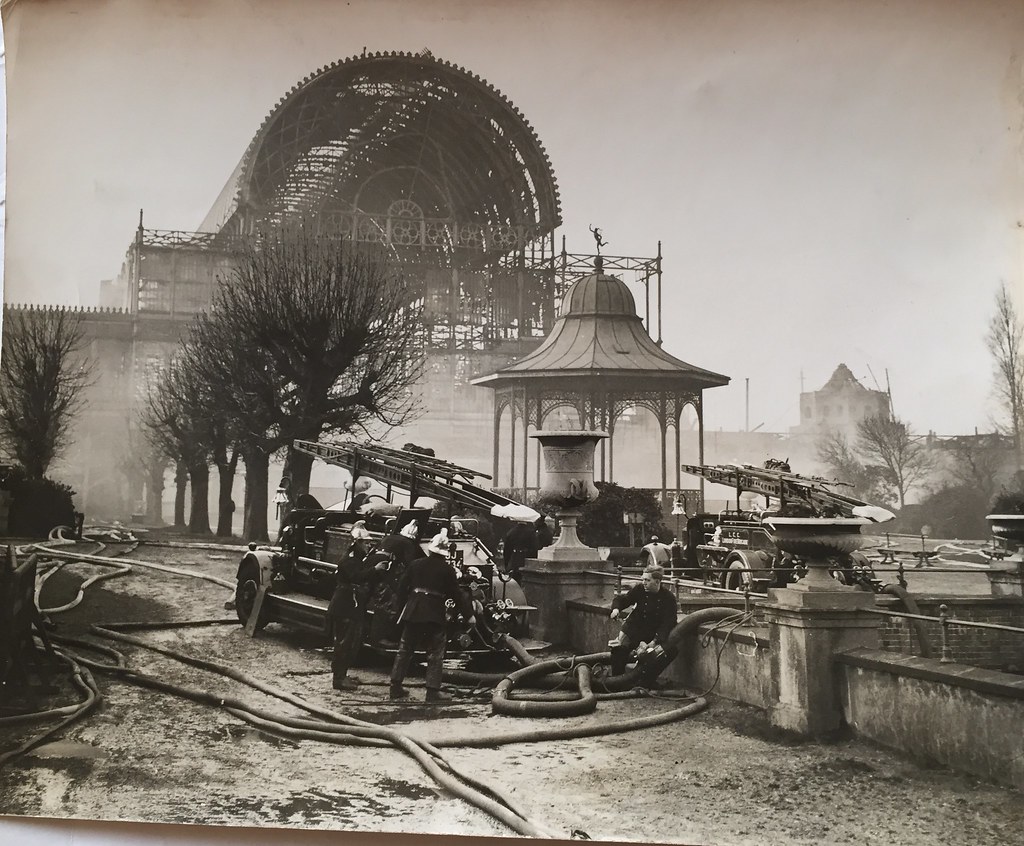

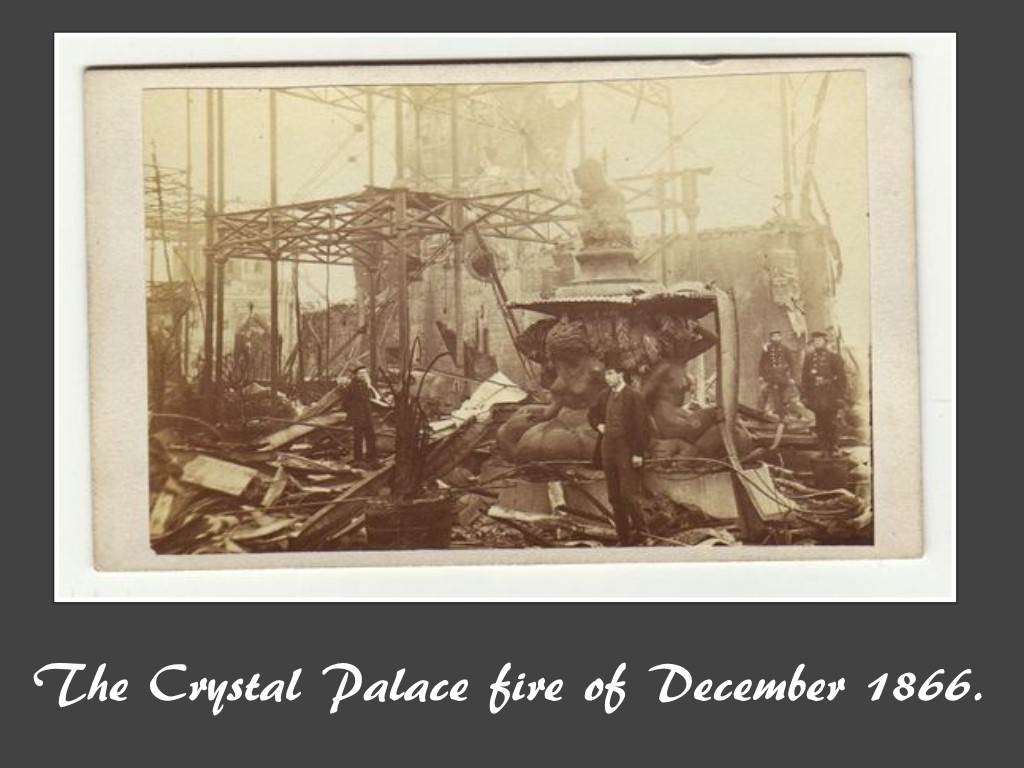
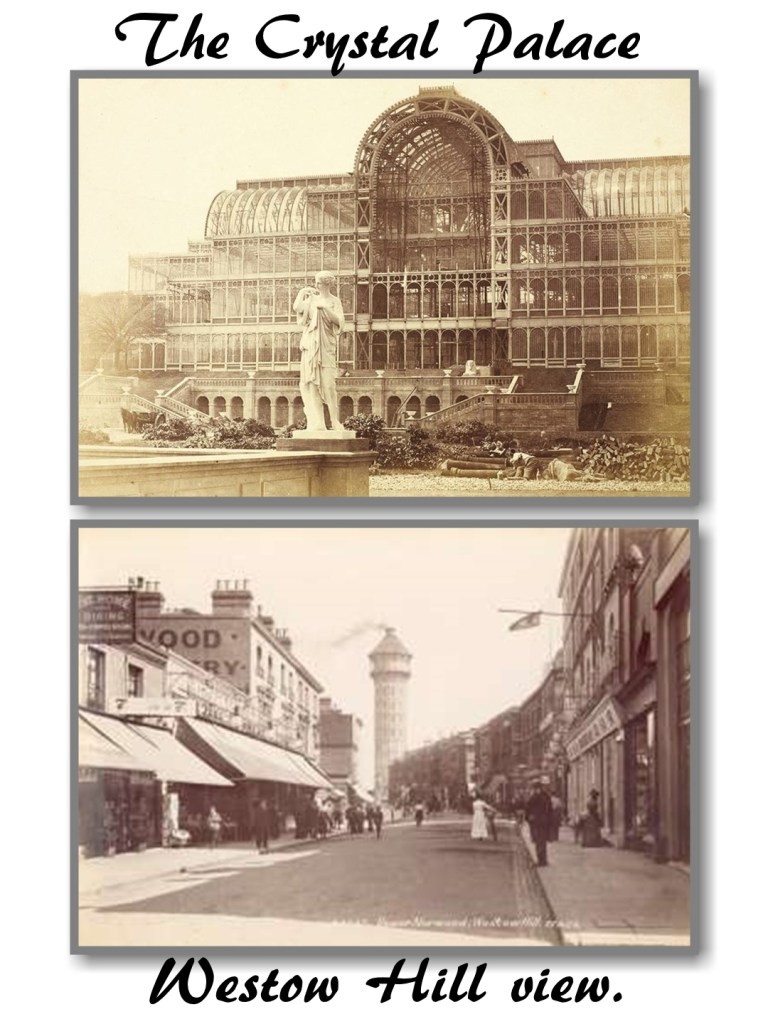
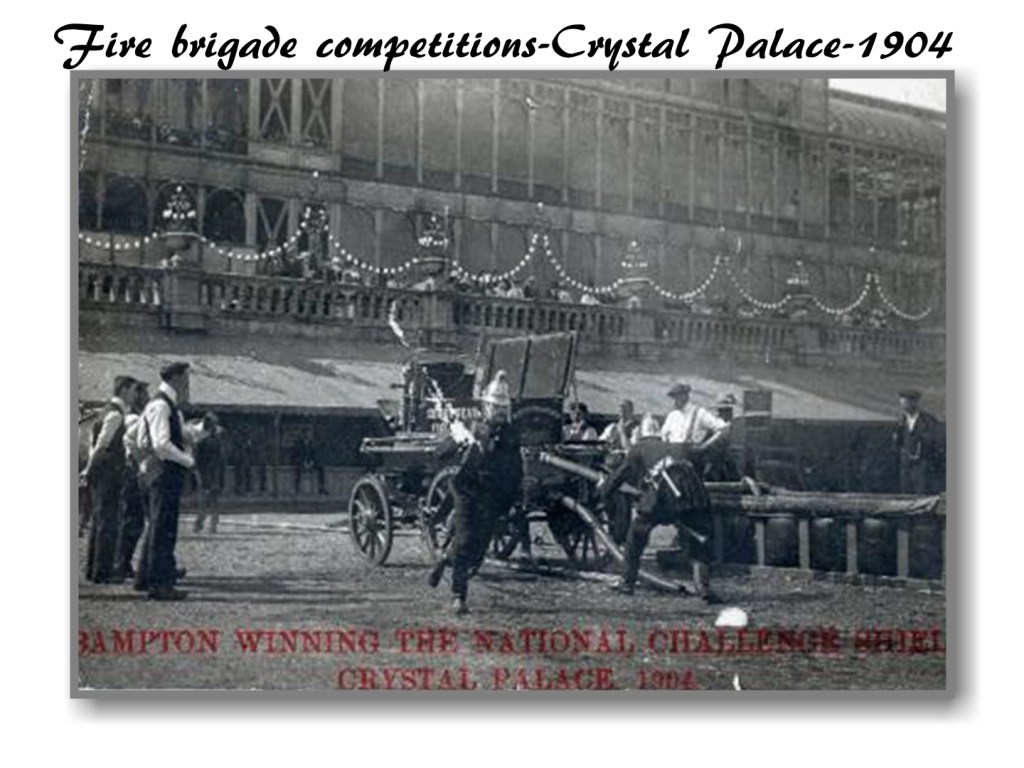
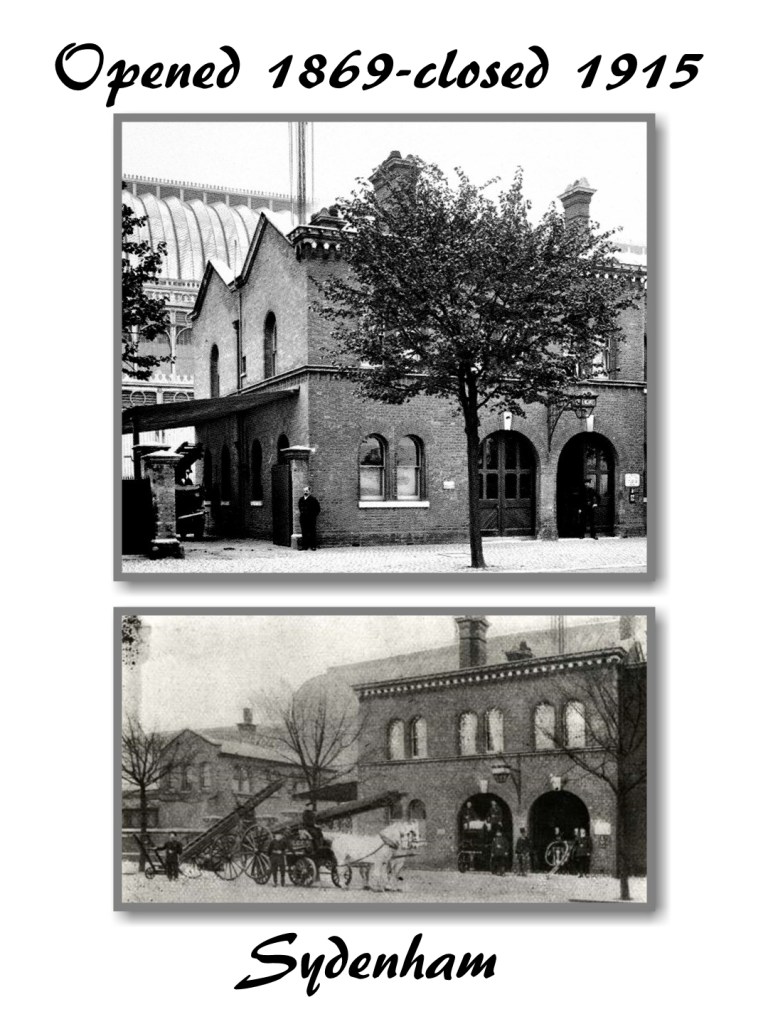


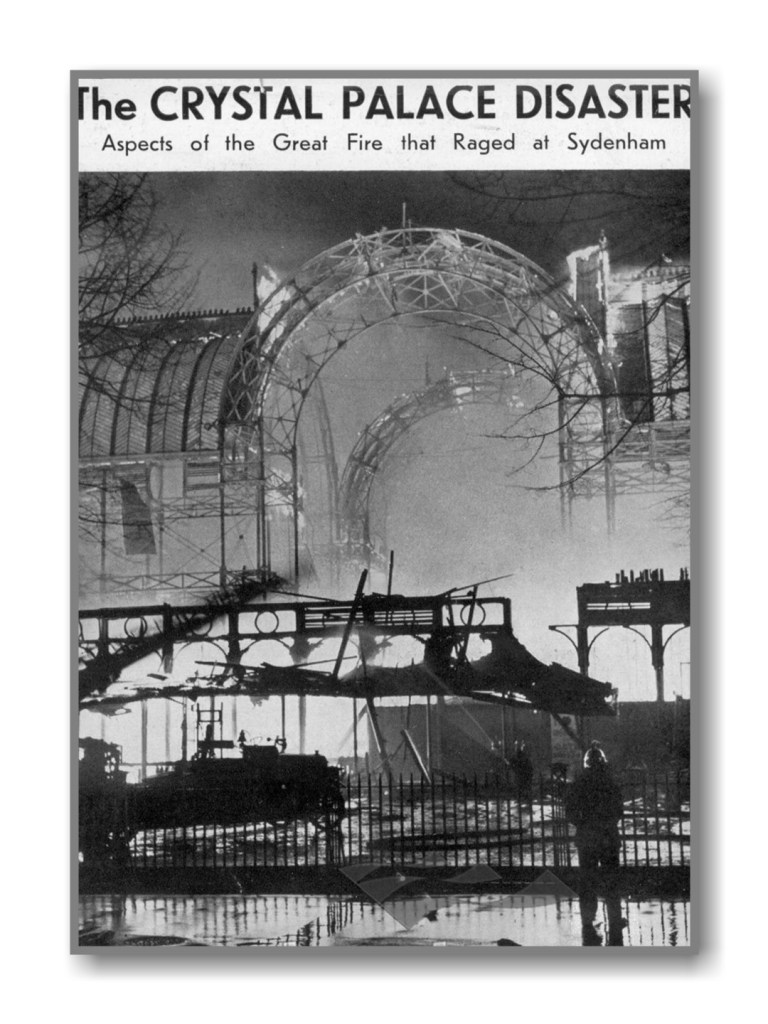
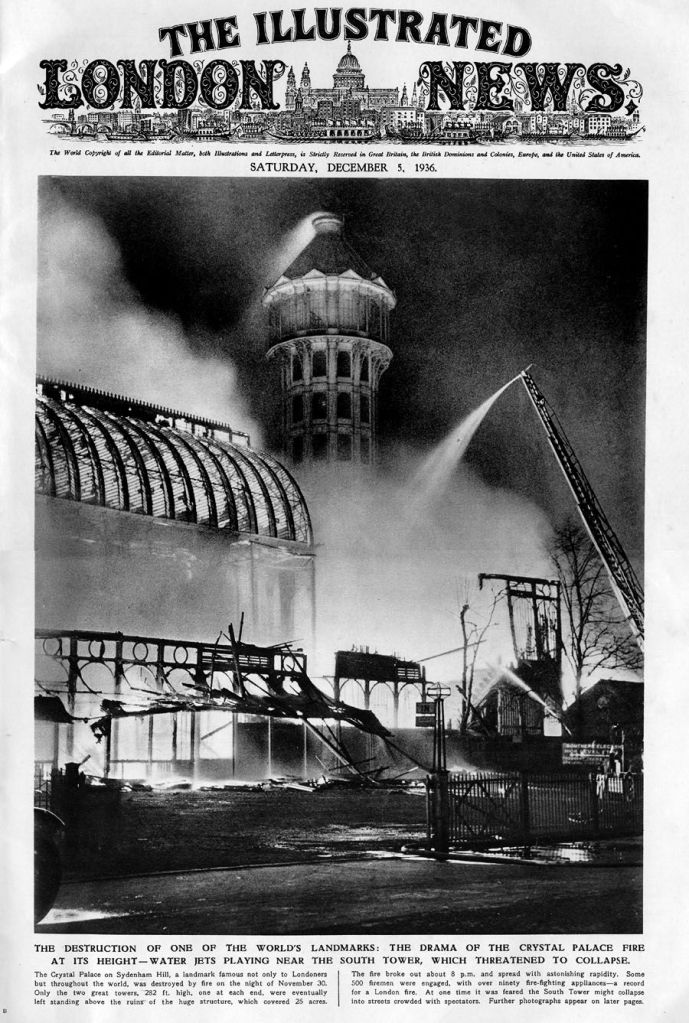


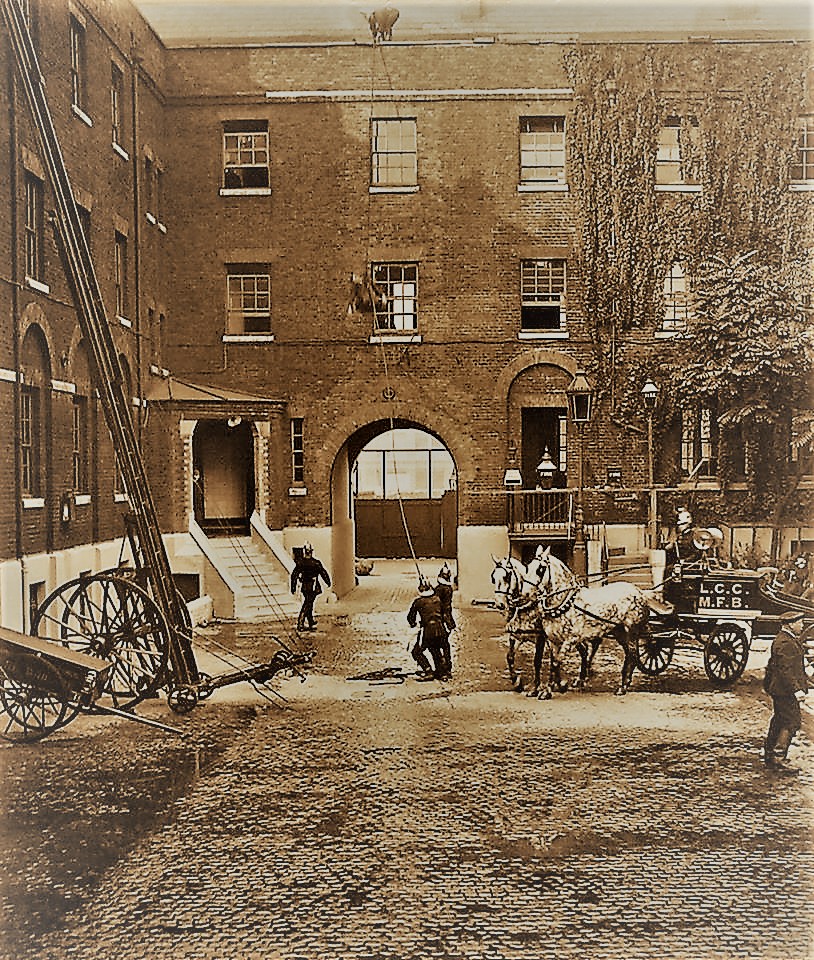


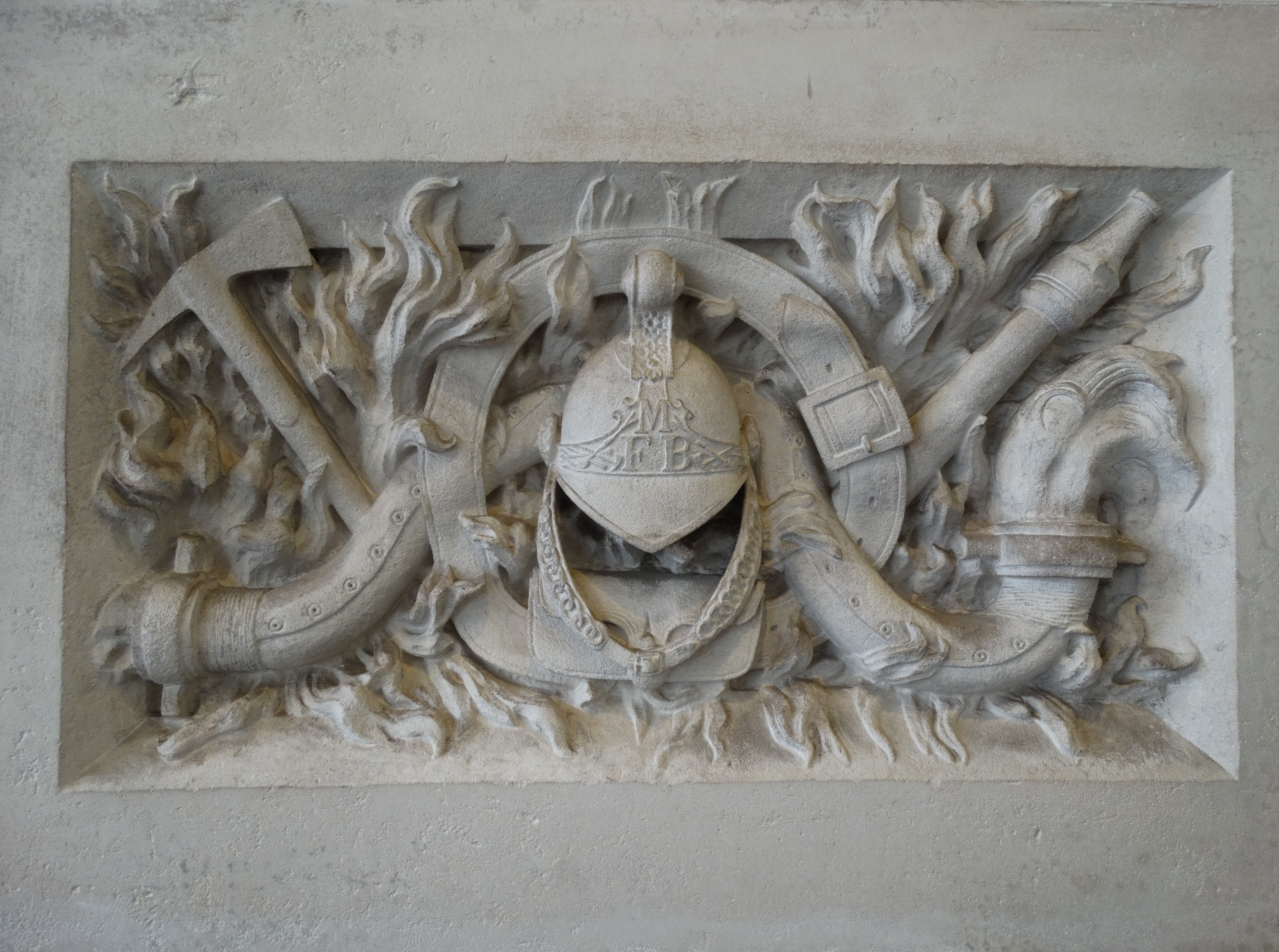


 A retired London Fireman