The immediate after-effects of the IRA’s bomb left in Westminster Hall.
For most people travelling into London on that Monday morning it was the start of just another working week. There was the normal hustle and bustle of commuters at both Victoria and Waterloo railway stations, some on the south side of the Thames heading north and visa-versa, Westminster Bridge providing the natural conduit for people on foot as well as a transit route for the rush hour traffic at that time of the morning.
At the Palace of Westminster the then Chief Whip of the Liberal Party, David Steel, had just arrived for work. He was one of many already in the Palaces. Just before 8.30 a.m. a man with an Irish accent telephoned the Press Association. The caller gave only a six minute warning before an explosion would take place in the Palace of Westminster. No exact location was given. The senior Police control room officer recognised that the IRA code word given was genuine and immediately raised the alarm.
As the Metropolitan police rush to seal the area of the Palace of Westminster the first fire engines were on the way.
At 8.28 a.m. the bomb exploded in a corner of Westminster Hall. It was later confirmed by the IRA to be a 20 lb (9.1 kg) device. Although police officers and security staff started an evacuation, they were not able to completely clear the Palace before the bomb went off. However, the explosion caused extensive damage and injured 11 people, remarkably they only suffered slight injuries. The blast fractured a gas main and a fierce fire quickly spread through the centuries-old hall in one of Britain’s most closely-guarded buildings.
Despite the reverberating sound of the explosion through Parliament and Parliament Square’s surrounding area there was no indication of the unfolding drama at Southwark fire station, where I had reported for duty that morning. The same could not be said for the nearby Westminster fire station (now closed), or that of Lambeth, who together with Soho, made up the special attendance to the Palace of Westminster. Both Westminster and Lambeth fire station crews heard the sound of the booming explosion. With a mixture of the oncoming day watch and the remainder of the night watch, still unrelieved, the on duty crews knew it sounded close and were waiting, impatiently, to find out where they would be ordered. Adrenaline was heightening their senses as they anticipated the possible carnage that the terrorist had unleased on their capital this time. The sound of the station bells at Westminster, Lambeth and Soho soon brought the answer they were waiting for as the teleprinter spewed forth the ordering slips.
Suddenly the pervading sound in the streets leading to Parliament were the cacophony of emergency service two-tones horns echoing off government building’s that lined the route. Fire engines, ambulances and police cars were all converging on a common destination and one of the world’s most famous landmarks. Smoke was already rising into the morning sky as Westminster’s appliances headed down Victoria Street, Lambeth traversed Lambeth Bridge and Soho was coming down Whitehall.
Westminster, Lambeth and Soho firemen are the first crews at the scene. They were swiftly joined by many more.
The scale of the explosion, and the burning fractured gas main, left the officer in charge of Westminster’s crews in no doubt that without substantial reinforcements he would not be able to contain the blaze. Driving into the Palace of Westminster yard he was confronted by a serious blaze starting to gain a stronghold in the north-east wing of the medieval Westminster Hall. Smoke was billowing from the gothic windows and the massive roof timbers were already well alight. The Great Hall was full of the accumulation of centuries of dust, dislodged by the force of the blast. Smoke was drifting in from the side annex, where the IRA device had been planted, into the Great Hall.
Among the organised chaos that such events bring in their wake, the task of assessing the situation, liaising with the police, weighing the priorities and seeing what rescues required to be performed a plan of attack started to unfold. Both Westminster and Lambeth pitch their escape ladders to the upper floors, water supplies were secured and hose lines laid out. Others donned their breathing apparatus sets, ready to undertake searches or bring jets of water to play on the flames from inside the burning building. A firemen’s way of fighting fire. Liaison with the police, responsible for the security of the Palace of Westminster, tried to establish whether people were still inside the Great Hall, and if so, where?
Back at Southwark fire station I was the Sub Officer in charge of the oncoming White Watch. White Watch personnel now crewed both the station’s Pump Escape and pump. Our two machines formed part of the first wave of reinforcing appliances. Our engines raced through the Elephant and Castle, clearing the morning traffic before heading to Westminster. If anyone tells you that sitting in the front of a fire engine as its speeds through traffic to a known emergency is not exhilarating they are probably lying. Also I could play a mean tune on the fire engine bell, which supplements the two-tone horns. So with the traffic brought to a near standstill around County Hall and Westminster Brigade Road, my bell ringing became more intense as the two fire engines weaved their way through the congested streets. The two engine drivers making the most of whatever clear stretches of the opposite side of the road they could find.
Escape and turntable ladder in use whilst firemen in breathing apparatus stand-by.
Some fourteen minutes after the initial call we passed through the police cordon on the south side of Westminster Bridge. I had a strange and uninterrupted view of Big Ben and the Palace of Westminster, but not the dramatic scenes being played out behind them. We would add our weight to those of others bringing order out of chaos. Committed in Proto BA to get a hose line up the stone internal staircase of the corner Great Hall tower, we were just a few of the pieces of the jigsaw that made the whole picture. The jigsaw pieces were wining too as the blaze was first surrounded and slowly subdued. Tried, hot looking firemen, were re-tasked to minimise further damage from the spread of fire. The early frantic efforts had given way to s steady more controlled attack. Crews started to isolate and investigate ‘hot spots’. Possible none more dramatic that scaling the roof of the Great Hall, using hook ladders as an improvised roof ladder, whilst the heavy, historic, roofs slates were removed one by one and smouldering beams and rafters were extinguished with hose-reel jets.
Four hours after we turned out we were back at Southwark, the tasked of extinguishing the fire completely still unfinished. Others having carried on where we left off. But the ‘Stop’ message was back. It showed twelve jets, two turntable ladders and (forty) BA sets were used. It never showed the dogged determination of London’s firemen to shrink form their duty and follow the tenets established by Massey Shaw himself.
‘A fireman, to be successful, must enter buildings, he must get in below, above, on every side, from opposite houses, over back walls, over side walls, through panels of doors, through windows, through loopholes, through skylights, through holes cut by himself in the gates, the walls, the roof; he must know how to reach the attic from the basement by ladders placed on half burned stairs, and the basement from the attic by rope made fast on a chimney. His whole success depends on his getting in and remaining there and he must always carry his appliances with him, as without them, he is of no use.’
At the time Scotland Yard detectives felt this attack would herald the start of a new summer offensive by the dissident Irish group on government buildings. The Leader of the Commons, Edward Short, announced an immediate review of security procedures, but he said the attack would not disrupt parliamentary business or intimidate MPs. Davis Steel, in a BBC interview, said the damage looked considerable. “I looked through Westminster Hall and the whole hall was filled with dust. A few minutes later it was possible to see flames shooting up through the windows,” he said.
Part of the aftermath of the IRA bomb in Westminster Hall.
1974 was one of the deadliest years in the IRA’s British mainland bombing campaign. That February a bomb had exploded on a coach carrying soldiers on the M62, killing 12 people. A further 26 people died later in the year in attacks on the Tower of London and on pubs in Guilford and Birmingham. The last Provisional IRA attack on the British mainland was in 1996.
The original Palace of Westminster was destroyed by fire in 1841, only Westminster Hall survived the blaze. Both bombs and other acts of violence have played a prominent role in Westminster’s history. In 1812, Prime Minister Spencer Percival was assassinated there. A Fenian bomb in 1885 severely damaged the Common Chamber and seriously injured three. During the Blitz the Palace was hit no less than 14 times. In addition to the IRA bomb in 1974, a car bomb exploded in the Palace car park in 1979, killing Conservative politician Airey Neave.
The bomb damaged car of Airey Neave. MP at the Palace of Westminster. 1979.
Footnote. Queen’s visit.
It was happenchance that I was on day duties on the 13 February 1975, the day Her Majesty the Queen chose to visit the headquarters of the London Fire Brigade; Metropolitan Police; City of London Police and the London Ambulance Service in a series of Royal visits. When told to report to the Brigade Headquarters in the afternoon to meet the Queen my first reaction was it was typical fire brigade wind-up. But it was no practical joke!
Myself and my pumps crew, all shining like bright new pins, reported as order and we were one of eight selected crews from London’s central divisions who were given the honour to be presented to the Queen. We were representing a much wider audience, all those who had responded to the abhorrant, and orchestrated, series of IRA bombings across the capital. Bombing that had brought death and carnage in their wake.
The Queen, greeted by Chief Officer Joe Milner, escorted Her Majesty to the Officers’ Club, a hallowed haven where us lowly firemen normally never passed over threashold, but not today. Her Majesty looked vibrant and chrippy as she entered the room. It was not a sombre occasion and whilst we felt nervious she moved from crew to crew, after being introduced to senior officers, putting us at ease and asking well0informed questions. The Chief acted as a perfect host, introducing the eight crews in turn then remaining in the background whilst those licky few savoured the moment of having this special audience with the Queen.
Chief Officer Joe Milner escorts Her Majesty the Queen on her visit to meet the selected fire crews and officers at the Lambeth headquarters.
The ‘Stop’ message from Westminster Hall; 12 jets, 2 turntable ladder jets, 40 BAsets. Another job done and dusted.
Joseph ‘Joe’ Milner. CBE. O.St. J. QFSM. London’s Chief Fire Officer. 1970-1976
What made this such a special time for this aspiring young fireman, one serving at Lambeth fire station, is a matter of some conjecture. Maybe it was just the exciting LFB life viewed through the eyes of this twenty-one year old? A young fireman that was being shown the ropes, and his craft, by the combined experience and wisdom of ordinary people who had chosen the life of a London fireman. Maybe being at a busy fire station helped, but it was also a time of big change. A new ‘Chief’ had brought with him new ways, new ideas. He also brought a fresh new style, one that ordinary fireman seemed to understand and could readily relate too where it really mattered-out on the fire ground. However, it was also a time of considerable wider industrial unrest, even fraught at times. But it never seemed to be personal, there never seemed to be a lynch mob baying for the new Chief’s blood.
It was only after his premature departure from the Brigade, many considered under a cloud, that I can honestly say I got to know this man a little better. Ever so briefly in the early eighties and on a more regular basis in the late nineties. Joe was not a Londoner. His service with the LFB was only as its Chief Officer, yet despite the manner of his departure he only ever referred to his tenure in office with warmth and genuine affection. He always remained loyal to its ‘firefighters’ and had worked hard, even in retirement, to support them via the then named Benevolent Fund.
Personally, I remain convinced that Joe was a man of his time. A man gifted with a common touch. A man I remain proud to have served under. A man who should have been referred to as SIR JOE…If there is a league table of LFB Chief Officers’ he is up there with the very best. I do not feel the LFB will ever see his like again, but who knows given how the new one is doing? So a reminder of the man-Joe Milner.
Joe was born in Manchester in October 1922. He was the son of a Manchester labour and his affinity to the working man (and woman) remained with him throughout his career and beyond it. Leaving school at 14 he worked for a short time with a firm of gas engine manufacturers before joining the Manchester Corporation’s Transport Department. (As what was never recorded.)
With the imminent outbreak of war Joe had joined the army in 1938 at 16 years of age. He served in the Royal Corps of Signals until his 18th year when he transferred to the Kings (Liverpool) Regiment in 1940. From 1942 until 1946 he fought in India and Burma. In 1944 Private Milner was a member of Orde Wingate’s Long Range Pentation Force (The Chindit’s) and was flown into Burma by Waco gliders. His were the Broadway Landings, one of three selected sites to fight and harry the Japanese. Milner arriving at Broadway in the March. 600 further sorties followed bringing in more men, by which time about 9,000 Chindits (supported by over 1,000 animals) were present in Burma. Between June and July the Chindit’s sustained heavy casualties and were slowly pulled out of Burma. The last Chindit left Burma on 27 Aug 1944. Milner’s tour of duty was meant to last only 90 days but it was 5 months before the survivors, debilitated by malnutrition and disease, were finally pulled back into India. (No other units throughout World War II were kept in the field, deprived of any relief or recuperation, and are comparable to what the Chindit’s had endured.)
In 1945 Joe Milner once again returned to Burma. This time he was a member of the War Graves Unit and his, and his companions, task was to recover and properly bury the bodies of fallen comrades. He was working there for seven months.
Having been de-mobbed in 1946 Joe Milner applied to the Northumberland Region where he did his National Fire Service (NFS) recruit fireman training. Recruit Milner won the Under Secretary of State’s prize for the best recruit. Joe Milner was a fireman in the last months of the NFS. With the return of fire brigades to local authority control in 1948 Joe Milner, who had risen in rank, first became part of the Middlesbrough fire brigade and then transferred to the North Riding of Yorkshire Brigade before finally transferring into the Manchester Fire Brigade in 1950. It was the same year that he passed his Graduates exam in the Institution of Fire Engineers (IFE).
At 29 Milner was selected in 1951 to become a Station Officer in the Hong Kong Fire Brigade, as it was called then. The following year he passed his Membership exams of the IFE. Asked later why he has chosen Hong Kong to apply for he said; “I felt the call of the East. But more important I had a hunch that both Hong Kong and its fire service were due for radical transformation. I want to be in on the ground floor of a development like that”.
He was proved to be right and the credit went to him for bringing about many of those radical, and successful, changes. He saw the service grow from just 500 firemen to 3000. It became the second largest fire-fighting force in the Commonwealth and one of the world’s most efficient. During his first four years Joe Milner was in charge of the Kowloon District before running the Inspection Branch (later renamed the Fire Prevention Branch). Between 1955 and 1961 he was appointed a Divisional Officer, then District Officer before becoming the Deputy Director of Fire Services. He was awarded the Queen’s Fire Service Medal in 1962.
Appointed Director in 1965 Joe Milner was a major force in bringing about change and modernisation to the Hong Kong Fire and Ambulance Service. Not least in his list of significant achievements were the introduction of the Brigade’s ‘Search and Rescue’ Division, which accounted for 10% of the Hong Kong force. He also introduced new smaller sized fire stations rather than the few big ones plus an attendance criterion of six minutes.
Director Joe Milner of the Hong Kong Fire and Ambulance Service.
Armed with an impressive CV and a proven track record the Fire Brigade’s Committee of the Greater London Council selected Joe Milner to replace Leslie Leete, the retiring LFB Chief Officer. He took over the London Fire Brigade in June 1970 at the age 47. A sea change had come to the Brigade. Many would soon discover their new Chief to be a forthright man who did not mince his words. He was in stark contrast to the outgoing Chief who had given the impression of being particular uncomfortable in the company of the lower ranks. Joe, as he was to be affectionately called, was not tall and was slightly built. He had the appearance of a marathon runner although he was in fact an avid walker. Those on night duty in Lambeth’s watchroom would regularly see him leaving the Headquarters’ lobby around 5 a.m. for his daily six-mile constitutional and with his favourite pipe in his mouth. He would return some ninety minutes later occasionally popping into the fire station watchroom to chat with the dutyman. (A practice that would have been a complete anathema to the previous post holder.)
For those around the Brigade then reading the new Chief’s profile, produced for the in-house magazine and listing Joe Milner’s war record, it was akin to something taken from of the Boy’s Own Annual. Soon many would meet the man in person as he travelled around the eleven Divisions, and being seen frequently on the fire ground looking, learning, and gathering intelligence plus, one of Joe Milner’s greatest strengths, listening to the views of his London firemen and their officers.
Joe Milner, with pipe, getting the views from the ‘coal face’.
One of his first actions did not set the world alight but nevertheless set the tone of his tenure. He added the word RESCUE to the Brigade’s fleet of Emergency Tenders. His aim was to remind the public of what the LFB did and the variety of services it performed. Things did not go all his way as his desire to consider a complete name change to ‘London Fire and Rescue Service’ never saw the light of day.
In that first year his in-tray contained many issues requiring his urgent attention. But some things were beyond his control. Those early seventies had maintained the momentum of the late sixties with its growing political and industrial unrest. It was making its presence felt in every part of everyday life. The widespread national dock strikes (that were to sound the death knell of London’s docks) gave rise to dire economic effects. The then Labour government lashed out in response at its traditional stronghold of support, the Unions. Inflation had risen sharply by the end of the previous decade as the reduced buying power of London firemen’s meagre monthly wage more than demonstrated. Joe’s arrival coincided with an increasingly powerful trade union movement sweeping the nation (it also saw the removal of Labour’s Harold Wilson and the arrival of the Tory’s Ted Heath as Britain’s Prime Minister). This increased power and the demands by the Unions for better working conditions was felt within the fire service too.
It was following on from yet another major dock strike the country faced yet a further local authority dustmen’s strike. Once again London’s communities were up to their knees in tons of uncollected refuse. The results of this action was not lost on London’s inner city population or its many fire stations crews who were having to cope with the health and fire hazards caused by the consequences of the continuing battle for better pay and conditions demanded by the dustmen’s unions. Their employers resisted these demands supported by the Government’s unseen controlling hand. Rubbish rapidly accumulated all over again at the capital’s designated dumping areas. Night after night fire engine crews travelled around central London fire stations’ grounds dealing with these proliferation of fires or standing-by whilst the home station’s crews were dousing putrefying rubbish fires piled ten feet high in some cases. Leicester Square became a notorious “emergency” rubbish dump and the stench, after just a few days, was almost overpowering. South of the river much less salubrious locations were used to pile the uncollected garbage. But regardless of location, clambering over this mixture of rotting and smelly household and commercial waste was equally unpleasant regardless of where it stacked. Joe Milner would, together with other senior officers, take to the streets to see at first-hand the conditions that theirs firemen were having to endure.
For organisational leaders, and Joe Milner was but one, the seventies were an extreme decade as regards its industrial relations record. The extreme left dominated many Unions, including the Fire Brigades Union (FBU). Progress and proposed changes in the London Fire Brigade’s working practices were challenged and obstructed. The Unions opposition not necessarily supported by the whole of the London FBU membership, but in a show of hands, Union activists (better described as ‘militant’) would often carry the day.
The first, in a series, of the FBU “emergency only disputes” hit the Brigade during the middle of the Milner era. London firemen answered just nine-nine-nine calls and at some of the more militant stations appliances were taken “Off the run” for the most trivial of reasons. Maintaining adequate fire cover became a major issue at times for Chief Milner. This new type of fire brigade “industrial” action grew incrementally throughout his time in office. Finally, but after Milner’s sudden departure in 1976, the first national strike involving firemen started in November 1977. It lasted for sixty-nine days.
Just after a year in office, and in August 1971, Joe Milner became one of only two Chief Officer’s in modern times to command a fifty pump fire in the greater London area. CFO Milner actually commanded his whereas he predecessor merely attended it. Joe’s fire was one of the fiercest and most difficult fires that the post-war London Fire Brigade had to face. It lasted nearly thirty hours and involving all three watches. The scene of the blaze was at Wilson’s Wharf, Battle Bridge Lane just off Tooley Street in Bermondsey. SE1. It was ironic that this should be the same location that cost the life of London’s first Chief fire officer, Superintendent James Braidwood, when in 1861 he was buried under a collapsed wall in a warehouse blaze that took several days to bring under control. (Braidwood’s brigade being called the ‘London Fire Engine Establishment’.)
Wilson’s Wharf had been built on the site of that first devastating fire, part of the Hays Wharf Companies great rebuilding scheme, and had opened in 1868. Starting life as a coffee and cocoa wharf it later became the company’s first wine and spirit bottling department. Just over a century later it now lay unoccupied, having previously undergone conversion to a refrigerated warehouse and major cold store. The six-storey warehouse had an irregular shape and sat tightly wedged between other wharfs. On the riverside was a wide vehicular jetty where previously goods and products had been delivered to its one hundred and fifty foot wide riverside access. It was also one hundred and fifty feet from this side of the building to the far side, which faced Tooley Street. Various raised open and covered iron bridges were connected to surrounding wharves.
A small fire had started during the removal of plant. Unable to stem the rapidly developing fire with an extinguisher, contractors beat a hasty retreat from the building leaving their oxy-acetylene cutting plant in situ. It was sparks from their hot cutting that had ignited combustible tape on the pipe-work insulation. It had spread to the building’s insulation material itself, four-inch thick very flammable expanded rubber. Even as the contractors were running out of Wilson’s Wharf and local crews drew closer, the hot and smoky atmosphere was being trapped inside this disused cold store. Its windows and loopholes had been bricked up, making the building a veritable fortress thus turning large parts of the complex into a vast brick oven. The fire superheating the interior.
50 pump fire at Tooley Street-August 1971 with Joe Milner in charge,
In the space of forty-five minutes pumps went from fifteen, to twenty, and then thirty. Command of the fire changed hands so quickly that no single plan of action could be properly implemented until the Chief Officer Milner finally took command at 16.16 pm. He faced daunting problems, taxing even his considerable know-how of commanding major incidents from his time in Hong Kong. He had all his Headquarters’ principal officers at his disposal, including Deputy Chief Harold Chisnell. It would take their combined experience and expertise to direct operations at this incident, which was now extremely serious, due to the complex layout of the building, the thickness of the walls and lack of access points. The heat build-up, deep inside the structure, was likened to a potter’s kiln operating at its maximum temperature.
Despite the tenacity and doggedness of his firemen, the tremendous heatand smoke posed major problems for any of the crews fire-fighting to establish a bridgehead to counter the blaze. Contractors working alongside firemen tried to break open some of the bricked up windows at third floor level with elementary breaking-in gear, club hammers and cold chisels, but little or no progress was made. Meanwhile those BA crews that had made exploratory forays into the building were slowly being forced back out by conditions so severe that their exposed skin blistered. So intense was the fire at this stage that complaints of smoke drifts were received from as far away as Bethnal Green and there were reports of smoke drifting into some Underground stations in the City. (London Bridge Railway Station was adjacent to the incident.)
With a conflagration of such magnitude Joe Milner considered that only two courses were open to him: One was to concentrate on subduing the fire in main warehouse and arresting its development to the adjacent blocks. This would require him to committing crews to extremely hazardous and punishing conditions. Furthermore it would require a total commitment in the order of some 80 pumps! The result would be to denude large areas of London of any fire cover for a protracted period. (Of note; during the course of this fire the brigade dealt with 222 calls to other incidents in the capital.)
His second option was to abandon the efforts to subdue the fire in main warehouse and to concentrate on surrounding the fire and confining the spread to the area bounded by Battle Bridge Lane, English Ground the River. The success of Milner’s strategy depended on allowing the fire to break through the roof of the central warehouse and reduce the lateral transmission of heat and smoke by ventilation. The danger Milner faced being that once the fire broke through the roof there would be a serious threat to surrounding property and adjacent area from radiated heat and flying firebrands.
Following discussion with his command officers Joe Milner decided to adopt the second option. At 5.12 p.m. he ordered that pumps be increased to 50.His operation proved successful and by 1.30 a.m. the next day the fire had been reduced to the fourth and fifth floors and entry had been effected by BA crews. Although heavy smoke was still being encountered, steady progress was made throughout the day and it was possible for the Chief to send the “stop” message at 8.30 p.m. on the second day of the fire. The firefighting operations involved the use of twenty-three jets, eight radial branches, and one high expansion foam unit and in excess of 200 one-hour Proto BA sets using an estimated 315 oxygen cylinders.
The biggest blaze of the decade was fought at Wilson\’s Wharf, near Tooley Street, Southwark, in the summer of 1971. It was the same location that cost the life of London\’s Fire Chief, James Braidwood in 1861. A number of firefighters were seriously injured when a flashover occurred and others. like the fireman pictured, were affected by the toxic smoke from the disused cold store warehouse.
1971
The damage to the complex consisted of three-quarters of all floors severely damaged by fire, the remainder severely damaged by fire, heat, smoke and water, one half of the roof severely damaged by fire, heat and smoke. His stop message read;
From the Chief Officer.Stop for Wilsons wharf, Tooley Street.
A range of unoccupied buildingsof 1, 2, 3, 5 and 6 floors and basement,covering an area of 200 x 300ft.2/3rds damaged by fire 1/2 of roof off. 20 jets 8 radial jets 3 TL monitors high ex foam. Breathing apparatus.
TOO: 2038
Joe Milner’s brigade was operationally very busy throughout his tenure in the seventies. In fact during Joe Milner’s six year reign the Brigade dealt with more 20 to 35 pump fires than the previous decade or the next one. But the Chief had new operational worries to consider. Its operational workload was further added to that year by the “Troubles”. The IRA bombing campaign came to London in October 1971. The Post Office Tower (now called the BT Tower) was an IRA terrorist target. The bombing, although not resulting in any fatalities, did cause the closure of the building to the general public for many years to come. Joe Milner, like so many others, watched these events unfold on national and local news. However, the threat of becoming caught up in this new breed of incident was not only promoting discussion and speculation amongst station personnel, it was also increasing the concerns of wives, partners and firemen’s families. It seemed the IRA could make an attack on any high profile London landmark and the Chief was very aware, when on duty, his crews were concerned about their family members, many of whom worked in the capital and could become an innocent victim of this hate campaign. Such things were beyond his control and his firefighters had a job to do, but his concern for the wider fire brigade family was every present whenever he meet with his crews. (The IRA would bring brought twenty-nine separate bombings to the capital whilst Joe Milner was the Chief in the early 1970s.)
Joe Milner meeting the firemen of Holloway fire station.
By the end of that year Joe Milner had prepared plans for a radical shake-up of the way the Brigade was managed. His proposal were summited to the GLC’s Fire Brigade Committee and were accepted without modification. At its heart was a new Operations Branch headed by ACO Don Burrell. They were supported by the Technical, Planning and Development Branch headed by ACO Trevor Watkins, plus a Mobile Group (whose role was to check the way policies and procedures were being implemented) lead by ACO Ernie Allday. Additionally, the Fire Prevention Branch retained its existing role and there was revamped Training and Recruitment Branch.
On the evening of the 30th October 1971 Chief Joe Milner gave a ground breaking address to the Brixton Rotary Club at Kings Georges House, Stockwell Road in SW 4.He nailed his colours firmly to the mast in publicly acknowledging the value and esteem with which he personally held his officers, the men and women of the LFB. Such was the importance of his moving and heartfelt talk his complete address was later repeated in a special supplement to the London Firemen magazine.
He was not the only ones to make comment on the workings and people of the London Fire Brigade. In a highly unusual break with normal protocols the Fire Service Inspectorate, who were notoriously tight-lipped about what they observed in their Brigade inspections, commented most warmly on the enthusiasm of all ranks. They confirmed Joe Milner’s own belief that the moral and the ‘esprit de corps’ within the Brigade were high.
London, under Joe’s stewardship, lead the British fire service with its work in implementing a Hazchem Code, which was considered to be ground breaking work and much credit deservedly went to the late Charlie Clisby, then a Deputy Assistant Chief Officer. It was adopted across the emergency services during 1972. In the same year Milner directed that the Brigade launch a TV advertising campaign warning of the dangers of portable paraffin heaters. Heaters that had directly responsible for multiple fatalities and serious house fires. It was the first time a UK Brigade had used TV advertising in this way.
The extended refuse collection strike in the early 1970s resulted in piles of rubbish and uncollected waste lying for weeks in London streets. Fires were started which kept firefighters extremely busy in addition to their normal workload.
1970
Then the ‘Three-Day Week’ presented special problems for Joe Milner and his principal management team. They were one of several measures introduced across the United Kingdom by the then Conservative government to conserve electricity, the generation of which was severely restricted owing to strike and other action by coal miners and the aftermath of an oil crisis. This resulted in widespread blackouts over the winter of 1973 to 1974. The phased blackouts left fire stations (and everyone else for that matter, except essential services such as hospitals) without power for three to four hours at a time. Mobilising was severely affected and orderings had to be given over the radio network. Fire stations had no stand-by electrical generators and the resultant use of emergency lighting in homes (i.e. candles) lead to a number of serious fires.
The bombing of the Old Bailey law courts, at the heart of the British justice System, in March 1973 marked a dramatic shift in the tactics of the IRA in their attempts to bomb their way to achieve their political ends. The IRA exploded two car bombs in the heart of London and injured over two hundred innocents. Sadly, one man died, although not through the direct impact of the bombing butfrom a fatal heart attack. The bombers had callously chosen a day when thousands of commuters were forced to drive into central London becausestrikes had hit the capital’s public transport services.
It was St Bart’s Hospital that bore the brunt of the one hundred and sixty or so patients that were either taken there or who made their own way to the hospital’s emergency treatment department. The hospital had had no warning of the bombing or of the impending arrival of so many patients. Accordingly its procedures for implementing a major accident plan could not be used. Most of the walking wounded required treatment for cuts and abrasions, but nineteenindividuals were admitted and nine required surgery. There was much behind the scenes top level discussions on the role and safety of fire crews given the escalation in tactics of the Irish terrorists. Milner’s view remained firm that where public safety was concerned his crews would remain committed to all lifesaving duties and in all circumstances. His view widely supported by the Brigade’s rank and file.
The IRA bombing of the Old Bailey.
It was in the early months of 1974 that Joe Milner charged the Brigade to embark on its most intensive recruiting drive since the creation of the AFS in 1938. You could not look anywhere without seeing advertising space taken up in the national and local press, even on commercial television and radio, encouraging men to join the London Fire. Brigade recruitment posters were even pasted on to the sides of our fire engines!
Staff shortages were bad and getting worse. Appliances were being taken off the run at an increasing rate because there were not enough men to crew them. Normal manning was quickly reduced to minimum levels and the firemen were constantly being ordered out to other stations to make up the shortfalls. The FBU contested that some firemen were spending more time riding engines at the surrounding stations than at their own. More firemen were needed for the introduction of the forty-eight hour week, a reduction of eight hours from the existing fifty-six hour week. But Joe found himself operating in a very competitive market place. The Post Office, London Transport and the Metropolitan Police were all wanting extra staff and just as urgently. However, the brigade of the early 70s remained almost totally a white dominated operational work force. The desire to see a reflection of the multiracial society that London was rapidly becoming sadly did not feature in its recruitment campaign. But many non-white applicants did apply and “times they were a changing.” Colour did become an issue but not in the way you might think…Joe would see in the introduction of ‘Yellow’ fire helmets first and then yellow leggings.
By 1974 Joe Milner was really getting into his stride. It was the year that his promise of more breathing apparatus for his firemen was delivered. Compressed air (CA) breathing apparatus sets were introduced into pump-escapes and proto sets on pumps reduced to two per appliance with two additional CA carried. It was the same year which he introduced the Chemical Incident Unit into the operational fleet. It would attend the increasing number of chemical incidents and be mobilised to all radiation incidents.
London’s firemen were still using asbestos hoods in 1974-but times they were a changing.
Joe Milner’s only operational fatality on his watch occurred at the end of 1974. Tragically Fireman Hamish Harry Pettit lost his life at the Worsley Hotel fire which also claimed the lives of six other occupants. It was in the early hours of Friday 13 December 1974 that two separate fires were deliberately started in the Worsley hotel. The Worsley Hotel comprised a series of interconnecting houses and were 4 or 5 storeys tall. The hotel was located at 3-19 Clifton Gardens in Maida Vale, W9. The Worsley was used by the hotel industry to house both hotel and catering employees, many of whom came from aboard, and were either working or training in Central London hotels.
The Worsley hotel fire.
As further London crews arrived along with increasingly more senior officers to direct operations most of the occupants were accounted for as the immediate rescues were completed. The operations moved from one of rescue to fighting the fire. Crews took heavy hoses through the doors from the street and off ladders pitched to upper windows. One of these firefighting crews, 3 firemen led by a Station Officer, entered a second floor room to search out the seat of the fire. Whilst in the room several of the floors above them, now weakened by the extra load of the partially collapsed roof and the weight of a large water tank, came crashing down on the crew. The devastation appeared concentrated on that one room. It was not known initially how seriously the injuries to those trapped in the collapse might be. The release of their trapped colleagues became an immediate priority. It proved to be a most difficult and protracted rescue operation. One by one the 3 of the trapped men were released (2 firemen with serious burns and the Station Officer with a serious back injury). Tragically when the body of the 4th fireman was found he was declared dead at the scene. It was the body of the 26 year old probationer fireman, Hamish Harry Pettit, who had attended the fire with Red Watch A21 Paddington.
Chief Milner was no shrinking violet when it came to turning out from his Greenwich quarters to any incident. In addition to the 30 pumping appliances, 3 turntable ladders, 3 emergency tenders and other specialist vehicles attended this incident Joe Milner saw at first hand the efforts directed to saving life and building. The “Stop” message was despatched at 08:02 that morning, but damping down went on for some days. The fire proved to be the largest fire in Central London that year.
The Worsley Hotel fire was also the first major incident dealt with by the Wembley control room after computerized mobilising system had been commissioned earlier that week. Another of Milner’s improvements to the Brigade mobilising practices. He had closed the Lambeth Control room the same year.
For a man not shy to recognise the bravery and commitment of his fire crews this incident nevertheless resulted in one of the largest number of fire brigade bravery commendations from a single incident with four of the firemen subsequently receiving national gallantry awards from the Her Majesty the Queen. The highest bravery award in the London Fire Brigade is that of a Chief Officer’s Commendation. Joe Milner ‘COMMENDED’; Fireman Hamish Pettit (Posthumously), Temporary Sub Officer Roger Stewart and Fireman David Blair (West Hampstead), Sub Officer Ronald Morris and Leading Fireman Peter Lidbitter (Westminster), Station Officer Neil Wallington and Fireman Raymond Chilton (Paddington), Temporary Leading Fireman Eric Hall (Soho), Temporary Divisional Officer John Simmons (Brigade HQ) and Assistant Divisional Officer Tom Rowley (A Division HQ).
He also issued ‘Letters of Congratulation’ to; Assistant Chief Officer Trevor Watkins. DFC. KPFSM (Brigade HQ), Assistant Divisional Officer Gerald Clarkson (Brigade HQ), Assistant Divisional Officer Roy Baldwin (A Division HQ), Station Officer Keith Hicks, Temporary Sub Officer Ian Macey, Firemen Donald Clay, Edward Temple and Peter McCarlie (Soho), Fireman David Webber (Paddington), Fireman David Harris(Action) Acting Leading Fireman Alan Trotman (Belsize) and Fireman Daniel O’Dwyer (Manchester Square).
In 1975 Joe Milner’s name appeared in the Queens New Year Honours list. He was made a Commander of the Most Excellent Order of the British Empire (CBE).
The following month he actually meet the Queen but not at the Place, Her Majesty came to see him at the Lambeth headquarters in February. After meeting GLC dignitaries, including former London fireman ‘Paddy Henry who was now the Chairman of the Fire Brigade’s Committee, Joe Milner escorted the Queen into the Officers’ Club where she met representative crews and officers who had attended IRA bomb incidents over the previous couple of years. Typical of the man he moved away from Queen, after introducing each of the eight crews, to allow those being presented to talk to the Queen one on one.
The last day of February was a Friday and whilst Joe Milner was in his Lambeth officer the 08:38 service from Drayton Park on the London Underground Northern line (Highbury Branch) had left one minute late. It was formed of two three-car units of 1938 LTE rolling stock. On arrival at Moorgate station the train failed to slow, passing through the station platform area at 30–40 mph before entering the 66 feet (20 m) long overrun tunnel with a red stop-lamp, a sand drag and a hydraulic buffer stop. The sand drag only slowed the train slightly before the train collided heavily with the buffers and impacted with the terminal wall.
It was declared a Major Accident by both the Brigade and the London Ambulance Service. It was the LFB’s most difficult special service incident in over a decade. It was London’s worst-ever Tube disaster. The crash left the station in total darkness and threw up a huge amount of soot and dust. Joe Milner both at times commanded the incident and maintained a regular presence throughout the initial rescue and then recovery phase.
Joe Milner (with white helmet) talking with his crews at the Moorgate disaster.
The five day rescue operation involved 1324 firemen, 240 policemen, 80 ambulance men, 16 doctors and numerous voluntary workers and helpers. The last body to be brought out of the tunnel was that of the driver, Leslie Newson, a 56 year old husband and father of two children. It was London’s Chief Fire Officer who famously quoted ‘MY THOUSAND SELFESS HEROES’, in dedication to the literal 1000 firefighters who spent 5 days rescuing survivors.
It was in the early summer that Joe Milner ‘upped sticks’ and resigned from the London Fire Brigade. There was no warning of his imminent departure, but his was always his own man so it is to those who were part of the upper echelons at the time to say if he walked of his volition or was PUSHED? What is known is that that Joe’s first wife Bella died that year and he married Anne in the later part of 1976. So maybe he choose love over career, a career where he was seen as Caesar and there were too many Brutus’s on Lambeth’s principal floor.
In the September issue of the London Fireman the acting Chief, Don Burrell, gave not a mention to the departed Joe Milner, his achievements, his commitment to London’s firemen or even a ‘wish you well in your retirement’. The comments were churlish to as the least! If there was ever a ‘leaving do’ for Joseph Milner the powers that be never thought to cover the event in any future addition of the in-house magazine…
Postscript.
In his retirement Joe became an ambassador for the then named Fire Services National Benevolent Fund (The Firefighter’s Charity). He happily took the invitation to return to London, to attend a presentation following a sponsored Paris to London marathon row in the summer of 1981, and to accept a substantial cheque on behalf of the fund. He never uttered one ungracious word about his departure from the Brigade unlike some in principal rank who had kicked up a stink because Joe had been invited.
He travelled around but finally settled in Norfolk. Joe was a regular attendee to the then Retired Senior Officers Mess Club, under the watchful eye of its President Brian ‘Bill’ Butler. Despite the considerable travel distant Joe loved those evenings and the opportunity to swing the lamp and tell a tale or two. I was in regular contact with Joe then and never once did he comment on the manner of his departure, or of those that probably orchestrated it. He was a remarkable human being.
Joe Milner, even in retirement, ever popular with his firemen and staff. Here receiving a cheque on behalf of the FSNBF following Brixton fire station Paris to Londo marathon row in 1981
Joe wrote a novel, based on his own war time experiences, that was published in 1995. To Blazes with Glory was a Chindit’s tale, it was no doubt his tale too.
Joe died at his home in Caston, Norfolk, on the 13 January 2007. His Funeral Service was held on the 29th at Holy Cross Church in Caston. The London Assembly purelynoted ‘the recent death of former London Fire Brigade Chief Fire Officer, Joseph Milner CBE, QFSM.’ There was no comment by any Elected Member or Brigade officer on how much the man had achieved and done of the reputation of the London Fire Brigade.
The Leinster Tower Hotel fire. Leinster Gardens. W2. 6th June 1969.
In the basement control room of the Lambeth fire brigade headquarters, one of four control rooms that covered the whole of the Greater London area, the control officer answered the 999 telephone call in their normal professional fashion. “Fire Brigade.” It would be the only emergency call received to a blaze that would make London Fire Brigade history and result in a Chief Officer’s special commendation to the numerous crews who attended this fire and undertook some of the most dramatic rescues of the decade.
The new Paddington fire station in West London opened in 1969.
‘Paddington’ fire station had only been open for a few months. It was now the A Divisional headquarters station, an area which covered all of the West End, Westminster, Chelsea, North and South Kensington and Euston. The headquarters had transferred from its previous location at Manchester Square. The new, multi bayed, station had replaced the former Victorian built station in Edgware Road. Although the old station was originally named ‘Paddington’ that name was changed to Edgware Road. The new Paddington station reverted to the former name and housed four fire engines; the pump-escape, pump, turntable ladder and emergency tender plus the Divisional headquarters breathing apparatus control vehicle and the senior officers’ staff cars.
The three watches who made up the Paddington crews had already ‘bloodied’ the new station’s ‘make-up’ tally with a number of serious fires on its own ground in the months before that extraordinary June Friday early morning. Exactly how busy Paddington’s Red Watch crews had been prior to this particular call have long since been archived on their shift that started at 6.00 p.m. on the 5th June. The Paddington Red Watch crews were led by the highly regarded, and experienced, fire officer; Station Officer Alex Pilbro.
It was in the small hours of the 6th that a fire was discovered on the first floor of the hotel, a six storey building, located in Leinster Gardens near Hyde Park. The initial attempts to quell the blaze proved fruitless and it gained in ferocity and strength whilst the toxic smoke it produced spread. The solitary emergency call to the Lambeth control was received at 0454hrs. As the control officer took down the details from the caller another control officer, monitoring the 999 call, swiftly found the relevant index card for Leinster Gardens. Index cards, one for every single throughfare in the area covered by the control room, detailed the six nearest fire stations, the locations of special appliances and the initial attendance for all fire calls to that particular road/street. As the control officer read aloud the details from the street index card they were teleprintered to the designated stations by another control officer.
The Lambeth control room who received all central London 999 calls and co-ordinated the subsequent responces.LFB control officers in the Lambeth control room. On the left, the control officer responding to the 999 call. The man scrolls through the card index drum for the address being given whilst a third officer (furthest away) removes the station appliance tallies being sent to an call and places them on the incident board.
At Paddington and Kensington fire stations the call bells rang out loudly as the automatic house lights came on and crews responded to their respective appliance rooms. The augmented attendance to the six-storey hotel comprised Paddington’s Pump-escape (PE), Pump (P) and Turntable ladder (TL) together with Kensington’s Pump.
In the four minutes it took Alex Pilbro to arrive at the scene and make an initial assessment he knew he had a serious fire situation on his hands. His crews were confronted by a very serious fire. Acrid smoke was billowing from many of the front elevation windows. A dire situation was already developing. Noxious, life threatening, smoke was rising swiftly and involving the upper floors and filling the escape corridors. He quickly made pumps six and said ‘persons were reported’. In the Lambeth control room the index card information told the control officers who to dispatch next. It was Kensington’s PE; North Kensington’s PE and P together with the A Divisional Breathing Apparatus Control Vehicle that were now headed to the unfolding drama.
Early rescues from the lower floors.
As the fire continued to seek fresh fuel the choking smoke had reached the uppers floors via various ducts and vents. Around one-hundred and twenty guests, and most staff, were asleep in the hotel at the time. Many had no opportunity to evacuate the premises via the normal escape routes. Numerous occupants had become trapped in their rooms, several now seeking rescue from the upper floors. Some were just calling out, others desperate for urgent assistance and rescue. Station Officer Pilbro recognised the seriousness of the fraught situation and made pumps ten at 5.03 a.m. He had already directed his crews to pitch the two wheeled escape ladders and an extension ladder and commence rescue operations. These initial rescues were made all the more complicated by a number of cars parked in front of the hotel. Cars which made access to the upper windows problematic as the firemen tried to position their escape ladders for the rescues. It was an operation which was quickly escalating as more and more occupants of the hotel required rescuing.
50 foot escape ladders and a 100 turntable ladders at use during the extensive rescue phase.
Before the arrival of any senior officers Station Officer Pilbro commanded the incident from the front of the hotel. With the arrival of a colleague from Manchester Square, who came on at ‘make pumps 10’, Station Officer Fred Alcock, went to the rear of the hotel with both crews and ladders (including hook ladders) to affect other urgent rescues. Station Officer Pilbro was subsequently relieved by the A Division Commander, Arthur Nicholls, from the Paddington HQ. He was later quoted by a national paper as saying; “That people were screaming from every window as he arrived.” As some of the firemen brought more hook ladders into use DO Nicholls made pumps 20, TL’s four at 0512 a.m.
Within those first twenty-three minutes fifty people were rescued. All were brought to safety via various fire brigade ladders, others rescued by line from both the front and rear windows of the two-hundred room hotel. However, the unprecedented rescue operation came with a price tag. Whilst dealing with the overwhelming number of lives to be saved, some of which were extremely difficult to undertake and others plain dangerous, it detracted from a concerted and prolonged attack on the fire. The fire had spread to the upper floors, this despite the best efforts of those inside the hotel working in breathing apparatus and manhandling heavy lengths of hose. The firemen had to struggle against the effects of the severe heat whilst working in the most punishing of conditions in order to reach the flames.
At 05.17 a.m. pumps were made 30. The Deputy Chief Officer took command. At 05.50 a.m. Emergency Tenders (ET) were made four. Lambeth and Heston ET crews joining Paddington and Clerkenwell who were already working at the scene. Despite the blaze destroying a significant part of the hotel, only sixteen of those rescued had to be removed to hospital. Even then they fortunately only suffered minor injuries and smoke inhalation. Not a single life was lost to the fire. Five firemen were also taken to hospital but fortunately none were seriously hurt.
A fireman, still in his breathing apparatus set, being assisted away suffering from heat exhaustion.
Such was the nature of this hotel fire, in an unprecedented act, the then Chief Officer, Leslie Leete, issued the first ever special order which COMMENDED those crews involved in the rescues and firefighting. The order described the incident as “without parallel in the Brigade’s history for the magnitude of the task…and the excellence of the firefighting work performed”. The special order recognised the contribution of all the Brigade members who took part in the rescue work by recording all their individual names.
Subsequently, and in accordance with normal practice, the actions of certain individuals were also brought to the attention of the Brigade’s Honours and Awards Committee. The Committee awarded the Brigade’s highest award, a COMMENDATION, to Station Officer Alexander Pilbro for his outstanding officership in organizing the firefighting and multiple rescues in the early stages of the fire.
Commendations also were awarded to:
Leading Fireman Gerald Fuller and Fireman Peter Mars (Paddington) for rescuing at least 15 people between them and using hook ladders to bring people to safety from the third and fourth floors. Both men were subsequently awarded the Queen’s Commendation for Brave Conduct.
Firemen John Hughes and Paul Stephens (Manchester Square) for a difficult hook ladder and line rescue of a man from a fifth floor and lowering the man to safety. Both men were also subsequently awarded the Queen’s Commendation for Brave Conduct.
Leading Fireman Richard Ellicott (Euston) for the difficult hook ladder rescue he undertook of a man trapped at a third floor window.
Lastly, Station Officer Fredrick Alcock, was awarded a Chief Officer’s Letter of Congratulations for the resourceful way he supervised the rescue work at the rear of the building and for the removal of three people who injured themselves by jumping before the arrival of the Brigade.
The aftermath of the fire at Leinster Tower Hotel.
The term ‘dinosaurs’ is often used by today’s youth to describe us ‘ancient’ ones. It certainly is where the London Fire Brigade is concerned and for those of us who once wore a fireman’s uniform, with its Melton tunics, rows of silver buttons and cork fire-helmets. The fact that the fire service has changed, beyond recognition to many former firemen, is without a doubt. New kit, new ways, and a new order of doing things. But some things that have never changed: fires are just as hot (and remain as potentially dangerous) as they always were. The other unviable is the attitude of those on the front line, those that ride the fire engines and who put themselves in harms’ way.
Whilst this tale happened over fifty years old it is a sharp reminder of the moment I knew I had taken the right career path. My decision was to join the London Fire Brigade. Not just because of the social side of the ‘job’ (with all its fun and jolly japes) but those other moments. The one’s where you might wait shifts to happen and then, occasionally, wished they never had! When you were at the sharp end. The moments, if you could choose, you would not wish to see repeated but nevertheless were life affirming about your choice of an occupation.
The iconic image shown is of two Old Kent Road firemen reviving the child on the pavement with oxygen from a breathing apparatus cylinder. It followed a serious fire at London’s Elephant and Castle. It’s an image that always invokes my own special moment. A time when I was a mere boy! A wet behind the ears probationer fireman at Lambeth’s fire station on the Albert Embankment. Tony Sowerby had also beeen a former junior fireman like myseld and was stationed at Brixton, on the Red Watch. It was Tony, during a conversation, who brought that moment flooding back. A moment, in truth, I thought I had pretty much forgotten about.
Brixton Hill. SW2.
It’s 1967 and I am sitting in the rear of Lambeth’s pump fire engine which had gone onto a call in support of Brixton’s pump-escape and pump crews’ to a ‘person’s reported’ fire at Brixton Hill. I was a ‘make-weight’, no experience, and a very ‘junior’ buck.
Brixton’s Red Watch were a tour de force. Old, steady, experienced ‘hands’. Some were ex-army and one former Royal Navy sailor. Sowerby was their ‘junior buck’ with almost two years’ service. Our arrival at Brixton Hill found a serious house fire involving children. Brixton’s crews were fully committed. Lambeth’s pump was sent for additional Station Officer cover and the crew seemed to know exactly what was required to be done and immediately set about doing it. I was left standing there like a spare-part!
The blackened, crazed, gazing at the front first and second floor windows gave a clue to the extreme heat inside. One of Brixton’s experienced hands was vomiting on the door step, a clue to the vile smoke that filled the house as I walked up to the front door to peek inside. Three firemen in breathing apparatus, the others without, the house seemed full of firemen. Firemen desperately searching for the missing children whilst fighting the fire. Suddenly there was a commotion coming down the stairs. There were shouted orders and some confusion too.
Sowerby is holding a one child and I am given another as the fireman suddenly about turns and heads back into the smoke filled house. Sowerby cradles his child wrapped in something, I can’t recall what. The toddler I am holding is covered with grime and is smoke stained. Neither child is breathing but neither Sowerby nor I wish to believe the children are dead. They can’t be.
We find ourselves on the back of an ambulance being driven at break neck speed, under police escort, to Kings College Hospital in south London. Neither of us stop trying to revive the unmoving children. The ambulance man in the rear, monitoring our progress, tries to hold us steady.
“Keep going lads” he encourages.
The arrival at ‘King’s’ A&E sees an initial frenzy of activity. The children are taken from our arms and carried inside. We seemed to wait for ages but in reality it was a short time. The doctor’s face told us what we never wished to hear. The children never made it. He thanked us for our efforts, which counts for nothing when you fail!
It was the police car that returned us to the fire scene. There was a palpable sense of loss in the firemen’s faces. Their blood shot eyes, snotty running noses and blacked faces telling its own tale of their determined efforts to rescue the two children. Sowerby and I say nothing. Not to each other nor to anyone else either. We try to avoid the faces of the other firemen. Brixton’s guvnor calls us to one side. A big, gruff, powerful man he tells us we were already fighting a losing battle. We could not have done anything more than what we did.
However, it was not his words that mattered it was the nods and a wordless pat on the back from the firemen. Firemen who I was in awe of and which showed a compassion, a sympathy and benevolence that this eighteen year old had not seen, or ever experienced, before. You could see the genuine sadness in their eyes that their efforts, this time, had been in vain. But they left me feeling that they would do it all again in a heartbeat to try and save a life.
It was because of them (and so many more that followed them) this sticks as the moment I knew I had made the right choice – I wanted to a fireman. It was a feeling that lasted for the next thirty plus years. Today the terms fireman versus firefighter might seem like mere semantics but I understand it is so much more. By the time of my retirement there were only firefighters. Change was nothing new either-the fire service was always changing, sometimes it was just faster than other times.
For those old firemen, of our ilk, most had one ambition when joining the fire brigade and that was to be worthy of the title ‘fireman’. It was a rank we all started with but that one simple word carried with it so much more than the lowest rank. The rank of fireman may, in the opinion of some, have been a humble one. But those who knew the work the fireman did (in all its guises) would tell you its to be able to climb up, get down, to crawl in and use your senses when common senses tells those getting out to run faster. We learnt our craft from people called FIREMEN, the senior hands who took and believed in this noble calling. Our proudest moment was to save a life. Yet we were full of pride when told by these ‘old’ hands “We’ll make a fireman of you yet”.
I like to think, that whilst we might be outdated and obsolete (us dinosaurs), that firefighters maintain the same values and ideals as we did. They are next generation of dinosaurs after all… There will always be two words that instils pride in what I once did and in what today’s people still do. Today’s rules of engagement may differ but the words remain… ‘London Firefighter’.
Picture credit-the late Owen Rowlands-Kings College University.
Code-named Operation Dynamo, and also known as the Miracle of Dunkirk, it was the evacuation of Allied soldiers during World War II from the beaches and harbour of Dunkirk, in the north of France, between 26 May and 4 June 1940. This year is its 80th anniversary.
Operation Dynamo-collecting the ‘little’ ships for the evacuation of Dunkirk.
The fire-float Massey Shaw was one of the little ships that played an important part in the evacuation. By 31 May, hundreds of civilian vessels – from fishing smacks and cockle boats to lifeboats and London’s fire-float responded to the Royal Navy’s call for help. The late Dick Heyler. BEM, was a fireman in the LCCs’ London Fire Brigade and was a member of the Massey Shaw fireboat crew. In 1940 he was one of the volunteers that took part in the evacuation of Dunkirk when the Massey Shaw joined the flotilla of ‘little ships’ that headed across the English Channel to rescue British and allied troops trapped on the beaches. He would later recall;
Fireman Dick Heyler-crew member of the Massey Shaw.
“We knew that things were not good in France. Sub Officer May had called a group of us together and said, ‘We’re in trouble. The British Army is stranded on the beach not far from Dunkirk. Will you volunteer to go over there?’ We agreed readily and scampered around getting the things we needed. There was a bit of a delay while we got a certified river pilot because they wouldn’t let the Massey Shaw out of the Thames without one, but we eventually got one and shoved off about four o’clock At Ramsgate we tried to get some metal sheeting for the engine covers and some Lewis guns, but as I recall we weren’t successful. From this point we had a naval officer in charge of us and flew the white ensign. Our crew comprised Jack Gillman, Beaumont Hinge, ‘Speaky’ Lowe, Mr Youngman and Sub Officer May, who was a really courageous bloke.
Sub Officer May with Thames pilot Mr Peach (with bowtie).
There were dozens of boats of all shapes and sizes moving out to cross the Channel. Spitfires and some twin-engine Blenheim’s cruised around overhead. Left to my thoughts in the engine room I wondered what I had let myself in for. Many of the crew had been in the First World War, but I was the youngest member of the crew at twenty-two. We had a look out of the hatch occasionally and when Dunkirk appeared on the horizon there was a thick pall of smoke coming from across the seafront. We steamed in towards Dunkirk and then turned along the coast towards De Panne. There were bombers overhead, but I was down below and could only hear things rather than see them which was as much as I wanted at the time. When I did poke my head out of the hatch I could see a French destroyer, completely burnt out.
It was a dead calm sea and there were wrecks everywhere. You could see masts sticking up out of the water from boats that had received direct hits from enemy bombers. In our engine room you could feel the shock waves from the explosions. We were unable to get right into the beach because of our propellers, but smaller boats were picking up soldiers. There was a lot of machine-gunning and bombing going on. Eventually we got soldiers on board from one of the other boats and after a while we could hardly move down there.
Fire-float Massey Shaw in June 1940.
Coming up on deck for fresh air I could see the troops still on the beaches. The sky was thick with aircraft while out to sea there were four or five destroyers lobbing some stuff inland. At one stage we wanted to get a line to a launch with our rocket line system but it fell short. I put on a lifejacket, pulled on the rocket line and swam ashore with it. The bombs and shells were coming down all the time and it really was very frightening. Anyway, I swam to this RAF launch which was crowded with soldiers. They said they were stuck until the tide came in, but somebody gave me a hand and we tied a bowline from the Massey to the towing bollard on the launch. A naval officer said we’ll never pull them off with all the soldiers on board, he was right, it was useless. Someone on the launch unhooked the line and threw it off. I had to swim back to the Massey.
We had nearly seventy soldiers on board and nearly all of them were drying off in the engine room. A few sat on the upper deck where they could find room. We were on the go all the time. Putting the engines into ahead, stop, astern, stop, ahead, you get the picture.
Eventually we got away at about three o’clock in the morning, one of the last to go. There was a red glow all over Dunkirk and the fuel oil tanks at theentrance to the harbour were well alight. We got back to Ramsgate without being machine-gunned. We had a cuppa tea and digestive biscuit but I remember we were still very hungry and absolutely exhausted. After we had gone off the Massey they put a Navy crew on board and after they came back from Dunkirk they sent another crew down from London for a third trip.
When we moved out again we were warned about mines which was particularly worrying for us as we had no protection against magnetic mines. We were nearly opposite Margate and I was in the engine room when I heard a tremendous crash. I nipped up the hatch to look and saw a plume of smoke not very far away. It was the Emile Deschamps, a French auxiliary vessel. She had struck a mine. She sank within two minutes. She had something like 350 people on board and nearly all were lost. We picked up 39 survivors, all of them badly injured. The first survivor we picked up saw the monitor of the Massey, thought we were the enemy and tried to swim away rather than be rescued.
It was a real mess and we felt so sorry for those poor devils. One man was split like a kipper, from his hip to his heel. We put them everywhere, all of them seriously injured, and covered in blood and with broken arms and legs. To make matters worse just as we were about to move off we got a line round one of our screws and had to put one of the engines off the run.
We signalled to HMS Albury, a minesweeper loaded with French troops, to ask if they could take the injured, but she replied that she had no doctor on board. We were about to head back to Ramsgate when the Albury signalled again to say they’d found some French doctors on board so we went alongside and transferred the injured before making our way back to Ramsgate.
As we came off the Massey Shaw we were told that somebody was needed to make a broadcast to Canada, There were no volunteers so, being the youngest, I was chosen. I came home by car and recorded the broadcast about Dunkirk at Broadcasting House. Whether or not it was ever broadcast I don’t know because, believe me, I was so tired that all I wanted to do was to sleep.”
A London fireman, who volunteered to crew the London Fire Brigade\’s fireboat Massey Shaw, is reunited with his wife and daughter after returning from the Dunkirk evacuations during late May and early June 1940. After disembarking at the Lambeth river station a reception was held at Fire Brigade Headquarters, Lambeth, for the volunteers and their families.
In all this the Massey Shaw was to receive two singular honours: she was the only small ship, civilian manned, to be mentioned by Vice-Admiral Ramsey in his despatches to the Lords Commissioners of the Navy. Following their actions three members of the Massey Shaw’s crew were awarded gallantry honours. They were published in the London Gazette on the 16th August 1940. (Supplement 34925)
Footnote.
Fireman Richard ‘Dick’ Heyler rose to the rank of Station Officer, serving at Holloway and Bethnal Green. In 1965 he famously returned to Dunkirk for the 25th Anniversary celebrations and was interviewed by the late Richard Dimbleby on the Massey Shaw at Dunkirk. It was one of the last interviews Dimbleby conducted as he died in the December of the same year.
Born in 1915 was awarded the British Empire Medal for services to the Fire Service. Post retirement he was an active member of the Retied Members Association and the Dunkirk Veterans Association. He maintained close links with the Massey Shaw right until his final years and was one of the founding members that saw this iconic fireboat become the heritage craft she is today. Dick died on the 6th January 2003 aged 88.
The Massey Shaw fireboat nearing her berth at Blackfriars on the Victoria Embankment, London, in the year she was commissioned- 1935
It might come as a surprised just how early a system which allowed firemen to work in smoke was first used. In London early attempts to protect firemen, when entering smoke, were imported from France. A smoke-proof ‘dress’, that was created by M. Paulin, was one suggestion that found considerable favour.
Lieut-Colonel Pauline was the commander of the corps of Sapears Pompiers (fire brigade) in Paris. It was his design that crossed the Channel and adopted by its London equivalent force, the London Fire Engine Establishment (LFEE) in 1836. His invention was taken up by its Superintendent James Braidwood. Braidwood conducted his own tests and deemed them to be successful.
The smoke-hood, which covered the whole of the upper body, was made of leather. Enclosing the wearer’s head it reached down to their waist were it was secured by a belt. The arms reached down to the wrists and were secured about the cuffs by string. Two glass eye-pieces afforded the wearer uninterrupted vision.
Fresh air was supplied via a length of hose attached to the back of the hood. A bellows forced air into the hood with excess pressure escaping via the waist and wrists. As the air was being forced in it inflated the hood and prevented smoke from entering. Formally adopted, the hood was first used in anger at a fire in Basing Lane on the 22nd December the same year. Details of how many times it was actually used remains scarce but Braidwood’s reported to his Insurance Committee stated that its use in vaults, cellars or ships holds: “this dress is invaluable”.
Smoke helmet in a training drill at the MFB Southwark HQ.
Progress over the next 50 years can be regarded as limited but Capt. Eyre Massey Shaw (who took over from Braidwood after his death at a fire in Tooley Street) became the first Chief Officer of the new Metropolitan Fire Brigade. Progress with smoke hood development came around 1875 when he and a Professor Tyndall devised, and introduced, a ‘smoke cap’ which was, in fact, the first respirator. The earlier hoods were considered primitive. It was thought that a respirator would filter smoke and other gases and be effective under all conditions. It was not realised that the greatest danger to firemen, wearing such equipment, was oxygen deficiency! Nothing but a supplementary air supply, or oxygen, could do the job required.
Shaw next gave his blessing to Dr Fisher’s patent smoke mask in 1878. Made of light, imperishable, material, when dipped into hot water made it plastic. Placed on quickly it could be adapted to closely fit the fireman’s face. It was made with strong glasses covering the eyes and secured to the face by a buckled strap. The whole mask weighed only a few ounces and by Victorian standards was considered reasonably efficient.
Siebe Gorman smoke hood.
By 1900 a German company, Siebe Gorman, had supplied the brigade with an improved smoke helmet and accessories. It comprised a leather smoke helmet, double acting foot bellows air pump, canvas kit bag containing 120 ft of air hose, 120 ft. of security rope and body harness. They had introduced smoke helmets, based on the principle of a deep-sea diver’s breathing system. Air entered the helmet through breathing tubes, which were connected to a set of bellows at each side and operated by a second person. A neck curtain attached to the helmet was tucked into the fireman’s tunic, providing a reasonably air-tight seal. However, the equipment was very restrictive as firemen could only go as far as the air hose allowed.
In 1912 ten additional pairs of smoke helmets, of the self-contained type, were purchased to ensure it could be available in any part of London without undue delay. That said, in the Chief Officer’s report of that year “148 individuals were endangered at fires and of these 43 were rescued by firemen.” In the vast majority of cases firemen had, of course, to endure the punishing effects of smoke. His report made no mention if smoke-hoods made any material difference to the rescues carried out, or even if they were used?
With an increased use of motorised fire engines the following year a decision was made to purchase two additional, specialist, motorised fire engines (emergency tenders). One was under construction and would be allocated to the No 1 station at the Southwark headquarters. A second would be located at the Superintendent’s station of Clerkenwell once built.
The London Fire Brigade’s first emergency tender with its Proto wearing firemen and located at the No 1 station-Southwark. (Photo circa 1914)
The brigade’s policy on smoke-hoods was they were allocated to thirteen fire stations; each with two hoods carried on a fire engine. Smoke hood training was restricted to a relative few firemen, only those serving at those stations. The brigade’s total stock of smoke-hoods stood at twenty six sets. However, there continued use was brought to a sudden end in 1913.
On the 13th March that year Firemen Robert. L. Libby and William McLaren died during an incident at Pembridge Villas. W11 near Notting Hill. The two men had entered a sewer wearing smoke hoods (it is assumed) to rescue a sewer worker, but that is not certain. What is beyond doubt is that the two firemen died. Both asphyxiated because of gas within the sewer. As a direct result of their deaths the efficacy of all the self-contained smoke hoods raised much nervousness about their continued use. Henceforth the practice of carrying smoke hoods was discontinued and they were removed from stations.
The Brigade urgently required a better system of breathing apparatus. Under existing UK legislation (1910 and 1911), it was compulsory for the vast majority of British collieries to have access to self-contained breathing apparatus. The London Fire Brigade took upon itself to adopt the mine rescue teams’ most successful system. It remained in use (albeit modified over time) for more than sixty years.
A early breathing apparatus course at the Southwark headquarters and training in the Proto set.
The first practical breathing apparatus set, for rescue and salvage work in coal mines, had been invented by Henry Fleuss, an Englishman. He had become interested in diving equipment whilst working for the P&O steamship company. His first apparatus, of 1879, was a primitive self-contained underwater breathing apparatus. Divers would carry a self-contained compressed oxygen supply, plus a contrivance to recover (regenerate) oxygen from exhaled carbon dioxide. Fleuss subsequently obtained patents and started his own company. He also collaborated with Siebe, Gorman & Co. of London, the premier makers of diving equipment. The Fleuss apparatus was adapted for use in mines. Enabling the wearers to survive in a poisonous atmosphere underground.
Austria and Germany had both been at the forefront of efforts to develop breathing apparatus for use in irrespirable atmospheres (underground) during the 1890s and into the 1900s. The first British models began to appear in the early 1900s. The ‘Proto’ was introduced in 1906, manufactured by Siebe Gorman.
The Proto
Proto.
It was a self-contained system, consisting of a cylinder of oxygen and an air reservoir or breathing bag containing an absorbent. This removed the exhaled carbon dioxide it was mixed with a fresh supply of oxygen from the cylinder and reused. The apparatus included a separate mouthpiece through which to breathe, a nose clip and rubber goggles to protect the eyes. Although requiring special training, it was swiftly adopted by the Brigade and issued to the first emergency tender crews.
The benefit of this new breathing apparatus for firemen was that several could now work together as a team when wearing the oxygen sets. By 1916, there were some 913 Proto sets in use across Britain. The London Fire Brigade only account for around 2% of that total. The age of the smoke eating fireman remained the order of the day.
The outbreak of the Great War in 1914 had a number of significant impacts on the Brigade, not least the number of firemen, and officers, who returned to the ‘colours’ either as reservist or volunteered to fight for King and Country. With the War effort there was no funding available to see an expansion of breathing apparatus to more London fireman. According to the Brigade’s summary of stations and appliances published in 1919 it still only had the one petrol motor emergency tender and 36 sets of Proto breathing apparatus which, interestingly, were still referred to as ‘smoke helmets’!
1919 saw the promotion of Arthur Dyer to become the Brigade’s Chief Officer. The continuous duty of firemen had been approved to be changed to a two watch system the following year and with it the number of breathing apparatus trained firemen doubled. The second emergency tender was finally placed into service. Although in looks it took on the appearance of an adapted fire engine that remained open to the elements. The Proto set was proving its worth, although from the wearers point of view it was prone to overheat and the oxygen supply was painful to inhale. Dyer proved himself to be a remarkable Chief Officer, a more than competent fireman and leader of his men. However, it is worth noting that there was no general expansion in the acquisition of, or the use of, breathing.
The ‘open’ emergency tender and crew of station 66-Clerkenwell.
Cmdr. Aylmer Firebrace RN. joined the London Fire Brigade as an officer entrant the same year Dyer was appointed Chief Officer. Firebrace would rise, not only to command London prior to the outbreak of WWII, but would lead the British fire service during the conflict. In 1941 he was instrumental, along with his deputy Frederick Delve, in establishing the UK’s National Fire Service. Reflecting of his early years of service he had these comments regarding attitudes to breathing apparatus.
BA wearing London firemen of the late 1920’s and 1930s when the brass helmets were phased out and the new black cork helmets took their place.
“Fireman can, of course, be protected from smoke by the use of breathing apparatus, but we are not yet in the era; though with the advance in science it is bound to come. A time when every fireman has his own personal set of really light, efficient apparatus.” “But the apparatus is bulky and heavy, some thirty-one pounds, and a handicap to firefighting activity.”
Top: BA training at the Southwark headquarters. Lower: The first enclosed BA carrying pump at the Southwark headquarters.
However, Firebrace was swift to praise the performance of his BA firemen too. He reported on the quick thinking of a BA crew who saved the lives of two sewer men. An emergency tender crew had been summoned to rescue two men overcome in the sewer some 140 ft. below ground level. The gas-plant used for pumping fresh air into the sewer, whilst the men worked below, failed. First descending and then walking half a mile through sewage the team discovered two in a state of collapse. The Sub Officer leading the team detailed two men to carry one of the casualties to the entrance and fresh air. He carried the other man unaided. On his return he noted the man had stopped breathing. Filling his Proto breathing bag with oxygen he then disconnected the oxygen cylinder from the set and administered oxygen to the unconscious man. As the man’s breathing grew stronger he was carried to the entrance and raised to the surface. Both men survived their ordeal. Firebrace’s comment on the extraordinary rescue was; “Only a stout-hearted man, complete master of his equipment, would have done this.”
An emergency tender and crew of 1936.
It was not until 1934 that progress in the greater availably of breathing apparatus was felt across the brigade. Under its new Chief Officer, Major Cyril Morris MC. the London County Council’s Fire Brigade Committee approve the reorganisation of the brigade. In addition to improved appliance design and the introduction of dual purpose fire engine with 50 ft. wheeled escape the brigade introduced ten enclosed breathing apparatus pumps, each carrying thee Proto sets.
The BA room of the new headquarters station at Lambeth. 1937.
In 1937 the new headquarters of the London Fire Brigade was formally opened by King George VI accompanied by Queen Elizabeth. The bespoke, state of the art headquarters saw a dedicated brigade workshops incorporated into the design and Lambeth became the Brigade’s training school, both for new recruits and for breathing apparatus training. A smoke and heat training facility was included in the specification and was located in the basement under the main yard.
Lambeth fire station had the latest enclosed, BA carrying, limousine pumps plus one of the two emergency tenders. On the 12th July 1938 a serious leakage of ammonia occurred at the Eldorado ice cream factory in Stamford Street, SE1. An incident which resulted in questions being asked in Parliament. Yet whilst the growth in acquiring breathing apparatus continued firemen had no gas-tight clothing to protect them from the dangerous effects of chemicals, most notably ammonia. A gas that has very unpleasant effects on the skin, attacking any places on the body liable to perspiration.
The ammonia escape involved much of this extensive factory. An escape of gas that would see 60 people removed to hospital for treatment, 15 of whom had to be detained. With Lambeth and Southwark’s crews summoned it fell to the emergency tender crew, whose Proto sets could be adapted to take full-faces masks, to take a briefing from the factory engineers to shut off the supply. With limited body protection the fireman had to smear a thick coating of ammonia resistant ointment to their necks, ears and hands before entering the white ammonia mist. It would not be until the 1950s that the Brigade were equipment with gas tight suits (Delta suits) to wear when dealing with such incidents.
Preparations for war had started in the mid-1930s. The enrolment in excess 25,000 Auxiliary Fire Service (AFS) firefighters, both men and women, expanded the service across London to previously unseen levels. In 1937, the government passed legislation to enable the establishment of an AFS of volunteers to support the regular fire brigades in the event of war. By September 1939 the AFS had over 200,000 members, some of whom were equipped with pumps pulled by cars, or London taxis painted grey, as fire engines were in such short supply. However, the use of breathing apparatus remainded the domain of the regular London firemen.
WWII
Following the declaration of war there followed a considerable lull when the anticipated enemy attacks on the UK, and in particular London, never materialised. Termed the ‘phoney war’ AFS firefighters received both press and public ridicule and were frequently referred to as ‘war dodgers!’ However, both regular firemen and the AFS firefighters were at the forefront of danger with the start of the Blitz in September 1940. Throughout that time, and until the creation of the National Fire Service (NFS) in August 1941, London’s regular firemen maintained all BA duties.
Breathing aparatus training at the Lambeth headquarters. 1940s.
With the formation of the NFS the Siebe Gorman Salvus Mk VI breathing apparatus was a light oxygen rebreather set introduced into the London Region (NFS) and many of these sets supplemented the Proto sets across greater London’s fire stations. Their cooler boxes were marked ‘NFS’. Designed to last 30 minutes in an irrespirable atmosphere although it worked on the same principles of the Proto IV sets they were not interchangeable.
King George VI talking to BA fireman at the Lambeth headquarters. NFS.
The general design and layout of the Proto breathing apparatus sets up to, and including, the Mark IV had not changed to any great extent. Improvements were made with each successive ‘mark’ and these included such things as the change from caustic soda to ‘Protosorb’ and the introduction of a small breathing bag, and the carrying of the pressure gauge in a pocket on the shoulder instead of in front of the breathing bag.
BA instructor wear his compressed air set, firemen exiting the smoke chamber in Proto. NFS. Circa 1942.
Additionally, during this time another type of breathing apparatus came upon the scene. Compressed air sets were developed during the Second World War and the LFB, part of the NFS, tested some of the early versions at the Lambeth headquarters. Photographic evidence shows the ‘Roberts’ set in use in a training role. If they were accepted into general operational service the records of when and where are scarce. Clearly some were used by BA instructional staff conducting Proto BA training at the Lambeth headquarters, but the outcome of trials are vague.
Return to Local Authority control
On the first April 1948 the London Fire Brigade returned to local authority control, the London County Council. The Brigade, in common with others, came under the supervision of the Home Office regarding its standards of efficiency, appliances and equipment, including breathing apparatus. Recovering from the war left the Brigade in a very poor financial state. No new stations would be built before 1956. Some stations still ran with NFS appliances and the BA carried comprised a mix of both Salvus and Proto sets. The two emergency tenders retained their Proto sets and a couple of compressed air sets.
Gordon Smith was a post war London fireman. He was stationed at the Bishopsgate station. He shares some of his experiences of BA from those times.
“I recall, most of my training was done at my home station, Bishopsgate. First it was verbal and written questions on the Proto breathing apparatus. The capacity of the cylinder and the pressure, the flow rate in litres, the duration of the oxygen at two and a half litres per minute. Then the Protosorb, the coolant, the various valves, the donning procedure, the mouthpiece, nose clip and goggles also the entrapped procedure.
“Then would come the practical side. The wearing of the set under heavy smoke conditions, which was simulated by tying a black silk blindfold over your eyes. Then you would search a large room or series of rooms for a simulated victim. Generally you would search a space by maintaining contact with the wall, until you got back to your entry point, then diagonally from corner to corner. When you walked, or rather ‘shuffled’, you moved one foot cautiously ahead, testing the floor, then the other leg, in an outward sweeping movement, forward until it was beside your other foot.
If you hadn’t gone through the floor by then you took another step. Of course, our guvnor liked to make it a little more exciting so a few hazards were added. When searching the drill yard the boards would be lifted from the suction pit, drain covers would be missing and there would someone creeping up behind you who would crack open your bypass valve, to simulate that you had hooked it on something. All this training could take a good six months to complete to the satisfaction of the watch Station Officer.
For the training the BA had to be taken ‘off the run’ (unavailable). It could be two hours before we could put it back operationally. We only had two Proto sets and one Salvus set on the Pump. There was no BA on the open PE. There may have been a more authoritative BA testing unit somewhere in 1948 but I don’t remember where? I seem to remember entering a system of concrete piping wearing BA, maybe the Lambeth headquarters, where it was necessary to crawl on all fours before meeting an obstruction. Then it was necessary to loosen the breathing bag and push it ahead of you and over the obstruction so you could then squeeze yourself over it. There was a heat source to make it more challenging.”
In December 1949 he attended the ill-fated Covent Garden fire. He was one of many sent below ground to fight the blaze.
“If we had already been exposed to smoke, which was the norm, before we rigged we would take a few breaths of oxygen through the mouthpiece before putting on the nose-clip, to clear our lungs. Our BA was the Proto one hour set including its cylinder containing 6 cubic feet of oxygen at 1800 psi. If you became trapped you were taught to turn off the main valve and use the bypass valve to supply the bag with the oxygen needed.”
The Salvas sets (breathing bags at their sides) at the fatal fire in Covent Garden, December 1949. Station Officer Charles Fisher died in the basement whilst wearing his Salvus BA set.
Mark IV Proto sets in the early 1950s.
The BA ‘Bowler’.
In the mid-1950s the Chiek Officer, Frederick Delve, introduced a new style fire helmet for the BA riders of the Brigade’s two wemergeny tenders, based at Clerkenwell and Lambeth fire station. Due to its shape it was soon nicked-named the ‘bowler’.
The LFB’s BA helmet the bowler.
Whilst the helmet proved poplar with the firemen, especially when working in confined or restricted spaces with breathing apparatus, the helmet fell foul of the national standards governing the style and specifications of UK firemens helmet design. It was considered it lacked adequate neck protection, which the standard issue helmet afforded.
1956. Fireman Les Porter, an ET fireman from Lambeth, wearing the new style ‘bowler’ BA helmet.
By the late 1950s the Brigade had to withdraw the helmets from operational use due to the conflict with national helmet design.
An ET crew, wearing their ‘bowlers’ standing by with a station BA crew at the Smithfield Meat Market fire in 1958.
1958. A BA watershed
In January 1958 a massive fire swept through the Smithfield Meat Market in the City of London. Such was the intensity of that fire that it spread through two and a half acres of underground passages before involving the upper floors. Finally all BA crews were forced to withdraw and they had to surround the blaze. A blaze which lead to the collapsed of the old market buildings. It was a fire that was ultimately fought by 1,700 firemen and officers. Some 389 fire engines and ancillary vehicles attended the incident. Two dozen firefighters were injured at ‘Smithfield’s’, two tragically died.
In the early stages of the fire firemen wearing Proto breathing apparatus were committed into the basement to seek out the fire and extinguish it. John Bishop was an acting Station Officer and one of those first on the scene. His pump’s crew were one of scores to enter the Smithfield basement. This is his own story:
“It was a maze and we used clapping signals. I was going down the centre and I’d send men down a passageway here and there. You would walk along one step at a time, with the back of your hand in front of you in case you walked into something red-hot, making sure you were not going to fall down a hole. All we could find was passageways with meat packed either side from floor to ceiling. The smoke got thicker – you could eat it; black oily smoke. It was very cold down there and you were cold, even though you were sweating. That was fear.”
The re-drawing of breathing apparatus procedures.
Following Smithfield reports were submitted to the Fire Brigade Committee of the London County Council by Chief Officer Delve. Once again lessons were to be learned, lessons that could not be ignored. Some of the problems at Smithfield, regarding BA procedures, had occurred at two previous fires at Covent Garden. A revised LFB procedure was set up in 1956 following the second fatal Covent Garden Fire. This involved the provision of a BA Control Point. At Smithfield it was located in Charterhouse Lane. It detailed a record of the entry of men wearing BA into the incident however, the BA Control Point consisted of no more than a simple blackboard and white chalk. It recorded: name, station/location, time of entry and time due out.
As basic as it was it proved invaluable. It indicated, later, in the incident that two men were missing and overdue. However, following the tragic loss of life at Smithfield there were concerted calls for a more comprehensive schedule of BA procedures to be formulated. These calls came from Delve himself, his deputy Leslie Leete and Mr John Horner, General Secretary of the Fire Brigades Union.
A blackboard and white chalk serves as the BA control board at the Smithfield fire. It monitored crews locations and not individual BA wearers.
Later that same year a Fire Service Circular (FSC) 37/1958 was issued. It detailed the findings of the Committee of Inquiry and recommended the following:-
Tallies for BA sets;
A Stage I and Stage II control procedure for recording & supervising BA wearers:
The duties of a control operator:
The procedure to be followed by crews:
A main control procedure.
In the accompanying letter to the circular Brigades were requested to report their observations and recommendations in light of experience by the end of November 1959. There was at the time no specifications for the design and use of guide or personnel lines. It was considered that more experience had to be gained! Recommendations were, however, made in respect of a specification for a low cylinder pressure warning device and a distress signal device.
Finally, and in light of the views of Fire Brigades following Smithfield and based on their own experiences, it was clear that the use of BA would require more men to be better trained in its use and the safety procedures. Subsequent guidance on the selection of BA wearers was provided in FSC 32/1960 after agreement at the Central Fire Brigades Advisory Council on 27 July 1960. It recommended:-18 months operational service before BA training. A possible age limit for wearers. Standards of fitness. Two BA wearers per appliance equipped with BA.
BA controls procedures being demonstated together with the ‘Southhampton’commications equipment. The images shows Stage II procedure with an ’emergency’ crews standing by (D61).
Smithfield brought about the introduction of the Mark V Proto set. The set saw some major changes. The weight of set was reduced by 6 lbs (2.7 kilos) down to about 27 lbs (12.2 kilos). The reduction was achieved by the use a terylene fabric for the breathing bag and harness and using alloy steel for the oxygen cylinder. Additionally there were changes to the filter, valves and the by-pass valve. The main valve became the only valve operated by a hand wheel and it was no longer possible to confuse the controls. There was also a push button operated by-pass valve and an automatic relief value on the breathing bag.
In the late 1950s gas-tight suits were added to emergency tenders. They were worn in conjunction with the MarkV Proto set.
Besides the changes to BA procedures the brigade increased its complete of emergency tenders by 100%. The additional tenders were placed a Greenwich and Euston fire stations. Additionally when a ‘BA required’ message was received by the control room two emergency tenders were dispatched to the incident. In some instances, dependent on the risks, additional breathing apparatus was sent at the time of the original call. A typical example was a ship fire.
On Boxing Day 1960 a call was received to a fire on the Motor Vessel ‘Twin’, moored at Hercules Wharf in Poplar. E14. The 999 call was received at 9:25 p.m. and was on Brunswick Road ground. Its pump escape and turntable ladder together with Burdett Road’s pair joined the ET’s from Clerkenwell and Greenwich, plus Lee Green’s hose laying lorry as the initial attendance. Additionally West Ham’s (a separate, adjoining, fire brigade) emergency tender was sent together with a breathing apparatus control vehicle from Clerkenwell (the Divisional Headquarters) and the major control unit from the Lambeth headquarters. The incident also attracted two senior officers from Clerkenwell.
The officer in charge made an immediate attack on the fire committing his BA crews in the knowledge he had speedy BA reserves at hand if required. Neither did he require additional fire engines to deal with the incident. At 10.10 p.m. the fire was under control. His stop message gives an indication of the severity of the fire.
Stop for the MV Twin. Hercules Wharf. Severe damage by fire to 3 crew cabins on starboard quarters, water from 2 jets and hosereel from 1 pump from hydrant. 6 x Proto BA.
In late 1962 Leslie Leete became the LFB’s new Chief Officer. Among his initial actions was the return of the Brigade’s training school to Southwark. It would be the hub of all recruit, BA and ET training until the creation of the Greater London Council (GLC) in 1965 and an enlarged London Fire Brigade. The arrival of the GLC saw the part or whole amalgamation of the fire brigades surrounding the outgoing LCC’s London. Almost all of the former Middlesex brigade (which after London was the second largest brigade in the UK) was absorbed. The Brigades of East and West Ham together with Croydon were taken in wholesale. Not all the appliances or equipment taken over were of the same pattern. BA sets were one such issue with Kent having some Salvus sets and others running with Proto Mark IV sets. Croydon fire brigade had moved entirely to compressed air sets. Fortunately those firemen familiar with Proto just required familiarisation with London’s Mark V set. As part of the transition Proto Mark V sets replaced the other inherited BA sets. In addition three emergency tenders were acquired, one each from Middlesex, Croydon and West Ham, bringing the Brigade’s fleet of ET’s to seven.
Both breathing apparatus and emergency tender training returned to Southwark.
During the early 1960s an addition to existing Proto breathing apparatus came into service; compressed air (CABA). Supplied by Siebe Gorman the set was normally intended for the use of senior officers at major fires and where only short inspections of the progress/actions of Proto firemen was necessary. The set provided approximately half an hour of air, however, if the wearer was working hard the amount of time would be much reduced. The set comprised a full face mask, an air cylinder (carried vertically on the back) and the facility to allow the wearer to talk to other crew members.
The ‘rat-run’ at Southwark formed an intergral part of the practical training for BA courses. Both heat and smoke could be added to this underground obstacle course.
At the end of the 1960s Proto BA remained the dominant set but there were three types of compressed air sets in use in the Brigade. The most common being Siebe Gorman but Roberts and Normalair sets had also been purchased.
In the last months of Leets’s service London had its worst post war ship fire. In August 1969 the SS Paraguay Star, moored at the Royal Victoria Dock. E 16 caught fire. Twenty pumps, a foam tender and both the Brigade’s fireboats (Massey Shaw and Firebrace) attended the refrigerated cargo/passenger ship (10,800 tons). The fire centred on the ships engine room and Proto crews experienced the most punishing heat and dense oily smoke whilst gaining access into the ship. As with many such protracted and involved BA incidents the BA Incident Box was summoned and spare oxygen cylinders sent to the scene. It facilitated BA wearers testing their sets, changing cylinders before being recommitted into the ship.
New era.
The arrival of the 1970s heralded a new era. An era where the arrival of a new Chief Officer brought change, especially in regard to breathing apparatus. The Proto set would be consigned to the history books and compressed air sets would replace them in a massive expansion of their allocation. Joe Milner had been the former Chief Officer of the Honk Kong fire service. When asked about his priorities on taking on the role of London’s new Chief he said that although helmets and clothing were some insurance against injury, not enough attention had been given to preventing the damage done to firemen’s lungs. In Hong Kong he had ensured that there was one breathing apparatus set for very two men on duty. London firemen were riding with a ratio of one set for every four men on duty.
Joe Milner (with pipe) talking to BA firemen at the scene of a north London blaze.
The new Chief Officer quickly established his authority, but anyone left thinking the ‘new broom’ was going to swept away the practices of the past overnight with a programme of rapid reforms were disappointed. He was also a very regular face on the fireground and proved himself a competent operational officer and swiftly won the respect of his men. He commanded from the front and in August 1971 directed firefighting operations at London biggest blaze of the decade at Tooley Street. The second of two post war 50 pump fires.
The vast, disused, cold store warehouse fire involved breathing apparatus from the off. The severest of conditions tested wave after wave of Proto firemen attempting to enter the building and seek the heart of the blaze. It was not the only thing being tested. The recently introduced, new style, BA guidelines were given their baptism by fire. Many of the exhausted Proto crews were affected by the excessive heat and humidity. Late in the afternoon a contractor’s acetylene cylinder exploded. The resultant flashover caught three BA firemen working from a covered Bridgeway. All were injured and one was rushed to hospital suffering serious burns to his hands and face.
Into the last days of the Proto sets…
By 1972 Joe Milner was really getting into his stride. It was the year that his promise of more breathing apparatus for firemen was delivered. The ‘Airmaster’ compressed air (CA) breathing apparatus sets were introduced initially into pump-escapes and proto sets carried on pumps. Later the Proto was reduced to two sets with two additional CA sets carried. Eventually four CA sets were carried on every front line appliance (PE and pumps). The ‘Airmaster’ was subsequently replaced by the phased introduction of the Siebe Gorman ‘Firefighter’ set around 1979.
1970s. LFB Compressed air wearers exiting from a major blaze at Ironmongers Row. London.…after the wearing came the testing and maintenance of the Proto set back at the station.
Enter the compressed air ‘Airmaster’ sets.
With the growth in chemical incidents Milner also oversaw the introduction of a Chemical Incident Unit into the operational fleet. It attended both chemical incidents and was mobilised to all radiation incidents. Among its crews duties were the safe decontamination of BA crews committed to such incidents. Milner also added the word ‘rescue’ to the title of emergency tenders. Henceforth they were called ‘emergency rescue tenders’.
With the widespread allocation of compressed air breathing apparatus to all front line appliances its use was very much the norm rather the exception. The age of the ‘smoke-eater’ if not totally passed their days were numbered. BA became an integral part of the fireman’s everyday operational kit.
Shoreditch (C21) crews use BA sets where firemen once stood and took in the smoke!
Such was the importance of breathing apparatus to the fireman’s ‘job’ that the Fire Brigade’s Union cited it as a central plank in their case to secure a much overdue pay rises for firemen nationally. The case fell on deaf ears and the first national strike stated in November 1977. It would last until January 1978. Firemen across London, whilst on strike, carried their BA sets in their private cars to the scene of fires where there was a risk to life.
(London first woman firefighter joined the Brigade in 1982; the term fireman was officially replaced with ‘firefighter’ in all formal Brigade contracts by the late 1980s.)
The 80s & 90s
In all instances serious fires underground were difficult, challenging and frequently dangerous. On every occasion breathing apparatus was necessity to extinguish the fire. A fire at the Oxford Street underground station was no exception. In November 1984 a blaze started in building materials stored in a closed-off passageway between the northbound Bakerloo and Victoria line platforms. It lead to many passengers being hospitalised with smoke inhalation. Such was the damage caused that the Victoria line had to be closed between Warren Street and Victoria for nearly a month. Something which gives an indication of the tremendous determination required of the BA firefighters in getting to grips with the blaze. (As a direct result a complete ban on smoking all sub-surface stations was introduced in February 1985.)
Kings Cross underground fire. November 1987.
On the 18 November 1987, at approximately 19:30 p.m. a fire broke out at King’s Cross underground station, a major interchange on the London underground. The fire started on a wooden escalator serving the Piccadilly line when at 19:45 p.m. it erupted in a flashover into the underground ticket hall. The fire would kill 31 people, including Station Officer Townsley from Soho fire station and injure 100, some critically. It was the most significant BA fire of the decade. Whilst the conditions endured by the firefighters were horrendous their compressed air breathing apparatus sets stood up to the challenges presented. However, a number firefighters were overcome with heat exhaustion. What was found wanting was the outdated fire kit of the firefighters, kit that had hardly changed since the arrival of the early Proto sets? As a direct result of this fire improved fire kit was introduced, kit that has continued to be modified and updated to the present day.
A new style automatic distress signal unit was introduced on all breathing apparatus sets in 1990. The device would operate when the wearer is immobile for more than 20 seconds.
An exhausted firefighter administered oxygen at the Gillender Street fire.
On 10th July 1991 two firefighters died whilst wearing BA at a major fire at Gillender Street, E3. Fire had broken out in a document storage warehouse in the early afternoon. Before the fire was brought under control 40 pumping and specialist appliances attended. The incident took over six to contain. It was during the course of firefighting operations that a BA team were instructed to lay out a BA main guide line to the scene of the fire on a second floor mezzanine. It was whilst carrying out this activity that two firefighters (Terence James Hunt and David John Stokoe) from Silvertown fire station lost their lives.
Their deaths resulted in an immediate inquiry and investigation not only by the Brigade, the Fire Brigade Union but the Health and Safety Executive. Such was design of the building and its structure the fire generated punishing conditions of intense heat and dense smoke making the incident particularly difficult.
The internal report identified a number of areas of concern both of basic ‘firemanship’; departures from procedures and practical problems with the use of BA. Not least of the matters identified was issues with Operation 91 (that covered all matters BA related). The report suggest areas of it required revision and amendment. It was stated that a longer duration breathing apparatus set would have been an advantage (EDBA) although at the time the Brigade was only evaluating such equipment.
Health and Safety Executive, at the conclusion of their investigation, took the unprecedented action of serving two improvement notices on the Brigade. It brought about a radical review of BA practices and the standing of its training regime. However, of note the Brigade’s investigation also highlighted areas of excellence? One was those mentioned were East Ham’s Emergency Rescue Tender crew whose actions and professionalism in attacking the fire greatly aided the headway in extinguishing it. Finally the commitment and professionalism of a large number of the firefighters and officers, in such difficult and complicated circumstances, was considered worthy of the highest admiration and praise.
But the issuing of the Improvement Notices acted as a watershed, particularly in regard to BA training at all levels.
ERT were rebranded as Fire Rescue units with enhanced rescue capability and extended duration breathing apparatus sets.
Southwark Training Centre received approval for a multi-million pound make-over and refurbishment in 1992. It’s the first major overall at Southwark since its creation by Capt. Shaw in 1878. A pilot study also starts on the creation of a bespoke, hi-tech, firehouse complex at Southwark and the creation of the Brigade’s first ‘real-fire’ training facility.
The findings of a radical review of the LFB’s firefighter recruit training syllabus is agreed. Recruits had previously be trained in BA at the end of their course and prior to going to their stations. They now received that training at the mid-point, thereafter performed practical ladder drills wearing BA and following BA procedures. Recruits finished their basic training with a visit to the Fire Service College-Morton in Marsh to undergo ‘real fire training’ which was assessable.
A mobile heat and smoke training unit was introduced and made available to enhance station BA training.
Into the new millennium
2002- a change of fire kit but the task of getting in with BA remained the same.
After 12 years of research and development, in 2003, (and at a final cost of £22 million) the ‘Firehouse’ at the refurbished and modernised Southwark Training Centre goes live. It lasted less than two years! After a second fire in the complex it was necessary to stop all ‘real fire training’. The facility could only be used for ‘cold’ BA training. It was later demolished when the whole of the Southwark site was sold and the vast majority of Brigade training had been outsourced.
Not all was smothing sailing regarding BA especially if you happened to be a woman firefighter. There were serious issues of adequate PPE. Some women had to make do with ill-fitting kit. Not least were incorrectly fitting helmets, tunics and BA facemasks. The Brigade undertook to work nationally to provide ALL firefighters with the best possible gear regardless of size, gender or ethnicity.
At the same time the Brigade undertook improvements to its Fire Rescue Unit (FRU) fleet. They were to be increased from five to seven with enhanced essential specialist equipment in addition to their BA role. In December 2003 25 Draeger extended duration sets relaced the old sets on the FRU’s. They would extend a firefighter’s working time to a nominal 75 minutes. In addition the set was fitted a bodyguard intergrated pressure gauge which provided digital information toalart the wearer when to get out when conditions became unsafe.
In 2004 London saw the creation of the ‘London Resiliance Forum’. It meant, in practical terms. that more money was allocated to special clothing and equipment to make sure specially trained firefighters are able to deal with any kind of disaster.
BA Telemetry
(The process of recording and transmitting the readings of an instrument.)
In 2010, following research, it was established it was possible to interference (with the telemetry component of breathing apparatus) using a mobile handset, dongle or other 4G mobile device within a certain distance. This allowed live and relevant data to be transmitted and received between a remote monitoring point and the breathing apparatus wearer for the first time.
The LFB introduced telemetry procedures for their BA equipment. The telemetry was incorporated in BA command and control and BA equipment procedures.
Standard Duration Breathing Apparatus (SDBA)
The Brigades current standard duration breathing apparatus has only one cylinder. The set weighs about 15kgs. When a firefighter is breathing normally a SDBA they should get about 31 minutes of air time. But, if the firefighter is working hard and breathing heavily the cylinder won’t necessarily last that long.
Extended Duration Breathing Apparatus (EDBA)
To use extended duration breathing apparatus firefighters must have completed specialist training. EDBA sets have two cylinders and weigh around 23kgs.
A firefighter in EDBA should get 47 minutes of air time. But the same rules apply if the firefighter is working hard and breathing heavily.
EDBA is usually brought out when firefighters have to travel longer distances using breathing apparatus, like a train stuck in a tunnel.
Since the Smithfield fire (1958) whenever firefighters are committed using breathing apparatus a Breathing Apparatus Entry Control (BAEC) is established. The system tracks who’s gone in and who’s come out.
(Note. 1.Currently there is one contract in place with Dräger Ltd for the supply of component parts for BA, cylinders and telemetry equipment. This is due to expire on 1 July 2021. 2. The disparity between the duration of the EDBA set (75 minutes and 45 minutes) is not easy to explain. The current duraton is given at 45 minutes.)
Grenfell
Grenfell-2017
The fire at Grenfell Tower on 14 June 2017 took the lives of 72 people. It left hundreds more with both physical and psychological injuries. Whilst firefighters are trained to respond to fires in residential high rise buildings this incident was of a scale and rapidity that was exceptional. Those failures created a set of conditions not previously experienced by the Brigade. It provided unique challenges for the Brigade and none more so than in its use of breathing apparatus.
The first on the scene, although experienced, were not of senior rank. They faced with a situation for which they had not been properly prepared or trained. In the resulting, ongoing, public inquiry it was established none seem to have been able to conceive of the possibility of a general failure of compartmentation or of a need for mass evacuation. The Inquiry looked, in microscopic precision, at the actions of individuals almost minute by minute. A few were found to be wanting but in publishing an interim report the Chairman, a retired High Court judge, to pains to state;
“The firefighters who attended the tower displayed extraordinary courage and selfless devotion to duty.”
Grenfell-where London firefighter BA crews put themselves in harm’s way-only to do it again at the Grenfell Inquiry when individual actions were placed under a micoscope.
In the aftermath the LFB, following its examination of the breathing apparatus and telemetry data gathered was able to identify the composition of all the BA teams deployed into Grenfell Tower. A detailed analysis of the data, including a comparison of the effectiveness of SDBA and EDBA in such circumstances was commenced in 2019 to identify learning that may inform operational procedures and / or the design of BA equipment in the future.
The training of all station-based firefighters begun the same year. Babcock Training Services (The LFB’s training provider) delivered half day briefings on fire safety in high-rise premises including elements of construction, compartmentation, firefighting facilities, evacuation strategies and ventilation systems. A computer-based training package and one day face-to-face training session covering fire safety in commercial premises is scheduled to take place in the financial year 20/21. Following Grenfell, and as the Brigade’s outsourced training arrangements have been in place for a number of years, the LFB commissioned an independent review of training by Ribband Star Consultancy Limited. A report was presented to Commissioner’s Board on 9 October 2019.
After Grenfell, the Brigade also began investigating the use of fire escape hoods to mitigate the risk of smoke inhalation for occupants attempting to escape or being rescued. The hoods were introduced in November 2018 and provide up to 15 minutes protection for the wearer. The hoods are attached to every BA set. They have used to assist in the rescue of 25 members of the public at October 2019. Investigations are taking place to see if additional fire escape hoods could be provided in designated grab packs on frontline appliances and used on occupants in the event an evacuation.
Problems with BA policy were discovered. A preliminary report to the LFB Commissioner noted that some elements of BA operations were not fully aligned to the Brigade’s operational procedures as set out in its operational BA policy.
The Brigade has since replaced its bi-annual two day BA course and the bi-annual half day confirmation of BA skills course. From April 2019 firefighters receive a new annual two day firefighting course; designed to increase firefighter awareness and understanding of tactical ventilation, scene survey, weight of attack and the importance of correct BA procedures.
The outcomes of its BA analysis will inform the development of operational procedures and BA equipment in the future. The Brigade is also investigating a number of events related to BA operations including the removal of personal facemasks to provide air to residents seeking to evacuate the building via the compromised stairwell, leading to exposure of the products of combustion.
Working with Imperial College they hope to establish an independent long term respiratory health study for firefighters who attended the Grenfell Tower incident. This study has the support of the Fire Brigades Union and is the largest of its kind to date, into the potential long-term effects of firefighting.
The Grenfell Tower Inquiry was suspended in March 2020 “until further notice” following the escalation in the country’s response to the growing coronavirus crisis. The history of the LFB’s continues to be written.
The story of London’s fire brigade breathing apparatus progress continues…
An iconic image of London firemen wearing their Proto sets.
Engraving of Davies’ portable fire escape belonging to the Royal Society for Protection of Life from Fire, at the Obelisk in Blackfriars Road, London with Mr Wood the escape conductor. Date: 1849
London’s fire brigades have their roots embedded in the different insurance company firemen. The Insurance Company firemens’ tenets was that of saving property from fire not life! This was in order to keep the insurance companies level of claims down. Saving of life was seen as a secondary affair. However, it was in response to a growing public disquiet over the loss of life from fire that the Fire Escape Society was originally formed in London in 1828. It was their wheeled escape ladders that were strategically placed in streets to be ‘run’ by conductors to a fire with the object of effecting any necessary life saving rescues. The Society was funded by private donations but failed to secure sufficient financial support. It was eventually absorbed by the newly-formed Royal Society for the Protection of Life from Fire in 1836.
London’s first municipal fire brigade was formed in 1833. It was called the London Fire Engine Establishment (LFEE) and its Chief, termed Superintendent, James Braidwood reported to the insurance companies. Although Braidwood would see the introduction of the ‘new’ steam fire engine none of his stations ever housed an escape ladder. Braidwood died at a Tooley Street fire in 1861 and an Irishman, Capt. Eyre Massey Shaw, took over the helm of the LFEE.
The Metropolitan Fire Brigade was established by an Act of Parliament in 1866. Capt. Shaw was its first Chief Officer. Fnded by the ratepayers of London, it took over responsibility for the Royal Society’s escapes in 1867, by which time the number of escape stations had reached 85. The Royal Society then concentrated its efforts in the provinces but finally discontinued its rescue activities in 1881 as it was seen as a local authority responsibility i.e. the fire brigade’s role.
Operating from its Watling Street headquarters, in Cheapside, Shaw had over twice as many ‘escape’ stations as he had fire stations. His firemen, who had been on escape duty in the streets all night, often had to be sent straight out to a fire as soon as they returned to the station in the morning. It was not unusual for a fireman to be on duty for 120 continuous hours without a break.
Metropolitan firemen would push and run the escape ladder to the scene of a blaze.
Many of the escape firemen performed heroic acts of bravery. Some died in the process. In 1871 Fireman Joseph FORD was on escape duty when called to a fire in Grays Inn Road. With the aid of a policemen the pair ran the ladder to the burning house. Five times Ford ascended the escape ladder and rescued five with hardly a pause for breath, sliding them down the copper chute situated on the underside of the ladder. Then he heard another in distress, a woman, at the top of the building. Almost exhausted he climbed the ladder and bringing the woman half way down and dropping her to safety. He himself became entangled in the chute for a while. As the crowd watched in horror Ford was being roasted alive by the blaze. Finally, and frantically, he freed himself only to fall the ground where he died. Such was the outpouring of public sympathy that generous donations raise some £1000.00 for Ford’s widow. Ford’s employer, the then Board of Works (the forerunner of the London County Council) promptly cancelled Ford’s widow pension stating the she and his children were now adequately supported!
Capt. Shaw moved to the new Metropolitan Fire Brigade (Southwark) headquarters in 1878. His Brigade strength stood at 48 fire stations and 107 fire escape stations. There were over 450 escape ladders situated across London at both locations and many held in reserve. Firemen were still ‘running’ the 50 foot escape ladders to fires. By 1889 the station numbers had risen to 55 and 127 respectively. Although there were 127 escapes manned every night there were no funds available for any day-time escape service!
The new headquarters of the Metropolitan Fire Brigade in Southwark Bridge Road amd opened in 1878.
Shaw tendered his resignation with the now London County Council (LCC) in the autumn of 1891. His successor, his deputy, was Capt. Simmons. His five year tenure did little to influence the availability of the escape ladders. His term of office end when the LCC effectively sacked him for misconduct and paid him off. It was his successor Capt. Lionel de Latour Wells RN. who is credited with introducing both the escape cart and the ‘long ladder’, a 75 foot version of the escape ladder.
The Metropolitan Fire Brigade escape station at Brockwell Park, South London.
Wells was both intelligent and inventive and brought forward radical plans and struggled to persuade the LCC to enlarge the Brigade. But convince them he did and he embarked on a range of far reaching improvements. In the desire to improve the Brigade he built upon ideas already introduced into other UK fire brigades. Some were carrying their escape ladders on horse drawn ‘carts’ (invented in 1890). For Shaw’s days escape ladders were stationed in the street at night and wheeled to fires by one or two fireman detailed to that duty, either from the station or a distant ‘watch-box’.
A Metropolitan Fire Brigade ‘watch-box’ with the escape ladder at the ready. The ‘duty’ fireman (sometimes two) had to push the ladder to the fire.
Wells introduced escape carts into London making several improvements to the original design. For the first time London had escape ladders that were immediately available, day or night, that were transported to the scene of a fire by a properly drilled and trained crew. Hose was also changed. The former, and long standing, leather hose (which had to be extensively maintained) was replaced almost right across the Brigade with lighter, and more flexible, canvas hose.
A horse-drawn 50ft wheeled escape ladder at Station No 83, Sydenham. The ladders could be very quickly slipped by the crew and extended up to a window. Their sole purpose was rescue, and these units, one of which was based at each fire station, carried no firefighing equipment. There were no warning devices to help them through Londons traffic the crew would should Hi! Hi! Hi! to clear the way. The driver has his right hand on the brake lever and would operate this during the exciting dash to the fire. 1890
The 75 foot ‘long ladder’ in use at the Southwark headquarters station.
These extra-long escapes were also carried on a horse drawn vehicles and placed strategically across London. It was first the first time that the Brigade had a dedicated life-saving appliance. Escape-carts later became escape-vans, and were fitted with first-aid firefighting equipment. Horses slowly gave way to the introduction of the motorised escape-vans in 1906 and with increased mobility and speed the escape stations were eventually withdrawn right across London. (The first horse drawn turntable ladders were introduced in 1905.)
Over the next thirty years things improved both in equipment and a marginal improvement in firemen’s conditions but the 50 wheeled escape ladder remained the same. However, how it was carried changed in 1934 with the introduction of the first dual purpose appliances capable of being either a pump-escape or a pump. That policy would remain to the present day with the most commonly used front line fire engines. Self-propelled appliances had replaced all horse drawn engine, the last withdrawn from service in 1921. With the increased acquisition of turntable ladders the 75 foot wheeled escapes were scrapped too.
The escape ladder was the fireman’s preferred ladder of choice. It was strong and stable but did have some limitations when it came to pitching it restricted spaces. However, used in conjunction with a first floor ladder (placed at the top of the escape ladder, or providing a platform to use hook ladders to scale further up a building, or bridged to span a gap at lower levels it was an extremely versatile and robust firefighting ladder.
During WWII its use was restricted to London’s regular firemen who rode the pre-war pump escapes and despite the wholesale devastation caused by enemy bombing and the fires they caused day-to-day fires still occurred across London and the escape ladder remained the primary rescue ladder of the Brigade.
London firemen and Auxilary firefighters standing by during the London Blitz in the early hours of the morning, after another night of bombing. 1940
Sadly, in December 1951 three London firemen died and many more were seriously injured when a wall collapsed at the major fire at Eldon Street. The upper walls crashed down on a number of escape ladders being used by crews to direct jets into a burning warehouse. They were the first operational firemen deaths involving a wheeled escapes since Victorian times. Tragically other firemen also died engaging the pump-escape competitions, where crews raced against each other in slipping and pitching the escapes to a drill tower and performing a rescue by a ‘live’ carry-down. The pump-escape competitions were later suspended and then cancelled altogether by the 1960s.
Hook-pulley-pulley-hook: hook-pulley-hook; describes how the cables extended the ladder to its working height of 50 feet and at elevation of 75 degrees. Some had pawls and the LFB pattern had its friction brake. Its speed of extension dependent on the power and strength of the fireman winding it up and, especially where rescues were required, the ladder could be wheeled into position and extended at the same time at a rate of knots.
Fire at 298 Old Brompton Road, London SW5, 25 February 1956. An escape ladder is extended to the second floor, with Sub Officer Kirby of A9 Fulham carrying a 19-month-old child, Dennis Norman McGowan, down in his arms, and Sub Officer Temple following. The child had been left in his cot in the front room before the fire started. At this stage the strings of the ladder were smouldering which, together with the heat and smoke from the shop, made the situation extremely dangerous. The child’s mother waits in the foreground to be reunited with her son. Date: 1956
A ladder that for many London firemen was their mainstay where LFB ladders were concerned. One where stamina, fortitude, grit, courage, guts and determination are all words that can be used to describe those bringing it into use in many life and death situations. The escape ladder combined with lengths of heavy hose was a regular feature of many drills in the station yard. The escape provided a platform to reach even greater heights when combined with the first floor ladder and or hook ladder(s).
Firefighters using the 50 foot wheeled escape ladder to gain access to the upper floors of this terraced house affected by a serious blaze in Notting Hill, West London. Two hose lines have gone in through the front door and one is at work from the escape ladder. 1970s
The escape ladder is now an item of fire service history. Its legacy not as a relic of the past but a ladder with an exceptional chronology of lives saved from fire in times gone by. Accounts, which like the firemen that once slipped and pitched them in anger, should not be forgotten. Such accounts included:
1966. Fireman Robert Gray. (Kingsland) Awarded a Chief Officer’s Commendation and subsequently the British Empire Medal for Gallantry for the rescue he performed on the 7th May. Climbing an escape ladder, pitched at a difficult angle, he first brought down a child from the third floor window of a smoke filled house. He returned to rescue the mother of the child who was now kneeling on the window sill. Whilst jumping onto the ladder the mother slipped through the escape rounds and in saving her from falling Fm Gray fractured his wrist. With his ‘good’ arm he nevertheless retrieved her, and by this time smoke and flames had broken out of the other windows and were coming up the face of the building. With great difficulty Fm Gray managed to get the woman safely to the ground.
1970. Firemen David Wilson, Peter Mynors, Christopher Reynolds and Kenneth Palen (Paddington) all received a Chief Officer’s Commendation for the rescue of eight people from a fire at The Parade, Kilburn High Road in February. The ground floor of a grocer’s shop was well alight and smoke was billowing from the second and third floor windows were several people were calling for urgent help. The four, using an escape ladder, worked as a team and brought one man, three women (two of whom were extremely distressed), two children and a baby to safety. Fireman Wilson and Fireman Mynors then went in wearing BA to bring out an elderly lady trapped on the first floor. She died, but the other people survived.
1978. Brixton and West West Norwood White Watch were each awarded a Certificate of Merit by the Royal Society for the Prevention of Cruelty to Animals for their actions in rescuing a large Alsatian dog at a fire in Tulse Hill, Brixton on the 29th May. A severe fire was in progress in a three storey shop and dwellings when the Brigade arrived. The ground floor was completely engulfed in flames. No people were reported trapped, having jumped to safety from the rear of the building and crews were committed, front and back, to tackling the blaze. The tenant of the top floor flat returned home and became hysterical calling for her dog, said to be trapped on the top floor. With the lower staircase burnt away and the remainder of the building smoke logged an escape ladder was pitched, by a crew of three, and a fireman climbed almost to the head of the escape before a large aggressive Alsatian dog jumped up, barking, at the closed window before disappearing again. The fireman cautiously opened the window and discovered the dog now overcome by smoke, laying in the room. Entering the smoke filled room he passed the unconscious dog to another fireman who carried it down the escape ladder. The dog was no longer breathing and oxygen was administered by the ambulance crew whilst another firemen performed cardiac massage. The dog made a full recovery and reunited with its owner.
The demise of the wheeled escape ladder came about in the mid-1980s. Cost and problems of maintenance and difficulty in replacement were cited as the cause, but firemen of the time bemoaned the ladder’s passing. A ladder that had served London’s firemen and its firefighters well was sadly consigned to the history books and to fire service museums.
London’s Southwark training school did not only train recruit firemen, other firemen attended there also. They undertook a range of practical skill training courses. One such course was the breathing apparatus (BA) course. From the 1960s firemen had to have served a minimum of a year before attending the BA school and learn how to wear, use and test the Proto oxygen BA set. I had some way to go but had returned to Southwark to complete my junior fireman training. Seeing these firemen training, wearing their sets, as they shuffled and felt their way around the perimeter walls of the training school was a regular occurance. Blindfolded, and wearing their blue bagged Proto sets, they practiced the skills necessary for moving safely in smoke and darkness as they walked dragging their feet along without lifting them fully from the ground. The BA shuffle as it was called.
Breathing apparatus trianing in the 1960s at Southwark.
Occasionally we saw the firemen exiting the underground smoke chamber, an purpose made maze and obstacle course. As they exited, either carrying equipment or a training dummy, they were shrouded in the chemical smoke which was forcing its way out of the chamber at the end of a another exhausting training exercise. I was in awe of these real firemen. Seeing them standing proud, in their breathing apparatus sets, I looked forward to being one myself when the time came.
The larger of Southwark’s two sewer pipes. The smaller, round, pipe required BA wearers to go through on their stomach’s
It was our Southwark instructor who announced that the squad would to go down into the smoke chamber. There were excited mutterings as we left Southwark that evening thrilled, and full of anticipation, for our first taste of real smoke!
The visit to the smoke chamber came at the end of our normal training day. In fact we thought the instructor was having us all on or he had completely forgotten all about it! However, he had done neither. True to his word he was providing some extra-curricular activity, but after the Training School senior officers had left for the day. This was an unofficial lesson. As surprising as it must seem firemen going into smoke during their basic training was not something contained in London Fire Brigade recruit training syllabus.
There was conspicuous odour as we walked through the smoke chamber door and headed down the stairs into the basement. It was aroma of decades of use of chemical smoke bombs. Canisters that were ignited by a fuse. The smell filled our nostrils. The smoke chamber consisted of an extensive multi-roomed training area, divided into sections. As we walked down the single flight of stairs into the chamber the electric bulk head lights threw out a strange glow of orange light. Their original clear glazing was obscured by the build-up of greasy tar residue from the training smoke over the years. But on this particular afternoon we would experience some real smoke!
Fireman, at his station, maintaining a Proto set.
Stepping into the chamber entrance the tang of smoke hung everywhere. At the base of the stairs was a control room where Instructors could monitor the progress the progress of firemen through the various elements. It was were they controlled the heat levels too. Safety was an important part of their role and they could communicate via loud speakers with the crews inside. There was also a ‘panic button’ which in the case of an emergency the smoke in the chamber could be extracted by powerful fans and the area ventilated. But we wouldn’t be needing any of that this afternoon, or we hoped not!
To the left of the lower door was a purpose timber built ‘rat-run’. It comprised an elongated, narrow, enclosed obstacle course. It was built on various, interconnecting, levels and incorporated hazards firemen might experience in any building fire including missing floor boards, ball-bearing rollers, small openings and vertical ladders. The configuration of the ‘rat-run’ could be altered by the BA instructors. Using a series of lockable gates they ensured that only their selected route could be followed by BA firemen undergoing training. Additionally, the design of the ‘rat-run’ allowed those inside only move through it in single file.
“Right” said our instructor, as he guided us towards the entrance of the ‘rat-run’. “Through you go. There is only one possible route to reach the other end.Now find your way out.” He opened the access door and said, “Right you go first. Oh, and there are some dead-ends in there.”
Then, as we waited to enter he switched all the lights off. We were plunged into total darkness. You could not see a hand in front of our faces. We could taste the stench of the smoke impregnated timber rat-run. It was then the reality of this extra-curricular activity suddenly hit home.
Crawling through on hands and knees or stooped low we moved forward slowly and unsteadily. Some missed their footing, others banged their helmeted heads on low beams, two rolled backed down the industrial rollers they were trying to climb. I took a wrong turning. I led them down a route only to find it blocked by a locked gate! Confusion reigned, as we groped and felt our way through the inter-connected galleries. I had to back up causing a log jam as those trying to move forward pushed against those trying to move back.
Our instructor moved around effortlessly in the blackness. He had a self-assured stride as he monitored our progress to the end of the ‘run’ and before he turned the lights back on. Some exited with sore knees, others with grazed knuckles and we were led into the adjacent, larger, room. It was about twenty feet by twenty feet. This room served as a ‘search’ area by those undergoing their BA training and by proper firemen doing regular BA training exercises. In the centre of the concrete floor room stood a metal ‘crib’. It was piled high with waste sawn wood.
“Right you lot stand back against the walls” he said, in an unusual conciliatory tone.
“If any of you has had enough smoke make your way out and wait in the drill yard,” he said, pointing to the metal door which opened onto the staircase leading up and out to the drill yard. “After I have lit the crib and I will put some horse-hair stuffing on the fire. It’s the same horse-hair you might find in a mattress or in a settee or an armchair; just look and learn.”
Even standing some 10 feet away we felt the temperature rise in the confined space. The heat of the fire was reflected on our faces. Our eyes smarted and watered from the pungent wood smoke.
As the flames engulfed the wood in the crib the instructor moved closer to the blazier. Taking large handfuls of the horse-hair from a sack he piled it onto the fire almost smothering it. The nature of smoke changed immediately as did the smell. No longer was it a light translucent smoke with a blueish tint, but became an ugly thick brown smoke that quickly obscured our vision. For some of the recruits who had smelt burning hair they quickly recognised the unpleasant odour. It was a smell that we recruits would, in the months ahead, become all too familiar with when attending fires in private dwellings. The smell was noxious. It was pernicious.
The 8 pump, BA required, fire at the Covent Garden Flower Market, Tavistock Street, WC2.
20th December 1949.
Introduction.
Station No 36 Whitefriars, one of the fire engines to arrive, as smoke from burning christmas trees engulfs firemen at the scene of the fire at the Flower Market in Covent Garden.
Covent Garden is a district in the eastern fringes of the West End. It lays between St. Martin’s Lane and Drury Lane. It was once associated with the famous, former, fruit-and-vegetable market in the Central Square which is now a popular shopping and tourist site, and together with the Royal Opera House, comprises what is known as today’s “Covent Garden”.
The area was once fields. But by 1201 part of it had been walled off by Westminster Abbey for use as arable land and orchards. Inigo Jones was later commissioned to build some fine houses to attract wealthy tenants. The design of the square was new to London and had a significant influence on modern town planning. By 1654 a small open-air fruit-and-vegetable market had developed on the south side of the fashionable square. Gradually, both the market and the surrounding area fell into disrepute, as taverns, theatres, coffee-houses and brothels opened up. By the 18th century it had become a well-known red-light district. An Act of Parliament had to be drawn up to control the area.
Charles Fowler’s neo-classical building were erected in 1830 to cover and help organise the market. The market grew and further buildings were added: the Floral Hall, Charter Market, and in 1904 the Jubilee Market. By the end of the 1960s traffic congestion was causing major problems, and in 1974 the market was relocated to the New Covent Garden Market about three miles (5 km) south-west at Nine Elms.
The fire.
Firemen wearing their oxygen ‘Proto’ breathing apparatus at Covent Garden
In the annals of the London Fire Brigade Covent Garden stands out for some very sombre reasons. It was the setting for two separate, major, fatal fires which took the lives of four of its own. The first outbreak occurred on the morning of the 20th December 1949. A fire broke out in stacks of Christmas trees and packing boxes stored in catacomb like storage cellars beneath the Covent Garden flower market; a warren of tunnels, which to those unfamiliar with them, was a literal maze The first of the two 999 calls was received 11.10 a.m. (The second was made at 11.13 a.m.)
Covent Garden was, and remains, on Soho fire station’s ground. Yet not all its firemen were first on the scene that morning. Soho’s pump escape became involved in a collision, en-route, with a private car in Drury Lane and was delayed. The Lambeth control room sent Whitefriars pump escape as a replacement fire engine.
At 11:20 a.m. Soho’s Station Officer Baldry sent an assistance ‘priority’ message making ‘pumps four’. He added to the message; “Smokey job in basement”. Station Officer Baldry crawled into the basement to located the fire and then led a breathing apparatus crew of 2, with a jet, to the fire. However, the firemen of Soho, and backed up by those at Whitefriars, were unable to contain the initial blaze. In fact they had the greatest difficulty in getting to grips with the fire. Dense smoke had completed filled the labyrinth of underground passageways and arched storage areas.
At approximately 1125 Station Officer Baldry met Station Officer Fisher (Whitefriars) alone in the basement wearing breathing apparatus and directed him to the hose line. At about 1136 one of the breathing apparatus crew heard Station Officer Fisher shouting “get me out my sets running out”. The fireman found Station Officer Fisher in a state of collapse and tried to get him to the exit. The fireman was himself was overcome after losing his mouthpiece and nose clip. Following this first unsuccessful rescue attempt further attempts were made by other firefighters working on their own.
The afternoon of the 20th December at Covent Garden. D61 is Lambeth’s emergency tender which stayed at the scene for the duration of the incident.
The predominant culture of the London Fire Brigade post WWII was one of getting in to fight any blaze. It was the era of the ‘smoke-eater’, a term used to describe firemen who would enter a smoke filled environment seemingly unaware of its affects. Breathing apparatus was available, carried on one fire engine at every station (and on the two emergency tenders) but they were not worn as a matter of course. When they were put on the firemen may have already absorbed considerable amounts of smoke which had a detrimental effect on the breathing apparatuses effectiveness.
Breathing apparatus sets as used at the time of the Covent Garden fire.
Assistant Divisional Officer Abbit and the Divisional Officer Smith were mobilised by the Lambeth control to the incident from their A Divisional Headquarters station at Manchester Square. At 11.36 a.m. Divisional Officer Smith, who had taken charge, sent the second priority message making ‘pumps eight; BA required. This brought to the scene the crews of Clerkenwell, Bishopsgate and Southwark fire stations, plus the emergency tenders from Lambeth and Clerkenwell and the Brigade’s control unit from the Lambeth headquarters.
Recovery of Station Office Fisher at Covent Garden Market. Sadly it was all too late.
Station Officer Charles Fisher (Whitefriars fire station) was in charge of their pump and was one of those who entered the basement in the early stages. He would die fighting the blaze. Thirty more London firemen would be injured and removed to hospital suffering from the pungent acrid smoke pouring up from underground. Eight were detained in hospital such was the nature of their injuries. Eventually a co-ordinated rescue attempt was mounted to save Station Officer Fisher by Station Officer Watkins (Lambeth HQ) and Assistant Divisional Officer Abbit. Station Officer Fisher was recovered and brought from the basement but was pronounced dead on arrival at hospital.
Some of the firemen who had donned breathing apparatus didn’t start up their sets until they had already inhaled copious amounts of smoke whilst some, in breathing apparatus, frequently worked alone. It was in the early stages of the fire that a fireman, trying to rescue a collapsed colleague, became so exhausted he barely made it back to street level to summon assistance. Others demonstrated extraordinary levels of bravery in entering the basement to rescue colleagues who had been overcome or had gotten into difficulty.
Gordon Smith was a 22 year old firemen then who recalls, with reasonable clarity, the fire at Covent Garden in that December of 1949. On that day he rode BA on the rear of Bishopsgate’s pump and was among the very first at the scene. In 1948, when the London Fire Brigade was returned to the control of the London County Council and until the fire, BA training was mainly delivered at fire station level. It could take a good six months (and many smoky jobs) before the watch Station Officer allowed anyone to put BA after their name. Even getting the opportunity to wear BA was harder than you would think because every time you wore BA you had to clean and test it before putting it back on the ‘run’ (available), therefore firemen were reluctant to use it.
Firemen of station 33 (Redcross Street) wearing the type of breathing apparatus sets worn by Gordon Smith that day.
In places like Covent Garden, with its network of underground passages, the use a guide line had been heard of but in reality was never practiced. There were no dedicated ‘guide lines’ then. BA crews had to use the lines (rope) carried on their fire engines. Firemen were averse to using them, siting ‘no one would want to have a 3/4 line dragging behind them’! So we just headed down into the blackness and shuffled our feet. We followed our hands, always protecting the ‘family jewels’, and communicated by hand signals and frequently by talking around the mouthpiece.
If we had already been exposed to smoke, which was the norm, before we rigged we would take a few breaths of oxygen through the mouthpiece before putting on the nose-clip, to clear our lungs. Our BA was the Proto one hour set including its cylinder containing 6 cubic feet of oxygen at 1800 psi. If you became trapped you were taught to turn off the main valve and use the bypass valve to supply the bag with the oxygen needed.
Although I never met him, whilst at Covent Garden I heard that when Stn O Fisher was finally discovered his nose clip was not on his nose. There was a lot of confusion around especially with a firemen missing in the basement. We never had a lunch that day. By the time we returned to Bishopsgate, cleaned up the gear, restowed the fire engine and tested the BA sets and changed the cylinders before we cleaned ourselves up, the night watch was coming on duty. They returned to the fire and did the same thing all over again.
Fireman saving a colleague’s life at Covent Garden Market.
Such was the public interest in the blaze that the police had to cordon off the area to lunchtime sightseers as they jostled and fought to see the fire. Some market holders, despite the smoke and disruption, even continued to trade.
In truth it is difficult to determine just how many pumps the fire was ‘made up’ to as no record of it has been located. But what is known was that 500 firemen attended the incident in the 27 hours it took to quell the blaze. With the death and injury of his firemen Chief Officer Delve, together with Deputy Chief McDuell, attended to oversee operations. Wave after wave of immediate pumps were dispatched to the incident working in 4 hour arduous shifts. It means, in simple terms, that 15-20 pumps were engaged at any one time. Station crews, many now lost to closures, returned to their station for a brief respite before returning to the fray. Stations such as Redcross Street, Bishopsgate and Cannon Street supplied some of the 500 firemen who would be called. It was rare for any fire engine in London to be fully crewed in the late 40’s and early 50s, in fact the Brigade was estimated to be 25% understrength.
So taxing, and tough, were the conditions that every pump from the Brigade’s two appliance stations were sent to the blaze which involved both its two watch’s, Red and Blue. 120 oxygen cylinders were used and the Brigade’s canteen van returned to the scene seven times to provide much needed refreshments to the exhausted crews. Eventually more than one million gallons of water were pumped into the ‘catacombs’ in attempt to quell the blaze. In some parts of the basement the water eventually rose as high as five feet.
Upper. Station 21, Islington, and a fireman emptying his boots of water. Lower. Lambeth’s canteen van delivering much needed refreshments to the firemen.
The blaze continued until 1. 40 p.m. the following day. It not only proved to a very difficult and challenging fire but highlighted significant procedural and operational problems. Whilst it had always been recognised that any basement fires presents difficult problems to the firemen this fire presented some the worst conditions that any fireman had to confront. The conditions were so severe that eventually, and armed with pneumatic drills, the brigade bored holes in concrete floors allowing smoke to escape and water to be direct below ground.
The Lambeth control room, located in the basement of the headquarters.
During the course of fire the London Fire Brigade control room responded to another 131 ‘999’ fire calls of which two were serious enough to require four fire engines each to deal with them.
In his report to the London City Council on Jan. 24, 1950, the Chief Fire Officer, F. W. Delve, deemed the Brigade’s performance as “satisfactory.” However, the lessons learnt from this fatal fire were:-
There were no guidelines. Hose was used for this purpose. It was difficult for crews to trace in the deepening water which eventually reached five feet deep in places.
Firemen worked alone. – The fireman who struggled back to street level to summon assistance became so exhausted he barely made it back. He subsequently collapsed and vital minutes were lost in the rescue attempt.
There was no recording and supervising procedures for firemen entering and leaving the incident in wearing BA.
No method of summoning assistance in an emergency was in place. There was no equivalent of a distress signal unit.
Communications were bad to non-existent. They consisted of hand or line signals. As was often the case firemen removed their mouthpiece to talk thereby allowing the ingress of toxic products into the respiratory tract.
There was no minimum charging pressure for BA cylinders. Many were only 2/3 full when the wearers entered a fire.
BA Sets din not have a low cylinder pressure warning device fitted.
Lastly, it was common practice for firemen to don BA but not start up until it was absolutely essential. By which time they had taken in quantities of smoke and gases which had its effects. The History of BA – 1950.
As a direct result of the Covert Garden fire the Brigade introduced a nominal roll board which was held in the watch room. Names of crews were appended at change of watch and through the day as necessary. Men wearing BA had the letters BA appended after their names. These boards were not initially carried on appliances responding to incidents. Other than the nominal roll board, the procedure for BA did not change until the next fatal fire 1954 and, which ironically, was again in the Covent Garden area.
Footnotes.
Trevor Watkins (jnr) was born into the London Fire Brigade. His father, also named Trevor, was a Superintendent in the Brigade. Trevor Watkins jnr joined the brigade in his early twenties prior to the outbreak of war. After the Blitz he, then a Sub Officer, joined the Royal Air Force-Bomber Command. He had a notable war record and Flight Sergeant Watkins was awarded the Distinguish Flying Cross when he flew the aircraft back to base following a bombing raid and the pilot had been severely injured.
His father also ended the war with a national gallantry award, the MBE. (L/G. 35117, 28th March 1941. pp. 1778.) His citation read; Chief Superintendent Trevor Frank WATKINS. During intensive air raids in his District, Superintendent Watkins has shown the greatest qualities of leadership, initiative and courage. On one occasion he was the first to enter a smoke-logged building and vent it for his men. Despite long hours and fatigue, he has ably controlled the administration of his District.
On his return to the London Brigade the younger Watkins was appointed a Column Officer in the then London Region (National Fire Service). On the denationalisation of the fire service in 1948 Trevor Watkins was promoted to Station Officer rank. At the time of the fire he was the Station Officer riding the Brigade Headquarters control unit at Lambeth. He attended Covent Garden when pumps were made eight. Following the Covent Garden fire he was one of three to receive national bravery awards for their actions.
Trevor Watkins rose to the rank of Assistanct Chief Officer.
In 1950 The London Gazette published; “The King has been pleased to award the Kings Police and Fire Service Medal for Gallantry to Station Officer Trevor Watkins. DFC. of the London Fire Brigade.
Leading Fireman James Maul Flemming (Peckham fire station) was also commended by the Chief Officer, and later received the British Empire Medal for Gallantry, for his actions at the Covent Garden Market fire in which he rescued a man whilst showing exceptional determination and personal courage.
Last, but not least, Assistant Divisional Officer Hughie Abbit (A Division HQ) was commended by the Chief Officer, and later received the King’s Commendation for Brave Conduct, in attempting to rescue a colleague at the Covent Garden Market fire.
Firemen at the Covent Garden Market fire, London, on the night of 20 December 1949.
Lionel de Lautour Wells was born in Calcutta on the 31st January 1859. He was educated at Cheltenham and in the Royal Navy. He entered the Royal Navy, as a Naval Cadet aged 12, in 1871. Wells was ranked sixth in order of merit of the thirty-five successful candidates following the entrance examinations.
Appointed a Midshipman, aboard Bellerophon, aged 14 he advanced to Sub-Lieutenant by 19. He served as such aboard the royal yacht Victoria & Albert during July-September 1881. Promoted to Lieutenant rank he served on the despatch vessel Iris seeing service in the Egypt War of 1882. He was later appointed to the torpedo school ship Vernon in September 1883 where he qualified as a Torpedo Lieutenant. He served in that capacity aboard both the Raleigh and Agincourt. He was advanced to Commander in June 1892. (He held the rank of Captain on the Royal Navy retired list.)
Capt. Lionel de Lautour Wells.RN
Captain Wells was employed by the London County Council (LCC) as Chief Officer of the Metropolitan Fire Brigade in 1896. His appointment followed the scandal caused by the previous, sacked, Chief Officer Sexton Simmons. Simmons had been promoting equipment to be purchased by the Brigade for personal financial gain. The LCC was having none of it and Simmonds was struck off the strength of the Metropolitan Fire Brigade. The highly competent deputy to Simmonds was Mr Gamble, it would not be the only time this most professional of London fire officers would be overlooked by the Fire Brigade Committee of the LCC.
Aged 37 Well’s moved into Southwark’s Winchester House full of excitement and enthusiasm and to take up a role he had very little knowledge of. But Well’s hit the ground running and, given his background, he turned his hand to London’s fire-floats and their dire need for improvement. Until then the fire-floats needed a draft of nine feet in which to operate. Wells naval experience told him great improvements could be made and he set about delivering them. Wells drew up the plans for a new craft himself. He also radically improved the organisation of the river service with the five river stations remodelled. The licenced watermen, who were the coxswains of all the fire-floats, were now required to be on call at the river stations not live distant from them. Also the river crews were amalgamated so that there was always a crew on-board a craft ready to go.
Well’s design which saw the Alpha placed into service as a new breed of fire-float. These steam driven self-propelled shallow draught craft were based on the Royal Navy gunboats and proved highly effective compared to what they replaced. (Picture circa 1920s)
For Wells it was a good start, one that he would build upon it. Not only was it a noteworthy selection for the LCC, the Metropolitan firemen were warming to their new Chief too. Not least in Wells’ attributes was a refreshing attitude to fire brigade discipline. He ordered that if a man was punished that was over and done with and would not interfere with a man’s promotion if he proved himself worthy of it. His other change to the harsh conditions firemen had to endure was that married men could go home for meals, which for most going upstairs on the fire station they served on to the family quarters.
Wells modified design of the Metropolitan Fire Brigade’s escape cart at the Southwark headquarters.
Wells was both intelligent and inventive. He brought forward radical plans and struggled to persuade the LCC to enlarge the Brigade. But convince them he did and embarked on a range of far reaching improvements. Among the first introduced was a period of leave of absence, once in a fortnight, for those at station level. His desire to improve the Brigade was also built on ideas already introduced into other UK fire brigades. Some were carrying their escape ladders on horse drawn ‘carts’ (invented in 1890). In the Metropolitan Fire Brigade escape ladders were stationed in the street at night and wheeled to fires by one or two fireman detailed to that duty, either from the station or a distant ‘watch-box’.
Wells introduced escape carts into London making several improvements to the original design. For the first time London had escape ladders that were immediately available, day or night, that were transported to the scene of a fire by a properly drilled and trained crew. Hose was also changed. The former, and long standing, leather hose (which had to be extensively maintained) was replaced almost right across the Brigade with lighter, and more flexible, canvas hose.
Metropolitan firemen from Whitefriars with their steamer.
A year after his appointment there were 63 manual fire engines and 59 steamers, both drawn by teams of horses. It was the same year Wells married. Such was his standing in the Brigade that his men presented him with a pair of silver candelabra and the LCC’s Fire Brigade Committee gave the newlyweds a silver salver.
It was on Wells recommendation, himself a former Royal Naval man, that the LCC changed the recruitment criteria for men wanting to join London’s fire brigade. Previously only ex-sailors where offered positions in the brigade, something that went back Braidwood’s era. Now with a growing and expanding London it was considered advisable that firemen should have a wider understanding of building construction and the dangers in the growth in the use of electricity. Such training was also added to their recruit training courses.
In 1897 the City of London suffered a disastrous fire: the Great Cripplegate fire. Over 50 warehouses, some six storeys high, were consumed in the flames. Almost every London steam fire engine was engaged at the blaze and 228 firemen fought the conflagration. There followed a ‘fire’ Inquest and the City Coroner, responding the jury findings found that although the Brigade were as good, if not better, than any other UK brigade their fire engines were not as good as they might have been. The jury recommended more fire alarms, better hydrants and that two should have two steam fire engines with one with its boiler already fired. They also considered that London’s firemen should have the opportunity to familiarise themselves with the layout and construction of warehouses. (Not the first, or the last, this type of recommendation was made.) Following the Cripplegate blaze the LCC ordered the building of a new City fire station- Redcross Street which opened in 1901.
Wells remained at the forefront of innovation and a progress, subject to the funds he managed to secure from the LCC’s Fire Brigade Committee. In 1898, and based on the experience Wells saw he introduced the supply of hot tea and coffee to his firemen at large fires. The ‘canteen-van’ had arrived. The following year (1900) he established electric bells fitted to fire stations to alert crews when an emergency call (they were only fire calls then) was received. He extended the bells into the firemen’s family accommodation, above the fire station, to summon them at night. In 1899 Wells withdrew the last manual fire engine from service.
The manual fire engine was last used inLondon at a fire in 1899.
But it would be another City blaze that would lead Wells to consider his future career in the Metropolitan Fire Brigade or rather the pressure that the London Press generated, who had him in their sights, following unfounded criticism after nine people, eight of them women, died in the fire. The fire in Quee4n Victoria Street involved a five storey office building. Despite the delay in summoning the brigade when they arrived their ladders could not reach those women trapped and screaming for help on the upper floor. By the time the Brigade’s 70 foot escape arrived from its Southwark’s it helped in the rescue of two women. Another daring rescue was performed by Station Officer Wood of the Cheapside fire station in Watling Street. However, it was all too late for eight women and a young man who had rushed into the burning building to assist the women.
The Press subsequently published bitter and blistering articles blaming both the LCC and the Brigade for its failings, the focus of their attention falling on Capt. Wells himself. In total contrast the Inquest jury exonerated the Brigade and gave unqualified praise to the MFB for their actions at the fire. None of which did anything to appease the Press and their quest to continue to point the finger of blame at Well’s and his Brigade.
It was typical of Wells, and his deputy Mr Gamble, that they sought to learn lessons for the incident and make improvements to the Brigade’s practices and its equipment. Well’s ordered that the fire horses were no longer to be kept in their stables but kept harnessed, for two hours at a time, to the station’s escape cart. Additionally, Well’s introduced a French fire brigade ladder into the Metropolitan Fire Brigade. Called a ‘hook ladder’ they were about 13 feet in length and weighed around 28 pounds. With its long serrated hook at the top end firemen could hook the ladder on a building’s window sill. When one or two ladders were used, and the fireman climbed them using special hook belts, they could scale the outside of a building to any height. Armed with a rescue rope, which they carried with them, they could lower a person in need of rescue to the ground.
Hook ladders in use together with a horse drawn steamer at drill, Southwark HQ.The Brigade changed its name from the Metropolitan Fire Brigade to London Fire Brigade the year after Wells resigned. 1904
Despite continued improvements to the Brigade’s efficiency the Press continued its drip-drip of criticism of Wells methods and his standing. In 1903 he introduced bells on all fire engines to warn other traffic to make way. (Prior to that firemen had used the shanty call of seamen “Hi-hi-hi” as they clung to their fire engine and sped through the streets.) Then he saw the first, small, motorised fire tender put into service. Fitted with a tank of water the water was expelled from the hose-reel under pressure of carbon dioxide gas. But the 12 months of public scrutiny had taken its toll on Well’s and he tended his resignation to the LCC.
First self-propelled staff car. Circa 1902 at the Manchester Square fire station.
Wells had had a remarkable tenure in office. He certainly proved the LCC’s appointment to be a wise choice. Unlike his predecessor he was not out to line his own pocket from his contacts with the suppliers of fire brigade equipment. He also proved himself far superior to his successor; Captain James De Courcy Hamilton RN. Hamilton lasted five years and it was said of the man; ‘He knew nothing about fire-fighting when he took over command of the London Fire Brigade and that knowledge, in this respect, had not greatly increased when he left.’
Capt Wells (with top hat) with his two Divisional Officers (seated) and his superintendents.
Wells in his ‘fire brigade’ capacity was the originator of the 1898 ‘Scheme for the Protection of London against Fire’ which was completed in 1908. He was also the patentee of the horsed escape, telephone fire alarm, and other fire brigade improvements.
Postscript.
With the onset of WWI Wells was recalled to service with the rank of Captain. In November 1914 he was posted to Sunderland, Co. Durham, to arrange the anti-invasion defences of the seaport. He was then posted as Senior Naval Officer, Thurso, Scotland. During July 1915-late 1916, he served aboard the cruiser Europa in the Mediterranean, being employed on transport duties, especially in connection with the Gallipoli campaign. During the period February 1917-January 1919 he was the Senior British Naval Officer at New York and Principal Convoy Officer in the United States, being promoted to Commodore 1st Class in July 1917.
For his wartime services he was awarded the C.M.G. in 1916, C.B. in 1918, C.B.E. in 1919, and awarded the U.S. Navy D.S.M. Wells was knighted in 1921. Living in the latter stages of his life at Houghton Lodge, Stockbridge, Hampshire.


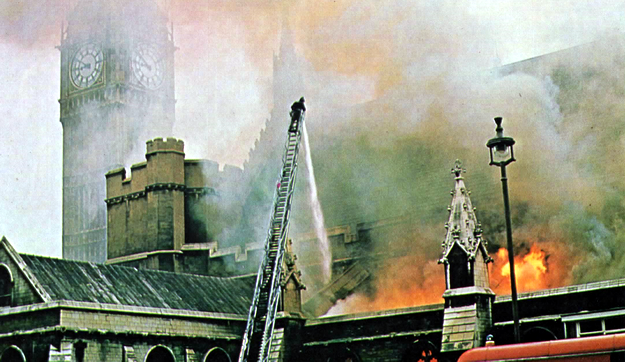


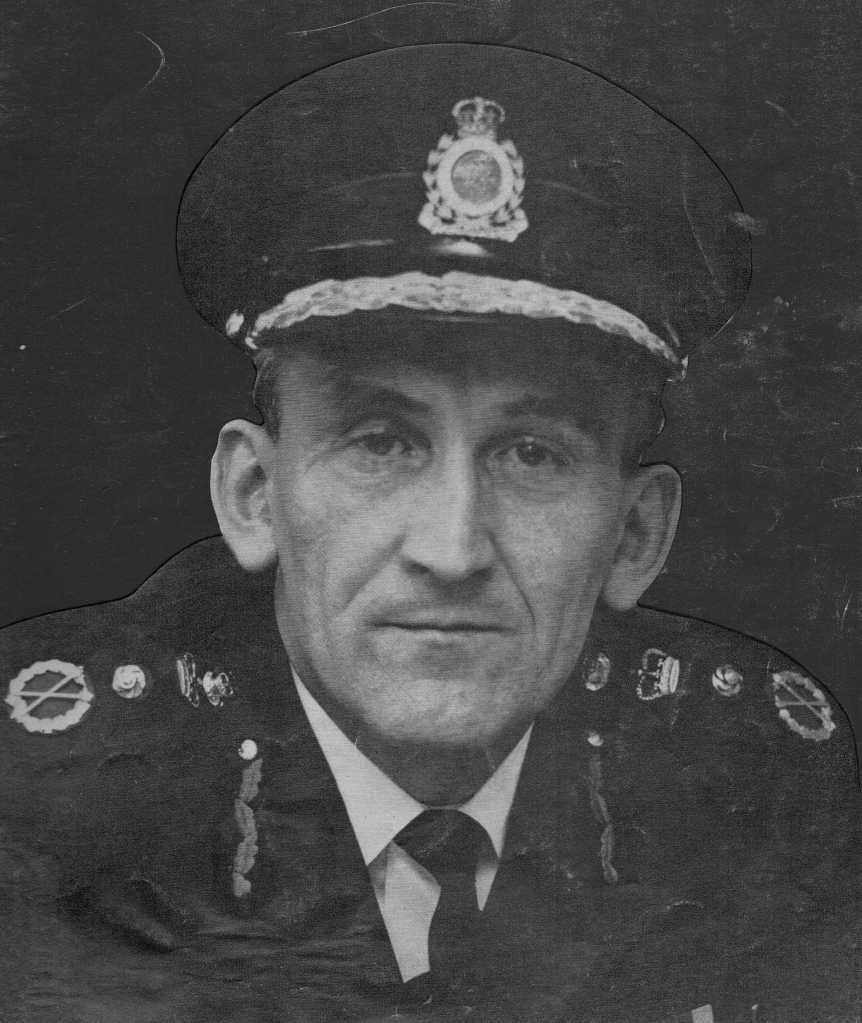


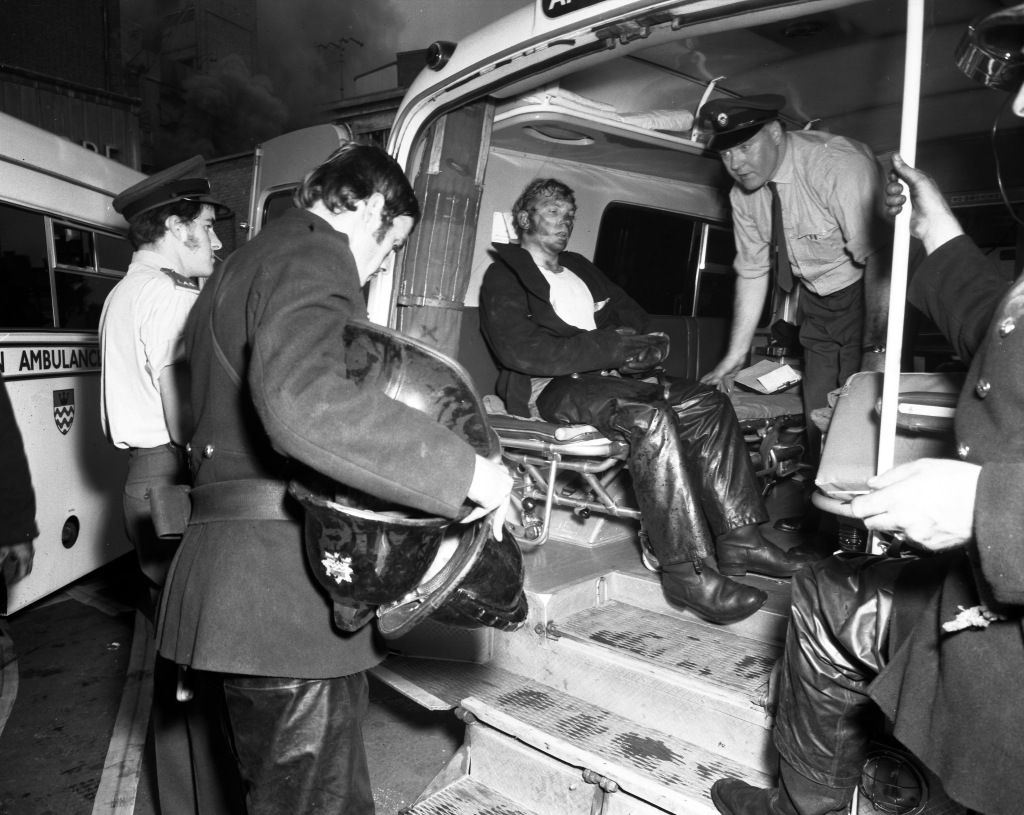
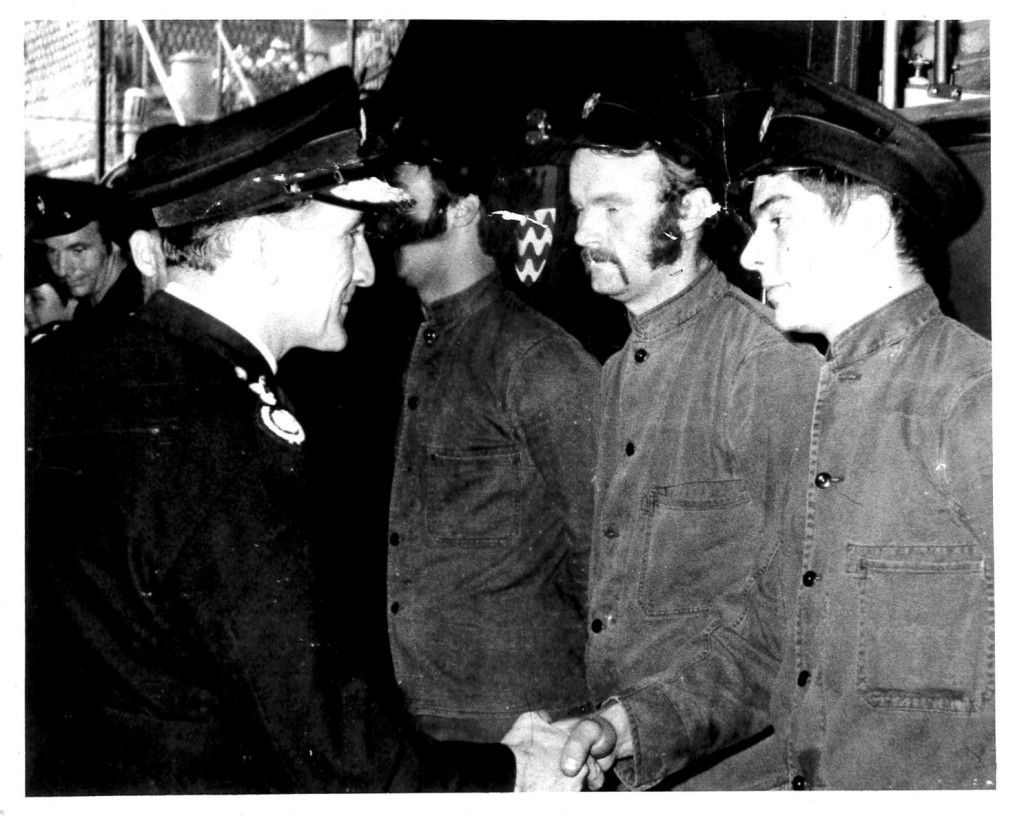

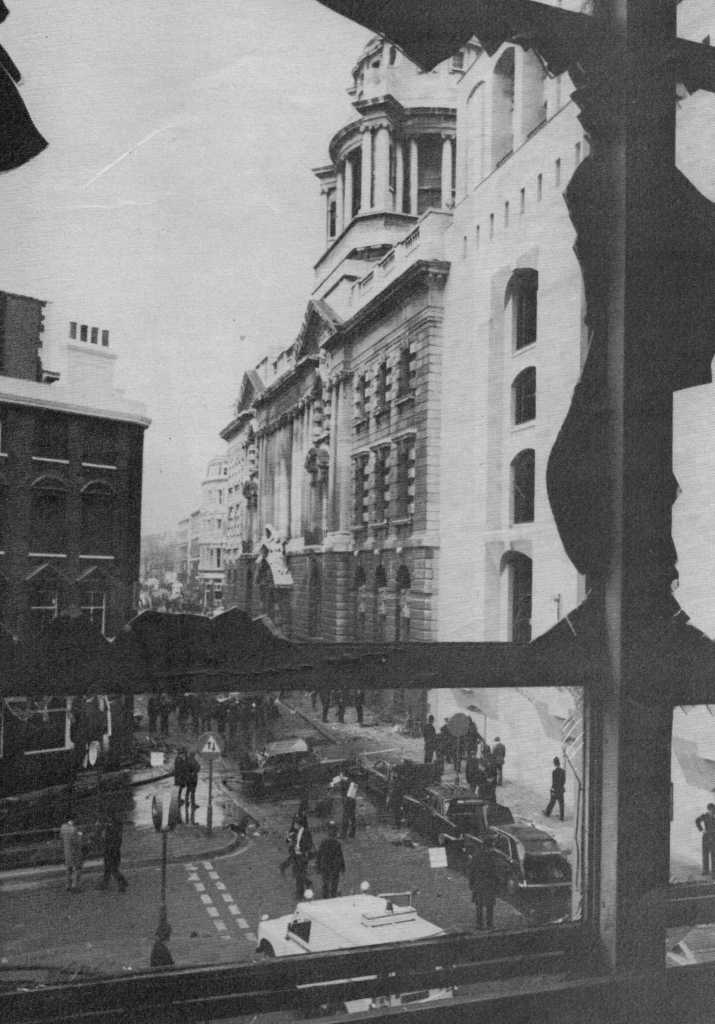
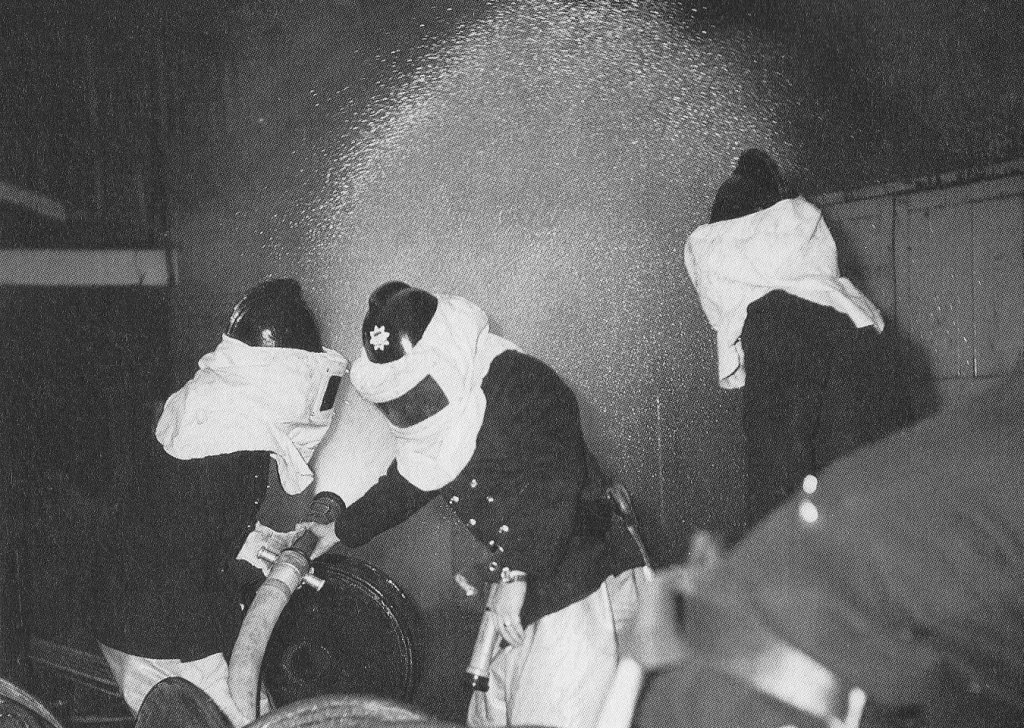


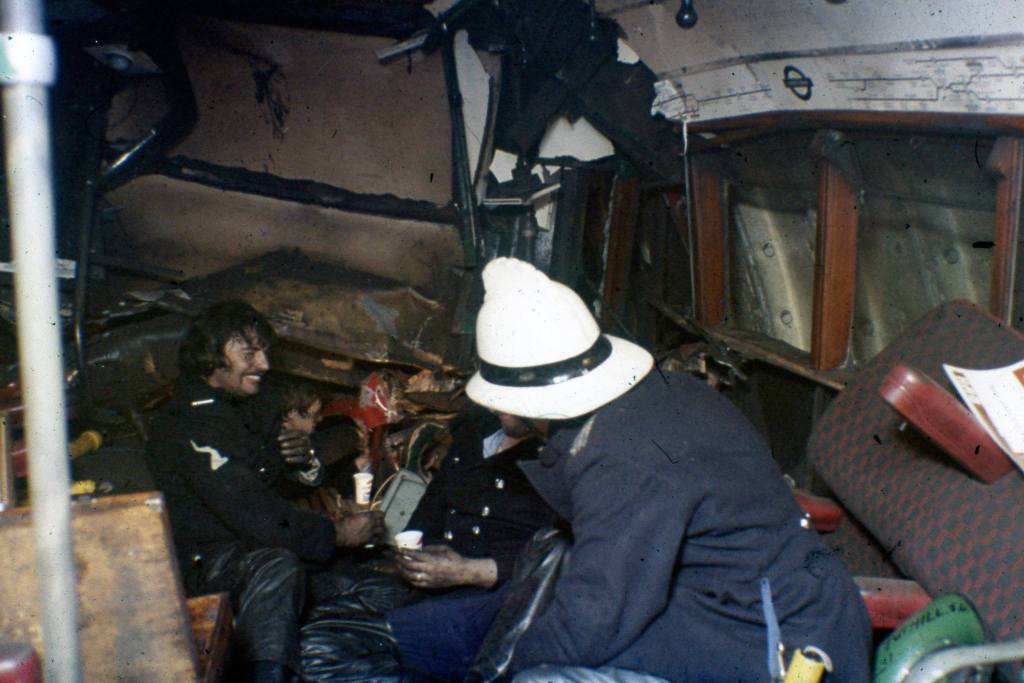


 A retired London Fireman